Tag: ai decision framework

  • How to Choose AI for Business Tools That Deliver Real Results

    How to Choose AI for Business Tools That Deliver Real Results

    Introduction: Cutting Through the AI Noise for Real Business Impact

    Let’s be honest. In 2026, the number of new AI tools hitting the market is dizzying. Every week there’s a fresh chatbot, a new writing assistant, another automation platform. It all sounds great. But when you’re trying to run a business, you don’t have time to test every shiny new gadget. You need what actually works.

    Here’s the thing: the hype is real, but so is the chaos. According to recent data on small business AI statistics for 2026, AI use among small businesses jumped from 40% to 58% in just one year. And 91% of those using AI report revenue gains. That’s huge. But it doesn’t mean every tool is worth your money. Nearly 40% of businesses say they haven’t seen measurable results from their AI experiments. The gap between potential and payoff comes down to one thing: knowing where to focus.

    That’s exactly what this article is for. We’re going to give you a simple, evidence-based framework to cut through the noise. You’ll learn how to identify the right AI for your specific business needs, evaluate tools based on real ROI, and implement solutions that actually move the needle. Whether you are a digital marketing specialist trying to streamline content, a business owner exploring social media marketing services, or someone building a content marketing strategy from scratch, there is a smart path forward.

    For a deeper look at how to find technology you can trust, check out our guide on trusted AI tool discovery sources.

    And if you want to stay ahead without drowning in new tool announcements every day, you might appreciate getting clear daily updates straight to your inbox. The AI Newsletter Worth Reading delivers practical, no-hype AI news so you can focus on what matters: results.

    Assess Your Business Needs Before You Evaluate Tools

    It is easy to fall in love with a slick demo. A tool shows up, promises to write your emails, analyze your spreadsheets, and schedule your social posts all at once. You feel the urge to buy. But here is the thing: most businesses that see poor AI results made the same mistake. They chose the tool before they defined the problem.

    Nearly 40% of businesses report they have not seen measurable results from their AI experiments. That number comes straight from the AI Readiness Report for SMBs. The reason is almost always the same: no clear problem to solve. You cannot pick the right solution until you know exactly what you are trying to fix.

    So before you open a single pricing page, take a step back and map your needs into four simple buckets:
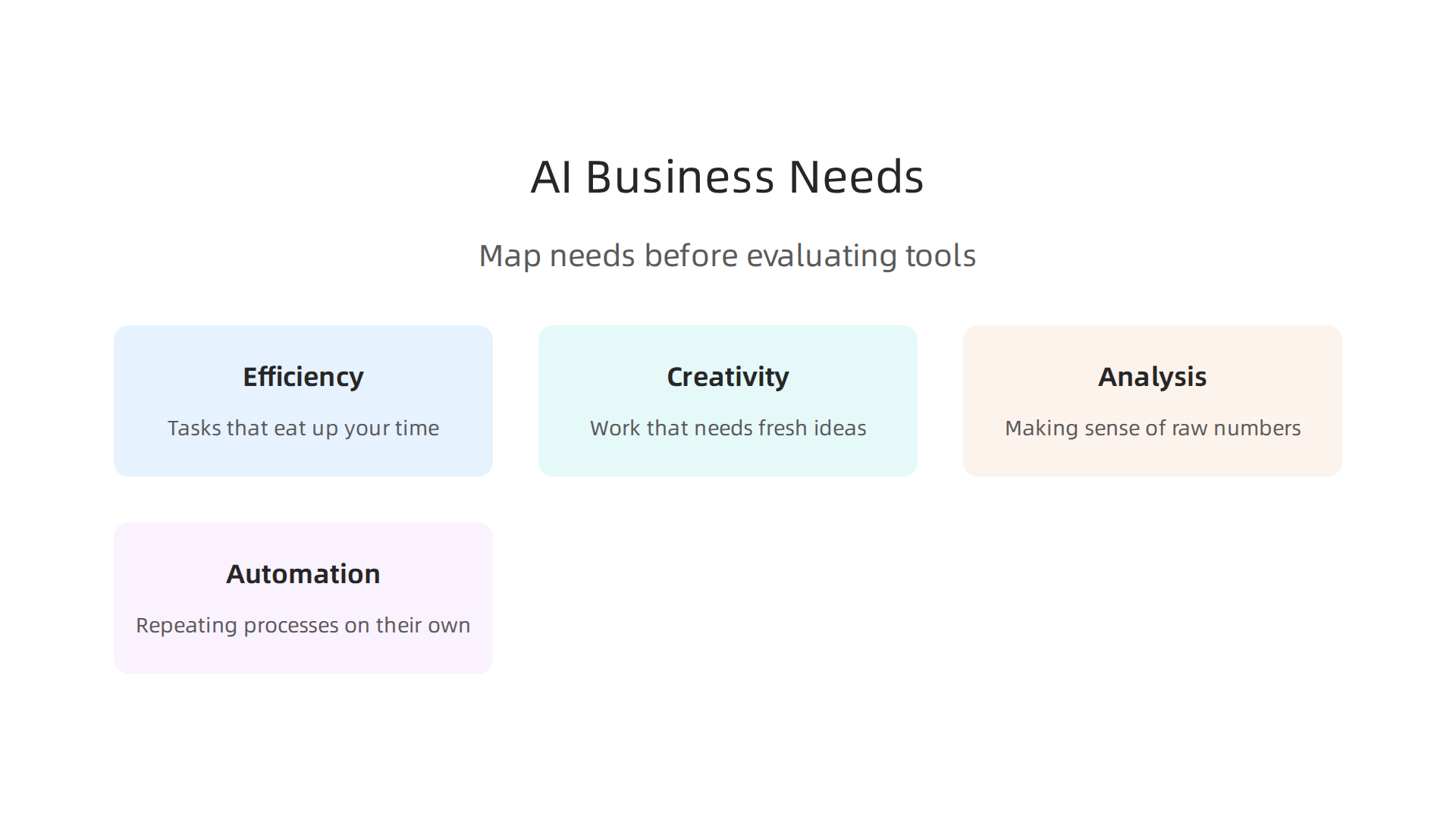

    An infographic illustrating the four core business needs that AI tools can address: Efficiency, Creativity, Analysis, and Automation.

    A diverse team actively collaborating around a whiteboard, mapping out their business challenges and needs.

    • Efficiency – Tasks that eat up your time but require little thinking. Things like scheduling, data entry, or sorting emails.
    • Creativity – Work that needs fresh ideas, writing, images, or video. This is where a digital marketing specialist might use AI to draft social posts or brainstorm campaign angles.
    • Analysis – Making sense of raw numbers, spotting trends, or pulling insights from customer data. A solid content marketing strategy depends on understanding what your audience actually wants.
    • Automation – Repeating processes that run on their own once you set them. Think lead follow-ups, invoice reminders, or social media posting for your social media marketing services.

    Write down which bucket hurts the most right now. That is where you start. Trying to fix all four at once is the fastest way to get nothing done.

    If you want to see how a specific AI tool can fit into your daily operations, check out this guide on AI that streamlines business operations across marketing, sales, and service. It shows exactly how matching needs to features leads to real results.

    Building a Requirements Checklist for Your AI Stack

    Now that you know which problem to solve, it is time to build a simple checklist. This keeps you from buying a tool that looks good but does not actually work for your team. Focus on four must-haves.

    Integration capability comes first. The tool needs to work with the software you already use. If it does not connect to your CRM, email, or project management system, you will end up with a siloed mess that nobody adopts. Data security is a close second. Before you try anything, confirm where your data lives and whether the vendor meets industry standards like GDPR or HIPAA. A good place to start is this guide on choosing the right AI tool for your business, which walks through the exact criteria.

    Scalability matters too. The tool should grow with you without a big price jump or performance drop. And vendor support can save you when something breaks. Ask about response times and training resources upfront.

    For cost, build a simple spreadsheet. List the monthly fee, setup costs, and any hidden charges for extra users or features. Then test your top two picks with free trials. Get three people from different roles to use them for a week and share honest feedback. If they hate it, move on.

    If you want more ways to spot the right tools, check out this article on AI tool discovery for trusted tech sources in 2026. It covers how to filter the noise.

    And to stay ahead of the curve, grab The AI Newsletter Worth Reading for clear daily updates on the best tools hitting the market.

    Top AI Tools for Content Creation and Marketing in 2026

    Now that you have a checklist, it is time to look at the actual tools that pass those tests. 2026 offers a rich lineup of AI tools built for content creation and marketing. The key is matching each tool to the task.

    For copywriting and long‑form content, Jasper remains a standout. It goes beyond simple text generation. It learns your brand voice and keeps it consistent across every blog post, email, and ad. For marketers who need multilingual support, Jasper also handles translations pretty well. You can start with the Creator plan at $39 per month. Another strong option is Copy.ai, which is great for social media copy and sales workflows. According to the 12 Best AI Content Creation Tools ranking, Jasper works best for blog writing while Copy.ai shines in social copywriting.

    For image generation, Canva AI is the top pick for non‑designers. You describe what you want, and it creates on‑brand visuals in seconds. It integrates directly with your social media scheduling and analytics tools. That means you can design a graphic and schedule it without leaving the platform. Canva Pro costs $14.99 per month and includes every Studio feature.

    For social media management, tools like Flick and Buffer offer AI‑driven scheduling and content suggestions. They help you plan posts, find the best times to publish, and track engagement across platforms. They connect easily with your CRM and email tools, so your whole marketing team stays in sync.

    When choosing any of these tools, go back to your checklist. Does it integrate with your current CRM? Does it keep your brand voice consistent? Can it grow with your team? If the answer is yes, it belongs in your stack.

    For a deeper look at how AI tools connect with your full marketing system, check out this guide on HubSpot AI streamlines your business operations across marketing, sales, and service. It shows how one platform can tie everything together.

    Finally, remember that the best tool is the one your team will actually use. Pick two from this list, test them with your checklist, and see which one feels right.

    Side-by-Side: Leading Content AI Platforms

    Here is a side by side look at the leading content AI platforms to help you compare.
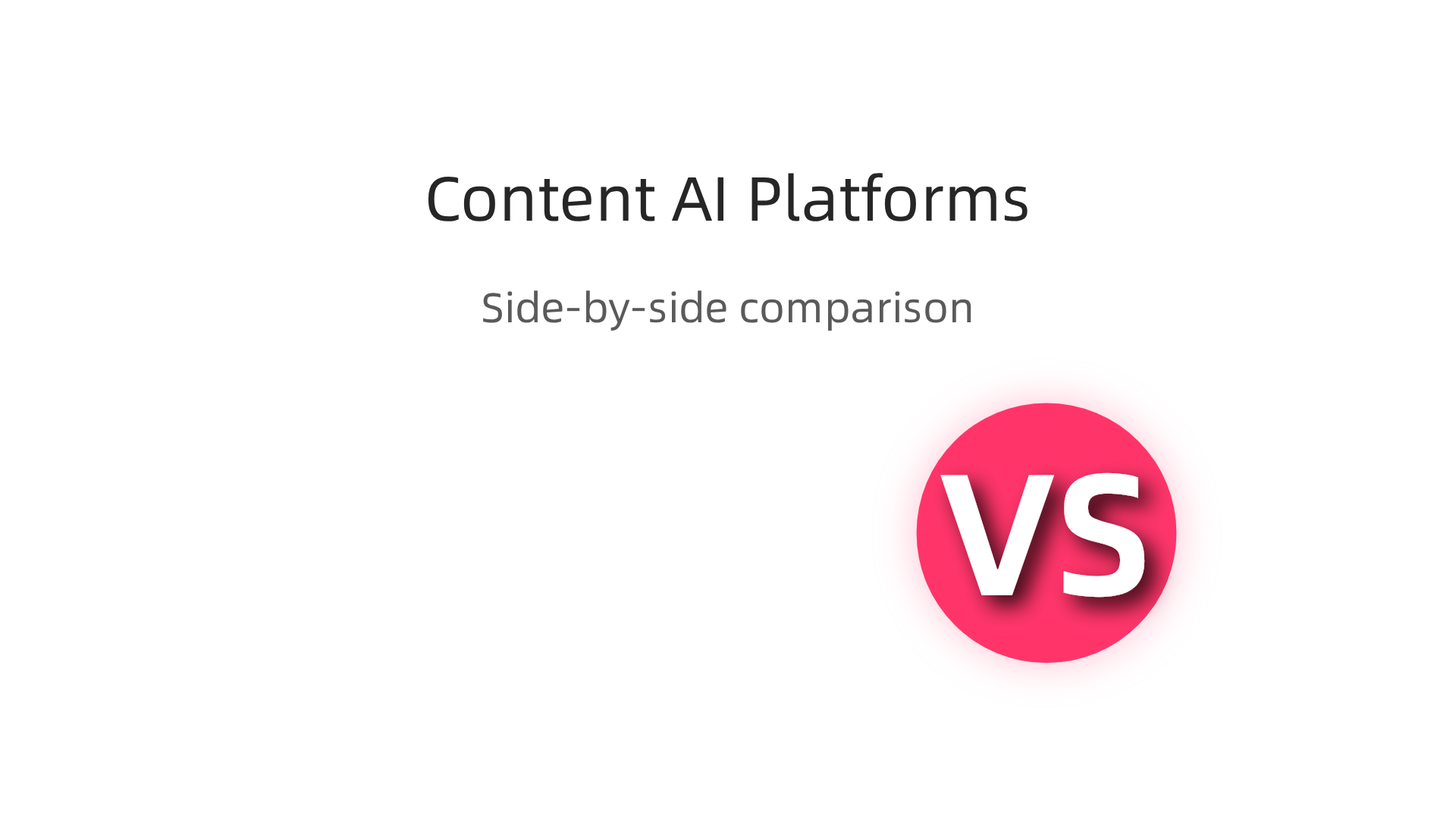
    A side-by-side comparison infographic of leading AI platforms designed for content creation and marketing.

    Platform Best For Starting Price Difference Maker
    Jasper Branded marketing copy $39/month Brand voice memory
    Copy.ai Sales & social workflows $24/month GTM automation templates
    Writesonic SEO & GEO content $39/month AI search visibility tracking
    Canva AI On-brand visuals $14.99/month Prompt to publish design

    A digital marketing specialist might pair Writesonic for blog posts with Canva for social graphics. An in-house team often runs Jasper across departments to keep the brand voice consistent.

    The smartest move is to A/B test. Run the same campaign through Jasper and Copy.ai. Compare the outcomes side by side. According to a detailed comparison guide to AI content tools, matching the tool to the channel gives the best results.

    For teams managing these tests, the main challenge is tracking value. That is where getting real ROI from AI marketing tools comes into play.

    Staying current on which platform leads each category is tough. Get clear daily AI updates from The Deep View Newsletter so you always know which tool fits your next campaign.

    AI-Powered Analytics: Turning Data into Decisions

    Running campaigns without clear data is like driving with foggy windows. You might move, but you have no idea where you are going. That is where AI powered analytics changes the game for any ai for business strategy.

    Instead of staring at spreadsheets for hours, AI tools now handle the heavy lifting.

    A professional confidently reviewing a report, demonstrating how AI-powered analytics transforms raw data into clear, actionable decisions.

    They automatically pull data from your sources, spot patterns, and serve up insights in easy to read dashboards. A digital marketing specialist can see which channel drives the best return without digging through rows of numbers.

    What these tools do well

    • Customer sentiment analysis AI scans reviews, social comments, and support tickets to tell you how people really feel about your brand. No more guessing.
    • Predictive analytics It looks at past behavior to forecast what happens next. Which customers might churn? Which product will sell out next month? The tool gives you a heads up.
    • Anomaly detection When something unusual happens like a sudden drop in traffic or a spike in refunds the system flags it instantly.

    Integrations that matter

    The best analytics tools connect directly to the platforms you already use. They pull data from Google Analytics, your CRM, and even data warehouses. This means one dashboard shows your full picture. Some tools even include features like Writesonic’s AI visibility tracking that monitors how your content performs across both search engines and AI answer engines.

    When you tie analytics into your content marketing strategy and social media marketing services, you stop guessing and start acting on real signals. It turns raw data into a clear next move.

    To see how this works inside a complete business platform, check out how HubSpot AI streamlines your business operations across marketing, sales, and service. It gives you one place to track everything.

    Metrics That Matter: Measuring AI Tool Impact on Business KPIs

    You have the analytics dashboard running, but how do you know your AI tools are truly paying off? The answer is tracking the right KPIs before and after you adopt each tool.
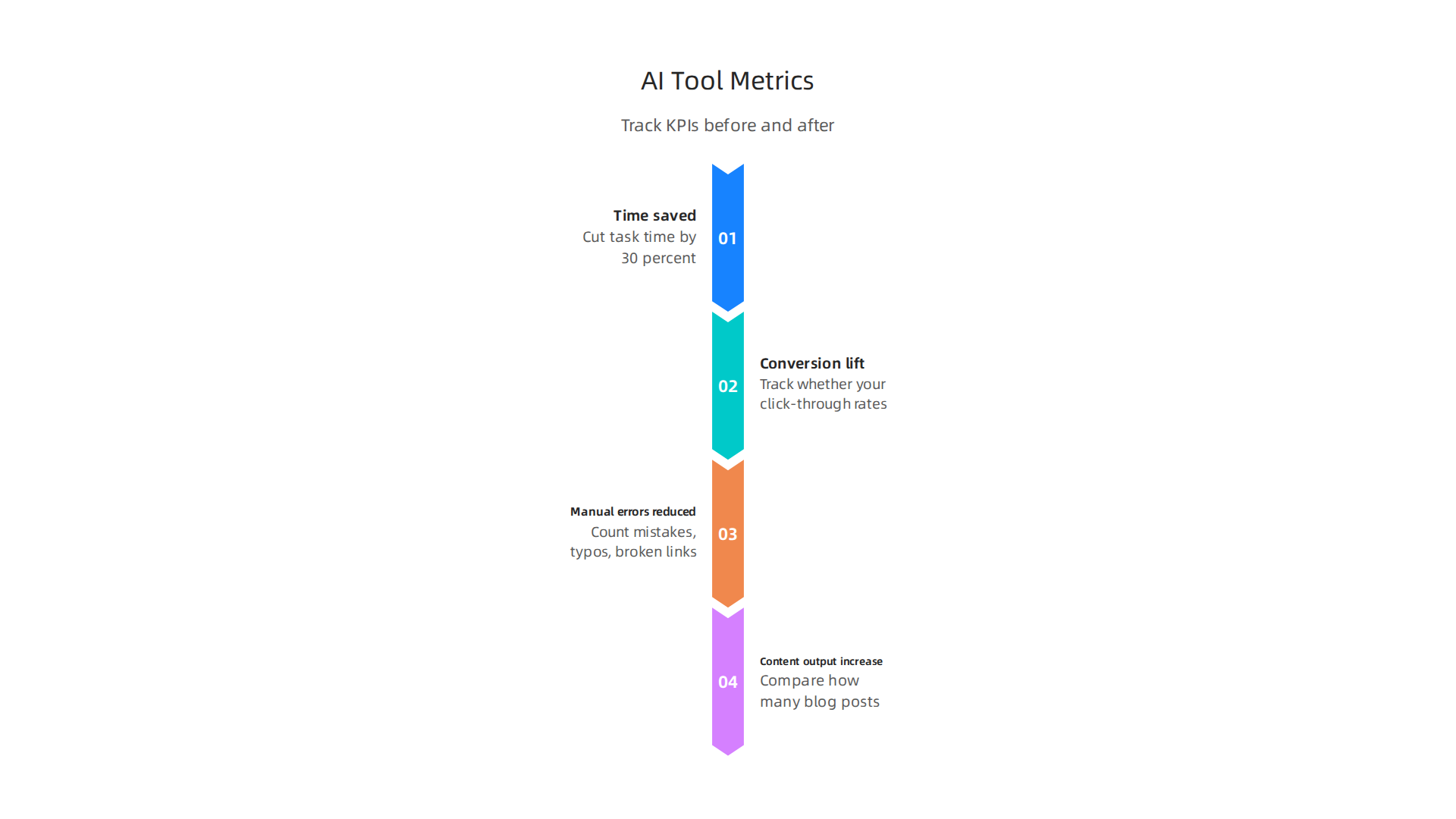
    An infographic detailing the essential metrics to track for measuring the true impact of AI tools on business Key Performance Indicators.

    The essential metrics to watch

    • Time saved – Measure how many hours your team spends on tasks like writing, editing, or reporting. A good AI tool should cut that time by at least 30 percent.
    • Conversion lift – Track whether your click-through rates or sales go up after using AI generated content.
    • Manual errors reduced – Count mistakes like typos, broken links, or data entry errors. Fewer errors mean higher quality work.
    • Content output increase – Compare how many blog posts, social posts, or emails your team produces per week before and after tool adoption.

    A simple spreadsheet works great for this. Create one column for each metric, record your baseline numbers for a week or two, then measure again after your team starts using the tool. The difference shows your real impact.

    Expert tip – Never deploy a tool without first measuring your baseline. Without knowing where you started, you cannot prove improvement. For deeper guidance on tracking ROI across your whole stack, check out how to get real ROI from AI marketing cloud in 2026.

    To stay current on the latest measurements and trends, subscribe to The AI Newsletter Worth Reading from The Deep View for clear daily updates.

    Workflow Automation: AI That Saves Time Every Day

    Once you have your metrics in place, the next big step is putting AI to work on the tasks that eat up your day. Workflow automation is where many businesses see their first real time savings. The idea is simple — let AI handle the boring, repetitive work so your team can focus on things that actually matter.

    What can you automate? A lot. Think about scheduling meetings, sorting emails, entering data into spreadsheets, or pulling together weekly reports. These tasks add up fast. A digital marketing specialist, for example, might spend hours every week just scheduling social media posts or copying data between tools. That is time they could spend on creative strategy or client work.

    The best part? You do not need to be a developer to set this up. No-code automation platforms let you connect your favorite apps with a few clicks. Tools like Zapier and its newer AI-powered alternatives let you build workflows that run on autopilot. You can set rules like: "When a new lead fills out a form, add them to my CRM and send a welcome email." It all happens in seconds.

    The real productivity gains are huge. According to recent analysis, small businesses using AI for repeatable tasks typically see a 3-4x return on investment by cutting down manual labor. One study found that AI agents in sales can save teams 8–12 hours per week by handling data entry and pipeline management. That is basically an extra day of work back each week.

    And it is not just about speed. Automation also reduces errors. Machines do not get tired or make typos when copying data. That means higher quality work with less rework.

    To make the most of workflow automation, start small. Pick one annoying task that happens every week and automate that first. Prove it works, then build from there. If you want to explore how AI can take over more of your routine, check out this guide on AI virtual assistants for business to see what else is possible.

    For a deeper look at how successful teams are shifting from basic prompts to full workflow design, this article on AI agents transforming workflows in 2026 offers a practical playbook you can follow.

    Pitfalls to Avoid When Automating Business Processes

    But before you automate everything, it helps to know where things can go wrong. Many teams rush into automation and end up with more problems than solutions.

    One common mistake is automating a broken process. If your workflow has unclear steps or weak logic, automation just repeats those flaws faster and at scale. Another trap is building too many workflows at once. That creates a tangled system where nobody knows what each part does. Ignoring error handling is equally dangerous. Every workflow will eventually hit an unexpected input or a failed connection. Without a backup plan, things break silently. For a full look at these and other errors, see this analysis of common pitfalls in small business automation projects.

    The fix is simple. Start with one small, high-frequency task. Automate it, measure the results, and only then scale up. Keep human oversight in the loop until the workflow proves stable over several runs. Security is critical too. When giving AI access to sensitive processes, begin with read-only permissions. Add write access only after you have tested thoroughly. If you need a streamlined platform to start with, explore how HubSpot AI streamlines business operations across marketing, sales, and service.

    To stay informed on best practices and avoid these traps as you adopt AI for business, Get clear daily AI updates from The AI Newsletter Worth Reading.

    A Decision Framework for Selecting the Right AI Tool

    With so many options out there, picking the right AI for your business can feel overwhelming. But you don’t need to guess. A simple step-by-step framework helps you choose with confidence.
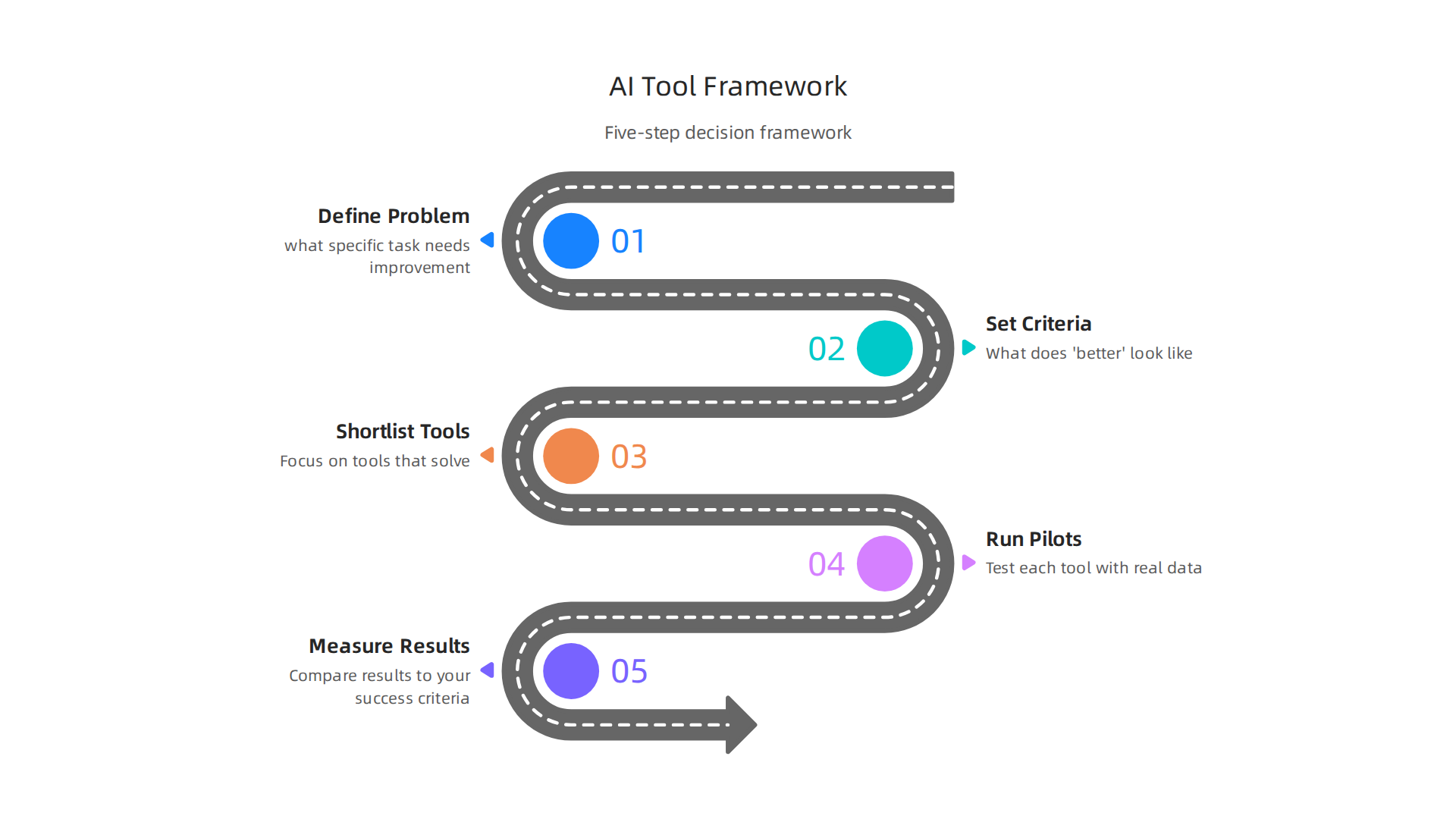
    An infographic outlining a clear, five-step decision framework to confidently select the most appropriate AI tool for your business needs.

    Step 1: Define the problem clearly. Ask yourself what specific task needs improvement. Maybe you are a digital marketing specialist who wants to speed up content creation. Or you need a better content marketing strategy that uses AI to find trends. Perhaps you want to automate social media marketing services. Write down the exact pain point.

    Step 2: Set success criteria. What does "better" look like? Save 10 hours a week? Cut response time by half? Increase engagement by 20%? Define measurable goals before you look at any tool.

    Step 3: Shortlist 3 to 5 tools. Focus on tools that solve your specific problem. For example, a simple audio tool like Lalal AI free version might help a content creator separate vocals. But for a full marketing workflow, you need a platform that integrates with your CRM. Create a shortlist based on core capabilities.

    Step 4: Run structured pilots. Test each tool with real data and real users on your team. Don’t just watch a demo. Ask your team to try it on an actual task. Collect feedback on ease of use, speed, and accuracy. For a deeper look at what to check, see this AI tool selection framework from research resources.

    Step 5: Measure against your baseline. Compare results to your success criteria. Did the tool meet your goals? How did it handle errors? Was the support helpful? Use a simple scoring matrix to compare tools side by side.

    Here is a basic scoring matrix you can copy:

    Criterion Weight Tool A Tool B Tool C
    Ease of use 20% 4/5 3/5 5/5
    Integration with current tools 25% 5/5 2/5 4/5
    Security and compliance 25% 5/5 5/5 3/5
    Cost and ROI 20% 3/5 4/5 4/5
    Scalability 10% 4/5 3/5 5/5

    Don’t forget vendor evaluation. Check their security certifications (like SOC 2), support quality, and product roadmap. Also get buy-in from key stakeholders early. If your IT team or legal department has concerns, address them before you purchase. For more on how to find trusted tools, read this guide on AI tool discovery for real business results.

    Finally, stay informed as new tools appear every week. Get clear daily AI updates from The AI Newsletter Worth Reading to keep your framework sharp.

    Vendor Evaluation Checklist and Security Standards

    Once you have your shortlist, the real work begins. You need to check security and compliance before you sign anything.

    Ask for these certifications:

    • SOC 2 Type II – Third-party proof of strong security controls.
    • GDPR compliance – Required for data from EU residents.
    • HIPAA compliance – Needed for health data.
    • PCI-DSS Level 1 – For handling payment card data.

    Many enterprises require a fintech vendor security review process. Also ask about data residency: where is your data stored? Ensure it matches your legal requirements.

    Questions for sales teams:

    • What integration APIs are available? Can they connect to your existing tools?
    • What uptime SLA do you guarantee?
    • What is your exit strategy? Can you export data easily if you leave?

    Finally, insist on a trial with real data, not just a sandbox. Test with an actual task your team does. That is the only way to know if the tool truly works for your business. For more on evaluating tool performance, check this guide on getting real ROI from AI marketing cloud.

    Future-Proofing Your AI Toolkit: Trends to Watch in 2026

    You just finished choosing your AI tools. But the tech world does not stand still. In 2026, several big trends will reshape what AI can do for your business.

    First, AI agents are becoming a real thing. These are systems where multiple AI agents work together on complex tasks. Instead of one tool doing everything, you get a team of specialists. Gartner calls this a top strategic trend. You can read more about these AI-driven technology advancements.

    Second, multimodal models are growing fast. These AIs can understand text, images, audio, and video all at once. That means smarter search, better content creation, and richer customer experiences.

    Third, vertical‑specific AI is on the rise. Instead of a general chatbot, you get AI built for healthcare, legal, or finance. These tools understand your industry’s language and rules.

    Fourth, open‑source models are leveling the playing field. You no longer need a giant budget to run your own AI. Open‑source options give you control, privacy, and lower costs.

    To future‑proof your toolkit, choose platforms with flexible architectures. Look for modular designs. You want to swap out a model or add a new capability without rebuilding everything.

    Continuous learning is also vital. The field changes weekly. One easy way to stay ahead is to follow top interactive AI newsletters that curate the best updates. Even better, subscribe to The AI Newsletter Worth Reading for clear daily AI updates delivered right to your inbox.

    By keeping an eye on these trends and staying informed, your ai for business strategy will stay effective for years to come.

    Building a Culture of AI Literacy in Your Organization

    Picking the right ai for business tools is only half the battle. The real challenge is getting your team comfortable using them every day. Without AI literacy, even the best software sits unused. A digital marketing specialist who understands AI can double their output. That is why upskilling your team is just as important as buying new tools.

    A group of professionals engaged in a learning or training session, building AI literacy and enhancing their understanding of new technologies.

    You do not need a big training budget to start. Low-cost methods work great. Host internal demos where team members show off a tool they tried. Run lunch-and-learn sessions with free online courses. Encourage your content marketing strategy team to experiment with AI for drafting posts or analyzing social media marketing services data.

    The best way to learn is by doing. Set up a sandbox environment where people can test AI tools without risk. Let them try different features before your company buys a license. Gartner’s top tech trends for 2026 highlight that multiagent systems and domain-specific models are coming fast. Your team needs hands-on practice to keep up.

    To see how human skills and AI can work together, check out this data on human AI collaboration. It proves that teams who learn together outperform those who just buy tools.

    By building AI literacy now, you turn your whole organization into a learning engine for ai for business success.

    Summary

    This article gives a practical, no‑hype framework to choose and implement AI tools that actually deliver business results. It starts by helping you map your biggest needs into four buckets—efficiency, creativity, analysis, and automation—then shows how to build a requirements checklist (integration, security, scalability, support) and run structured pilots. You’ll find recommended tools for copy, images, social, and analytics plus a side‑by‑side comparison and guidance on A/B testing. The guide also explains how to measure ROI with specific KPIs, automate repeatable workflows safely, evaluate vendors for compliance, and keep your stack future‑proof while building team AI literacy. After reading, you’ll know how to shortlist, test, and measure AI so your investments move the needle.


  • Human or AI Creativity What the Data Says About Collaboration in 2026

    Human or AI Creativity What the Data Says About Collaboration in 2026

    Introduction

    Let’s be real. The AI noise in 2026 is deafening. Every day, a new tool pops up claiming to be a creative genius. You might find yourself wondering if it’s all just ai slop or if there’s real substance behind the hype. Maybe you’ve even muttered, i hate artificial intelligence after scrolling through another messy ai overview. You are not alone.

    The real question isn’t just about frustration. It’s deeper. It’s the human or ai question. Can a machine ever match natural intelligence? Recent research from 2026 shows this year is a true turning point in how we understand human creativity versus machine creativity (How AI Is Transforming Creativity in 2026). Some researchers argue that creativity is our defining human trait (Is AI more creative than us? – CORDIS). Yet the pressure to use AI is everywhere.

    If you are a marketer, founder, or operator, you are caught in the middle. You feel the pressure to adopt AI, but the information overload is real.

    Navigating the complex landscape of AI adoption requires clear strategy amidst information overload.

    How do you find the right tools without wasting time and money? You need clarity, not more hype. You need to know if the investment will actually pay off.

    This article gives you exactly that clarity. We are not here to push an agenda. We are taking an evidence-based look at where natural intelligence and AI overlap and where they diverge. You will get actionable frameworks to make the human or ai decision easier for your specific workflow. Grounded in the latest studies on collaborative creative processes and computer-generated creativity, we will show you how to get the best of both worlds. For a broader look at cutting through the noise, check out our curated list of 10 top AI websites professionals trust for real news and tools.

    Screenshot of the AI Tools News Today homepage, a resource for AI professionals.

    Ready to stop guessing and start building a smarter workflow? The key is staying informed without getting overwhelmed. For clear, daily AI updates that cut through the ai slop, you can Subscribe Free to The Deep View Newsletter. It is the simplest way to keep your skills sharp and your strategy sound in 2026.

    Defining Creativity: Can AI Ever Be Truly Creative?

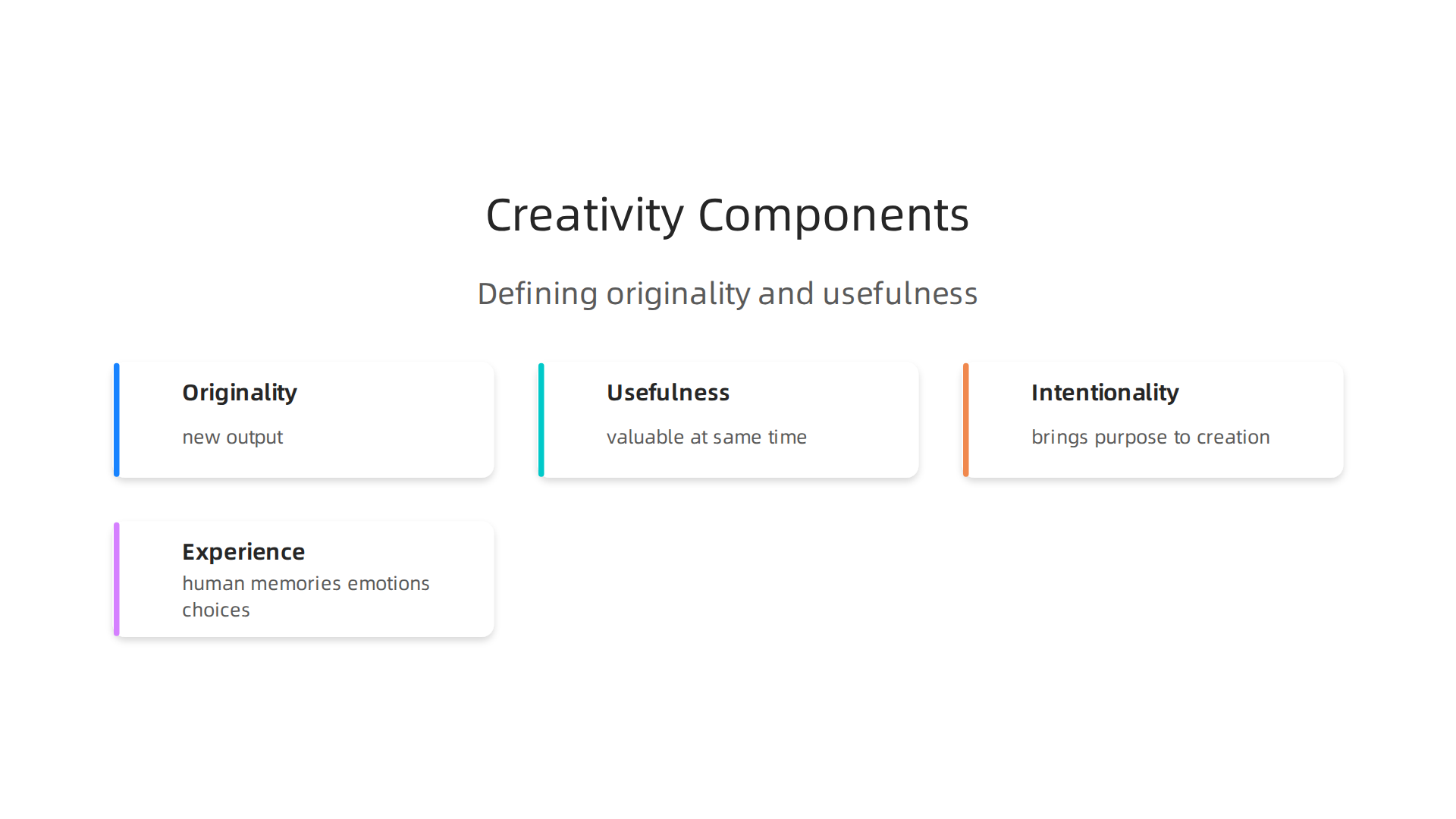
    To answer the human or ai question properly, we need to start with a basic definition. What does creativity actually mean? Researchers usually describe it in two parts: originality and usefulness.

    An infographic illustrating the essential components of creativity, distinguishing human intent from AI mimicry.

    A creative idea must be new and valuable at the same time (Has AI Surpassed Humans in Creative Idea Generation? A Meta-Analysis).

    That sounds simple enough. But here is where the trouble starts. AI can certainly generate new-looking outputs. Give it a prompt and it will spit out text, images, or code you have never seen before. Yet there is a missing ingredient. Intent.

    Think about it this way. When you create something, you pull from your own life. You have memories, emotions, and experiences that shape your choices.

    A person deeply immersed in thought, reflecting the intrinsic human element in the creative process.

    A machine has none of that. It only has training data. So when AI writes a poem or designs a logo, it is really just remixing existing patterns. The result might look original on the surface, but it lacks the deeper meaning that comes from real human experience.

    This is not just a philosophical argument. Research from 2026 shows that generative AI models perform poorly in creative tasks when they are deprived of human guidance (Human creativity still surpasses "creative" generative AI). The output can be technically correct. But it often feels hollow. That is because natural intelligence brings something to the table that algorithms cannot copy: intentionality. You create with purpose. A machine creates because it was told to.

    Some experts argue that creativity is a defining human trait, something that separates us from machines entirely (Is AI more creative than us? – CORDIS). And they have a point. When you browse an ai overview that just feels off, or you mutter i hate artificial intelligence after yet another robotic email, you are sensing that missing spark.

    Here is the real shift happening in 2026. Generative models have gotten incredibly good at mimicking creativity (How AI Is Transforming Creativity in 2026). They can produce work that looks and sounds human. But mimicry is not the same as true creation. The ai slop you see across the internet is proof of that. It looks right but feels empty.

    So where does that leave you? AI is an amazing tool for generating raw material fast. It can help you overcome creative blocks and explore ideas quickly. But the meaning, the context, the real spark… that still comes from you. Studies continue to show that human creativity matters just as much today as it ever did (Neag School Researcher Finds That Human Creativity Still Matters).

    The human or ai choice is not about picking a winner. It is about knowing when to let the machine assist and when to trust your own natural instincts. To explore more tools that can support your creative workflow, check out our list of 10 top AI websites professionals trust for real news and tools. And if you want clear, daily insights to help you make smarter choices, Get Free Updates from The Deep View Newsletter.

    What the Numbers Say: Productivity and Quality Metrics

    So we know creativity needs human intent. But what do the actual numbers say about working alongside AI? The data from 2026 is pretty clear. AI boosts speed. But the quality picture is more complicated than you might expect.

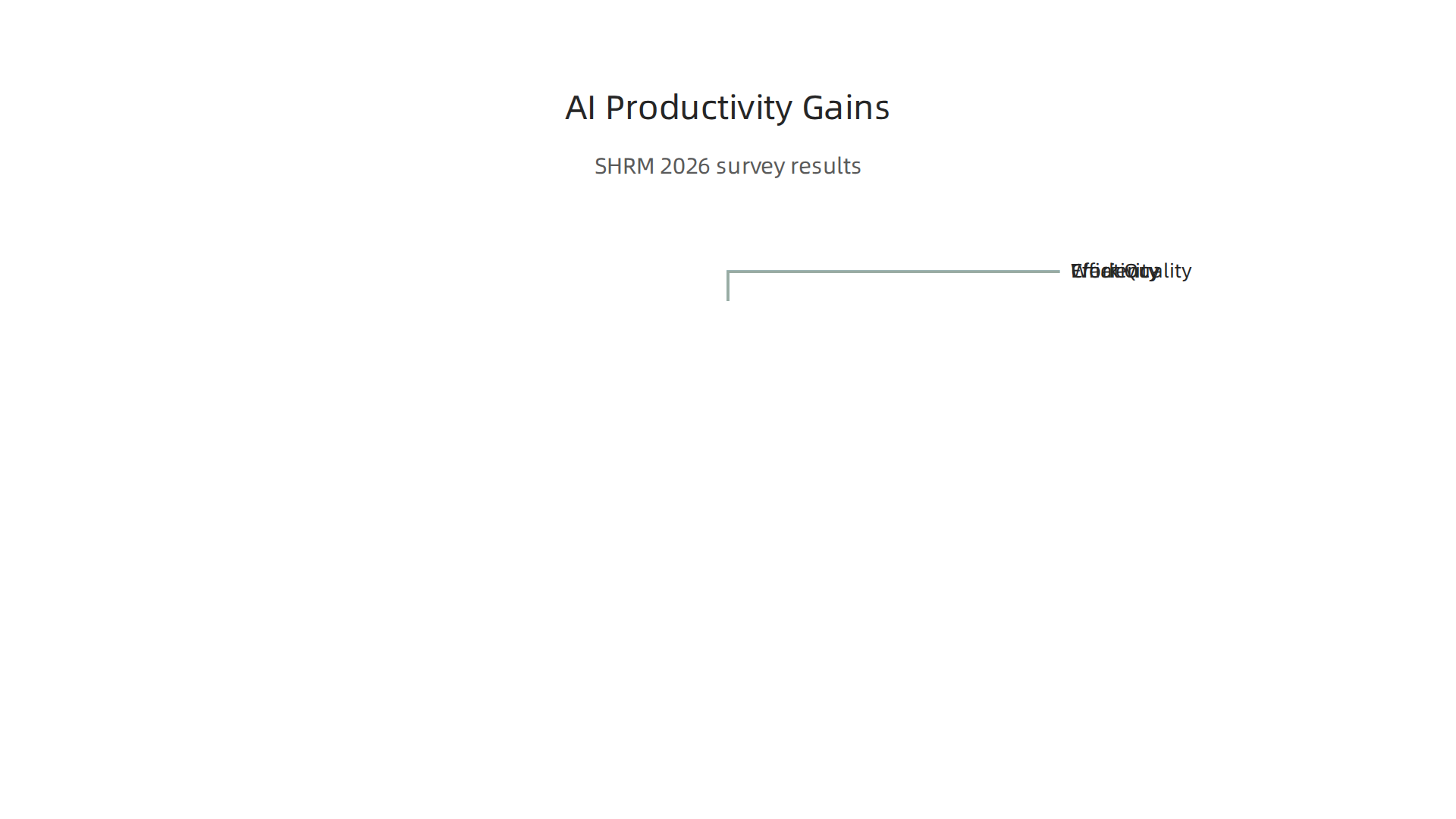
    Let us start with the good news. The 2026 SHRM report found that more than two-thirds of workers reported improvements in creativity (70%), efficiency (87%), and overall work quality (75%) when using AI tools

    Data-backed insights on how AI tools are improving creativity, efficiency, and overall work quality for professionals.

    (SHRM State of AI in HR 2026). That is a huge jump. Similarly, a METR survey of technical workers showed that AI helped them get more done faster, especially in research and software engineering (METR Early-2026 AI Impact Survey). The OECD also reviewed experimental research and found clear productivity gains across many creative tasks (OECD Effects of GenAI on Productivity). Speed is not the only benefit. The NVIDIA State of AI report showed that companies using AI saw measurable revenue growth and cost reductions (NVIDIA State of AI Report 2026). The Microsoft Work Trend Index found that people felt more creative when AI handled the boring parts (Microsoft Work Trend Index 2026).

    Here is the thing though. Speed does not always mean better. A study from Florida International University found something important: how you make something matters to your audience (FIU AI Reputation Study). When people found out a creator used AI, they judged the work more harshly. The work felt less authentic.

    A person critically reviewing work, highlighting the nuanced human perception of AI-generated content authenticity.

    That is the trade off nobody talks about. You can pump out content faster than ever before. But if it feels like ai slop, your reputation takes a hit. The Adobe Digital Trends report shows that brands are struggling with this exact problem: customers want personalization but they also want human touch (Adobe Digital Trends 2026).

    Quality metrics reveal another layer. The Stanford AI Index Report shows that top AI models keep getting better at matching human output (Stanford HAI AI Index 2026). But better matching does not mean better strategy. AI can write a blog post in seconds. It can design a logo in minutes. Yet the most effective marketing and content still needs strategic depth. That is where human judgment wins. An ai overview might summarize facts correctly. But it will miss the emotional thread that connects with real people.

    So what does this mean for you? The numbers show AI is a powerful tool for raw output. Use it to speed up research, generate drafts, and handle repetitive tasks. But do not hand over the creative controls completely. Your audience can tell the difference. They value authenticity. That is why the human or ai question is so important right now. You need to decide when to let the machine take over and when to step in with your own thinking.

    If you are looking for ways to boost your productivity without losing your human edge, check out our list of best startup gadgets in 2026 that actually deliver results. And to keep up with the latest shifts in AI and creativity, Subscribe Free to The Deep View Newsletter for clear daily updates.

    Real-World Applications: Where AI Augments and Where Humans Lead

    The numbers we just looked at paint a clear picture. But you might be wondering what this looks like in your actual day-to-day work. Let’s walk through some real examples from 2026.

    In marketing, teams are using AI to handle the heavy data lifting. A tool might analyze thousands of customer comments to spot patterns in what people want. That is something AI does better than any human could. It can process huge amounts of information in seconds. The PLOS One study found that the real question is whether AI should focus on digging deeper into existing ideas or exploring new creative directions (PLOS One study on AI strategy). The answer depends on your goal. If you want to refine a campaign, let AI exploit existing patterns. If you need a fresh concept, push AI to explore.

    But here is where human leadership steps in. Only you can decide which pattern matters. Only you can feel whether a message hits the right emotional note. Research shows that the most effective outputs come from iterative human refinement (The Hybrid Creative Era). AI generates drafts. You shape them into something that connects.

    In product design, the same pattern plays out. AI can generate hundreds of layout options in minutes. It can suggest color schemes and content placement based on user behavior data (AI and Creative Collaboration). That is huge for speed. But the final call on brand identity, ethics, and user trust still belongs to you. Cambridge research shows that creativity improves when human-machine workflows guide feedback and iteration deliberately (Why human-machine teams need deliberate design). You design the process. AI executes the repetitive parts.

    Software development tells a similar story. AI can spot bugs, suggest code completions, and even write boilerplate functions. That frees up developers to focus on architecture, user experience, and strategic decisions. The Mindbreeze analysis of the 2026 collaborative era shows that humans focus on high-value thinking while AI handles intensive data analysis (The New Collaborative Era).

    Screenshot of the Mindbreeze homepage, a company focused on collaborative AI solutions.

    This is the augmentation model, not full automation.

    Think of it this way: AI is like a super-fast assistant. It can research, draft, and iterate at speeds you cannot match. But it lacks natural intelligence. It cannot read a room. It does not grasp cultural nuance. It will never feel the weight of a brand’s reputation. That is why the human or ai question is not about choosing sides. It is about knowing when to hand off and when to step up.

    If you want to stay ahead of these shifts, you need reliable sources. Check out our list of best startup gadgets in 2026 that actually deliver results for tools that support this kind of collaboration.

    And to get clear daily updates on how AI is changing your industry, Subscribe Free to The Deep View Newsletter. It cuts through the noise so you can focus on what matters.

    Cutting Through the Noise: A Framework for Selecting the Right AI Tools

    By now, you probably see how powerful the human or ai combination can be. But here is the problem: in 2026, there are hundreds of AI tools claiming to boost creativity, write better, and save time. How do you pick the right one without drowning in ads, hype, and what some people call "ai slop"?

    I hear you. The information overload is real. A 2026 SHRM report showed that 87% of professionals reported efficiency gains from AI tools, but many also struggled with too many options (SHRM State of AI in HR 2026). You do not need another list of shiny tools. You need a simple framework to sort through them.

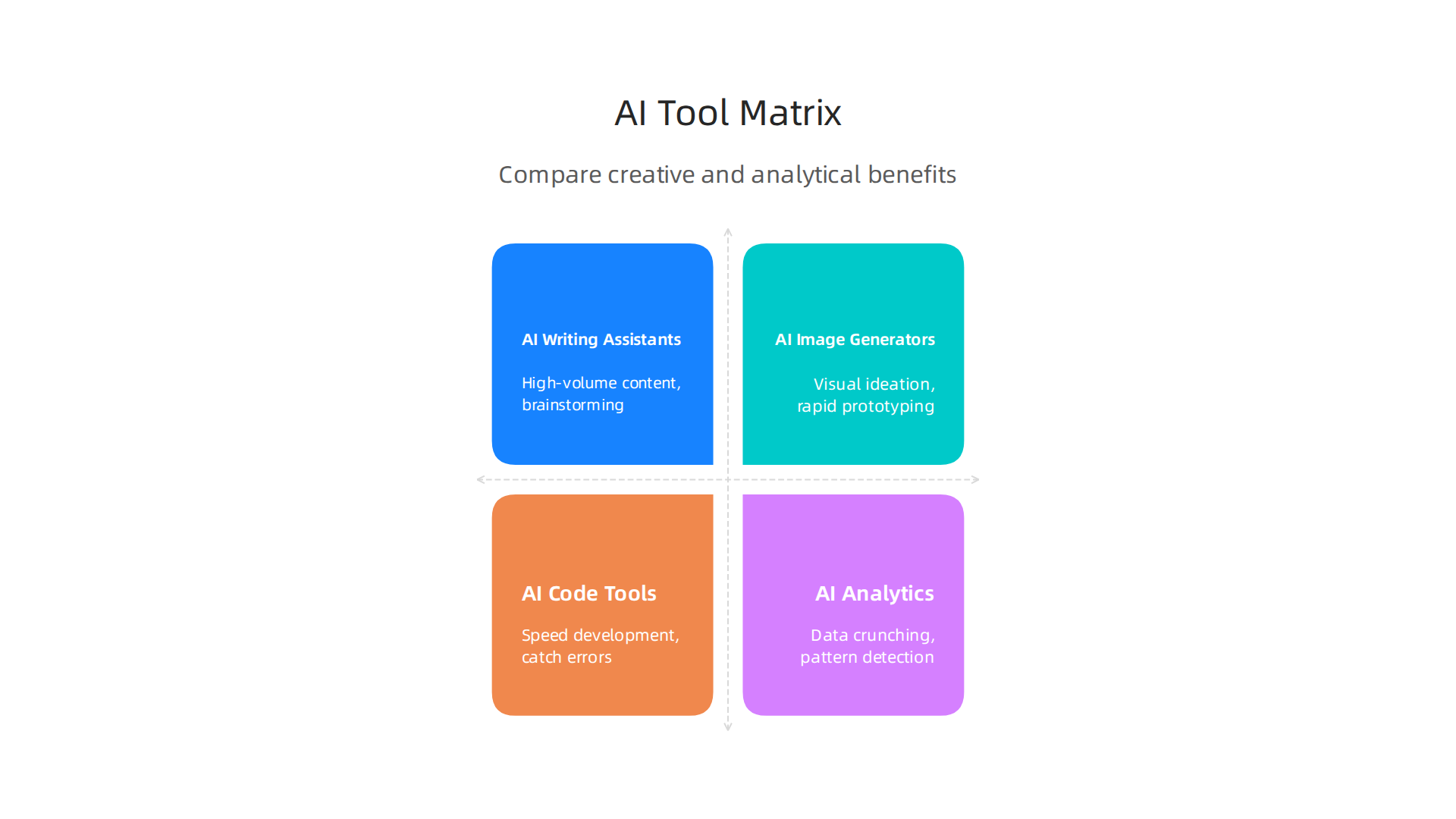
    Here is a decision matrix that works. It compares tool categories based on what matters most for creative and analytical work.

    An infographic summarizing different AI tool categories and their primary benefits for creative and analytical tasks.

    Use it as your cheat sheet.

    Tool Category Best For Output Quality Customization Data Privacy Learning Curve Integration Ease Cost
    AI Writing Assistants (e.g., draft emails, blog posts, social copy) High-volume content, brainstorming Good for drafts, needs human polish Medium (tone/style tweaks) Varies (check policies) Low High (works with many platforms) Free to $30/mo
    AI Image Generators (e.g., design concepts, product mockups) Visual ideation, rapid prototyping Great for inspiration, less for final assets High (prompts, style controls) Medium (some train on your data) Medium Medium (often requires plugins) Free to $50/mo
    AI Code Tools (e.g., snippets, debugging, boilerplate) Speeding up development, reducing errors High for repetitive code, needs review Low (mostly standardized) High (enterprise tools secure code) Low to Medium High (IDE integrations) Free to $40/mo
    AI Analytics & Research (e.g., customer insights, trend spotting) Data crunching, pattern detection Very high for analysis, low for creative Medium (filter and segment) High (often anonymized) Medium Medium (needs data uploads) $20–$200/mo

    Now, how do you use this? Start by asking what kind of creativity you need. For example, if you need to generate twenty headlines, an AI writing assistant does that fast. But that FIU study in 2026 found that how you make the work matters to your reputation (FIU research on reputation and AI). So do not hit "publish" without adding your own judgment.

    Think about the human or ai split this way: AI handles volume and speed. Natural intelligence handles taste, ethics, and nuance. If you find yourself thinking "i hate artificial intelligence" after a bad tool experience, it is often because the tool was applied to the wrong task. This framework helps you avoid that frustration.

    Before you pick any tool, run it through these five criteria:

    1. Output quality – Does it meet your standard, or does it produce generic results?
    2. Customization – Can you shape it to your brand voice or project needs?
    3. Data privacy – Does it keep your information safe? The Stanford 2026 AI Index showed many tools still lag on transparency (Stanford HAI AI Index 2026).
    4. Learning curve – Will you and your team actually use it beyond the first week?
    5. Integration ease – Does it plug into your existing workflow (e.g., Slack, Adobe, VS Code)?

    The OECD research on generative AI confirmed that productivity gains come from deliberate human-machine collaboration, not just buying the latest tool (OECD on AI productivity). You design the process. The tool executes part of it.

    If you want a shortcut to finding tools that professionals actually trust, check out our curated list of 10 top AI websites professionals trust for real news and tools. It will save you hours of searching.

    And because the AI landscape shifts so fast, you need a daily filter. Get Free Updates from The Deep View Newsletter. It cuts through the noise so you can focus on the tools and strategies that actually work.

    Overcoming Implementation Hurdles: Budget, Skills, and ROI

    So you have a framework for picking the right tools. But here is where many people get stuck. You are ready to move forward, but real-world roadblocks show up. Budget is tight. Your team does not have deep AI skills. And your boss wants to see proof that the investment pays off.

    A team actively collaborating, symbolizing problem-solving and strategic planning to overcome AI implementation hurdles.

    You are not alone. In 2026, small businesses report struggling with technology as they try to scale their AI efforts (BizTech Magazine). The same challenges show up in departments inside big companies too.

    Let me walk you through three common hurdles and how to get past them.

    Hurdle 1: Limited Budget

    You do not need a huge budget to start. Many powerful AI tools offer free tiers or low-cost plans. The key is to start small. Pick one workflow that eats up time and test a free tool there.

    For example, if your team spends hours writing social media captions, try a free AI writing assistant. See if it saves time before you pay for a subscription. A 2026 report from the U.S. Chamber of Commerce found that 57% of small businesses believe AI tools help them save time and reduce costs (U.S. Chamber of Commerce). Start with the free options and level up only when you see real value.

    Hurdle 2: Lack of AI Literacy

    Almost everyone has tried ChatGPT by now. But casual use is not the same as knowing how to apply AI strategically. A 2026 study on AI adoption challenges found that insufficient skills and expertise remain a top barrier (Naviant).

    The fix is simple: designate an internal champion. Pick one person on your team who is curious about AI. Give them time to learn and experiment. They can then train others. This approach costs nothing but builds real skills over time.

    Hurdle 3: Measuring ROI

    How do you prove that a $30 per month AI tool is worth it? Track one thing at first. Maybe it is time saved on a repetitive task. Maybe it is more content published per week. A JP Morgan Chase study showed that the diversification of AI tools and decreasing costs have enabled small business adoption (JP Morgan Chase Institute). You just need one clear win to build confidence.

    Start with a pilot project that lasts 30 days. Measure before and after. If you see a clear improvement, expand slowly.

    If you want a shortcut to finding tools that professionals actually trust, check out our curated list of 10 top AI websites professionals trust for real news and tools. It will save you hours of searching.

    And because the AI landscape shifts so fast, you need a daily filter. Get Free Updates from The Deep View Newsletter. It cuts through the noise so you can focus on the tools and strategies that actually work.

    The Road Ahead: Workflow and Collaboration Trends for 2026

    You have tackled the budget. You have built some skills. You have even measured your first win. So what comes next? The way we work with AI is changing fast, and 2026 is the year things get real. Let me walk you through the biggest shifts in workflow and collaboration you will see in the next 12 to 24 months.

    Rise of AI Agents in Daily Work

    By 2026, up to 40% of enterprise applications could include task-specific AI agents (Gleecus). These are not simple chatbots. They can handle multi-step processes like drafting emails, scheduling meetings, and even analyzing data. You will start to see these agents working alongside your team, not just sitting in a chat window.

    But here is the catch. A 2026 workforce report from Gloat found that 95% of AI pilots fail (Gloat).

    Screenshot of the Gloat homepage, a platform for talent marketplace and workforce agility.

    Why? Because teams throw AI at problems without redesigning workflows. The winning approach is to start with clear tasks and let the agent handle the repetitive parts while humans keep the strategic decisions.

    New Roles Are Emerging

    You have probably heard titles like prompt engineer before. But in 2026, we are seeing more specialized roles like AI orchestrator and prompt strategist. Skills in roles that use AI are evolving 66% faster than in less exposed positions (Glocomms). That means the people who learn to direct AI effectively will earn more and have more job security.

    An AI orchestrator does not write code. They design how humans and AI work together.

    A leader facilitating a discussion, symbolizing the emerging role of an 'AI orchestrator' in human-AI workflows.

    A prompt strategist knows how to get good outputs from models, avoiding the generic junk people call "ai slop." These roles keep the human brain in charge while letting the machine do the heavy lifting.

    Keeping Human Oversight Front and Center

    Some people say "i hate artificial intelligence" because they have seen bad results: wrong answers, tone deaf content, or boring copy. That frustration comes from a lack of human oversight. The best human AI collaboration keeps a person in the loop. You should always review AI outputs before they go public. Think of AI as a junior assistant, not a final decision maker.

    The goal is to strengthen natural intelligence, not replace it. Tools like AI overview can help you quickly scan data, but your judgment decides what matters. That balance is what separates successful teams from failed pilots.

    How to Stay Ahead

    The fastest way to keep up with these shifts is to read and learn every day. Instead of hunting through scattered news, rely on one trusted source. Our guide to 10 top AI websites professionals trust for real news and tools gives you a shortcut to the best resources. Bookmark it and check back often.

    And if you want a daily filter that cuts through the hype, Get Free Updates from The Deep View Newsletter. It lands in your inbox with one clear takeaway each day. No fluff, just practical insights on the human or AI question that matters for your business.

    The next two years will change how you collaborate with machines. Keep your team curious, keep humans in charge, and you will build workflows that actually work.

    Summary

    This article examines the