
Why this matters now: framing the debate about jobs and AI
Are you worried about what jobs will AI replace? It’s a question many people are asking in 2026.

This isn’t just a distant worry; it’s a very real topic happening right now. Everyone wants to know which jobs might be most at risk and, just as important, which jobs will simply change thanks to new technology.
The truth is, AI is reshaping the world of work very quickly. This change is driven by several big things happening all at once. For one, technology itself is getting better at a super fast pace. Things that seemed like science fiction a few years ago are now everyday tools. Businesses are also always looking for ways to do things smarter and faster. They want to be more efficient, and AI offers many ways to do just that.
Another big reason for this shift is how easy AI tools have become. You don’t need to be an AI scientist to use many of them anymore. Simple AI programs can help with writing, planning, and even making images. This makes it easier for companies of all sizes to start using AI. In fact, many reports show that AI won’t just take jobs away; it will create new ones too. The World Economic Forum, for example, expects AI and automation to create many new roles by 2030, even while some older jobs change or fade out, leading to a net gain of millions of jobs worldwide World Economic Forum Future of Jobs Report 2026: AI Will Create 78 Million Net New Jobs by 2030. This means we need to understand both sides of the story.
So, while some might worry that AI is bad or only causes problems, it’s more about how we adapt. This guide will help you understand the changes and how you can prepare for them.
Get clear daily AI updates from The AI Newsletter Worth Reading.
Overview: Which jobs are most at risk from AI and why
So, if AI is changing how we work, how do we know what jobs will AI replace or change the most? It is not always about replacing a whole job. Instead, it is more about how AI can do certain tasks within a job. Think about it this way: a job is often made up of many small tasks. AI might be very good at some tasks but not others.
This way of looking at things is called a "task-based framework." Experts now say that breaking down jobs into their smaller parts gives us a much better idea of how AI will affect them. For example, a 2026 study showed how looking at nearly 30,000 tasks across different jobs helps understand AI’s impact better Research Brief – assessed at the 6-digit occupational level covering nearly 30,000 tasks. Many jobs will not disappear completely. Instead, they will change as AI takes over some tasks, letting people focus on other, more human-centered work. Actually, some reports suggest that AI will reshape more jobs than it fully replaces AI Will Reshape More Jobs Than It Replaces | BCG.
So, what kinds of tasks are most at risk from AI? Generally, AI is really good at "routine cognitive tasks" and "repetitive data processing."
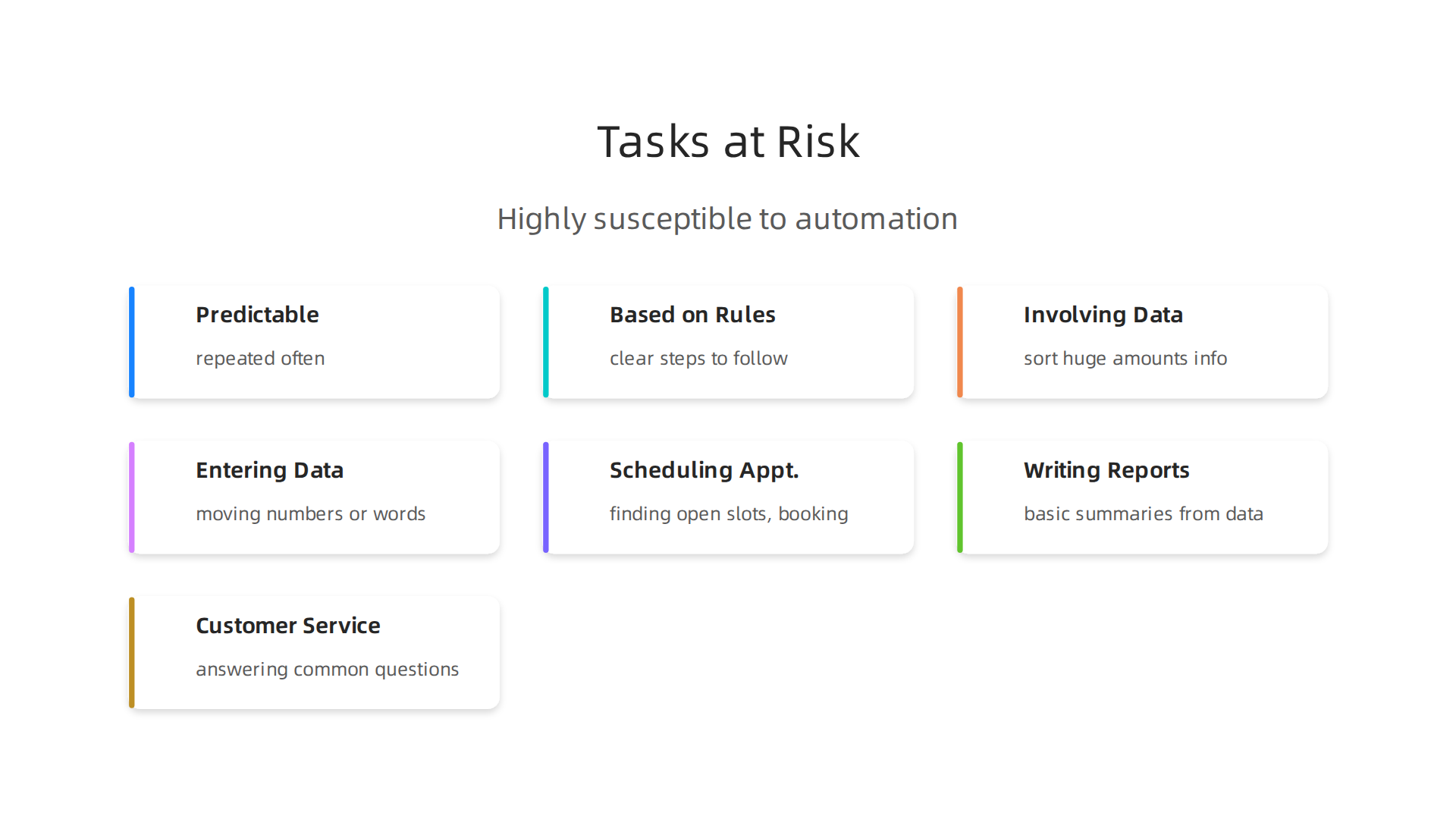
This means tasks that are:
- Predictable and repeated often: If you do the same thing over and over, AI can probably learn it.
- Based on rules: If there are clear steps or rules to follow, AI can handle it.
- Involving lots of data: AI can quickly sort through huge amounts of information.
Think of jobs that include tasks like:
- Entering data: Moving numbers or words from one place to another.
- Scheduling appointments: Finding open slots and booking times.
- Writing simple reports: Creating basic summaries from data.
- Customer service for common questions: Answering easy questions that pop up often.
Jobs that have many of these kinds of tasks are more likely to see big changes. Roles like data entry clerks, administrative assistants, or some customer service agents might find a large part of their daily work taken over by AI tools. This means they will need to learn new skills or adapt to new ways of working. Understanding this task-based view is key to preparing for the future. Learning how to choose AI ready business computers and use AI effectively can give you a big advantage, even in jobs that are changing quickly.
Why some roles are resilient: tasks, skills and context that protect jobs
While some tasks are easy for AI to take over, other kinds of work are much safer. These jobs often have tasks that need human qualities.

When we think about what jobs will AI replace, it is important to also think about the jobs AI finds hard to do.
Here are the main things that make a job strong against AI:
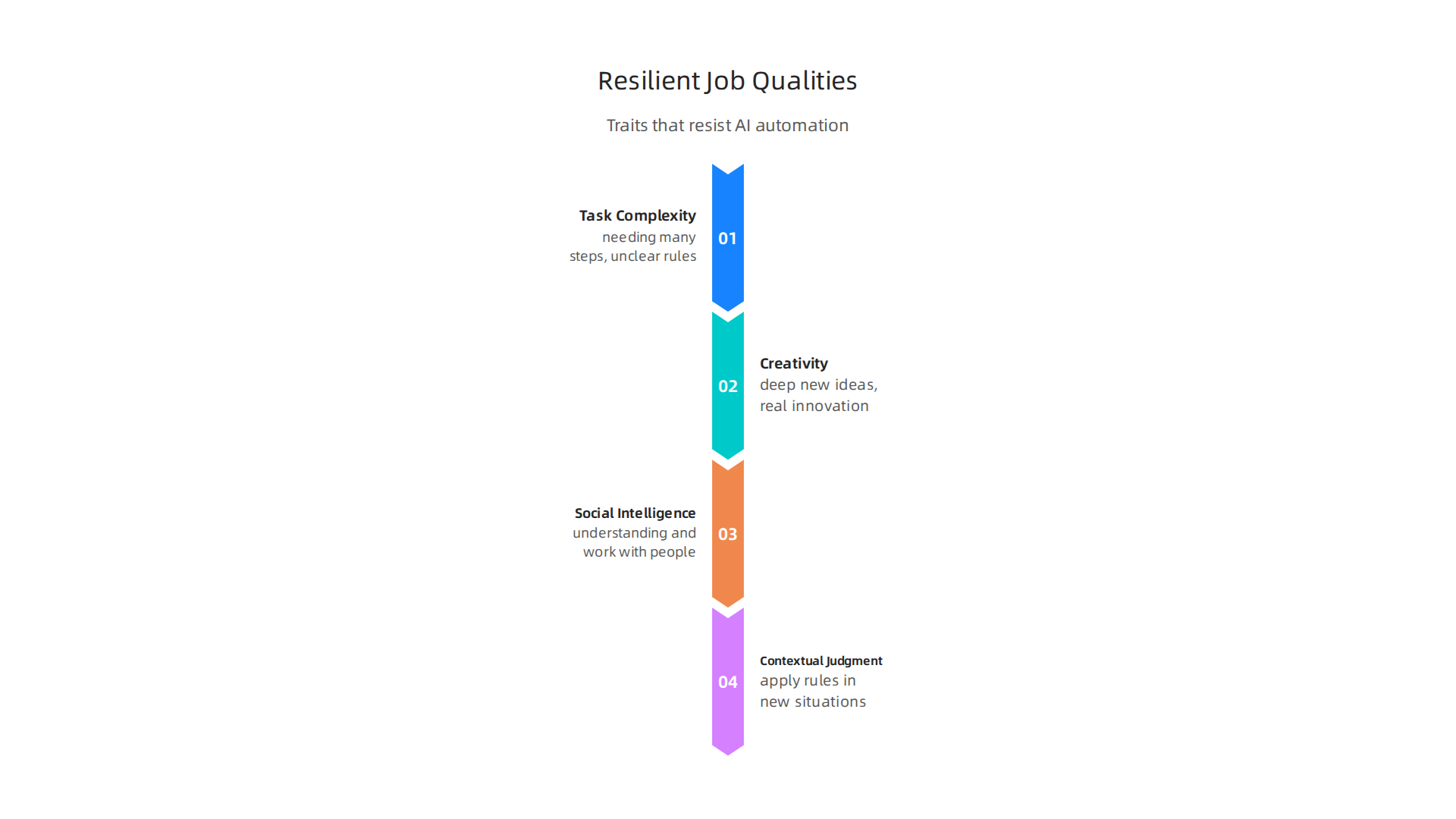
Task Complexity
AI is good at simple, repeated tasks. But when tasks become very complex, needing many steps or unclear rules, AI struggles. Imagine a job where you must figure out new problems all the time. An AI system might break down a job into many smaller steps to assess its risk of automation. This helps show which parts are simple and which are very hard for AI to do AHP-BASED FRAMEWORK FOR ASSESSING PROFESSIONAL ….
Creativity
AI can create some things, like simple reports or basic images. But deep, new ideas, real innovation, and making something truly original still need people. Think of artists, writers who tell complex stories, or an AI scientist coming up with new theories. These jobs need creative thinking that AI cannot truly copy. Many experts believe human creativity will always be needed, working alongside AI tools. To learn more, read about Human or AI Creativity: What the Data Says About Collaboration in 2026.
Social Intelligence
Many jobs need you to understand and work with other people. This is called social intelligence. It means things like:
- Empathy: Feeling what others feel.
- Negotiation: Working together to find a solution.
- Teaching and guiding: Helping others learn and grow.
- Complex communication: Reading body language or understanding unspoken feelings.
Jobs that rely on these skills, like therapists, teachers, nurses, or managers, are much harder for AI to take over. Studies show that jobs needing social skills and creative skills are less likely to be automated Automation risk is negatively correlated with the utilization of social skills… and creative skills.
Contextual Judgment
This is about knowing when and how to apply rules, especially in new or unexpected situations. AI follows rules. Humans can break rules when it makes sense, or use their gut feeling. A doctor diagnosing a rare illness, a lawyer handling a tricky case, or a leader making big decisions for a company all use contextual judgment. These jobs need deep understanding of many small details, past experiences, and future possibilities. Such skills are important job attributes that predict how likely a job is to be automated Automation and the changing nature of work.
How Companies Help
It’s not just about your skills. How a company sets up jobs also matters. By redesigning jobs, businesses can reduce the risk of automation. This means letting AI do the easy parts, so people can focus on the complex, creative, social, and judgment-based tasks. This way, AI becomes a helpful tool that makes people better at their jobs, instead of taking them away. Learning to use smart AI for business can help protect jobs and boost growth.
Staying updated on how AI changes the workplace can feel like a lot of work. But understanding these trends helps you prepare for the future.
Get clear daily AI updates from The AI Newsletter Worth Reading.
While it’s true that AI changes how we work and even reduces some jobs, it’s also a powerful engine for creating totally new jobs and reshaping existing ones. Many people wonder, "what jobs will AI replace?" but fewer ask, "what jobs will AI create?" Actually, the future of work looks like a mix of both.
Experts in 2026 believe that AI will create many more jobs than it takes away. For example, the World Economic Forum predicts a net gain of 78 million new roles by 2030, even after some jobs are displaced World Economic Forum Future of Jobs Report 2026. This means new kinds of jobs are popping up, and existing ones are changing to include AI tools.
New Kinds of Jobs Because of AI
AI is not just about robots doing human tasks. It needs people to build, manage, and guide it. Here are some new jobs AI is creating:
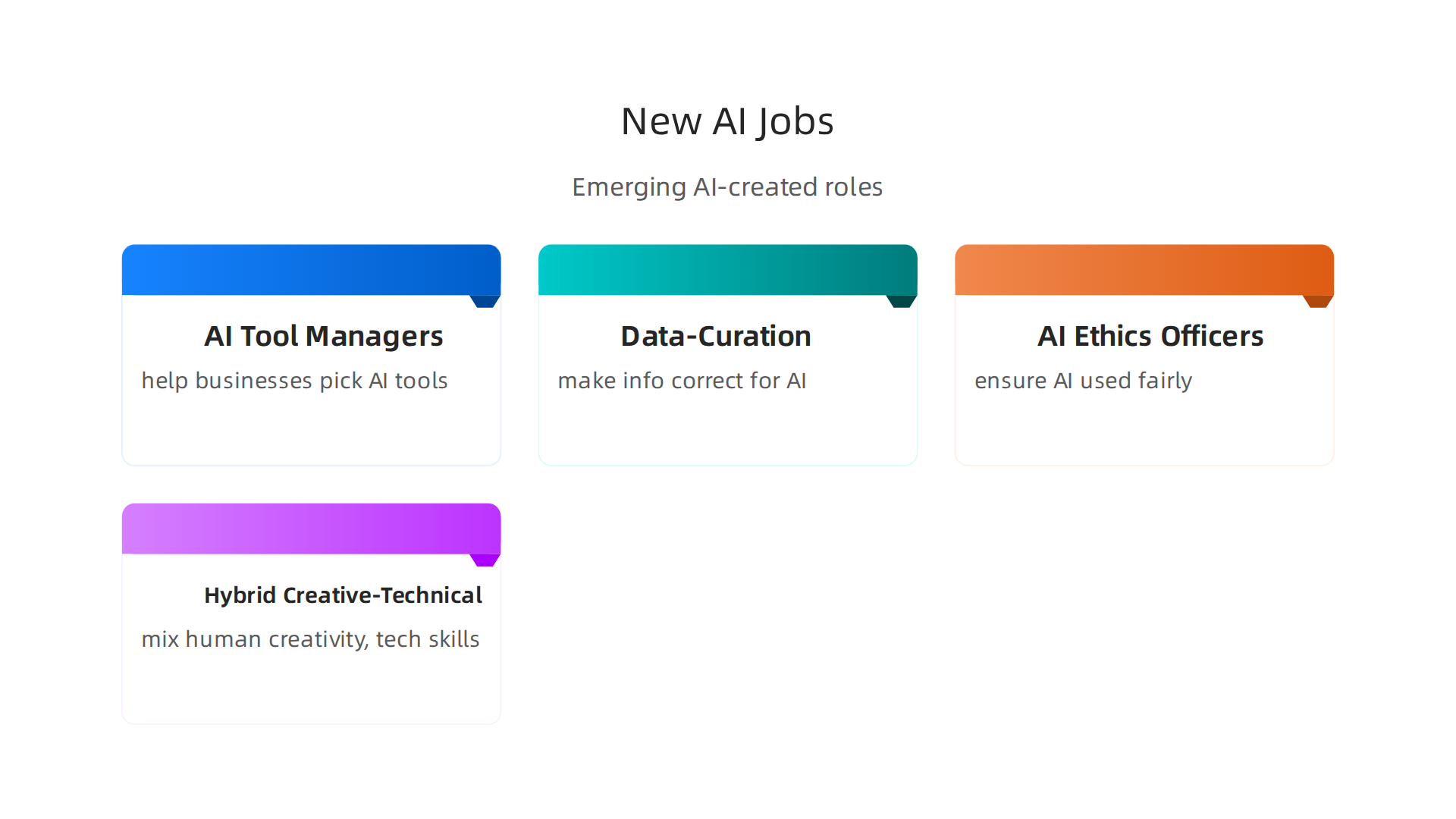
- AI Tool Managers: These are people who help businesses pick the right AI tools and teach everyone how to use them. They make sure the tools work well and help the company grow. Learning how to choose AI for business tools is a skill in demand How to Choose AI for Business Tools That Deliver Real Results in 2026.
- Data-Curation Specialists: AI needs good, clean information to work properly. These specialists sort through large amounts of data, making sure it’s correct and ready for AI to use. This job is all about making sure AI gets the best input.
- AI Ethics Officers: As AI gets smarter, we need people to make sure it’s used fairly and without harm. These officers create rules and watch how AI is used to keep things right. They ensure that businesses follow ethical AI guidelines Ethical AI Guidelines: HR’s Blueprint for Responsible Workplace Automation.
- Hybrid Creative-Technical Roles: These jobs mix human creativity with technical skills. Think of artists who use AI to help them draw, or writers who use AI to brainstorm ideas. They use AI as a helper to do amazing things that only humans can truly imagine.
How Old Jobs Change with AI
It’s not just new jobs. Many existing jobs are changing. AI helps with the simpler parts, letting people focus on the complex and human-centered tasks. This is called job transformation. For instance, a marketing specialist might use AI to write first drafts of ads, then spend more time perfecting the message and thinking about customer feelings. This way, AI reshapes more jobs than it replaces AI Will Reshape More Jobs Than It Replaces.
Workers often need to learn new skills, or "reskill," to fit into these changed jobs. Companies are helping with this by offering training. This means people can keep their jobs but take on new and exciting tasks that use AI as a powerful assistant.
To truly stay ahead and understand these fast changes, you need reliable information.
Get clear daily AI updates from The AI Newsletter Worth Reading.
The world of work is changing fast with AI. Businesses need to be smart about how they get ready for these changes.

It is not just about wondering what jobs will AI replace. It is also about helping people learn new skills and finding new ways for them to work with AI. This is called workforce planning, and it helps everyone grow.
Practical Steps for Workforce Planning
To get ready, companies should take a few important steps:
- Task Audits: First, businesses need to look closely at all the tasks their employees do. They figure out which tasks can be done by AI, which ones can be helped by AI, and which ones need a human touch. This helps them understand where AI can make work easier and where people are truly needed. One way to do this is by using special frameworks to assess tasks AHP-BASED FRAMEWORK FOR ASSESSING PROFESSIONAL ….
- Capability Mapping: After a task audit, companies see what skills their employees have now and what skills they will need for future jobs with AI. This is like drawing a map of everyone’s abilities. If a company finds a gap in skills, they know they need to offer training. This helps them build a strong team for the future.
- Priority Reskilling: Giving employees new skills is super important. Many jobs will change, not disappear. So, workers need to learn how to use AI tools, understand data, and focus on human skills like creativity and problem-solving. Businesses should offer training programs to help staff learn these new skills. This kind of reskilling is key for adapting to AI Reskilling Towards AI: Why It Matters and How to Start | Selectic. Studies show that AI-powered training can help close skill gaps Evaluating the Impact of AI-Powered Reskilling Programs …. Some people might worry that AI is bad for jobs, but with reskilling, it opens up new chances.
Smart Ways for Smaller Businesses to Use AI
Smaller businesses might worry about the cost of AI or how to change their teams. But there are good ways for them to start:
- Start Small with Pilot Projects: They can pick one small area, like customer service or marketing, to try out an AI tool. This helps them learn what works without a big risk. You can learn more about picking the right tools in our smart AI for business guide.
- Focus on Augmentation, Not Replacement: Instead of thinking about what jobs will AI replace, think about how AI can help current employees do their jobs better and faster. This means protecting jobs while making them more efficient.
- Look for Affordable AI Solutions: Many AI tools are made for smaller businesses and are not too expensive. Looking into these can save money while still getting the benefits of AI. It is wise to evaluate AI companies to unlock business growth carefully.
- Training Partnerships: Small businesses can work with local colleges or online platforms to offer training. This way, they do not have to build their own training programs from scratch.
By taking these steps, businesses of all sizes can get ready for AI and help their employees thrive in 2026 and beyond. This approach focuses on growing together with technology, rather than fearing it. The overall impact of AI on the workplace is often more about change than job loss The impact of AI on the workplace.
Even as businesses get ready for how AI changes work, it is important to think about the rules and fair play. This is not just about what jobs will AI replace, but also about making sure AI is used in a good way.

We need to look at the ethical, legal, and policy side of things so that AI helps everyone fairly.
Risks to Fairness and Due Process
When companies use AI for hiring or checking how well people do their jobs, there are some big worries.
- Bias and Unfairness: Sometimes, AI systems can learn bad habits from old data. If the data used to train an AI has unfair ideas built into it, the AI might make unfair decisions too. This means certain groups of people could be treated badly without anyone meaning to. It is a real risk for worker inclusion and exclusion when AI is used in the job market, as research shows Artificial Intelligence in the Labor Market: Evidence on Worker …. For example, an AI might unfairly pick people for interviews or promotions. To avoid this, businesses need to be very careful with how they design and check their AI tools.
- Lack of Due Process: Due process means everyone gets fair treatment and can question decisions made about them. If an AI makes a decision about someone’s job or future, it can be hard to understand why it made that choice. People need to know how AI systems work and have a way to challenge a decision if they think it is wrong. It is important to have clear rules for how AI tools are managed at work to ensure fair impacts Algorithmic Management: Assessing the Impacts of AI at Work.
Rules and Good Practices for AI in the Workplace
To make sure AI helps and does not hurt, we need good rules. Both companies and governments have a role to play.
- Company Guidelines: Businesses should create their own clear rules for using AI. These rules should focus on fairness, being open about how AI is used, and protecting people’s privacy. Many groups are creating guidelines for ethical AI, like a new framework that gives HR teams a plan for using AI responsibly Ethical AI Guidelines: HR’s Blueprint for Responsible Workplace …. This helps make sure AI is used ethically in hiring, training, and managing workers.
- Government Policies: Governments are also working on laws to guide AI use. These laws can help make sure that companies follow fair practices and protect workers’ rights. For instance, laws are being made to cover human rights, data protection, and how companies are held responsible for their AI actions Algorithmic Governance at Work: A Legal-Sociological and …. In 2026, many states and cities in the US already have their own AI laws, showing how important this topic is What the March 20 ‘National AI Legislative Framework …. These rules help create a future where AI works for everyone.
Getting ready for AI means more than just finding new tools. It means thinking deeply about how these tools affect people and making sure they are used in a way that is fair, open, and helpful. You can learn more about how to navigate these challenges by exploring how to manage hidden AI risks and opportunities in our guide on Stealth AI: A Business Guide to Hidden AI Risks, Opportunities, and Management in 2026.
Want to stay informed on how AI is shaping the world of work and beyond?
The AI Newsletter Worth Reading
AI implementation case studies: what worked, what didn’t
After thinking about the important rules for AI, it is helpful to look at real-life examples. How have other companies used AI? What did they do right, and what went wrong? Learning from these stories can help you use AI better in your own business.
Many businesses are using AI, with a big jump in adoption recently; about 72% of companies now use AI solutions, which is much more than before How AI is Transforming the Workplace: Real Results from …. The key is not just to use AI, but to use it wisely.
Stories of Success with AI
When AI works well, it often means people and technology work together. For example, some companies found that instead of worrying about what jobs will AI replace, they could use AI to make existing jobs better.
- Manufacturing: In factories, AI has helped with tasks like checking product quality or keeping machines running smoothly. By having AI watch for problems, workers can focus on more important jobs, like fixing complex issues or making new plans. This shift often means that jobs are changed, not taken away, as shown in studies about AI’s impact on the workplace The impact of AI on the workplace. Workers who learned new skills to work with AI saw their roles grow.
- Finance: Banks and financial companies have used AI to spot fraud faster or help customers with common questions. This frees up human staff to help with more complicated customer needs. When AI tools are chosen carefully and fit into the company’s daily work, they can really boost how much work gets done Proving Productivity Uplift: Linking AI Tool Adoption to …. This shows that helping employees learn new skills to work with AI is a big part of making AI work well AI in Action: Beyond Experimentation to Transform Industry.
Where AI Implementation Can Go Wrong
Sometimes, AI implementation does not go as planned. It is not because "ai is bad," but often because of how it is brought into the company.
- Poor Planning: If a company buys an AI tool without a clear idea of how it will help, or if they do not train their team to use it, the project might fail. For example, if an AI scientist helps pick a tool, but the everyday users are not involved, it can lead to problems. It is important to know what you want AI to do before you start.
- Not Supporting People: A common issue is when companies do not prepare their workers for AI changes. People might feel worried that AI will replace them, or they might not know how to use the new tools. This can slow things down and make employees unhappy. Leadership is actually the biggest hurdle to successful AI use, not the employees themselves AI in the workplace: A report for 2025. Helping people get new skills is key for success Technology and Innovation Report 2025 – Chapter II … – UNCTAD.
Key Lessons for Smart AI Use
From these stories, we can see clear ways to make AI work for you:
- Line up AI with your business goals: Make sure the AI tool helps with a real problem or makes a process much better. Do not just use AI because it is new.
- Manage change well: Talk to your employees about AI. Train them on how to use new tools and show them how AI can make their jobs easier, not harder. This often means designing new ways for humans and AI to work together Proof over Promise: Insights on Real-World AI Adoption from ….
- Measure what happens: Keep track of how AI changes things. Is it saving time? Making customers happier? Knowing the real impact helps you make better choices for the future.
Choosing the right AI tools for your business and making sure they deliver results is crucial. If you are looking for guidance on how to pick the best AI tools, you might find our guide helpful: How to choose AI for business tools that deliver real results. It covers how to make smart decisions when adding AI to your company.
Now that we have seen how AI can succeed or fail, it is time to put those lessons into practice. Here is a simple checklist for leaders to help bring AI into their business the right way.
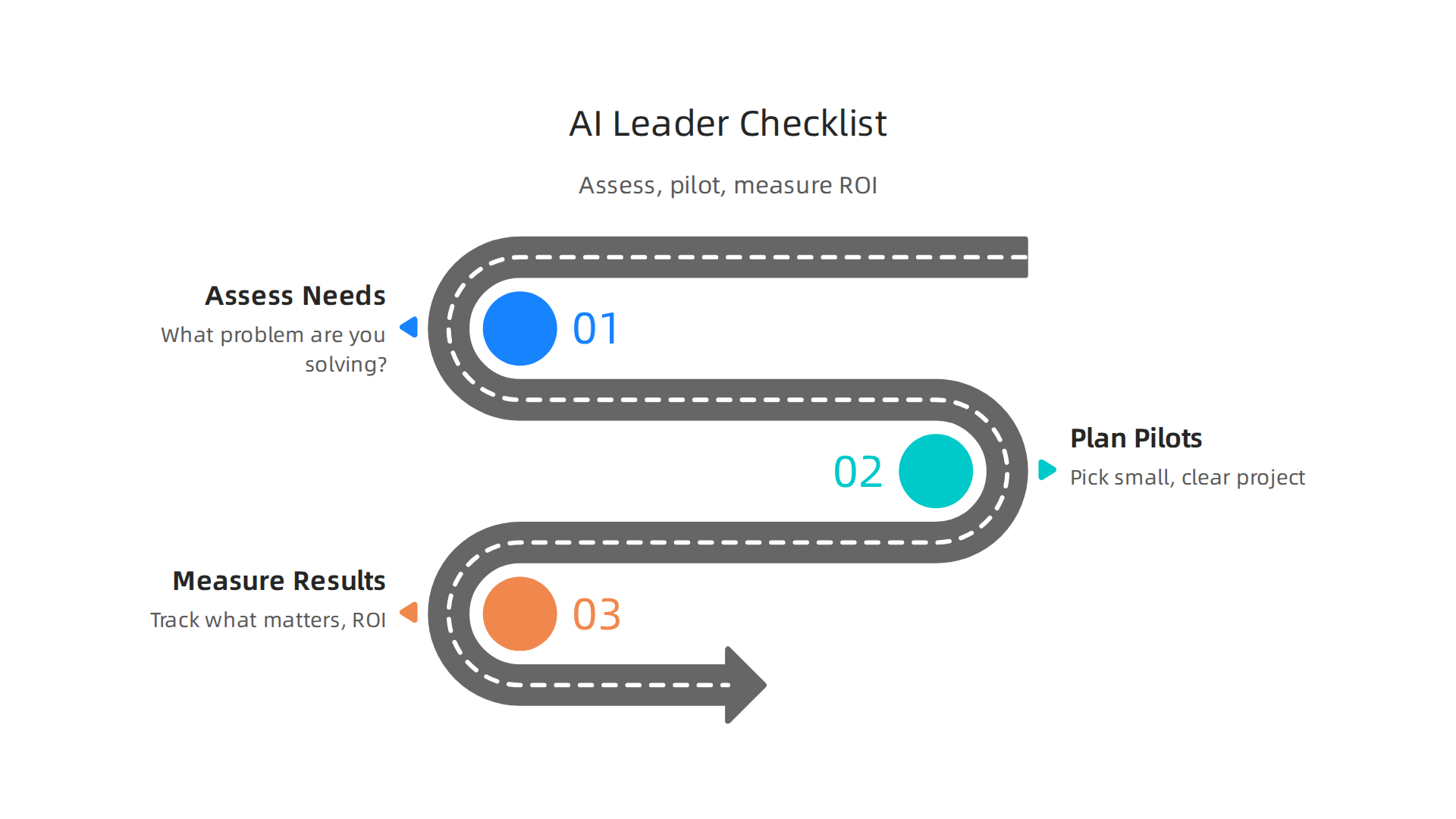
This helps you understand risks, plan small tests, and see if AI is truly helping.
Checklist for Smart AI Use
Using AI well means thinking ahead. It means looking at your business, planning carefully, and checking results.
1. Assess Your Needs and Readiness
Before you even think about "what jobs will AI replace" or buying new tools, ask these questions:
- What problem are you trying to solve? Do not just get AI because it is new. Make sure it helps with a real business issue, like saving time or making customers happier.
- How ready is your team? Do your employees have the skills to use AI? Will they need training? Knowing this helps you support them. You can use an AI readiness checklist to see where your company stands.
- What data do you have? AI needs good data to work. Make sure your data is organized and ready for AI tools.
2. Plan Small Tests (Pilots)
Starting small is key. A pilot project helps you test AI without big risks.
- Pick a small, clear project: Choose one area where AI could make a big, but simple, difference. For example, using AI to sort customer emails.
- Set clear goals: What will success look like for this pilot? How much time should it save? How will you measure it? Having clear steps for success is part of a good AI strategy.
- Get everyone involved: Make sure the people who will actually use the AI are part of the planning. This helps them feel good about the change and gives useful feedback.
3. Measure Your Results (ROI)
After your pilot, you need to see if the AI is worth it. This is called measuring Return on Investment, or ROI.
- Track what matters: Keep an eye on the numbers. Did the AI save money? Did it make tasks faster? Did employees feel more productive? There are clear steps to measure AI ROI that go beyond just knowing if people use the tool.
- Review and adjust: Look at your results. If things are not going well, find out why. Maybe the tool needs changes, or your team needs more training.
- Understand job changes: While some worry about what jobs will AI replace, it is important to know that AI also creates many new jobs. For example, the World Economic Forum said that by 2030, AI will create 78 million more jobs than it takes away World Economic Forum Future of Jobs Report 2026: AI Will Create 78 Million Net New Jobs by 2030. It is about jobs changing, not always disappearing. You might need someone with deep technical skills, like an AI scientist, to help guide these changes.
By following this checklist, leaders can make smart choices about AI. They can lead their teams to use AI in ways that help the business grow and make work better for everyone.
To stay current with the latest AI trends and how they impact business, consider getting The AI Newsletter Worth Reading. It gives clear daily AI updates.
Summary
This article explains how AI is reshaping work by focusing on tasks rather than whole job titles, showing which tasks are most likely to be automated and which roles remain resilient. It covers the main risk factors—routine, rule-based, data-heavy tasks—and contrasts them with jobs that require creativity, social intelligence, complex judgment, or contextual knowledge. The guide outlines how AI also creates new roles (for example, AI tool managers, data curation specialists, and ethics officers) and why reskilling and capability mapping are essential. For employers it provides practical workforce-planning steps—task audits, pilots, training priorities, and ROI measurement—and explains how small businesses can adopt AI affordably. The article warns about fairness, bias, and due-process risks and recommends company guidelines and policy awareness to protect workers. Real-world case studies show common success factors (alignment with goals, change management, measurement) and pitfalls (poor planning, lack of support). After reading, you will understand where risk lies, how to plan for change, and the concrete steps to implement AI responsibly in your organization.