Why AI Racism Matters Now: A Practical Primer for Decision-Makers
In 2026, artificial intelligence (AI) is everywhere. It helps us do many things, from choosing what to watch online to deciding who gets a loan or a job. But what happens if the AI learns bad habits from the data it uses? This is where we run into a big problem called AI racism. It’s when AI systems unfairly treat people based on their race, often without anyone meaning for it to happen.
You might wonder, "how long has AI been around?" While the idea of AI has been around for many years, the tools we use today have grown very quickly, especially since 2023. As AI development moves forward, we have to be careful about how these powerful tools are made and used. If an AI brain is fed information that has hidden biases, it will learn those biases and act on them. This can lead to unfair results for real people.
What is AI Racism?
Simply put, AI racism happens when an AI system shows unfair bias against certain racial groups. It’s not about the AI itself being "racist" like a person. Instead, it’s about the data it learns from, the rules it follows, or how people use it. This bias can creep into AI systems in many ways. For example, if an AI is trained mostly on pictures of one race, it might not be as good at recognizing faces of other races. This isn’t just a small flaw; it can cause big problems. Experts have been working on ways to check for and fix these biases, looking at things like fairness metrics for different groups of people Racial/Ethnic Bias in AI Systems: A PRISMA Systematic….
Where Does AI Racism Show Up?
AI racism can appear in many parts of our lives. Here are a few examples:
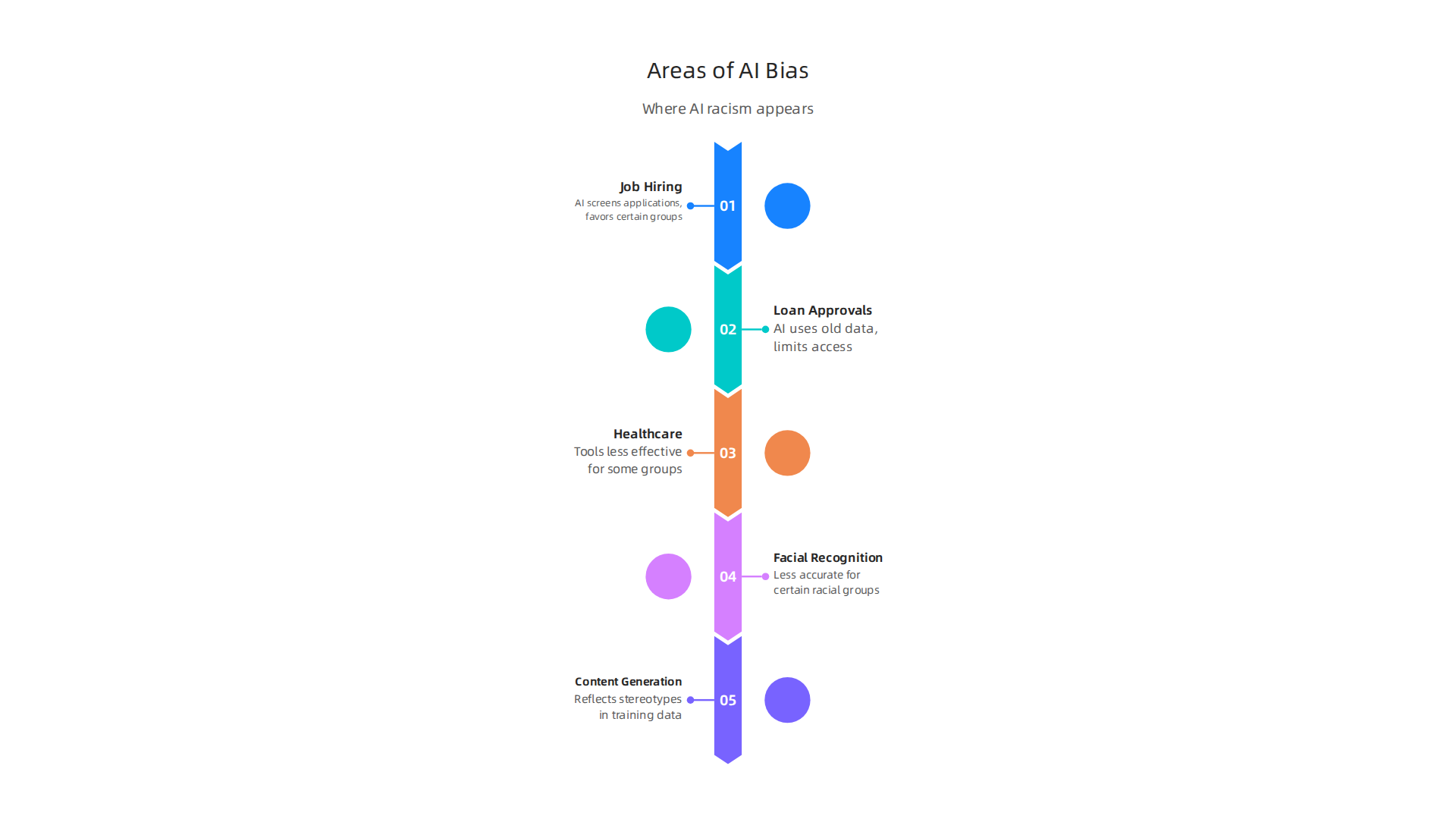
- Job Hiring: An AI that screens job applications might learn to favor names or experiences linked to one racial group, accidentally shutting out good candidates from others.
- Loan Approvals: AI systems that decide who gets a bank loan could use old data that shows loans were less often given to certain neighborhoods, making it harder for people from those areas to get loans even today.
- Healthcare: Medical AI tools might not work as well for certain racial groups if they were mostly tested on data from another group. This could mean a delay in getting the right care.
- Facial Recognition: Police often use AI to identify people. If this technology is less accurate for certain racial groups, it can lead to wrongful arrests or unfair stops. People sometimes hold an AI protest when they feel these systems are being used unfairly.
- Content Generation: AI that creates text or images can also show bias, reflecting stereotypes if its training data contains them.
Companies and governments are starting to develop guides and rules to help make AI fair. These are often called AI ethics frameworks AI Ethics Frameworks in 2026: EU AI Act + Tools – Future AGI. They help make sure AI works well for everyone. Tools like AI Fairness 360 are also available to help companies check for unwanted bias in their AI models before they cause harm AI Fairness 360.
Why This Matters for Your Business
For decision-makers, understanding ai racism is not just about doing the right thing. It’s also about protecting your company’s reputation and bottom line.

- Harm to People: First and foremost, biased AI can hurt people. It can limit their chances for jobs, housing, or fair treatment. This is a basic moral issue that no company wants to be part of.
- Bad for Business: When AI systems show bias, it can lead to public complaints, news stories, and even legal action. This can damage your brand, making customers lose trust in your products and services. No business wants to be known for using unfair technology. The cost of fixing a damaged reputation can be huge.
- Limits Innovation: If your AI tools are not fair, they are also not working as well as they could be. They might be missing out on talent, customers, or insights from diverse groups. Building equitable AI systems requires a focus on tools and strategies that help address bias White Paper: Addressing Bias in Artificial Intelligence.
Staying updated on these issues is key. If you want clear daily AI updates to help you navigate this fast-changing world, check out The AI Newsletter Worth Reading.
AI racism is often not planned but creeps into systems during the AI development process. It’s important to know how this happens. Let’s look at the common ways AI systems can go wrong and show unfairness.
How AI Racism Shows Up: Common Failure Modes
When an AI brain is built, bias can sneak in at different steps. Understanding these points helps us prevent problems.
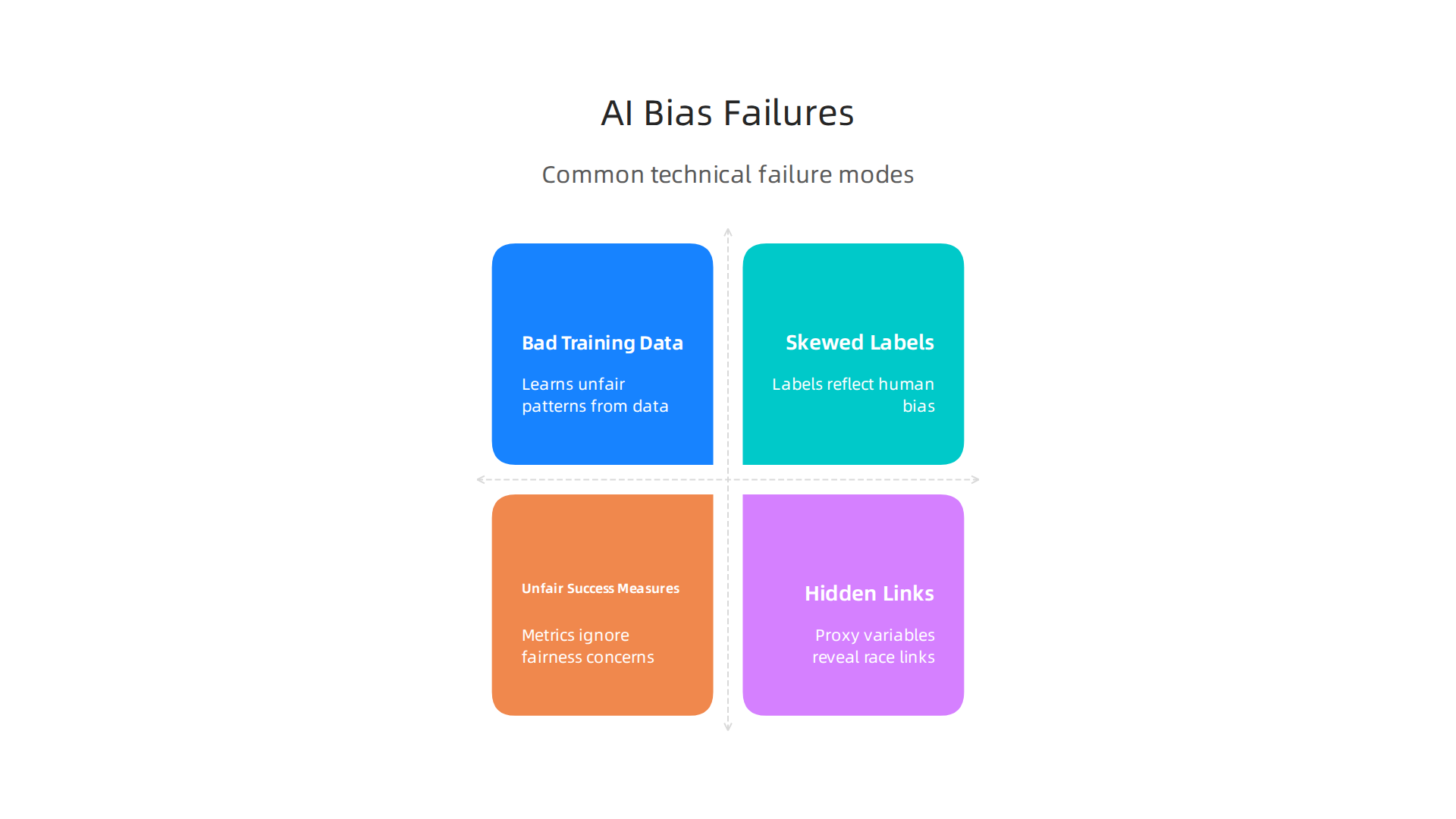
- Bad Training Data: This is the most common reason for AI racism. Imagine an AI learns from books that only show people from one background. That AI will then have trouble understanding or dealing with people from other backgrounds. If the data used to train an AI system has unfair patterns from the real world, the AI will learn and repeat those unfair patterns. Many AI models have been shown to have too many White individuals in their training data, with very few from other groups, leading to bias Bias in AI systems: integrating formal and socio-technical approaches.
- Skewed Labels or Categories: Sometimes, people label the data the AI learns from. If these labels are unfair, the AI will learn that unfairness. For example, if images of certain racial groups are often labeled in a negative way, the AI will link those groups to negative things. This bias can emerge at many points in the machine learning process Fairness at Risk: Where Bias Emerges in Machine Learning.
- Unfair Ways to Measure Success: When we build an AI, we tell it what "success" looks like. If our idea of success doesn’t include fairness for everyone, the AI might achieve its goal while still being unfair to some groups.
- Hidden Links (Proxy Variables): An AI might be told not to use race directly. But it might use other things that are strongly linked to race, like zip codes or names, to guess a person’s race. These "hidden links" are called proxy variables. The AI then treats people unfairly based on these hidden links, even if race itself isn’t directly used.
These technical issues can lead to real problems in many areas of life:
- Job Hiring Tools: AI systems that help choose job candidates might learn from old hiring data that preferred certain groups. This can mean good candidates from other groups are overlooked. The AI might use things like where someone went to school or their hobbies as a "proxy" for race, leading to unfair decisions.
- Justice System (Recidivism): Some AI tools try to predict if someone who has committed a crime will do so again (this is called recidivism). If these tools are trained on historical arrest data that was unfair to certain racial groups, the AI might wrongly predict that people from those groups are more likely to re-offend. This can lead to harsher sentences or less chance for parole, unfairly hurting communities of color.
- Vision and Facial Recognition: As we saw before, if an AI that recognizes faces is mostly trained on pictures of one race, it will be less accurate for others. This can cause big problems for security systems or law enforcement, leading to false alarms or incorrect identifications. This is why it’s important to think about population bias when training AI Artificial intelligence training and population bias.
- Healthcare: Medical AI tools can show bias too. For example, a tool that helps doctors diagnose skin conditions might not work as well for darker skin tones if it was trained mostly on images of lighter skin. Or, an AI used to decide a patient’s risk of disease might be less accurate for certain racial groups, leading to poorer health outcomes. There are real concerns about how AI systems can worsen health differences for different groups of people A Systematic Review on AI-Driven Racial Disparities in Healthcare.
It’s important to remember that AI is only as good as the data and rules it’s given. Learning about when artificial intelligence was made can help us understand its journey and how these issues have grown with its complexity. As AI development continues at a rapid pace in 2026, finding and fixing these kinds of biases is a big challenge for everyone involved in creating and using AI systems. Making good choices about how to choose AI for business tools that deliver real results means choosing tools that are built with fairness in mind.
To truly understand if an AI brain is fair, we need ways to measure fairness. It’s not always simple, because "fair" can mean different things to different people. This is a big part of dealing with ai racism in the modern world.
Ways to Measure if an AI System is Fair
There are a few main ideas about how to measure fairness in AI:
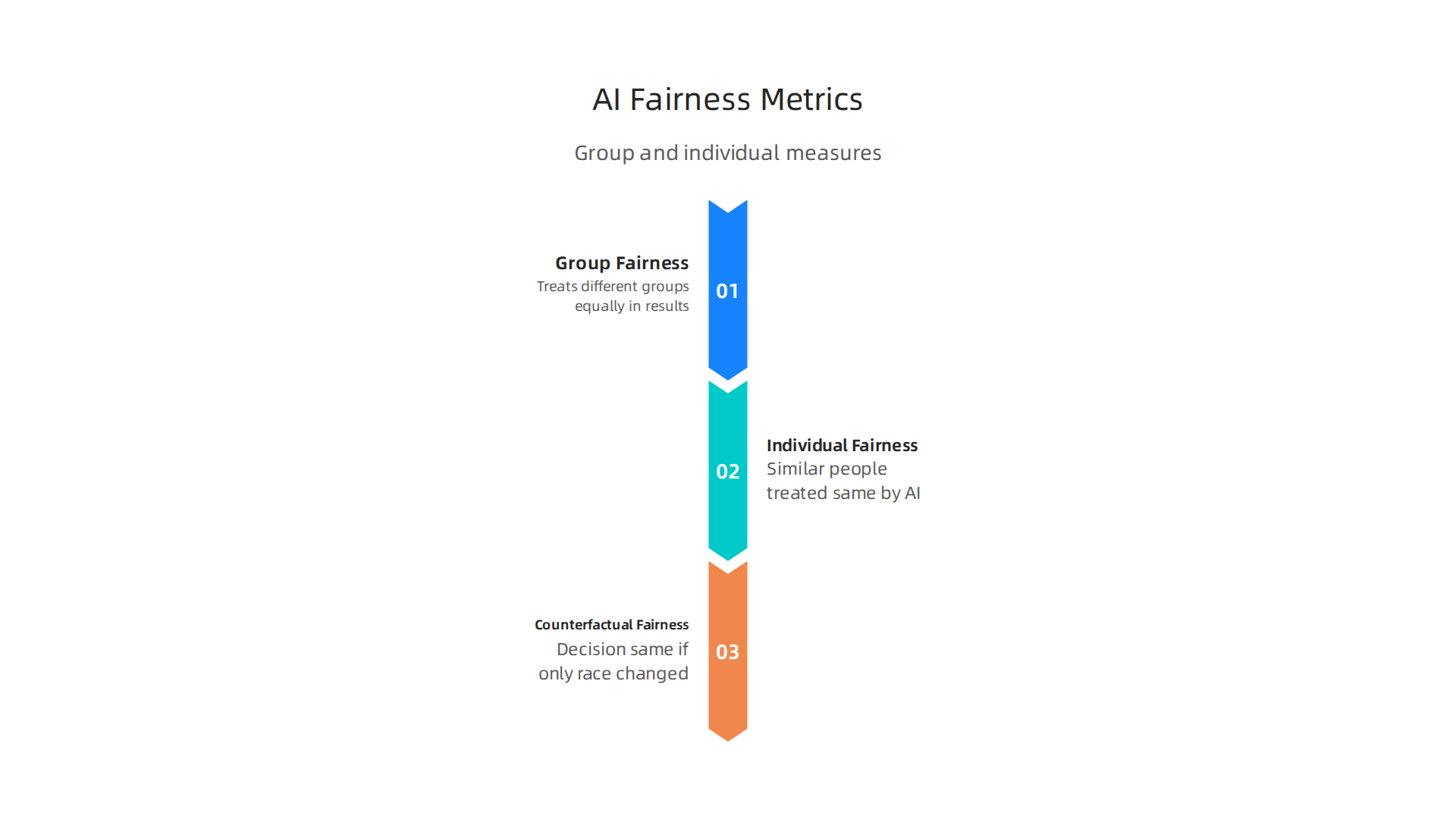
- Group Fairness: This idea looks at whether an AI system treats different groups of people equally in terms of its results. For example, if an AI is deciding who gets a loan, group fairness would mean that people from different racial groups have the same chance of getting approved, or the same rate of errors. Many studies look at these kinds of group differences to spot bias Racial/Ethnic Bias in AI Systems: A PRISMA Systematic ….
- Individual Fairness: This idea says that people who are very similar should be treated the same by the AI, no matter what group they belong to. So, if two people have the exact same credit score and job history, the AI should make the same loan decision for both, even if they are of different races.
- Counterfactual Fairness: This is a bit more complex. It asks: "If we changed only one thing about a person, like their race, but kept everything else the same, would the AI make the same decision?" If the answer is no, then the AI might not be counterfactually fair. This helps find out if the AI is making decisions based on race, even if it’s trying not to.
Problems with the Data We Use to Measure Fairness
Even with these ways to measure fairness, we still run into challenges. The data itself can have problems:
- Missing Information: Often, the datasets used to build and test AI models don’t have good information about race or ethnicity. In fact, one study found that 84% of worldwide clinical AI models did not report the racial makeup of their training data, which makes it hard to check for fairness Gender and racial bias unveiled: clinical artificial intelligence (AI) and machine learning (ML) algorithms are fanning the flames of inequity – PubMed. If the data doesn’t properly show all groups, the AI cannot learn fairly. This is like trying to learn about the whole world by only reading books from one small town.
- Bad Samples (Sampling Bias): Sometimes, even if race is included, the sample of people in the data might not truly represent all parts of the population. For example, a healthcare AI might be trained on data mostly from one hospital in a rich neighborhood, making it less useful for patients in other areas or from different backgrounds Healthcare bias in AI: A Systematic Literature Review. This kind of sampling bias means the AI’s "understanding" is incomplete.
- Hidden Measurement Problems: How we define and measure race can also be tricky. Sometimes, an AI might guess someone’s race based on their name or address, which can be wrong and lead to unfairness without us even realizing it. These hidden links can make it hard to accurately measure racial bias.
As we move deeper into 2026, finding good ways to measure AI fairness and deal with these data problems is a top concern in AI development. It’s not just about building powerful tools, but making sure those tools help everyone fairly. For businesses, understanding these measures is part of building trust and ensuring that AI solutions meet Mastering the AI Future Standard 2026.
Staying on top of these complex AI topics can be a challenge. Get clear daily AI updates from The Deep View Newsletter. The AI Newsletter Worth Reading can help you keep informed.
As we move deeper into 2026, finding good ways to measure AI fairness and deal with data problems is a top concern in AI development. It’s not just about building powerful tools, but making sure those tools help everyone fairly. For businesses, understanding these measures is part of building trust and ensuring that AI solutions meet Mastering the AI Future Standard 2026.
Regulation, Standards, and Legal Risk: What Leaders Must Know
Because AI can have hidden biases and cause problems like ai racism, governments around the world are making new rules. For business leaders, it’s very important to know about these rules and what they mean. Not following them can lead to big problems.

New Rules and What They Mean
Many countries and regions are creating laws to make AI safer and fairer. For example, the European Union has its AI Act | Shaping Europe’s digital future, which became largely applicable in 2026. This act looks at AI systems that are considered "high-risk" and makes sure they follow strict rules for safety, transparency, and non-discrimination. It even requires checking datasets for biases, which helps stop things like racial bias from happening.
In the United States, different states are also making their own rules. For instance, California’s AB 2013 on AI Training Data Transparency came into effect in January 2026. This law helps make sure we know more about the data used to train AI. The US government has also proposed a National Policy Framework Artificial Intelligence to guide how AI should be used fairly. Other places like Australia are also developing their own rules for AI use, aiming for strong safety standards.
These laws often say that AI systems must:
- Be watched for biases.
- Explain how they make decisions.
- Be used in a way that doesn’t treat people unfairly based on things like race or gender.
The goal is to prevent harm and ensure that AI systems are trustworthy. This is part of how businesses can apply Smart AI for Business effectively and ethically.
Legal Risks and Problems for Businesses
If a business uses an AI system that causes harm or shows racial bias, there can be serious legal risks.
- Lawsuits and Fines: People who are unfairly treated by an AI could sue the company. Governments can also issue big fines for not following AI laws. For example, in employment, some regulations make employers responsible for unfair outcomes from AI tools, even if they didn’t mean for it to happen. In fact, rules taking effect in 2027 in places like Connecticut aim to remove tricky demands in favor of clearer disclosure rules for workplace AI, according to AI Employment Law Updates: 2026 Changes.
- Bad Reputation: Companies that use unfair AI can quickly get a bad name. This can lead to public backlash, sometimes even an ai protest or loss of customer trust. In 2026, people are much more aware of AI’s power and its potential for harm.
- Difficulty Getting New AI Tools Approved: Regulators might make it harder for companies with a history of biased AI to bring new tools to market.
For an AI bias to be against the law, it usually has to harm a specific group of people who are protected by anti-discrimination laws. This means that if an AI system leads to unfair treatment based on race, it could be seen as unlawful discrimination. Understanding these legal risks is a key part of how to choose AI for business tools that truly deliver results and avoid legal trouble.
So, it’s not enough to just build smart AI. Leaders must also make sure their AI is built and used fairly, following all the new rules and avoiding legal traps. This helps everyone, from the business to the people who use its AI tools.
After looking at all the new rules, what can businesses actually do to make sure their AI tools are fair and safe? It’s not enough to just hope for the best. Companies need clear plans and actions in place. This is where good operational practices come in, like checking for problems, testing thoroughly, and knowing what to do if something goes wrong.
How to Check and Fix AI Problems
To keep AI from causing unfairness or issues like ai racism, teams need practical ways to handle it. Think of these as safety checks and emergency plans for your AI systems.
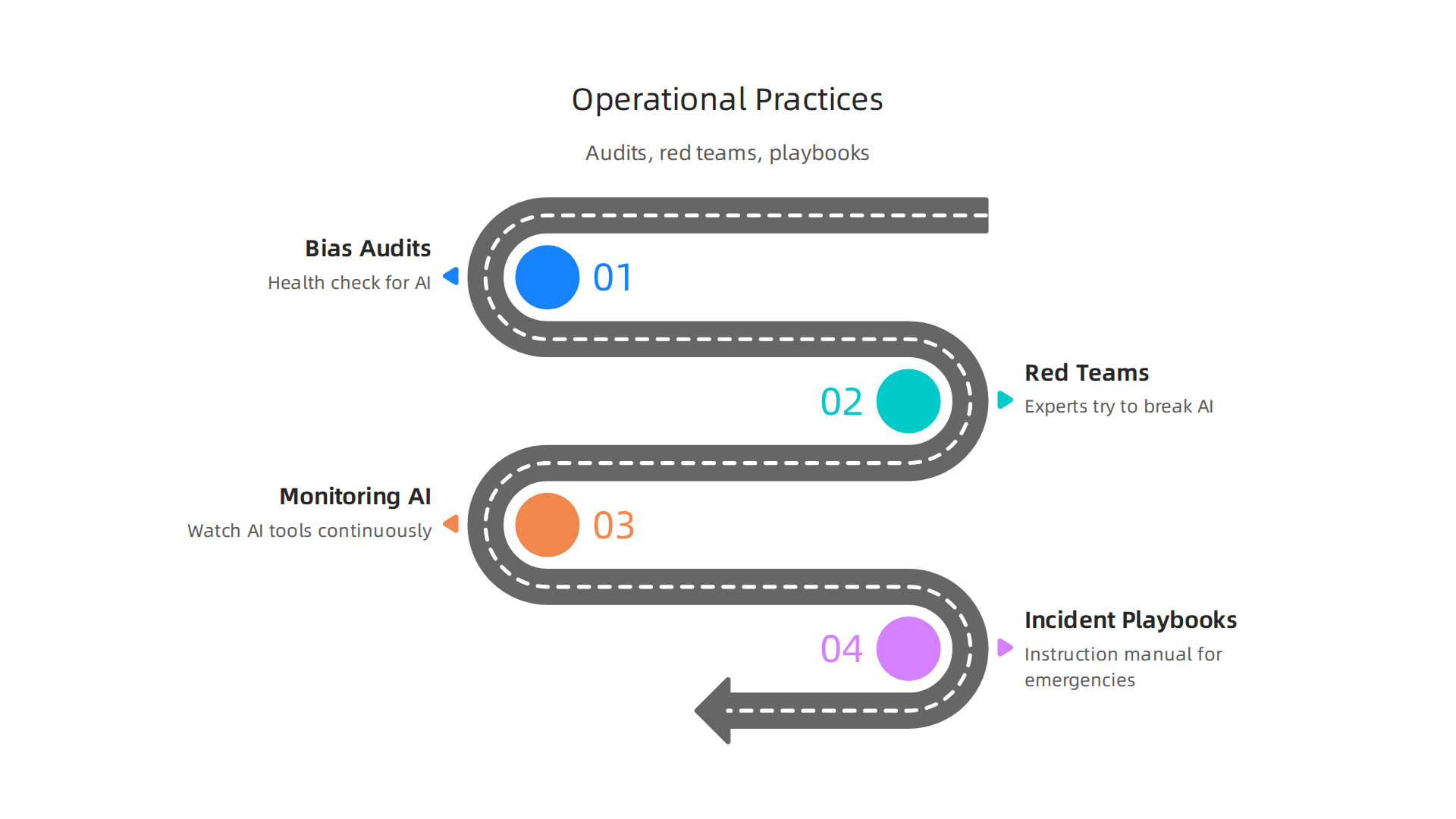
- Bias Audits: This is like a health check for your AI. You carefully look at the AI system and the data it uses to find any hidden unfairness. These audits help make sure the AI isn’t treating some groups of people worse than others. For example, they can reveal if an AI used for hiring accidentally favors one gender or race over another. The goal is to spot these problems early and fix them. The National Institute of Standards and Technology has even put out guides on how to properly Identify and Manage Bias in AI.
- Red-Teaming: Imagine hiring a group of "friendly hackers" whose job is to try and break your AI. That’s red-teaming. These experts actively try to find ways the AI could be used wrongly or misused, or how it might show bias in unexpected situations. This helps companies understand their AI’s weak spots before a real problem happens. It’s a key part of making sure AI development is secure and responsible.
- Monitoring AI: Even after an AI system is launched, the work isn’t done. Businesses need to watch their AI tools all the time. This means looking for signs of new biases appearing or if the AI starts acting in ways it shouldn’t. Good monitoring helps catch issues quickly, preventing harm and keeping the AI aligned with its purpose.
- Incident Response Playbooks: What if something does go wrong? A playbook is like a detailed instruction manual for emergencies. It tells everyone on the team what to do if an AI system causes harm or shows serious bias. This includes steps for stopping the problem, telling the right people, and fixing the AI. Having a clear plan can reduce damage and help the company react faster.
Picking What to Fix First
Many companies don’t have endless money or people to work on every single AI problem at once. So, it’s important to pick what to fix first. Here’s how:
- Look at the biggest risks: Which AI tools could cause the most harm to people or the business? Focus on those first. An AI that decides if someone gets a loan has a bigger risk of causing financial ai racism than, say, an AI that helps you pick a movie.
- Follow the rules: Make sure your AI meets all the new government rules and standards. Not following these rules can lead to big fines and legal troubles, so these are often a top priority. For businesses looking to optimize their workflow and stay compliant, knowing how to choose AI-ready business computers in 2026 can be a smart step to support these practices.
- Listen to feedback: Pay attention to what users and employees say about your AI. If people report problems or concerns, investigate them quickly. Sometimes, real-world feedback can show you problems that your tests didn’t catch.
By putting these practical controls in place, businesses can build trust and make sure their AI helps everyone fairly. It’s about being proactive and responsible in how we use this powerful technology.
To keep up with the latest in AI trends and best practices, remember to check out The AI Newsletter Worth Reading for clear daily updates.
When AI tools have problems like unfair bias or even ai racism, it’s not just a technical issue. These problems can hurt a business in many ways. It’s important for companies to understand these risks and talk openly about them with everyone involved. This includes customers, people who make rules, and any communities that might be affected.
Turning Harms into Business Risks
If an AI system causes harm, it can lead to big problems for a company.
- Money Problems: If an AI acts unfairly, especially when it comes to things like loans or jobs, businesses can face huge fines and legal trouble. For example, new laws in 2026, like California AB 2013, are making companies more responsible for their generative AI systems. Not following these rules can cost a lot of money. Laws like the 2026 AI Laws Update: Key Regulations and Practical Guidance make this very clear.
- Bad Reputation: When people find out that a company’s AI is unfair, it can really hurt how they feel about that business. News stories about ai racism or other biases can make customers lose trust. People might stop buying products or using services. This can lead to public backlash, and sometimes even an ai protest against the company, which is hard to fix.
- Loss of Trust: Trust is a very important thing for any business. If customers can’t trust that an AI system will treat them fairly, they will simply go somewhere else. This loss of trust can be very hard to get back and can slow down the company’s growth and new ai development.
Talking Clearly to Everyone
How a business talks about its AI tools is very important. Being open and honest can help build trust, even when problems come up.
- With Customers: Companies should be clear about how they use AI. They should explain what the AI does, what information it uses, and how they make sure it’s fair. Simple language is best so everyone can understand.
- With Rule-Makers (Regulators): Businesses need to show that their AI tools follow all the rules and laws. This means having good records and being ready to share information about how their AI works and how they check for problems. Staying up-to-date with new standards is key to mastering the AI future standard 2026 and showing good behavior.
- With Affected Communities: If an AI system causes harm, it’s very important to talk to the people who were affected. This means listening to their concerns, saying sorry if needed, and explaining what the company is doing to fix things and prevent it from happening again. This open talk can help heal relationships and keep problems from getting bigger.
Being ready to handle AI problems and communicate clearly is a huge part of using AI responsibly in 2026. It protects the business, keeps customers happy, and makes sure AI benefits everyone fairly.
To make sure AI works fairly for everyone, companies must think about fairness right from the start.

This means looking closely at how AI systems are built, from the first pieces of information they get to the final product choices. Designing good AI takes careful planning and constant checking.
Smart Data Collection and Labeling
The main reason AI can be unfair, leading to things like ai racism, often comes from the data it learns from. If the data isn’t balanced or doesn’t show all kinds of people fairly, the AI will learn those biases.
- Gathering Diverse Data: It’s super important to collect many different kinds of data. This means making sure the data includes people from all backgrounds, ages, and groups. If you’re building an AI for hiring, for example, your data should represent a wide range of job applicants, not just one type of person. A key way to fight bias is to collect more diverse and representative data before the AI model is even trained, and to rebalance data to help different groups equally AI Bias and Fairness: From Detection to Mitigation in 2026.
- Careful Data Labeling: People often label the data that AI uses. If these people have their own hidden biases, those biases can get into the AI system. Companies must train their data labelers well and check their work often to make sure the labels are fair and correct. You can even adjust the features and labels in the data set before the AI learns from it to make sure it’s fair Fairness in AI-Driven Recruitment: Challenges, Metrics, ….
Keeping Humans in the Loop
Even with the best data, AI systems can still make mistakes or show bias. That’s why having real people involved in checking the AI’s work is so important.
- Review and Override: Companies should set up ways for people to look at what the AI suggests or decides, especially in important areas like hiring or giving loans. If the AI seems unfair, a human should be able to step in and change the decision. This "human-in-the-loop" approach helps catch errors before they cause harm. Research from 2026 shows it’s wise to keep humans involved in decisions where people might be rejected by AI AI Screening Bias: What 2026 Research Reveals – HyreFast.
- Ongoing Monitoring:
AI developmentisn’t a one-time thing. AI systems need to be watched all the time, even after they are launched. Companies should regularly check if their AI is working fairly for all groups and fix problems right away. This involves running checks to find and deal with bias through the entire AI system’s life Responsible Implementation and Use of Artificial Intelligence in ….
Building Equity into Product Decisions
For product teams, designing inclusive AI means thinking about fairness at every step of building and launching a product.
- Set Clear Goals for Fairness: Just like setting goals for how well a product works, teams should have clear goals for how fair the AI will be. This means deciding what "fairness" looks like for their specific product and how they will measure it. Different fairness measures exist, like making sure positive outcomes are similar for all groups Data and AI Ethics Framework – GOV.UK.
- Regular Audits and Checks: Product teams should regularly check their AI systems for bias. This isn’t just a technical task; it’s about looking at how the AI affects real people. They can use special tools, like IBM’s AI Fairness 360, which is a free toolkit to help find and fix bias in AI models Introducing AI Fairness 360. These audits should be part of the regular work schedule.
- Feedback Loops: Create ways for users and communities to share their thoughts and experiences with the AI. If people report problems with
ai racismor other biases, the product team should listen and use that feedback to improve the AI. This helps make sure the AI truly serves everyone. You can learn more about finding the right tools by checking out how to choose AI for business tools that deliver real results.
By following these steps, companies can build AI systems that are not only powerful but also fair and helpful for all people. Staying on top of AI developments and ethical standards is crucial.
Get clear daily AI updates from The AI Newsletter Worth Reading.
Summary
This primer explains why AI racism — unfair outcomes tied to race from AI systems — is an urgent business and policy issue in 2026. It walks through how bias enters AI (bad training data, skewed labels, proxy variables, and unfair objectives), shows where biased systems cause harm (hiring, lending, healthcare, facial recognition, content), and describes practical ways to find and fix problems. The article covers fairness definitions (group, individual, counterfactual), data and measurement challenges, and operational steps like bias audits, red‑teaming, continuous monitoring, and incident playbooks. It also outlines the rising regulatory landscape (EU AI Act, state laws like California AB 2013, and national frameworks) and the legal, reputational, and financial risks of ignoring bias. Readers will learn how to prioritize high‑risk systems, build human oversight into workflows, and choose controls and tools to reduce harm while staying compliant. The goal is to give leaders a clear, actionable roadmap to make AI safer, fairer, and more trustworthy for all users.