Tag: ai hardware

  • PC Parts Compatibility for AI: Build a Powerful, Bottleneck-Free Workstation

    PC Parts Compatibility for AI: Build a Powerful, Bottleneck-Free Workstation

    Why PC parts compatibility matters for AI workloads (and what this guide will solve)

    If you’re thinking about building a computer for AI tasks like teaching new models or making smart predictions, you might imagine it’s just like putting together a super powerful gaming PC. But here’s the thing: making sure your pc parts compatibility is right for AI is actually quite different from what a typical "pc master race" gamer would look for.

    AI tasks, like training complex models, fine-tuning them, or running quick guesses (inferencing), put very different demands on your computer parts. For example, a gaming PC might focus on having a super-fast graphics card to draw game worlds smoothly. But for AI, the graphics card (GPU) needs a lot of special memory, often called HBM, and very fast ways to send information to other GPUs. For instance, connections like NVLink can offer much higher speeds between GPUs than the standard PCIe connections found in most regular computers, making a big difference for large AI projects. Some reports show NVLink 4.0, used in high-end AI GPUs, can be over seven times faster than PCIe 5.0 for moving data between parts NVLink vs PCIe: Do You Actually Need NVLink? (2026).

    This means that simply choosing parts that seem strong for an "affordable gaming pc" might not give you the performance you need for serious AI work. Without the right pc parts compatibility, your system could slow down, waste a lot of time, and even cost you more money in the long run due to inefficient operations.

    Illustrating the frustration of inefficient operations due to poor PC parts compatibility for AI tasks.

    You need a computer that can handle huge amounts of data and perform many calculations at once without bottlenecks.

    This guide is here to help you understand all the important details about pc parts compatibility for AI. We will walk you through each component, like the CPU, GPU, memory, and storage, and explain what to look for. Our goal is to give you a clear, easy-to-follow checklist. This way, you can pick the best parts, avoid expensive mistakes, and make sure your computer runs as fast and smoothly as possible for all your AI projects in 2026. If you’re ready to start building your ideal machine, you might find our guide on how to build and optimize your AI workstation for peak performance 2026 very helpful.

    Want to keep up with the latest AI trends and tools? Get clear daily AI updates from The Deep View Newsletter.

    When building a computer for AI, understanding the difference between your Central Processing Unit (CPU) and your Graphics Processing Unit (GPU) is very important.
    An infographic comparing the distinct roles of CPU and GPU in handling various AI workloads.

    It’s not just about getting the fastest parts; it’s about making sure your pc parts compatibility is perfect for how AI tasks actually run.

    The CPU’s Role in AI

    Think of the CPU as the brain of your computer. It’s really good at handling many different tasks one after another, like a skilled manager organizing a team. In AI work, the CPU mostly helps with:

    • Getting Data Ready: Before a GPU can train an AI model, the data often needs to be cleaned, sorted, and prepared. This is called data preprocessing, and the CPU handles it well. For example, if you’re working with text, the CPU will get all the words in order.
    • Running the Show: The CPU tells all the other parts of your computer what to do. It starts and stops AI programs and makes sure everything works together smoothly. This is like the CPU being the conductor of an orchestra.
    • Lighter AI Tasks: For simple AI tasks or when you’re just using a small AI model, the CPU can do the work itself.

    While the CPU is very important, it’s generally not the star for heavy AI computations.

    The GPU’s Power for AI

    The GPU is like a team of super-fast math helpers. Instead of doing one task after another, it can do thousands of simple math problems all at once. This is why GPUs are so critical for AI:

    • Training AI Models: Training an AI model involves huge amounts of calculations, usually with something called "tensors" (which are like big grids of numbers). GPUs are built to do these kinds of calculations super fast, much quicker than a CPU ever could. This is their main job for AI.
    • Making Predictions (Inferencing): Once an AI model is trained, the GPU can also help it make quick predictions or decisions. If you’re building a system that needs to understand images or voices in real-time, a powerful GPU will be key. Many AI guides highlight the GPU as the most important piece of hardware for AI workloads AI Workstation 2026 Guide: What Hardware to Buy Now.

    How CPU Features Affect GPU Performance and PC Parts Compatibility

    Even though the GPU does the heavy lifting, your CPU still needs to be a good match. Here’s what to look for regarding pc parts compatibility:

    1. Socket Type: This is the shape and pin layout on the motherboard where the CPU sits. Your CPU’s socket must match your motherboard’s socket. For instance, Intel’s 10th and 11th Gen CPUs use the LGA1200 socket, requiring specific motherboards Compatibility of 10th and 11th Generation Intel® Desktop Processors. If these don’t match, nothing will work. You can usually find a list of compatible CPUs for a motherboard, or vice-versa, in a "Motherboard – Processor Compatibility" list from the manufacturer.
    2. PCIe Lanes: These are like highways that connect your CPU to other parts, especially your powerful GPUs. The more PCIe lanes your CPU and motherboard offer, the more fast connections your GPUs can have.
      • Speed Matters: Newer standards like PCIe 5.0 are much faster. For instance, AMD’s AM5 platform supports 28 PCIe lanes and PCIe 5.0, which can move data at 4GB per second per lane ECE 571 – Advanced Microprocessor-Based Design Lecture 31.
      • Enough Lanes: If you plan to use multiple GPUs for big AI models, you need a CPU that provides enough lanes so each GPU can run at its best speed. Some CPUs, like AMD Threadripper or Intel EPYC, are designed for many GPUs because they have lots of PCIe lanes Best AI Workstation Builds in 2026. Without enough lanes, even the best GPUs can slow down, creating a bottleneck.
    3. Platform I/O (Input/Output): This refers to how well the CPU and motherboard work together to manage all the data flowing in and out of the system. A good CPU and chipset will ensure that data can move quickly between the GPU, memory, and storage without delays.

    Choosing the right CPU and motherboard with enough PCIe lanes is crucial for excellent pc parts compatibility.

    Visualizing the collaboration and careful planning required for optimal CPU and GPU compatibility in AI builds.

    It helps your powerful GPUs talk to the rest of the system as fast as possible, which means your AI tasks will run much quicker. If you’re looking for different build ideas, you might find useful information on how to choose the best prebuilt gaming PCs for AI work in 2026. This isn’t like an affordable gaming pc where you might skimp on these details; for serious AI, every connection counts.

    After making sure your CPU and GPU work well together, you need to think about the motherboard. The motherboard is like the main street of your computer. It connects all the important parts: the CPU, GPU, memory, and storage. For good pc parts compatibility, especially when building a powerful AI computer, choosing the right motherboard is a must.

    Here are the important things about a motherboard for your AI setup:

    Chipset

    The chipset is like a tiny manager on the motherboard. It helps the CPU talk to everything else. Different chipsets support different CPUs, memory types (like DDR4 or DDR5), and how many fast connections (PCIe lanes) are available for things like your graphics cards and speedy storage drives. For example, Intel’s 700 series chipsets help manage how the CPU connects to other parts, making sure data flows smoothly.

    PCIe Slot Layout

    You already know PCIe lanes are like highways. The motherboard has slots for your GPUs that use these lanes. For serious AI work, you might need several powerful GPUs. Your motherboard must have enough PCIe slots that run at high speeds, like PCIe 5.0 x16, to let your GPUs do their best work. Some motherboards even have special slots for fast storage that use PCIe 5.0 x4 lanes.

    M.2 and NVMe Slots

    These are for super-fast storage drives, often called NVMe SSDs. They are much quicker than older hard drives. For AI, you’ll be loading and saving huge amounts of data. Having multiple M.2 slots that connect directly to the CPU or chipset using PCIe lanes means your data can move very fast. This helps stop delays when your AI model is training or working. Many modern motherboards, like the X870 MAX GAMING WIFI7, support PCIe 5.0 x4 mode for M.2 drives, which is great for fast data access.

    BIOS Support

    The BIOS (Basic Input/Output System) is like the motherboard’s instruction book. It tells your computer how to start up and how to talk to your CPU, memory, and other main parts. Sometimes, when new CPUs come out, the motherboard might need a BIOS update to recognize and work with them. If your BIOS is too old, your new CPU might not work at all, even if the socket matches. For example, some AMD Ryzen 5000 series CPUs needed a BIOS update on older motherboards to work right. You can usually find a Motherboard – Processor Compatibility list from your motherboard maker that tells you which BIOS version you need for each CPU.

    Practical Checks Before You Buy

    To avoid headaches, always do these checks:

    • CPU Support List (QVL): Every motherboard manufacturer has a list on their website that shows every CPU that works with their specific motherboard model. Check this list carefully to ensure your chosen CPU is supported.
    • BIOS Version: Note the required BIOS version for your CPU. If the motherboard you buy has an older BIOS, you might need to update it. Some motherboards have a "BIOS Flashback" feature that lets you update the BIOS without a CPU installed, which is very handy.
    • Online Compatibility Checkers: Before you spend your money, use an online tool to check your pc parts compatibility. Websites like PC Build Compatibility Checker or PC Component Compatibility Checker let you pick out your CPU, motherboard, RAM, and GPU to see if they all fit together. These tools are like your personal pc master race guide, helping you avoid mistakes that even experienced builders can make.

    Choosing the right motherboard with the correct chipset, enough fast PCIe slots, and up-to-date BIOS support is key for building an AI computer that runs smoothly. It’s not just about raw power; it’s about making sure all your parts can talk to each other without bottlenecks.

    To learn more about putting together a high-performing system, consider reading about how to build and optimize your AI workstation for peak performance 2026.

    Staying informed about the fast-moving world of AI tools and hardware is also a smart move for any business leader. Get clear daily AI updates to help you navigate this space.

    The AI Newsletter Worth Reading

    The motherboard connects everything, but what gets connected in terms of memory and storage is just as important for pc parts compatibility in an AI setup.
    An infographic detailing optimal memory and storage solutions crucial for AI performance.

    Think of memory (RAM) as your computer’s short-term workspace and storage as its long-term filing cabinet. Both need to be big and fast for AI tasks.

    Memory and storage choices for AI performance

    When working with AI, especially training large models, your computer needs a lot of space to hold data it’s actively thinking about. This is where memory, or RAM, comes in.

    What to know about RAM for AI

    RAM is like your desk. The bigger the desk, the more papers (data) you can have open at once. For AI, this means holding larger datasets or working with bigger "batch sizes" during training. Batch size refers to how many examples your AI model looks at at one time. More RAM lets you use bigger batch sizes, which can sometimes speed up training. Experts suggest that AI workloads often need a lot of system RAM, sometimes from 128 GB up to 2 TB for very big projects, depending on how much data you are feeding the AI and what you want to achieve How Much RAM Do AI Workloads Really Need?.

    Beyond just how much RAM you have, its speed also matters. Faster RAM can move data to and from your CPU quicker, which helps prevent delays. Look for memory with high clock speeds and good timing. Also, how RAM is set up in "channels" can make a difference. Using two or four sticks of RAM instead of just one (dual-channel or quad-channel memory) can allow your CPU to access data even faster. This is like having more lanes on a highway. GPU memory capacity also directly impacts how well your system performs for AI INOM. For big language models (LLMs) in 2026, serving them can require hundreds of gigabytes of RAM per server, with high memory bandwidth being key for good performance Efficient LLM Inference: Bandwidth, Compute ….

    Storage choices for AI

    Storage is where all your large AI datasets, programs, and models live permanently. For AI, you need storage that’s not only big but also very fast.

    • NVMe SSDs: These are the top choice for AI. NVMe (Non-Volatile Memory Express) drives are super-fast storage that connect directly to your motherboard’s PCIe slots, just like your powerful graphics cards. They can read and write data much, much faster than older SATA SSDs or traditional hard drives. This means your computer can load huge datasets quickly, which is critical for training AI models without long waits. NVMe drives offer very low delay and high data flow, which is perfect for today’s AI tasks The Semiconductor Ecosystem at the Foundation of Data Centers.
    • SATA SSDs: These are still good and faster than old hard drives, but they are not as quick as NVMe drives. They connect using SATA cables. For some less demanding AI tasks or for storing data that isn’t accessed all the time, SATA SSDs can be a more affordable option.
    • Hard Drives (HDDs): These are the slowest. They are good for storing very large amounts of data that you don’t need to access quickly, like backups. For active AI work, they are usually too slow and will cause major delays.

    When picking storage, also think about "read/write IOPS" and "endurance." IOPS means "Input/Output Operations Per Second," and a higher number means the drive can handle more requests for data at once. Endurance refers to how much data can be written to the drive over its lifetime before it starts to wear out. AI workloads involve a lot of writing, so high endurance is a plus.

    Making smart choices for memory and storage makes sure your pc parts compatibility is strong, helping your AI computer run smoothly and efficiently.

    A visual metaphor for making smart, organized choices for memory and storage to ensure smooth AI operations.

    If you’re looking for guidance on what AI hardware to choose for your business, exploring resources like AI Hardware 2026: A Business Leader’s Guide to Growth can be very helpful.

    After picking out your fast memory and huge storage, the next big steps for great pc parts compatibility in an AI computer are making sure it gets enough power and stays cool. Powerful AI components, especially the graphics cards, use a lot of electricity and create a lot of heat. If your computer does not have enough power or gets too hot, it will slow down, crash, or even get damaged. This is why the power supply (PSU) and cooling system are super important for stable AI training runs.

    PSU and cooling: ensuring stable AI training runs

    Think of your power supply unit (PSU) as the heart of your computer. It gives power to every part. For AI, your graphics processing unit (GPU) is usually the hungriest for power. AI training is a tough job that makes GPUs work at their highest level for a long time. This means they pull a lot of power consistently.

    Power Supply Unit (PSU) needs for AI

    Choosing the right PSU is key. You need one strong enough to handle all your components, especially if you plan to use multiple powerful GPUs.
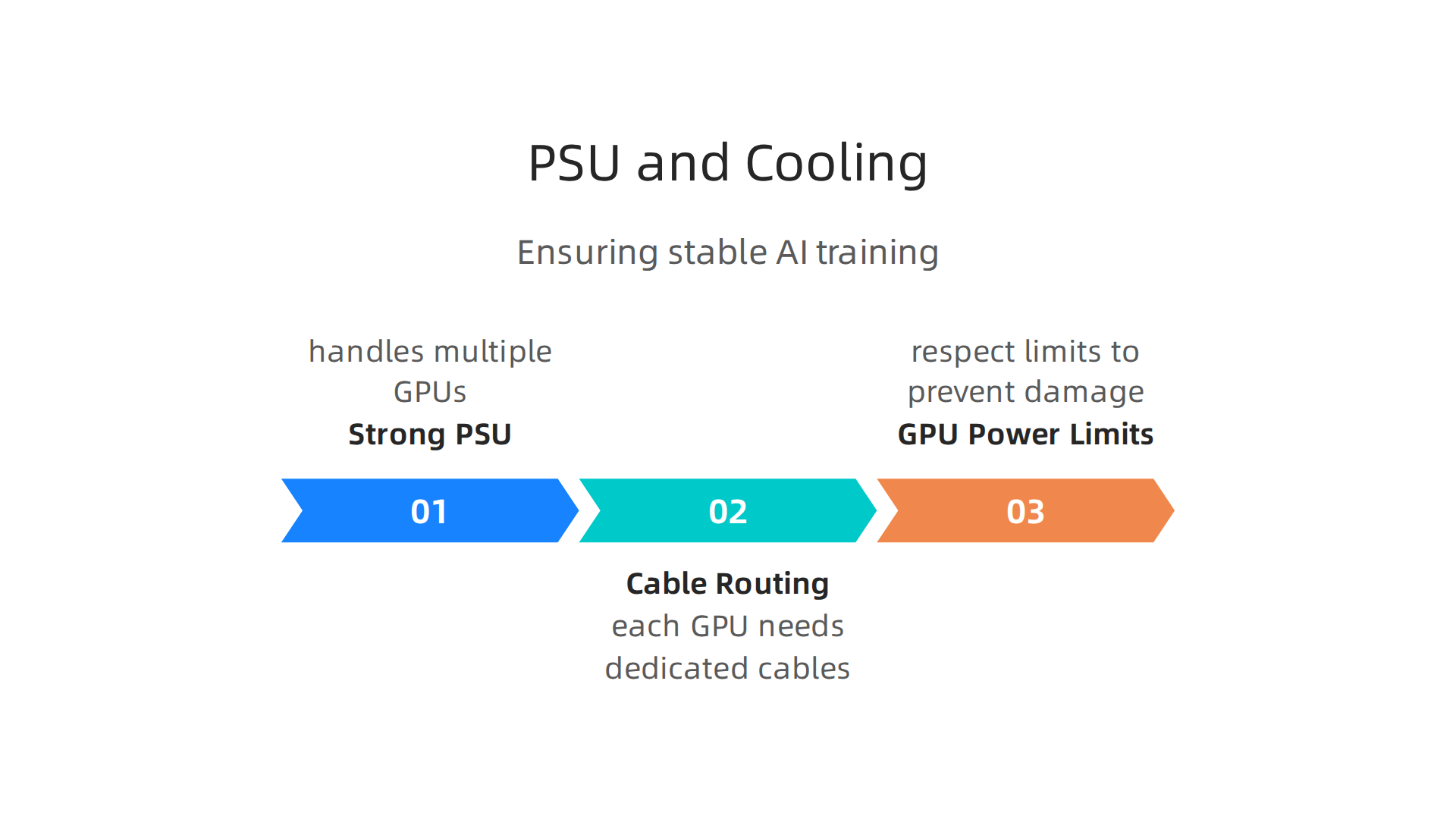
    An infographic illustrating the critical considerations for power supply units in AI computer builds.

    For example, modern high-end NVIDIA RTX 5000 series graphics cards often need power supplies around 1000W or even higher NVIDIA RTX 5000 series graphic card PSU recommendation. If you’re building a system with one of these, or even considering two for a dual-GPU setup, you will need a very powerful PSU. Experts suggest looking for a PSU with at least 1200W or more to ensure you have enough power, especially for future GPU upgrades 7 Best Pre-Built AI Workstations 2026 — Tested & Ranked.

    When you have more than one GPU, like in a multi-GPU setup, power distribution becomes even more important.

    • Cable Routing and Connectors: Each powerful GPU needs its own set of power cables from the PSU. Make sure your PSU has enough PCIe power connectors (often 6-pin or 8-pin) for all your graphics cards. Connect them directly to the PSU. Do not daisy-chain cables if you can help it, as this can lead to unstable power delivery.
    • GPU Power Limits: Some GPUs have limits on how much power they can draw. You need to respect these limits to prevent damage and ensure stability. A good PSU provides clean, stable power even when all parts are working hard.

    Cooling strategies for AI workloads

    AI training pushes your components, especially GPUs, to their limits. This creates a lot of heat. Keeping these parts cool is not just about making them last longer; it is also about keeping them running fast. When a part gets too hot, it automatically slows down to protect itself, which means your AI training takes longer.

    • GPU Cooling: Modern GPUs come with strong cooling systems, but for AI, you might need even more. Good airflow in your computer case is a must. Many AI workstations are designed with chassis and power supplies ready for continuous workloads, and stable cooling is a top priority Workstation for Artificial Intelligence: AI Hardware Guide ….
    • Case Airflow: Make sure your computer case has plenty of fans pulling cool air in and pushing hot air out. A good case design helps move air over your hot components. You might want to invest in extra case fans. When buying an AI PC, always check that the cooling system is good enough for steady AI work Budget Guide: How to Buy an AI PC Without Breaking the ….
    • CPU Cooling: While GPUs do most of the heavy lifting in AI training, your CPU still needs good cooling. A large air cooler or a liquid cooler (AIO) is a good choice for keeping your CPU temperatures in check.

    Getting your power and cooling right is a big part of achieving great pc parts compatibility for your AI build.

    Depicting the confidence that comes from a well-planned and stable AI computer build with adequate power and cooling.

    It ensures that your expensive components can perform their best without overheating or crashing. If you want to dive deeper into making your AI setup perfect, exploring how to Build and Optimize Your AI Workstation for Peak Performance 2026 can offer more insights.

    Stay informed about the latest advancements in AI and technology that can impact your hardware choices.

    Get clear daily AI updates from The AI Newsletter Worth Reading.

    When you are building a computer for AI, the graphics processing unit, or GPU, is like the brain of your machine. It does most of the heavy math that AI needs, whether you are teaching an AI new things (training) or using an AI that has already learned (inference). Getting the right GPU and making sure it works well with all your other parts is a huge part of good pc parts compatibility.

    GPU selection and multi-GPU setups for AI

    Choosing the best GPU for AI depends on what kind of AI work you want to do. Different GPUs are better for different jobs. This choice greatly affects how well your whole system works together.

    What to look for in an AI GPU

    Not all GPUs are made the same, especially for AI tasks. Here are the main things to think about:
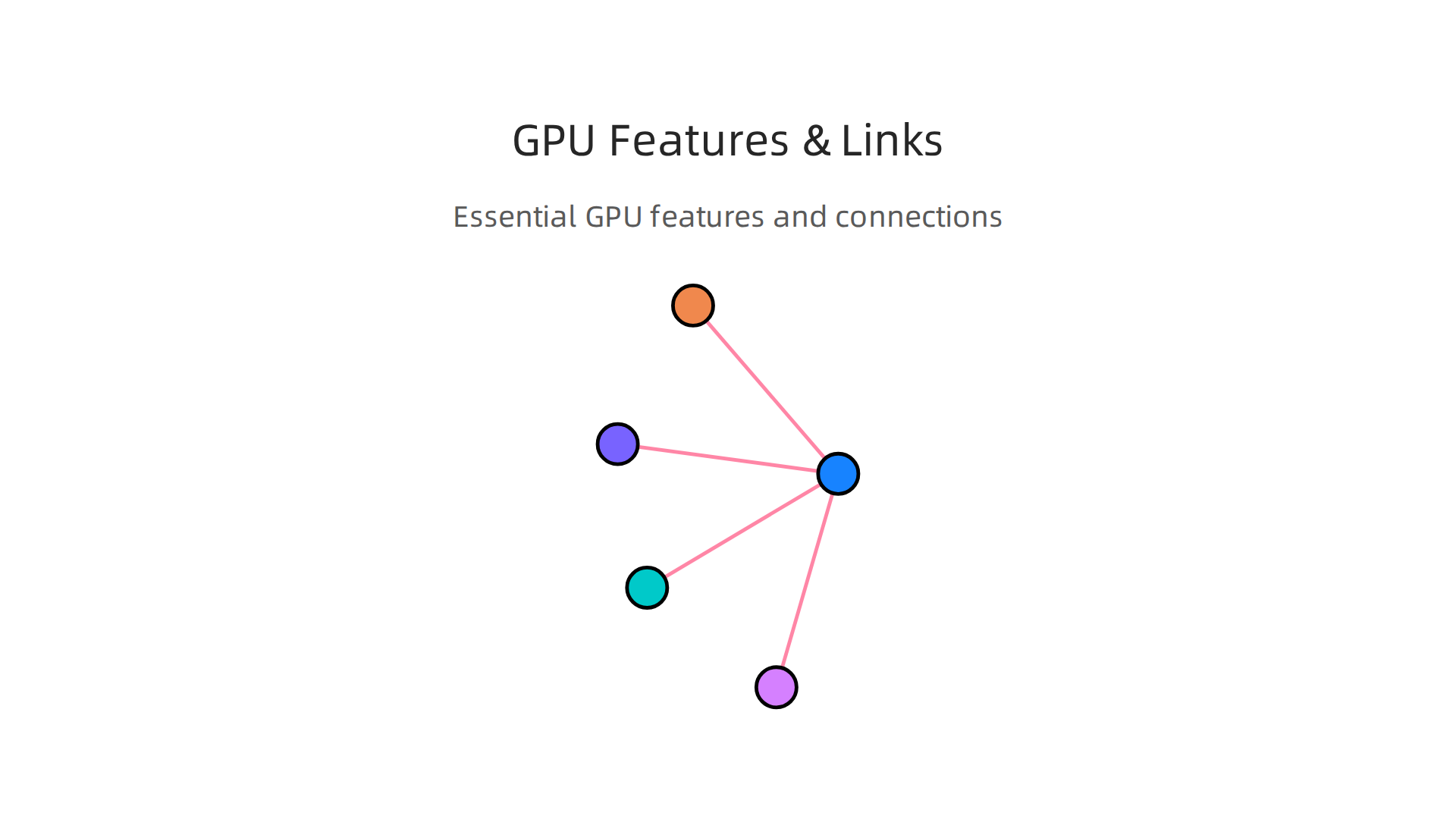
    An infographic highlighting essential GPU features and interconnection methods vital for AI workloads.

    • VRAM (Video RAM): This is super important. VRAM is like the GPU’s own memory. The more VRAM a GPU has, the bigger and more complex AI models it can handle. For training large AI models, you need a lot of VRAM. For example, some of the top NVIDIA GPUs like the H100 or H200 have 80GB or even 141GB of HBM3/HBM3e memory, which is designed for very big AI tasks NVIDIA GPU Architecture Explained: A Guide for AI (August …. For using AI models (inference), you might not need as much, but more is always better. For serious AI work, aim for at least 24GB or more.
    • Tensor Cores: These are special parts inside NVIDIA GPUs that are built to speed up AI calculations. If your GPU has Tensor Cores, it can do AI math much faster. NVIDIA’s newer architectures like Hopper and Blackwell have advanced Tensor Cores that make AI training and inference very quick NVIDIA GPU Architectures Guide for 2026 – CloudMinister.
    • GPU Architecture: This refers to the overall design of the GPU. Newer designs, like NVIDIA’s Blackwell or Hopper, are made to be more powerful and efficient for AI work than older ones. These new designs often come with more VRAM and better Tensor Cores.

    Multi-GPU setups: more power for AI

    Sometimes, one powerful GPU is not enough. For really big AI projects or when you want to train models faster, you might need to use more than one GPU in your computer. This is called a multi-GPU setup. This is where pc parts compatibility gets even more important.

    How GPUs talk to each other

    When you have many GPUs, they need a way to share information and work together. There are two main ways they connect:

    1. PCIe (PCI Express): This is the normal way parts connect to your motherboard. GPUs use PCIe slots to plug in. PCIe 5.0 x16, a common type, offers good speed, but it routes data through your CPU first. While good for single GPUs or simple multi-GPU inference, it can become a bottleneck for heavy multi-GPU training Multi-GPU for AI – NVLink vs PCIe, Builds & Setup (2026) – VRAM First.
    2. NVLink: This is a special connection made by NVIDIA that lets GPUs talk directly to each other without going through the CPU. NVLink is much faster than PCIe. For example, NVLink 4.0 on an H100 GPU gives 900 GB/s of speed, while PCIe 5.0 x16 maxes out at about 128 GB/s NVLink vs PCIe: GPU Interconnect for AI 2026 | packet.ai. This huge speed difference means that with NVLink, your GPUs can share data very quickly, which is great for training large AI models. However, NVLink is usually found on high-end NVIDIA professional GPUs and only a few consumer cards like the RTX 3090, as the RTX 4090 and newer consumer cards don’t support it Multi-GPU for Local AI in 2026: NVLink vs PCIe and When a Second ….

    Compatibility for multi-GPU builds

    Using multiple GPUs needs careful planning:

    • Motherboard and CPU: Your motherboard needs enough PCIe slots, and they should be the right kind (like x16 slots) and spaced apart so your big GPUs can fit. Your CPU also needs enough PCIe lanes to support all those GPUs. If your CPU doesn’t have enough lanes, your GPUs might run slower. For serious AI work, you might want to consider a special CPU and motherboard setup that gives more PCIe lanes, like those found in workstation-class systems.
    • Physical Size: High-end GPUs are often very big. Make sure your computer case has enough room for all of them and that they get enough air for cooling. We talked about cooling in the last section, and it is even more important with multiple GPUs.

    Getting these parts to work together well is key to building an AI computer that performs great. If you are aiming for a powerful setup, exploring options like using AI Hardware 2026: A Business Leaders Guide to Growth can help you decide.

    To ensure all your parts fit and work together perfectly, you can use online tools. These tools check things like CPU socket fit, RAM type, GPU length, and power needs PC Part Compatibility Checker: CPU, GPU, PSU & Case | SpecsCalc. They help prevent common mistakes when building a custom PC.

    Making sure all your computer parts work together is a big deal, especially for AI builds. We just talked about how powerful GPUs and their connections are key for good pc parts compatibility. Now, let’s look at how to double-check everything before you buy and what to think about when you want to make your computer better later on.

    Your Essential PC Parts Compatibility Checklist

    Before you spend your money, it’s smart to have a checklist. This helps you avoid common mistakes and makes sure your new computer will run smoothly. Here are the main things to check for pc parts compatibility:

    • CPU and Motherboard Socket: This is the most important check. Your CPU needs to fit the exact socket type on your motherboard. For example, an Intel CPU might need an LGA 1700 socket, while an AMD CPU might need an AM5 socket. You can often find this info on the product page for each part PC Parts Compatibility Guide UK: How to Check Your ….
    • RAM Type: Computers today use either DDR4 or DDR5 memory. Your motherboard can only use one type, so your RAM sticks must match what your motherboard supports.
    • GPU Size: High-end GPUs for AI can be very large. You need to make sure your computer case has enough space for your GPU to fit. Also, check that your motherboard has the right type and number of PCIe slots for your GPU or multiple GPUs.
    • Power Supply (PSU) Wattage: Your power supply needs to be strong enough to power all your parts, especially a powerful GPU or several GPUs. It also needs the right cables to connect to your GPU and other components.
    • CPU Cooler Height: If you are using a large air cooler for your CPU, make sure it is not too tall for your computer case to close properly.
    • Case Size and Airflow: Beyond just fitting the GPU, your case needs to have good airflow to keep all your hot AI components cool. This is extra important for multi-GPU setups.

    Smart Tools to Check Compatibility

    Luckily, you do not have to guess if your parts will work together. There are many free online tools that can help you with pc parts compatibility. These tools let you pick your CPU, motherboard, RAM, GPU, power supply, cooler, and case. Then, they instantly tell you if there are any issues.

    Some popular compatibility checkers will review socket types, memory types, GPU physical size, power needs, and even cooler height to make sure everything lines up Build Compatibility Checker — Free Online PC Hardware Tool …. Tools like these are great for saving time and preventing headaches. For example, some tools check over 40 rules in real time to ensure your chosen parts will work together perfectly PC Builder Online India – Build Your PC Free · GetPC.co.in.

    Planning for Future Upgrades

    Thinking about future upgrades for your AI PC is also part of good pc parts compatibility. Sometimes you want to make your computer faster or more powerful down the road.

    • GPU-First Upgrade: Many AI builders choose to upgrade their GPU first, as it often has the biggest impact on AI performance. If you do this, make sure your existing CPU is still powerful enough to keep up, or it could slow down your new GPU. Also, your power supply needs to handle the increased power demand.
    • CPU-First Upgrade: If your CPU is old, upgrading it can make your whole system faster. But be careful: a new CPU often means you might also need a new motherboard and new RAM because of how parts fit together. This can turn a simple upgrade into a bigger project.
    • Platform Compatibility: Some computer platforms (the combination of CPU and motherboard) offer more room for upgrades than others. If you plan to upgrade often, look for platforms that support multiple generations of CPUs or have plenty of PCIe slots for extra GPUs. This flexibility is key if you want to scale up your AI work without rebuilding everything from scratch.
    • Budget Considerations: When planning upgrades, especially for an affordable gaming pc that also handles AI, always think about the cost versus the performance boost. Sometimes, small upgrades can give good results for the money. Other times, saving up for a bigger upgrade makes more sense for a much larger performance jump.

    By doing your homework and using the right tools, you can make sure your AI computer build is a success from the start and can grow with your needs. Building and optimizing your AI workstation for peak performance is a continuous journey.

    To stay on top of the latest AI hardware and software trends that impact compatibility and performance, you need reliable information.
    Get clear daily AI updates from The AI Newsletter Worth Reading.

    Summary

    This article explains why PC parts compatibility is critical when building machines for AI workloads and how that differs from standard gaming builds. It covers the distinct roles of CPUs and GPUs, why PCIe lanes and inter‑GPU links like NVLink matter, and how motherboard chipset, BIOS, RAM type, and NVMe storage affect performance. The guide also walks through PSU sizing and cooling strategies needed for sustained training runs, how to choose GPUs (and plan multi‑GPU setups), and practical checks such as socket matching, BIOS versions, and physical fit. You will learn concrete rules of thumb—like targeting larger GPU VRAM and high system RAM for big models—and get a simple pre‑purchase checklist plus tools to verify compatibility so you can avoid bottlenecks, wasted spend, and upgrade headaches.


  • AI Hardware 2026 A Business Leader’s Guide to Growth

    AI Hardware 2026 A Business Leader’s Guide to Growth

    Why AI Hardware Matters for Computer Companies and Business Leaders in 2026

    The world of technology is changing fast, and artificial intelligence (AI) is at the center of it all. In 2026, we are seeing a huge boom in special computer parts made just for AI. This is changing how all computer companies work and what business leaders need to know. No longer are simple, general-purpose computers enough. Now, there are many different types of AI hardware, from powerful chips in big data centers to smarter parts inside a small desktop computer.

    This big change means new chances for computer companies to make exciting products. It also means that businesses can do more amazing things with AI, like making work easier or understanding customers better.

    A business leader reflects on emerging technological opportunities and strategic decisions for company growth.

    The global market for AI hardware is growing very quickly. Experts say it was worth about $103.63 billion in 2026 and will keep getting bigger. This growth shows just how important these new specialized parts are becoming for every kind of business and for the big tech companies that make them, too Global Artificial Intelligence (AI) Hardware Market Size.

    But with all these new tools and fast changes, it can be hard to know what’s best. Business leaders often feel like there’s too much information. It’s tough to figure out which new AI hardware is truly good and which is just hype. Plus, everyone worries about how much things cost. Choosing the wrong hardware can waste money and slow down your business goals. For example, knowing if a simple, powerful desktop or one of the best mini pc options is good enough for your AI tasks can be tricky.

    That’s where this guide comes in. We want to help you understand all the new AI hardware trends that are happening in 2026. We’ll look at what big tech companies are doing and how different computer companies are trying to stand out. Most importantly, we’ll give you clear, easy steps to pick, buy, and use these new AI tools in your business. This way, you can make smart choices that truly help your company grow and do well. To learn more about selecting the right tools, you can explore our guide on how to choose AI-ready business computers in 2026.

    Staying on top of these changes is key for any business. The world of AI moves incredibly fast, and new hardware comes out all the time. Knowing the latest can give your business a real edge.

    Want to keep up with all the daily AI news and tech insights? The AI Newsletter Worth Reading delivers clear updates straight to your inbox.

    State of AI Hardware in 2026: Market Trends Affecting Computer Companies

    In 2026, the world of AI hardware is shaped by a few major trends that all computer companies need to watch. Businesses are thinking carefully about where they run their AI tasks. Do they use big cloud services or do they keep everything in their own offices?

    A team collaborates, discussing critical market trends and strategic choices affecting their business.

    This choice has a big impact on who buys what kind of hardware.

    Many businesses are choosing a "cloud-first" approach. This means they use the computing power of large cloud providers like Amazon, Google, or Microsoft. These providers have huge data centers filled with powerful AI chips. For computer companies, this means a big market to sell their chips and servers to these "big tech" giants. These cloud companies buy a lot of the best AI hardware to rent out to smaller businesses.

    However, some companies still prefer to keep their AI systems "on-premises" in their own buildings. This can be for privacy, special security needs, or simply to have more control over their data. This trend creates chances for traditional computer companies that build and sell high-end servers and workstations directly to businesses. It’s a balance between ease of use (cloud) and full control (on-premises). For those looking to set up their own powerful systems, learning how to build and optimize your AI workstation for peak performance 2026 can be a smart step.

    Another big trend is how special AI chips are being made. Instead of general-purpose chips, we see a rise in chips made just for AI. Companies like NVIDIA are leading the way, holding a very large share of the AI data center chip market in 2026, with AMD also growing its share significantly Cloud Ai Market Share: Aws…. What’s more, some big tech companies are now making their own custom AI chips, called ASICs, for their specific needs. This helps them save money and get exactly the performance they want. This shift means that traditional computer companies now need to think about sourcing these specialized chips or even designing their own.

    Finally, how businesses buy AI hardware is changing. It’s not just about how powerful a chip is anymore. In 2026, companies are also looking at how fast parts connect to each other, how much power they use, and how well they can be cooled down. These are big challenges for hardware makers and drive new ideas in chip design and system building Top 7 AI Chips Priorities Hyperscalers Accelerate for 2026. This means computer companies need to offer more than just raw power; they need to provide full solutions that manage energy and heat efficiently. As businesses look to leverage these advancements, understanding how to identify AI leadership among chip makers and system integrators becomes critical for smart investment.

    Key Hardware Innovations: Chips, Accelerators, and Custom Silicon

    Building on the idea of specialized AI chips from the previous section, let’s look closer at the amazing new parts that make AI work in 2026. Computer companies are always finding new ways to make these parts faster and better. It’s not just about one type of chip anymore; there’s a whole family of them, each good at different tasks.

    At the heart of AI power are different kinds of processors. Most people know about GPUs (Graphics Processing Units), like those from NVIDIA. These chips are great at handling many tasks at once, which is perfect for training big AI models. But now, we also have TPUs (Tensor Processing Units) from Google, NPUs (Neural Processing Units) often found in phones and laptops for on-device AI, and other special chips called IPUs (Intelligence Processing Units). Each one is designed to speed up AI in its own way. Many of these specialized AI accelerators are compared in detail for their performance and features AI Accelerators Beyond GPUs | Introl Blog.

    A big trend in 2026 is that chips are made for very specific jobs. Some chips are best for "training" AI models. This is like teaching a child from scratch, which takes a lot of power and time. Other chips are built for "inference." This is like when the child already knows something and just needs to give a quick answer. Inference tasks need chips that are super fast and use less power, like the ones you’d find in a best mini PC or a smart device. These chips can be up to ten times more power-efficient for tasks like understanding speech or recognizing faces Original Research Paper AI Hardware Accelerators ….

    Also, many "big tech" giants are now making their very own custom AI chips, known as ASICs (Application-Specific Integrated Circuits). These chips are tailor-made for their unique AI programs, helping them save money and get exactly what they need. This means computer companies that make standard hardware must also adapt. They either need to use these custom chips or come up with their own special designs. This change is shaking up how computer companies sell their products, pushing them to offer more complete, AI-ready solutions. For businesses, learning how to choose AI-ready business computers in 2026 is more important than ever.

    Staying on top of these rapid changes can be tough.
    If you’re looking to understand the latest developments in AI hardware and tools, we recommend checking out The AI Newsletter Worth Reading. Get clear daily AI updates from The Deep View Newsletter.

    Staying on top of these rapid changes can be tough. Now, let’s look at how major computer companies are changing their plans and products for the world of AI in 2026.

    Top Computer Companies – Product Strategies and Roadmaps

    The rise of AI has truly shaken up how computer companies create their products. Traditional companies that make PCs and servers, along with the big cloud providers, are all rethinking their strategies. They need to build hardware that can handle the heavy demands of AI, whether it’s for training complex AI models or running everyday AI tasks. According to a 2026 report, the enterprise hardware world is changing fast because of AI’s needs, leading to more AI servers and new data centers 2026 Global Hardware and Consumer Tech Industry Outlook.

    Many big tech companies are making smart moves. For example, NVIDIA is known for its powerful GPUs. Their roadmap for 2026 and beyond includes new generations of GPUs like the "Rubin" R200 and advanced server CPUs, showing a clear path for future AI power Driving Down The AI System Roadmap With Nvidia. AMD is also a major player, with its Instinct MI350 Series GPUs already being used by large cloud providers. They even showed off their "Helios" systems with the MI450 Series GPUs, aiming to deliver top-notch performance for AI AMD Unveils Strategy to Lead the $1 Trillion Compute …. These companies are not just making chips; they are building entire systems, like AMD’s Helios rack system, to make AI easier to use for businesses.

    Then there are companies like Apple and Meta. Apple is pushing its M5 chips to lead the AI PC market in 2026, putting special AI parts directly into devices you use every day Apple’s M5 Roadmap Revealed: The 2026 AI Silicon Offensive to …. Meta is also developing its own custom AI chips, called Meta Training and Inference Accelerator (MTIA), to power its huge data centers Meta outlines roadmap for four new in‑house AI chips to …. This trend of companies making their own chips means other hardware makers must work closely with these giants or create their own unique designs to offer complete AI-ready tools.

    When looking at what these companies plan for the future, called their roadmaps, we see a big focus on making AI systems more energy efficient.

    A professional sketches out a project roadmap on a whiteboard, outlining future strategies and goals.

    For example, AMD expects its 2026 rack-scale AI solutions to be much more efficient than older models AMD claims its 2026 rack-scale AI solution is 4X more …. These signals tell us which computer companies are truly committed to making AI hardware better for the long run. Understanding these shifts is key for any business looking to adopt AI and for anyone interested in future technologies, including iot companies as AI moves into more devices. If you want to dive deeper into selecting the right tools, learn how to Choose the Best AI Tech Products for Your Team.

    Knowing the plans and roadmaps of big computer companies is important. But just as crucial is understanding the real-world challenges of making these powerful AI tools. This means looking at how things are built, how they get from the factory to you, and what they cost.

    Manufacturing, Supply Chains, and Cost Trends for AI Hardware

    Making advanced AI hardware is not always easy. The process involves many steps and relies on a complex network of suppliers. In 2026, we still see challenges like getting enough materials and making sure parts are delivered on time. This is called supply-chain strain.

    Team members collaborate on logistics and supply chain management, addressing challenges in product delivery.

    For example, the global semiconductor industry, which makes the chips for AI, is seeing a big increase in demand, driven by AI. While chipmaking capacity is growing, it’s still a careful balancing act to keep up Global Semiconductor Industry Outlook – GSA. These delays can make it harder for businesses to get the AI-ready computers and systems they need when they want them.

    The actual cost of AI hardware is also a big factor. This cost comes from a few places. First, there’s the price of silicon wafers, which are the basic building blocks for chips. Then, there’s the cost of packaging these tiny, powerful chips so they can work in a computer. Energy efficiency is another key cost driver. The more power an AI system uses, the more expensive it is to run, especially for big data centers. Because of this, computer companies are working hard to make their AI chips use less power. Total Cost of Ownership (TCO) for data centers, which includes electricity, cooling, and maintenance, is a major concern for businesses investing in AI. To manage these expenses and get the most from new technology, businesses need a smart approach, like learning how to Cut Costs Without Cutting Corners in AI Operations.

    Another important trend is being kind to the Earth and following rules. Computer companies and even smaller iot companies are now thinking about how their products affect the environment. This means looking at where materials come from, how much energy factories use, and what happens to products when they are no longer needed. Governments also have a say. For example, the U.S. government has incentives for semiconductor manufacturing, showing how rules can impact where and how chips are made GAO-26-109121, SEMICONDUCTORS. These rules and desires for greener products mean that businesses must think carefully about how they buy and use AI hardware.

    Staying updated on these manufacturing and cost trends is important for anyone wanting to get the most out of AI technology in 2026.


    Get clear daily AI updates.

    The AI Newsletter Worth Reading

    Want to stay ahead in the fast-moving world of AI? The AI Newsletter Worth Reading delivers easy-to-understand daily insights right to your inbox.Knowing the plans and roadmaps of big computer companies is important. But just as crucial is understanding the real-world challenges of making these powerful AI tools. This means looking at how things are built, how they get from the factory to you, and what they cost.

    Manufacturing, Supply Chains, and Cost Trends for AI Hardware

    Making advanced AI hardware is not always easy. The process involves many steps and relies on a complex network of suppliers. In 2026, we still see challenges like getting enough materials and making sure parts are delivered on time. This is called supply-chain strain. For example, the global semiconductor industry, which makes the chips for AI, is seeing a big increase in demand, driven by AI. While chipmaking capacity is growing, it’s still a careful balancing act to keep up Global Semiconductor Industry Outlook – GSA. These delays can make it harder for businesses to get the AI-ready computers and systems they need when they want them.

    The actual cost of AI hardware is also a big factor. This cost comes from a few places. First, there’s the price of silicon wafers, which are the basic building blocks for chips. Then, there’s the cost of packaging these tiny, powerful chips so they can work in a computer. Energy efficiency is another key cost driver. The more power an AI system uses, the more expensive it is to run, especially for big data centers. Because of this, computer companies are working hard to make their AI chips use less power. Total Cost of Ownership (TCO) for data centers, which includes electricity, cooling, and maintenance, is a major concern for businesses investing in AI. To manage these expenses and get the most from new technology, businesses need a smart approach, like learning how to Cut Costs Without Cutting Corners in AI Operations.

    Another important trend is being kind to the Earth and following rules. Computer companies and even smaller iot companies are now thinking about how their products affect the environment. This means looking at where materials come from, how much energy factories use, and what happens to products when they are no longer needed. Governments also have a say. For example, the U.S. government has incentives for semiconductor manufacturing, showing how rules can impact where and how chips are made GAO-26-109121, SEMICONDUCTORS. These rules and desires for greener products mean that businesses must think carefully about how they buy and use AI hardware.

    Staying updated on these manufacturing and cost trends is important for anyone wanting to get the most out of AI technology in 2026.


    Get clear daily AI updates.

    The AI Newsletter Worth Reading

    Want to stay ahead in the fast-moving world of AI? The AI Newsletter Worth Reading delivers easy-to-understand daily insights right to your inbox.

    When picking AI hardware, just knowing the price isn’t enough. You also need to know how well it works and if it’s the right fit for your specific tasks. This means looking at performance benchmarks and understanding what different kinds of AI work need from their hardware.

    Performance Benchmarks and Workload Fit: How to Evaluate Hardware

    To truly know if an AI computer or chip is good, you have to measure its performance. These measurements are called benchmarks. They show how fast and efficient a piece of hardware is at doing AI jobs. When you talk to different computer companies, ask for these numbers. For example, some chips are great at training AI models, which is like teaching the AI new things. Others are better at "inference," which means using the AI model to do its job, like recognizing a picture or answering a question.

    Actually, GPUs (Graphics Processing Units) are often best for training big AI models. But special chips called ASICs (Application-Specific Integrated Circuits) can be much more efficient for inference tasks, sometimes doing the work ten times better for the same power Original Research Paper AI Hardware Accelerators …. This is why knowing your workload is so important.

    Here are some types of AI work and what they usually need:

    • Training: This is when AI models learn from lots of data. It needs powerful hardware that can do many math problems at once. GPUs are a common choice for this.
    • Inference: This is when the AI model is used after it’s been trained. It needs hardware that can quickly give answers or make decisions. Specialized chips like ASICs or even some CPUs can be very good here.
    • Large Language Models (LLMs): These are the AI brains behind chatbots and writing tools. They need hardware that can handle huge amounts of text and quickly process requests. Special benchmarks exist just for LLM inference performance, where different chips are ranked by how fast they can generate text The Best AI Chips Ranked by Inference Performance (2026).
    • Vision and Multimodal AI: These involve AI that "sees" images or videos and sometimes hears sounds too. They need hardware that can process visual and audio data very quickly.

    To make sure you pick the right hardware, it’s a good idea to test it yourself. This is called a "proof-of-concept benchmark."

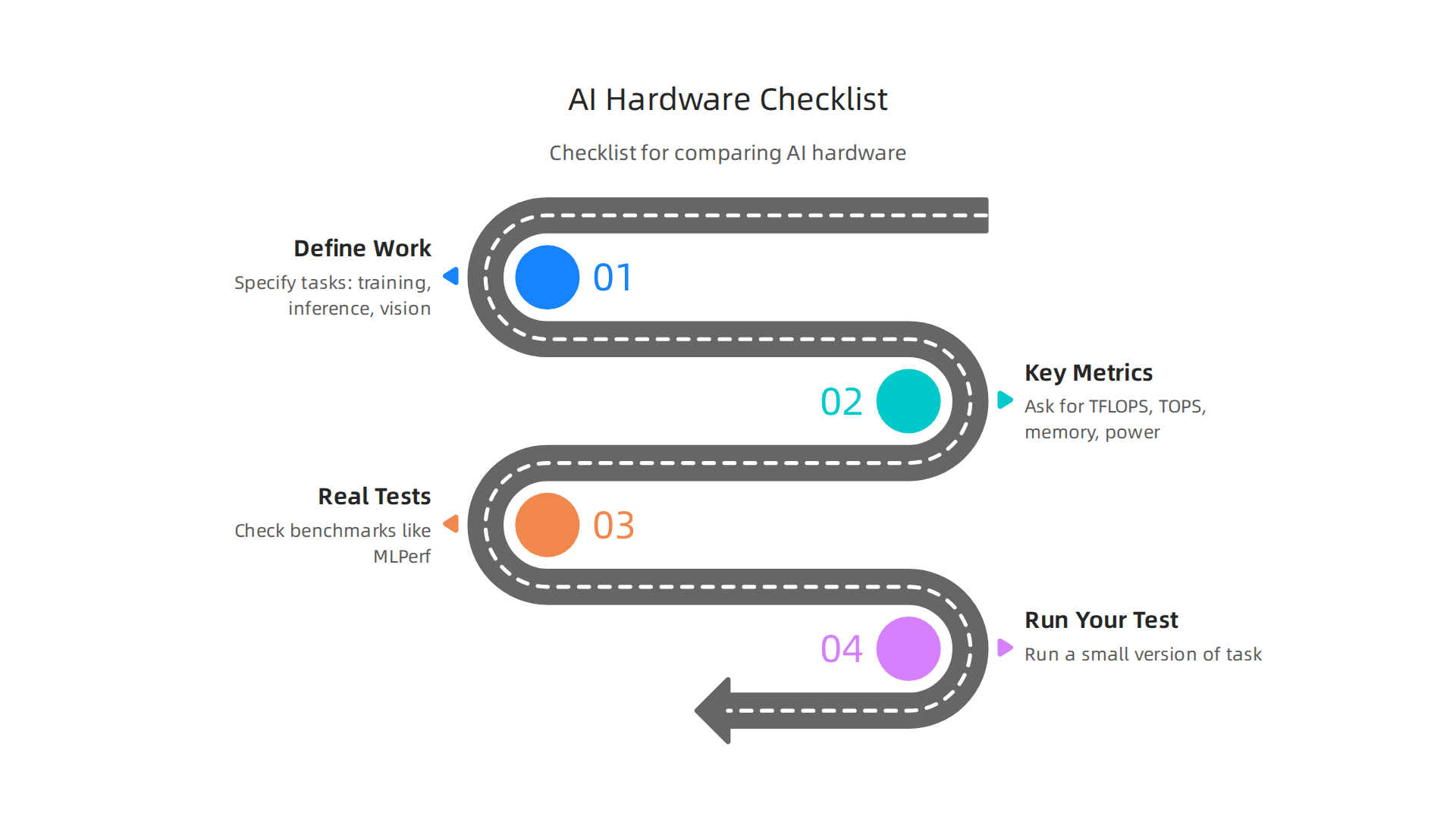
    Here’s a simple checklist to help you compare AI hardware:

    1. Define Your Work: What specific AI tasks will you run? Training, inference, LLMs, vision, or something else?
    2. Look at Key Numbers: Ask vendors for metrics like TFLOPS (how many math operations per second) for training and TOPS (for inference), memory size, and how much power it uses.
    3. Check for Real-World Tests: Are there independent tests or standard benchmarks like MLPerf that show how the hardware performs with real AI applications?
    4. Do Your Own Test: If you can, try running a small version of your AI task on the hardware.

    A clear checklist outlining practical steps for businesses to evaluate and select the right AI hardware.

    This helps you see how it really works for your needs. A good way to do this is to run the same task many times and see how consistent the results are Cloud to Edge: Benchmarking LLM Inference on Hardware ….

    By doing these checks, you can make a smarter choice for your AI hardware. If you’re looking for help deciding which computers are best for AI, learn more about how to choose the right AI-ready business computers in 2026. This careful planning helps you get the most value for your money.

    Choosing the right AI hardware is more than just looking at how fast it runs or its price tag. You also need to think about how well it will fit into your current systems, how you will use it every day, and its full cost over time. This is called the total cost of ownership.

    Integration, Deployment, and Total Cost of Ownership

    Getting new AI hardware to work properly means more than just plugging it in. You have to think about how it talks to your existing software. This involves things like software stacks, which are all the programs that make your AI work, and drivers, which help the hardware and software communicate. It also includes orchestration, which is like directing all the different parts of your AI system to work together smoothly. If these parts don’t play well, it can cause big headaches. Many computer companies offer tools and support to help with this, but it’s important to ask them about it upfront.

    Also, consider the ecosystem around the hardware. Does it have good support from other developers? Are there many tools that work with it? This maturity of the ecosystem can make a huge difference in how easy it is to use and manage your AI systems. Big tech companies often have wide support for their hardware, but you should still check.

    The price you pay for hardware is just the start. The true cost, or Total Cost of Ownership (TCO), includes many hidden fees. For example, AI hardware can use a lot of power. This means higher electricity bills. It also gets hot, so you might need special cooling systems, which also cost money to buy and run. Don’t forget software licensing fees, which you pay to use the programs that run on your AI hardware. And you’ll need people to set up, manage, and fix these systems, which adds to staff costs. All these things add up over time. Knowing the full picture helps you make smarter choices about which solutions truly save you money. The global semiconductor industry, which makes these chips, is always changing, with updates to supply chains and new reports coming out in 2026 that can affect prices and availability Global Semiconductor Industry Outlook – GSA.

    How you put your AI hardware to use is also key. This is called deployment. There are a few main ways:

    • Edge Deployment: This means putting AI hardware right where the work happens. For example, a smart camera at a factory that checks products instantly. This is great for speed and privacy. Many IoT companies use this method. Sometimes a powerful best mini PC can handle edge AI tasks.
    • Cloud Deployment: This is when you use AI power from big data centers over the internet, like from Google or Amazon. It’s flexible and you only pay for what you use, but it needs a good internet connection.
    • Hybrid and Cloud-Bursting: This mixes the two. You might do most AI work locally, but send big, tough jobs to the cloud when you need extra power. This gives you the best of both worlds.

    Thinking about these different ways of deploying AI helps you choose hardware that fits your business needs, not just today, but in the future too. To learn more about getting your AI systems ready, you might want to explore how to build and optimize your AI workstation for peak performance 2026.

    Keeping up with the fast-changing world of AI and tech can be hard.
    The Deep View Newsletter makes it easy, delivering clear daily AI updates right to your inbox. Stay informed without the info overload.
    The AI Newsletter Worth Reading

    Keeping up with the fast-changing world of AI and tech can be hard, especially when you’re trying to figure out the best way to buy new tools. For small and medium-sized businesses (SMBs) and internal teams, making smart choices about AI hardware needs a clear plan.

    Buying Guidance for SMBs and Teams: Practical Steps and Checklists

    When your team or small business thinks about getting new AI tools, it’s easy to feel lost with all the options. You want solutions that fit your budget and don’t need a tech expert to set up every time. That’s why having a simple guide can make a big difference.

    Staying informed without feeling overwhelmed is key.
    The AI Newsletter Worth Reading delivers clear, daily updates right to your inbox.

    One of the first big decisions is whether to use cloud services, buy your own hardware (on-premise), or mix both. Think of it this way:

    • Cloud capacity is like renting computing power. It’s great if your AI work changes a lot or if you only need extra power sometimes. You pay for what you use, and you don’t have to worry about maintaining the hardware. This can be very cost-effective for tasks that come and go.
    • On-premise hardware means buying and owning the AI computers yourself. This often makes sense if your AI work is constant and heavy. While the upfront cost is higher, it can be cheaper in the long run if your systems are used almost all the time. Actually, for tasks that are used a lot, having your own hardware can pay for itself quickly, sometimes in less than four months according to a 2026 report comparing on-premise versus cloud costs for generative AI On-Premise vs Cloud: Generative AI Total Cost of Ownership (2026 Edition).
    • Hybrid approaches blend these two. You might handle most tasks on your own computers but send very big jobs to the cloud when needed. This gives you flexibility and control.

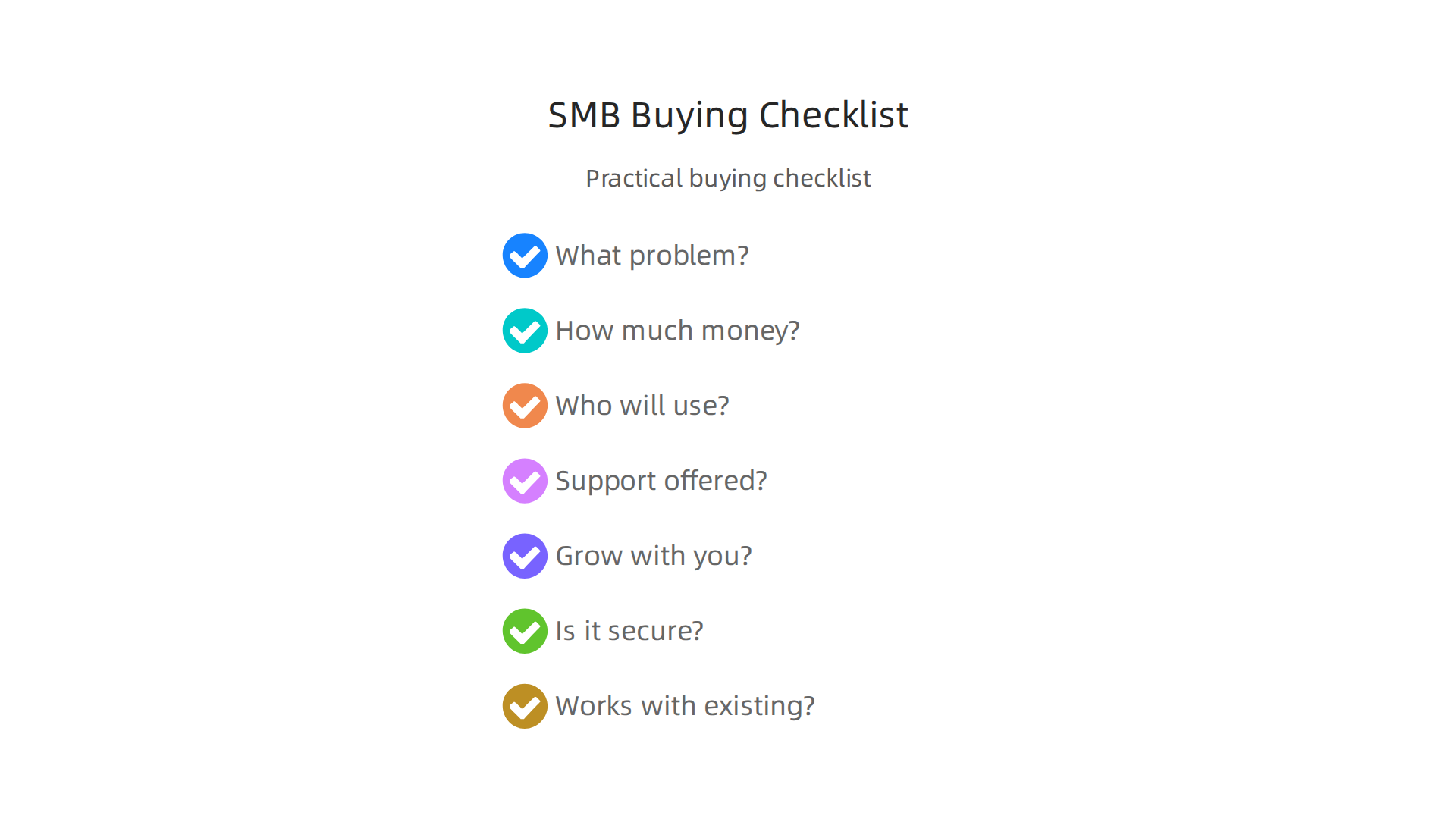
    To make sure you pick the right tools, here’s a simple checklist:

    • What problem are you solving? Clearly know what you want AI to do for your business.
    • How much money do you have? Set a clear budget for buying and running the AI tools.
    • Who will use it? Make sure the tools are easy enough for your team.
    • What kind of support is offered? Good help from the computer companies who sell the hardware is important for small teams.
    • Can it grow with you? Pick solutions that can handle more work as your business gets bigger.
    • Is it secure? Protect your important information.
    • Does it work with what you already have? New AI tools should fit smoothly into your existing setup.

    A practical checklist designed to guide small and medium-sized businesses in making informed AI hardware purchasing decisions.

    To reduce risks, start small. Try a pilot program with a few users before rolling it out to everyone. Then, do a phased rollout, which means slowly bringing in the new AI tools step by step. Also, always check vendor service level agreements (SLAs). These are like promises from the computer companies about how well their systems will work and the support they will give. Looking at how other successful AI companies make these decisions can also give you ideas. These steps help make sure your new AI tools really help your business grow without too much trouble.

    Summary

    This article explains why specialized AI hardware is a critical strategic issue for computer companies and business leaders in 2026, describing rapid market growth and the rise of purpose‑built chips across cloud, edge, and endpoint devices. It covers major trends—cloud‑first buys versus on‑premises control, custom ASICs from big tech, and a diverse landscape of GPUs, TPUs, NPUs and other accelerators—and why those choices affect performance, cost and sustainability. The guide walks through real operational concerns: supply‑chain strain, energy and cooling costs, vendor roadmaps, and how to read benchmarks and workload fit for training, inference and LLMs. It also explains total cost of ownership, integration challenges, and deployment models (edge, cloud, hybrid), and gives practical buying and pilot steps for SMBs and teams. After reading, leaders will know which questions to ask vendors, how to benchmark hardware for their workloads, and how to build a phased, cost‑aware AI hardware plan that limits risk and scales over time.

  • Choose the Best AI Tech Products for Your Team in 2026

    Choose the Best AI Tech Products for Your Team in 2026

    Using the right tools is super important for any job, and it’s especially true for teams working with Artificial Intelligence, or AI. In 2026, AI is changing how we do business at a very fast pace.

    Leaders strategize to harness AI's rapid advancements for business growth.

    This means that choosing the best tech products for your AI team is not just a small choice. It can make a big difference in how well your projects turn out.

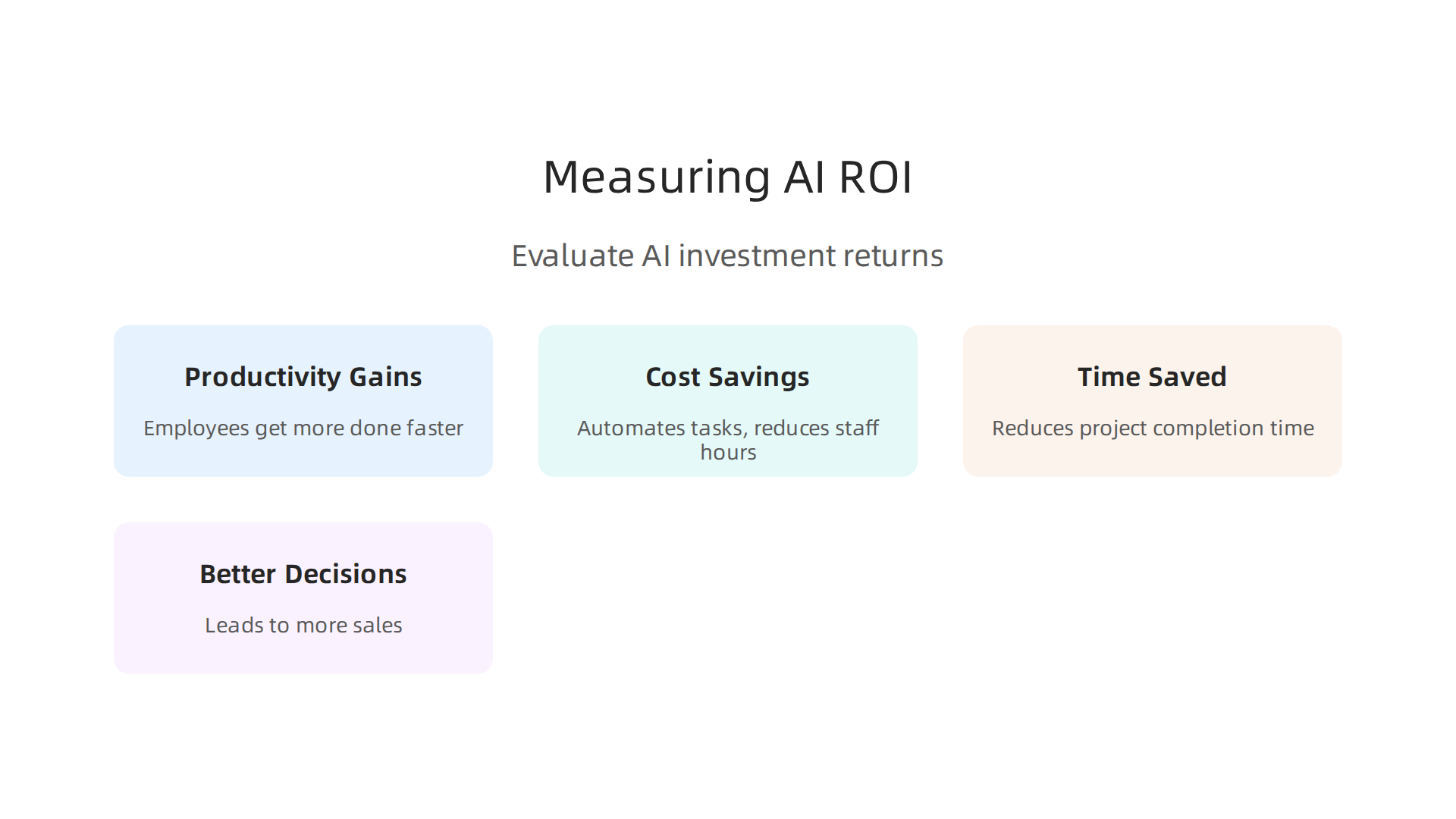
    Think about it: AI professionals need strong computers, smart software, and smooth ways of working together. But sometimes, it feels like there are too many options. It can be hard to know which hardware will make your AI models run fastest, or which software will help your team work best without costing too much. Many companies use AI, but not all of them see a good return on their investment. Actually, a report from Q1 2026 showed that only 8 percent of companies get a clear return on their AI money spent Global AI Pulse Q1 2026. This often happens because they pick the wrong tech products or don’t use them well.

    This guide is here to help you. We will look at the common problems AI teams face when picking their tools. This includes everything from picking the right computers to setting up smart ways to work. We will make it easy to understand, giving you clear steps and tips. Our goal is to help busy team leaders and decision-makers like you make smart choices about your AI tech products. You’ll learn how to pick tools that truly help your team do amazing things. For a deeper dive into making smart choices, learn how to choose AI-ready business computers in 2026.

    Stay ahead with the latest insights and trends in AI.
    The AI Newsletter Worth Reading

    Moving from picking the right kind of computers for AI to the actual machines themselves, let’s look closely at the hardware that makes AI work. Picking the right workstation and its main powerhouse, the Graphics Processing Unit (GPU), is a big step.

    A professional carefully considers critical hardware choices for optimal AI performance.

    It’s like choosing the right tools for a builder: a small hammer won’t build a skyscraper.

    1) Workstations & GPUs: what to buy and when

    When it comes to the actual computers, AI teams need different kinds of tech products for different jobs.

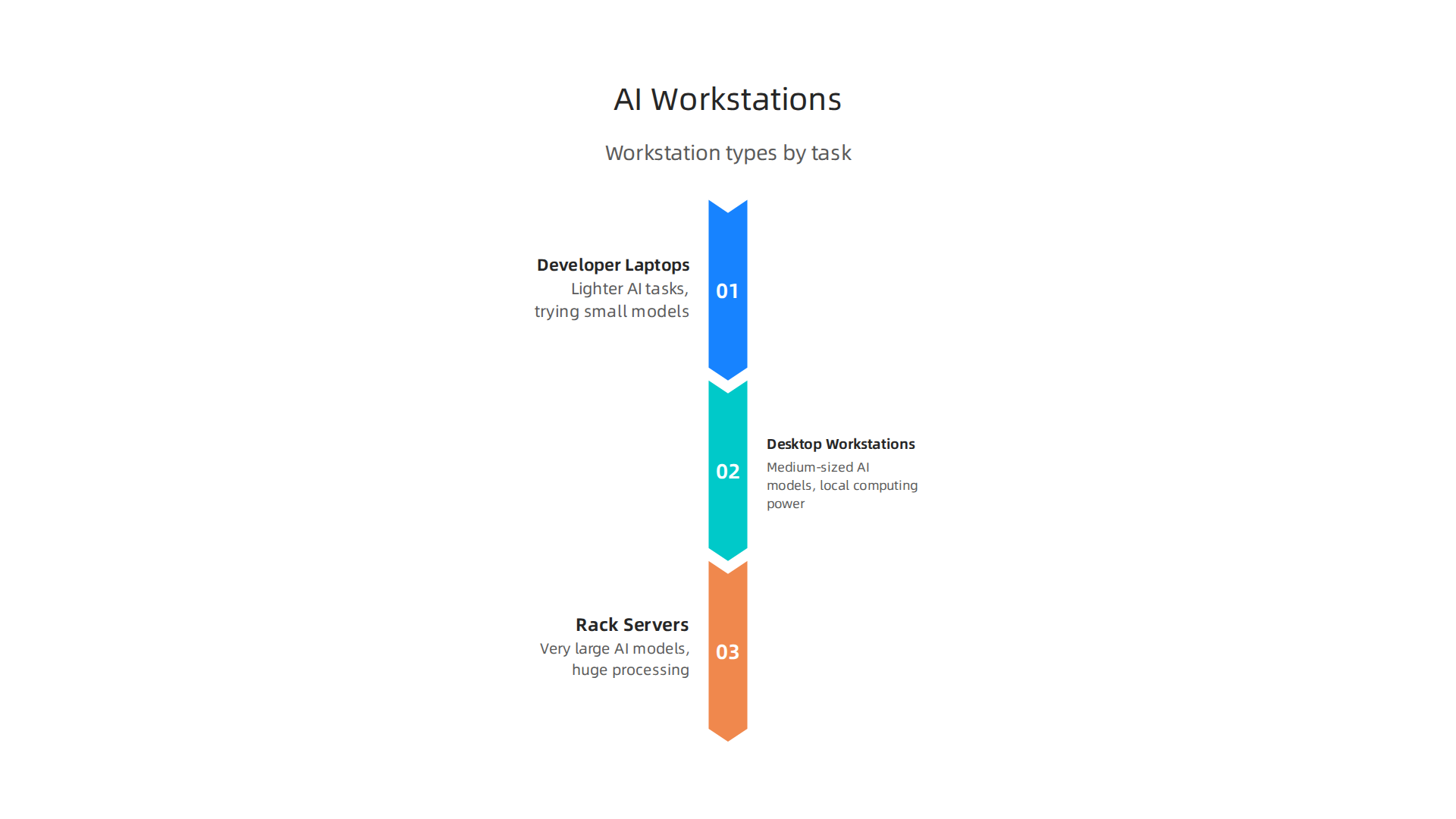
    Different AI tasks require specific workstation types, from portable developer laptops to powerful rack servers.

    • Developer Laptops: These are good for people who are just starting out, or for lighter AI tasks like trying out small models or writing code. A strong laptop, like a good picking the best Macbooks for AI for your 2026 projects or a thinkpad for programming, lets developers work from almost anywhere. They are easy to carry and powerful enough for many daily tasks.
    • Desktop Workstations: These are more powerful. They can hold bigger and better GPUs and have more memory. Desktop workstations are great for training medium-sized AI models or for when a team member needs a lot of local computing power. If you are looking to build one, you might wonder about the best place to buy pc parts. For those who prefer a ready-to-go option, looking for a best buy prebuilt gaming pc can sometimes lead to good deals on powerful machines that can be used for AI. You can also learn how to build and optimize your AI workstation for peak performance 2026.
    • Rack Servers: These are the big guns. They are kept in special data centers and can hold many powerful GPUs. Rack servers are used for training very large AI models that need huge amounts of data and processing power, or for running many AI tasks at once. These are for serious, large-scale AI operations.

    Understanding GPUs: The Brains of AI Computing

    The GPU is the most important part of any AI workstation. It’s what actually does the heavy lifting for AI tasks. When choosing a GPU, here are the key things to think about:

    • Memory (VRAM): This is super important. More VRAM means you can work with bigger AI models and larger amounts of data at one time. For example, a GPU with 80 GB of memory can help you train models with around 13-15 billion data points, and even larger ones for just running them Best GPU for Data Science Workstations in 2026. Some newer GPUs in 2026 offer even more, like 192 GB of VRAM for the biggest tasks Best GPU for AI Inference in 2026: Benchmarks, Pricing, and ….
    • Compute Type: This refers to how fast the GPU can do math. You might hear terms like "FLOPS" (Floating Point Operations Per Second) or "Tensor Cores." Tensor Cores are special parts of NVIDIA GPUs that are really good at the kind of math AI needs, speeding up many common AI tasks Accelerating ML Workloads using GPU Tensor Cores. Different GPUs perform differently across various AI workloads, and benchmarks help compare them AI GPU Benchmarks 2026: H100 vs H200 vs B200 vs RTX ….
    • Power Budgets: Powerful GPUs use a lot of electricity and create a lot of heat. You need to make sure your workstation has enough power and good cooling to handle them. This is especially true for compact gaming pc setups, where space for cooling is limited.
    • PCIe vs. NVLink: These are ways GPUs connect to the computer’s main board or to each other.
      • PCIe (Peripheral Component Interconnect Express) is the standard way. It works well for one or two GPUs.
      • NVLink is a faster connection method, mainly used by NVIDIA GPUs. It lets multiple GPUs talk to each other much quicker. This is vital when you have many GPUs working together on a single, huge AI model, as it helps them share information faster.

    Choosing the right tech products for your AI hardware means thinking about what your team will actually be doing. Will they be training huge models daily, or mostly experimenting with smaller ones? Matching the right workstation and GPU to the task will save you time, money, and headaches.
    Choosing where your AI tech products and workloads live is just as important as picking the right machines. You have two main choices: using cloud services or keeping everything on your own computers, also known as "on-premise." Each option has its own upsides and downsides when we look at costs, how fast things work, and rules about data.

    2) Cloud vs. on-premise: cost, latency, and compliance trade-offs

    Let’s break down the main differences between using the cloud and keeping things on-premise for your AI tasks in 2026.

    A comparison of cloud and on-premise solutions for AI workloads, detailing costs, latency, and compliance factors.

    Understanding the Costs

    • Cloud Costs: Cloud services, like those from big companies, let you rent computing power. You pay for what you use. This can be great for trying new things or for tasks that don’t happen all the time. It avoids a big upfront cost. However, if you’re constantly running large AI models, the costs can add up quickly over time. Sometimes, yearly cloud costs can even be more than running your own setup, especially for heavy AI inference tasks. You can use tools to compare the total cost over time for cloud versus on-premise AI systems in 2026 to get a clearer picture AI Inference Cost 2026: CapEx vs OpEx, Edge vs Cloud + ….
    • On-Premise Costs: Buying your own servers and GPUs means a large cost at the start. You also need to pay for power, cooling, and people to manage the systems. But for companies that run AI tasks all the time, owning your tech products can be cheaper in the long run. For example, setting up a cluster of NVIDIA H100 GPUs for a large language model could cost around $200,000, plus about $30,000 a year for power and cooling, but these costs are spread out over several years LLM Inference Cost Calculator — Cloud vs. On … – Taction Software.

    Latency: How Fast Is It?

    Latency is how long it takes for a system to respond.

    • On-Premise: When your AI hardware is right in your office, the data doesn’t have far to travel. This means very low latency, which is super important for AI applications that need to react instantly, like self-driving cars or real-time factory controls.
    • Cloud: Data has to travel to and from the cloud data centers. This can add a small delay. For many tasks, this delay is not a big deal, but for those needing instant answers, it can be a problem.

    Rules and Privacy: Compliance and Data Residency

    This is often the biggest reason why companies choose on-premise or a mix of both.

    • Data Residency: This means where your data is actually stored. Many laws, especially for healthcare, finance, or government, require data to stay within a certain country or region. For AI, this includes all the data used to train models, the models themselves, and any results AI Data Residency Requirements by Region: The Complete ….
    • Data Sovereignty: This is about whose laws apply to your data. If your data must obey the laws of a specific country, having your own servers there ensures this.
    • Compliance: Following these rules is a must. If your business handles sensitive information, or operates in a regulated industry, you might be required to keep your AI workloads on-premise or use a hybrid setup where sensitive data stays local Hybrid LLM deployments, when to keep workloads on-prem.

    For businesses that need full control over their data’s location and legal framework, an on-premise or hybrid approach is often the only way to meet strict compliance rules. This helps avoid problems with things like GDPR in Europe, where rules about data are very strict On-Premise RAG: Deployment Guide for Regulated Sectors – edtek.ai.

    Hybrid Setups: The Best of Both Worlds

    Many companies use a hybrid setup. They use the cloud for tasks that are not sensitive or need a lot of flexible power. They keep sensitive data and critical AI processes on their own servers to meet rules and ensure low latency. This allows them to use the advantages of both cloud and on-premise solutions. To make smart choices for your business, it’s helpful to understand how to choose AI ready business computers in 2026 that can fit into either setup.

    Staying informed about these choices is key to making the best decisions for your business.

    Want to keep up with the newest trends and insights in AI and technology? Get clear daily AI updates from The AI Newsletter Worth Reading.

    After figuring out where your AI workloads will run, the next big step is choosing the right software tools. These developer tools are like the workbench and toolkit for creating, managing, and improving your AI models. Picking the right ones is just as important as selecting the powerful hardware or cloud services we talked about earlier.

    3) Developer tools: IDEs, model ops, and experiment tracking

    To build successful AI tech products in 2026, you need a set of smart software tools. These tools help developers at every stage, from the first idea to a working AI system.

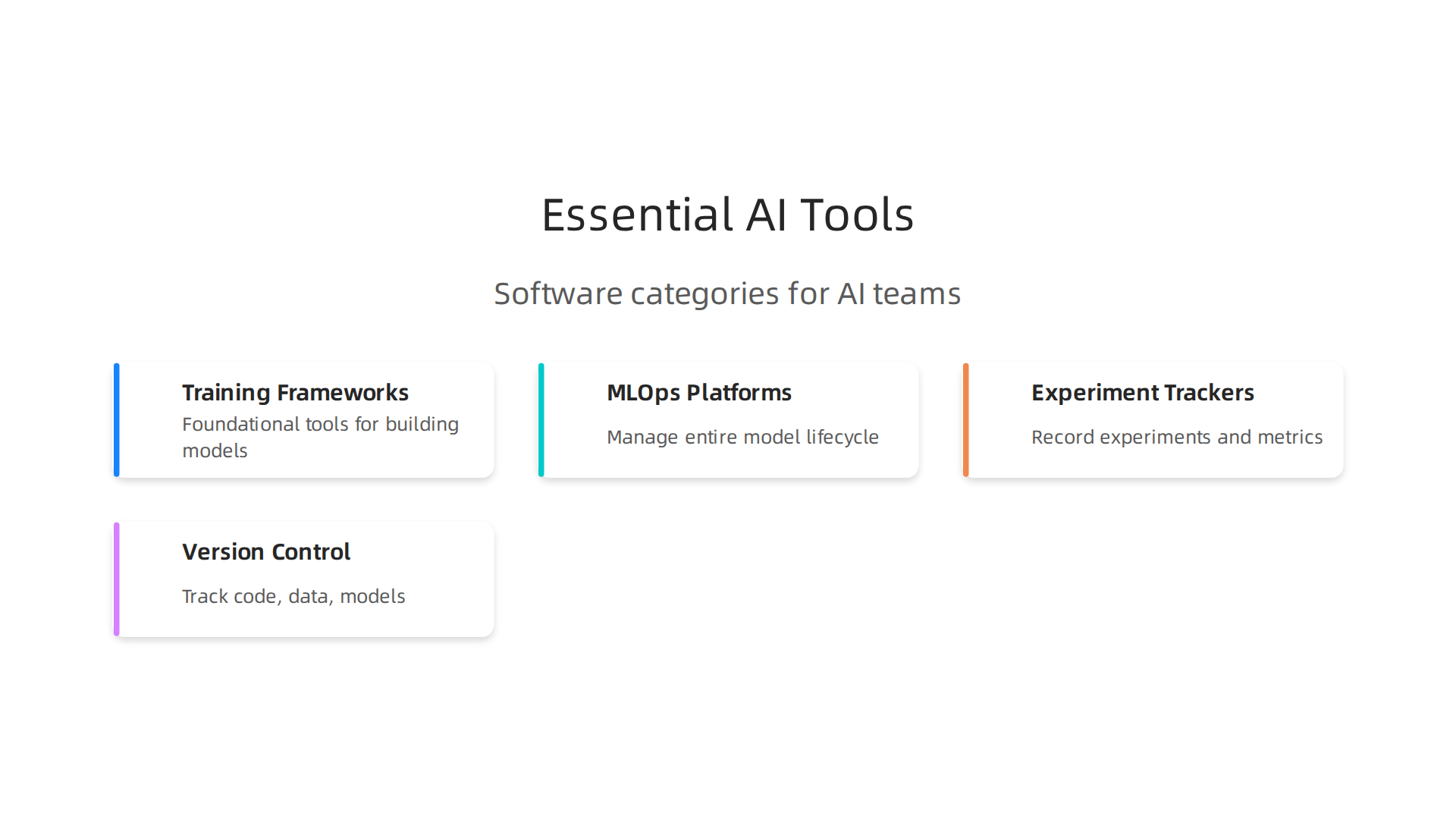
    Essential Software Categories for AI Development

    Here are the main types of software tools every AI team needs:

    Key software categories that empower AI teams through the entire model development lifecycle.

    • Model Training Frameworks: These are the foundational tools for building AI models. Think of them as the programming languages specifically designed for AI. Popular examples include TensorFlow and PyTorch, which help developers write the code that teaches AI models.
    • MLOps Platforms: MLOps, or Machine Learning Operations, is all about making the process of creating and deploying AI models smooth and reliable. It helps teams manage the entire lifecycle of an AI model, from training to testing and putting it into action. MLOps helps companies get their AI models into production in days instead of months by automating many steps, as highlighted in the 2026 MLOps learning roadmap MLOps Learning Road: Step by Step Guide (2026).
    • Experiment Trackers: When you’re building an AI model, you often try many different settings and approaches. Experiment trackers keep a detailed record of each attempt. They log things like the settings you used, the data that went into the model, and how well the model performed. This way, you can easily compare results and know which changes worked best. Tools like MLflow are widely used for this, with a survey showing it dominates the experiment tracking space in 2026 Machine Learning & MLOps – Survey Results 2025–2026.
    • Version Control: Just like software developers use version control for code, AI teams use it for their code, data, and even the AI models themselves. This ensures everyone on the team is working with the latest versions and can easily go back to an older version if needed.

    Choosing the Right Tools for Your Team

    When picking these tech products, think about:

    • Team Size: For smaller teams, simpler tools might work fine. Larger teams often need more robust MLOps platforms that allow many people to work together efficiently.
    • Deployment Targets: Where will your AI models run? Some tools are better suited for cloud deployments, while others work well for on-premise systems or even smaller edge devices.
    • Integration Needs: How well do these tools work with your existing systems and other software? You want tools that play nicely together to avoid headaches.

    No matter the scale of your AI ambitions, from personal projects on a powerful computer to enterprise-wide deployments, choosing the right software can make all the difference. To ensure your hardware keeps up, learn how to build and optimize your AI workstation for peak performance in 2026. Making informed choices about these crucial tools helps your business reach its AI goals. If you’re looking for guidance on broad AI adoption, discover how to choose AI for business tools that deliver real results in 2026.

    Choosing the right software for building AI models is just one piece of the puzzle. You also need to make sure your AI has good data to learn from. This means having the right tools to bring in, clean, and prepare all that information. Without good data, even the best AI tech products won’t work well.

    Team members collaborate to ensure high-quality data powers AI models effectively.

    4) Data pipelines, labeling, and synthetic data tools

    Think of data as the food for your AI. Just like you need to prepare good food for yourself, AI needs well-prepared data. This is where data pipeline, labeling, and synthetic data tools come in. They help you get, clean, and make sense of all the information your AI needs.

    Tools for Managing AI Data

    Here are the main types of tools that help with AI data:

    • Data Ingestion Tools: These tools are like smart funnels. They help you collect data from many different places. This could be information from websites, sensors, apps, or even old files. These tools make sure the data flows smoothly into where your AI can use it.
    • Data Labeling and Annotation Tools: AI models learn by looking at examples. For instance, to teach an AI to spot cats in pictures, you need to show it many pictures of cats and label them as "cat." These tools let people draw boxes around objects, tag words, or mark sounds in the data. This "labeling" helps the AI understand what it’s looking at. It’s a key part of making useful AI tech products.
    • Synthetic Data Generation Tools: Sometimes, you might not have enough real data. Maybe the data is private, or a certain event happens very rarely. Synthetic data tools can create new, artificial data that looks and acts like real data. This fake data can be used to train AI models without using sensitive real-world information. This is a big help for privacy and for making AI smarter faster.

    Why Data Quality Matters So Much

    The quality of your data directly impacts how well your AI models perform. If your data is messy, incomplete, or wrongly labeled, your AI will learn bad habits. This can lead to wrong answers or even dangerous mistakes.

    High-quality data, on the other hand, helps AI models learn faster and be more accurate. This means you get results from your AI projects much quicker, boosting your business value. Actually, good data reduces the time it takes for your AI investments to start paying off.

    Also, in 2026, where your data is stored and how it’s handled is super important due to rules and laws. This is called "data residency" and "data sovereignty." Some rules say your data must stay in a certain country or region. Choosing the right tools can help you follow these rules. For example, AI data residency refers to where AI-related data, like training data and model outputs, is stored and processed physically, and these requirements vary by region AI Data Residency Requirements by Region: The Complete …. It’s vital for businesses to understand where their data sits to meet regulatory demands Data Residency for AI Workloads: Enterprise Cloud Guide. For more on keeping up with these important rules, learn about Mastering the AI Future Standard 2026: Your Guide to Compliance and Growth.

    To stay ahead in the fast-changing world of AI, keeping up with the latest insights is key.

    Get clear daily AI updates from The AI Newsletter Worth Reading.

    After making sure your AI has good data, the next step is getting those AI models to work fast and well. This is where cloud services and managed Machine Learning (ML) platforms come in handy. These are special online services that help you build, run, and watch your AI models without having to set up all the complicated computer systems yourself. They are a big part of modern tech products for AI.

    When to Choose Cloud Services Over Building Your Own

    Imagine you want to build a house. You could buy all the tools and materials, learn how to build, and do it all yourself. Or, you could hire a construction company that already has everything ready.

    • Building Your Own (In-House): This means you buy all the computer parts, like servers and special graphics cards (GPUs), and hire experts to set them up and keep them running. This can be cheaper in the very long run if you use them all the time and have a lot of specific needs. For example, if you need a thinkpad for programming or are building a compact gaming pc for AI work, you might consider buying individual pc parts. However, it takes more time and skilled people.
    • Using Cloud Services (Managed Platforms): These are like renting that construction company. You pay a service like Google, Amazon, or Microsoft to use their powerful computers and special software tools. This often means you can get your AI projects working much, much faster. It’s often the way to go for many businesses in 2026. While on-premise solutions are required for certain strict data rules, for many others, cloud options can be more flexible and cost-effective, balancing immediate needs with long-term expenses AI Inference Cost 2026: CapEx vs OpEx, Edge vs Cloud + …. You can compare the costs of cloud-based versus on-premise AI solutions using tools like an LLM Inference Cost Calculator.

    Choosing managed platforms can help you launch your AI tech products much quicker. This is known as speeding up your "time-to-market."

    Key Features of Managed ML Platforms

    Managed ML platforms offer some really helpful features that make building and running AI models easier:

    • Autoscaling: Imagine your AI tool suddenly becomes very popular. Autoscaling means the platform automatically adds more computer power when many people are using your AI. When fewer people are using it, it scales back down. This saves you money and makes sure your AI always runs smoothly, no matter how busy it gets.
    • Model Monitoring: Once your AI model is working, you need to make sure it keeps doing a good job. Model monitoring tools watch your AI closely. They check if it’s giving correct answers, if it’s using too much computer power, or if anything seems off. This helps you fix problems before they become big issues.
    • Built-in MLOps: MLOps stands for Machine Learning Operations. It’s about making the whole process of building, deploying, and managing AI models easy and organized. Managed platforms often have MLOps tools already built-in. This means you don’t have to spend a lot of time setting up complex systems. Instead, you can focus on making your AI smarter.

    These managed platforms help businesses big and small to use AI without needing to become experts in setting up huge computer systems. If you’re looking to understand the different options, check out our guide on Enterprise AI Platforms 2026: Top Providers and How to Choose the Right One.

    To keep learning about these powerful tools and more, don’t miss out on important updates. Stay informed with The AI Newsletter Worth Reading.

    After setting up efficient AI models and choosing the right cloud services, the next step is making sure the people who use and create with these AI tools also have the best equipment and ways of working. This is where special accessories and smart team tools come in. They help everyone be more productive.

    Essential Gear for AI Creators

    Good hardware can make a big difference in how fast and smoothly creative work gets done. Think about what a creator needs beyond just a powerful computer.

    AI Tools for Smarter Creative Work

    Today, many helpful software tools use AI to make creative jobs easier and faster. These are like having a smart assistant for your creative tasks.

    • Writing and Design Tools: AI can help you write better and design faster. Tools like ChatGPT and Claude are great for generating text ideas, while Midjourney and Adobe Firefly help with creating images. Canva AI can help with templates and graphics, making design simpler for everyone. Actually, in 2026, these are among the 9 Best AI Tools for Creating Digital Products in 2026.
    • Video and Productivity Tools: For video creation, tools like Synthesia and Descript use AI to help with editing and even creating AI-generated avatars. You can also explore best AI avatar tools for video content in 2026 for more options. For general tasks, AI productivity tools can help manage your schedule, take notes, and summarize information, speeding up everyday work 19 Top AI Productivity Tools for 2026 (Tested & Reviewed). Many top AI tools for creators are available to help with different parts of the creative process.

    Streamlining Workflows with AI Templates

    One big challenge is making sure creators and engineers work well together. AI workflow templates can help a lot.

    • What are Workflow Templates? Think of these as clear guides or "recipes" for how to do a task using AI. They tell you exactly what steps to take, what information you need to start, and what the final result should look like. These templates help automate parts of your creative work using AI tools like GPT prompts Top AI Workflow Templates (2026): Automations & G….
    • Reducing Friction: By using these clear steps, everyone knows what to expect. This means fewer misunderstandings and less wasted time between creators making new things and engineers putting them into real tech products. For example, using Best Notion AI Templates for Productivity 2026 can help teams stay organized. Building repeatable workflows is key to setting up an effective 2026 AI Productivity Stack.

    After mastering AI workflows, it’s time to talk about the money side of things. How do you buy these important AI tools and tech products smartly? And how do you know if they are actually helping your business grow? This section will help you understand how to buy, budget for, and measure the success of your AI investments.

    Smart Buying for AI Tech Products

    When you’re ready to get AI tech products, it’s like shopping for anything important for your business. You want to make sure you get the right stuff without spending too much. This means looking at hardware and software.

    First, think about the tools you need. Will you use powerful computers locally, like a dedicated workstation, or mostly cloud-based services? Sometimes, a good local computer is needed for creative work, while for heavy AI tasks, cloud services are best. You also need to think about the full cost over time, not just the starting price. This includes things like ongoing subscriptions, maintenance, and energy use. A 2026 report looked at the total cost of ownership for generative AI, comparing on-premise (local) versus cloud solutions, which can help guide your choices On-Premise vs Cloud: Generative AI Total Cost of Ownership 2026 Edition. Knowing this helps you pick the right mix of resources. You might even find value in exploring options like used PC parts for AI to get powerful performance without a huge budget.

    When buying, look for vendors that offer clear terms and good support. A 2026 guide on enterprise AI procurement offers tips on RFPs (requests for proposals) and vendor selection to help you make smart choices The 2026 Enterprise AI Procurement Playbook: RFPs, Vendors & TCO.

    Budgeting for AI

    Budgeting for AI means knowing where your money will go. Here are some common areas where costs add up:

    • Software Subscriptions: Many AI tools work on a monthly or yearly payment plan.
    • Hardware: This includes powerful computers for your team, like a ThinkPad for programming or even a compact gaming PC if you need strong graphics power for AI tasks.
    • Data Costs: Preparing and storing the data that AI models learn from can be a big expense.
    • Talent: Hiring experts to set up and manage AI systems also costs money.

    In 2026, the cost for enterprise AI is quite varied. Some large companies spend a lot, but the typical company spends less. Understanding these costs is crucial for planning your budget The AI Cost Stack in 2026: Data, Talent, Compute, and ….

    Measuring the Return on Investment (ROI)

    After you’ve bought and set up your AI tech products, how do you know if they’re actually making a difference? Measuring ROI means checking if the benefits you get are more than the money you spent.

    Business professionals review financial reports to evaluate the return on investment from AI initiatives.

    Here are some ways to measure if your AI tools are successful:

    Effective ways to evaluate the return on investment for AI tech products and initiatives.

    • Productivity Gains: Are your employees getting more done in less time? For example, if an AI writing tool helps a content creator finish articles faster, that’s a win.
    • Cost Savings: Is AI helping you save money in other areas? Maybe it automates tasks that used to require a lot of staff hours.
    • Time Saved: If AI helps reduce the time it takes to complete a project, that’s valuable. For example, some procurement AI deployments have shown a payback period of just 9 to 18 months Procurement AI ROI: Data From 50 Real Deployments.
    • Better Decisions: Is AI helping you make smarter choices that lead to more sales or happier customers?

    While many companies are using AI in 2026, actually measuring the ROI can be tricky. Only about 41% of companies using AI can clearly show a measurable ROI on their biggest AI programs State of Enterprise AI 2026 Report. This shows that tracking your AI investments is very important.

    For small and medium businesses (SMBs), there’s good news too. AI embedded in revenue or cost flows can show an ROI of 75% to 150% AI ROI for SMBs: 2026 Benchmarks. It’s all about choosing the right tools and tracking their impact carefully.

    Want to stay on top of all the latest AI trends and how they impact business?
    Join our community of informed professionals.
    The AI Newsletter Worth Reading

    Summary

    This article is a practical guide to choosing the right tech products for AI teams in 2026, covering hardware, software, deployment, data and procurement so leaders can make smarter investments. It explains which workstations and GPUs suit different workloads, and why VRAM, compute type and interconnects like PCIe or NVLink matter. The guide compares cloud, on‑premise and hybrid setups with a focus on cost, latency and regulatory compliance, and it shows when managed platforms make sense. It also outlines essential developer tools—training frameworks, MLOps, experiment trackers and versioning—and the data stack: ingestion, labeling and synthetic data. Finally, the article walks through creator gear, workflow templates, buying strategies, budgeting and practical ways to measure ROI so teams can reduce risk and accelerate value from AI projects.

  • Build and Optimize Your AI Workstation for Peak Performance 2026

    Build and Optimize Your AI Workstation for Peak Performance 2026

    It’s 2026, and artificial intelligence (AI) is no longer just a buzzword. It’s a tool that many businesses, big and small, use every day. From making special pictures to writing new ideas, AI helps teams get more done. But here’s the thing: for your team to really shine with AI, the computer they use needs to be up to the task. Having the right "optimum tech" or a powerful "pc setup" is super important.

    When your computer can handle AI tasks right on your desk, it changes a lot. First, it helps you work much faster. Instead of waiting for things to load or process on a faraway server, your ideas can come to life in moments. This quickness means your team can try out new things and fix problems much quicker. Think of it like drawing. If your pencil moves slowly, you can’t sketch as many ideas. A fast computer is like a super-fast pencil for AI.

    This speed also helps save money. When you run AI tasks on your own computer, you don’t have to pay for expensive cloud services as often. For small to medium businesses (SMBs), this can make a big difference in costs. Plus, when developers and creators have powerful tools that work smoothly, they are happier and get more done. It boosts their productivity and keeps them focused on creating, not waiting.

    For example, to run even a small AI model, you need a computer with at least 16GB of system memory (RAM) and a graphics card with 8GB of its own memory (VRAM). For bigger tasks, you’ll need 24GB or more VRAM and maybe 64GB to 128GB of system RAM [1, 2]. Picking the right parts for your pc setup is key to making sure your AI efforts pay off.

    Screenshot of the AI Tools News Today website, a resource for businesses seeking insights on AI-ready computer configurations.

    In this guide, we’ll walk you through how to build an AI workstation that balances great performance with a smart budget. You’ll get an easy-to-follow checklist and recommendations for hardware that will keep your team at the top of their game without breaking the bank.

    Do you want to stay updated on the latest AI trends and tools that can help your business thrive?
    Get clear daily AI updates from The Deep View Newsletter.

    Choosing the right parts for your computer is a big step in getting your team ready for AI tasks.

    A person intently planning and making strategic decisions regarding optimal hardware choices for an AI workstation.

    Think of these parts like the different players on a sports team. Each one has a special job that helps the whole team win. For AI, you need a strong CPU (the "brain"), a powerful GPU (the "muscle"), lots of RAM (the "short-term memory"), and fast storage (the "long-term memory"). Getting the right optimum tech in your pc setup means your AI projects will run smoothly and quickly.

    Graphics Card (GPU) is Key

    The most important part for most AI tasks is the Graphics Processing Unit, or GPU. It’s like the main engine for AI. GPUs are very good at doing many calculations at once, which is exactly what training AI models and using them (called "inference") needs.

    • Training small models or fine-tuning: If you’re working with smaller AI models, or just tweaking existing ones, a GPU with about 8GB to 16GB of its own memory (VRAM) is often enough. For example, running a 7-billion parameter AI model comfortably needs 16GB of VRAM Local AI Hardware Requirements (2026): Complete Guide.
    • Larger AI models: For bigger jobs, like training large language models or working with complex image AI, you’ll need much more VRAM. A graphics card with 24GB or even 32GB of VRAM is much better. Some of the best consumer-grade cards in 2026, like the NVIDIA RTX 4090, offer 24GB VRAM, which is great for many tasks Best AI PC Builds for Running Local LLMs in 2026 – Newegg.

    Screenshot of the Newegg homepage, a prominent online retailer for computer hardware components relevant to AI PC builds.

    You might wonder about consumer GPUs (made for gamers) versus professional GPUs (made for serious work). Consumer GPUs, like the RTX series, offer great performance for their price, especially if you’re building a budget-friendly AI workstation. Professional cards are more expensive but offer more VRAM and special features for huge projects. For most small and medium businesses, a powerful consumer GPU can be a very smart choice for your AI pc setup.

    Central Processing Unit (CPU) and System Memory (RAM)

    While the GPU does the heavy lifting for AI math, the CPU is still very important. It handles everything else, like getting your data ready for the GPU (data preprocessing), running the operating system, and managing other programs. A CPU with many "cores" (the parts that do work) helps a lot with these tasks. It keeps the data flowing smoothly to the GPU so your graphics card isn’t waiting around.

    For system memory, or RAM, you need a good amount too. It holds all the data that your CPU and GPU are working on at that moment. For basic AI tasks, 32GB of RAM is a good start in 2026. But for more serious work, like if your GPU doesn’t have enough VRAM and needs to use some of the system RAM (called "CPU offloading"), 64GB or even 128GB of RAM is much better How Much RAM for Local AI in 2026? Memory Guide. This makes sure everything runs quickly without slowing down.

    Fast Storage for Data

    Finally, don’t forget storage. AI models and the data they learn from can be very large. You need fast storage, like NVMe SSDs, to quickly load and save these files. Slow storage can make your whole system feel sluggish, even if you have a powerful GPU and lots of RAM. Having 2TB or more of fast NVMe storage is often recommended for serious AI work Best PC for AI, Machine Learning & Data Science (2026) | CORSAIR.

    Smart Choices for Your Budget

    Building an AI workstation is about finding the right balance. You want enough power without spending too much.

    An infographic illustrating recommended hardware specifications for entry-level, mid-range, and heavy AI workloads.

    • For entry-level AI: A strong CPU, 32GB of RAM, and a consumer GPU with 8-16GB VRAM, along with a fast 1TB NVMe SSD, can get you started.
    • For mid-range tasks: Upgrade to a faster CPU with more cores, 64GB of RAM, and a GPU with 24GB VRAM.
    • For heavy AI workloads: Consider a top-tier CPU, 128GB+ of RAM, and a GPU with 32GB+ VRAM (or even two GPUs), plus multiple large, fast NVMe drives.

    You can often save money by looking into options like used PC parts for AI or even finding a used gaming PC for AI that you can upgrade. This smart approach to building your pc setup means you can get the optimum tech you need without stretching your budget too thin.

    Choosing the right computer parts is just the first step for AI work. Think of it this way: even the fastest race car needs a good driver and the right fuel to win. For your AI pc setup, the "driver" is the software that makes everything run. Getting this software stack right is key to having the most optimum tech and smooth performance. It makes sure your powerful GPU can actually do its job well.

    Understanding the AI Software Stack

    The software stack for AI has different layers, much like a sandwich. Each layer needs to work with the ones above and below it.

    An infographic illustrating the hierarchical layers of the AI software stack, from GPU drivers to AI frameworks.

    1. GPU Drivers: These are special programs that let your operating system (like Windows or Linux) talk to your graphics card. Without the right driver, your GPU can’t do much.
    2. CUDA or ROCm (The GPU Language): This is the magic layer that lets AI programs tell your GPU what to do.

    Screenshot of the NVIDIA homepage, highlighting their leadership in GPU technology and AI computing solutions.

    *   **ROCm** is AMD's answer, and it works with AMD GPUs. It has gotten much better in 2026, with more official support for consumer cards like the RX 7900 XTX [AMD ROCm vs CUDA for Local AI [2026 Compared]](https://www.kunalganglani.com/blog/amd-rocm-vs-cuda-local-ai-open-source-guide). However, CUDA often still performs 10% to 30% better than ROCm [ROCm vs CUDA: GPU Computing Comparison (July 2026)](https://www.thundercompute.com/blog/rocm-vs-cuda-gpu-computing).
    
    1. AI Frameworks: These are the big toolkits that AI developers use, like PyTorch and TensorFlow. They use CUDA or ROCm to send tasks to the GPU.

    Avoiding Software Conflicts

    The tricky part is making sure all these layers are compatible. For example, a new version of PyTorch might need a specific version of CUDA, which in turn needs a certain NVIDIA driver. If these versions don’t match, your AI programs might crash or run very slowly. AMD’s ROCm also has detailed compatibility lists, showing which versions work with different GPUs and operating systems ROCm 7.14.0 compatibility matrix – ROCm Documentation.

    It’s a good idea to always check the "compatibility matrix" for your chosen CUDA or ROCm version and your AI frameworks. This small step can save you a lot of headaches. Staying on top of updates and new releases in the world of AI technology is essential for any business.
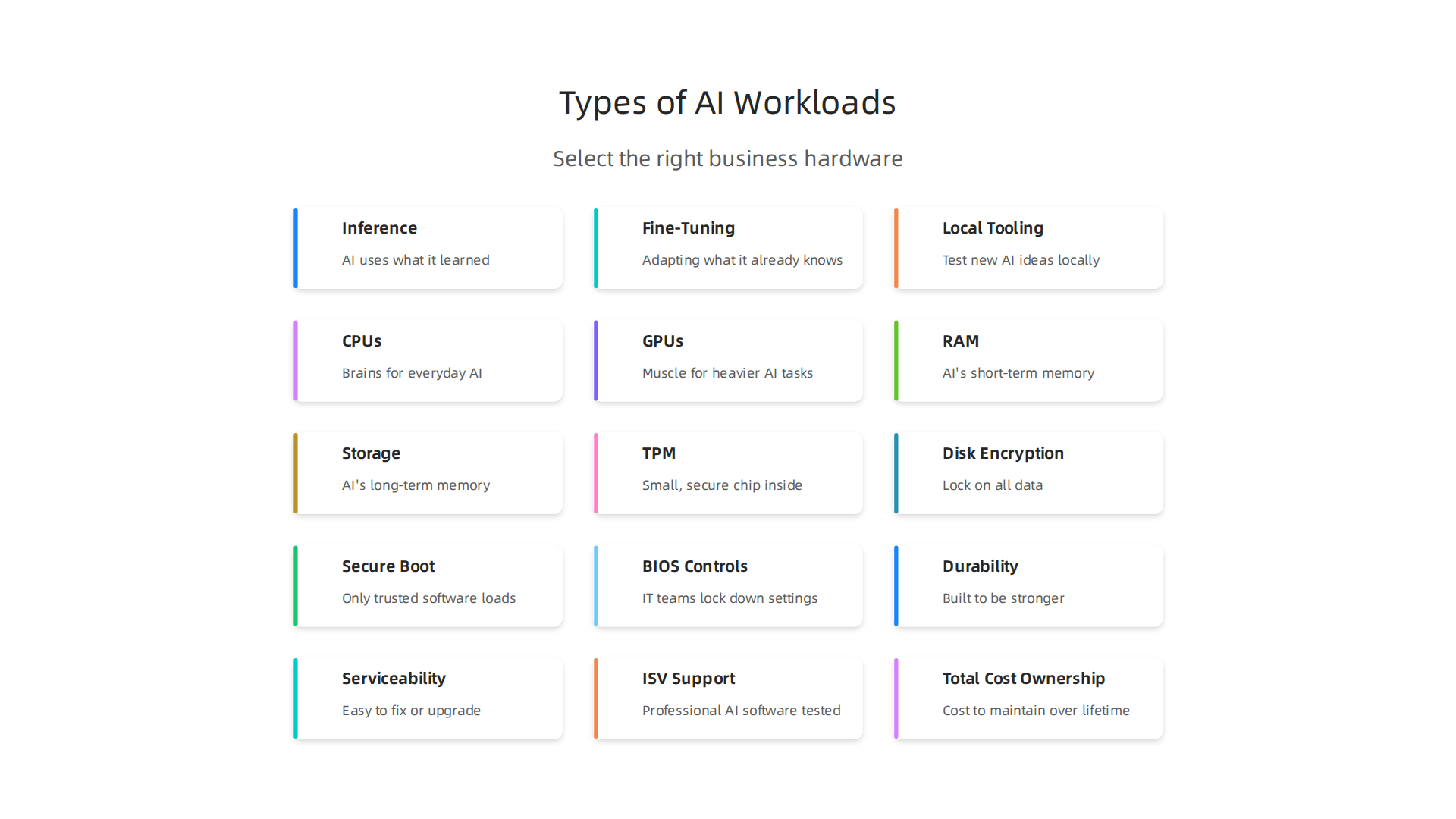
    Boosting Performance Without New Hardware

    Even with your current pc setup, you can make your AI tasks run faster by tuning your software.

    • Mixed Precision Training: This is a smart trick where your AI model uses smaller, simpler numbers for some calculations. This speeds up training and saves GPU memory (VRAM). It’s like doing some math with rough estimates instead of always exact numbers, which is often good enough for AI and much faster. Many modern AI frameworks support this.
    • Memory Management: Being careful about how your programs use VRAM and system RAM can make a big difference. Closing other programs, reducing the "batch size" (how many pieces of data the GPU processes at once), or optimizing your code to use less memory can lead to faster training and inference.
    • Software Updates: Keeping your GPU drivers, CUDA/ROCm, and AI frameworks updated to compatible versions can often bring performance improvements and new features. It’s like getting a tune-up for your car.

    By focusing on these software aspects, you can squeeze out more performance from your existing hardware, ensuring you truly have the optimum tech for your AI projects. If you’re looking to understand more about choosing the best systems, check out our guide on how to choose AI ready business computers in 2026.

    Staying informed about the latest developments in AI tools and compatible software can also help you make smart choices. It ensures your software stack remains efficient and powerful.

    Get clear daily AI updates from The AI Newsletter Worth Reading.

    Okay, your powerful AI graphics card needs to crunch huge amounts of data. But if that data can’t get to the GPU fast enough, it’s like having a super-fast car stuck in traffic. That’s why memory, storage, and how your computer moves data around (called I/O) are just as important for a truly optimum tech setup.

    A person focused on a screen displaying complex charts and data, representing efforts to analyze and optimize data flow.

    We need to prevent any slow-downs, or "bottlenecks," that stop your AI projects from running smoothly.

    Making Sure Your AI Data Flows Fast

    When you train an AI model, it needs to read huge collections of information, called datasets. It also saves its progress often, creating "checkpoints." If these files are slow to load or save, your GPU will sit idle, waiting for data. That’s wasted time and power.

    1. Dataset Formats:
    The way your data is stored matters. Some formats, like TFRecord for TensorFlow or Arrow for PyTorch, are made to be read very quickly. They pack data efficiently and can be streamed to the GPU without much fuss. Using these formats can speed up your AI work a lot.

    2. Smart Storage Choices (Storage Tiers):
    Think of your storage as different lanes on a highway.

    • NVMe SSDs: These are the fastest lanes. They’re like rocket ships for data. For AI work, your active datasets and checkpoints should be on NVMe (Non-Volatile Memory Express) drives. These plug right into your motherboard and are much faster than older SSDs. Making sure your NVMe drive is running at its full speed, like PCIe Gen4 x16, is important to avoid a data jam Local AI Performance & Optimization (2026 Admin Guide).
    • SATA SSDs: These are still fast, like a regular highway. Good for less critical data or older projects.
    • HDDs (Hard Disk Drives): These are the slowest, like a country road. They’re good for storing really large amounts of archived data that you don’t need to access often.

    Having the right storage for the right job means your pc setup has the optimum tech for speed.

    3. Moving Data Smartly (I/O Strategies):
    Getting data from your storage to your GPU involves many parts, including your computer’s brain (CPU) and its operating system.

    • Operating System Tuning: Even the operating system (like Linux) can be tweaked to help. Special settings in the "kernel" (the core of the OS) can help data flow better. For example, using larger memory pages, called "Transparent Huge Pages," can make things faster Linux Kernel & OS Optimization for AI/ML Workloads in 2026. Some tools can even use AI to automatically fine-tune your Linux kernel for better performance Tuning the Linux kernel with AI brings significant performance.
    • Caching: Your computer can temporarily store frequently used data in a faster memory area, called a cache. This is like putting your favorite tools right next to you instead of walking to the shed every time. For large datasets, smart caching helps a lot.
    • RAID: This is a way to combine several hard drives to act like one. You can set it up for extra speed (reading and writing across multiple drives at once) or for safety (if one drive fails, your data is still safe on others). For AI, a RAID setup focused on speed can be helpful for very demanding projects.

    Practical Steps for a Better PC Setup

    To make sure your pc setup is ready for heavy AI work in 2026:

    • Invest in NVMe: Make sure your main drives for AI datasets and checkpoints are NVMe SSDs.
    • Check PCIe Lanes: In your computer’s settings (BIOS), make sure your GPU and NVMe drives are using all their available speed lanes, especially for PCIe Gen4 x16.
    • Optimize Your OS: If you’re using Linux, look into tools and settings for kernel tuning. For example, setting vm.swappiness to 0 can stop your computer from using slower storage as "fake" RAM, which is good if you have enough actual RAM Linux OS & Kernel Tuning – GPU Cluster Knowledge Base. You can also dedicate specific CPU cores and memory to your AI tasks.
    • Data Organization: Store your most important, actively used AI datasets on the fastest NVMe drives. Move older or less used data to slower, cheaper storage like larger HDDs.

    By paying attention to these details, you’re not just buying powerful parts; you’re building a truly efficient machine. This helps define technology that works for you, ensuring your AI work runs faster and smoother. If you are interested in seeing how operating systems are evolving to integrate AI, you can read about Integrating Artificial Intelligence into Operating Systems.

    After making sure your powerful AI graphics card gets data quickly, the next step is to look at how your computer’s main brain, the operating system (OS), and its core, the kernel, work. Getting these right is key for truly stable and optimum tech performance when doing AI tasks. Without proper settings, even the best hardware can slow down.

    OS-Level Settings for AI

    Think of your operating system as the boss of your computer. It decides who gets to use the CPU, memory, and other resources. For AI, you want your important AI programs to get priority.

    • CPU Scheduling: Your CPU has to manage many tasks at once. "CPU scheduling" is how it decides which task runs when. For AI, we want AI training or inference tasks to run smoothly without other programs hogging the CPU. You can often tweak settings in Linux to give your AI jobs more CPU time. Using special groups called "cgroups" helps you set aside CPU cores and memory just for your AI programs, keeping them separate from other tasks Beyond the GPU: Linux Kernel & OS Optimization for AI/ML Workloads in 2026.
    • Kernel Tuning: The kernel is the very heart of the OS. It manages everything. For AI, certain kernel settings can boost speed. For example, some tools can use AI itself to automatically find the best kernel settings for your system, leading to better performance Tuning the Linux kernel with AI brings significant performance. This kind of smart tuning can really make your pc setup shine.

    Containerization for AI Work

    Making sure your AI work can be repeated exactly the same way every time is super important. That’s where containers come in.

    • What are Containers? Imagine a small, self-contained box that holds everything your AI program needs to run: the code, its tools, and all its settings. This box is a container. Docker is a popular tool for making and running these containers.

    Screenshot of the Docker homepage, showcasing the platform for containerizing and managing applications, including AI workloads.

    • Why They Help AI:
      • Reproducible: Because everything is bundled, your AI model will run the same way on your computer as it does on a friend’s computer, or on a big server farm. This means fewer "it works on my machine" problems.
      • Consistent: Containers help keep your different AI projects separate. One project’s tools won’t mess with another’s.
      • Easy to Move: You can easily move your containerized AI projects from one machine to another. This is great for sharing your work or moving to bigger computers if your AI needs more power.

    Containers vs. Virtual Machines vs. Bare Metal

    When setting up your AI environment, you have choices for how isolated your programs are.

    An infographic comparing Bare Metal, Containers, and Virtual Machines for AI project deployment and isolation.

    • Bare Metal: This means your AI software runs directly on your computer’s hardware, with only the operating system in between. It’s the fastest way to run things because there’s no extra layer slowing it down. This gives you the maximum optimum tech speed. However, it can be harder to manage many different projects or quickly switch between environments.
    • Containers: As we talked about, containers add a light layer on top of your OS. They give you a good balance of speed and flexibility. They’re much faster than VMs because they share the OS kernel with the host machine.
    • Virtual Machines (VMs): A VM creates a whole fake computer inside your real computer, with its own OS. This offers the best isolation and security. You can run Windows on a Linux machine, for example. But VMs are slower than containers or bare metal because they have more layers to go through. They’re useful if you need to run AI on a very different operating system or need strict isolation.

    For most AI tasks in 2026, especially for local development on your pc setup, containers are a great middle ground. They offer solid performance and the flexibility to manage many projects. For the absolute fastest training or inference, bare metal is often preferred, but it needs more careful manual setup and management.

    To stay on top of all the new ways operating systems and other technology are evolving with AI, it helps to keep learning.

    For clear, daily AI updates that help you make sense of the fast-moving world of AI and technology, consider subscribing to The AI Newsletter Worth Reading.

    After setting up your computer’s brain and packaging your AI programs in containers, you might think you’re ready to go. But wait! How do you know if your setup is truly performing at its best? This is where measuring things becomes super important. You need to look at tooling, profiling, and observability to measure before you optimize.

    Think of it like tuning a car. You don’t just change parts; you first check what’s wrong with special tools. For your AI pc setup, you need similar checks to find out if anything is slowing it down.

    Tooling, profiling, and observability: measure before you optimize

    "Profiling" simply means watching your AI program as it runs to see which parts are fast and which are slow. This helps you find the weak spots that keep your computer from reaching its optimum tech potential. You need to keep an eye on a few key things:

    • CPU Usage: This shows how hard your computer’s main brain is working. Is it busy doing AI tasks, or is something else taking up its time?
    • GPU Usage: Your graphics card is like the powerhouse for AI. You want to make sure it’s working hard on your AI calculations and not just sitting idle.
    • Memory Usage: This includes both your computer’s main memory (RAM) and the special memory on your graphics card (VRAM). If you run out of memory, everything slows down.
    • Input/Output (I/O): This checks how fast data moves around your system. If your computer can’t get data to the GPU fast enough, your AI will wait, even if the GPU is powerful.

    Watching these numbers helps you see exactly where to make changes. For example, tools like the PyTorch Profiler can show you a detailed timeline of what your AI model is doing, frame by frame, to spot bottlenecks in its operation Profiling in PyTorch (Part 1): A Beginner’s Guide to torch. …. This kind of detailed view helps you understand the inner workings of your AI tasks.

    A Simple Plan for Better Performance

    To make sure your AI runs as fast as it can, follow these steps:

    1. Measure First: Before changing anything, measure how well your AI is performing right now. Note down the CPU, GPU, memory, and I/O numbers. Many useful technology tools exist for this Best Machine Learning Profiling Software.
    2. Change One Thing: Make just one small change to your settings, code, or hardware.
    3. Measure Again: Run your AI program and measure its performance again. Compare the new numbers to the old ones to see if your change helped or hurt.
    4. Repeat: Keep doing this cycle. Each time, you’ll learn more about what makes your specific AI work faster.

    This way, you’re not just guessing what might help. You’re using real numbers to guide your choices, making your performance checks "reproducible." This means you can do the same test multiple times and get the same results, confirming your improvements. It’s how experts ensure their pc setup is always top-notch for AI. For more tips on setting up your computer for AI, check out how to choose AI-ready business computers in 2026.

    Keeping track of these details is part of "observability." It’s about having a clear picture of what’s happening inside your system at all times. This helps you react quickly if problems come up and ensures your AI projects stay on track. Learning about new tools and trends can also help you keep your systems updated; you can even build a tech radar to track AI trends and tools in 2026.

    After you know how well your AI is running, the next big question is where it should run. Should your AI tasks stay on your own computer, known as your local pc setup? Or should you send them to the cloud, which is like using super powerful computers far away over the internet? This choice is called using "hybrid workflows," and it’s key to getting the most out of your optimum tech.

    A person thoughtfully considering options, symbolizing the decision-making process for hybrid AI workflows (local vs. cloud).

    Hybrid workflows: when to offload to cloud or keep work local

    Think of it like deciding where to do your cooking. You can cook at home (local) or order from a restaurant (cloud). Both have good and bad points. For AI, picking the right place helps you save money, finish tasks faster, and keep your information safe. Businesses in 2026 often use a mix of both. This blend of local and cloud resources for AI is often called a hybrid AI architecture Hybrid AI Architecture: 6-Criterion Decision Matrix (2026).

    Here’s how you can decide:

    An infographic outlining key factors to consider when deciding between local and cloud resources for AI workloads.

    • Data Security: If your AI works with very private or secret information, it’s often best to keep it on your local pc setup. This way, you have full control over your data. Many businesses choose local models for sensitive data Local AI vs Cloud AI in 2026: When to Run Models on Your Own ….
    • Cost: Running AI in the cloud can be like paying-as-you-go. You only pay for what you use. Setting up a powerful local computer for AI can cost a lot of money upfront, like buying all your own kitchen tools. But for many tasks, local can be cheaper in the long run Designing Hybrid Cloud‑Local LLMs: A 2026 Architecture ….
    • Speed and Time: For some fast, small jobs, your local computer might be quicker because there’s no internet delay. But for huge jobs that need a lot of computing power, the cloud can finish them much faster by using many computers at once On-Premise vs Cloud AI Deployment: A Decision ….
    • Growing Bigger (Scalability): The cloud makes it easy to handle much more work when you need to, and then shrink back down later. Your local computer has a fixed amount of power.

    Many people choose a mix, which is called a "hybrid approach." For example, you might use your local machine for everyday tasks or for data that needs to stay private. Then, for really hard problems or when you need a lot of power, you send those tasks to the cloud. This smart way of working helps you get the best of both worlds, leading to optimum tech performance.

    To set up these hybrid workflows, you can:

    1. Sort Your Work: Look at all your AI tasks and decide which ones need to stay local (due to privacy or cost) and which ones can go to the cloud (for speed or big jobs). You can classify tasks by how complex they are or how sensitive their data is Hybrid AI Strategy Guide — Achieving 50% Cost Reduction with ….
    2. Use Smart Routing: Set up your system to automatically send tasks to the right place. Simple or sensitive tasks stay local, while more complex tasks go to the cloud. This creates a "tiered inference architecture" that routes requests efficiently Local-First AI Agents: Hybrid Cloud-Edge Architectures for ….
    3. Use Tools that Help: There are tools that can help you manage where your AI runs, making it easier to switch between local and cloud.

    Choosing the right approach for your AI setup is a big part of mastering technology in 2026. For more ideas on finding the right tools, check out how to choose AI for business tools that deliver real results in 2026.

    Staying updated on these new ways of working is very important.

    Get clear daily AI updates from The Deep View Newsletter. The AI Newsletter Worth Reading

    Summary

    This guide explains how to build and optimize an AI workstation that balances performance and budget so teams can run local AI smoothly in 2026. It covers hardware essentials — why GPUs (VRAM), CPUs, system RAM and NVMe storage matter — and gives concrete spec ranges for entry, mid and heavy workloads. The article also walks through software considerations like drivers, CUDA vs ROCm, AI frameworks and containerization, plus OS and kernel tuning to avoid slowdowns. You’ll learn practical performance boosts such as mixed precision, memory management, and I/O strategies, how to measure bottlenecks with profiling tools, and when hybrid cloud workflows make sense. By the end you’ll know which parts to pick, how to tune the stack, and cost-saving options like used parts or hybrid routing to get optimum tech without overspending.

  • How to Choose AI-Ready Business Computers in 2026

    How to Choose AI-Ready Business Computers in 2026

    Artificial intelligence (AI) is changing how businesses work in 2026. From making tasks easier to helping with big decisions, AI is everywhere. Because of this, picking the right computer for your business is more important than ever. You need laptops and PCs that can handle AI tasks well, not just today, but for a long time to come. This is where "AI-readiness" truly matters.

    Many businesses make a common mistake. They often buy new computers based on exciting marketing words or big numbers on a spec sheet. But sometimes, what sounds great on paper doesn’t work so well in the real world. A computer might be advertised as "AI-ready," but that can mean different things. It’s like buying a car that says "fast" without knowing if it’s fast for city driving or only on a race track. For businesses, this mistake can lead to wasted money and slower work.

    Actually, there are different kinds of AI work, also called "workloads." In 2026, many companies are focused on what is called "inference." This is when an AI model that has already been taught uses what it learned to make predictions or answer questions. Think of it as the AI doing its job after it’s finished school. Inference tasks often need quick bursts of power, but they are not as heavy as "training" tasks, where the AI is learning from scratch AI training vs inference: the 2026 economics split. Experts like Deloitte say that by 2026, inference workloads will make up about two-thirds of all AI computing

    Explore Deloitte's insights on technology trends and AI computing forecasts for businesses.

    More compute for AI, not less. This means what a business needs in a laptop might be different from what a big AI lab needs.

    So, when you are looking at business laptops or PCs, like different thinkpad models, you shouldn’t just look at the highest numbers. You need to think about how the computer will perform day after day. Does it offer good, steady performance for the kind of AI tasks your team actually does? Is it easy for your IT team to set up and keep running? For example, a Lenovo ThinkPad X Series might be perfect for one business, while another might need a different setup entirely. Understanding these details helps you get a better return on your investment.

    Staying on top of all the new AI tools and computer tech can be tricky.


    Get clear daily AI updates from The AI Newsletter Worth Reading.


    Understand Your AI Workloads: Inference, Fine-Tuning, and Local Tooling

    It’s true that keeping up with all the new AI tools and computer technology can feel like a lot.

    A team actively engaged in learning new technological concepts and tools.

    But to pick the best computers for your business, you need to know exactly what kind of AI work your team will do.

    Understanding different AI workloads helps in selecting the right business hardware.

    It’s not just about "AI" in general; it’s about the specific tasks, also called "workloads."

    We already talked about inference, which is when an AI uses what it learned to give answers or make predictions. This needs quick power bursts. But there are other important types of AI work too:

    • Fine-Tuning: Imagine you have a very smart AI model, like a big brain that knows a lot about everything. Fine-tuning is like teaching that smart brain a special new skill, using a smaller set of your own company’s information. It’s not learning from scratch, but adapting what it already knows to your exact needs. This kind of work needs more computer power than just inference, especially good memory and a strong graphics processor (GPU) 5 types of AI workloads and how to deploy them. Fine-tuning tasks often involve reading large amounts of data and doing many quick calculations.
    • Local Tooling/Experimentation: Sometimes, your team might want to test new AI ideas or use smaller AI tools right on their own computers. This is like having a small AI lab on a laptop. For these tasks, you need a computer that can handle the work quickly without relying on the internet or a big cloud service. A computer with a good built-in GPU and enough memory will help these local AI tools run smoothly.

    Different companies have different needs. A study found that businesses are using AI for many different things, not just one type of workload AI Workload Priorities Diversify as Enterprises Push Compute Beyond Training. This means there’s no single "best" computer.

    Matching Workloads to Computer Needs

    When you look at different thinkpad models or other business PCs, think about these things:

    • Latency (Speed): How fast does your AI need to give answers? For quick customer service chatbots, you need very low latency. Inference tasks often need fast responses.
    • Memory (RAM): How much information does your AI need to hold in its active "brain" at once? Fine-tuning and local experimentation can use a lot of memory.
    • Local GPU vs. Cloud Hybrid: Do you need a powerful graphics card right inside the computer (a local GPU) for heavy work, or can your computer send tasks to bigger, more powerful computers over the internet (cloud hybrid)? Many daily inference tasks can run well on laptops with newer AI-ready chips, while more intense fine-tuning might need a stronger local GPU or a mix of local and cloud power. For example, a dedicated ibuypower pc with a strong GPU might be great for local AI model experimentation, while a portable lenovo thinkpad x series or a lenovo thinkpad t14 gen 2 could handle most on-device inference tasks just fine. If you’re considering a more budget-friendly approach to local AI computing, looking into a used gaming pc for ai might be an option.

    To pick the right computer, you also need to know about the parts inside it.

    Essential hardware components and their roles in various AI tasks.

    These parts are called hardware specs. Think of them as the engine and other important bits of a car. Each part helps with different kinds of AI work.

    CPUs: The Brains for Everyday AI

    The CPU, or Central Processing Unit, is like the main brain of your computer. For AI, how powerful your CPU needs to be depends on the task.

    • CPU Cores: CPUs have "cores," which are like mini-brains working together. More cores can help with tasks that need many things done at once.
    • Single-Thread Performance: This means how fast one of those mini-brains can work on its own. For quick AI tasks like simple searches or small actions (often called inference), fast single-thread performance is very important. Many newer thinkpad models have CPUs that are great for this kind of quick, on-the-spot AI work.
    • Platform Memory Bandwidth: This is about how fast the CPU can get information from the computer’s memory (RAM). Good bandwidth helps the CPU keep working smoothly without waiting for data. For light AI use and small learning tasks, a strong CPU is key, as it often handles many calculations that lead to the AI’s answer. Benchmarks like Cinebench help show how well a CPU performs for rendering and multi-threaded tasks, which can be similar to some AI workloads How to Use and Interpret Cinebench 2026 Results. For a deeper look into CPU performance for AI, you can explore comparisons like CPU Vs GPU In 2026: Key Differences, Use Cases, And Tips.

    GPUs: The Muscle for Heavier AI Tasks

    The GPU, or Graphics Processing Unit, is like the muscle of your computer, especially for AI. It’s really good at doing many math problems at the same time, which is exactly what AI needs for training and fine-tuning.

    • Integrated vs. Discrete GPUs:
      • Integrated GPUs are built right into the main CPU chip. They share memory with the CPU and are good for lighter AI tasks, like running a simple AI chatbot on your lenovo thinkpad x series.
      • Discrete GPUs are separate, more powerful chips with their own dedicated memory (VRAM). These are found in powerful laptops or desktop computers, like an ibuypower pc, and are much better for heavy AI work.
    • Dedicated VRAM (Video RAM): This is super important for AI. VRAM is special memory just for the GPU. The more VRAM a GPU has, the bigger and more complex AI models it can handle directly on the computer. For tasks like fine-tuning a large AI model or doing a lot of local experimentation, you’ll want a GPU with plenty of VRAM. A good example of understanding which laptop graphics card is best for various AI tasks can be found in resources like Understanding the Best Laptop Graphics Card 2026.

    RAM: The AI’s Short-Term Memory

    RAM (Random Access Memory) is where your computer keeps information that it’s actively using right now. For AI, having enough RAM is super important.

    • Holding Large Models: If you’re working with big AI models or lots of data at once, you need a lot of RAM. Fine-tuning, for example, often needs 16GB, 32GB, or even 64GB of RAM to hold the AI model and the data it’s learning from.
    • Speed Matters: The speed of your RAM also makes a difference. Faster RAM means the CPU and GPU can get the information they need more quickly. This leads to smoother and faster AI processing.

    Storage: The AI’s Long-Term Memory

    Storage is where your computer saves everything permanently, like programs and all your AI data.

    • SSD vs. HDD:
      • SSDs (Solid State Drives) are much faster than older HDDs (Hard Disk Drives). For AI, you definitely want an SSD. It allows the computer to load large AI models and datasets quickly, which speeds up both training and inference.
      • Capacity: AI models and data sets can be huge. Make sure your computer has enough storage space, usually 512GB or 1TB (terabyte) or more for serious AI work. Fast storage is crucial for AI workloads, as models can quickly read and write large files during training or fine-tuning AI Workloads Storage Architecture.

    Choosing the right mix of these hardware parts will make sure your AI tasks run smoothly. When looking at different lenovo thinkpad t14 gen 2 models or other laptops, remember to match these specs to the AI work you plan to do. For businesses exploring powerful local setups, sometimes even checking out Gaming PC Deals 2026 How AI Hardware Makes Mid-Range Systems Outperform can offer surprising value. If you’re considering MacBooks for AI, you might find valuable insights in this guide to Picking the Best MacBooks for AI for Your 2026 Projects.

    Once you know what computer parts are best for AI, there’s another big thing for businesses to think about: how safe and easy those computers are to handle. This is super important when a company buys many computers for its team, especially for sensitive AI work. Features like strong security, being able to manage many devices at once, and easy setup help save money and keep everything running smoothly.

    Security Features: Keeping AI Safe

    For businesses, especially those dealing with important AI projects, security is key.

    Key security features critical for protecting business AI projects and data.

    Good thinkpad models and other business laptops come with special tools to keep your data and AI models safe.

    • Trusted Platform Module (TPM): This is a small, secure chip inside the computer. It helps make sure your computer starts up safely and that no one has changed its important software. It also helps with things like disk encryption. Many security checklists for 2026 say you need TPM for high-risk users Endpoint Security Hardening in 2026: A Practical Checklist for ….
    • Disk Encryption: Imagine putting a lock on all the data on your computer’s hard drive. That’s what disk encryption does. If a laptop like a lenovo thinkpad x series gets lost or stolen, your important AI data stays private because it’s scrambled and locked.
    • Secure Boot: This feature helps protect your computer when it first turns on. It makes sure that only trusted software loads. This stops bad software from hijacking your computer right from the start. Keeping Secure Boot enabled is a key part of protecting endpoints Guidance for Managing UEFI Secure Boot. In 2026, many companies are updating how they manage Secure Boot to keep up with new threats Secure Boot Certificate Rollout 2026: Critical Update for Windows Devices.
    • BIOS Controls: The BIOS is like the computer’s basic instruction book. Business-focused machines give IT teams special controls here. They can lock down settings to make sure users can’t change important security features, which helps keep all computers on the network just as safe.

    Manageability and Fleet Deployment: Easy for IT

    When a company has many AI-ready computers, like a fleet of lenovo thinkpad t14 gen 2 laptops, managing them all can be a big job. This is where manageability features really shine.

    • Remote Management: IT teams need to set up, update, and fix computers without being right next to them. Tools for remote management let them do this from afar. This means they can get new AI-capable computers ready quickly and push out important security updates to everyone at once.
    • Driver Updates and MDM: Keeping drivers (small programs that help hardware work) up to date is crucial for AI. Business computers often work well with special software called Mobile Device Management (MDM). MDM helps IT teams easily manage all devices, including making sure all drivers are current and secure. For anyone looking to select the right technologies to help their business grow, understanding these management systems is key Unlock Growth by Selecting the Right Smart Technologies in 2026.

    These features help businesses reduce their Total Cost of Ownership (TCO). This means they spend less money over time because their IT teams can work more efficiently. Instead of manually fixing each computer, they can manage many thinkpad x series laptops at once, saving time and money. For businesses trying to use AI to grow, picking computers with these enterprise features is a smart move.

    Even with the best parts, how a computer handles heat is super important for AI work. When a computer runs hard, it gets hot. If it gets too hot, it has to slow down to protect itself. This slowing down is called "throttling," and it can really mess up AI tasks that need to run fast for a long time.

    Short Tests vs. Long Work

    Many computer tests, called benchmarks, only show how fast a computer can go for a few seconds. They are like a quick sprint. But AI work is more like a marathon. It needs the computer to stay fast for many minutes or even hours.

    If a thinkpad models laptop or a powerful desktop like an ibuypower pc can’t keep itself cool during these long tasks, its great parts won’t perform their best. The computer will get hot, slow down, and your AI projects will take much longer to finish. This is why "sustained throughput" matters. It means the computer can keep up its speed over a long time, not just for a quick burst.

    What to Look For to Avoid Slowdowns

    When picking a computer for AI, especially models like the lenovo thinkpad x series or lenovo thinkpad t14 gen 2, here are some things to check:

    • Good Cooling Design: Look for computers that have big fans, many vents, or even special liquid cooling systems. These designs help move heat away from the important parts so they can keep working at full speed.
    • Vendor Thermal Profiles: Check what the company that makes the computer says about its cooling. Some computer brands let you pick different "thermal profiles" or modes. These can make the fans spin faster to keep things cooler, even if it means a bit more noise.
    • Independent Stress Tests: Don’t just trust the company’s numbers. Look for reviews from other websites or experts who test computers. They often run special "stress tests" that push the computer hard for a long time. These tests will show if a computer can keep its speed up or if it starts to slow down because of heat.
    • Reviews for Gaming PCs: Many gaming computers need good cooling for long play sessions. You can often learn a lot about a laptop’s cooling abilities by reading reviews focused on gaming performance, as AI tasks can be just as demanding. For budget-friendly options, consider a used gaming PC for AI to get strong cooling and graphics power.

    By looking into these details, you can pick a computer that won’t surprise you with slowdowns when you need it most.

    After thinking about how to keep your computer cool, it’s also important to pick the right type of machine from the start. Not all computers are made the same, especially when we talk about business needs. This is where different thinkpad models and other business computers come in. They are built with different things in mind, like how tough they are or how easy they are to fix.

    ThinkPad Models and Comparable Business Lines: Matching Features to Use Cases

    Choosing a computer for AI is not just about raw power. It’s also about how reliable it is, how long it will last, and if it can work well with the special software you use. Business laptops, like the various thinkpad models, are often designed with these practical needs in mind.

    Here are some key things that make business laptops different and why they matter for AI:

    Important features of business laptops relevant for AI work beyond raw power.

    • Durability (How Tough It Is): Business laptops are often built to be stronger. They can handle being carried around and opened many times. This is important for AI users who might take their laptop to different places. A strong laptop means fewer broken parts and less time away from your important AI projects.
    • Serviceability (How Easy to Fix): When something breaks, how easy is it to get fixed or upgraded? Business laptops are usually made so that IT teams can swap out parts like memory or storage more easily. This helps keep costs down over time. Keeping track of your business hardware lifecycle is key, as companies often refresh power-user laptops every 2 to 3 years to meet high demands, according to experts in 2026 Enterprise IT Hardware Refresh Cycles: 2026 Guide.
    • ISV Support (Software Works Right): ISV stands for "Independent Software Vendor." This means that companies making professional AI software have tested their programs on certain business laptops. When a laptop has ISV support, it’s more likely your specialized AI tools will run smoothly without unexpected problems.
    • Total Cost of Ownership (TCO): When buying a computer for business, the sticker price is just the start. You also need to think about how much it will cost to maintain, fix, and update it over its lifetime. Studies show the purchase price is only a small part of the total cost Enterprise Laptop Manufacturer Selection Guide. This is where good durability and serviceability save money.

    Picking the Right Laptop for Your AI Work

    To make a good choice, think about how you will use the computer. Here’s a simple guide to help match different business laptop families to common AI jobs:

    • Road Warrior (Someone Who Travels a Lot): If you are always on the go, you need a light laptop with a long battery life. Models like the lenovo thinkpad x series are perfect for this. They are thin, easy to carry, and reliable.
    • Data Scientist (Needs Lots of Power): For heavy AI tasks that need strong processing and lots of memory, you might look at more powerful thinkpad models, such as the lenovo thinkpad t14 gen 2 or other laptops in the T-series. These often have better cooling and can handle more demanding work. For even more power, a dedicated desktop like an ibuypower pc might be considered.
    • Developer Workstation (Building AI Tools): Similar to a data scientist, a developer needs top-notch performance. They might also need many ports to connect extra screens or devices. High-end ThinkPads or powerful custom desktops are good fits here.
    • Hybrid Worker (Mix of Home and Office): If you work both at home and in an office, you need a laptop that’s good for both. A balanced option like the lenovo thinkpad t14 gen 2 gives you good power for AI tasks while being easy to move around.

    Making smart choices about your AI hardware helps you unlock growth by selecting the right smart technologies in 2026. Stay ahead with daily AI and technology insights by signing up for The AI Newsletter Worth Reading.

    Connectivity, Expandability, and Peripherals: Building an AI-Ready Workstation

    Beyond choosing the right core computer, like a powerful thinkpad models laptop, how you connect it to other things is just as important for serious AI work. This means looking at ports, extra graphics cards, docking stations, and how your computer talks to the internet and stores files. These parts help make sure your AI tasks run smoothly and you can work without frustrating slowdowns.

    Ports: Your Computer’s Connection Points

    Modern laptops, including many lenovo thinkpad x series or the lenovo thinkpad t14 gen 2, come with different types of ports. For AI, you will want ports that are fast and versatile.

    • Thunderbolt or USB4: These are very important. They let you connect to many devices at once through a single cable. You can plug in fast external storage, multiple screens, and even an external GPU.
    • Ethernet: While Wi-Fi is common, a wired Ethernet connection is much faster and more stable. This is key for downloading large AI datasets or sending results to the cloud without interruptions.
    • Other USB Ports: Having a mix of USB-A and USB-C ports allows you to connect all your devices, from keyboards and mice to external hard drives.

    External GPU Enclosures (eGPUs): More Graphics Power

    Sometimes, even a strong laptop might not have enough graphics power for very demanding AI tasks. This is where an external GPU enclosure comes in. It’s a box that holds a desktop graphics card and connects to your laptop, usually through a Thunderbolt port. This can give your laptop a big boost in AI processing, making it almost as powerful as a desktop computer like an ibuypower pc.

    However, it’s good to know that using an eGPU can mean a small loss in performance. For instance, connecting an external GPU through Thunderbolt 4 might mean your graphics card works 15% to 30% slower than if it were inside a desktop computer My 1-Year Review of Using an External GPU (eGPU) with a Thin …. Newer connections like Thunderbolt 5 can reduce this loss to about 5% to 15% The best eGPU enclosures for Linux in 2026, from TB5 to …. For best results, it’s often better to use an external screen with your eGPU setup instead of your laptop’s built-in screen, as this can improve performance

    Explore community insights and guides on external GPU setups for enhanced performance.

    eGPU Performance: Internal vs. External Display. If you’re looking for extra power on a budget, sometimes even a used gaming PC for AI can offer a strong GPU.

    Docking Strategies: One Cable Does It All

    A docking station is a hub that connects to your laptop with one cable and lets you plug in all your other devices: monitors, keyboard, mouse, Ethernet, and external drives. This is super helpful if you move your laptop between different workspaces, making it easy to set up your full AI workstation quickly.

    Storage Tiers and Backup: Keeping Your Data Safe

    AI work often involves huge amounts of data. Having the right storage is crucial.

    • NVMe SSDs: These are the fastest storage drives, perfect for your operating system and active AI projects that need quick access to data.
    • SATA SSDs: Still very fast, but a bit slower than NVMe. Good for storing larger datasets that you don’t need to access constantly.
    • External Hard Drives: Useful for long-term storage or backups.

    Always have a backup plan for your important AI experiments and data. Losing your work due to a broken drive can set your projects back significantly. Make sure you regularly copy your data to another drive or a cloud service. This way, your local experiments are safe and you can always go back to a previous version if needed.

    After figuring out the best ways to connect your AI workstation, it’s time to think about the money side of things. For teams, buying computers like different thinkpad models for AI isn’t just about picking the fastest machine. It’s also about smart spending, making sure those computers last, and getting good value for your money. This is especially true when you’re looking at a fleet of lenovo thinkpad x series laptops or even powerful desktop ibuypower pc setups for your whole team.

    Budgeting for Your AI Team

    When you buy computers for a team, you usually think about two main ways to spend money:

    • Capital Expenses (Capex): This is when you buy something outright, like a new lenovo thinkpad t14 gen 2 laptop or an external GPU. It’s a big, one-time payment. This kind of spending is often seen as an investment that adds value over time.
    • Operating Expenses (Opex): These are the ongoing costs, like paying for software licenses each month, cloud services, or even repair services. These are smaller, regular payments that keep things running.

    Choosing between Capex and Opex depends on your team’s needs and how your company likes to manage money. For example, buying powerful workstations (Capex) might cost more upfront, but it could save you money in monthly cloud fees (Opex) if your team does a lot of AI work locally.

    Warranty and Service Tiers

    For businesses, a good warranty is super important. If a computer breaks down, you need to fix it fast so your team can keep working. Most manufacturers offer different warranty plans:

    • Standard Warranty: Covers basic repairs for a certain time, usually a year.
    • Extended Warranty: Gives you coverage for a longer period, like three or five years.
    • On-Site Service: This means a technician comes to your office to fix the computer, which saves time compared to sending it in.
    • Accidental Damage Protection: Covers things like spills or drops, which can be a lifesaver in a busy workplace.

    A better warranty can mean less downtime for your team, which keeps your AI projects on track.

    Expected Lifecycle of AI Machines

    How long should an AI-ready computer last? For simple office tasks, a computer might be good for five years or more. But for demanding AI work, new technologies come out quickly. A machine that’s great today might not be fast enough in three years.

    You can check how powerful a computer is using special tests called benchmarks. These tests measure how well a CPU, GPU, and NPU perform with AI tasks, giving you a good idea of its capabilities today and how long it might remain competitive Laptop AI Benchmarks 2026 — NPU TOPS & LLM tokens/sec. Paying attention to thermal management is also key to ensuring your laptops stay fast over time Why Laptop Cooling Matters More Than Ever in 2026.

    Return on Investment (ROI) Checklist for AI Tools

    Measuring ROI means looking at how much value you get back from your investment.

    Professionals analyzing financial data to determine return on investment for business decisions.

    For AI-capable computers, here’s a simple checklist:

    • Productivity Gains: How much faster can your team complete AI tasks? If a better computer cuts down project time by 20%, that’s a big win.
    • Software Licensing Costs: Factor in the price of AI software and tools. Sometimes, free or open-source tools can lower your Opex.
    • Cloud vs. Local Costs: This is a big one. Running AI models on your own powerful computers (local) means less money spent on cloud services. But if your team only needs AI power sometimes, cloud services can be cheaper. A general idea is that a gaming laptop can be 54% less costly than a desktop for similar performance, which might affect the cloud vs. local calculation too Gaming Laptop vs Desktop 2026: 54% Gap, $919 Entry.
    • Training and Learning: If your team learns how to use these powerful machines better, they become more efficient.

    By carefully planning your budget and thinking about ROI, you can make sure your team has the best tools for AI work without overspending. It helps to choose the right AI tools for business that deliver real results. For more details on smart spending, check out tips on tech for less AI operations cut costs without cutting corners in 2026. Also, understanding how to choose AI for business tools that deliver real results in 2026 can help ensure your investments pay off.

    Summary

    As AI becomes central to everyday business work in 2026, choosing the right laptops and desktops requires more than trusting marketing labels like

  • Best Startup Gadgets 2026 That Actually Deliver Results

    Best Startup Gadgets 2026 That Actually Deliver Results

    Introduction

    You have probably noticed it: new AI tools and startup gadgets seem to appear every single day. It is hard to tell which ones are worth your time and money.

    Navigating the influx of new AI tools requires careful consideration to find real value.

    In 2026, innovation is moving at record speed. According to the Deloitte Tech Trends 2026 report, generative AI reached 100 million users in just two months, far faster than older technologies.

    Deloitte's website, a source for tech trends reports and industry insights.

    That kind of growth creates a flood of options, especially for business owners and professionals.

    Think about the gadgets making headlines right now: ray ban meta smart glasses, google glasses, and countless other wearables designed to boost productivity. Meanwhile, nyc tech startups and top saas companies are racing to build the next must-have device. But here is the thing, not every shiny new tool delivers real value. The hype can drown out practical advice.

    That is where we come in. This article gives you a structured, evidence based overview of the most promising startup gadgets. We explain what they do, who they help, and how to decide if they fit your workflow. No fluff, just useful guidance.

    If you want to stay ahead of the curve on AI tools, we have got you covered. Check out our list of top AI websites professionals trust for real news and tools to start building your daily learning habit.

    A trusted resource for real news and tools for AI professionals.

    For even simpler daily updates, Subscribe Free to The Deep View Newsletter and get clear AI insights delivered right to your inbox.

    Subscribe to The Deep View Newsletter for daily AI insights delivered to your inbox.

    The Startup Gadgets Landscape in 2026: Key Trends Driving Innovation

    The flood of options for startup gadgets in 2026 is powered by three big shifts.

    Three major trends are shaping the 2026 startup gadget landscape.

    These trends explain why nyc tech startups and top saas companies are betting big on specific kinds of hardware.

    First, edge AI is changing how wearables work. Instead of sending data to the cloud, devices like ray ban meta smart glasses and google glasses can process information right on the device. This cuts down on lag and keeps your data more private. According to the Deloitte Tech Trends 2026 report, AI adoption is growing faster than any previous technology, making real time processing possible in a tiny device.

    Second, health gadgets are moving from fun experiments to serious business tools. AI powered wearables now track stress, sleep, and vital signs in ways that help companies manage employee wellness programs. Enterprise buyers are driving this shift, not just early adopters.

    Third, startups are building gadgets that plug directly into the software you already use. Whether it is Slack, Salesforce, or custom dashboards, the best new tools work inside your existing workflow. They do not add extra steps.

    To keep up with these fast moving trends, it helps to have a reliable source of smart analysis. We recommend checking out our list of top AI websites professionals trust for real news and tools so you never miss a breakthrough.

    For a quick daily update on the most important AI news, you can Subscribe Free to The Deep View Newsletter. It lands in your inbox every morning with clear insights you can actually use.

    Trend: Edge AI in Wearables

    Of the three shifts we just covered, edge AI in wearables has the biggest impact on your daily work. When a gadget like ray ban meta smart glasses or google glasses runs AI directly on the hardware, two great things happen.

    Smart glasses with Edge AI capabilities offer real-time assistance and enhanced privacy in professional settings.

    Response times drop to near zero. And your private data stays on the device.

    This matters more than you might realize. According to the Deloitte Tech Trends 2026 report, AI is being adopted faster than any technology in history. That speed means we cannot afford lag. Smart glasses now give you real time translation during meetings. Productivity headsets track your focus levels and suggest when to take a break. All of it happens right on the device.

    For remote teams especially, this is a game changer. You do not need a strong cloud connection to get smart help from your gear.

    For more on how AI is reshaping the tools you rely on, check out our list of top AI websites professionals trust for real news and tools.

    Want to stay ahead of these fast moving hardware trends? Get Free Updates from The Deep View Newsletter. It lands in your inbox each morning with clear insights on the AI gadgets that actually matter.

    Trend: AI-Powered Health Gadgets

    The shift to on-device intelligence also makes health gadgets smarter and safer. New startup gadgets now track stress levels, nudge you to fix your posture, and suggest ergonomic tweaks, all without sending data to the cloud. That local processing matters a lot, especially under privacy rules like GDPR. According to the JPMorganChase Emerging Technology Trends 2026 report, health-focused wearables are one of the fastest-growing categories in enterprise tech.

    JPMorgan Chase's official site, providing information including emerging technology trends.

    Many nyc tech startups and top saas companies are bundling these devices with software dashboards for HR and wellness teams. You get real-time data on team fatigue, plus automated reminders to move or breathe. It is a simple way to improve wellbeing without relying on a strong internet connection.

    Want to see which gadgets your team could use next? Subscribe Free to The Deep View Newsletter for daily updates on workplace tech that actually works.

    How to Evaluate AI Gadgets for ROI and Adoption

    Before you buy a batch of smart glasses or stress trackers for your team, you need a clear way to judge if they are worth the cost. A structured review keeps you from wasting money on startup gadgets that do not fit your workflow.

    Start with compatibility. Does the gadget work with your existing software? Many nyc tech startups build gadgets that only pair with their own dashboards. Next, look at total cost of ownership. Factor in hardware price, monthly subscriptions, and any training time. Finally, check integration effort. A gadget that takes weeks to set up may kill adoption before it starts.

    Expert frameworks make this easier. According to a 2026 AI performance review guide, a weighted scoring matrix and a go/no-go checklist give you a repeatable way to compare options. ROI calculation must include adoption rates and time saved per employee.

    Want to know which new gadgets actually deliver results? Subscribe Free to The Deep View Newsletter for daily insights.

    Framework: The 5-Point Checklist

    A structured checklist saves you from guesswork. Instead of comparing startup gadgets based on hype alone, you grade each option on five core criteria. Here is the framework we use:

    A structured checklist helps evaluate new AI gadgets for ROI and adoption.

    1. Compatibility – Does the gadget work with your current tools? Many nyc tech startups build devices that only talk to their own software. Check this first.
    2. Scalability – Will this solution grow with your team? A gadget that works for five people might break at fifty.
    3. Vendor Support – How reliable is the company behind it? Look at update history and response times.
    4. ROI Timeline – When will you see payback? Calculate not just cost but adoption speed and time saved per employee.
    5. Data Security – Where does your data go? Especially important for gadgets like Ray-Ban Meta smart glasses that record constantly.

    Each criterion gets a weight based on your business context. For example, if you work with sensitive client data, security might count for 40% of the score. According to the 2026 AI performance review guide, a weighted scoring matrix and a go/no-go checklist give you a repeatable way to compare options.

    Using this checklist helps standardize evaluations across team members. Everyone uses the same lens, so you avoid arguments over which gadget is "cooler."

    Want a simpler way to stay updated on which gadgets actually deliver? Subscribe Free to The Deep View Newsletter for daily AI insights without the noise.

    Common Pitfalls and How to Avoid Them

    Even with a strong checklist, many businesses still stumble when picking startup gadgets. Here are the three most frequent mistakes and how to dodge them.

    Learn to identify and avoid common mistakes when selecting and implementing AI gadgets.

    1. Overlooking total cost of ownership. The purchase price is just the start. You also need to budget for training, maintenance, and potential downtime. A cheap device can become expensive fast if your team struggles to adopt it. Build these hidden costs into your ROI timeline from day one.

    2. Falling for marketing hype without proof. Flashy demos often hide real-world flaws. Always ask for case studies, independent reviews, or a trial period. The AI Agent Evaluation Checklist for Ecommerce recommends watching for red flags like vague performance claims and short support windows.

    3. Ignoring integration complexity. A gadget that works great alone might clash with your existing tools. This is especially common with Ray-Ban Meta smart glasses or Google glasses that need specific software. Map out your current stack before committing.

    Each pitfall is avoidable when you slow down and verify. Want to catch these mistakes before they cost you? Get Free Updates from The Deep View Newsletter for daily, hype-free AI insights.

    The Most Innovative AI Startup Gadgets of 2026

    Now that you know what to watch out for, let’s look at the tools that are actually worth your time. After months of hands-on testing from experts and real user feedback, these five startup gadgets stand out for their distinctiveness and business impact. They range from productivity wearables to smart office devices.

    1. Even G2 Display Smart Glasses. These glasses put a clear heads-up display right in your line of sight. Great for field workers or remote support in NYC tech startups.
    2. Rabbit R1. A pocket-sized AI assistant that handles simple tasks like booking rides or controlling apps. Top saas companies use it to automate small but frequent tasks.
    3. Humane AI Pin. This screenless wearable clips to your shirt and responds to voice and gestures. It helps you stay connected without staring at a phone.
    4. Oura Advisor. A smart ring that tracks stress, sleep, and recovery. Founders and operators use it to stay healthy during crunch time.
    5. HP EliteBoard G1a. An all-in-one smart board for meetings. It uses AI to take notes, translate conversations, and summarize action items.

    These aren’t just shiny toys. Each one earned a spot because of positive user feedback and real ROI potential. For example, the Ray-Ban Meta smart glasses and Google glasses can help teams stay productive on the go. But remember, a tool is only as good as how well it fits your workflow.

    Want to discover which of these gadgets fits your startup best? Subscribe Free to The Deep View Newsletter for daily, hype-free AI insights delivered straight to your inbox.

    Gadget 1: AI Productivity Headset

    The first startup gadget you need to know about is a voice-powered headset designed to save you hours every week. It uses advanced AI to listen in on your meetings, transcribe everything automatically, and then summarize the key action items. It even syncs with your calendar so you never miss a follow-up.

    Earlier versions of these headsets had short battery life and felt heavy after an hour. The 2026 models are different. You can wear them all day without discomfort, and the battery easily lasts through back-to-back calls. Remote teams especially love how easy it makes staying on the same page.

    Top SaaS companies and NYC tech startups are already adopting these headsets to cut down on note-taking and improve meeting follow-through. Early reviews praise the accuracy and how much time it frees up for real work.

    Want to stay ahead of tools like this? Get Free Updates from The Deep View Newsletter for daily, hype-free AI insights.

    For more context on where to find reliable info on the latest gadgets, check out our list of the 10 top AI websites professionals trust for real news and tools. The 2026 lineup of AI devices continues to impress, as highlighted in the Tom’s Guide AI Awards and other expert roundups.

    Gadget 2: Smart Desk Lamp with AI Focus Assistant

    You know that feeling when you’re deep in a project and suddenly your eyes ache? The light is too harsh, your head hurts, and you can’t focus. A smart desk lamp with an AI focus assistant solves that. It uses a tiny camera to watch your posture and the task in front of you. If you’re reading, it shifts to a warm, dim glow. If you’re coding, it boosts brightness and reduces glare. It also learns when you’ve been sitting too long and nudges you to take a micro-break. These features help you stay in a flow state longer.

    Remote workers and creatives at top SaaS companies and NYC tech startups are already using these lamps to maintain energy through the day. Many 2026 smart gadgets, like the best AI gadgets spotted in expert roundups, focus on improving how we work. This lamp goes a step further by syncing with your project management tools to log your focus streaks and even suggest when you need a coffee.

    Want to keep up with more startup gadgets like this? Subscribe Free to The Deep View Newsletter for daily, hype-free AI insights. And if you are hunting for trustworthy sources to follow, check out our list of the 10 top AI websites professionals trust for real news and tools.

    Gadget 3: Portable AI Transcription Device

    Have you ever been in a meeting, desperately trying to write down every word someone says? You always miss something. Imagine a tiny device that does all the listening for you.

    This pocket-sized gadget acts like your personal assistant. It transcribes and translates conversations instantly. You can use it offline, which helps on flights or in areas with spotty internet. Whether you are a journalist, a consultant meeting with NYC tech startups, or a freelancer taking notes, this device captures every word accurately. The Tom’s Guide AI Awards 2026 highlights gadgets like this as essential for the future of work.

    It doesn’t stop at live transcription. It connects to the cloud after your meeting or interview. You can search past conversations for specific topics. Pull exact quotes, share notes with your team, or translate a recording. Unlike many startup gadgets that only save you time, this one protects you from forgetting important details.

    If you are building better productivity habits, you need to know about the best tools available. Follow trusted sources that track real AI breakthroughs. Knowing what works is half the battle. For daily updates on game-changing AI devices like this one, Subscribe Free to The Deep View Newsletter. They cut through the hype so you get what matters for your work.

    Gadget 4: AI-Powered Whiteboard Camera

    Okay, let’s be real. Have you ever left a hybrid brainstorming session with a whiteboard full of messy scribbles? You take a photo, but the glare is terrible. The marker is smudged. And nobody can read your handwriting.

    This gadget fixes all of that. It is a special camera that points at your whiteboard.

    AI-powered whiteboard cameras enhance collaboration, especially for hybrid and remote teams.

    It captures everything you draw and write. Then, AI steps in to clean up the image. It removes glare, sharpens the text, and even turns your rough sketches into clear digital shapes.

    This is perfect for hybrid teams. The person working from home gets the same clear view as the person in the room. It shares those cleaned-up notes directly to Slack, Microsoft Teams, or Notion. No more "Can you read this?" messages. It saves you tons of time and stops information from getting lost.

    This kind of tool is exactly what top saas companies are using to keep remote teams connected. Gadgets like this one are making work easier for everyone. If you want to stay ahead of the latest tools that actually help, you need real updates.

    Subscribe Free to The Deep View Newsletter. They send you the best new tools every day so you never miss a game changer.

    Gadget 5: AI Fitness Tracker for Corporate Wellness

    Do you ever feel like burnout is just part of the job? Your team works hard, but stress levels climb. Sleep suffers. And healthcare costs go up every year. That is where an AI fitness tracker designed for the workplace comes in.

    This gadget looks like a simple wearable. But it does a lot more than count steps. It tracks physical activity, stress signals, and sleep quality. The magic happens when AI takes all that data. It gives your HR team anonymized reports showing overall wellness trends. No personal info is shared. Just helpful patterns.

    The AI also suggests personalized challenges and small interventions. Maybe it reminds someone to take a breathing break. Or nudges the whole team to walk more. The goal is simple. Keep employees healthier and happier while cutting healthcare costs. This is one of the best AI gadgets of 2026 for corporate wellness.

    Many top saas companies are already using tools like this to boost engagement. If you want to stay ahead of wellness trends and discover more startup gadgets that actually work, you need real updates.

    Get Free Updates from The Deep View Newsletter to see the best new tools every day.

    Implementation Strategies: Integrating AI Gadgets Into Your Workflow

    Picking the right gadget is only half the battle. The real test is how you bring it into your daily work. Start by defining clear goals and running a small pilot. Experts recommend focusing on one high-impact team first to validate results before scaling (source). This is smart whether you are testing startup gadgets from NYC tech startups or standard tools from top saas companies.

    During the pilot, measure success with simple KPIs tied to real business outcomes. Maybe time saved, error rate drop, or employee satisfaction. Even advanced wearables like ray-ban meta smart glasses need a disciplined rollout. The same goes for google glasses in field service. The point is to treat any new tool as a process improvement, not a magic fix.

    To stay updated on real world implementation tips, many professionals rely on curated insights. If you want to cut through the noise and get practical advice, it helps to follow a trusted source.

    Get Free Updates from The Deep View Newsletter for clear daily updates on integrating the best AI tools.

    Step-by-Step Integration Guide

    So you have your startup gadgets picked out. Now what? A phased approach avoids costly mistakes. Here is a simple three-phase guide to get your team up and running smoothly.

    Follow this three-phase guide for a smooth and successful integration of AI gadgets into your workflow.

    Phase 1: Needs assessment and gadget selection. Start by looking at your team’s biggest bottlenecks. Match those to the right tool. This might mean choosing a platform from top saas companies for data work or testing hardware like ray-ban meta smart glasses for hands-free tasks. Focus on high-impact workflows first, a best practice experts recommend (source).

    Phase 2: Pilot with 5-10 users and collect feedback. Run a small pilot, not a company-wide launch. Pick a handful of early adopters and let them try the gear for a few weeks. Collect real feedback on what works and what breaks. Maybe your nyc tech startups team finds google glasses perfect for remote support but clunky for note-taking. Starting small lets you refine before scaling (source).

    Phase 3: Full rollout with training and support. Once the pilot shows results, roll out to the whole team. But do not skip training. Offer hands-on sessions, written guides, and a support channel for questions.

    Effective training and support are crucial for successful integration and adoption of new AI gadgets.

    This is where many rollouts fail. To learn how other teams succeed, check out this list of 10 Top AI Websites Professionals Trust for Real News and Tools. And for a steady stream of practical advice delivered to your inbox, Subscribe Free to The Deep View Newsletter.

    Measuring Success: KPIs and Feedback Loops

    So you have your rollout done. Now how do you know if your startup gadgets are actually working? It is tempting to just assume everything saves time. But you need real numbers and real opinions to see the full picture.

    Start with quantitative KPIs. Track time saved per task, error reduction rates, and adoption rate across your team. For example, if you introduced ray-ban meta smart glasses for hands-free data access, measure how many minutes your field staff save each day. If you use tools from top saas companies, check how much faster reports are generated. These hard numbers tell you the raw impact (source).

    But numbers are only half the story. You also need qualitative feedback. Ask your team: Do the new tools make their day easier? Do the google glasses actually fit their workflow, or do they feel clunky? User satisfaction is just as important as raw efficiency. A tool that saves time but frustrates everyone will never stick. Many nyc tech startups find that short weekly surveys catch hidden friction early.

    Combine both data types to iterate. Look at your KPIs weekly. Listen to feedback daily. Tweak your setup based on what you learn. This cycle of measure, listen, and adjust is how you maximize ROI from your startup gadgets. For more strategies on using data to improve your process, check out this list of 10 Top AI Websites Professionals Trust for Real News and Tools. And to keep learning practical ways to refine your workflow, Subscribe Free to The Deep View Newsletter for daily insights straight to your inbox.

    Trust and Skepticism: Separating Hype from Real Utility

    Not every shiny new startup gadget delivers on its promise. Plenty of tools, even from well-funded nyc tech startups or established top saas companies, end up disappointing users. So how do you spot the flops before you buy in?

    Watch for red flags. Vague claims like "saves hours daily" without hard data are a warning sign. Lack of third-party reviews or hands-on tests should raise doubt. And closed ecosystems that prevent you from switching providers are a trap.

    Real-world failures show the cost of skipping due diligence. Big brands have launched AI tools that backfired, causing brand damage and wasted budgets (source). The lesson is clear: test everything with real users first.

    A little skepticism goes a long way. To stay ahead of hype and find tools that truly work, Get Free Updates from The Deep View Newsletter.

    Red Flags in AI Gadget Marketing

    The previous section talked about staying skeptical. Now let’s get specific. When you look at startup gadgets or even products from top saas companies, their marketing often sounds too good to be true. Here are three red flags to watch for:

    1. Vague "AI" claims. If a product says "powered by AI" but never explains what the AI actually does, that’s a warning. Real AI has a clear job, like detecting faces or summarizing text. If the company won’t get specific, they might be hiding a basic algorithm.

    2. No independent benchmarks or reviews. Many nyc tech startups ship products without letting third parties test them. Look for hands-on tests from trusted sources. Without them, you’re just trusting marketing hype. Big brands have learned this the hard way: famous AI failures often happen when nobody checks the claims before launch (source).

    3. No transparent data privacy policy. Gadgets like the ray-ban meta smart glasses or the old google glasses collect tons of data. If a company doesn’t clearly say what data it collects and how it’s used, walk away. That’s a recipe for privacy headaches.
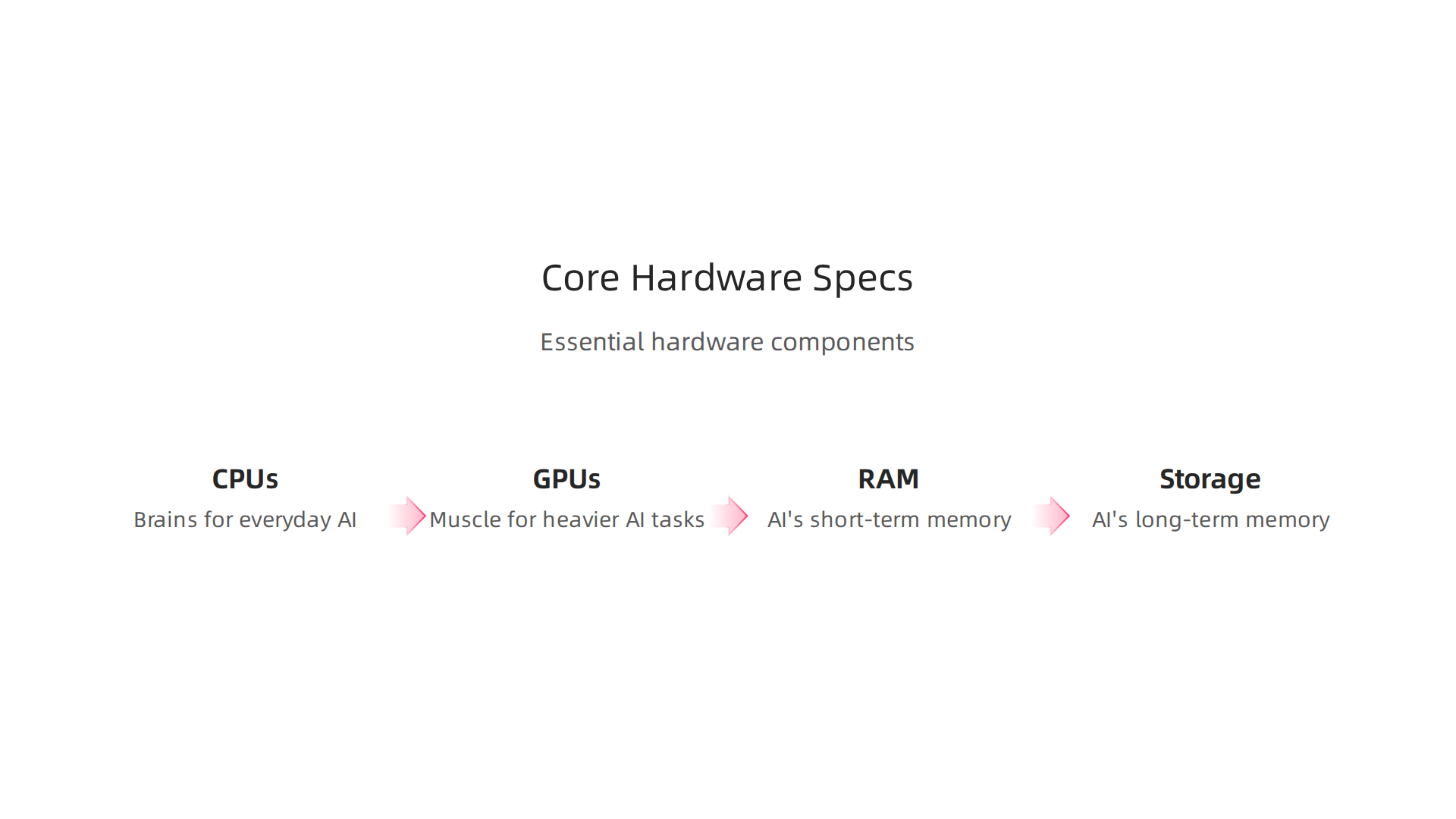
    Stick with tools that are open about what they do. For reliable, vetted AI news and tool reviews, check out 10 top AI websites professionals trust for real news and tools. And to cut through the hype daily, Subscribe Free to The Deep View Newsletter.

    Case Studies of Failed Gadget Adoptions

    Even with those red flags in mind, many startup gadgets still fail after launch. Here are two real examples that show why.

    Case 1: Smart glasses for warehouse workers. A well-known company created these glasses to help employees pick and pack orders faster. But the hardware was heavy and uncomfortable. Workers refused to wear them for long shifts. The company eventually abandoned the project. This failure happened because designers never tested the glasses with the actual people who would use them. It’s a classic example of ignoring end user needs, which makes the list of biggest brand missteps from 2025.

    Case 2: An AI scheduling device. This gadget promised to save time by organizing your calendar automatically. But it couldn’t sync with common tools like Google Calendar or Outlook. Users had to enter events manually. Instead of saving time, it created more work. The product disappeared within a year. This is one of many famous AI failures that stem from ignoring existing workflows.

    Lessons learned. Always involve end users early in the design process. And make sure your gadget works smoothly with tools people already rely on.

    To avoid these mistakes and stay ahead of real AI trends, explore 10 top AI websites professionals trust for real news and tools. Then Subscribe Free to The Deep View Newsletter for daily insights on what actually works.

    Conclusion: Building a Smart Gadget Strategy for 2026 and Beyond

    The AI gadget landscape in 2026 is full of opportunity, but it demands a careful approach. As we saw from the failed adoptions, skipping the basics like user testing and workflow compatibility can kill even a promising product.

    Here is the good news. You now have a clear evaluation framework and practical implementation steps to guide your decisions. Use them to assess every new startup gadget against real user needs, integration requirements, and long-term value. This is how you avoid costly mistakes and maximize your ROI.

    But here is the catch. The pace of innovation is not slowing down. According to recent forecasts, the impact of AI over the next few years will be enormous, potentially exceeding that of the Industrial Revolution. Strategic tech trends from AI trust to quantum computing are already reshaping what is possible for businesses and individuals alike. Staying informed is no longer optional.

    That is why professionals turn to curated resources like this list of 10 top AI websites professionals trust for real news and tools to keep their finger on the pulse. The same approach applies whether you are exploring devices like Ray-Ban Meta Smart Glasses or evaluating new tools from NYC tech startups and top SaaS companies. Always test with real users. Always check integration. And never stop learning.



    Ready to stay ahead of the curve? Get Free Updates from The Deep View Newsletter for simple daily AI insights that cut through the noise.

    Summary

    This article offers a practical, evidence-based guide to the most promising startup gadgets of 2026, focusing on why they matter, who they help, and how to choose them wisely. It explains three major trends—edge AI in wearables, AI-powered health devices, and seamless integrations with existing software—and why those shifts are changing productivity and privacy for businesses. You’ll get a repeatable 5-point checklist to evaluate compatibility, scalability, vendor support, ROI timeline, and data security, plus a simple phased integration plan and KPIs to measure success. The piece highlights five standout gadgets, shows common adoption failures, and lists marketing red flags to avoid. Read it to learn how to run a small pilot, measure real impact, and scale only the tools that deliver tangible value for your team.