
Why leaders need to rethink strategy around top software companies and AI
It’s 2026, and the world of business is buzzing with talk about Artificial Intelligence, or AI. Every day, it feels like there’s a new AI tool or update being released. This can be exciting, but also a bit much. For many business leaders, it creates a big problem: information overload. It’s really hard to tell what’s truly helpful and what’s just noise when everyone is talking about AI.
With so many top software companies now offering AI features, how do you pick the right ones for your business? How do you know which tools will really make a difference and help you grow? This question is more important than ever. The global market for enterprise AI was huge in 2025 and is set to grow even more by 2030, showing just how fast things are moving along Enterprise AI Adoption Trends 2026. Companies are quickly adopting AI, with many already seeing it in action across their operations The State of AI in the Enterprise – 2026 AI report.
This rapid change means that leaders can’t just stick to old ways of thinking. They need a fresh approach to how they look at top software companies and their AI offerings.

If you’re in charge of making big decisions, whether for b2b marketing, running a company like Zensar Technologies, or leading any marketing firms, you know it’s a challenge to keep up. You have to sort through countless options, figure out which ones fit your needs, and then put them into action.
That’s why we’re here. This article will give you a clear, simple way to think about and choose AI software. We will provide a practical framework to help you make smart choices about strategy, buying new tools, and putting them to use. Our goal is to cut through the confusion and help you understand how to pick AI tools for business that deliver real results in 2026.
If you want to stay updated with clear, daily insights on AI and technology, consider subscribing.
Get clear daily AI updates from The AI Newsletter Worth Reading.
1) Market landscape: Who counts as a ‘top software company’ for enterprise AI?
To truly pick the right AI tools for your business in 2026, you first need to understand who the main players are. What does "top software company" even mean when we talk about AI for businesses? It’s not just about the biggest names you know. It’s about how they help companies like yours use AI in smart ways.
We can look at a few important things to decide if a company is a top player in enterprise AI:
- Scale: Can they handle a lot of data and many users? Top companies offer solutions that work for both small businesses and very large ones.
- Product Breadth: Do they offer many different AI tools, or just one specific thing? A wide range of products means they can help with different business needs.
- Vertical Reach: Do their AI tools work well for specific industries, like healthcare, finance, or b2b marketing? Some companies are leaders in certain areas.
- Integration Ecosystem: Can their AI tools easily connect with other software you already use? This is super important. No one wants a tool that can’t talk to their existing systems.
- Enterprise Trust: Do businesses trust them with important data and tasks? A company’s track record and how secure their tools are really matter.
In fact, many organizations today, about 40% of them, choose to buy ready-made AI solutions instead of building their own from scratch The multi-year AI advantage. This shows how important it is for leaders to know which providers are truly reliable.
Different Kinds of AI Software Vendors
The world of AI software is big, but we can group the vendors into a few main types.
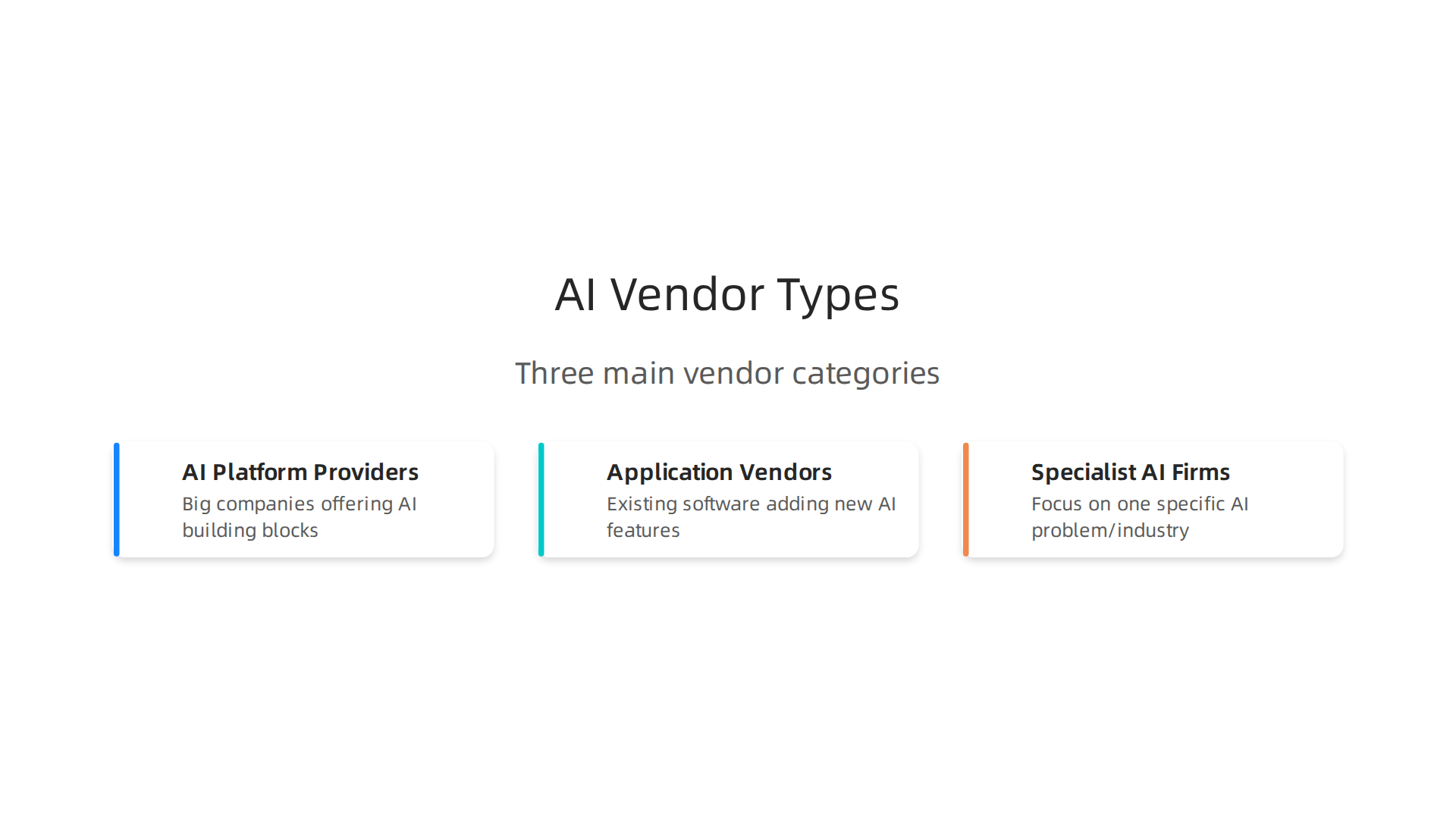
Knowing these groups helps you think about your strategy for buying new AI tools.
- AI Platform Providers: These are the really big companies, often called "hyperscalers." Think about the huge cloud providers that offer many AI building blocks. They give you the basic tools and power to create your own AI solutions. They are great if you have a team that can build custom tools. For example, if you need a strong base to run complex AI models or manage a lot of data, these platforms are key.
- Application Vendors with AI: These are companies that already make software you might use every day. Now, they are adding AI features right into their existing products. For instance, a company offering customer relationship management (CRM) software might add AI to help sales teams write better emails or predict customer needs. Companies like Zensar Technologies, or other marketing firms, often add AI to improve their services. This is helpful because the AI is already part of a tool you know, making it easier to use. If you are looking for ways to improve specific tasks, this type of vendor can offer powerful, ready-to-use solutions. You can learn more about how to choose effective tools in our guide on how to pick AI tools for business to drive growth in 2026.
- Specialist AI Firms: These are often smaller companies that focus on one very specific AI problem or industry. They might have a super smart AI tool for making videos, analyzing legal documents, or improving medical diagnoses. They are experts in their niche. If you have a very particular problem that common software doesn’t solve, a specialist firm might have the perfect AI solution.
Understanding these different types of top software companies helps you look for the right kind of AI tool. It makes it easier to figure out if you need a broad platform, an AI add-on to your existing software, or a special tool for a unique challenge. This helps you narrow down your choices and avoid getting lost in the sea of new AI releases every day. For a deeper look at evaluating AI companies, check out how to evaluate AI companies to unlock business growth in 2026.
After you have a good idea of what kind of AI vendor you need, the next important step is to look closely at their products.

This means checking if their AI tools actually fit your business needs. You want to make sure the software can do what you need it to do, works well with your other systems, and will keep getting better in the future.
Here are the main things to check when looking at AI products from top software companies:
Core Capabilities and Features
First, think about what the AI tool is built to do. What are its main skills? For example, if you need an AI for customer service, does it understand customer questions well? Can it give helpful answers? If you need it for writing marketing materials, how good is the quality of its writing?
You should compare different platforms based on what they can actually do. Some AI platforms, like Microsoft Azure AI Foundry or Google Vertex AI, offer many different features. They can handle things like understanding different types of information or working across many systems Enterprise AI Vendor Comparison 2026: Top 15 Platforms for …. It’s important to match these skills to your specific tasks. Think about your goals, whether it’s for b2b marketing efforts or streamlining other business operations.
How Well They Connect: APIs, Extensibility, and Data
One of the most important things for any new AI tool is how well it can work with your existing systems.
No one wants an AI that works alone.
- APIs (Application Programming Interfaces): Think of APIs as special doorways that allow different software programs to talk to each other. If an AI tool has good APIs, it means you can easily connect it to your current customer relationship management (CRM) software, your sales tools, or your accounting programs. This makes sure all your systems can share information.
- Extensibility: This means how much you can change or add to the AI tool. Can you customize it for your special needs? Can you build new features on top of it? For example, if you’re a marketing firm, can you extend the AI’s capabilities to handle specific types of campaigns unique to your brand? Some platforms are very flexible, letting you build custom solutions Top Enterprise AI Platforms 2026: 8 Compared.
- Data and Connectivity: How does the AI tool handle your business’s data? Can it easily connect to where your data lives, whether that’s in the cloud or on your own servers? Look for tools that can work smoothly with your data setup to make sure the AI has all the information it needs to be helpful. Some top software companies focus on strong data connections, like Databricks Mosaic AI for lakehouse-centric AI Top 10 Enterprise AI Platforms in 2026 (Ranked).
Reading the Roadmap and Engineering Signals
Choosing an AI tool isn’t just about what it can do today. It’s also about what it will be able to do tomorrow. The world of AI changes very fast in 2026. This is where looking at a company’s product roadmap and engineering signals becomes useful.
- Product Roadmap: This is like a plan that shows what new features and improvements a company intends to add to their software in the future. A clear roadmap tells you if the company is focused on the things that matter to your business. Does it show plans for better integrations? More advanced AI capabilities?
- Engineering Signals: These are clues about how a company builds and updates its software. Do they release updates often? Do they listen to customer feedback? Are they pushing the boundaries with new AI technologies? Companies that invest heavily in research and development usually have stronger engineering signals. This can tell you a lot about their long-term vision and reliability. IBM watsonx, for example, is known for its focus on regulated industries and strong governance Every Major Enterprise AI Platform Benchmarked (2026). This shows a clear signal about their engineering priorities.
By carefully checking these points, you can make a better choice about which AI tools will truly help your business grow. For more detailed insights on how to pick the right AI solutions, explore our guide on Enterprise AI platforms 2026: top providers and how to choose the right one.
Keeping up with the latest AI trends is a big job. If you want to stay smart about new AI tools and features without getting lost in all the noise, there’s a great resource.
Get clear daily AI updates from The AI Newsletter Worth Reading.
Picking the right AI tools from all the top software companies is just the start. The next big step is making them work smoothly with everything else you do every day.

This is where real-world integration and deployment come in. It’s about getting the AI system up and running and making sure it stays useful and secure for your business, whether it’s for b2b marketing efforts or other important tasks.
Common Integration Challenges
When you bring a new AI tool into your company, it’s a bit like adding a new player to a team. Everyone needs to work together. Here are some common problems you might face:
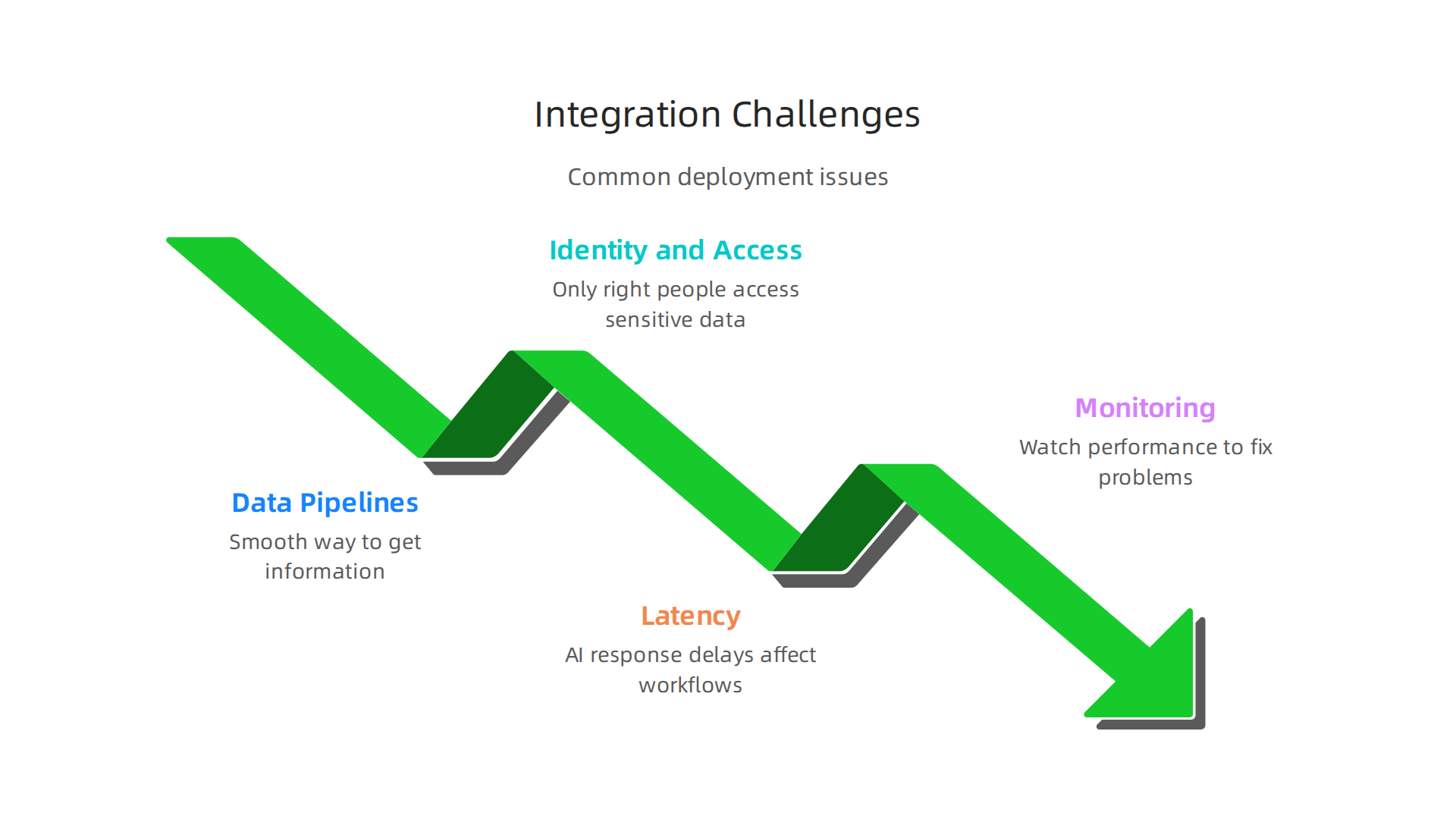
- Data Pipelines: AI needs lots of data. You need a smooth way to get your company’s information to the AI tool. This is called a data pipeline. If this pipeline isn’t set up right, the AI won’t have the facts it needs to do its job. It’s like trying to cook without all your ingredients.
- Identity and Access: Who gets to use the AI tool? How do they log in? It’s really important that only the right people can access sensitive AI tools and data. Many top software companies offer ways to connect their AI tools to your existing security systems, like Single Sign-On (SSO) and Multi-Factor Authentication (MFA). This makes sure everyone logs in safely, as highlighted in one Enterprise AI Onboarding Checklist: 30 IT Must-Checks.
- Latency: This is just a fancy word for delay. If your AI takes too long to respond, it can slow down your whole team. For example, if a marketing firm’s AI takes ages to draft an email, it’s not very helpful. You want quick answers from your AI.
- Monitoring: Once an AI is working, you need to watch it closely. Is it doing what it’s supposed to? Is it making mistakes? Good monitoring tools help you see how the AI is performing in real time so you can fix problems quickly. This includes setting up dashboards to track performance, as detailed in an Ultimate Enterprise AI Integration Guide for 2026.
Operational Readiness: Keeping AI Running Smoothly
Beyond just getting the AI to work, you need to make sure your business is ready to keep it running well every day. This is about being "operationally ready."
- Site Reliability Engineering (SRE) and Observability: These are about making sure the AI system is always available and working correctly. SRE teams focus on keeping things reliable. Observability means you can "see" what’s happening inside the AI system at all times, so you know if something is going wrong.
- Compliance and Governance: In 2026, rules about how AI uses data are very important. Your AI tools must follow laws and company rules. This includes managing approvals, audits, and who can access the AI model, which are key parts of Enterprise AI in 2026: Use Cases, Governance, and Rollout. You need clear plans for how data is used and stored.
- Vendor Support Models: Even the best AI tools from top software companies will sometimes need help. What kind of support does the vendor offer? Do they have a team you can call if there’s a problem? How quickly do they respond? Good support means less worry for your team.
Making sure your business is ready for these challenges is vital for successful AI adoption. To learn more about how to pick the right tools for your business, check out our guide on how to choose AI for business tools that deliver real results. It’s all about thoughtful planning and choosing tools that fit your company’s specific needs and readiness. Getting this right helps your business grow and makes sure your AI investment pays off.
Getting your AI tools up and running is one thing. Paying for them and knowing if they are truly helping your business grow is another big part of the picture. This is where we look at how to buy AI, what different pricing plans look like, and how to measure if you’re getting your money’s worth.
Common Pricing Approaches from Top Software Companies
When you decide to bring AI into your business, you’ll find that different top software companies offer various ways to pay for their services. Understanding these helps you budget wisely:
- Subscription Plans: Many AI tools work like other software you might use, with a monthly or yearly fee. This gives you access to a set of features, and sometimes a certain amount of usage. It’s often the simplest way to budget.
- Consumption-Based Pricing: With AI, you often pay for what you actually use. This might mean paying for each "token" processed, each AI "query" made, or the amount of data the AI handles. For instance, a marketing firm using AI to generate ad copy might pay per copy created. This model helps align costs with how much value you’re getting, as explained in one AI pricing guide for founders.
- Outcome-Based Pricing: Some advanced AI solutions are priced based on the results they deliver. For example, a tool that helps reduce customer service calls might charge based on the number of calls prevented. This type of pricing ties the cost directly to the benefits your business receives.
It’s important to know these different models so you can pick the one that best fits your company’s needs and how you plan to use the AI.
Measuring ROI and Value from AI Initiatives
Once you start paying for AI, the big question is: Is it worth it? This is about figuring out your Return on Investment, or ROI. It means checking if the money, time, and effort you put into AI are bringing back good results for your business.
To truly understand if your AI investment is paying off, you need a clear plan. In 2026, many businesses are focusing on how to measure this impact. This includes:
- Defining Clear Goals: Before you even start, know what you want the AI to achieve. Is it to save money, make things faster, or help your b2b marketing team create better campaigns? The CIO’s Playbook for Enterprise AI Strategy in 2026 suggests defining clear outcomes and baselines.
- Tracking Key Metrics: You need to watch certain numbers to see if the AI is making a difference. For example, for a marketing firm, this could be how much faster content is produced, how many more leads are generated, or how much less is spent on repetitive tasks. For more on this, check out our guide on how to get real ROI from AI marketing cloud.
- Calculating Time-to-Value: This means how quickly you start seeing real benefits from the AI. For AI in procurement, for example, many companies see a payback period of 9 to 18 months.
- Considering Total Cost of Ownership (TCO): Don’t just look at the price tag. TCO includes all costs over time, like setting up the AI, training your team, ongoing maintenance, and any special infrastructure needs. A good business case for AI procurement needs to factor in this three-year total cost. Companies like Zensar Technologies understand the importance of comprehensive planning for AI solutions.
By carefully tracking these factors, businesses can make sure their AI tools are not just fancy additions, but powerful engines for growth and efficiency.
Want to stay ahead of the curve and get daily insights on the latest AI trends and tools?
The AI Newsletter Worth Reading
After looking at pricing and how to measure if your AI tools are helping, there’s another very important step: making sure you pick a trusted partner. This is about understanding the risks involved with AI vendors and what you need to check before you agree to anything.
Vendor risk, trust, and compliance: what to check before signing
Bringing AI into your business means you’re putting a lot of trust in the top software companies providing these tools. But not all companies are the same, and some choices can lead to big problems if you’re not careful. It’s smart to think about different kinds of risks before you sign any agreements.
Here are some important risk areas to consider:
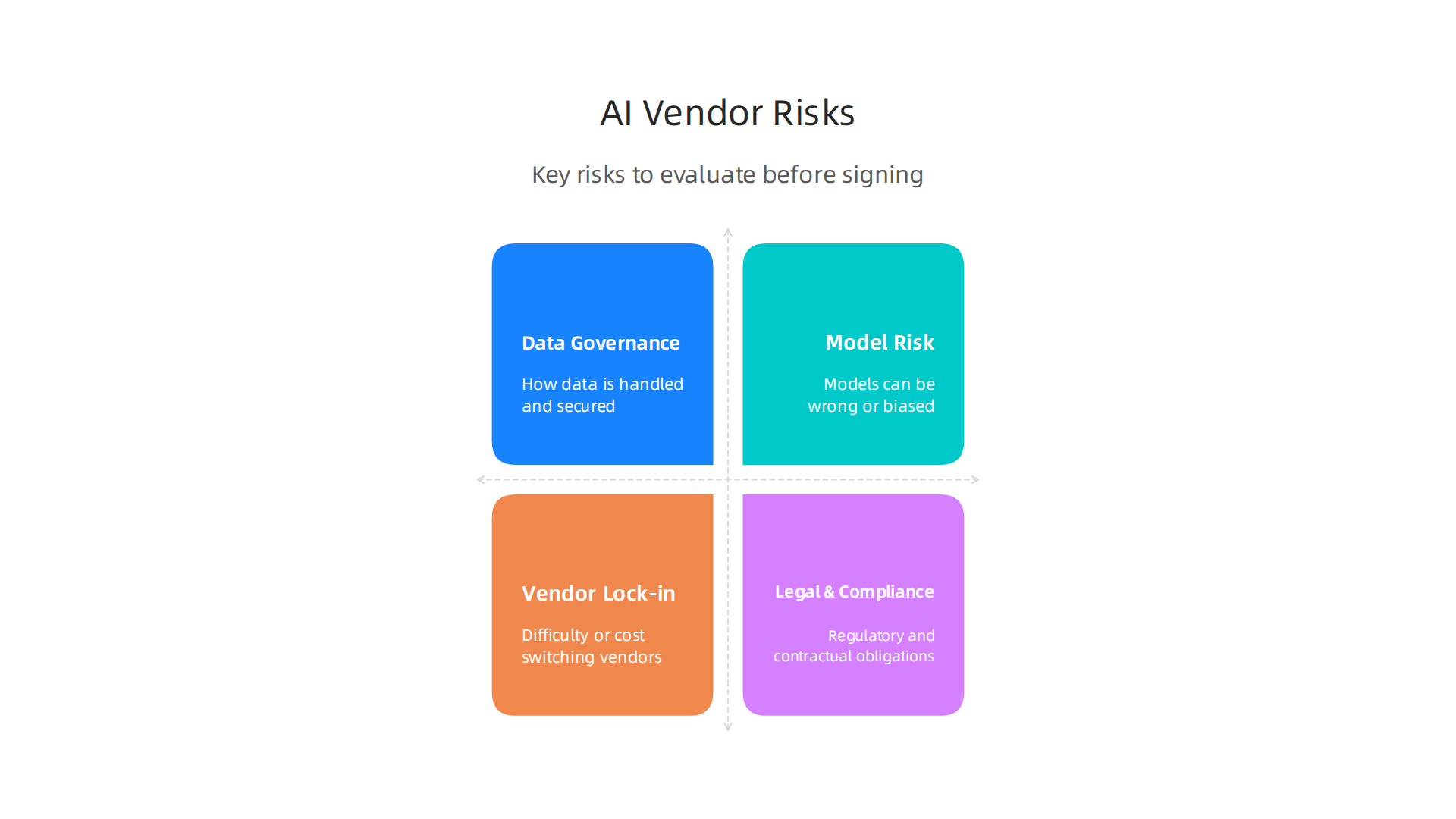
- Data Governance: This means how your data is handled. Who owns it? How is it kept safe? Will the AI vendor use your company’s data to train their models, possibly mixing it with others’ data? You need clear answers to make sure your important information stays private and secure. One expert suggests asking how training data is handled and if customer data is used for model training to avoid issues like vendor lock-in and to ensure trust with enterprise AI solutions in 2026.
- Model Risk: AI models can sometimes be wrong, unfair, or biased. This is called model risk. If the AI makes bad decisions, it can hurt your business. For example, a b2b marketing tool that targets the wrong customers could waste a lot of money. You need to know how accurate the AI is and what steps the vendor takes to make sure it works fairly.
- Vendor Lock-in: Imagine if it becomes very hard or costly to switch to a different AI tool later. That’s vendor lock-in. It happens when you depend too much on one vendor’s special way of doing things. You want to keep your options open, especially as AI technology keeps changing quickly in 2026.
- Legal and Compliance Exposure: There are growing rules and laws about how AI can be used, especially with customer data. If your AI vendor doesn’t follow these rules, it could put your business in legal trouble. Understanding these legal risks is part of being ready for AI. To learn more about managing these hidden dangers, check out our guide on Stealth AI A Business Guide to Hidden AI Risks Opportunities and Management in 2026.
Your AI Vendor Due Diligence Checklist
To avoid these risks, you need to do your homework. This is called "due diligence." It means carefully checking out each potential AI vendor. Many top software companies offer great tools, but you need to make sure they’re the right fit for your business, not just today, but for the future.
Here’s what to look for:
- Security Certifications: Does the vendor have proof that their systems are secure? Look for known security badges or reports from independent auditors. This shows they take security seriously. A good AI Vendor Selection Framework suggests data governance and security are very important, weighing in at 25% of the evaluation.
- Audit Practices: Ask how often they check their AI systems for problems or unfairness. Do they have a plan for fixing issues quickly? Good audit practices show they are responsible.
- Contract Clauses to Negotiate: The contract isn’t just a formality. It’s your chance to protect your business. Make sure you understand clauses about data ownership, how the AI makes decisions, and what happens if something goes wrong. Don’t be afraid to ask for changes that make you feel safer. When choosing an AI vendor, a detailed AI Vendor Selection Criteria guide highlights that the technical depth and track record are critical, along with IP and data terms. For more guidance on choosing the right partners, read our article on how to Evaluate AI Companies to Unlock Business Growth in 2026.
By taking these steps, you can build trust with your AI partners and ensure that their solutions truly benefit your operations, whether you’re a small business or a large enterprise like Zensar Technologies. Remember, careful selection is key to successful AI adoption.
Moving from careful selection to a forward-looking plan is the next step for any business wanting to truly make AI work.

It means thinking ahead, not just for today or tomorrow, but for the next one to three years. This long-term view helps you pick partners who can grow with you and tools that stay useful as AI changes quickly.
Strategic roadmap: selecting vendors and planning for 12–36 months
To truly get the most out of AI, you need a smart plan that stretches out over time. This plan should help you pick the best AI vendors and prepare for how fast AI technology changes. It’s like setting a course for a long journey.
A Repeatable Vendor Selection Framework
Picking the right AI tools isn’t a one-time thing. You need a clear process you can use again and again. This is called a repeatable vendor selection framework. It helps you find the top software companies that fit your business goals.
Here’s how to build one:
- Set Clear Goals: Before looking at any tool, know what you want to achieve. Do you want to save money, make your customers happier, or help your marketing teams with b2b marketing efforts? For example, some businesses like Zensar Technologies might aim for better operational efficiency or new ways to grow income. Knowing your goals helps you measure success later.
- Create an Evaluation Rubric: This is a checklist or scorecard to judge each vendor fairly. You’ll score them on things like their technical skills, how well their tools work, and their history of success. One guide suggests weighing technical depth and their track record heavily, giving them 30% and 20% of the score, respectively, when choosing an AI vendor in 2026. This also includes looking at how innovative they are and if they offer solutions that fit your whole business needs, not just one small part.
- Pilot Program: Before fully committing, test the AI tool with a small group or project. This "pilot" lets you see how it works in real life without big risks. You can find out if the tool truly helps, if your team understands it, and if it meets your initial goals.
- Define Scale Criteria: After a successful pilot, how do you decide if the AI is ready for your whole company? You need clear rules. This might include hitting certain performance numbers, showing good returns on investment (ROI), or being easy enough for many employees to use.
Scenario Planning: Creating a Flexible Roadmap
The world of AI is always moving forward. New tools and models come out all the time. This means your plan needs to be flexible. You can’t just pick one vendor and expect them to be the best choice forever.
- Prepare for Change: Imagine different futures. What if your main AI vendor gets bought out? What if a new, much better AI model comes along? By thinking about these "scenarios," you can build a roadmap that can bend without breaking.
- Don’t Get Locked In: It’s important not to rely too much on one vendor’s unique way of doing things. This is called vendor lock-in, and it can make it hard to switch later. Businesses in 2026 must be careful not to let how a vendor is growing decide their main AI plan. Experts suggest that a key decision for technology leaders is how to manage their entire software setup to avoid being stuck with one vendor.
- Stay Updated on the AI Stack: The "AI stack" refers to all the different parts that make up an AI system, from the basic models to the tools you use every day. Make sure any vendor you choose fits well with your existing systems and how your company works. This helps prevent problems down the road. For many marketing firms, understanding how different AI tools integrate is crucial for seamless operations.
By having a flexible roadmap and a clear way to pick vendors, you can make sure your business stays ahead in the fast-paced AI world. It’s about being ready for what comes next.
If you want to stay updated on the latest AI trends and how they impact businesses like yours, consider subscribing to our daily insights.
The AI Newsletter Worth Reading
Summary
This article helps business leaders cut through the noise of 2026’s fast-moving AI market by giving a practical framework for choosing and working with top software companies. It explains who counts as a leading enterprise AI vendor—platform providers, application vendors adding AI, and specialist firms—and shows what to evaluate in their products, from core capabilities to APIs and roadmaps. The piece covers real deployment challenges like data pipelines, identity, latency, monitoring, and operational readiness (SRE and observability), plus the compliance and governance steps needed to reduce legal and model risks. It also breaks down typical pricing approaches, how to measure ROI and time-to-value, and what to include in vendor due diligence. Finally, it offers a repeatable vendor selection process, scenario planning to avoid lock-in, and a 12–36 month roadmap to pilot, scale, and keep AI investments aligned with business goals.