Tag: ai productivity

  • Apple Certified Refurbished MacBook Air for AI: Your 2026 Buying Guide

    Apple Certified Refurbished MacBook Air for AI: Your 2026 Buying Guide

    In 2026, running advanced AI tools is key for many professionals and small businesses. But getting the latest tech can be very expensive. This often leaves people wondering how to get powerful computers for AI tasks without spending too much. Finding that sweet spot between cost and strong performance is a big puzzle.

    That’s why an Apple Certified Refurbished MacBook Air can be such a smart choice. These aren’t just used computers. Apple takes them, makes sure they are like new, and then sells them at a lower price. Every Apple Certified Refurbished product goes through a full testing process to ensure everything works perfectly. You get a device with real Apple parts if any were needed, and it’s thoroughly cleaned and checked. This means you can save up to 15% while still getting a quality Apple product Why Refurbished. Plus, they come with a standard one-year warranty, just like new products.

    For those wanting to use AI-driven workflows, a well-equipped MacBook Air can handle many tasks surprisingly well, thanks to Apple’s powerful chips. It’s an excellent way for tech-savvy people and business leaders to get great performance without the top-tier price tag.

    This article will help you understand if an apple certified refurbished macbook air is the right fit for your needs in 2026. We will walk you through a clear buying checklist and look at how these machines perform with AI applications. We will also dive into the costs and what kind of return on your money you can expect, share helpful setup tips, and even explore other options. By the end, you’ll know exactly how to make an informed decision for your AI-powered work.

    To learn more about selecting the right systems for your tasks, check out our guide on how to choose AI-ready business computers in 2026.

    Want to stay informed about the latest AI breakthroughs every day? Get clear daily AI updates from The Deep View Newsletter.

    At-a-glance: What ‘Apple certified refurbished’ means for buyers

    When you see "Apple Certified Refurbished," it means much more than simply "used." It’s a special label from Apple itself, telling you that the product has gone through a very strict process to make it almost like new again. This is a big difference from buying a used MacBook from just any seller or a refurbished one from a third-party company.

    Here’s how it works: Apple takes a product that someone returned or used as a demo.
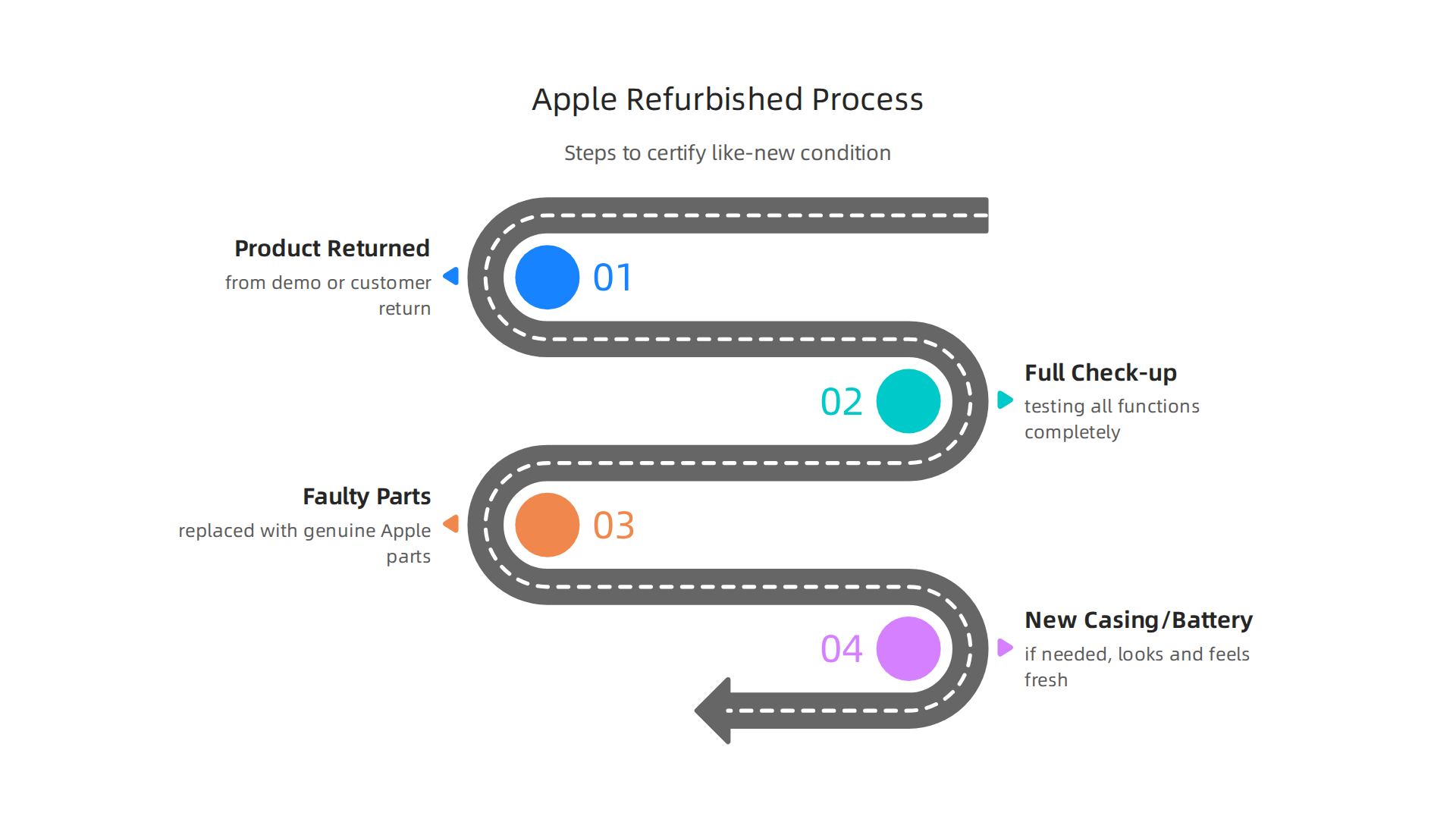
    An infographic detailing the strict process Apple uses to certify refurbished products, ensuring like-new quality.

    Instead of just cleaning it up, they do a full check-up. This includes testing all its functions completely. If any parts are faulty, Apple replaces them with genuine Apple parts. They also clean the device thoroughly and put a new outer casing and battery in it if needed, so it looks and feels fresh Apple Certified Refurbished Products. This careful process makes sure that an apple certified refurbished macbook air meets Apple’s high standards.

    One of the best parts for buyers, especially for businesses, is the warranty. Every Apple Certified Refurbished product comes with a standard one-year limited warranty, just like a brand new Apple product would Certified Refurbished Products. This gives you peace of mind that your investment is protected. If you want even more coverage, you can also buy AppleCare for these devices, extending your warranty and support options AppleCare for a refurbished Mac.

    The return policy for a refurbished Apple product is also the same as for new items. You usually get a 14-day window to return it if it doesn’t meet your needs. This is helpful when you’re making a big purchase for your AI-driven workflows. When you receive your refurbished MacBook Air, it will be in a plain white box, making it clear it’s refurbished, but the product inside will look and work like new.

    For those considering an upgrade or joining the apple upgrade program in the future, understanding this certification is key. It means you’re getting a reliable machine with Apple’s backing, not just a used computer with unknown history. This way, you can trust that your chosen apple certified refurbished macbook air will be ready for demanding tasks in 2026 without the top new price.

    Understanding M-series performance for AI tasks on MacBook Air

    After learning about what "Apple Certified Refurbished" means, you might wonder how these machines handle today’s smart tasks. Specifically, an apple certified refurbished macbook air with an M-series chip is surprisingly good for many AI jobs in 2026. Apple’s own chips, like the M1, M2, M3, and the newest M5, are built in a special way that helps them do AI work very well.

    How Apple Silicon Helps with AI

    Apple’s M-series chips have a part called the Neural Engine. Think of it as a special brain inside the computer that’s just for AI tasks. This makes many AI workflows much faster and more energy-efficient than older computer chips.

    Here’s how an apple certified refurbished macbook air handles common AI tasks:

    • Model Inference: This is when an AI model makes a prediction or decision. For example, if you use AI to guess what a picture shows, your MacBook Air can do this quickly. The M-series chips are very good at this, making everyday AI tools run smoothly.
    • Local LLMs (Large Language Models): These are like AI chatbots that run right on your computer without needing the internet. Many people like using tools like Ollama to run these models. Macs with M-series chips are getting better at handling these. In 2026, you can run many popular LLMs on a MacBook Air, especially smaller ones or "quantized" models which take up less space Best LLM for MacBook (2026). For example, an M1 MacBook Air with 8GB RAM can handle a model like Phi-3 Mini quite well
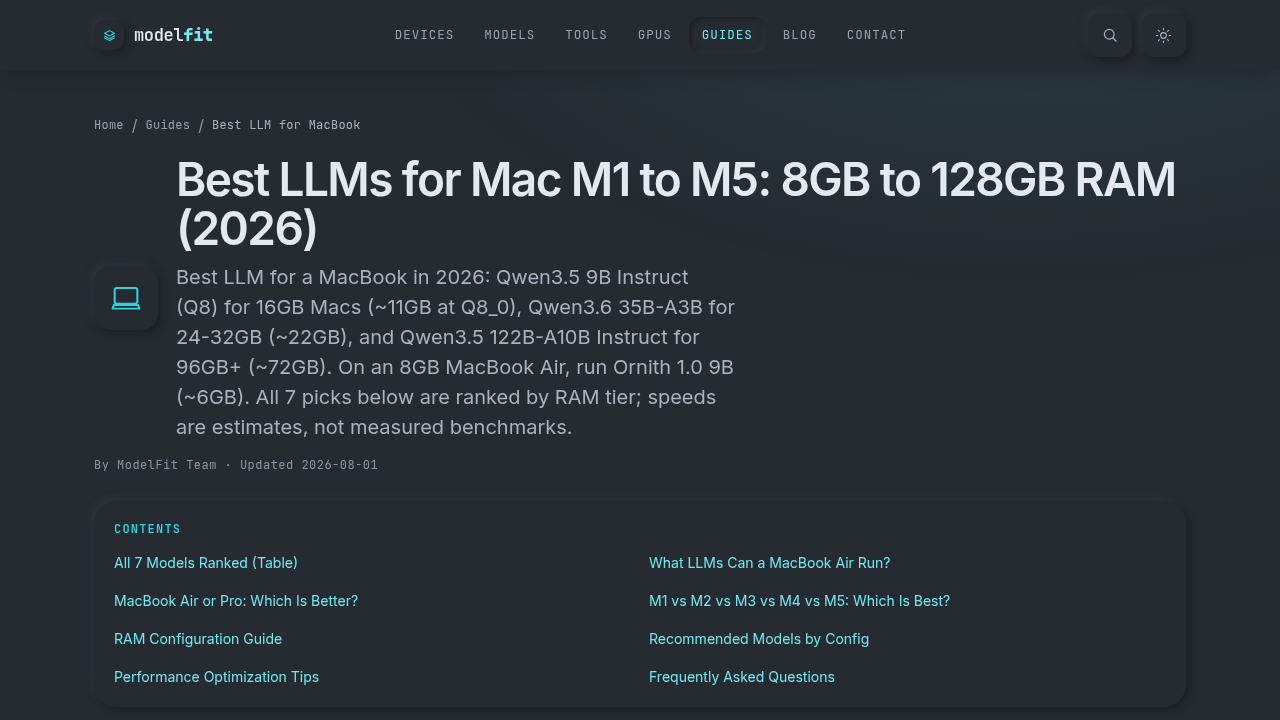
    A screenshot of a guide on Modelfit.io, discussing the best LLMs for MacBook devices in 2026.

    Run Local AI on Mac 2026.

    • ML Libraries: If you work with special programs like TensorFlow or PyTorch, the M-series chips can speed them up. They use a special feature called Metal Performance Shaders (MPS) to make the graphics part of the chip help with AI calculations Running AI Models on Your Mac.
    • Batching: This is like giving the AI many tasks to do at once. M-series chips are good at handling these bursts of work, especially with their unified memory that lets the CPU and GPU share data fast. For more on what Macs are best for AI, check out this guide on picking the best MacBooks for AI for your 2026 projects.

    Limits of the MacBook Air for Heavy AI Work

    While the MacBook Air is powerful, it has some limits compared to a MacBook Pro, especially for very intense, long-lasting AI tasks.

    • Thermal Constraints: The MacBook Air is very thin and light. It does not have a fan to cool itself down in many models. If you push it too hard for a long time, like training a big AI model for hours, it can get hot. When it gets hot, the chip slows down to prevent damage. This is called "thermal throttling."
    • Sustained Workloads: For quick AI tasks or running small models, a MacBook Air works great. But for very heavy, continuous AI work, like running huge LLMs or training complex models from scratch for many hours, a MacBook Pro with its cooling fans and often more powerful chips (like the M3 Max or M5 Max) will perform better for longer periods Best Mac for Local AI 2026.

    Still, for many business users and creators, an apple certified refurbished macbook air offers a fantastic balance of power, portability, and value for AI tasks in 2026. It’s perfect for exploring AI, running local chatbots, and using AI-powered apps every day. Keeping up with the latest in AI can be tough.

    Stay informed with daily updates and insights into the rapidly evolving AI landscape.
    The AI Newsletter Worth Reading

    While the MacBook Air works well for many AI tasks, picking the right model and features makes a big difference. Think of it like choosing a tool for a specific job. An apple certified refurbished macbook air can be a smart choice if you know what specs matter most for AI work.

    Here’s what to look for when choosing an Apple Certified Refurbished MacBook Air for AI in 2026:
    An infographic highlighting the most important specifications for an Apple Certified Refurbished MacBook Air for AI productivity.

    Key Specs for AI Performance

    When buying a MacBook Air for AI, focus on these main parts:

    • Unified Memory (RAM): This is the most important part. AI models, especially large language models (LLMs), need a lot of memory to run. Unlike older computers, Apple’s M-series chips share memory between the main processor (CPU) and the graphics processor (GPU). This "unified memory" is super fast.
      • For basic AI tasks or running smaller LLMs, 16GB of unified memory is a good starting point. Many popular LLMs need at least 16GB of RAM to run well on Apple Silicon chips Local LLMs Apple Silicon Mac 2026 | M1 M2 M3 Guide.
      • For more serious AI work, like running bigger chatbots or doing some light AI model training, 24GB or even 32GB of unified memory will give you much more room to work. You can see how different chips perform with various LLMs by checking out the Apple Silicon LLM Benchmarks 2026.
    • Neural Engine Generation: Every M-series chip has a special part called the Neural Engine, built just for AI tasks. Newer chips like the M3 or M5 have more powerful and faster Neural Engines. This means they can handle AI tasks more quickly. For example, a MacBook Air with an M5 chip shows strong performance in AI tests MacBook Air (15-inch, M5, 2026)/M5 – Geekbench. If your budget allows, a newer M-series chip will give you better AI speed.
    • GPU Cores: The GPU (Graphics Processing Unit) also helps a lot with AI. More GPU cores mean faster calculations for many AI tasks, like image processing or speeding up LLMs. While MacBook Air models don’t have as many GPU cores as MacBook Pros, newer Airs with M3 or M5 chips offer more cores than older M1 or M2 models. This can make a noticeable difference in how fast your AI apps run.
    • SSD Storage Size: AI models can be very large. If you plan to download and run many local AI models, you’ll need plenty of storage space. A 512GB SSD is a good minimum, but 1TB or more is better if you’re a serious AI user. You don’t want to run out of space when trying out new tools.

    Choosing for Different AI Users

    Your best apple certified refurbished macbook air depends on what you plan to do:

    • For the Everyday Business User or Marketer: If you mainly use AI for writing help, creating images, or running small local chatbots, an M1 or M2 MacBook Air with 16GB of unified memory and 512GB SSD is often enough. This setup provides good speed for common AI apps without breaking the bank. It’s a great way to choose AI for business tools that deliver real results in 2026.
    • For the AI Analyst or Aspiring Developer: If you want to experiment with larger LLMs, do more complex data analysis with AI tools, or start light AI development, you should aim for an M3 or M5 MacBook Air with 24GB or 32GB of unified memory and at least 1TB SSD. This gives you more power and flexibility for growing AI tasks. You can compare how different M-series chips perform for LLMs using an Apple Silicon AI Calculator.

    Trade-offs: Price vs. Power

    Going for higher RAM, a newer chip, or more storage will cost more. An apple certified refurbished macbook air helps here by offering these better specs at a lower price than a brand-new machine. You’ll get more power for your money. Remember that while a MacBook Pro might offer even more power for heavy AI tasks, a well-chosen MacBook Air still provides excellent value for many everyday and even advanced AI uses. For more insights on how to pick the right computer, you might want to read our guide on how to choose AI ready business computers in 2026.

    After picking out the right features for your AI tasks, the next step is making sure the actual apple certified refurbished macbook air you buy is in great condition. It’s smart to have a plan for what to check both before and after you make the purchase. This way, you can be sure you’re getting a good deal and a reliable machine for your AI work.

    Here is a practical checklist to guide you:

    Before You Buy Your Apple Certified Refurbished MacBook Air

    When you are thinking about buying an apple certified refurbished macbook air, do these checks first:

    • Check the Serial Number: Always get the serial number of the MacBook Air and enter it on Apple’s official website. This lets you confirm the model details, when it was first bought, and its warranty status. This is a very important step to make sure you’re getting a real Apple product and not a fake or stolen one Buying a Used MacBook ? Here are 10 checks to do.
    • Confirm Warranty and Return Policy: Even refurbished items from Apple usually come with a warranty. Make sure you know how long the warranty lasts. Also, understand the seller’s return policy. What if you find a problem a few days later? A good return window gives you peace of mind.
    • Inspect the Look and Feel: Look closely at the MacBook Air. Check for any big dents or deep scratches on the body. Open and close the lid to see if the hinges feel strong. Look at the screen very carefully for dead pixels, weird colors, or bright spots Your Essential Physical Inspection Checklist for Buying a …. Test every key on the keyboard and click the trackpad.
    • Test All the Ports: Bring a USB stick or another device and plug it into every port (USB-C, headphone jack, etc.) to make sure they all work correctly.

    After You Get Your MacBook Air

    Once your apple certified refurbished macbook air is in your hands, take these steps:

    • Run Apple Diagnostics: This is a built-in tool that checks your Mac’s hardware for problems. To use it, disconnect everything from your Mac, then turn it on while holding down the "D" key. It will run tests to find any issues with the hardware Second-hand MacBook buying guide: 10 things to check. This can help you catch problems early.
    • Update the Operating System: Make sure your MacBook Air is running the latest version of macOS. Updates often fix bugs, improve security, and can even boost performance, which is great for running AI tools.
    • Check for Previous Accounts: Ensure that no old iCloud accounts are linked to the device and that "Find My Mac" is turned off. This prevents any issues with activation locks later on.
    • Perform Performance Checks: Run some of your usual AI apps or benchmarks. Does it feel as fast as you expected based on the specs? If you notice any lag or problems, it might be worth looking into further or using the return policy. This confirms that the machine is truly "AI-ready" for your needs.

    Taking these steps will help you get the most out out of your apple certified refurbished macbook air for AI tasks, ensuring it runs smoothly for your projects.

    Staying updated on the latest AI advancements is crucial for making the most of your tech. The AI Newsletter Worth Reading delivers clear daily AI updates directly to your inbox.

    After learning how to check a refurbished MacBook Air inside and out, the next big question is often about the money. How much can you really save, and is it truly a smart choice for your AI work? Let’s look at the costs, savings, and what you get back from your investment.

    A person reviewing financial documents, illustrating the cost-saving benefits of refurbished tech.

    Cost, Savings, and ROI: Refurbished vs New MacBook Air for AI Productivity

    Choosing between an apple certified refurbished macbook air and a brand-new one comes down to your budget and how much power you need for AI. In 2026, prices for refurbished MacBook Air models can be much lower than new ones. For example, some refurbished models can be 10% to 15% cheaper if you buy directly from Apple’s own refurbished store, giving you a machine that’s almost like new Refurbished MacBook Air 2026: Price Comparison Guide.

    However, if you look at other trusted sellers like Back Market or RefurbMe, you can find even bigger savings. Discounts often range from 20% to 40% compared to new prices, sometimes even more for older chips like the M1 or M2. For instance, an M1 MacBook Air might cost around $365 refurbished, while newer M4 models start closer to $791 Refurbished MacBook Air: Best Deals & Models 2026. This means you could save hundreds of dollars.

    When does buying an apple certified refurbished macbook air make the most sense for AI tasks?

    • Refurbished is a Clear Win: If you or your team use AI tools for lighter tasks, like writing assistance, simple image generation, or managing data, a refurbished MacBook Air is likely a great deal. The savings are huge, and the performance from an M1 or M2 chip is still very good for these kinds of jobs. This helps small businesses and teams save money without losing too much performance. For everyday AI use, a refurbished model can give you excellent value for your money.
    • When Buying New Yields Long-Term Savings: For heavy AI work, such as complex machine learning, training large models, or intense video editing with AI features, a brand new MacBook Air with the latest chip might be a better choice. Newer chips like the M4 or future ones offer more speed and power, which means your work gets done faster. While the upfront cost is higher, a new machine might last longer and handle tougher tasks for more years. This can actually save you money in the long run because you won’t need to upgrade as soon. You might also consider the apple upgrade program if you always want the newest tech. Keeping an eye on the next apple event can help you decide when to buy new models.

    In short, a refurbished MacBook Air can save you a lot of money and still be powerful enough for many AI tasks. But for the most demanding work, a new model might offer better long-term performance. Thinking about what kind of AI work you do will help you pick the best option.

    Now that you have thought about which MacBook Air is best for your AI tasks, let’s look at how to set it up so it works its very best. Getting your apple certified refurbished macbook air ready for AI means more than just turning it on. You want to make sure every part is working hard for you.

    Setup and optimization tips to get the most AI productivity from a MacBook Air

    To make your MacBook Air great for AI, you need to set up its software and choose the right tools. Here are some simple steps:

    macOS Settings for Better AI Work

    First, let’s tune your computer’s brain, called macOS.

    • Update Your System: Always make sure your MacBook Air has the newest macOS. Newer versions often have better ways to handle AI tasks. In 2026, keeping up with updates helps your computer run smoother and faster.
    • Manage Power: For heavy AI work, your MacBook Air needs all its power. Go to System Settings, then Battery. Pick the "High Power Mode" if your model has it, or simply choose "Optimized for performance" when plugged in. For lighter tasks, "Low Power Mode" can save battery.
    • Clear the Clutter: Close apps you are not using. Each open app uses up some of your computer’s memory and power, which your AI tasks need. Turn off many notifications too, as they can distract you and slow things down a little.

    Use Apple Silicon’s Special Power

    Apple’s M-series chips in your MacBook Air are great for AI because they have special parts that speed up AI calculations.

    • Metal Performance Shaders (MPS): This is a fancy name for Apple’s own way of making AI run fast. When you use AI programs, make sure they are set up to use MPS. This helps your MacBook Air’s chip work smarter, not just harder. For a deeper look into running AI models on your Mac, you can check out a comprehensive guide to running AI models.
    • Unified Memory: MacBook Airs have "unified memory," which means the chip and memory work very closely together. This is a big plus for AI, especially for running big language models. The more unified memory your MacBook Air has, the more complex AI tasks it can handle.

    Simple Tools for AI on Your Mac

    You don’t always need super expensive tools for AI.

    • Ollama: This is a great, easy-to-use tool to run many AI models right on your MacBook Air. It lets you download and try different AI brains, like ones that write text, without needing the internet all the time. Setting up local AI on your Mac in 2026 is simple with tools like Ollama How to Run Local AI on a Mac in 2026: Setup Guide.
    • Cloud for Heavy Lifting: If you have a very big AI task that your MacBook Air can’t handle alone, you can use "cloud inference." This means your MacBook Air sends the tough work to powerful computers on the internet. It’s like having a supercomputer helper when you need it.

    Making sure your MacBook Air is set up correctly helps you get the most out of it for your AI work, whether you chose a new or an apple certified refurbished macbook air. This way, you can achieve great AI productivity and make smart business choices. To learn more about picking the right computer for your AI needs, consider reading about picking the best MacBooks for AI for your 2026 projects.

    For a daily dose of AI insights and trends, make sure to stay informed.
    The AI Newsletter Worth Reading

    Now, while a MacBook Air is a powerful machine for many AI tasks, there are times when you might need something even stronger. It’s smart to know when another Apple device would be a better choice for your AI work.

    When to choose other Apple devices or configurations instead

    Even with all the great setup tips, sometimes a MacBook Air just isn’t enough. If your AI tasks are very big or need a lot of power for a long time, you might want to look at other Apple devices.

    For Very Heavy AI Workloads

    Think of your MacBook Air as a fast, smart car for daily driving. But if you need to tow a huge trailer, you need a bigger truck. For AI, that means:

    • MacBook Pro: This is like the bigger, stronger brother to the Air. MacBook Pro models have more powerful M-series chips (like M1 Pro, M1 Max, M2 Pro, M2 Max, and so on) with more "cores" for running many tasks at once. They also have better cooling systems. This means they can work harder for longer without slowing down, which is key for training complex AI models or running huge datasets. If you’re comparing a refurbished MacBook Pro to an apple certified refurbished macbook air, the Pro often offers a significant jump in power for serious AI work, even if it costs more. For example, a refurbished MacBook Pro can be a smart buy in 2026 if you need that extra power, often at a good price compared to new models, as one comparison showed
    A screenshot of a ZDNet article comparing refurbished MacBook Pro models, offering insights for buyers.

    Is a refurbished MacBook worth buying in 2026? I did the ….

    • Mac mini, Mac Studio, or Mac Pro: These are desktop computers. They are not portable like a MacBook Air, but they offer even more power. They have even better cooling and can have much more unified memory. This makes them perfect for AI pros who do a lot of research or develop very big AI programs. They are like powerful supercomputers for your desk. Choosing the right machine is all about balancing your needs with your budget.

    Thinking About Team Work and Growth

    If you are part of a team, or if your AI work will grow bigger over time, you need to think about how your devices can grow with you.

    A team collaborating in a meeting, discussing future growth and strategic tech investments.

    • Scaling Up: You might start with an apple certified refurbished macbook air for basic AI tasks, but later need more powerful machines for bigger projects. Consider an apple upgrade program that lets you trade in your old device for a newer, stronger one.
    • Hybrid Plans: Sometimes, a mix of local and cloud power works best. You can use your MacBook Air for quick AI tasks on your computer and send the really heavy work to cloud services. This way, you get the best of both worlds.
    • Choosing for Your Business: For businesses, picking the right computers for AI is a big decision. It involves looking at cost, power, and how easy they are to use. You can learn more about how to make these choices for your company with guidance on how to choose AI ready business computers in 2026.

    Knowing when to pick a MacBook Air and when to choose a more powerful Apple device will help you make smart decisions for your AI projects, now and in the future.

    Summary

    This article explains why an Apple Certified Refurbished MacBook Air can be a smart, cost-effective choice for AI work in 2026, and walks you through what the certification means, real-world M-series performance, and practical buying advice. It covers how Apple refurbishes devices, the included one-year warranty and return window, and how M-series chips and the Neural Engine enable solid inference and local LLM use. You’ll learn which specs matter most—unified memory, Neural Engine generation, GPU cores, and SSD size—and get concrete recommendations for everyday users, analysts, and developers. The guide also offers a hands-on pre-purchase and post-purchase checklist, tips to optimize macOS and MPS for AI, and cost comparisons that show typical savings from Apple and third-party refurbished sellers. Thermal limits and sustained workload trade-offs are explained so you can decide when a MacBook Pro or desktop makes more sense. By the end you’ll know how to pick, test, set up, and get the best ROI from a refurbished MacBook Air for AI tasks.


  • MacBook Air 2022 AI Workloads Guide Benchmarks and Workflows

    MacBook Air 2022 AI Workloads Guide Benchmarks and Workflows

    Introduction

    You just got your MacBook Air 2022. It is sleek, light, and fast. But here is the real question: Can it handle your AI workload?

    If you are like most professionals in 2026, you are juggling AI tools every day. Maybe you use ChatGPT for drafting emails. Maybe you run local models for image generation. Or maybe you are drowning in AI newsletters, tool reviews, and workflow tutorials that all promise the same thing.

    That overwhelm is real. According to the latest AI Productivity Guide for 2026, professionals who use AI tools effectively are saving an entire workday every week. But getting there means cutting through the noise first.

    That is where the MacBook Air 2022 shines.

    With its M2 chip, this laptop delivers surprising power in a thin frame. It is not the most expensive Apple desktop replacement. It is not a gaming rig. But it offers something rare: true portability paired with enough processing muscle to run modern AI applications without breaking a sweat.

    So why does this matter for you?

    Because the right hardware is only half the equation. You also need practical workflows, real benchmarks, and honest tips that turn your machine into an actual productivity hub. That is exactly what this guide delivers.

    We will cover how the MacBook Air 2022 handles real-world AI tasks. We will compare it to other options like the best mini PC setups and show you how to avoid common mistakes. And we will share strategies to keep your workflow smooth, even when things go wrong.
    If you have been wondering whether your Apple MacBook trade in was worth it or how to get the most out of your current machine, you are in the right place.

    Let us start with something simple. If you want daily AI updates that actually help, consider checking out The AI Newsletter Worth Reading.

    Screenshot of The Deep View's newsletter subscription page, offering practical AI insights.

    It delivers clear, practical insights without the fluff.

    1. Why the M2 Chip Matters for AI Tasks

    The M2 chip is the engine that makes the MacBook Air 2022 work well with AI. Without it, this thin laptop would struggle. With it, things just run smoothly.

    Two things make this possible.

    First, the 16-core Neural Engine. This part of the chip is built just for machine learning. When you run an AI model, the Neural Engine handles the hard work. Your main processor stays free for other tasks. This means less lag.
    Second, the unified memory. Instead of separate memory spots for different parts of the chip, everything shares one fast pool. Data moves faster because nothing needs to copy itself around. For AI jobs like running LLMs or making images, this matters a lot.

    The numbers back this up. According to Apple M2 Processor Benchmarks and Specs from Notebookcheck, the M2 runs 18% faster than the M1 at the same power level.

    Screenshot of Notebookcheck's homepage, a resource for laptop and processor benchmarks.

    Compared to older Intel MacBooks, the jump is even bigger. Some AI tasks run up to 40% faster.

    Real-world tests show the same story. The MacBook Air 2022 runs mid-sized language models and image tools smoothly. It is not a desktop computer for heavy work. But for daily AI tasks, it holds up well.

    If you want to see how the M2 stacks up against newer chips, the Apple Silicon for AI M4 vs M3 vs M2 Comparison guide breaks it down with clear numbers.

    And if your AI workflow ever crashes, learning how to report a problem to Apple when your AI workflow crashes can help you fix things fast.

    2. Maximizing RAM and Storage for AI Models

    Your MacBook Air 2022 has unified memory. That means the AI model and the processor share the same pool of memory. No copying data back and forth. This is great for speed, but it means you need enough memory to hold the entire model.

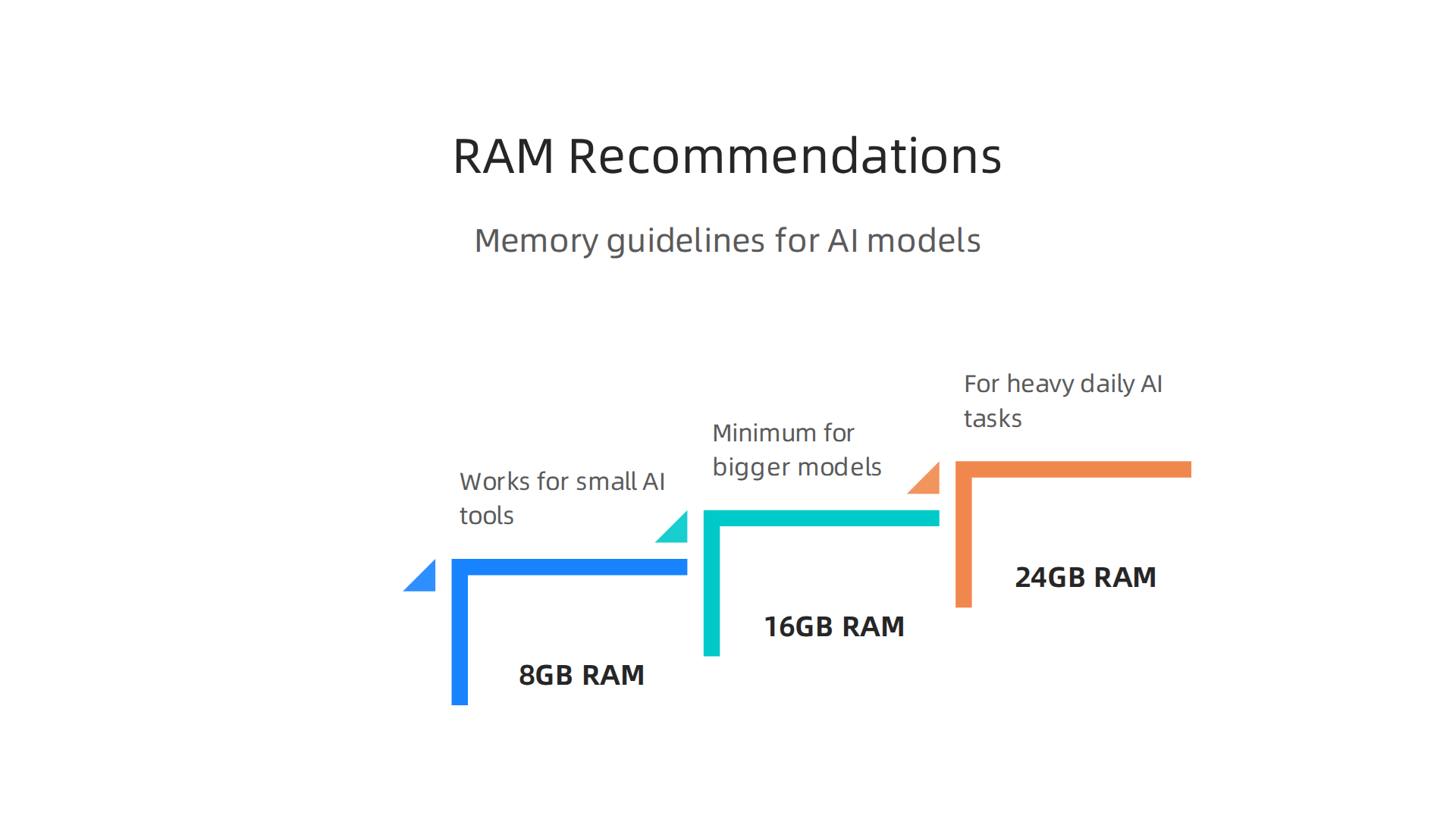
    For small AI tools, 8GB works okay. But for bigger language models or image generators, you want more. A good rule is 16GB at minimum. If you plan to run heavy AI tasks daily, get 24GB if your budget allows.

    Memory guidelines for running various AI models effectively on your MacBook Air 2022.

    The M2 chip supports up to 24GB of unified memory.

    Here is why memory matters more than you think. When your model runs out of RAM, the system starts using your SSD as virtual memory. This is called swapping. It slows everything down. A lot. Apple’s own announcement of the M2 chip explains how the unified memory architecture makes this possible. You can check that Apple M2 breakthrough performance and capabilities page for the full details.

    Screenshot of the Apple Newsroom homepage, where official announcements and product details are released.

    Now about storage. The MacBook Air 2022 comes with SSDs up to 2TB. A fast SSD matters because it loads your AI models and checkpoints faster. But here is the trick: if you have to choose between more RAM and more storage, pick RAM every time. You can always add an external drive later. You cannot add more RAM after purchase.

    If you are still deciding which model fits your work, check out this picking the best MacBooks for AI guide. It compares options across the whole lineup.

    Staying current on AI tools helps you make the most of your MacBook. Want the latest AI news and tips delivered daily? Get clear updates from The AI Newsletter Worth Reading and stay ahead.

    3. Top AI Apps Optimized for MacBook Air 2022

    Now that your MacBook Air 2022 has enough RAM and fast storage, it’s time to load it with AI apps that actually use the M2 chip’s power. The unified memory and Neural Engine make many AI tools run surprisingly fast on this laptop. Here are five apps that feel like they were made for your machine.

    1. ChatGPT for Mac – The official desktop app is lightweight and uses your Mac’s GPU for faster responses. It works great for writing, brainstorming, and coding help.
    2. MacWhisper – This native macOS app turns audio into text using OpenAI’s Whisper model. It runs completely offline and handles long recordings without slowing down.
    3. DiffusionBee – An image generator that runs locally on Apple Silicon. No cloud needed. You can create AI art right from your MacBook Air 2022 in seconds.
    4. LM Studio – Lets you download and run open-source language models like Llama and Mistral. It’s fully offline and optimized for M2 chips.
    5. Raycast – A keyboard launcher with built-in AI features. You can ask questions, summarize text, or control your Mac with natural language.

    All these apps take advantage of the M2’s efficiency. That means your battery stays strong while you work.

    For a full list of tools that perform well on Apple Silicon, take a look at this roundup of best AI apps for Mac from MacHow2.

    If you’re still figuring out which AI tools deserve your time, this guide on finding trusted AI sources can help you cut through the noise.

    4. Using Shortcuts and Automations for AI Workflows

    Once you have the right apps installed, the next step is making them work together automatically. Your MacBook Air 2022 comes with the Shortcuts app built in. This tool lets you chain AI prompts and outputs across different apps without touching the keyboard.

    For example, you can set up a daily AI briefing. Shortcuts grabs the top news headlines, sends them to ChatGPT for a one-paragraph summary, and reads it aloud through your speakers while you make coffee. All in one click.

    Another powerful automation is image generation from clipboard. Copy an image to your clipboard, run a shortcut that sends it to DiffusionBee, and get a variation or upscale in seconds. No manual importing required.

    Text summarization is equally simple. Highlight any text, trigger a shortcut, and have Raycast or ChatGPT summarize it instantly. You can then save the summary to a note or send it to your email.

    For people who want more control, third-party tools like Keyboard Maestro and BetterTouchTool take automations further. They add custom triggers, complex conditions, and deeper integration with system events. You can create workflows that run AI models based on file changes, time schedules, or even mouse gestures.

    A well-designed AI workflow saves you minutes every day. And minutes add up fast.

    A person focused on streamlining their workflow with tools, representing the benefit of automation.

    If you ever run into problems with automations going wrong, this guide on troubleshooting AI workflow crashes with Apple support can help you get back on track.

    To get the most out of these automations, you need to keep up with the latest AI tools and updates. The Deep View Newsletter delivers clear daily AI news straight to your inbox, so you never miss a new workflow opportunity. The AI Newsletter Worth Reading is a great way to stay sharp.

    5. Multitasking with AI Tools: Split View, Spaces, Stage Manager

    Now that your shortcuts and automations are running smoothly, you need a way to juggle multiple AI tools without getting lost in a mess of windows. The MacBook Air 2022 has three built-in features that make this easy: Split View, Spaces, and Stage Manager.

    Stage Manager groups your apps into sets on the left side of the screen. Click one set, and your AI writing tool, image generator, and chatbot all appear together. Click another, and you see your research notes, email, and planner. It cuts down clutter instantly.

    Spaces lets you create separate full-screen desktops. You can dedicate one desktop to your coding environment, another to your LLM chat, and a third to your output viewer. Swipe between them with three fingers on the trackpad. No alt-tabbing through a stack of windows.

    Split View is perfect when you need to see two apps side by side. Drag one window to the left edge and another to the right edge. Now you can tweak your AI prompt in one pane and watch the output update in real time.

    Here is a real-world example. A developer using the MacBook Air 2022 sets up Space 1 with VS Code for writing code. Space 2 holds ChatGPT for asking questions about the code. Space 3 shows a live preview of the app they are building. The developer switches between spaces in a heartbeat. No slowdowns. No confusion.

    These multitasking tools turn your MacBook Air 2022 into a command center for AI work.

    A professional demonstrating efficient multitasking across several virtual workspaces.

    For more tips on getting the most from your setup, check out this guide on picking the best MacBooks for AI for your 2026 projects. It covers which models handle heavy multitasking best.

    6. Local vs Cloud AI Processing: When to Use Which

    Now that your multitasking setup is ready, the next question is where to run your AI workloads. Your MacBook Air 2022 can handle some models right on the device. But other jobs are better sent to the cloud. Here is how to decide which approach fits each task.

    The M2 chip inside the MacBook Air 2022 has a 16-core Neural Engine that can run about 15.8 trillion operations per second. That is enough power for lightweight models like small language assistants, text summarizers, and basic image editing tools. Running these locally means zero latency. No waiting for an internet request. No monthly fees. You just open the app and go.

    But heavier models need more muscle. Large language models like GPT-4, video generators, or advanced image upscalers require cloud servers. The MacBook Air 2022 has a unified memory limit of 8GB or 16GB. That is not enough for models that need 32GB or more of VRAM. Offloading these to the cloud costs money per request, but you get professional-grade results instantly.

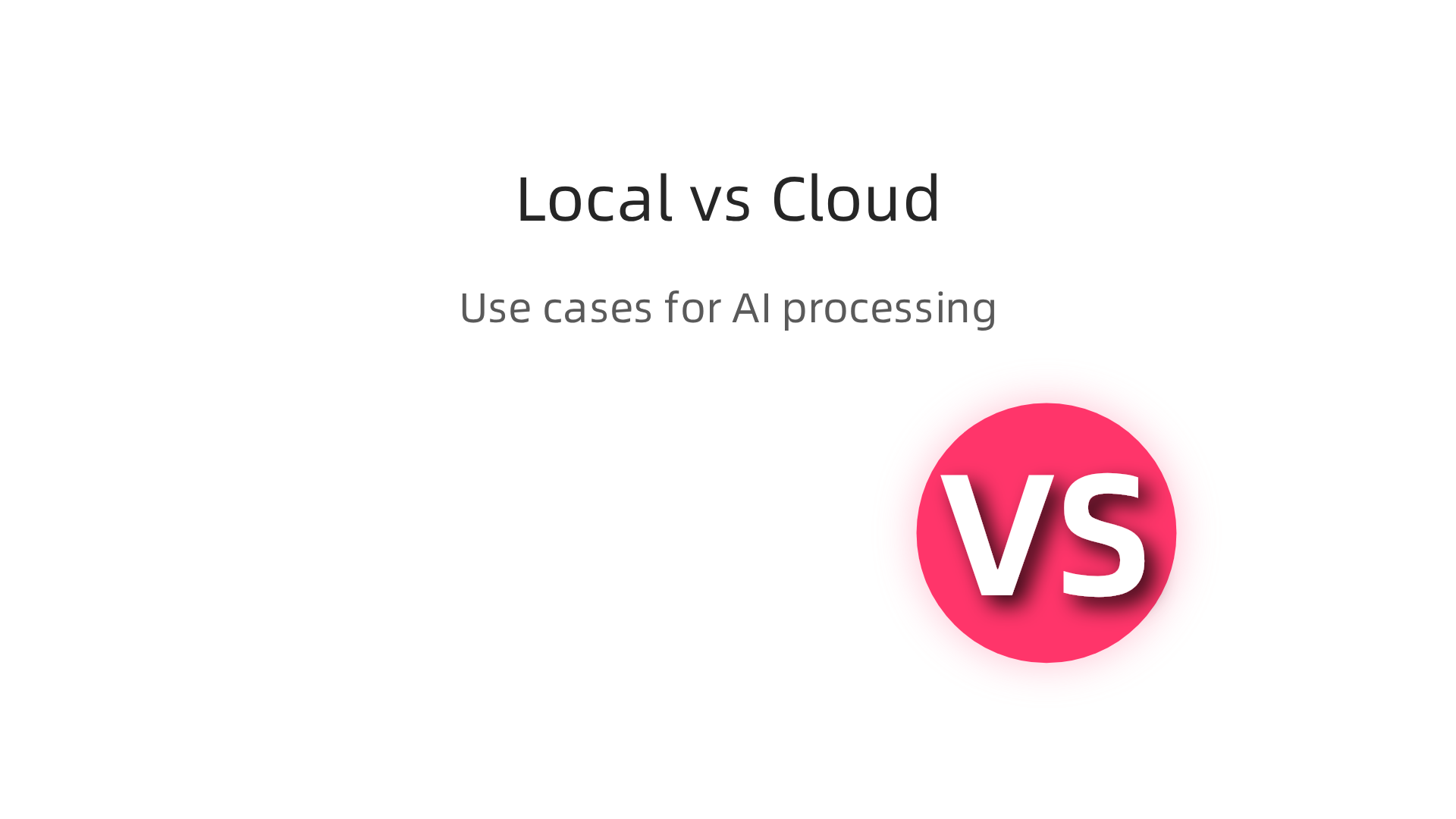
    Here is a simple strategy. Use local processing for quick edits, small drafts, and personal assistants. Use cloud processing for complex analysis, full content generation, and media creation.

    Deciding whether to run AI tasks locally on your MacBook Air or leverage cloud resources.

    The blend gives you speed when you need it and power when you must have it.

    For a deeper look at how different setups compare, check out this guide on enterprise AI platforms for 2026. It helps you match processing type to your workload.

    If you want to stay on top of which AI models run best locally versus in the cloud, The AI Newsletter Worth Reading delivers daily updates straight to your inbox. No fluff, just practical AI news.

    7. Battery Life Management for Heavy AI Workloads

    Now that you know when to run AI locally versus in the cloud, let’s talk about what happens to your battery when you push the MacBook Air 2022 with local models. The M2 chip has special efficiency cores that keep power draw lower during sustained AI inference. That is a big help. But running AI models still eats energy fast.

    Here is the honest truth. If you use your MacBook Air 2022 for normal tasks like web browsing and writing, you might get 15 hours or more. Apple’s newer MacBook Air with M5 shows up to 18 hours for video playback in Apple’s official battery ratings for MacBook Air. But when you start running continuous AI inference, that number drops hard. Expect about 3 to 4 hours of steady AI work on a full charge.

    Do not panic. You can stretch that battery further with a few simple habits. First, lower your screen brightness. The display is a big power hog. Second, close every app you are not using. Background apps fight for system resources and drain your battery. Third, turn on optimized energy settings. Go to System Settings and select Low Power Mode. That caps performance slightly but gives you more runtime.

    Also, avoid running multiple AI models at the same time. The MacBook Air 2022 handles one local model fine. Piling on two or three will drain your battery in under two hours. Stick to one task at a time.

    If you want to upgrade your hardware for longer AI sessions, check out this guide on best MacBooks for AI projects. It compares battery performance across different models.

    8. Integrating AI with macOS Native Features (Spotlight, Siri, Quick Look)

    Your MacBook Air 2022 already comes with tools you can use for AI work. You probably use Spotlight to find files or Siri to set reminders. But these native features can also help you run AI tasks faster. Here is how to make them work for you.

    Use Spotlight as a quick launchpad for AI scripts and tools. Press Command + Space and type the name of an AI app or script. For example, if you have a local text generation model saved as a shortcut, Spotlight finds it in seconds. You do not need to dig through folders every time.

    Siri shortcuts can trigger complex AI workflows with voice commands. Open the Shortcuts app on your Mac. Create a shortcut that runs an AI model or opens a set of tools. Then say "Hey Siri" followed by the shortcut name. Siri runs it without you touching the keyboard. This is great when you need to start a long AI task while you step away.

    Quick Look previews of AI-generated images and documents save time. Select a file and press the Space bar. You see the image or document content without opening any app. This works for AI output like generated pictures, text files, or CSV exports. You check results fast and move on.

    Newer MacBook models include even deeper AI features, as shown in The best MacBooks of 2026. But your MacBook Air 2022 already handles these tricks well.

    If you want to stay updated on more AI tips like this, The AI Newsletter Worth Reading delivers clear daily updates straight to your inbox.

    These small habits turn your everyday Mac features into AI helpers. No extra software needed.

    9. Security and Privacy Considerations for AI on MacBook Air

    Using AI on your MacBook Air 2022 is exciting, but it also raises important questions about safety. Here is the good news: running AI locally on your machine keeps your sensitive data off third-party servers. When you use a local AI model instead of a cloud service, your private information never leaves your laptop. That alone reduces a lot of risk.

    Your MacBook Air already comes with strong built-in protections. FileVault encrypts your entire drive so that even if someone gets physical access to your computer, they cannot read your files.

    A person thinking about or implementing data security measures for their digital work.

    Gatekeeper checks that every app you run has been verified by Apple. And the T2 security chip in your MacBook Air handles encrypted storage and secure boot processes. These features protect both your AI tools and the data they process.

    Here are a few best practices to keep your AI work safe:

    Sandbox your AI apps. When you download a new AI tool, run it in a separate user account or a container. This limits what the app can access if something goes wrong.

    Vet your models carefully. Only download AI models from trusted sources. Bad actors can hide malware in fake model files. Check reviews and community feedback before running anything unfamiliar on your MacBook Air.

    Use encrypted containers for sensitive AI data. Tools like VeraCrypt let you create a secure folder that locks with a password. Store your training datasets and AI outputs there when you are not using them.

    Apple has been paying closer attention to AI security too. In 2026, the company started accelerating security updates in response to AI-powered hacking risks. This means your MacBook Air gets fixes faster when new threats appear.

    If you run into security issues with your AI workflow, you can learn how to report a problem to Apple when your AI workflow crashes. Getting fast help keeps your projects moving without putting your data at risk.

    Staying safe does not have to be hard. A few small habits make a big difference when you are exploring AI on your MacBook Air 2022.

    10. Future-Proofing Your MacBook Air for Emerging AI Tech

    Building on that foundation of safety, let us talk about how to keep your MacBook Air 2022 ready for the AI tools of tomorrow. The good news is that Apple designed this laptop with future AI features in mind.

    The M2 chip inside your MacBook Air includes a 16-core Neural Engine built specifically for machine learning tasks. As Apple rolls out more on-device AI features in future macOS updates, that Neural Engine will become even more useful. Your machine is already set up to handle those improvements without needing new hardware.
    But to really get the most out of your laptop for years to come, you need the right configuration. If you are buying new or upgrading, aim for at least 16GB of RAM and a 512GB SSD. These specs give your MacBook Air the memory and storage space to handle larger AI models and bigger datasets without slowing down. That upfront investment will extend your laptop’s useful life by several years.

    Staying ahead also means keeping an eye on Apple’s machine learning framework updates and community optimizations. The AI space moves fast, and new techniques can make older models run faster on the same hardware. Following these changes helps you squeeze every bit of performance from your MacBook Air 2022. You can find more guidance on picking the best MacBooks for AI if you are considering other options.

    Apple is also adapting its overall approach to keep users safe as AI evolves, with accelerated security updates in response to AI-powered threats becoming the new normal. That level of commitment means your MacBook Air will keep getting better protection over time.

    To stay on top of all the AI tools and updates that matter for your workflow, get clear daily AI updates from The AI Newsletter Worth Reading. It helps you keep your MacBook Air ready for whatever comes next.

    Summary

    This guide explains how the MacBook Air 2022 with Apple’s M2 chip performs as an everyday AI machine and how to get the most from it. It breaks down why the 16‑core Neural Engine and unified memory matter, recommends RAM and storage configurations, and gives practical rules of thumb for running local models versus sending jobs to the cloud. You’ll find a curated list of apps that run well on Apple Silicon, step‑by‑step ideas for automations and multitasking, and concrete tips to stretch battery life during sustained inference. The article also covers macOS integrations like Shortcuts, Spotlight and Siri, plus security practices to keep data safe when using AI tools. Finally, it shows how to future‑proof your setup with the right specs and update strategies so your MacBook Air stays useful as AI evolves. After reading, you’ll know which workloads your Air can handle, how to configure it for speed and safety, and when to offload heavier tasks to cloud services.

  • Galaxy AI 2026 Agentic Assistant for Business and Content Creation

    Galaxy AI 2026 Agentic Assistant for Business and Content Creation

    Introduction

    Have you ever wished your phone could actually do the heavy lifting for you? Not just answer questions or set timers, but really handle the boring stuff like scheduling meetings, organizing your email, or helping you create content. That’s exactly what Galaxy AI is starting to deliver in 2026.

    A person looking focused and relaxed, benefiting from smart technology assisting with daily tasks.

    Galaxy AI is quickly becoming a serious player in the AI assistant space. Samsung has been pushing hard to make AI more useful and personal. The Galaxy S26 series now features what Samsung calls "agentic AI." This means the AI can act on your behalf to automate workflows, handle scheduling, and much more. Samsung shared the full details at their Unpacked event in February 2026.

    So what makes Galaxy AI different from other tools like HeyGen AI or Dreamina AI? A big part of it is on-device intelligence. Instead of sending all your data to the cloud, Galaxy AI processes a lot of information right on your device. This keeps your data more private and secure. Samsung has been open about how trust, security, and privacy shape the future of AI, especially during their talks at CES 2026.

    For businesses, this is big news. Teams in content creation, marketing, and operations are starting to explore what Galaxy AI can do. Whether it’s helping with writing, generating ideas, or automating daily tasks, the potential is real. According to a detailed whitepaper on the Galaxy AI revolution, Samsung is leading with technologies focused on communication, creativity, productivity, and health.

    In this article, we will give you a complete and practical overview of Galaxy AI. We will look at the technology behind it, how it works in real life, and whether it can actually deliver a good return on investment for your business.

    If you want to stay ahead in the fast-moving world of AI, it helps to have a trusted source of news. We recommend signing up for The Deep View Newsletter. It delivers clear daily AI updates straight to your inbox so you never miss what matters.

    And if you are curious about other smart tools that can boost your productivity, check out our guide on how to choose and use an AI powered research assistant. It covers practical tips for picking the right AI helper for your needs.

    What is Galaxy AI? Core Architecture and Philosophy

    So what actually powers Galaxy AI? It helps to understand the engine before you push the pedal.

    Galaxy AI is not one single tool. It is a full suite of AI models and features built by Samsung. At the February 2026 Unpacked event, Samsung introduced what they call "agentic AI" for the Galaxy S26 series. This means the AI can act on your behalf. It can handle tasks like scheduling meetings or organizing your inbox without you needing to guide every step.

    The secret to how Galaxy AI works lies in two core ideas: privacy and personalization.

    First, privacy. Samsung processes a lot of the AI work directly on your device. Your photos, messages, and personal data do not have to travel to a cloud server to be analyzed. This on-device processing is a big deal. Samsung has been open about how trust and security shape the future of AI, especially during their discussions at CES 2026. You get powerful AI help without giving up control of your information.

    Second, personalization. Galaxy AI learns from how you use your phone. It adapts to your habits, your tone, and your schedule. Over time, it becomes more helpful because it knows what matters to you. The system blends on-device smarts with cloud intelligence when needed. This hybrid approach means you get fast responses for simple tasks and deeper power for bigger jobs.

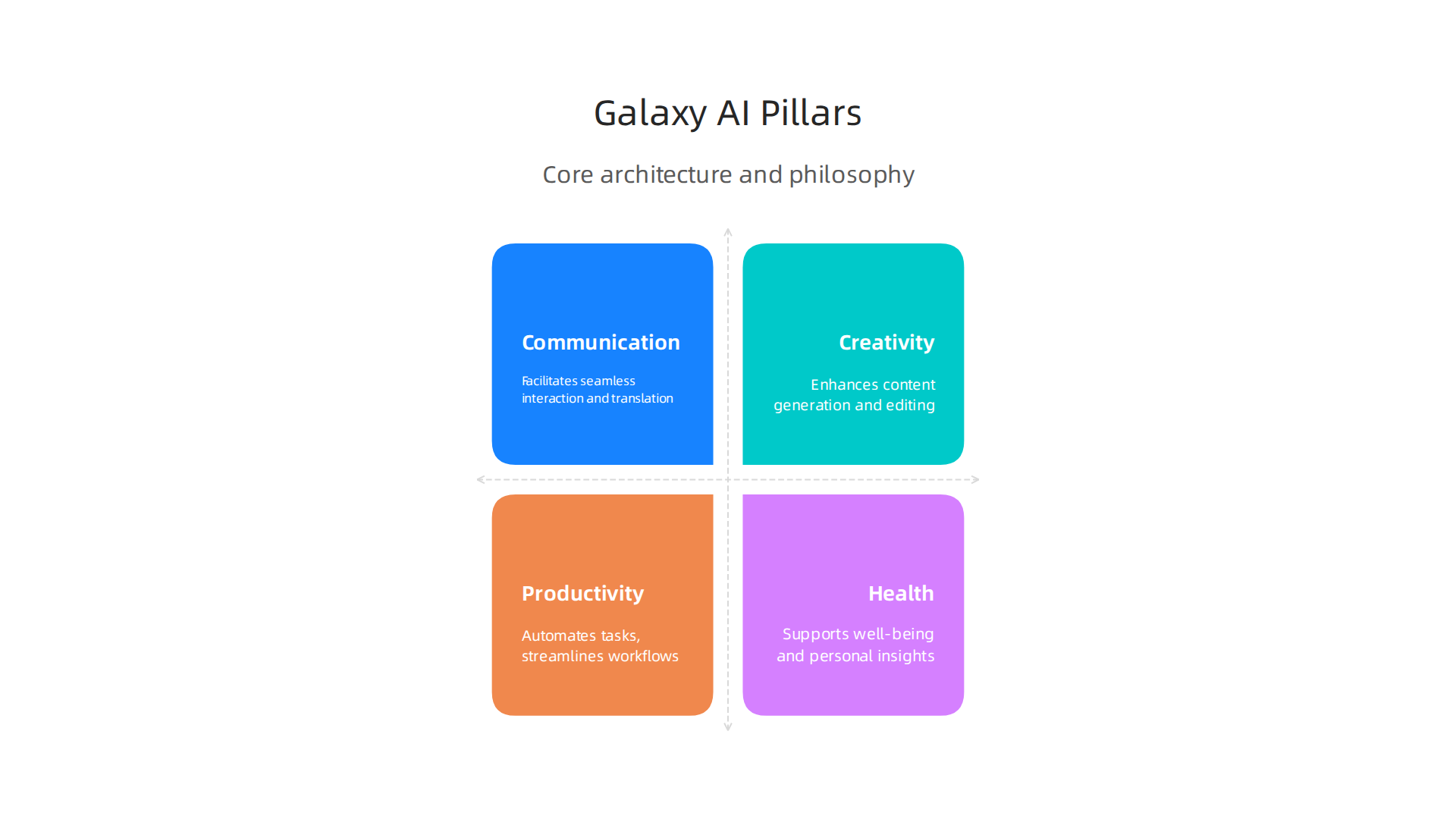
    According to a detailed whitepaper on the Samsung Galaxy AI revolution, Samsung’s technology focuses on four main areas: communication, creativity, productivity, and health.

    The four fundamental pillars driving Samsung's Galaxy AI technology.

    Understanding these pillars helps you know which features to use for your specific workflow.

    When you know how Galaxy AI thinks about privacy and personalization, it becomes easier to pick the right tools for your day. For example, you might use on-device translation for a private chat but use cloud-powered image editing for a creative project. Knowing the architecture helps you work smarter.

    If you want to explore other smart assistants that can boost your daily workflow, check out our guide on how to choose and use an AI powered research assistant. It covers practical tips for picking the right helper for your needs.

    And if you want to stay updated on all things AI without the noise, subscribe to The Deep View Newsletter. It sends clear daily AI news straight to your inbox so you never miss what matters.

    Galaxy AI for Content Creation: Text, Image, and Video Tools

    Now that you understand the engine behind Galaxy AI, let us look at how it helps you create content. Whether you write emails, edit photos, or make short videos, Galaxy AI brings powerful tools right to your phone.

    A creative professional focused on crafting engaging content, possibly with a mobile device nearby.

    Galaxy AI includes generative text assistants that can help you write messages, summarize long articles, or translate languages in real time. This is important for professionals who need to move fast. A 2026 benchmarks report on the state of AI in marketing shows that content velocity is a top trend reshaping the industry. Having an AI powered assistant on your device means you can draft a reply, polish a post, or summarize a meeting transcript without switching apps. It keeps your flow going.

    When it comes to images and video, Galaxy AI shines because it does the work right on your device. You do not need to upload your personal photos to a cloud server to edit them. This on-device processing means low latency and better privacy. You can remove objects from a video, adjust lighting in a photo, or generate a new background with just a few taps. It is like having a mini desktop editor in your pocket, but with the extra benefit of working offline.

    How does this stack up against tools like ChatGPT or Adobe Firefly? Those tools are powerful, but they usually need an internet connection and a separate account. Galaxy AI is built directly into the Samsung ecosystem. It is always ready, it learns your style, and it does not send your data to a distant server. For marketers following the latest AI investments, having a mobile-first, offline-capable creation suite is a major advantage.

    If you are curious about how AI creativity compares to human creativity across different platforms, check out our analysis on human or AI creativity.

    The world of AI content creation is changing fast. Do not get left behind. Subscribe to The Deep View Newsletter. It sends clear daily AI updates straight to your inbox so you always know what tools actually work.

    Galaxy AI for Marketing: Personalization and Campaign Automation

    Content creation is just the start. The real magic happens when you use Galaxy AI to run smarter marketing campaigns. In 2026, personalization is no longer a nice to have. It is what customers expect. Galaxy AI helps you deliver it, right from your phone.

    A small team collaborating on a marketing strategy, brainstorming ideas and reviewing data.

    Here is how. Galaxy AI can analyze on-device data to build hyper personalized customer segments. It looks at behavior, preferences, and past interactions without sending private data to the cloud. This matters because 46% of marketers now use AI to scale creative work, according to the 2026 Digital Advertising Trends Report by Smartly.

    Smartly.io homepage, a platform specializing in digital advertising automation for marketers.

    And up to 30% of marketing budgets get wasted on generic outreach. Galaxy AI helps you stop that waste.

    You can also automate repetitive campaign tasks. Galaxy AI writes ad copy variations for you. It sets up A/B tests automatically. It even integrates with major marketing platforms so your campaigns run on autopilot. This matches what the State of AI in Marketing 2026 benchmarks report calls content velocity: the ability to produce and test more content in less time. Early adopters report better conversion rates and much faster campaign setup times.

    Think about what that means for your workflow. Instead of spending hours writing five versions of a Facebook ad, you let your AI powered assistant handle the first draft. You just review and tweak. It is the same approach top marketing teams use when they invest in AI for creative workflows and testing, as the Section AI article on 2026 AI investments points out.

    If you want to learn more about writing copy that sounds natural and connects with people, check out our guide on how to use AI to write content that sounds human.

    Personalization and automation are changing marketing fast. Galaxy AI puts these tools in your pocket. Are you ready to use them? Stay ahead of the curve by getting clear daily updates on what actually works. Subscribe to The Deep View Newsletter. It delivers practical AI insights straight to your inbox every day.

    Galaxy AI for Business Operations: Workflow and Data Analysis

    Marketing gets all the glory, but the real time drains in business are the boring tasks. Data entry. Report generation. Chasing down numbers from different systems. If you run a small team or wear many hats, you know exactly what I mean. Galaxy AI can take over these repetitive jobs and free up your brain for bigger decisions.

    A business leader reviewing important documents or reports, making strategic decisions with confidence.

    Here is how it works in practice. Galaxy AI automates many of the routine tasks that eat up your day. It can pull data from spreadsheets, fill in forms, and generate weekly reports without you touching a keyboard. This is especially useful when you think about enterprise security. Galaxy AI offers data processing and feature restrictions through the Knox Service Plugin, so you can configure Galaxy AI data processing to match your company’s security policies.

    Samsung Knox documentation portal, detailing enterprise security solutions and policy configurations for Galaxy AI.

    Your sensitive business data stays safe.

    The feature that really changes things is natural language querying. You do not need to be a data analyst or know SQL. You just ask a question in plain English. "Show me last month’s sales by region." Or "Which products have the lowest inventory?" Galaxy AI understands your request, searches your business database, and returns the answer instantly. For non-technical team members, this is a game changer. It puts the power of data analysis into everyone’s hands.

    Think of the use cases across different departments. In supply chain management, Galaxy AI can spot delays and suggest reorder points before stock runs low. In customer service, it can summarize support tickets and identify common complaints. The time savings add up fast. Instead of spending two hours pulling a report, you get the answer in seconds.

    If you want to dig deeper into how AI can transform your daily research and analysis workflows, read our guide on how to choose and use an AI powered research assistant. It covers the best tools to pair with Galaxy AI for maximum efficiency.

    The bottom line is this. Galaxy AI turns your phone into a business operations hub. It automates the boring stuff, answers your data questions, and helps you move faster. Ready to see what else AI can do for your business? Subscribe to The Deep View Newsletter for daily insight on the tools that actually deliver results in 2026.

    Galaxy AI vs. Competitors: Feature-by-Feature Comparison

    By now you have seen how Galaxy AI handles business tasks. But how does it stack up against the big cloud-based names like GPT-4, Google Gemini, and Claude? Let us break it down feature by feature.

    The biggest difference comes down to where the processing happens. Most AI assistants, including GPT-4 and Gemini, rely on cloud servers to answer your questions. That means your data travels to a remote data center, gets processed, and comes back to you. Galaxy AI is different. It does a lot of work right on your device. This on-device processing is not just faster. It also means sensitive business data never leaves your phone. For industries like healthcare, law, and finance, that is a huge win.

    When we look at raw benchmarks, the cloud assistants still lead in some areas. According to recent testing, GPT-5.4 scores around 93.1% on coding benchmarks, edging out Claude Opus 4.6’s 90.4%. And on general reasoning tests, models like Gemini 3.0 score in the high 80s on GPQA Diamond. But here is the thing. These scores require an internet connection and sending data to the cloud. If you are offline, those models are useless. Galaxy AI keeps working without a network.

    The table below shows the key differences at a glance:

    | Feature | Galaxy AI | GPT-4/Gemini/Claude |

    A feature-by-feature comparison of Galaxy AI's on-device processing versus cloud-based AI models.

    |———|———–|———————|
    | Processing location | On-device (privacy focused) | Cloud (requires internet) |
    | Works offline | Yes | No |
    | Data privacy | High (data stays on your phone) | Lower (data sent to cloud) |
    | Coding benchmarks | Good for device tasks | Higher overall scores |
    | Latency | Instant (no network delay) | Depends on connection speed |

    For many business users, the privacy trade-off is worth it. You do not need the world’s best coding model to automate a report or pull up sales numbers. You need something that works fast, works offline, and keeps your data safe. Galaxy AI delivers on all three.

    If you want to stay on top of how these AI tools compare, check out our guide to the top AI websites professionals trust for real news and tools. It is a great resource for finding the latest benchmarks and reviews.

    Want side-by-side comparisons like this delivered to your inbox every day? Subscribe to The Deep View Newsletter for daily insight on the tools and models that actually deliver results in 2026.

    Integrating Galaxy AI with Existing Tech Stacks

    Now that you have seen how Galaxy AI stacks up against cloud-based tools, you might wonder: How do I actually connect this to the software my team already uses? The good news is that Galaxy AI is built to play nice with your current setup.

    Galaxy AI offers a range of APIs and SDKs that let developers build custom integrations. This means your IT team can connect Galaxy AI directly to your company’s internal systems, databases, and workflows. Instead of using a separate AI dashboard, you can embed the AI powered assistant right into the apps your people use every day. For example, if you run a healthcare clinic, you could integrate Galaxy AI with your patient management system so it helps schedule appointments or answer billing questions, all without sending patient data to the cloud. Samsung’s Knox Platform for Enterprise lets you set policies for Galaxy AI data processing to meet your security requirements check Samsung Knox docs.

    For teams that are not doing custom development, Galaxy AI also comes with plugins and connectors for popular business tools. You can connect it to Microsoft 365, Google Workspace, and Salesforce right out of the box. Imagine having Galaxy AI automatically generate a summary of your Google Doc or pull the latest sales numbers from Salesforce and turn them into a clean report. No extra coding needed. Your team just clicks and it works.

    And if your business deals with industry-specific language, you can fine-tune Galaxy AI models to fit. A law firm could train it on legal terms and case law. A factory might teach it to recognize specific machine errors. This custom model fine-tuning makes the AI much more useful than a one-size-fits-all solution.

    If you want to see how other AI tools connect to real-world workflows, check out our guide on how to choose and use an AI-powered research assistant in 2026. It gives practical tips for picking tools that fit your stack.

    Ready to get the latest on AI integrations? Subscribe to The Deep View Newsletter for daily updates on the tools that actually make a difference in 2026.

    Best Practices for Deploying Galaxy AI in Your Organization

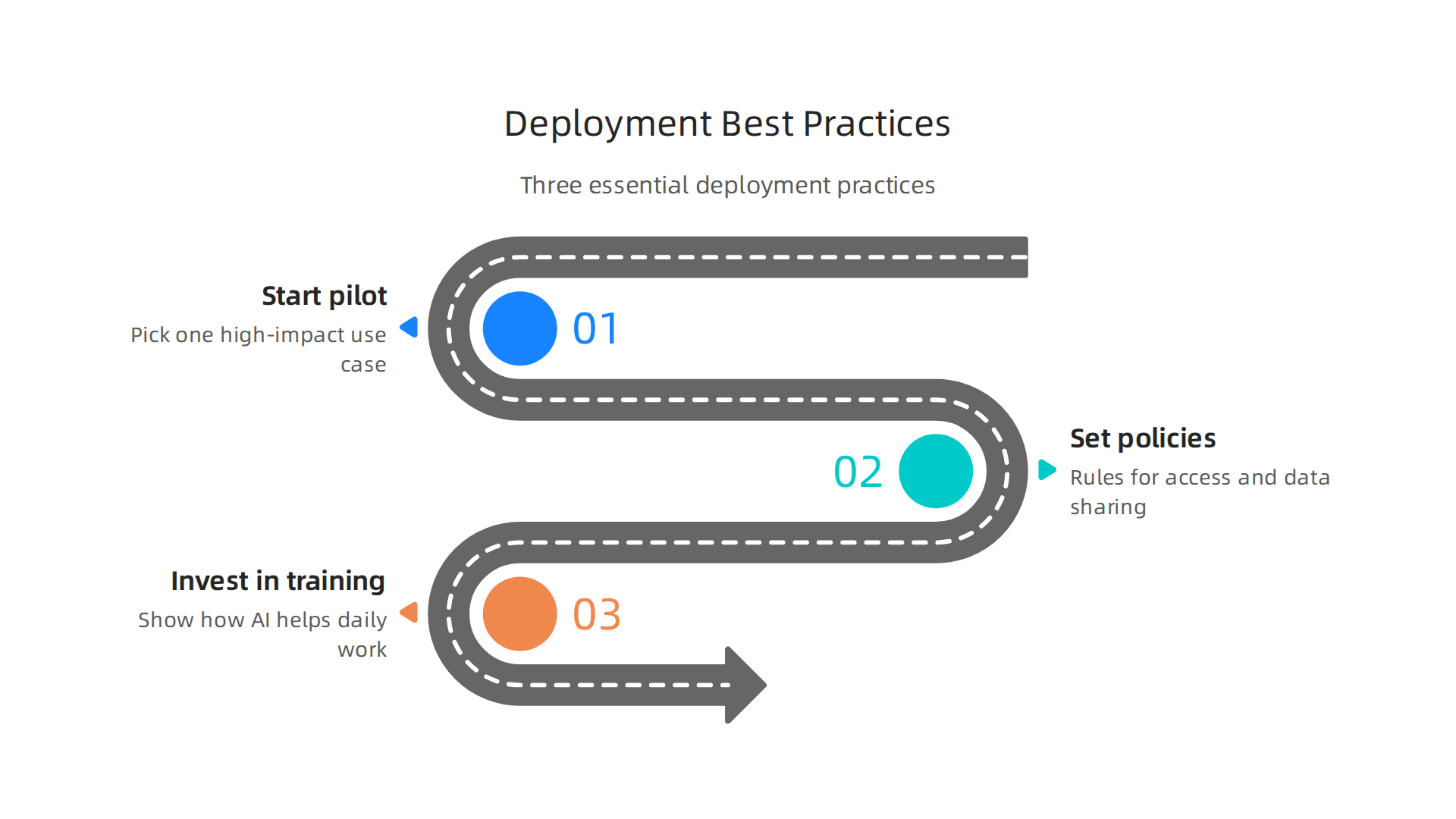
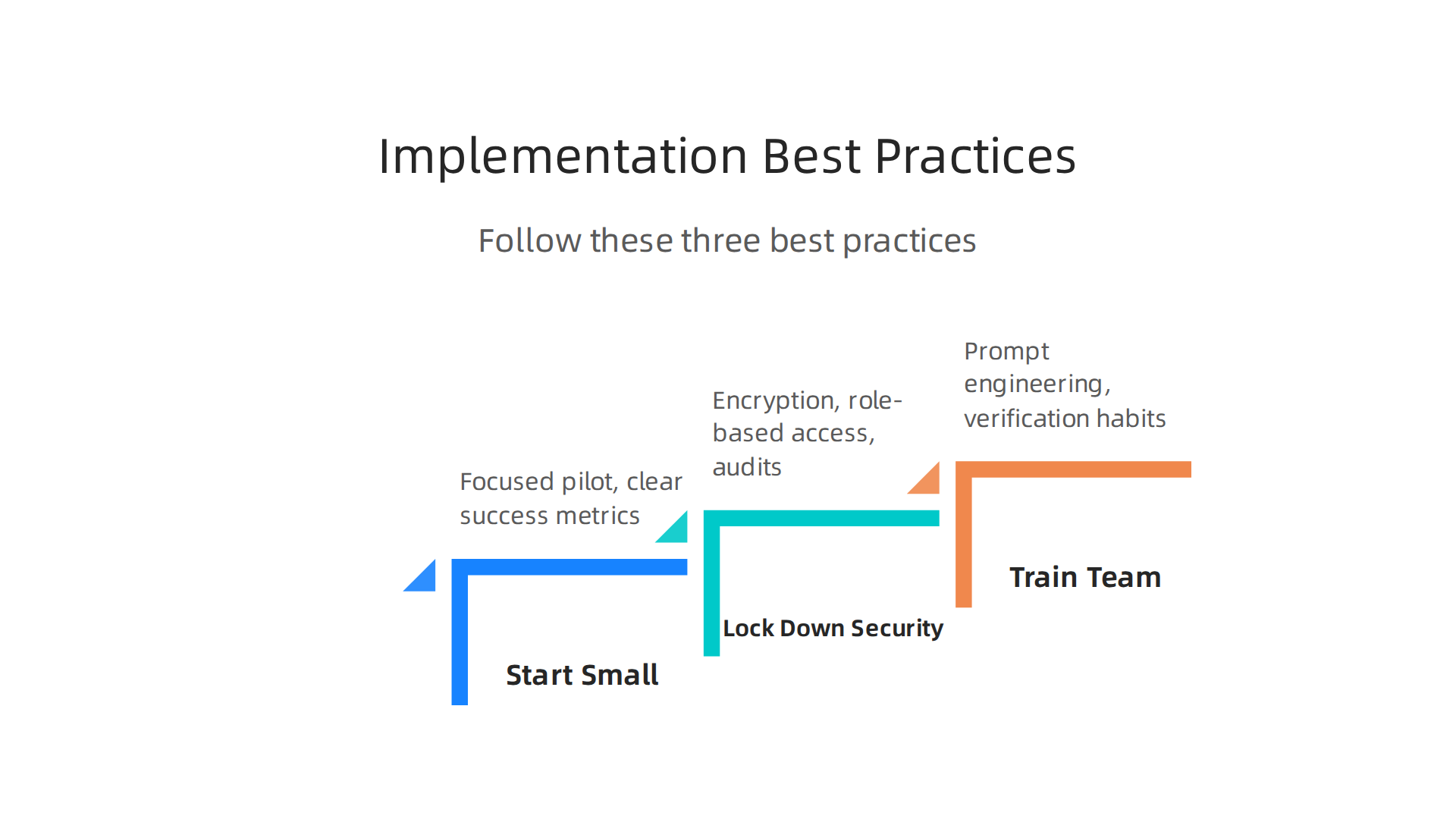
    You have Galaxy AI connected to your systems. Now what? Rolling out a new AI powered assistant across an entire company can feel overwhelming. But you can avoid the common pitfalls by following three simple best practices.

    Three essential best practices for a successful deployment of Galaxy AI within an organization.

    Start with a pilot project. Do not try to use Galaxy AI everywhere at once. Pick one high-impact use case. Maybe that is automating customer support replies. Or generating weekly sales reports. A small pilot lets your team learn what works without risking big disruptions. You can measure success by looking at time saved or error rates. For example, you might compare Galaxy AI’s performance against other top models on specific tasks by checking the latest benchmark results from MindStudio to see how it stacks up for coding or writing tasks.

    MindStudio.ai homepage, a platform for building AI applications without code.

    Once you prove the value in one area, expand slowly.

    Set clear governance policies. Before employees start using Galaxy AI, your organization needs rules. Who can access the AI? What data is okay to share? How do you handle privacy? Samsung Knox lets you control data processing policies, but you also need a written policy for acceptable use. This helps prevent mistakes like feeding sensitive customer information into the AI. A detailed analysis of ChatGPT versus Gemini versus Claude can show you how different models handle data, which informs your governance choices. Your policy should cover data retention, audit logs, and what happens if the AI makes a mistake.

    Invest in training and change management. The best AI tool fails if nobody uses it. Your people might worry that Galaxy AI will replace them. Or they might not understand how it helps their daily work. Provide hands-on training sessions. Show real examples. Let employees practice using the AI powered assistant in a safe environment. Talk about how AI can handle boring tasks so your team can focus on creative and strategic work. For more insight into how humans and AI can work together, read our guide on human or AI creativity and what the data says about collaboration in 2026. It explains how teams that embrace AI collaboration actually become more productive and innovative.

    Start small. Set clear rules. Teach your people well. That is the recipe for a smooth and successful Galaxy AI rollout.

    For daily updates on the AI tools shaping business in 2026, subscribe to The Deep View Newsletter.

    Measuring Success: KPIs and ROI of Galaxy AI

    You have deployed Galaxy AI. But how do you know if it is working? You need clear numbers to show the value. That means tracking the right KPIs and calculating your return on investment.

    Start by defining your most important KPIs. For Galaxy AI, focus on three main areas. First, productivity savings. How much time do your employees save each week? You can measure this by comparing task completion times before and after the rollout. Second, error reduction. Is the AI powered assistant making fewer mistakes than your old processes? Track error rates in customer support replies, data entry, or report generation. Third, new revenue from AI driven insights. Did Galaxy AI help your team find patterns in customer behavior that led to more sales? These three KPIs give you a solid baseline.

    According to the Olakai AI ROI framework, you should also measure qualitative benefits like employee satisfaction and innovation speed. A practical guide from Olakai explains how to balance hard metrics with softer outcomes.

    Olakai AI homepage, providing insights and frameworks for measuring AI ROI in business.

    Another helpful resource from Tropicapp shows how CFOs at companies like Zapier measure AI ROI using five frameworks that go beyond just time saved. You can read their AI ROI frameworks from Tropicapp to see real world examples.

    For the ROI calculation, add up all the costs: licensing fees, training time, integration work. Then compare that to the value of time saved and revenue gained. But do not forget the intangible wins. Employees who feel less bored by repetitive tasks tend to stay longer. That is harder to measure but just as important. A comprehensive framework from RevGen Partners outlines how to capture both tangible and intangible factors.

    To set realistic expectations, look at industry benchmarks. Reports from leading analysts can show what other companies achieve with similar AI tools. For a curated list of trusted sources for AI benchmarks and news, check out our guide on the 10 top AI websites professionals trust in 2026. This will help you compare your Galaxy AI results against industry standards.

    Measuring success is not a one time task. Check your KPIs monthly. Adjust your goals as you learn more. Galaxy AI can deliver big returns, but only if you track the right numbers.

    Want daily updates on AI tools that boost your bottom line? Subscribe to The Deep View Newsletter for clear, actionable insights every day.

    Summary

    Galaxy AI is Samsung’s hybrid, agentic assistant built into the Galaxy S26 line that combines on-device intelligence with cloud power to automate tasks, create content, and protect user data. This article explains Galaxy AI’s core architecture—privacy-first on-device processing plus selective cloud use—and shows how those design choices matter for marketers, content creators, and business teams. You’ll learn practical use cases for writing, image and video editing, campaign personalization, and operations automation, plus how Galaxy AI compares with cloud-first models like GPT and Gemini. The guide also covers integration paths, rollout best practices (pilot projects, governance, training), and ways to measure KPIs and ROI so you can decide if Galaxy AI fits your workflow and security needs.

  • How to Choose and Use an AI Powered Research Assistant in 2026

    How to Choose and Use an AI Powered Research Assistant in 2026

    Are you drowning in information? You sit down to research a topic, open a dozen tabs, and suddenly hours have passed.

    A professional facing an overload of information, reflecting the challenge AI assistants aim to solve.

    You have read reports, skimmed studies, and watched videos, but you still cannot pull out the key insights quickly. This is the reality for many professionals in 2026. The sheer volume of data out there is growing faster than ever. In fact, the global artificial intelligence market is projected to reach nearly $2.5 trillion by 2034, and the tools for creating content are multiplying just as fast Fortune Business Insights.

    Fortune Business Insights provides market research reports on various industries, including artificial intelligence.

    But all that information does not help if you cannot find what matters.

    That is where the AI powered research assistant comes in. These smart tools promise to automate the boring parts of research: synthesizing long documents, summarizing key points, and even extracting insights from scattered sources. Instead of spending your energy on sorting, you can focus on understanding and deciding. The AI assistant market itself is growing at a staggering compound annual growth rate of over 44%, showing just how many people are already turning to these helpers SNS Insider.

    But here is the thing: not every AI tool lives up to the hype. Some claim to be research wizards but deliver shallow summaries. Others are built for general tasks, not deep investigation. That is why this guide exists. We are going to cut through the noise and give you a clear framework for evaluating and adopting the best AI research tools for your specific needs. Whether you are an engineer exploring engineering applications of artificial intelligence, a marketer comparing AI tools, or a founder looking for the next edge, you need a practical approach. If you want to stay ahead of the curve every day, consider subscribing to The AI Newsletter Worth Reading for clear, daily updates.

    Before we dive into the tools, you might also want to check out our list of 10 Top AI Websites Professionals Trust for Real News and Tools. It is a great starting point for building your own reliable source stack. Now, let us break down exactly what an AI powered research assistant can do for you and how to pick the right one without the guesswork.

    What Is an AI-Powered Research Assistant?

    Let’s get specific. An AI powered research assistant is a smart tool that uses large language models (LLMs) and a technique called retrieval-augmented generation (RAG) to help you work with information. Instead of just searching the web and giving you a list of links, it actually reads, summarizes, and answers questions based on the content you feed it. Think of it as a tireless research partner who never gets tired of skimming hundreds of pages.

    The key difference from a regular search engine is the output. Google gives you ten blue links. A research assistant gives you a synthesized answer with citations you can check. You can upload a PDF, a bunch of articles, or even a video transcript, and then ask things like "What are the three main arguments in this report?" or "Summarize the key findings from the past year." It pulls the relevant pieces, combines them into a clear response, and tells you where it got the information. That is a huge time saver.

    In 2026, the leading examples include tools like Perplexity AI, which acts like a conversational search engine,

    Perplexity AI, a conversational search engine, demonstrates advanced AI research assistant capabilities.

    and Google’s Gemini Deep Research, which can create detailed reports from many sources. Many companies also build custom enterprise solutions that work on their internal documents, combining the power of LLMs with their own data. The AI assistant market is growing fast, with forecasts showing it could reach over $21 billion by 2030 MarketsandMarkets. That growth tells you these tools are not just hype.

    These assistants are designed to help you do the boring parts of research so you can focus on understanding and making decisions. They are a perfect example of ai to human collaboration, where the machine handles the heavy lifting and you apply your judgment.

    A team working together, demonstrating effective human-AI collaboration in a modern office setting.

    For a deeper look at how this partnership works, read our article on human or AI creativity. The goal is not to replace your thinking. It is to make your thinking faster and sharper.

    If you want to keep learning about which tools deliver real results, subscribe to The AI Newsletter Worth Reading. It gives you clear, daily updates so you never miss what matters.

    Core Capabilities of Modern AI Research Tools

    You have a stack of PDFs, a dozen browser tabs, and a deadline. You need one clear answer. That is exactly where an ai powered research assistant shines. The best tools in 2026 share a set of core capabilities that turn information chaos into usable insights.

    An overview of the essential features that define modern AI-powered research assistants.

    First, advanced summarization. These tools can boil down long reports, academic papers, or even video transcripts into a few digestible paragraphs. Instead of reading 50 pages, you get the key points in seconds. According to a comparison of top tools, features like real-time data retrieval and citation tracking are now standard DevOpsSchool.

    Second, multi-source synthesis. A good assistant does not just summarize one document. It pulls from many sources at once, combines the information, and gives you a coherent answer. You can ask "Compare the pricing models of these three competitors" and get a table with citations. That saves hours of manual cross-referencing. Tools now go beyond simple Q&A to handle research, coding, and full workflows across different apps EMA.ai.

    Third, real-time data integration. The best assistants connect to live databases, news feeds, or your company’s internal systems. They give you up-to-date answers, not stale summaries. For example, you can get current market trends or competitor news pulled straight from the web. Platforms like CleverX and Outset.ai are examples of end-to-end research tools that do this well CleverX.

    CleverX, an end-to-end research tool, offers solutions for real-time data integration and insights.

    Customizable knowledge bases and API access are what separate average tools from powerhouses. If you work in a specialized field like engineering, being able to train the assistant on your own documents changes everything. You can upload internal reports, past projects, or technical manuals. The tool then answers questions using your private data. This is where the real ai to human value shows up. For a deeper look at how custom AI fits into business strategy, read our article on Palantir Technologies 2026 growth and products.

    Accuracy and source transparency remain the make-or-break factors. You need to trust the answer. The best tools show exactly where each piece of information came from, usually with clickable citations. Without that, you cannot verify the output. Many students and professionals have tested assistants like ChatGPT, Perplexity, and NotebookLM, and they always emphasize that seeing the source builds confidence Zemith.

    In short, the right assistant does not just give you answers. It gives you answers you can trust, fast. If you want to stay on top of which tools are delivering real results, subscribe to The AI Newsletter Worth Reading. It delivers clear daily updates so you never miss what matters.

    How to Choose the Right AI Research Assistant

    You know what you need from your ai powered research assistant. Speedy answers, clear sources, and help with the heavy lifting.

    A professional thoughtfully considering options, symbolizing the decision-making process when choosing AI tools.

    But with so many options in 2026, how do you pick the right one without wasting time or money?

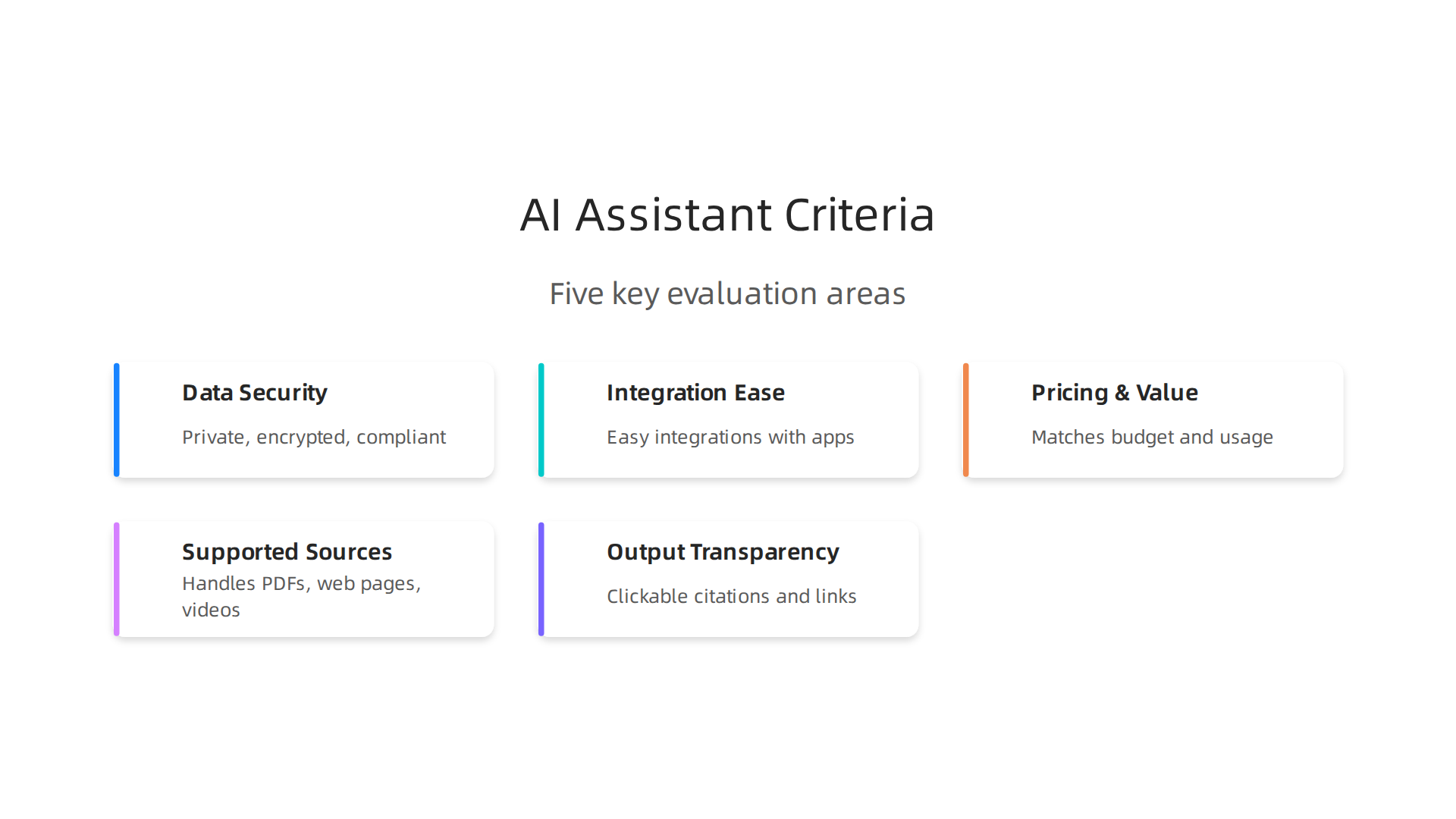
    The trick is to compare tools using the criteria that actually matter for your work. Don’t get distracted by flashy features you will never use. Focus on five key areas.

    Five crucial criteria to evaluate when selecting an AI-powered research assistant for your needs.

    Data security. If you work with sensitive client information or internal reports, the tool must keep your data private. Check whether the tool encrypts your files and whether it trains on your data. This matters more than ever for business users and engineering applications of artificial intelligence.

    Integration ease. A tool that sits alone is less useful than one that connects to your existing apps. Look for tools that plug into your browser, document storage, or project management platform. The best ai powered research assistant fits into your flow, not the other way around. According to a comparison of AI assistants, the top tools now go beyond simple Q&A to handle full workflows across apps EMA.ai.

    Pricing and value. Some tools offer generous free tiers. Others charge a monthly fee for advanced features. Think about your budget and how often you will use the tool. Students can often get by with free versions, while professionals might need the deeper capabilities of paid plans.

    Supported data sources. Can the tool handle PDFs, web pages, videos, and spreadsheets? Or is it limited to text? If you work with a lot of academic papers or industry reports, choose a tool that excels with those formats. Tools like Anara AI are built specifically for handling large piles of PDFs and research documents Stackademic.

    Output quality and transparency. This is the big one. Does the tool show you its sources? Can you verify the information? The best tools provide clickable citations so you can trust the answer. Top tools in 2026 include options like ChatGPT, Perplexity, and NotebookLM, all of which have been tested by students and professionals for accuracy Zemith.

    To make the choice easier, here is a simple comparison of a few widely used tools:

    Tool Best For Key Feature Pricing Hint
    ChatGPT General queries and brainstorming Strong conversational skills Free tier + paid plans
    Perplexity Real-time search with citations Always shows sources Free tier + pro
    NotebookLM Working with your own documents Uses your uploaded files only Free
    Anara AI Heavy PDF and paper analysis Handles large document sets Free tier + paid

    Before you commit to any tool, test it yourself. A trial period or free tier is essential. Spend a day using it for your real work. See if it actually saves you time or just adds another layer of noise. Research workflows can be 10x faster with the right setup OpenClawLaunch, but only if the tool matches your needs.

    For a wider look at the tools available, check out our roundup of the 10 top AI websites professionals trust for real news and tools. It will help you spot the ones worth trying.

    Finally, the best way to stay ahead is to keep learning. The AI landscape shifts fast. Subscribe to The AI Newsletter Worth Reading and get clear daily updates on the tools that actually deliver results.

    Advanced Applications Across Industries

    Now that you know how to choose the right ai powered research assistant, let’s look at how different fields are putting these tools to work. The most successful teams don’t just use AI for quick answers. They build it into their daily workflow to save hours of manual effort.

    Marketing teams rely on AI research assistants for competitor analysis and content gap identification. Instead of spending weeks manually reading through competitor blogs and social posts, they ask the assistant to pull key themes and missing topics. According to research, top AI research assistants can complete in hours what used to take weeks, giving marketers a huge speed advantage ListenLabs. They also use these tools to translate raw data into human language that shapes campaign strategy. This kind of ai to human translation helps teams act faster on insights. For more tips on how AI can help you write content that connects, check out our guide on how undetectable AI helps you write content that sounds human and gets results.

    Finance professionals use AI research assistants for regulatory summarization and market trend extraction. New rules and reports come out constantly. Reading every page would take a full team. AI tools scan hundreds of documents and pull out the important changes. Some tools reach 75-90% accuracy for tasks like identifying regulatory updates Jenova AI. This lets finance teams spend their time on analysis instead of reading. The engineering applications of artificial intelligence in finance mean these assistants can also spot patterns in market data that humans might miss.

    Healthcare researchers use AI research assistants for literature review and clinical trial data synthesis. A single review might involve thousands of papers. Modern AI tools can screen up to 40,000 papers in real time with smart suggestions Editage. This is a lifesaver for teams who need to stay current with medical studies. The assistant helps them find relevant studies faster and compare results across trials. One recent evaluation shows that ai-powered research assistant tools now support every stage of academic research, from review to citation management Lumivero.

    No matter your industry, the core idea stays the same. An ai powered research assistant is not just a search engine. It is a partner that handles the boring work so you can focus on the big picture.

    If you want to keep up with the latest ways teams use AI across different fields, you need a source you can trust. Subscribe to The AI Newsletter Worth Reading and get clear updates on how ai tools are changing the way professionals work.

    Overcoming Common Challenges

    Using an ai powered research assistant sounds amazing. And it is. But let’s be real. You will hit some bumps on the road. Knowing what they are ahead of time makes all the difference.

    Data privacy and compliance are top concerns. When you upload sensitive company data or personal information into an AI tool, you need to know where it goes. Rules like GDPR and CCPA put strict limits on data handling. Not every tool follows the same standards. Always check the privacy policy before you start. A good framework for evaluating AI tools includes ethical use and privacy safeguards ASCCC. If your industry has extra rules like HIPAA, make sure the tool can handle that too.

    Accuracy and hallucination risks are real. Here is the thing: even the best ai powered research assistant can make things up. Studies show these tools reach 75-90% accuracy for most tasks Jenova AI. That means 10-25% of answers could be wrong. You cannot just copy and paste the output. Always validate key facts against original sources.

    A professional meticulously reviewing a document, emphasizing the importance of human verification with AI outputs.

    Think of the assistant as a smart intern, not a final reviewer. For more on making AI output sound trustworthy and human, check out our guide on how undetectable AI helps you write content that sounds human and gets results.

    Integration with existing workflows often needs custom setup. Most ai tools do not plug in perfectly on day one. You might need to connect them to your CRM, project management software, or internal databases. That takes time and sometimes a bit of technical work. Tools that support multiple stages of research, from review to citation management, tend to fit more smoothly Lumivero. Plan for a short setup period when you adopt a new assistant.

    The good news? Once you work through these challenges, your ai-powered research assistant becomes a reliable partner instead of a risk. You just need to go in with your eyes open.

    Want to stay updated on how professionals are solving these challenges with the latest ai tools? Subscribe to The AI Newsletter Worth Reading and get clear, practical insights delivered to your inbox every day.

    Real-World Case Studies and ROI

    So what does an ai powered research assistant actually deliver in real life? The numbers are pretty impressive. Let me walk you through two examples.

    A marketing agency cut research time by 50%. This mid-size agency handled eight clients in different industries. Before the assistant, researchers spent hours digging through competitor data, market reports, and customer insights. After adopting a specialized ai powered research assistant, they cut that time in half. The team reallocated those saved hours to strategy and creative work. Their client satisfaction scores went up too. They simply had better insights to work with. And they did not need to worry about data leaks because they chose a tool with strong privacy controls. As the landscape of AI privacy becomes more complex, picking a tool that respects data boundaries is key IBM.

    IBM's resources on AI privacy, emphasizing the importance of data protection in AI tools.

    You can see how the right ai tools can reshape a team’s whole workflow.

    A biotech startup accelerated literature review by 70%. This is where engineering applications of artificial intelligence really shine. The startup needed to review thousands of research papers for a new drug target. Doing that manually would have taken months. With an ai-powered research assistant, they scanned, summarized, and categorized papers in weeks. The team validated the AI’s findings against original sources, so they did not sacrifice accuracy for speed. The result? They got to the lab phase much faster. For startups racing against funding timelines, that kind of speed can make or break a project.

    **Here are the key metrics that matter:

    Key performance indicators demonstrating the return on investment from AI research assistants.

    **

    Metric What it means
    Time saved 50-70% reduction in research hours
    Output quality More thorough and diverse sources
    Cost efficiency Less hourly labor spent on grunt work

    These results are not outliers. Teams in marketing, biotech, finance, and education are seeing similar gains. The secret is using the ai to human handoff correctly. Let the assistant do the heavy lifting. Then apply your own expertise to refine the final output. If you want to learn more about how AI and human creativity can work together, read our article on human or AI creativity and what the data says about collaboration in 2026.

    These case studies show the assistant is not just a nice toy. It is a real tool that changes how teams work and how fast they deliver results.

    Want to get more case studies and practical tips on using ai tools in your industry? Subscribe to The AI Newsletter Worth Reading and get daily insights that actually help you work smarter.

    Future Trends in AI Research Tools

    The ai powered research assistant you use today will look very different a year from now. The technology is moving fast, and three big trends are about to change how we do research.

    Multimodal research assistants. Right now, most assistants work with text. But the next wave can process images, audio, and video together. Imagine uploading a recorded interview, a chart from a report, and a podcast clip, and getting a single summary that connects everything. This kind of multimodal processing will make research faster and richer. Of course, handling multiple data types also raises new privacy questions. As AI works with more personal content, staying on top of data protection becomes essential Stanford HAI.

    Agentic AI that works on its own. This is where engineering applications of artificial intelligence get really exciting. Instead of you giving step by step instructions, the assistant will plan and execute multi-step research tasks by itself. For example, it could search databases, cross-reference findings, check sources for credibility, and then hand you a final report. You just review and refine. That is the ultimate ai to human handoff. But autonomous agents also need strong governance. Organizations must set clear rules about what the agent can access and share IBM.

    Integration with enterprise systems. Future assistants will plug directly into your company’s knowledge graphs, CRM, and internal documents. Instead of manually exporting data, you will ask a question and get answers rooted in your own proprietary information. This tight integration will make research much more relevant for your specific business context. Companies like Palantir are already showing how ai tools can work inside large enterprise systems. If you want to see how that plays out in practice, check out our breakdown of Palantir Technologies 2026 growth products and impact on business strategy.

    These trends all point in one direction: the ai powered research assistant will become smarter, more autonomous, and more embedded in your daily workflow. But with that power comes responsibility. Pay attention to privacy and governance as you adopt these new tools.

    Want to stay ahead of these trends? Subscribe to The AI Newsletter Worth Reading and get daily updates on the tools and technologies shaping the future of research.

    Implementation Best Practices

    The future sounds exciting, but you might be wondering: How do I actually start using an AI powered research assistant today without messing things up? That is a smart question. Jumping in without a plan can lead to wasted time, security risks, and low quality results. Follow these three best practices to get it right.

    Three essential best practices for successfully implementing an AI-powered research assistant.

    Start with a small, focused pilot project. Do not try to automate your entire research workflow on day one. Pick one specific, high value use case. For example, maybe your team spends hours every week summarizing competitor news. Use your AI research assistant to handle just that task first. Define clear success metrics like time saved, accuracy of summaries, and stakeholder satisfaction Workmate. Starting small lets you test the tool, find problems early, and build confidence before scaling.

    Lock down data security from the start. An AI powered research assistant will likely access sensitive company information, internal reports, and maybe even customer data. That means you need strong protections. Use encryption for data in transit and at rest. Set up role based access controls so only the right people can ask questions about certain documents. Regularly audit who and what the assistant can access. Remember, keeping data safe is not a one time setup. It requires ongoing attention Philip Burgess. This is especially important when you consider the engineering applications of artificial intelligence that connect into your core systems.

    Train your team on prompt engineering and verification. The best tool in the world is useless if people do not know how to use it well. Teach your team how to write clear, specific prompts that get useful answers. Also, build a habit of verifying everything the AI produces. An AI should supplement your thinking, not replace it Tellemai. Treat its outputs as draft material that needs a human check. This ai to human loop is what separates mediocre research from excellent research. Encourage your team to ask, "Does this answer make sense? Where did the data come from?" That kind of critical thinking makes the partnership stronger. For a deeper look at how humans and AI can collaborate effectively, check out our piece on human or AI creativity and what the data says about collaboration in 2026.

    Getting the implementation right means the difference between a tool that frustrates and one that transforms your workflow. Start small, keep it secure, and invest in your team’s skills.

    Want more practical guidance delivered to your inbox every day? Subscribe to The AI Newsletter Worth Reading for daily tips on using ai tools smarter and safer.

    Summary

    This article explains what an AI-powered research assistant is, how these tools work, and why they matter for professionals drowning in information. It breaks down core capabilities—like advanced summarization, multi-source synthesis, and real-time data integration—and shows which features separate robust assistants from hype. The guide gives practical criteria for choosing a tool (security, integrations, pricing, supported formats, and source transparency) and offers implementation best practices such as running a small pilot, locking down data, and training teams on prompts and verification. You’ll see real-world use cases across marketing, finance, biotech, and education with ROI examples (time savings of roughly 50–70%) and common pitfalls like hallucinations and compliance risks. The article also previews future trends—multimodal assistants, agentic automation, and tighter enterprise integration—and points to related coverage to help you stay current. After reading, you’ll be able to evaluate options, run a safe pilot, and integrate an AI research assistant that actually speeds up decision-making without sacrificing trust.

  • Human or AI Creativity What the Data Says About Collaboration in 2026

    Human or AI Creativity What the Data Says About Collaboration in 2026

    Introduction

    Let’s be real. The AI noise in 2026 is deafening. Every day, a new tool pops up claiming to be a creative genius. You might find yourself wondering if it’s all just ai slop or if there’s real substance behind the hype. Maybe you’ve even muttered, i hate artificial intelligence after scrolling through another messy ai overview. You are not alone.

    The real question isn’t just about frustration. It’s deeper. It’s the human or ai question. Can a machine ever match natural intelligence? Recent research from 2026 shows this year is a true turning point in how we understand human creativity versus machine creativity (How AI Is Transforming Creativity in 2026). Some researchers argue that creativity is our defining human trait (Is AI more creative than us? – CORDIS). Yet the pressure to use AI is everywhere.

    If you are a marketer, founder, or operator, you are caught in the middle. You feel the pressure to adopt AI, but the information overload is real.

    Navigating the complex landscape of AI adoption requires clear strategy amidst information overload.

    How do you find the right tools without wasting time and money? You need clarity, not more hype. You need to know if the investment will actually pay off.

    This article gives you exactly that clarity. We are not here to push an agenda. We are taking an evidence-based look at where natural intelligence and AI overlap and where they diverge. You will get actionable frameworks to make the human or ai decision easier for your specific workflow. Grounded in the latest studies on collaborative creative processes and computer-generated creativity, we will show you how to get the best of both worlds. For a broader look at cutting through the noise, check out our curated list of 10 top AI websites professionals trust for real news and tools.

    Screenshot of the AI Tools News Today homepage, a resource for AI professionals.

    Ready to stop guessing and start building a smarter workflow? The key is staying informed without getting overwhelmed. For clear, daily AI updates that cut through the ai slop, you can Subscribe Free to The Deep View Newsletter. It is the simplest way to keep your skills sharp and your strategy sound in 2026.

    Defining Creativity: Can AI Ever Be Truly Creative?

    To answer the human or ai question properly, we need to start with a basic definition. What does creativity actually mean? Researchers usually describe it in two parts: originality and usefulness.

    An infographic illustrating the essential components of creativity, distinguishing human intent from AI mimicry.

    A creative idea must be new and valuable at the same time (Has AI Surpassed Humans in Creative Idea Generation? A Meta-Analysis).

    That sounds simple enough. But here is where the trouble starts. AI can certainly generate new-looking outputs. Give it a prompt and it will spit out text, images, or code you have never seen before. Yet there is a missing ingredient. Intent.

    Think about it this way. When you create something, you pull from your own life. You have memories, emotions, and experiences that shape your choices.

    A person deeply immersed in thought, reflecting the intrinsic human element in the creative process.

    A machine has none of that. It only has training data. So when AI writes a poem or designs a logo, it is really just remixing existing patterns. The result might look original on the surface, but it lacks the deeper meaning that comes from real human experience.

    This is not just a philosophical argument. Research from 2026 shows that generative AI models perform poorly in creative tasks when they are deprived of human guidance (Human creativity still surpasses "creative" generative AI). The output can be technically correct. But it often feels hollow. That is because natural intelligence brings something to the table that algorithms cannot copy: intentionality. You create with purpose. A machine creates because it was told to.

    Some experts argue that creativity is a defining human trait, something that separates us from machines entirely (Is AI more creative than us? – CORDIS). And they have a point. When you browse an ai overview that just feels off, or you mutter i hate artificial intelligence after yet another robotic email, you are sensing that missing spark.

    Here is the real shift happening in 2026. Generative models have gotten incredibly good at mimicking creativity (How AI Is Transforming Creativity in 2026). They can produce work that looks and sounds human. But mimicry is not the same as true creation. The ai slop you see across the internet is proof of that. It looks right but feels empty.

    So where does that leave you? AI is an amazing tool for generating raw material fast. It can help you overcome creative blocks and explore ideas quickly. But the meaning, the context, the real spark… that still comes from you. Studies continue to show that human creativity matters just as much today as it ever did (Neag School Researcher Finds That Human Creativity Still Matters).

    The human or ai choice is not about picking a winner. It is about knowing when to let the machine assist and when to trust your own natural instincts. To explore more tools that can support your creative workflow, check out our list of 10 top AI websites professionals trust for real news and tools. And if you want clear, daily insights to help you make smarter choices, Get Free Updates from The Deep View Newsletter.

    What the Numbers Say: Productivity and Quality Metrics

    So we know creativity needs human intent. But what do the actual numbers say about working alongside AI? The data from 2026 is pretty clear. AI boosts speed. But the quality picture is more complicated than you might expect.

    Let us start with the good news. The 2026 SHRM report found that more than two-thirds of workers reported improvements in creativity (70%), efficiency (87%), and overall work quality (75%) when using AI tools

    Data-backed insights on how AI tools are improving creativity, efficiency, and overall work quality for professionals.

    (SHRM State of AI in HR 2026). That is a huge jump. Similarly, a METR survey of technical workers showed that AI helped them get more done faster, especially in research and software engineering (METR Early-2026 AI Impact Survey). The OECD also reviewed experimental research and found clear productivity gains across many creative tasks (OECD Effects of GenAI on Productivity). Speed is not the only benefit. The NVIDIA State of AI report showed that companies using AI saw measurable revenue growth and cost reductions (NVIDIA State of AI Report 2026). The Microsoft Work Trend Index found that people felt more creative when AI handled the boring parts (Microsoft Work Trend Index 2026).

    Here is the thing though. Speed does not always mean better. A study from Florida International University found something important: how you make something matters to your audience (FIU AI Reputation Study). When people found out a creator used AI, they judged the work more harshly. The work felt less authentic.

    A person critically reviewing work, highlighting the nuanced human perception of AI-generated content authenticity.

    That is the trade off nobody talks about. You can pump out content faster than ever before. But if it feels like ai slop, your reputation takes a hit. The Adobe Digital Trends report shows that brands are struggling with this exact problem: customers want personalization but they also want human touch (Adobe Digital Trends 2026).

    Quality metrics reveal another layer. The Stanford AI Index Report shows that top AI models keep getting better at matching human output (Stanford HAI AI Index 2026). But better matching does not mean better strategy. AI can write a blog post in seconds. It can design a logo in minutes. Yet the most effective marketing and content still needs strategic depth. That is where human judgment wins. An ai overview might summarize facts correctly. But it will miss the emotional thread that connects with real people.

    So what does this mean for you? The numbers show AI is a powerful tool for raw output. Use it to speed up research, generate drafts, and handle repetitive tasks. But do not hand over the creative controls completely. Your audience can tell the difference. They value authenticity. That is why the human or ai question is so important right now. You need to decide when to let the machine take over and when to step in with your own thinking.

    If you are looking for ways to boost your productivity without losing your human edge, check out our list of best startup gadgets in 2026 that actually deliver results. And to keep up with the latest shifts in AI and creativity, Subscribe Free to The Deep View Newsletter for clear daily updates.

    Real-World Applications: Where AI Augments and Where Humans Lead

    The numbers we just looked at paint a clear picture. But you might be wondering what this looks like in your actual day-to-day work. Let’s walk through some real examples from 2026.

    In marketing, teams are using AI to handle the heavy data lifting. A tool might analyze thousands of customer comments to spot patterns in what people want. That is something AI does better than any human could. It can process huge amounts of information in seconds. The PLOS One study found that the real question is whether AI should focus on digging deeper into existing ideas or exploring new creative directions (PLOS One study on AI strategy). The answer depends on your goal. If you want to refine a campaign, let AI exploit existing patterns. If you need a fresh concept, push AI to explore.

    But here is where human leadership steps in. Only you can decide which pattern matters. Only you can feel whether a message hits the right emotional note. Research shows that the most effective outputs come from iterative human refinement (The Hybrid Creative Era). AI generates drafts. You shape them into something that connects.

    In product design, the same pattern plays out. AI can generate hundreds of layout options in minutes. It can suggest color schemes and content placement based on user behavior data (AI and Creative Collaboration). That is huge for speed. But the final call on brand identity, ethics, and user trust still belongs to you. Cambridge research shows that creativity improves when human-machine workflows guide feedback and iteration deliberately (Why human-machine teams need deliberate design). You design the process. AI executes the repetitive parts.

    Software development tells a similar story. AI can spot bugs, suggest code completions, and even write boilerplate functions. That frees up developers to focus on architecture, user experience, and strategic decisions. The Mindbreeze analysis of the 2026 collaborative era shows that humans focus on high-value thinking while AI handles intensive data analysis (The New Collaborative Era).

    Screenshot of the Mindbreeze homepage, a company focused on collaborative AI solutions.

    This is the augmentation model, not full automation.

    Think of it this way: AI is like a super-fast assistant. It can research, draft, and iterate at speeds you cannot match. But it lacks natural intelligence. It cannot read a room. It does not grasp cultural nuance. It will never feel the weight of a brand’s reputation. That is why the human or ai question is not about choosing sides. It is about knowing when to hand off and when to step up.

    If you want to stay ahead of these shifts, you need reliable sources. Check out our list of best startup gadgets in 2026 that actually deliver results for tools that support this kind of collaboration.

    And to get clear daily updates on how AI is changing your industry, Subscribe Free to The Deep View Newsletter. It cuts through the noise so you can focus on what matters.

    Cutting Through the Noise: A Framework for Selecting the Right AI Tools

    By now, you probably see how powerful the human or ai combination can be. But here is the problem: in 2026, there are hundreds of AI tools claiming to boost creativity, write better, and save time. How do you pick the right one without drowning in ads, hype, and what some people call "ai slop"?

    I hear you. The information overload is real. A 2026 SHRM report showed that 87% of professionals reported efficiency gains from AI tools, but many also struggled with too many options (SHRM State of AI in HR 2026). You do not need another list of shiny tools. You need a simple framework to sort through them.

    Here is a decision matrix that works. It compares tool categories based on what matters most for creative and analytical work.

    An infographic summarizing different AI tool categories and their primary benefits for creative and analytical tasks.

    Use it as your cheat sheet.

    Tool Category Best For Output Quality Customization Data Privacy Learning Curve Integration Ease Cost
    AI Writing Assistants (e.g., draft emails, blog posts, social copy) High-volume content, brainstorming Good for drafts, needs human polish Medium (tone/style tweaks) Varies (check policies) Low High (works with many platforms) Free to $30/mo
    AI Image Generators (e.g., design concepts, product mockups) Visual ideation, rapid prototyping Great for inspiration, less for final assets High (prompts, style controls) Medium (some train on your data) Medium Medium (often requires plugins) Free to $50/mo
    AI Code Tools (e.g., snippets, debugging, boilerplate) Speeding up development, reducing errors High for repetitive code, needs review Low (mostly standardized) High (enterprise tools secure code) Low to Medium High (IDE integrations) Free to $40/mo
    AI Analytics & Research (e.g., customer insights, trend spotting) Data crunching, pattern detection Very high for analysis, low for creative Medium (filter and segment) High (often anonymized) Medium Medium (needs data uploads) $20–$200/mo

    Now, how do you use this? Start by asking what kind of creativity you need. For example, if you need to generate twenty headlines, an AI writing assistant does that fast. But that FIU study in 2026 found that how you make the work matters to your reputation (FIU research on reputation and AI). So do not hit "publish" without adding your own judgment.

    Think about the human or ai split this way: AI handles volume and speed. Natural intelligence handles taste, ethics, and nuance. If you find yourself thinking "i hate artificial intelligence" after a bad tool experience, it is often because the tool was applied to the wrong task. This framework helps you avoid that frustration.

    Before you pick any tool, run it through these five criteria:

    1. Output quality – Does it meet your standard, or does it produce generic results?
    2. Customization – Can you shape it to your brand voice or project needs?
    3. Data privacy – Does it keep your information safe? The Stanford 2026 AI Index showed many tools still lag on transparency (Stanford HAI AI Index 2026).
    4. Learning curve – Will you and your team actually use it beyond the first week?
    5. Integration ease – Does it plug into your existing workflow (e.g., Slack, Adobe, VS Code)?

    The OECD research on generative AI confirmed that productivity gains come from deliberate human-machine collaboration, not just buying the latest tool (OECD on AI productivity). You design the process. The tool executes part of it.

    If you want a shortcut to finding tools that professionals actually trust, check out our curated list of 10 top AI websites professionals trust for real news and tools. It will save you hours of searching.

    And because the AI landscape shifts so fast, you need a daily filter. Get Free Updates from The Deep View Newsletter. It cuts through the noise so you can focus on the tools and strategies that actually work.

    Overcoming Implementation Hurdles: Budget, Skills, and ROI

    So you have a framework for picking the right tools. But here is where many people get stuck. You are ready to move forward, but real-world roadblocks show up. Budget is tight. Your team does not have deep AI skills. And your boss wants to see proof that the investment pays off.

    A team actively collaborating, symbolizing problem-solving and strategic planning to overcome AI implementation hurdles.

    You are not alone. In 2026, small businesses report struggling with technology as they try to scale their AI efforts (BizTech Magazine). The same challenges show up in departments inside big companies too.

    Let me walk you through three common hurdles and how to get past them.

    Hurdle 1: Limited Budget

    You do not need a huge budget to start. Many powerful AI tools offer free tiers or low-cost plans. The key is to start small. Pick one workflow that eats up time and test a free tool there.

    For example, if your team spends hours writing social media captions, try a free AI writing assistant. See if it saves time before you pay for a subscription. A 2026 report from the U.S. Chamber of Commerce found that 57% of small businesses believe AI tools help them save time and reduce costs (U.S. Chamber of Commerce). Start with the free options and level up only when you see real value.

    Hurdle 2: Lack of AI Literacy

    Almost everyone has tried ChatGPT by now. But casual use is not the same as knowing how to apply AI strategically. A 2026 study on AI adoption challenges found that insufficient skills and expertise remain a top barrier (Naviant).

    The fix is simple: designate an internal champion. Pick one person on your team who is curious about AI. Give them time to learn and experiment. They can then train others. This approach costs nothing but builds real skills over time.

    Hurdle 3: Measuring ROI

    How do you prove that a $30 per month AI tool is worth it? Track one thing at first. Maybe it is time saved on a repetitive task. Maybe it is more content published per week. A JP Morgan Chase study showed that the diversification of AI tools and decreasing costs have enabled small business adoption (JP Morgan Chase Institute). You just need one clear win to build confidence.

    Start with a pilot project that lasts 30 days. Measure before and after. If you see a clear improvement, expand slowly.

    If you want a shortcut to finding tools that professionals actually trust, check out our curated list of 10 top AI websites professionals trust for real news and tools. It will save you hours of searching.

    And because the AI landscape shifts so fast, you need a daily filter. Get Free Updates from The Deep View Newsletter. It cuts through the noise so you can focus on the tools and strategies that actually work.

    The Road Ahead: Workflow and Collaboration Trends for 2026

    You have tackled the budget. You have built some skills. You have even measured your first win. So what comes next? The way we work with AI is changing fast, and 2026 is the year things get real. Let me walk you through the biggest shifts in workflow and collaboration you will see in the next 12 to 24 months.

    Rise of AI Agents in Daily Work

    By 2026, up to 40% of enterprise applications could include task-specific AI agents (Gleecus). These are not simple chatbots. They can handle multi-step processes like drafting emails, scheduling meetings, and even analyzing data. You will start to see these agents working alongside your team, not just sitting in a chat window.

    But here is the catch. A 2026 workforce report from Gloat found that 95% of AI pilots fail (Gloat).

    Screenshot of the Gloat homepage, a platform for talent marketplace and workforce agility.

    Why? Because teams throw AI at problems without redesigning workflows. The winning approach is to start with clear tasks and let the agent handle the repetitive parts while humans keep the strategic decisions.

    New Roles Are Emerging

    You have probably heard titles like prompt engineer before. But in 2026, we are seeing more specialized roles like AI orchestrator and prompt strategist. Skills in roles that use AI are evolving 66% faster than in less exposed positions (Glocomms). That means the people who learn to direct AI effectively will earn more and have more job security.

    An AI orchestrator does not write code. They design how humans and AI work together.

    A leader facilitating a discussion, symbolizing the emerging role of an 'AI orchestrator' in human-AI workflows.

    A prompt strategist knows how to get good outputs from models, avoiding the generic junk people call "ai slop." These roles keep the human brain in charge while letting the machine do the heavy lifting.

    Keeping Human Oversight Front and Center

    Some people say "i hate artificial intelligence" because they have seen bad results: wrong answers, tone deaf content, or boring copy. That frustration comes from a lack of human oversight. The best human AI collaboration keeps a person in the loop. You should always review AI outputs before they go public. Think of AI as a junior assistant, not a final decision maker.

    The goal is to strengthen natural intelligence, not replace it. Tools like AI overview can help you quickly scan data, but your judgment decides what matters. That balance is what separates successful teams from failed pilots.

    How to Stay Ahead

    The fastest way to keep up with these shifts is to read and learn every day. Instead of hunting through scattered news, rely on one trusted source. Our guide to 10 top AI websites professionals trust for real news and tools gives you a shortcut to the best resources. Bookmark it and check back often.

    And if you want a daily filter that cuts through the hype, Get Free Updates from The Deep View Newsletter. It lands in your inbox with one clear takeaway each day. No fluff, just practical insights on the human or AI question that matters for your business.

    The next two years will change how you collaborate with machines. Keep your team curious, keep humans in charge, and you will build workflows that actually work.

    Summary

    This article examines the