Tag: ai tool selection

  • Mastering AI For Marketing Services In 2026

    Mastering AI For Marketing Services In 2026

    In 2026, artificial intelligence (AI) is changing everything, especially in the world of marketing. What started as a new trend is now a must-have tool for any business offering marketing services. It’s no longer enough to just be curious about AI. Now, marketing teams need a clear plan to use AI wisely.

    Businesses need to move from just looking at AI to having a real strategy for it.

    A marketing team collaborates to outline a clear AI strategy, moving beyond simple curiosity to defined goals.

    Without a good plan, companies might miss out on big chances to grow or make things better. Experts agree that business leaders need smart ways to find new opportunities, pick the best ideas for using AI, test them out carefully, see what works, and then use those good ideas on a larger scale. This helps turn early tries with AI into real wins for the business From AI pilots to performance: 3 things leaders need to unlock.

    This guide is here to help you get a handle on AI for your marketing services. We will give you easy-to-understand ways to think about AI. You’ll learn about how to pick the right AI tools and how to measure if they are truly helping your business. We will show you real examples of how AI can help with many tasks. This includes making better content, putting together impressive AI for presentations, and even having an intelligent AI virtual assistants for businesses to support your team.

    You’ll find practical ways to test new AI tools, checklists to help you choose the best options, and tips on how to see if your AI efforts are really paying off. Our goal is to make sure you can use AI to make your marketing smarter, faster, and more effective.

    To stay on top of the latest AI trends and how they impact business, consider subscribing:
    The AI Newsletter Worth Reading

    Before you pick any AI tools for your team, it’s super important to have a clear plan. Think of it like going on a trip. You wouldn’t just grab a map and start driving without knowing where you want to go, right? The same goes for using AI in your marketing services. In 2026, simply getting AI tools isn’t enough. You need a smart way to use them to reach your business goals.

    Your AI plan should directly match what your marketing services are trying to do. For example, if you want to get more new customers (called lead generation), AI could help find people who are most likely to buy from you. If your goal is to keep current customers happy and loyal (retention), AI might help you send them special messages they will love. Or, if you need to make lots of new ads or content quickly, AI can help scale your creative output. Having a clear vision like this is a key step to building a good AI strategy for marketing, as experts say you need to define the main results you want to achieve How do I build an AI strategy for marketing?.

    To figure out which AI ideas to try first, you can use a simple plan. Ask yourself three things about each AI idea:
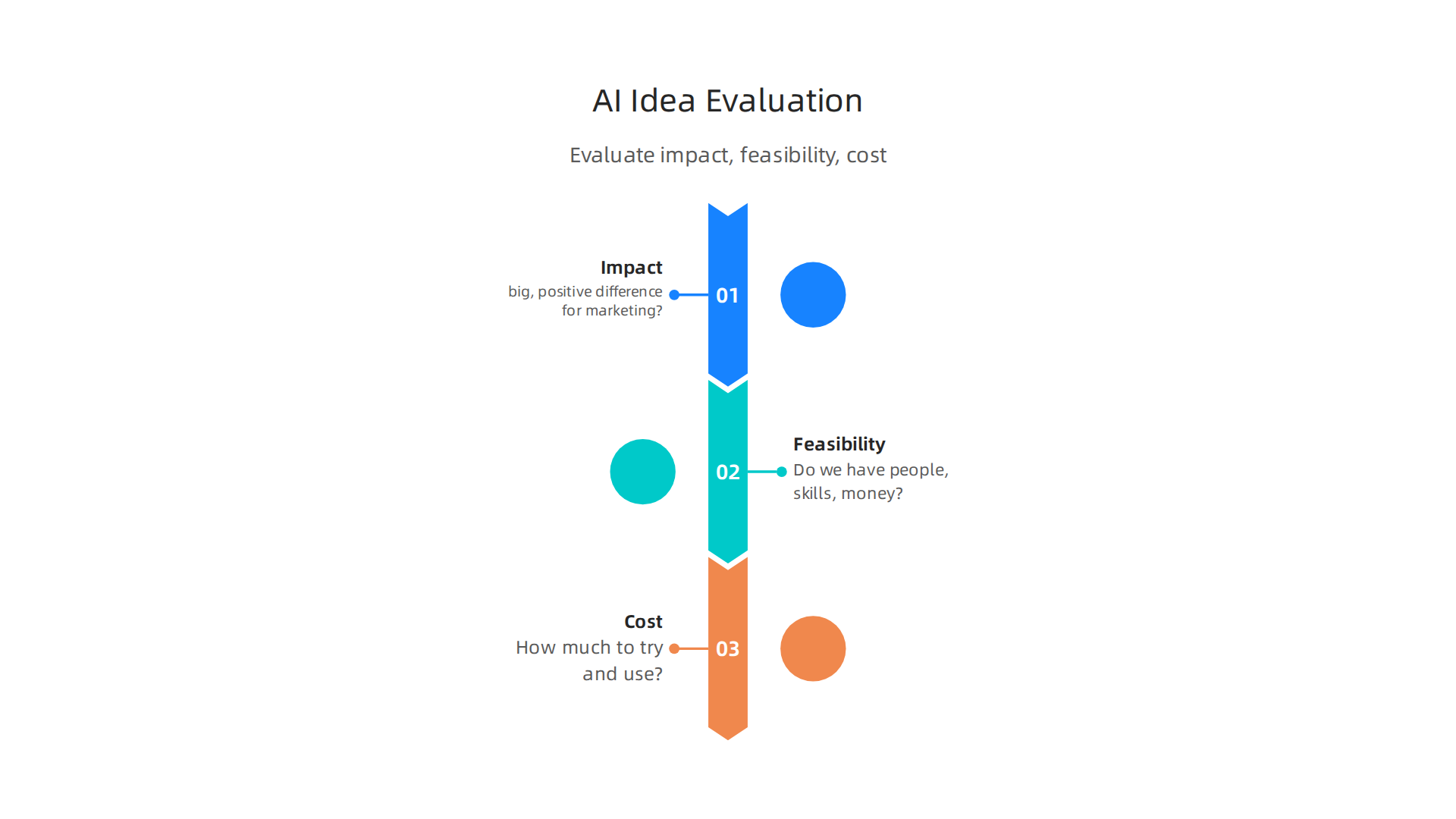
    Evaluate potential AI initiatives by considering their impact, feasibility, and cost.

    • Impact: Will this AI idea truly make a big, positive difference for our marketing services?
    • Feasibility: Can we actually do this right now? Do we have the people, skills, and money needed to make it happen?
    • Cost: How much will it cost to try out and use this AI tool?
      By thinking about these three points, you can choose the best projects that will bring the most value without costing too much or being too hard to set up. To learn more about selecting the right technology, consider reading our guide on how to pick AI tools for business to drive growth in 2026.

    A big mistake many teams make is picking AI tools before they know what they want to achieve. This is like buying a fancy hammer without knowing if you need to build a house or fix a leaky faucet. When you choose tools first, you might end up with expensive software that doesn’t really help your marketing services goals. This can lead to wasted money and time. Reports from 2026 show that while many businesses are using AI, a lot of them aren’t truly seeing big improvements in their work because they lack a clear plan State of Marketing in an AI-Driven World: 2026 Adobe Report. In fact, one report found that only 41% of marketers can clearly show how AI is helping them make more money Report: The State of AI in Marketing 2026. By setting your strategy first, you make sure that every AI tool you choose works towards your real business needs.

    Now that you have a clear plan for what you want your marketing services to achieve, the next step is to look closely at your current ways of doing things. This helps you find the best spots where AI can make a real difference. Think of it as looking under the hood of your marketing car to see which parts could run better with a little AI tune-up.

    To do this, you need to audit your marketing processes. This means checking out everything your team does, from making ads to talking with customers. Where are the tasks that take a lot of time? Where do you wish you had more help or better insights? These are often the places where AI can fit in perfectly.

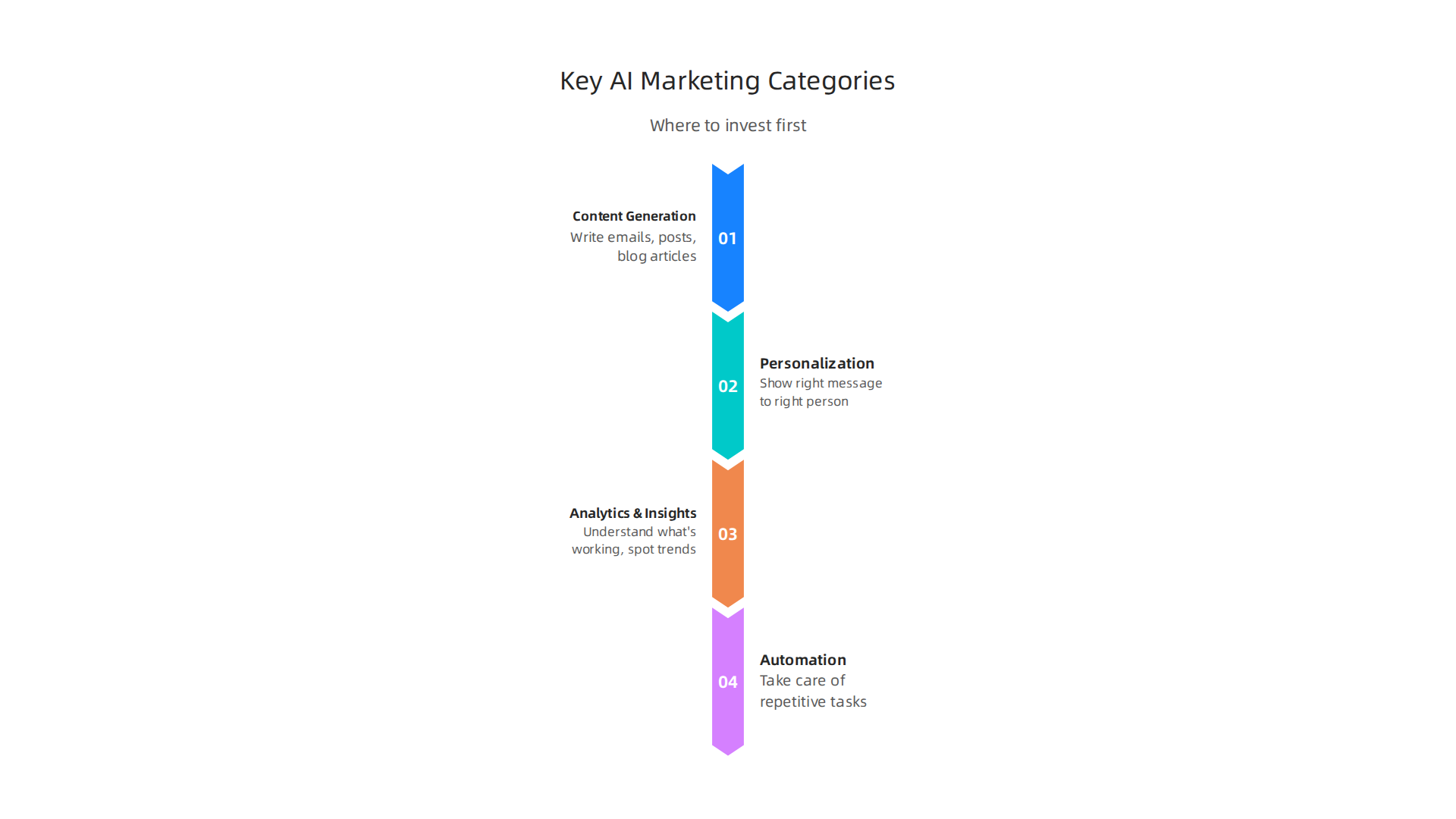
    Many marketing teams in 2026 are finding big wins with AI in a few key areas:
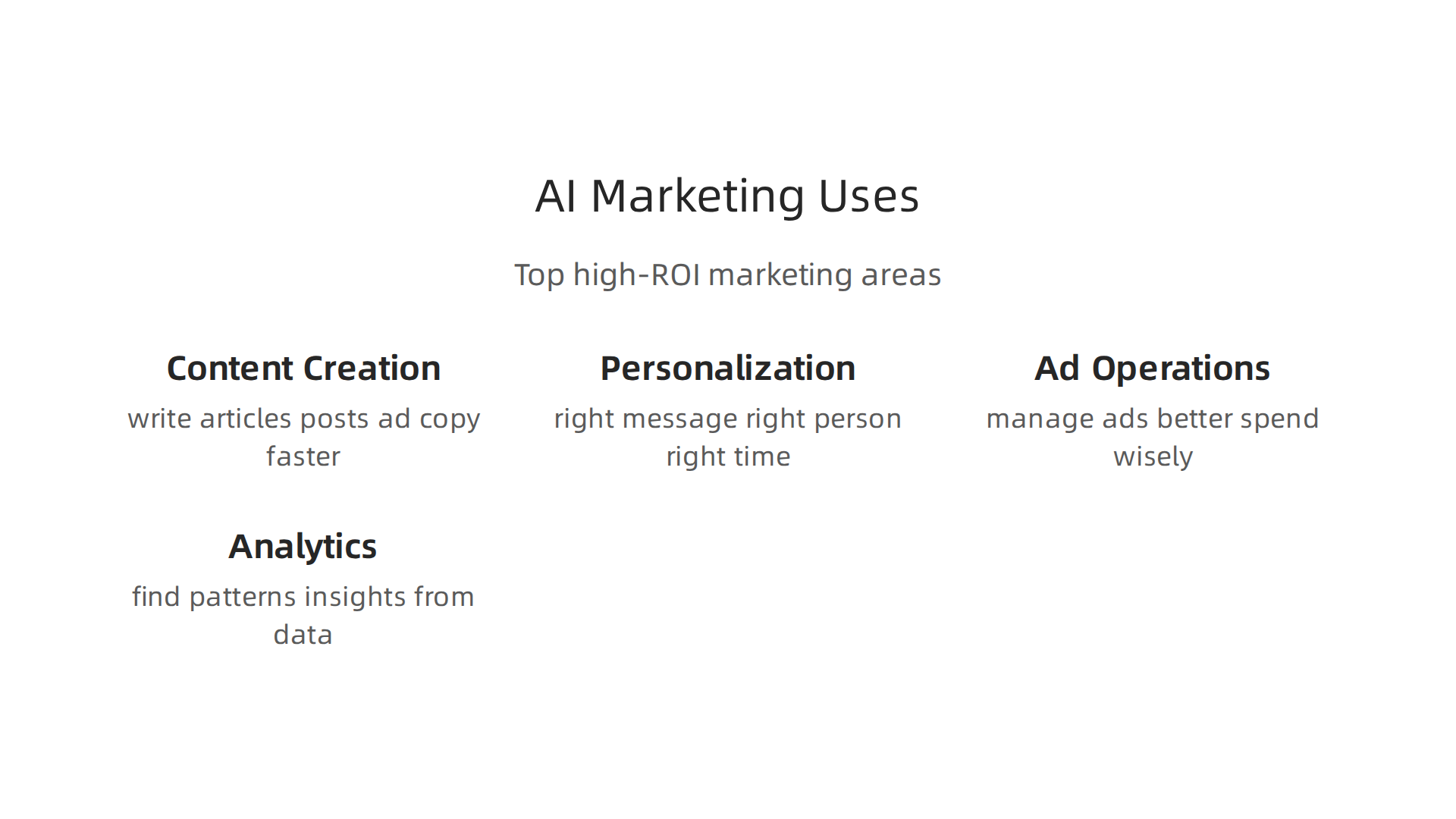
    Explore the top areas where AI is delivering significant value for marketing teams.

    • Content Creation: This is still the top use case for AI. AI can help write articles, social media posts, or ad copy much faster. This means your team can create more content without getting swamped. Reports show that content creation is used by 78% of teams, making it the most common way to use AI in marketing State of AI Marketing 2026 | Enterprise AI Adoption Report.
    • Personalization: AI can help you send the right message to the right person at the right time. This makes customers feel special and more likely to buy.
    • Ad Operations (Ad Ops): AI can manage your ads better by figuring out who to show them to and when, which helps you spend your ad money wisely.
    • Analytics: AI can look at huge amounts of data and find patterns or insights that humans might miss. This helps you understand what’s working and what’s not in your marketing campaigns. It’s like having a super-smart marketing assistant.

    When you’re looking at different ideas for using AI, you should score each one based on three things:

    • Potential Impact (ROI): How much positive change or money will this AI idea bring in? Will it truly help your marketing services grow or save costs? Teams focused on ROI see much better results from their AI efforts, with 83% of marketing teams reporting clear gains from generative AI AI Marketing Stats for 2026: ROI & Benchmarks.
    • Data Readiness: Do you have the right kind of data that the AI tool needs to work well? If not, how hard will it be to get that data ready?
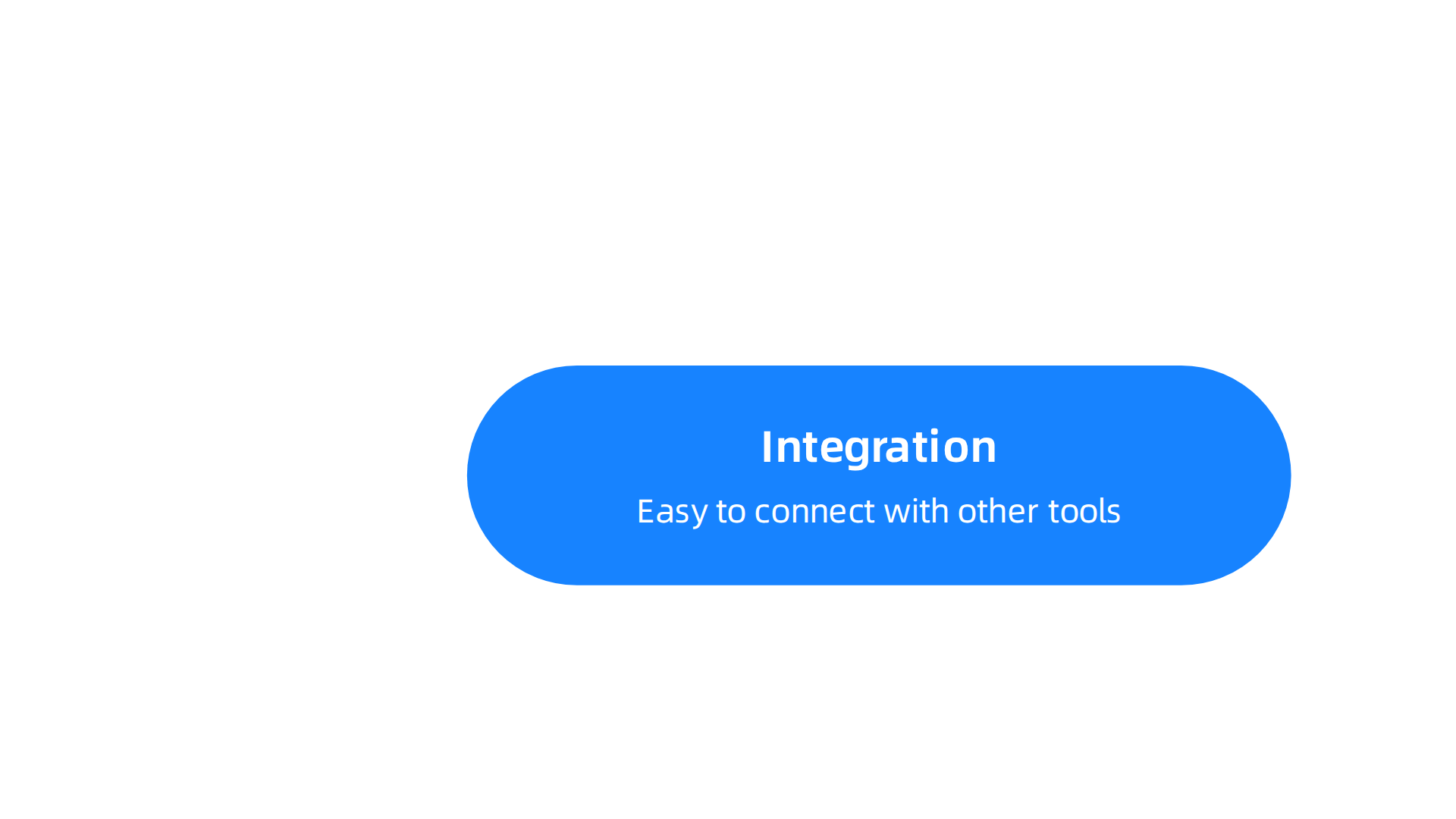
    • Integration Complexity: How easy or hard will it be to connect this new AI tool with the other tools and systems you already use?

    Sometimes it’s better to start with a "narrow pilot." This means trying out an AI tool for a small, specific task with a small team. For example, you might use AI to just help with writing headlines for your emails. If that works well, then you can think about a "platform-wide rollout," which means using AI across many different tasks and teams in your marketing services. Starting small helps you learn and fix problems before doing something big.

    To learn more about how marketing pros choose AI tools for their work, check out our guide on how marketing specialists choose AI tools for marketing and drive ROI.

    For daily updates on how AI is changing marketing and business, you’ll want to stay informed.
    Get clear daily AI updates from The AI Newsletter Worth Reading.

    Choosing the right AI tools for your marketing services is a big step after you know where AI can help most.

    A professional carefully evaluates different AI tools and vendors to make an informed decision.

    It’s like picking the best helper for your team. You want to make sure the tool can actually do the job well. To do this, you need a good checklist.

    What to Look For in AI Tools

    When you’re looking at different AI tools, keep these things in mind:
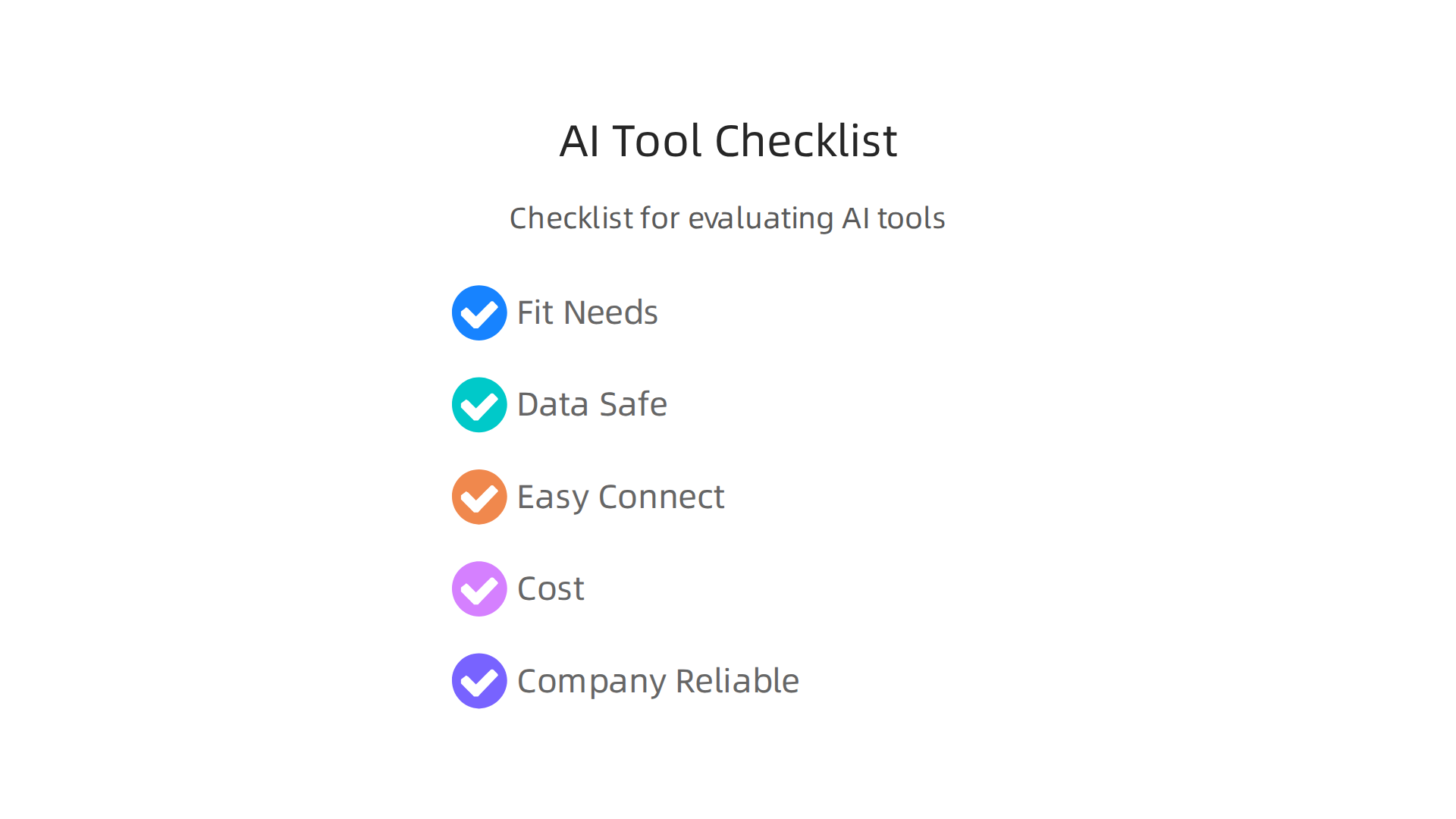
    Checklist for evaluating AI tools, focusing on needs fit, data safety, integration, cost, and company reliability.

    • Does it fit your needs? The AI tool must be able to do the specific tasks you need. If you want AI to help write social media posts, the tool should be good at that. Don’t pick a tool that does many things poorly when you need one thing done perfectly. You want a tool that truly boosts your marketing services.
    • Is your data safe? AI tools often need to use your company’s data. You must be sure that the tool and the company that made it will keep your information private and secure. This is very important for trust and legal reasons.
    • How easy is it to connect? Think about your current marketing tools. Will the new AI tool easily work with them? Or will it be a headache to link everything up? An AI tool that connects smoothly with your existing setup makes life much easier.
    • What does it cost? Understand how the AI tool charges you. Is it a monthly fee, or do you pay based on how much you use it? Make sure the cost makes sense for your budget and the value you expect to get. Tools that offer clear pricing help you manage your money better.
    • Is the company reliable? Look at the company behind the AI tool. Have they been around for a while? Do they update their tools often? A strong, reliable company means you’ll get good support and that the tool will keep getting better. A template for evaluating technology vendors can help you score different options to ensure they meet your business needs and values R E S P O N S I B L E A I T E M P L A T E.

    Testing AI Tools in Real Life

    Once you have a few tools in mind, it’s a good idea to test them. This is called a "Proof of Concept" (POC) or a "pilot."

    • Try them side-by-side: Don’t just pick one tool. Try out two or three tools at the same time for the same small task. For example, have Tool A and Tool B both write headlines for your next email campaign. See which one does better. This helps you compare them fairly.
    • Focus on how they work, not just features: It’s not just about what a tool can do, but how well it actually works for your team every day. Does it save time? Is it easy to use? Does it fit into your team’s workflow without causing problems? This helps you find the best fit for your marketing services. A good way to compare is by using a scorecard for different criteria, making sure you look at things like how deep the AI’s capabilities are and how well it fits your specific marketing needs How to Evaluate B2B AI Marketing Vendors: 12 Questions … – Tofu HQ.

    By carefully checking these things, you can choose AI tools that truly help your marketing efforts grow. If you want a more general guide on how to make smart choices for your business, you can read more about how to pick AI tools for business to drive growth in 2026. This careful process makes sure you’re getting a real marketing assistant, not just a fancy gadget.

    After testing AI tools with a small "Proof of Concept," the next big step is to make them a regular part of your marketing services. This means moving from a small test to full "production." It’s like moving from trying out a recipe to cooking it for all your customers every day. You need a clear plan to do this right.

    Getting AI Tools Ready for Daily Marketing

    Putting AI into your daily work for your marketing services needs careful steps.

    • Set up the Data Flow: Your AI tools need good data to work. Think about how your company’s information will safely get to the AI tool. This involves setting up "data pipelines," which are like highways for your data. You also need to make sure the data is clean and correct. If the data is bad, the AI’s results will be bad too. For marketing leaders, a good approach to data governance is key when using AI systems Snowflake’s Agentic Enterprise Framework Puts Data ….
    • Keep Testing and Improving: Even after a pilot program, you should keep testing the AI. As your marketing needs change, the AI tools might need to learn new things or be adjusted. This helps ensure the AI continues to perform its best for your team.
    • Rollout Slowly: Don’t just give the AI tool to everyone at once. Start with a small group, get their feedback, and then slowly bring more people on board. This "rollout cadence" helps everyone get used to the new tools without too much stress. It also lets you fix small problems before they become big ones.

    Teamwork and Rules for AI Success

    Making AI a permanent part of your marketing services means more than just turning on a new tool. It needs good teamwork and clear rules.

    • Assign Clear Roles: While marketing teams often lead the charge in adopting AI, they need help from others. Your IT team can help with security, your legal team can make sure you follow privacy rules, and data experts can check for fairness. Having everyone work together helps make sure the AI is used responsibly. In fact, setting up strong governance that includes different departments is important for using AI in a way that truly helps the business What governance structures support responsible AI?.
    • Create AI Rules (Governance): Just like you have rules for how your team works, you need rules for how your AI works. This is called "AI governance." It helps make sure the AI tools are used fairly, correctly, and ethically. For example, the European Data Protection Board updated its rules in 2026 to make sure AI agents follow data privacy principles at every step AI Agents and Data Privacy: A 2026 Compliance Guide – MTM Blog.
    • Watch for Bias and Protect Privacy: AI tools learn from data, and sometimes that data can have unfair patterns, or "bias." You need to look for this bias and work to fix it, perhaps by using fair data generation techniques Mitigating bias in artificial intelligence: Fair data generation via …. Also, always make sure the AI tool handles customer data with the highest privacy standards, especially in 2026, when data privacy rules are stricter than ever. Staying up-to-date on compliance is a must.

    By taking these steps, you make sure your AI tools don’t just work in a test, but truly become a strong marketing assistant for your business. This careful planning helps your marketing services grow and adapt for the future.

    If you want to keep learning about how AI impacts your business and marketing, you’ll find helpful insights in "The AI Newsletter Worth Reading." Get clear daily AI updates from The Deep View Newsletter.

    5) Measure What Matters: KPIs, Attribution, and ROI for AI-Driven Marketing

    Once AI tools are part of your daily marketing services, it’s super important to know if they are actually helping.
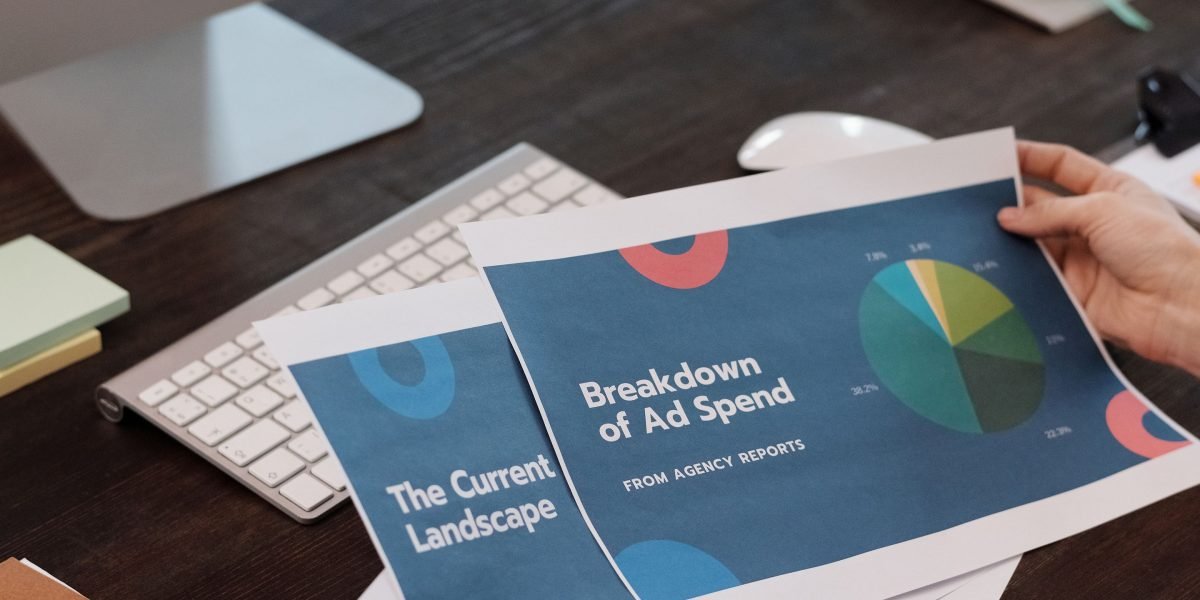
    A professional focuses intently on data and reports, measuring the impact of marketing initiatives.

    You need to measure their success. This means looking at certain numbers, understanding how AI causes good changes, and checking if you are getting a good return on your money.

    Picking the Right Numbers to Watch

    Before you even start using AI for your marketing, you need to know what you want to improve. These are called Key Performance Indicators, or KPIs. They are like scores that show how well your marketing is doing. For AI-driven marketing, you might look at things like:

    • How many new customers you get.
    • How many people click on your ads.
    • How much money each customer spends over time (this is called customer lifetime value, or LTV).
    • How much it costs to get a new customer (this is called customer acquisition cost, or CAC).

    It’s a good idea to know what these numbers were before you used AI. This way, you can see if the AI is making them better. Experts say you should set clear goals and measure your starting point before adding AI to your marketing efforts How do I measure the ROI of AI marketing investments?. This helps you tell a real story about how AI helps your marketing services.

    Knowing What Changes Are Due to AI

    When you use AI, many things might change. How do you know for sure that AI is the reason for a boost in sales or leads? This is where "attribution" and "experimentation" come in.

    • Attribution means figuring out which part of your marketing efforts gets credit for a result. With AI, you want to give the AI the right amount of credit.
    • Experimentation is like running a science test. You can split your audience into two groups: one that gets the AI-powered marketing (the "test" group) and one that doesn’t (the "control" group). By comparing these groups, you can see the true extra help, or "incremental lift," that AI brings. Methods like A/B tests help you find the real impact of your AI tools 2026 Marketing Playbook: Proven AI & Attribution Strategies. Companies that use smart attribution methods can see much better returns on their marketing money Marketing Attribution Statistics (2026): 54+ Data Points on ….

    To really dive deep into how AI can boost your sales and leads, learning about these measurement methods is key. You can find more helpful advice on how marketing specialists choose AI tools to drive ROI.

    Figuring Out Your Return on Investment (ROI)

    ROI means how much money you get back for the money you spent. For AI in marketing, it’s about seeing if the AI tools are worth their cost. A simple way to think about it is:

    ROI = (Extra Money Made + Money Saved − Total Cost of AI) ÷ Total Cost of AI

    Measuring AI’s ROI in marketing is not just a single number; it’s a process of setting a baseline, running tests, and then seeing the extra lift AI provides How Directors Measure AI ROI in Ad Campaigns | Pixis. Many companies are already seeing great results. In fact, about 60% of companies that have changed how they measure AI are getting two to three times their money back, or even more Report: The State of AI in Marketing 2026 – Jasper. This shows that with careful planning and measurement, AI can be a powerful marketing assistant.

    When you measure what matters, you make sure your AI investments are truly helping your marketing services grow and succeed. For further reading on this topic, consider learning more about how to get real ROI from AI marketing cloud.

    6) Data Governance, Privacy, and Ethical Considerations for Marketing Services

    After seeing how artificial intelligence (AI) can help your marketing services grow and succeed, it’s just as important to talk about how to use it wisely and fairly.
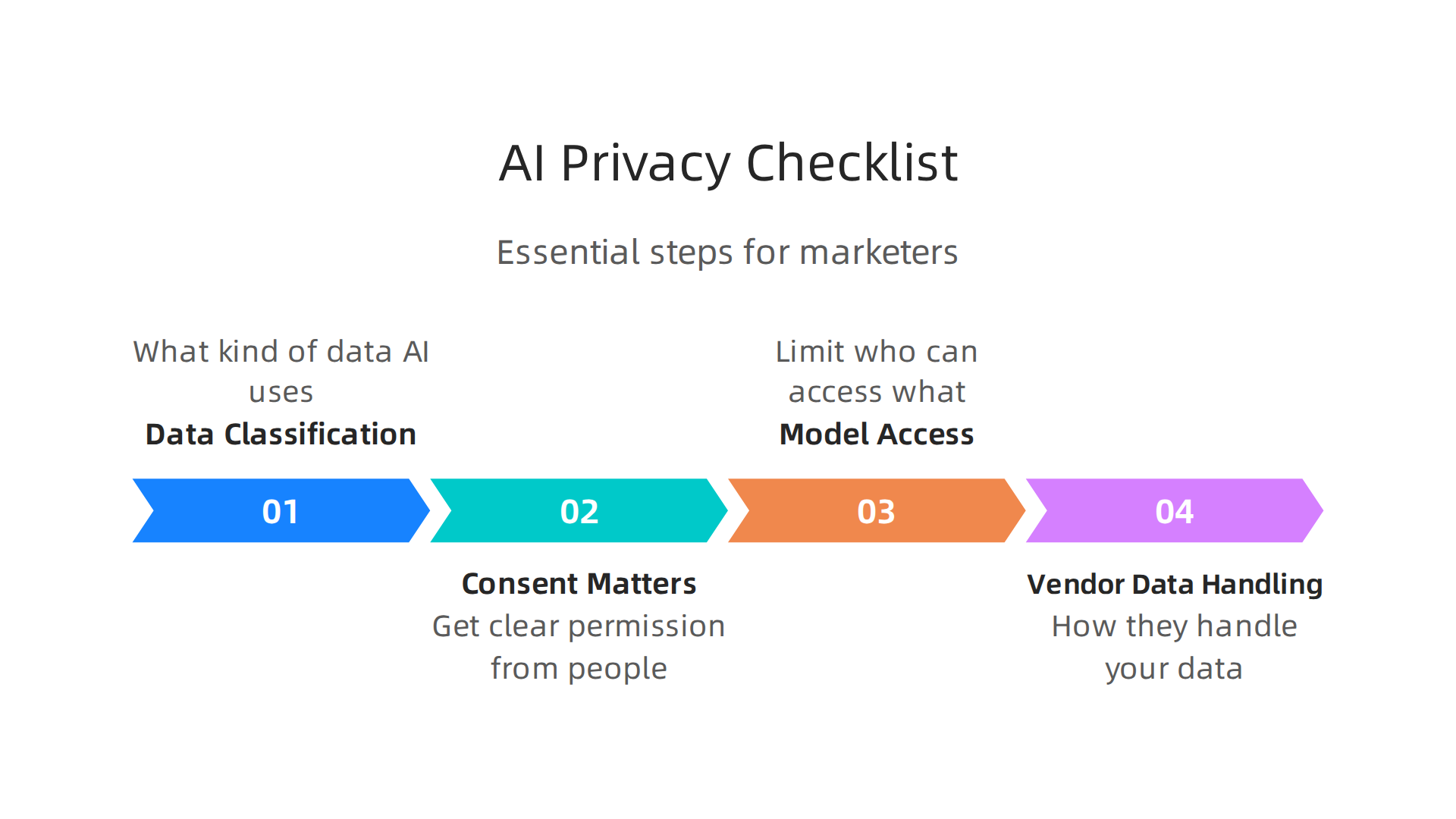
    Key ethical considerations for AI in marketing: data safety, fairness, and transparency.

    This means looking closely at how you handle data, respect people’s privacy, and make sure your AI systems are ethical. It’s not just about making money; it’s about building trust and following the rules in 2026.

    Keeping Data Safe and Private with AI

    When you use AI for marketing services, you’re often dealing with lots of customer information. "Data governance" is like having a clear set of rules for how you collect, store, and use this data. It makes sure your data is correct, kept safe, and used in a way that follows the law. Experts agree that your AI plan and your data rules must go hand-in-hand Snowflake’s Agentic Enterprise Framework Puts Data Governance at the Center of Marketing.

    In 2026, privacy is a big deal. New guidelines, like those from the European Data Protection Board, tell us that when AI agents process personal information, we must only collect the data we truly need and only use it for the reasons we said we would AI Agents and Data Privacy: A 2026 Compliance Guide. This is called "data minimization" and "purpose limitation." To help with this, you should do special checks, sometimes called "privacy impact assessments," before using AI systems that handle personal data. These assessments help ensure you’re using AI responsibly and protecting people’s privacy Privacy as the Foundation of Responsible AI Governance. It’s a key part of the larger topic of mastering the AI future standard 2026.

    Making AI Fair and Unbiased

    AI learns from the data it’s given. If that data has unfair patterns or gaps, the AI can learn those same biases and make unfair decisions. For instance, an AI for marketing services might unfairly target certain groups or miss others, just because of old data.

    To make sure your AI is fair, you need to:

    • Find Bias: Look closely at the data you feed your AI and the results it gives. You want to spot any unfair patterns. Learning to understand how an AI model works is important for finding these biases Systematic literature review on bias mitigation in generative AI.
    • Fix Bias: Take steps to reduce any bias you find. This can mean changing the data, adjusting the AI’s learning process, or fixing the results it gives. These steps can happen before, during, or after the AI does its work Bias mitigation in generative AI.

    It’s about making sure your AI acts like a fair and helpful marketing assistant, not one that carries old prejudices.

    Being Clear and Keeping Records

    For ethical AI, it’s also important to be clear about how your AI makes decisions. This is called "transparency." It means you should be able to explain, in simple terms, why your AI chose one thing over another.

    You also need good records. Keeping detailed notes about your AI systems helps you show how they work, what data they use, and why they make certain choices. This is very helpful if you ever need to have an audit or review. Having different teams involved, like marketing, legal, and IT, can help ensure everyone is on the same page and that your AI systems are both effective and responsible. This kind of teamwork is vital for a good strategic guide to marketing AI agents and their ethical deployment.

    Staying informed about the newest AI practices, including ethical guidelines, is important for any business leader.

    Get clear daily AI updates and stay ahead of the curve. The AI Newsletter Worth Reading will keep you in the know.

    Summary

    This article explains how marketing teams should move from experimenting with AI to running a clear, business-focused AI strategy that drives measurable results. It covers how to set goals that align AI initiatives with marketing KPIs, how to audit current processes to find high-impact use cases (content, personalization, ad ops, analytics), and a simple prioritization framework based on impact, feasibility, and cost. You’ll learn how to run narrow pilots, evaluate and compare tools with a vendor checklist, and prepare data pipelines and rollout plans for production. The guide also details governance needs—privacy, bias mitigation, and cross-functional roles—and shows how to measure AI success through attribution, experimentation, and ROI calculations. After reading, you’ll be able to pick the right pilot projects, test tools sensibly, and scale AI in marketing while protecting data and proving value.

  • How to Pick AI Tools for Business to Drive Growth in 2026

    How to Pick AI Tools for Business to Drive Growth in 2026

    The world of computer brains, known as AI, is growing super fast in 2026. Every day, it feels like a new tool comes out. This can make many of us feel a kind of "aiscream ai scream" feeling, like there’s just too much to keep up with.

    Navigating the rapid growth of AI tools can often lead to a feeling of being overwhelmed.

    Think about it: between 86% and 92% of people who make things online are already using AI in some way today, and about 38% of all business content on the internet gets help from AI at some point [Presenc AI research on AI content creation, Creator Economy AI Adoption Statistics (2026)]. It’s exciting, but it also means a lot of choices.

    All these new tools can be confusing. It’s hard to know which ones are right for you or your business, how to make them work together, or if they are even worth the money. That’s why this guide matters now more than ever. It’s here to help you cut through the noise. We will show you simple ways to pick the best AI tools, like an AI virtual assistant for businesses, and how to use them with your daily tasks. We’ll also cover how to check if these tools are truly helping your business grow and save money. You’ll even get a helpful checklist for using AI in things like making content. If you want to stay smart about AI every day, we’ve got something special for you.

    The AI Newsletter Worth Reading

    Even with the feeling of "aiscream ai scream" from so many new tools, AI is not just a passing trend. For small to medium-sized businesses (SMBs) and their teams, AI tools are changing how work gets done in 2026. The main reason? They offer huge steps forward in how fast things happen, how personal you can make your outreach, and how much your team can get done.

    Business Outcomes: Speed, Personalization, and Productivity

    Think about creating content. Writing blog posts, social media updates, or emails used to take a lot of time. Now, AI can help speed this up a lot. About 38% of all business content on the internet today gets some help from AI at some point [AI Content Creation Statistics 2026 | Presenc AI]. This means businesses can make more content, faster, to reach more people.

    AI also helps make things feel personal for each customer, even when you have many customers. This is called personalization at scale. Instead of sending the same message to everyone, AI can help tailor messages so each person feels like you’re talking directly to them. This can lead to happier customers and better sales.

    For daily tasks, an AI virtual assistant can be a game-changer. These smart helpers can answer customer questions, schedule meetings, or organize information. This frees up your team members to focus on bigger, more important jobs that only a human can do.

    AI virtual assistants free teams to focus on high-value, strategic, and human-centric tasks.

    It’s all about improving productivity, which means getting more done with less effort.

    Common Pitfalls: Picking Tools and Setting Them Up

    However, not all AI use is good use. One common problem is choosing AI tools just because they’re popular or because everyone else is talking about them. It’s like buying a fancy car when you only need a bike to get to work. The tool needs to fit your business’s real needs, not just be the latest buzz. To avoid this, it’s wise to learn how to choose AI for business tools that deliver real results.

    Another big mistake is not spending enough time making sure the AI tools work well with your existing systems. Imagine buying new kitchen gadgets but not having any space to put them or not knowing how to use them with your stove. For AI, this means planning how new tools will connect with your email system, customer records, or content platforms. If you don’t connect them well, the tools might not help as much, and could even create more problems, adding to that "aiscream ai scream" feeling of things being too messy or complicated. When using AI for content, remember to also think about tools that act as a humanize ai detector to make sure your AI-generated text still sounds natural and not robotic.

    To avoid that "aiscream ai scream" feeling when picking AI tools, you need a smart way to look at them. It is not just about choosing the most talked-about tool. Instead, you should think about what your business really needs. This helps you pick tools that work for you, not against you.

    Quick overview: How to Compare AI Tools

    When looking at different AI tools, there are a few important things to check.

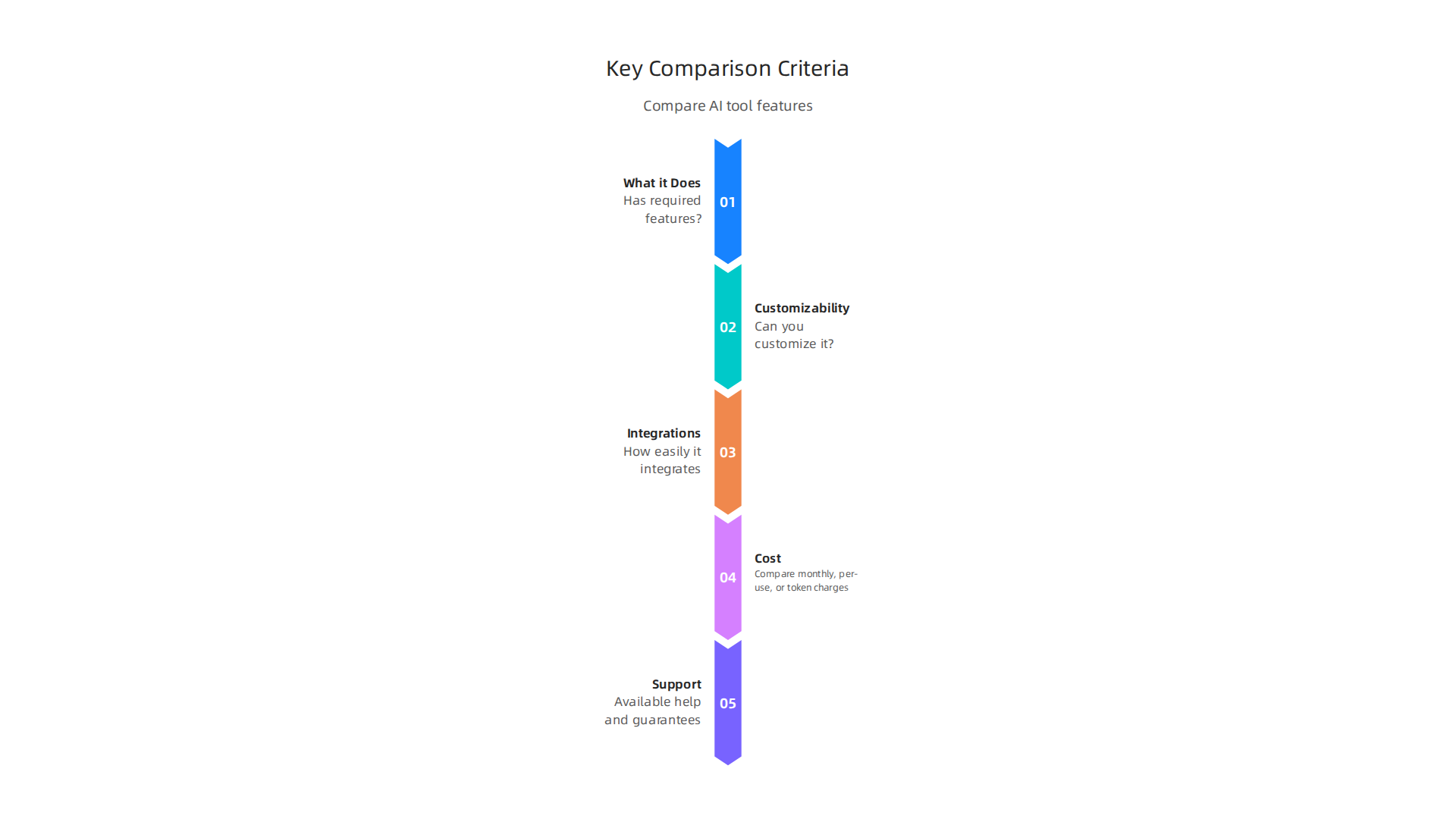
    Effectively compare AI tools by evaluating their features, customizability, API integration, pricing, and support.

    This helps you make sure the tool fits your business perfectly.

    1. What it Does (Feature Set): First, think about what the AI tool can actually do. Does it have all the features you need? For example, if you need an AI to write emails, does it do that well? Or if you need an AI for customer help, can it handle many different questions? Don’t just pick a tool with lots of features. Pick one with the right features for your specific tasks.
    2. How You Can Change It (Customizability): Some AI tools are like a ready-made suit, you can’t change much. Others are more like building blocks, where you can make them do exactly what you want. Think about if you need to teach the AI special words or ways of working for your business. The more you can change it, the more it can fit your unique needs.
    3. How It Connects to Other Tools (API Surface): This is very important. An "API surface" means how easily the AI tool can talk to your other computer programs, like your email system or customer records. If an AI tool cannot connect well, you might end up doing more work, not less. Making sure tools work together smoothly helps you avoid problems. You can learn more about picking the right tools by checking out this guide on mastering specialized AI tools.
    4. How Much It Costs (Pricing Model): AI tools can cost money in different ways. Some charge a monthly fee, some charge for every bit of work they do (like per word written or per question answered). It’s important to look at the pricing model and compare it carefully. For instance, the cost of AI APIs can vary a lot, with some models being as low as $0.02 per million input tokens in 2026 AI API Pricing 2026: Compare GPT, Claude, Gemini Token …. Make sure you understand how you will be charged so there are no surprises.
    5. Help and Guarantees (Support/SLAs): What kind of help will you get if something goes wrong? Good customer support means you won’t be stuck if you have questions or run into problems. Some companies offer "Service Level Agreements" (SLAs), which are promises about how quickly they will fix issues or how often their service will be working. This helps ensure your business keeps running smoothly.

    When you compare tools, don’t just count how many features each one has. Instead, match their features to the actual jobs you need them to do. This way, you pick tools that truly solve your problems and help your business grow.

    To stay on top of all the latest AI trends and insights that can help your business, consider subscribing to a reliable source.
    Get clear daily AI updates from The Deep View Newsletter.

    When picking AI tools for your business, it’s not enough to just know what the tools can do. You also need to think about what your business really needs them to do. This is like matching a lock to its key. If you don’t do this, you might end up with that "aiscream ai scream" feeling, wondering why your new tool isn’t helping.

    Choosing the right AI tool: use-case mapping and decision criteria

    First, let’s talk about what your business needs. You want to map your daily work to what an AI tool can handle.

    • What kind of work? (Content type) Do you need AI to write stories, make pictures, or put together videos? For example, many businesses use AI for writing. In fact, in 2026, about 38% of all web content from businesses gets help from AI at some point in making it. This is a big jump from past years. So, if you need a lot of written stuff, an AI writing tool is a good match. If you need something that can comment AI for feedback or correct mistakes, look for that specific skill.
    • How much work? (Volume) Are we talking about a few small tasks a day, or thousands of things every hour? Some AI tools are great for small, quick jobs. Others can handle huge amounts of work, like managing all your customer questions or creating many social media posts at once.
    • How good does it need to be? (Quality requirements) Does the AI need to create perfect content every time, or just rough ideas you can make better later? Some tools focus on speed, giving you a quick draft. Others aim for very high quality, almost like a human wrote it. You might even want a tool that can humanize AI detector tools so your AI content sounds more natural.

    Once you know what you need, here’s a checklist to help you make your final choice:

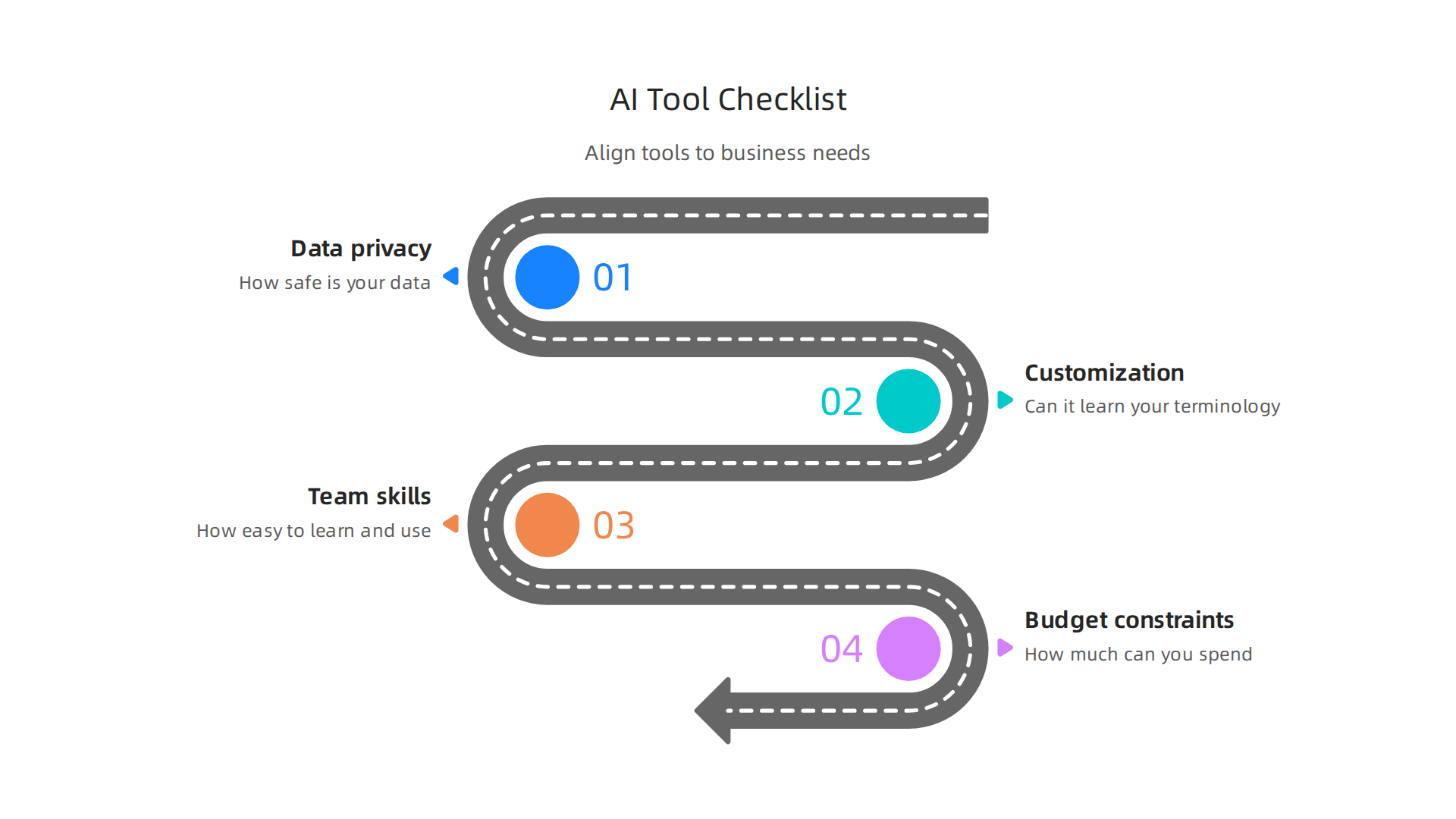
    Use this checklist to align AI tools with your business needs, considering privacy, customization, team skills, and budget.

    • Data privacy needs: How safe is your information with this AI tool? If you handle private customer details, you must pick an AI tool that keeps data very secure. Make sure it follows rules for protecting information. You can learn more about rules and growth by checking out this guide to mastering the AI future standard 2026.
    • Customization: Can you teach the AI tool to understand your business’s special words or ways of doing things? For example, can you upload your company’s style guide so it always writes in your brand’s voice?
    • Team skill requirements: Will your team find the tool easy to learn and use? A powerful AI tool is only good if your team can actually use it without a lot of extra training. Some tools are very simple, while others need someone with more tech know-how.
    • Budget constraints: How much money can you spend? Beyond the monthly or per-use cost, think about any extra costs for setting it up or training your team. Always have a clear budget in mind.

    By carefully matching your business needs with the right AI tools, you can avoid costly mistakes and help your business truly grow.

    Making smart choices about AI tools requires careful consideration of business needs and goals.

    Many companies are already doing this, with 86% to 92% of creators using AI in some way in 2026, showing how important it is to pick the right tools that fit their work Creator Economy AI Adoption Statistics (2026). If you’re looking for help with customer service, for instance, a good AI virtual assistant for businesses could be a great fit.

    Once you’ve chosen the right AI tool for your business, the next big step is making sure it works well with everything else you do. This is called "integration," and it’s how AI tools connect and talk to your existing systems.

    Integration patterns: APIs, pipelines, and deploying virtual assistants

    Think of integration patterns as the pathways AI tools use to work together. There are a few common ways this happens.

    • Content Pipelines: Many businesses use AI to help create written content. In a content pipeline, a human editor might send a draft to an AI tool to get help with ideas or grammar. The AI processes the request and sends it back to the editor, who then puts the final touches on it. This back-and-forth makes content creation faster and better.
    • Assistant Routing: Another common way is with virtual assistants. When a customer asks a question, an AI system first tries to understand what they really want. This is called "intent detection." Once the AI knows the intent, it then routes the request to the right place to get an answer. This "fulfillment" step might mean pulling info from a database, checking a calendar, or even asking another AI system for help. For businesses, learning how to set up these tools is key for growth. You can explore a Strategic Guide to Marketing AI Agents Deployment, ROI, and Growth in 2026.

    But how well these connections work depends on some key things you need to watch out for.

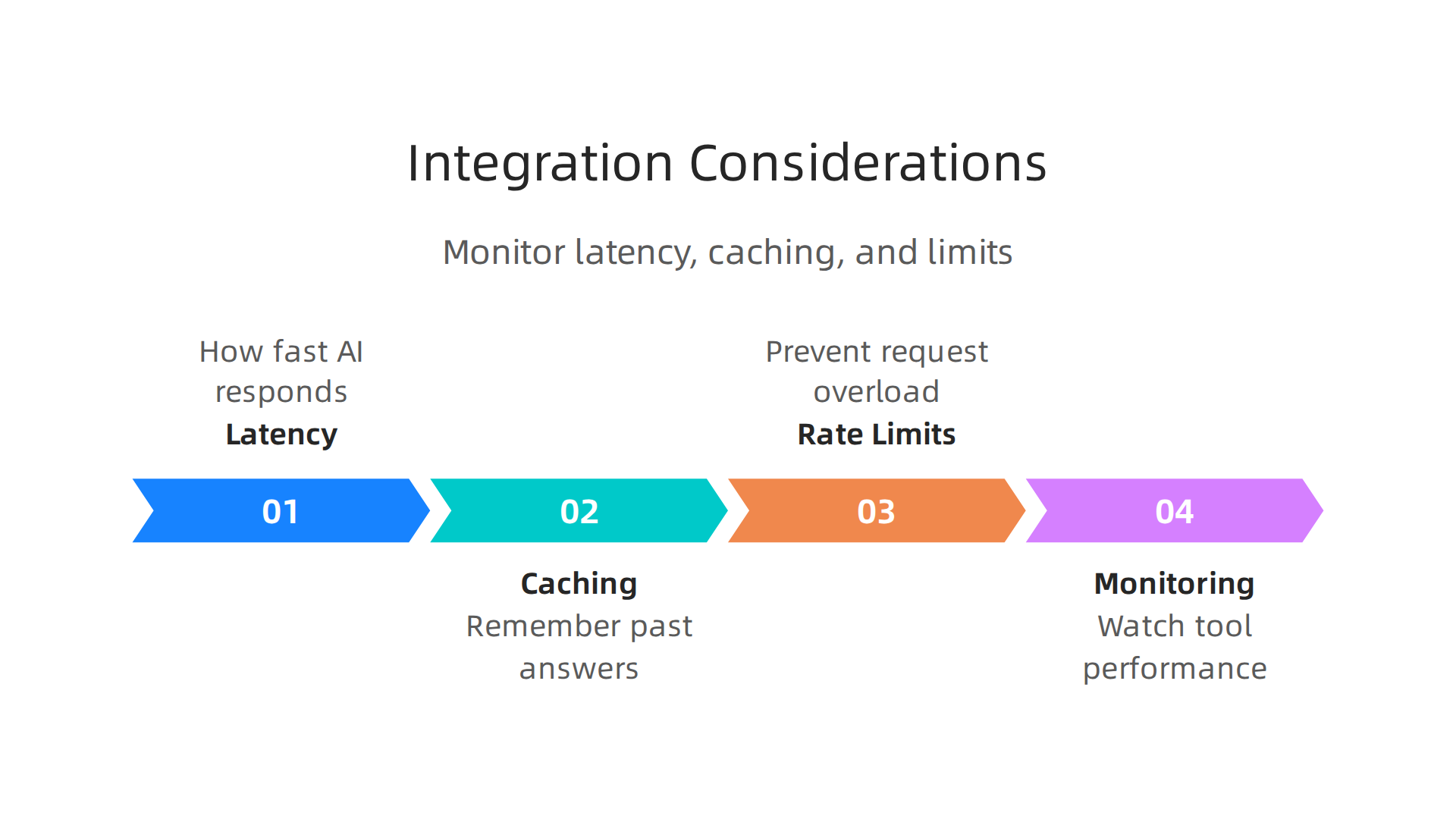
    Monitor latency, utilize caching, manage rate limits, and implement robust monitoring for smooth AI tool integration.

    • Latency: This is simply how fast the AI responds. If a virtual assistant takes too long to answer a customer’s question, it can be very frustrating. Slow responses can easily lead to that aiscream ai scream feeling for users. Experts suggest that for things like chat, AI should respond very quickly, often in less than a second, to keep users happy What is AI Observability? Key to Monitoring Your LLM Infrastructure.
    • Caching: Imagine the AI remembers past answers or tasks. If many people ask the same question, the AI can give a saved answer instead of having to think it up from scratch every time. This "caching" makes things much faster and more efficient.
    • Rate Limits: These are like speed limits for your AI system. They stop too many requests from coming in at once, which could make the system slow down or even crash. Rate limits help keep everything stable and running smoothly, preventing your AI from getting overwhelmed.
    • Monitoring: It’s super important to keep a close eye on how your AI tools are working. This means checking things like how fast they respond (latency), if they are making errors, and how often they are used. Good monitoring helps you find problems early and fix them before they affect your customers or business.

    Staying on top of these operational details ensures your AI tools work for you, not against you.

    Get clear daily AI updates. The AI Newsletter Worth Reading delivers valuable insights straight to your inbox.

    Making sure your AI tools run well is one thing, but knowing if they are truly helping your business grow is another. This is where measuring your return on investment, or ROI, comes in. It helps you see if the money and effort you put into AI are giving you good results. To do this, you need to set up clear goals, understand all the costs, and have real expectations.

    Defining Key Performance Indicators (KPIs)

    Key Performance Indicators (KPIs) are like scorecards that tell you how well your AI tools are doing.

    Measure your AI investment ROI using KPIs like time-to-publish, content engagement, support deflection, and assisted revenue.

    Instead of just guessing, KPIs give you clear numbers to look at.

    • Time-to-Publish: If you use AI for writing, how much faster does it make your team? You can measure the time it takes to go from an idea to a finished piece of content. Faster publishing can mean more content and better reach. You can learn more about measuring success in content creation with AI in this How to Measure AI Content Performance: KPIs & Framework.
    • Content Engagement: Are people reading the content created with AI? Look at things like how many views an article gets, how long people stay on the page, or how many shares it receives. These numbers help you see if your AI-assisted content is truly connecting with your audience. Some businesses also consider if their content needs to pass a humanize ai detector check to ensure quality.
    • Support Deflection: If you have an ai virtual assistant helping customers, how many questions does it answer without needing a human? The more questions it handles, the more time your human support team saves. This is a big win for efficiency.
    • Assisted Revenue: Can you link sales or new customers directly to AI tools? For example, did an AI-powered recommendation system lead to more purchases? Tracking this helps you see how AI adds to your bottom line.

    Overall, it’s important to track these things to understand how AI helps with active users, task completion, and customer satisfaction, which are all part of Evaluating AI Readiness: Checklist for Organizations.

    How to Model Costs

    Knowing your costs is just as important as knowing your benefits. AI tools come with different price tags.

    • Licensing and Subscriptions: Many AI software tools have monthly or yearly fees. These are usually straightforward.
    • API Usage: Some AI tools, especially for advanced features, charge based on how much you use them. This is often measured in "tokens," which are like small pieces of text. The more requests you send or the more text the AI processes, the more it can cost. For example, in 2026, the cost for 1 million input tokens can range from very low to several dollars depending on the AI model and provider, as detailed in various AI API Pricing Comparison 2026: 73 Models Ranked reports. If you’re not careful, these costs can add up fast, creating an aiscream ai scream moment if you don’t keep an eye on them.
    • Engineering Integration: Getting AI tools to talk to your existing systems often needs skilled technical help. This can involve developers and IT staff, which adds to the cost.
    • Monitoring and Overhead: You also need to pay for systems that watch your AI tools to make sure they are working correctly, and for any extra storage or computing power they use.
    • Editing and Oversight: Even with AI, you might still need human reviewers or editors, especially for content where a human touch or comment ai expertise is crucial. This human involvement ensures quality and accuracy. This ongoing human cost is an important part of the AI Pilot to Production Checklist: A Leader’s Guide.

    By carefully looking at both your benefits and all these costs, you can get a clearer picture of whether your AI investments are truly paying off. This helps you make smart choices about how to choose AI for business tools that deliver real results in 2026.

    To really make AI tools work for your business, you need more than just good numbers. You also need to make sure your team knows how to use them well. This means setting up clear plans for how to put AI into action and how to help your staff adjust to these new ways of working.

    Pilot Design for AI Tools

    Starting with a small test, also called a pilot program, is a smart way to bring AI into your business. Think of it like trying out a new recipe before cooking for a big party.

    • Narrow Scope: Do not try to change everything at once. Pick one small area or one team to start with. For example, maybe you try using an AI tool to help your customer service team answer simple questions, or to help your marketing team write social media posts. Keeping it small helps you learn without big risks.
    • Measurable Outcomes: Just like we talked about with ROI and KPIs, you need to know what success looks like for your pilot. If you are using an ai virtual assistant, measure how many simple questions it can answer on its own. If it is an AI tool for writing, see how much faster it makes content creation. Clear goals help you see if the tool is actually helping.
    • Fast Feedback Loops: You want to learn quickly. After you start the pilot, get feedback from your team right away. What is working? What is not? Are they having an "aiscream ai scream" moment because the AI made a big mistake? The faster you get this information, the faster you can fix problems and make the tool better.

    Training and Governance for AI Outputs

    When you bring AI into your daily work, teaching your team how to use it is super important.

    Effective training and onboarding are crucial for teams to confidently adopt and leverage new AI tools.

    It is not just about pressing buttons; it is about understanding how to work with the AI.

    • Onboarding Creators: For teams that make content or create new things, learning to prompt AI tools correctly is key. They need to know how to ask the AI for what they want and how to review what it gives back. Sometimes, AI can make things up, which is called "hallucinating." This can lead to wrong information. To avoid this, creators must learn how to check AI outputs carefully and how to make sure they sound human and accurate. Using a humanize ai detector can help ensure the content feels natural.
    • Onboarding Operations Staff: For those who manage projects or daily tasks, it is about integrating AI outputs smoothly. They need to understand the new workflows. This often means having human reviewers check the AI’s work before it goes out. This human oversight, sometimes called "Human-In-The-Loop," is important for catching mistakes and ensuring quality. Having humans involved throughout the process can greatly help in reducing AI hallucinations and building trust in the AI system, as explored in research on creating trustworthy LLMs. This human touch, or "comment ai" from a person, adds value that AI alone cannot always provide.

    By training your team and putting good rules in place, you help everyone feel comfortable and confident using AI. This makes sure your AI tools are not just fancy new tech, but real helpers that improve how your business works. To learn more about how to choose and use AI for your business, check out our guide on Smart AI for Business: Your 2026 Guide to Successful Adoption.

    When using AI tools in your business, it’s not enough to just train your team well. You also need to think about how to keep things safe and private. If you don’t, you might have an "aiscream ai scream" moment when something goes wrong. This means looking at security, privacy, and making sure you follow all the rules.

    Key Risks for AI Content and Assistants

    Bringing AI into your work means thinking about a few big dangers:

    • Sensitive Data Leaks: Imagine your AI assistant handles customer information, like their addresses or phone numbers. If this data isn’t kept safe, it could accidentally be shared with the wrong people. This is a big problem for privacy. You need strong rules about what kind of information your AI tools can see and use.
    • Hallucinations: As we talked about before, AI tools can sometimes make things up. This is called "hallucinating." While human oversight helps, AI models can still create false information. For example, an ai virtual assistant might give a wrong answer to a customer or write content with facts that are not true. This can lead to bad decisions or make your business look unreliable. Researchers are always looking for ways to stop these mistakes and make AI more trustworthy, like exploring who is responsible when AI systems give wrong information due to hallucinations, as discussed in studies on Mitigating Generative AI Hallucinations.
    • Auditability of AI Outputs: It can be hard to understand why an AI made a certain decision or gave a specific answer. This is called auditability. If you can’t easily check the steps an AI took, it’s tough to prove it followed the rules or to fix problems. This lack of clear steps can be a worry for both safety and fair play, especially as AI becomes more common, as a conceptual framework for studying AI hallucinations highlights.

    Practical Steps to Stay Safe with AI

    To avoid these problems and prevent any "aiscream ai scream" situations, you can take some smart steps:

    • Data Handling Policies: Set clear rules for all the information your AI uses. Decide what data is okay for the AI to process and what data is strictly off-limits. This might mean only giving AI tools "fake" or practice data for training, or making sure all sensitive customer data is removed before the AI sees it.
    • Redaction: This means taking out sensitive parts of information. Before data goes to an AI tool, make sure any private names, numbers, or other details are blacked out or removed. This helps keep customer information safe.
    • Human-In-The-Loop Checks: Just like we mentioned before, always have a person review what the AI creates or suggests. This human check is super important for catching mistakes, wrong information, or anything that doesn’t sound right. Think of it as a final quality check, adding a valuable "comment ai" from a real person.
    • Logging: Keep a record of everything your AI tools do. This means tracking what questions were asked, what answers were given, and who approved the final output. If there’s ever a problem, these logs can help you trace back what happened and fix it. An AI governance checklist can help you set up this kind of monitoring.

    By putting these safeguards in place, you can use AI tools more safely and with more confidence. You make sure your business stays secure and follows the rules, while still getting all the benefits that AI can offer in 2026. For a deeper dive into making sure your AI efforts meet the necessary standards, explore our guide on Mastering the AI Future Standard 2026.

    Summary

    This article helps business leaders cut through the surge of AI tools in 2026 by showing how to choose, integrate, measure, and govern AI effectively. It explains the tangible business outcomes—faster content, personalization at scale, and higher team productivity—while warning against common mistakes like picking hype-driven solutions or poor integrations. You’ll get a practical comparison checklist (features, customizability, API surface, pricing, support), guidance on integration patterns and operational concerns (latency, caching, rate limits, monitoring), and a framework for measuring ROI with KPIs such as time-to-publish, engagement, support deflection, and assisted revenue. The guide also covers how to run focused pilots, train teams with human-in-the-loop workflows, and set safeguards for data privacy, auditability, and hallucination risk so your AI investments deliver real, measurable value.

  • Google Ads Certification Master AI-First Marketing in 2026

    Google Ads Certification Master AI-First Marketing in 2026

    Why marketers and leaders must align Google Ads certification with AI-first marketing

    In 2026, the world of marketing keeps changing super fast. One big reason is the rise of smart AI marketing tools. But even with all these new tools, some basic skills are still very important. A great example is the Google Ads certification. It teaches you the building blocks of how paid ads work on Google.

    Think of it this way: learning to drive a car is still important, even if your new car has self-driving features.

    A professional engaging in continuous learning, symbolizing the need to adapt existing skills to new technologies like AI.

    You still need to know the rules of the road and how to steer. The Google Ads certification is like knowing those basic rules for online advertising. It covers things like setting up ad campaigns, choosing the right keywords, and understanding how Google’s ad system works. This includes knowing about search campaign structure and different keyword types, which are key parts of the exam itself Google Ads Search Certification Study Guide 2026. Other useful marketing certifications, like a HubSpot marketing certification, also provide a strong base for different areas of digital marketing.

    However, things are different now. Many tasks that used to take a lot of time can now be done much faster with AI. This means marketers and business leaders need to know how to use these powerful AI tools with their existing knowledge. This article will show you practical ways to bring together your Google Ads certification knowledge with the best AI for business tools. Our goal is to make your work easier, reduce problems, and get better results from your ad spending. You’ll learn how marketing specialists choose AI tools for marketing and drive ROI in today’s fast-paced world.

    Stay updated on the latest shifts in AI and marketing. The AI Newsletter Worth Reading provides clear, daily AI updates that can help you keep pace.

    What Google Ads certification covers – and what it doesn’t in an AI-first world

    Even in 2026, the basic Google Ads certification helps you understand how online ads work. It teaches you important skills to run search advertising campaigns. Think of it as learning the core rules for advertising on Google. This means knowing about how Google’s ad system is set up, choosing the right keywords, and understanding how bids work.

    The Google Ads certification covers many useful topics. For example, it teaches you how to structure an ad account, set up search campaigns, and pick keywords that match what people are searching for. You also learn about different ways to bid for ads, including "Smart Bidding" strategies, and how to write good ad copy that gets clicks. The certification also covers how to track your campaign results and measure if your ads are doing well Google Ads Certification Study Guide (2026). Knowing about the Google Ads ecosystem, account setup, and how ads are ranked are all part of the study guide too Google Certification Study Guide 2026 — Exam Format, Topics.

    But here’s the thing: while these basics are super important, the certification does not fully cover how much smart ai marketing tools have changed things. AI now handles many tasks that used to take a lot of human effort. This means some parts of the old way of doing things are now mostly done by computers.

    For example, creating ad pictures and text used to be a long process. Now, AI ad creative generation tools can quickly make many different ad versions. Some brands have seen their creative costs drop by 80% thanks to AI AI Advertising Statistics 2026: 30+ Key Facts & Fig…. Also, picking the best price for each ad click, called bidding, is often handled by AI-powered tools today. These tools can manage bids and budgets more efficiently than a person can Best AI Ads Management Software 2026: Complete Guide.

    AI also helps with finding the right people to show ads to, which is called audience modeling. It goes beyond simple targeting and can find very specific groups of people who are likely to be interested in your product. Plus, these best ai for business tools can test many ad ideas at once. AI-driven testing can make your ads work much better, boosting how many people take action by 12-18% compared to older methods AI In The Digital Advertising Industry: 2026 Verified Stats. Because of this, more and more ad money is being managed by AI, with total AI-powered ad spending expected to reach $57 billion in 2026 AI-powered ad spend will hit $57 billion in 2026 as brands go all in.

    Smart AI tools have changed how people work with ads every day. Tasks that used to take a long time are now done by computers.

    One big change is how we make ads. AI tools can create many different pictures, videos, and words for ads very fast. For example, some tools can make new ad designs and even guess which ones will work best before you spend money to show them 9 Best AI Tools for Performance Marketing in 2026 + Pricing. Other tools can help create all parts of an ad for different places online, like Meta and Google Best AI Ad Creative Tools (2026): An In-Depth Comparison. This means you spend less time drawing or writing each ad yourself.

    AI also helps predict how well your ads will do. It can guess how many people might click on your ad or buy something. Also, many tasks now happen automatically. For example, setting prices for ads or handling your budget is often done by smart AI. These tools can change bids very fast to get the best results, often better than a person could do Top 10 End-to-End Ad Optimization Platforms for Performance …. This means you do not have to make tiny changes every day. You can look at the bigger plan instead.

    So, what does this mean if you have a google ads certification? It means your job changes. Instead of doing small, repeated tasks, you now guide the AI.

    A marketing team collaborating, focusing on high-level strategy and guidance, reflecting the shift from manual tasks to AI oversight.

    Think of yourself as a coach for the AI.

    You still need to know how to plan a good ad campaign. This means deciding what you want your ads to do, who should see them, and what your main message will be. AI can help with the small parts, but you need to tell it the main goals and what path to take.

    Another very important skill is knowing how to check if your ads are working well. The google ads certification teaches you how to look at numbers and understand what they mean. Even with AI doing much of the work, you still need to see the results. You have to figure out if the AI is doing a good job and make important choices. Also, you need to find problems if the AI is not working right. These big skills are super important, and learning them helps you choose a digital marketing course for AI skills that really gets you ready for today’s world.

    To keep up with all the new AI tools and changes, staying informed is key.
    The AI Newsletter Worth Reading offers clear daily AI updates to help you stay ahead.

    Keeping up means understanding how your existing skills fit with new tools. If you have a google ads certification, you already know many important things. Now, let’s see how those skills change when you use AI for business. Think of it like a checklist of what you know and how AI helps you do it better.

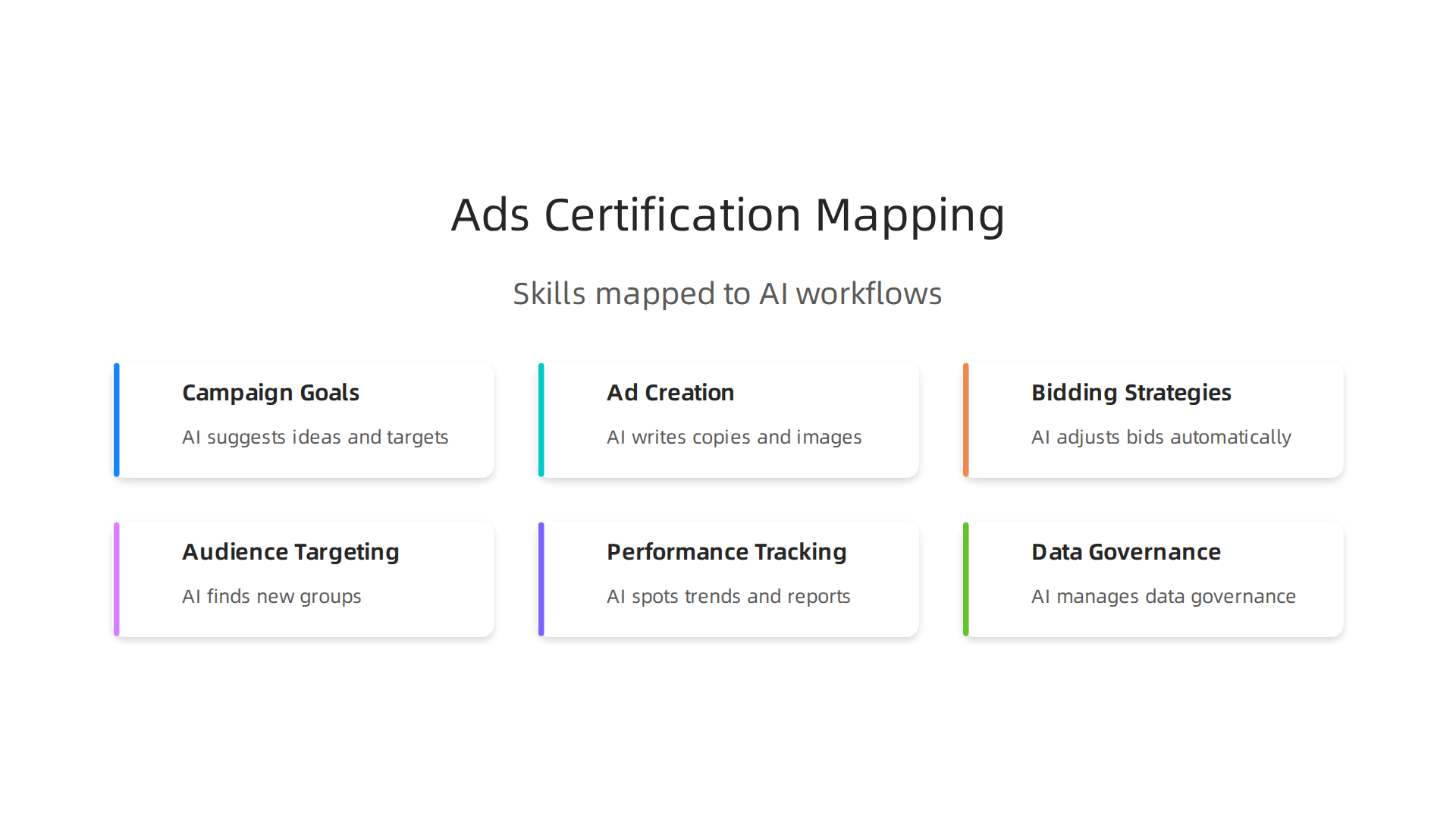
    Mapping Your Google Ads Certification Skills to AI

    Here is how your Google Ads knowledge fits into today’s world of AI marketing tools:

    Illustrating how traditional Google Ads certification skills adapt and complement AI-assisted marketing workflows.

    What You Learned (Google Ads Certification) How AI Helps Now (AI-Assisted Workflow) What You Still Need to Master (Your Role)
    Campaign Goals & Setup AI suggests campaign ideas, audience targets, and budgets. You set the big goals, tell AI what success looks like, and guide the overall plan.
    Ad Creation & Messaging AI writes many ad copies, creates different images or videos. You review AI’s ideas, pick the best ones, and make sure the message feels right for your brand.
    Bidding Strategies AI changes bids automatically to get the most clicks or sales. You choose the right bidding strategy for AI to follow and check that it’s working towards your goals.
    Audience Targeting AI finds new groups of people who might like your ads. But beware: some old ways, like lookalike audiences, are changing with new privacy rules in 2026 Lookalike Audiences Are Gone…. You learn new privacy rules, understand who you really want to reach, and make ethical choices for targeting.
    Performance Tracking & Reports AI collects all the numbers, spots trends, and makes reports easy to read. You look at the big picture from the reports, understand what the numbers mean, and decide what to do next.
    Data Governance & Compliance AI handles and uses a lot of data, making it faster to work. You make sure all data used by AI is collected and used correctly and legally. This is about making sure your AI efforts follow the rules AI and Data Governance in 2026: The Complete Guide.

    This table shows that while AI does many tasks, your smart human brain is still in charge. You are the conductor of the AI orchestra.

    How Different Roles Should Prioritize Learning

    Not everyone needs to learn the same things at the same speed. Your job helps you decide what parts of this checklist are most important.

    • For Founders/Business Owners: Your focus should be on "Campaign Goals & Setup" and "Performance Tracking & Reports." You need to know what to ask the AI for and how to read the results to make sure your best AI for business is working towards growth. You care about the big picture and return on investment (ROI).
    • For Campaign Managers: This entire checklist is for you. You are the one working closely with the AI marketing tools every day. You need to know how to guide the AI, check its work, and make changes when needed. Mastering "Bidding Strategies" and "Audience Targeting" in the AI world is very important. You might also want to explore a hubspot marketing certification to broaden your marketing automation skills.
    • For Consultants: You need to know everything on this list, and then some! You should understand how to set up, manage, and fix problems with AI-assisted campaigns for many different types of businesses. Staying up to date on all the latest AI trends, laws, and the best AI marketing tools is key. You also need to be good at explaining complex ideas simply.

    The table in the last section showed how your skills, like those gained from a Google Ads certification, are still key when working with AI marketing tools. But being the "conductor" also means you’re responsible for making sure everything is done by the book. This is super important with AI because new rules about data privacy and how we use information are always popping up in 2026.

    As a marketing leader, your main job is to guide your team to success. With AI, this also means staying on top of new laws and making sure your team follows them.

    A marketing leader carefully reviewing documents, symbolizing the critical role of ensuring compliance and data privacy with AI tools.

    Your knowledge from a Google Ads certification gives you a great start, but AI adds new layers to how data is collected and used. For example, some older ways of finding audiences are changing, and there are more rules about being open when AI helps create ads. Not following these rules can lead to big problems and can hurt trust with your customers. It’s why marketing leaders need to understand these 2026 Compliance Risks for Marketing Data Governance more than ever.

    Actually, industry groups are giving out new advice on how to use AI fairly and transparently. For instance, the IAB has updated its guidance, saying you must tell people if AI has made changes to images, videos, or voices in ways that might trick them. This is about being honest and clear with your audience, which is a key part of responsible marketing, as highlighted in new IAB updates AI disclosure guidance.

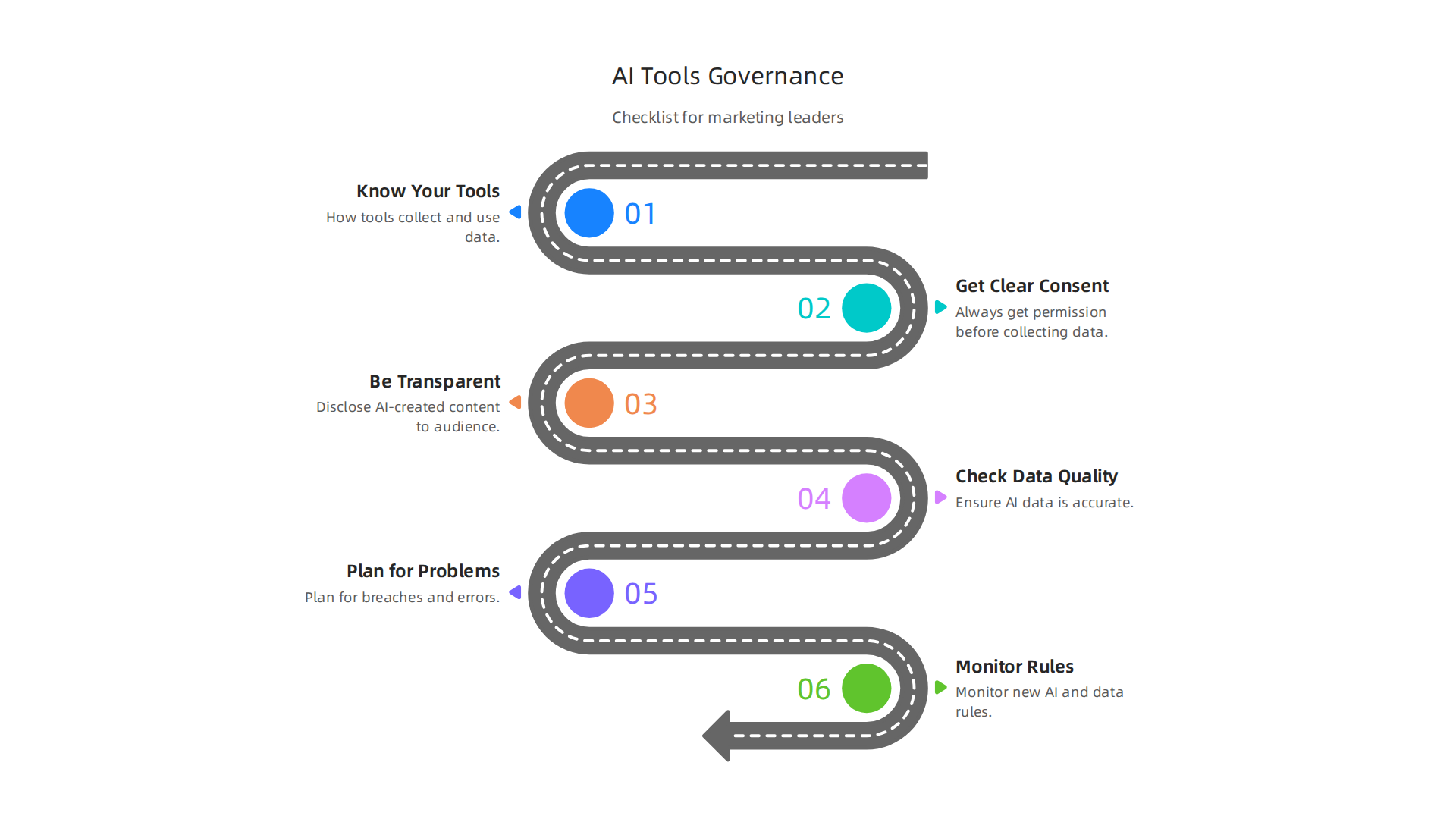
    A Short Governance Checklist for Marketing Leads Using AI

    To help you keep your AI efforts on track and reduce risks, here’s a simple checklist for how to use your ai marketing tools responsibly in 2026:

    A practical checklist for marketing leaders to ensure responsible and compliant use of AI marketing tools.

    • Know Your AI Tools: Understand exactly how each AI tool collects, uses, and stores data. Make sure they meet privacy standards. You can also explore how to choose a digital marketing course for AI skills to deepen your team’s expertise.
    • Get Clear Consent: Always get permission from people before you collect their personal data. Make it easy for them to say yes or no, and respect their choices. This is a core part of using How to Use AI Responsibly in Digital Advertising.
    • Be Transparent About AI: If AI created or heavily changed your ad content, think about telling your audience. Honesty builds trust.
    • Regularly Check Data Quality: Make sure the data your AI uses is correct and up to date. Bad data can lead to bad marketing choices and can also cause privacy issues.
    • Plan for Problems: Have a plan for what to do if there’s a data breach or an AI tool makes a mistake. Knowing how to react quickly is key to avoiding bigger problems. Setting up a strong strategic guide to marketing AI agents can help prevent many of these issues.
    • Keep Up with Laws: Laws about AI and data privacy are always changing. Stay informed about new rules in your area and the places you market to.

    Staying informed about the fast-moving world of AI is crucial for marketing leads. It helps you keep your business safe and ethical.


    Get clear daily AI updates from The Deep View Newsletter. The AI Newsletter Worth Reading

    Keeping up with laws is one thing, but making sure your team has the right skills to use new AI marketing tools is another. This is where good training comes in. As a marketing leader in 2026, you need to create learning plans that mix official certifications with hands-on practice.

    Training teams: blending certification study with hands-on AI tool labs

    Think of it like this: your team needs to learn the rules of the road (from certifications) and then actually drive the car (using AI tools).

    Putting Together Smart Learning Plans

    The best way to train your team is to create special learning paths. These paths should pair up lessons from things like a Google Ads certification or even a HubSpot marketing certification with real practice sessions. For example, after learning about setting up ad campaigns through a Google Ads certification course, your team members could then jump into "AI labs." Here, they would use actual AI marketing tools to create and manage campaigns in a safe testing space.

    This hands-on approach helps people truly understand how to use these powerful tools. They can try different AI features, see how they affect ad performance, and get comfortable with how the best ai for business works in real life. Google itself offers ways to learn these new skills, including a Google AI Professional Certificate to help build important AI knowledge. These programs help your team get skilled in using ai marketing tools effectively.

    Checking if Training Actually Works

    It’s not enough to just train your team; you also need to check if the training is making a difference. This means looking at your campaign results. Did the training help your team get better at their jobs? Are your ad campaigns performing better because of the new AI skills?

    You can evaluate this by:

    • Looking at Key Numbers: See if important things like how many people click your ads or how many sales you make have gone up. For example, one way to evaluate AI tools is by how they affect your campaigns, not just by what features they have. You can use checklists to audit your ai marketing tools to see if they are worth the cost and effort, as detailed in a Digital Marketing AI Tool Audit: Q2 2026 Checklist.
    • Getting Feedback: Ask your team members what they learned and how they are using the new skills.
    • Checking Performance of AI Tools: Make sure the ai marketing tools they are using are actually helping. You can learn more about how Marketing Specialists Choose AI Tools for Marketing and Drive ROI to ensure your team is using the right ones.

    By combining learning from certifications with hands-on labs and then carefully checking the results, you can make sure your team is ready for anything in 2026. This also helps you guide your business toward Smart AI for Business: Your 2026 Guide to Successful Adoption.

    After training your team, the next important step is picking the right ai marketing tools for them to use. This isn’t just about finding the flashiest new tool. It’s about using what your team learned from their certifications, like a Google Ads certification or a HubSpot marketing certification, to make smart choices. These certifications teach key skills that help you evaluate best ai for business solutions effectively.

    Evaluating AI tools through the lens of certification-driven decision criteria

    When you’re choosing new ai marketing tools, think about what your team learns in their training. This knowledge helps you look at tools in a smarter way. For example, a good 2026 Guide to Ultimate AI Ad Tech Evaluation Strategy shows how to pick tools based on clear rules, not just cool features.

    Here’s how what your team knows can help you pick the best AI tools:

    • How well does it measure? Certifications often teach how to track how well your ads are doing. When looking at AI tools, ask: Does this tool clearly show us if our ads are working? Can it help us understand clicks, sales, and what’s making people buy? You want tools that give you good information, not just guesses.
    • Can it make things better? A big part of any Google Ads certification is learning how to improve campaigns over time. Your AI tools should do this too. Do they suggest ways to get more for your money or reach more of the right people? The best ai marketing tools help your team keep making things better, not just set them up once.
    • Does it follow the rules? Your team learns about rules and good practices in their hubspot marketing certification or other training. AI tools should also follow these rules. Do they keep customer information safe? Are they clear about how they work? An AI tool should be transparent, meaning you can understand how it makes decisions, and allow for proper spend control.

    Thinking About Trade-Offs When Choosing AI Tools

    No AI tool is perfect, so you’ll need to think about what’s most important for your business.

    • Cost: This isn’t just the monthly price. Think about the full cost, including how much time it takes to set up the tool, train your team to use it, and keep it running smoothly. Sometimes a cheaper tool needs more work, making it more expensive in the long run.
    • Can you understand it? Some AI tools are like a "black box," meaning you don’t really know how they make their decisions. It’s often better to pick tools that are more "explainable." This means you can see why the AI made a certain choice, which helps your team learn and trust the tool more. For example, when evaluating AI advertising platforms in 2026, look for transparency and control.
    • How hard is it to connect? New tools need to work with the tools you already use. How much effort will it take to link a new ai marketing tool to your current systems? A tool that connects easily will save you a lot of headaches. You’ll want to choose the right Enterprise AI Platforms 2026 Top Providers and How to Choose the Right One to avoid integration issues.
    • What real impact will it have? Most importantly, will the tool actually help you reach your business goals? Will it save time, make more money, or make your customers happier? Focus on tools that can show clear, measurable results.

    By using the knowledge from google ads certification and other training, you can pick the best ai for business tools that truly help your team and your company grow in 2026.

    Staying ahead in the world of AI means always learning. To get the latest updates and practical insights for business users, there’s The AI Newsletter Worth Reading.

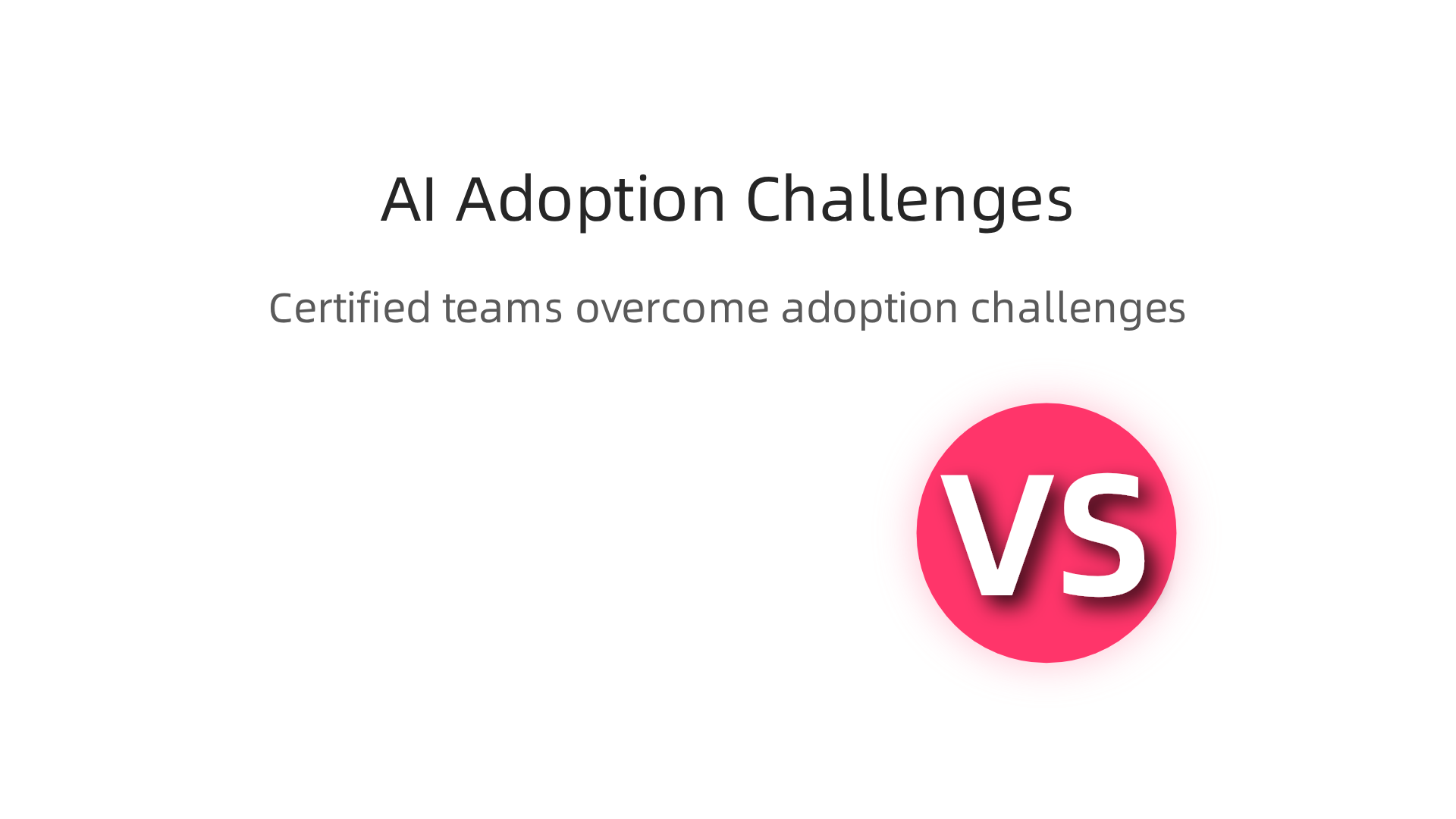
    Even with the best tools picked, bringing new ai marketing tools into your business can be tricky. It’s like having a new car but not knowing how to drive it perfectly. Many companies face bumps in the road when they try to use AI. These challenges can slow things down, but teams with good training are ready to overcome them.

    Here are some common challenges companies face when using AI tools:

    Visualizing common challenges in AI adoption and how certified marketing teams effectively overcome them.

    • Skills Gap: Sometimes, teams simply don’t have the right skills to use new AI tools effectively. They might know how to do their job, but not how to do it with AI. In fact, many marketing teams in 2026 still do not have a clear plan for AI, showing a lack of knowledge in how to move forward with new tech.
    • Budget Worries: Buying AI tools and training your team costs money. Business leaders worry if the tools will really make enough money or save enough time to be worth the cost. Starting a pilot program can help show the value, with some experts suggesting dedicating 20-25% of spend to AI-assisted experiments to see results quickly AI Advertising 2026 Transforms Paid Media for Pros – key-g.com.
    • Hard to Measure Results: It can be tough to see if AI tools are truly helping. How do you know if an ai marketing tool is working better than the old ways? This makes it hard to show that the investment was a good one.
    • Team Not Ready: Some team members might be worried about AI taking their jobs. This can make them less willing to learn or use the new tools The 12-Week Implementation…. This kind of resistance can stop new tools from being used well.
    • Rules and Safety: With new technology comes new rules. Companies need to make sure their AI tools keep customer information safe and follow all the laws. Many companies see legal, governance, and compliance as a big challenge when adopting AI AI GOVERNANCE AND RISK MANAGEMENT PLAYBOOK.

    How Certified Teams Make a Difference

    This is where trained teams truly shine. When your team has a google ads certification or a hubspot marketing certification, they are much better prepared. They know how to handle these common problems:

    • Better Skills: With certifications, your team already has the basic knowledge to understand how best ai for business tools work. This reduces the skills gap because they have learned about data, tracking, and how to improve campaigns. They are ready to explore tools for AI tool discovery 2026 and apply what they’ve learned.
    • Smart Start-Ups: Certified teams know to start with small test runs, called pilot programs. This helps them see what works and what doesn’t without spending too much money at once. It’s about slowly bringing in new tools, which is also known as "staging."
    • Clear Rules: They can help set up clear rules, or "governance," for how AI tools should be used safely and correctly. This includes understanding who is in charge of which part of the AI process and what risks to look out for AI Adoption Strategies: Your 2026 Playbook – AI Academy.
    • Checking Results Often: These teams are also good at setting "ROI checkpoints." This means they regularly check if the AI tools are giving good results and making the company money or saving time. This helps prove the value of the new tools and makes sure they are having a real impact. This also helps reduce concerns about cost.
    • Building Trust: By showing clear results and following rules, certified teams can help everyone feel more comfortable with new AI tools. This reduces team resistance and helps everyone work together better.

    By having a team that understands the challenges and has the right training, your business can smoothly adopt new best ai for business solutions and truly benefit from them in 2026. To learn more about how AI helps businesses grow, check out this guide on How Businesses Adopt AI for Growth.

    Summary

    This article explains why Google Ads certification remains a critical foundation in an AI-first marketing world and shows how to combine that foundational knowledge with modern AI tools. It summarizes what the certification teaches—campaign setup, keyword strategy, bidding, audience targeting, and measurement—and identifies what it doesn’t fully cover now that AI automates creative, bidding, and audience modeling. The piece maps certification skills to AI-assisted workflows, clarifies different learning priorities for founders, campaign managers and consultants, and gives a short governance checklist to reduce legal and ethical risks. It also outlines how to train teams with blended certification + hands-on AI labs, how to evaluate and choose AI marketing tools, and how certified teams can smooth adoption while measuring ROI and managing common barriers. After reading, you’ll have practical checklists, role-based priorities, and evaluation criteria to align your Google Ads knowledge with AI tools responsibly and effectively.

  • How Marketing Specialists Choose AI Tools for Marketing and Drive ROI

    How Marketing Specialists Choose AI Tools for Marketing and Drive ROI

    Why Marketing Specialists Must Adopt Focused AI Strategies Now

    In 2026, the world of marketing is changing faster than ever, and artificial intelligence (AI) is at the heart of it all. If you’re a marketing specialist, you’ve likely seen many new AI tools pop up every day. It can feel like too much information, making it hard to figure out which tools are right for your work.

    Navigating the overwhelming landscape of new AI tools in marketing requires focused strategy.

    This big challenge is what many marketing teams face today: how do you pick the best AI tools for your specific marketing jobs from so many choices?

    Actually, almost all marketing teams are now using AI. A report from this year shows that 91% of marketers actively use AI in their daily tasks, a big jump from past years. This means that if you’re not using AI, or not using it well, you might be falling behind. The goal for any marketing specialist today isn’t just to use AI, but to use it in a smart, focused way to get real results. Teams that focus on getting a good return on investment (ROI) from their AI tools see much better results, sometimes 3.2 times better [1]. This shows that the ai advantage is clear, especially for growth marketing.

    But with so many options, how do you cut through the noise? How do you pick AI tools that truly help with things like making better marketing collateral or understanding customers more deeply? Many marketing specialists feel unsure about where to start or how to make sure the AI tools they choose will actually work and be easy for their team to adopt. There’s a real worry about spending money on tools that don’t deliver.

    This article is here to help. We will give you a clear, step-by-step guide to choosing and using AI tools for your marketing work. Our playbook focuses on what really matters: getting a good return on your money, making sure the tools are easy to start using (low adoption friction), and helping you get them up and running quickly (implementation readiness). You’ll learn how to find AI solutions that truly fit your needs, so you can stop feeling overwhelmed and start seeing real business growth.

    To keep up with the fast-moving AI world without getting lost in all the news, it helps to have a trusted source. You can always get clear daily AI updates from The Deep View Newsletter. We will help you understand how to choose AI tools for business that deliver real results, so you can make smart choices for your team.


    [1] State of AI Marketing 2026 | Enterprise AI Adoption Report

    Set Clear Goals: Map AI Features to Marketing Outcomes

    Now that we know focused AI strategies are a must, the very first step for any smart marketing specialist is to set clear goals. You can’t pick the right tools if you don’t know exactly what you want them to do for you. Think of it like this: if you want to drive to a friend’s house, you first need to know their address.

    It’s not enough to say "I want more sales." You need to make your goals clear and easy to measure. For example, do you want to:

    • Make more people aware of your brand? (Like getting more views on your online videos or more people seeing your ads.)
    • Get better quality leads? (These are people who are more likely to buy from you.)
    • Turn more leads into customers? (This means improving your conversion rates.)
    • Keep existing customers happier for longer? (This is about customer retention.)

    By making your goals specific, you can then see how AI tools can really help. Each AI tool has different strengths, and knowing your goal helps you match the tool to the job. For example, an AI tool that writes emails might help with conversion rates, while one that suggests new ad ideas could boost awareness. The goal is to find AI solutions that directly help your growth marketing efforts.

    How to Map AI Features to Your Goals

    Once you have your goals, list out the marketing jobs you do every day. These are your "use cases." Then, think about how AI could make those jobs easier or better.

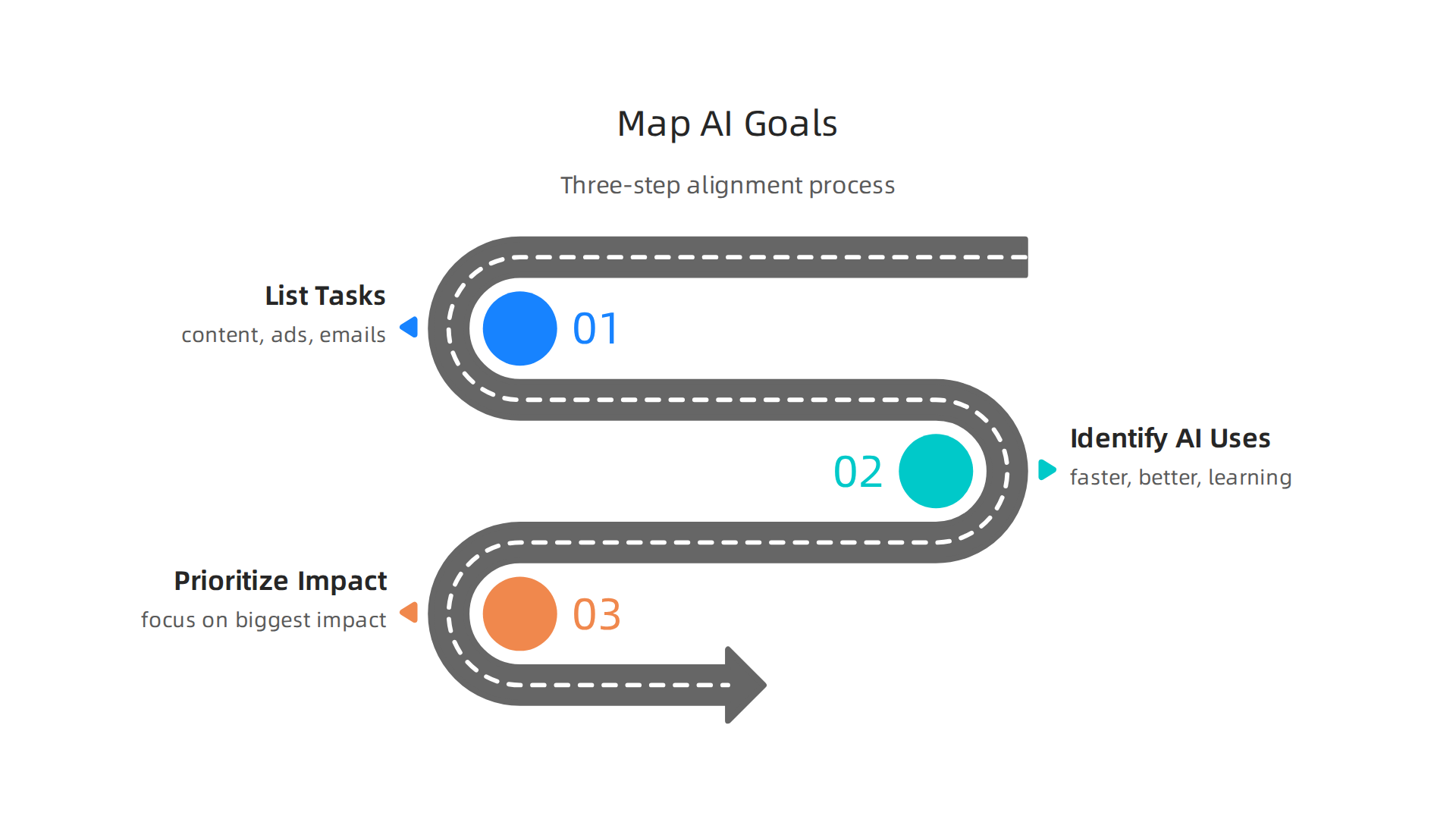
    A three-step process to align AI capabilities with specific marketing objectives for maximum impact.

    This helps you build a "prioritized use-case matrix."

    Here’s how to think about it:

    1. List your marketing tasks: Think about creating content, running ads, sending emails, talking to customers, or figuring out what customers like.
    2. See where AI can help: For each task, ask: Can AI make this faster? Can it make it better? Can it help me learn new things? Maybe AI can help you create more engaging marketing collateral.
    3. Prioritize: Not all tasks are equally important. Focus on the ones that will have the biggest impact on your measurable goals and give you the best return on your money. For example, if increasing leads is your top goal, prioritize AI tools that help with lead generation and lead scoring. Many businesses that use AI for marketing automation see a really good return on their money, sometimes even 544% ROI [1]. This shows the clear AI advantage when you pick tools carefully.

    By making a list of your goals and matching them to what AI tools can actually do, you’ll make smarter choices. This way, your limited budget and time go toward experiments that truly matter and bring high-impact results. This focused approach is key to harnessing the power of AI for business success. For example, understanding how to choose marketing automation software carefully can make a big difference for your team.


    [1] The Real ROI of AI-Driven Marketing in 2026: What the Data Actually Shows – V12 AI

    Now that you have your clear goals, the next smart step for any marketing specialist is to figure out where to put your money first. You need to pick the best types of AI tools that will give you the most bang for your buck and be easiest for your team to start using. This means looking at tool categories and ranking them.

    Think of AI tools like different types of helpers. Some are good for writing, some are good for talking to customers, and some are good for understanding numbers. You can’t hire all of them at once, so you need to decide which helpers will do the most important work for your business first.

    Key AI Marketing Categories to Consider

    Many marketing teams are using AI in a few main areas. Here are some big ones:

    Essential AI categories marketers should consider for initial investment to maximize growth.

    • Content Generation: These tools help you write emails, social media posts, blog articles, and other [marketing collateral]. Many businesses in 2026 use AI for creating content, making it the most common use of AI in marketing.
    • Personalization: These tools help you show the right message to the right person at the right time. For example, they can suggest products a customer might like or change an ad based on what someone has looked at before.
    • Analytics and Insights: These tools look at huge amounts of data to help you understand what’s working and what’s not. They can spot trends and tell you what customers might do next.
    • Automation: These tools take care of repetitive tasks, like sending follow-up emails, scheduling posts, or moving data between different systems. This saves your team time and lets them focus on bigger ideas.

    How to Prioritize Your AI Investment

    When deciding where to invest, think about two main things for each category:

    1. Expected Return on Investment (ROI): Which category will help you reach your specific goals the fastest and give you the biggest boost in sales or customer happiness? For example, AI tools that help with content writing can bring in 3.2 times your investment on average. Tools for personalization are also strong, bringing in about 2.7 times the investment on average.
    2. Integration Complexity: How hard will it be to set up and use these tools with what you already have? Some tools are super easy to plug in, while others might need a lot of setup or special tech skills. You want to pick tools that your team can learn and use without too much trouble.

    Also, don’t forget your team’s skills and your current tech setup. It’s important to match new AI tools to what your team can handle and what your systems can support. If your team isn’t ready for a very complex AI system, it might be better to start with something simpler. This helps avoid "adoption friction" and ensures your team actually uses the tools effectively. Looking into how to choose the best AI tech products for your team in 2026 can make this process smoother.

    By carefully ranking these categories based on their likely ROI and how easy they are to use with your team’s current skills and existing systems, you can build a smart plan. This focused approach gives your business a real [AI advantage] and helps your growth marketing efforts succeed.

    To stay on top of all the fast-changing AI tools and trends, make sure you’re getting trusted information.

    Get clear daily AI updates from The AI Newsletter Worth Reading.

    After you know which types of AI tools are best for your business, the next big step is picking the right company or "vendor" to get them from. For any smart marketing specialist, this means having a clear plan to check out each option. You want to make sure the tool will truly help your growth marketing efforts and fit well with how your team works.

    Evaluate Vendors: Checklist for Marketing Specialists

    When looking at different AI tools, don’t just pick the first one you see. You need a checklist to compare them fairly.

    A comprehensive checklist for marketing specialists to evaluate potential AI tool vendors.

    A marketing team collaboratively reviewing and discussing various AI tools or vendor proposals.

    Think of it as interviewing each tool provider to see if they’re the right fit for your team in 2026. Here are some key things to ask about:

    • How easy is it to connect with other tools you use? (Integration) The AI tool should work well with your existing marketing software, like your email system or customer database. If it’s hard to connect, it will cause problems later.
    • Can the AI tool use your business’s information? (Data Access) AI tools need data to learn and work. Make sure the tool can safely and easily use your company’s specific information without issues.
    • Can you change the tool to fit your needs? (Customization) Your business is unique. Can you change how the AI works or what it does to match your specific marketing campaigns and goals?
    • Is your information safe with them? (Security) This is super important. You need to know that your customer data and business secrets will be protected from bad actors. Ask about their security measures.
    • Are the costs clear and fair? (Pricing Transparency) Make sure you understand all the costs involved. Are there hidden fees? Does the price change as you use it more? A good vendor will be open about their pricing.

    Many companies offer checklists to help you with this. One helpful guide suggests looking at how vendors handle things like security and data management to avoid problems later on AI Vendor Evaluation Checklist: How to Choose Business AI Tools Without Getting Burned. It’s also smart to look at how different enterprise AI platforms stack up before making a big decision.

    Try Before You Buy: Short Pilot Tests

    After you have a few favorite vendors, the best way to really check if an AI tool is right for you is to try it out. This is called a "pilot test." It’s like a short trial run before you sign a long-term contract.

    A pilot test should be short, often about 30 to 90 days. During this time, you set clear goals. For example, you might want to see if an AI content tool can help your team write blog posts 20% faster. You need to decide exactly what you want to measure to know if the test is a success A Practical 30‑Day Pilot Plan to Evaluate AI Marketing Tools for Small Teams.

    Here’s how to run a good pilot test:

    1. Set Clear Goals: What do you hope the AI tool will achieve for your marketing team? Make these goals specific and measurable.
    2. Pick Key Numbers to Watch: These are called Key Performance Indicators or KPIs. They help you track if the AI tool is meeting your goals. For instance, if you’re testing an AI ad tool, you might track how many people click on the ads or how much a new customer costs AI Pilot Success Metrics & Reporting Plan: KPIs, Experiment.
    3. Keep it Small: Don’t try to use the AI tool for everything at once. Pick one small project or a small part of your team to test it with. This makes it easier to manage and see clear results.
    4. Decide What "Success" Looks Like: Before you start, agree on what will make you say, "Yes, this AI tool is great!" or "No, this isn’t what we need."

    By doing these pilot tests, your marketing specialist team can clearly see the value of an AI tool with your own data. This way, you make smart choices that truly give your business an [AI advantage] and boost your growth marketing efforts.

    Implementation Roadmap: People, Process, and Tech

    Once your team finishes a pilot test and sees that an AI tool works, the next steps are all about making it a permanent part of your business.

    A team confidently presenting or reviewing a successful project implementation roadmap.

    This involves a clear plan, often called an "implementation roadmap." It covers three main stages: getting the AI tool set up, putting it into wider use, and then growing its use even more across your company.

    Many experts agree that a good roadmap helps you smoothly bring AI into your marketing work. It’s like having a step-by-step guide to gain a real [AI advantage]. A common way to think about this journey is a 90-day plan, moving from initial checks to full-scale use, as shown in the How to Implement AI in Marketing in 90 Days guide.

    Key Stages for Rolling Out AI Tools

    1. Pilot: You just learned about this. It’s your short test to make sure the AI tool does what you need it to do. If the pilot goes well, you move to the next stage.
    2. Integration: This is where you connect the new AI tool with your other systems. For example, if you tested an AI tool for writing emails, you now link it to your email sending program. This makes sure all your tools talk to each other and share information easily. A marketing specialist often helps manage this technical part.
    3. Scale: After successful integration, you begin to use the AI tool across more of your team or for more projects. If it helped a small group write blog posts faster, now your whole content team might use it for all their [marketing collateral]. This helps your entire business see better results and boosts your growth marketing.

    Who Does What? Important Roles

    For each step of this roadmap, different people on your team will have important jobs. Having clear roles helps everything run smoothly. Here are some key people you’ll need:

    • Project Owner: This person is in charge of the whole AI project. They make the big decisions, clear away problems, and make sure the project stays on track. They are often a leader in marketing.
    • AI Integrator: This person makes sure the AI tool connects properly with your existing software. They solve any technical issues that come up.
    • Data Analyst: This person keeps an eye on the numbers. They check if the AI tool is truly helping your business reach its goals, using the KPIs you set during the pilot.
    • Workflow Owners: These are the people who actually use the AI tool day-to-day for specific tasks, like the content creators or ad managers. They help make sure the tool fits into their daily work.

    Putting together a strong team with clear jobs is crucial for success. In fact, a good AI Tool Selection Playbook for Marketing Teams points out the need for a cross-functional team with defined roles.

    Getting Everyone On Board: Change Management

    Bringing new AI tools into a business can sometimes be tricky because people don’t always like change. They might worry about their jobs or feel overwhelmed. This is where "change management" comes in. It’s all about helping your team understand and accept the new tools.

    Here are some tips to help everyone get on board:

    • Talk About Why: Explain clearly how the AI tool will help them and the company. Show how it will make their work easier or more effective, not harder.
    • Listen to Concerns: Let people share their worries and try to address them. Maybe they need more training or a simpler way to use the tool.
    • Provide Good Training: Don’t just give them a new tool and expect them to figure it out. Offer clear, easy-to-understand training sessions.
    • Show Success Stories: Share examples of how the AI tool is already making a difference, perhaps from your pilot test. This can inspire others.
    • Get Leaders Involved: When company leaders show their support and even use the tools themselves, it encourages everyone else.

    A big part of this is understanding your team’s different views and getting "buy-in" from everyone, as highlighted in the Leadership AI Adoption: A CMO Playbook for 2026. By handling changes well, your business can smoothly adopt new AI tools and achieve significant How Businesses Adopt AI for Growth.

    Staying on top of the latest AI trends and implementation strategies is a continuous effort.

    Get clear daily AI updates from The AI Newsletter Worth Reading.

    Governance, privacy, and compliance for marketers

    Staying on top of the latest AI trends and implementation strategies is a continuous effort. Beyond just putting AI tools to use, businesses must also think about the rules and safety. This means looking at how you handle data, get permission, and make sure everything follows the law. A good marketing specialist knows that using AI responsibly is key to long-term success and trust with customers.

    Practical Privacy Checklist for AI

    When using AI in marketing, it’s super important to be careful with people’s information. Here is a simple checklist to help your team:

    Essential steps for marketers to ensure data privacy and responsible AI usage.

    • Data Classification: Think about what kind of data your AI tools use. Is it sensitive customer information or just general website traffic? Knowing the difference helps you protect the most important data more carefully.
    • Consent Matters: You must get clear permission from people before using their data with AI. This is especially true for personalized marketing efforts. Studies from 2026 show that people want "permission-based targeting" for AI-driven personalization, meaning they agree to how their data is used, which helps build trust with customers AI-Driven Personalization in Digital Marketing.
    • Model Access: Not everyone on your team needs to have access to all your AI models or the data they use. Limit who can access what, based on their job. This keeps your data safer.
    • Vendor Data Handling: If you use outside companies for AI tools, make sure you know how they handle your data. Read their privacy rules carefully. You want to be sure they protect your information just as well as you do.

    Aligning AI with Laws and Company Rules

    Using AI for growth marketing isn’t just about getting an [AI advantage]; it also means following many rules. A marketing specialist needs to work closely with legal teams to make sure AI practices are always compliant.

    • Understand the Laws: Different places have different laws about data privacy. For example, the UK and Europe have strict rules like GDPR. Other regions have their own laws. Businesses need to understand these regional rules to avoid big fines. A comprehensive guide can help your team understand AI Marketing Compliance Guide 2026 across various regions.
    • Internal Legal Review: Always have your company’s lawyers look over how you plan to use AI. They can help you spot risks before they become problems. This includes reviewing how AI creates [marketing collateral] and other content.
    • Human Oversight: Even with smart AI tools, humans should always be in charge of important decisions. AI can help create content or suggest ideas, but a person should give the final okay, especially for high-risk customer interactions. Keeping a human touch helps maintain ethical standards and meet compliance requirements, as outlined in a 2026 guide on How to Use AI for Marketing Compliance in 2026.
    • Privacy by Design: Build privacy into your AI plans from the very start, not as an afterthought. This means thinking about data protection when you choose AI tools and set up new projects. A 2026 guide on Data Privacy in 2026: CRM, AI & Compliance Guide notes that organizations must adopt a privacy-by-design approach. For more on navigating these complex areas, you might find valuable insights in this article on Mastering the AI Future Standard 2026. Also, exploring how different AI systems handle privacy can offer additional perspectives, such as understanding Siri AI 2026: unlock its power for privacy and business strategy.

    By following these steps, your business can use AI tools safely and ethically, building customer trust and avoiding legal issues in 2026 and beyond.

    When you use AI for marketing, it is not enough to just set it up. You need to know if it is really helping your business grow.

    Professionals reviewing data and metrics to measure the impact of marketing initiatives.

    This means looking at numbers and understanding what they tell you. A smart marketing specialist always checks the results to make sure AI tools are giving you an [ai advantage] and helping your business get ahead.

    How to Track Success with AI

    Measuring the impact of your AI marketing efforts means looking at different kinds of important numbers.

    • Leading KPIs (Key Performance Indicators): These are early signs that things are going well. For example, if your AI creates social media posts or [marketing collateral], you might look at how many people click on them, share them, or visit your website. These numbers tell you quickly if your content is interesting and reaching people.
    • Lagging KPIs: These show the final big results. This could be how many sales you made because of an AI-powered ad, how many new customers you gained, or how much money you got back for every dollar you spent. This is called Return on Investment, or ROI. In 2026, many companies see great results. Some reports show that businesses using AI for marketing often get a 300% average ROI within six months of using AI marketing solutions [AI Marketing ROI Statistics 2026: 50+ Sourced Data Points – Zigment.ai]. Other studies suggest an average ROI improvement of 35% for companies using AI in their marketing efforts [AI in Marketing Statistics 2026: Adoption, ROI & …].

    You also need to set "measurement windows." This means deciding how long you will wait to check the results. For some things, you might check daily or weekly. For big goals like sales growth, you might look at results every month or quarter. If you want to dive deeper into how to measure financial gains, an article on How to Get Real ROI from AI Marketing Cloud can help.

    Understanding Where Credit Is Due (Attribution)

    It can be tricky to know exactly which part of your marketing efforts caused a sale. This is called attribution. With AI, you need clear ways to tell if the AI helped a customer decide to buy your product or service. This means setting up your tracking tools to follow the journey a customer takes. For example, you can see if they first saw an AI-made ad, then read an AI-generated blog post, and finally made a purchase.

    Being able to track this helps you prove the real value of your AI investments. For example, AI tools used for writing content can deliver a 3.2x ROI on average, and AI personalization engines can achieve 2.7x ROI [AI Marketing Statistics 2026: 200+ Adoption Insights].

    Improving Your AI with Feedback Loops

    To keep getting better results, a marketing specialist uses what is called a feedback loop. This means you look at the results of your AI campaigns and use that information to make your AI models smarter and your work processes better. This is how you achieve ongoing optimization.

    • Refining Models: If your AI isn’t finding the right customers, you can give it more data or adjust its settings. This helps it learn and get more accurate.
    • Improving Prompts: If the AI is creating content or ideas that do not sound quite right, you can change the instructions (prompts) you give it. This helps the AI learn to make better content over time that matches your brand’s voice.
    • Adjusting Workflows: Maybe your AI is great at making designs, but the process of getting those designs approved by your team is slow. You can change your team’s steps to make things smoother and faster.

    This constant adjustment is a key part of [growth marketing]. It helps ensure your AI tools are always working their best, saving time, and bringing in more business. Companies that actively track their AI ROI often report big returns, with 60% seeing two times their investment back or even more [AI to ROI Reports & Data: The State of AI in Marketing 2026]. To learn more about how AI can improve your customer focus, check out this guide on AI Inbound Marketing.

    Staying on top of the latest AI advancements and strategies is crucial for continuous improvement.

    Get clear daily AI updates from The AI Newsletter Worth Reading.

    Summary

    This article explains why marketing specialists must adopt focused AI strategies now and gives a practical playbook for doing it well. It covers how to set specific, measurable goals and map those goals to prioritized AI use cases so you invest where ROI is highest. You’ll learn which AI categories (content, personalization, analytics, automation) typically deliver the biggest returns and how to rank them by expected ROI and integration complexity. The guide shows how to evaluate vendors with a clear checklist, run 30–90 day pilot tests, and scale successful pilots using a 90‑day implementation roadmap with defined roles. It also walks through privacy, compliance, and governance best practices—like consent, data classification, and vendor reviews—so your AI work stays lawful and trusted. Finally, you’ll get practical ways to measure impact with leading and lagging KPIs, attribution approaches, and feedback loops to keep improving results.