Tag: ai vendor selection

  • Unlock Growth: How to Strategically Choose Top Software Companies and AI

    Unlock Growth: How to Strategically Choose Top Software Companies and AI

    Why leaders need to rethink strategy around top software companies and AI

    It’s 2026, and the world of business is buzzing with talk about Artificial Intelligence, or AI. Every day, it feels like there’s a new AI tool or update being released. This can be exciting, but also a bit much. For many business leaders, it creates a big problem: information overload. It’s really hard to tell what’s truly helpful and what’s just noise when everyone is talking about AI.

    With so many top software companies now offering AI features, how do you pick the right ones for your business? How do you know which tools will really make a difference and help you grow? This question is more important than ever. The global market for enterprise AI was huge in 2025 and is set to grow even more by 2030, showing just how fast things are moving along Enterprise AI Adoption Trends 2026. Companies are quickly adopting AI, with many already seeing it in action across their operations The State of AI in the Enterprise – 2026 AI report.

    This rapid change means that leaders can’t just stick to old ways of thinking. They need a fresh approach to how they look at top software companies and their AI offerings.

    A leader contemplates new strategies in the rapidly evolving AI landscape.

    If you’re in charge of making big decisions, whether for b2b marketing, running a company like Zensar Technologies, or leading any marketing firms, you know it’s a challenge to keep up. You have to sort through countless options, figure out which ones fit your needs, and then put them into action.

    That’s why we’re here. This article will give you a clear, simple way to think about and choose AI software. We will provide a practical framework to help you make smart choices about strategy, buying new tools, and putting them to use. Our goal is to cut through the confusion and help you understand how to pick AI tools for business that deliver real results in 2026.

    If you want to stay updated with clear, daily insights on AI and technology, consider subscribing.
    Get clear daily AI updates from The AI Newsletter Worth Reading.

    1) Market landscape: Who counts as a ‘top software company’ for enterprise AI?

    To truly pick the right AI tools for your business in 2026, you first need to understand who the main players are. What does "top software company" even mean when we talk about AI for businesses? It’s not just about the biggest names you know. It’s about how they help companies like yours use AI in smart ways.

    We can look at a few important things to decide if a company is a top player in enterprise AI:

    • Scale: Can they handle a lot of data and many users? Top companies offer solutions that work for both small businesses and very large ones.
    • Product Breadth: Do they offer many different AI tools, or just one specific thing? A wide range of products means they can help with different business needs.
    • Vertical Reach: Do their AI tools work well for specific industries, like healthcare, finance, or b2b marketing? Some companies are leaders in certain areas.
    • Integration Ecosystem: Can their AI tools easily connect with other software you already use? This is super important. No one wants a tool that can’t talk to their existing systems.
    • Enterprise Trust: Do businesses trust them with important data and tasks? A company’s track record and how secure their tools are really matter.

    In fact, many organizations today, about 40% of them, choose to buy ready-made AI solutions instead of building their own from scratch The multi-year AI advantage. This shows how important it is for leaders to know which providers are truly reliable.

    Different Kinds of AI Software Vendors

    The world of AI software is big, but we can group the vendors into a few main types.
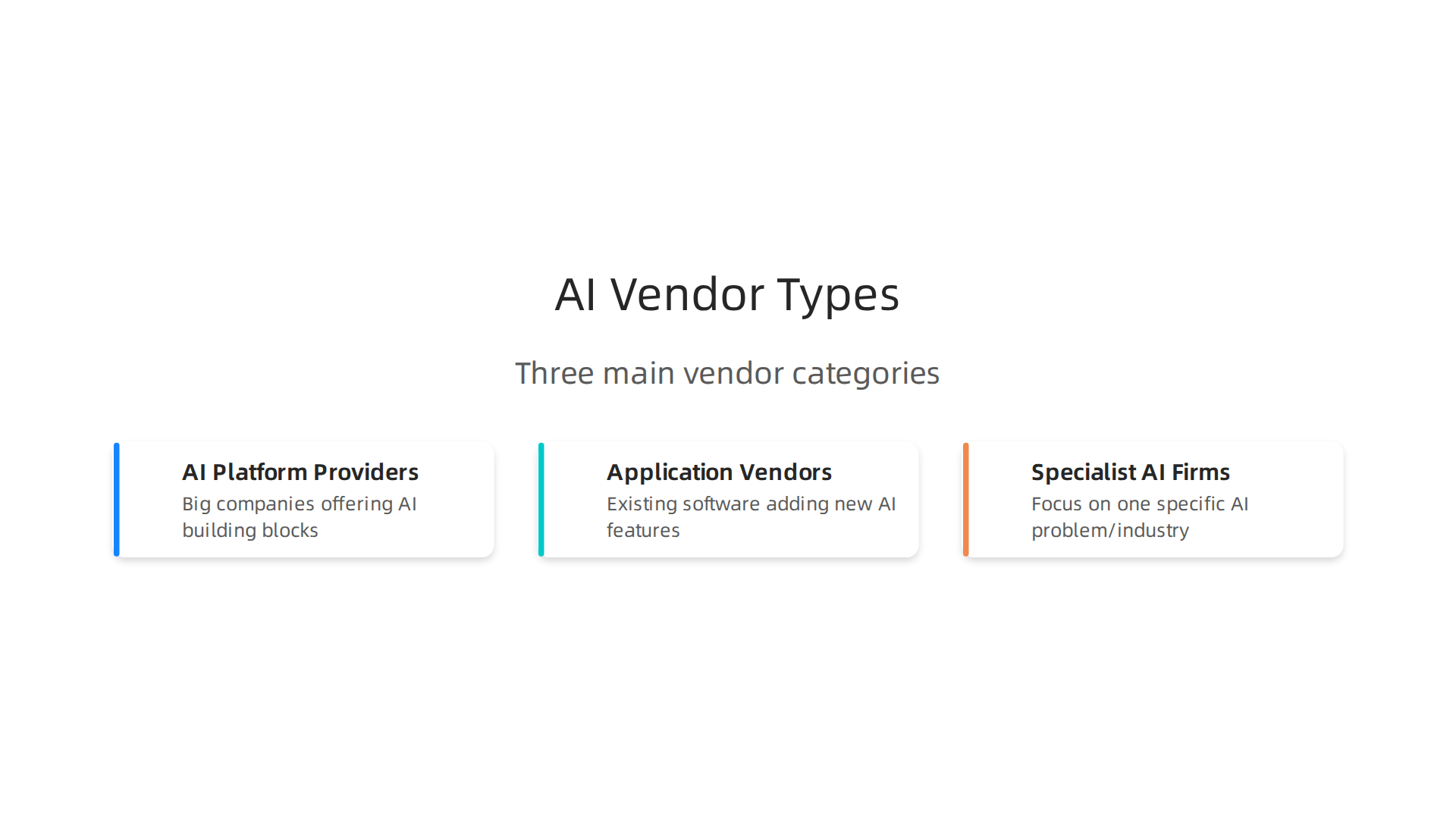
    Understanding the three main categories of AI software vendors helps in strategic tool selection.

    Knowing these groups helps you think about your strategy for buying new AI tools.

    1. AI Platform Providers: These are the really big companies, often called "hyperscalers." Think about the huge cloud providers that offer many AI building blocks. They give you the basic tools and power to create your own AI solutions. They are great if you have a team that can build custom tools. For example, if you need a strong base to run complex AI models or manage a lot of data, these platforms are key.
    2. Application Vendors with AI: These are companies that already make software you might use every day. Now, they are adding AI features right into their existing products. For instance, a company offering customer relationship management (CRM) software might add AI to help sales teams write better emails or predict customer needs. Companies like Zensar Technologies, or other marketing firms, often add AI to improve their services. This is helpful because the AI is already part of a tool you know, making it easier to use. If you are looking for ways to improve specific tasks, this type of vendor can offer powerful, ready-to-use solutions. You can learn more about how to choose effective tools in our guide on how to pick AI tools for business to drive growth in 2026.
    3. Specialist AI Firms: These are often smaller companies that focus on one very specific AI problem or industry. They might have a super smart AI tool for making videos, analyzing legal documents, or improving medical diagnoses. They are experts in their niche. If you have a very particular problem that common software doesn’t solve, a specialist firm might have the perfect AI solution.

    Understanding these different types of top software companies helps you look for the right kind of AI tool. It makes it easier to figure out if you need a broad platform, an AI add-on to your existing software, or a special tool for a unique challenge. This helps you narrow down your choices and avoid getting lost in the sea of new AI releases every day. For a deeper look at evaluating AI companies, check out how to evaluate AI companies to unlock business growth in 2026.

    After you have a good idea of what kind of AI vendor you need, the next important step is to look closely at their products.

    A business team closely examining product specifications and features during an evaluation meeting.

    This means checking if their AI tools actually fit your business needs. You want to make sure the software can do what you need it to do, works well with your other systems, and will keep getting better in the future.

    Here are the main things to check when looking at AI products from top software companies:

    Core Capabilities and Features

    First, think about what the AI tool is built to do. What are its main skills? For example, if you need an AI for customer service, does it understand customer questions well? Can it give helpful answers? If you need it for writing marketing materials, how good is the quality of its writing?

    You should compare different platforms based on what they can actually do. Some AI platforms, like Microsoft Azure AI Foundry or Google Vertex AI, offer many different features. They can handle things like understanding different types of information or working across many systems Enterprise AI Vendor Comparison 2026: Top 15 Platforms for …. It’s important to match these skills to your specific tasks. Think about your goals, whether it’s for b2b marketing efforts or streamlining other business operations.

    How Well They Connect: APIs, Extensibility, and Data

    One of the most important things for any new AI tool is how well it can work with your existing systems.
    Essential considerations for how AI tools connect with existing business systems.

    No one wants an AI that works alone.

    • APIs (Application Programming Interfaces): Think of APIs as special doorways that allow different software programs to talk to each other. If an AI tool has good APIs, it means you can easily connect it to your current customer relationship management (CRM) software, your sales tools, or your accounting programs. This makes sure all your systems can share information.
    • Extensibility: This means how much you can change or add to the AI tool. Can you customize it for your special needs? Can you build new features on top of it? For example, if you’re a marketing firm, can you extend the AI’s capabilities to handle specific types of campaigns unique to your brand? Some platforms are very flexible, letting you build custom solutions Top Enterprise AI Platforms 2026: 8 Compared.
    • Data and Connectivity: How does the AI tool handle your business’s data? Can it easily connect to where your data lives, whether that’s in the cloud or on your own servers? Look for tools that can work smoothly with your data setup to make sure the AI has all the information it needs to be helpful. Some top software companies focus on strong data connections, like Databricks Mosaic AI for lakehouse-centric AI Top 10 Enterprise AI Platforms in 2026 (Ranked).

    Reading the Roadmap and Engineering Signals

    Choosing an AI tool isn’t just about what it can do today. It’s also about what it will be able to do tomorrow. The world of AI changes very fast in 2026. This is where looking at a company’s product roadmap and engineering signals becomes useful.

    • Product Roadmap: This is like a plan that shows what new features and improvements a company intends to add to their software in the future. A clear roadmap tells you if the company is focused on the things that matter to your business. Does it show plans for better integrations? More advanced AI capabilities?
    • Engineering Signals: These are clues about how a company builds and updates its software. Do they release updates often? Do they listen to customer feedback? Are they pushing the boundaries with new AI technologies? Companies that invest heavily in research and development usually have stronger engineering signals. This can tell you a lot about their long-term vision and reliability. IBM watsonx, for example, is known for its focus on regulated industries and strong governance Every Major Enterprise AI Platform Benchmarked (2026). This shows a clear signal about their engineering priorities.

    By carefully checking these points, you can make a better choice about which AI tools will truly help your business grow. For more detailed insights on how to pick the right AI solutions, explore our guide on Enterprise AI platforms 2026: top providers and how to choose the right one.

    Keeping up with the latest AI trends is a big job. If you want to stay smart about new AI tools and features without getting lost in all the noise, there’s a great resource.
    Get clear daily AI updates from The AI Newsletter Worth Reading.

    Picking the right AI tools from all the top software companies is just the start. The next big step is making them work smoothly with everything else you do every day.

    A team works collaboratively to ensure smooth integration and deployment of AI systems.

    This is where real-world integration and deployment come in. It’s about getting the AI system up and running and making sure it stays useful and secure for your business, whether it’s for b2b marketing efforts or other important tasks.

    Common Integration Challenges

    When you bring a new AI tool into your company, it’s a bit like adding a new player to a team. Everyone needs to work together. Here are some common problems you might face:
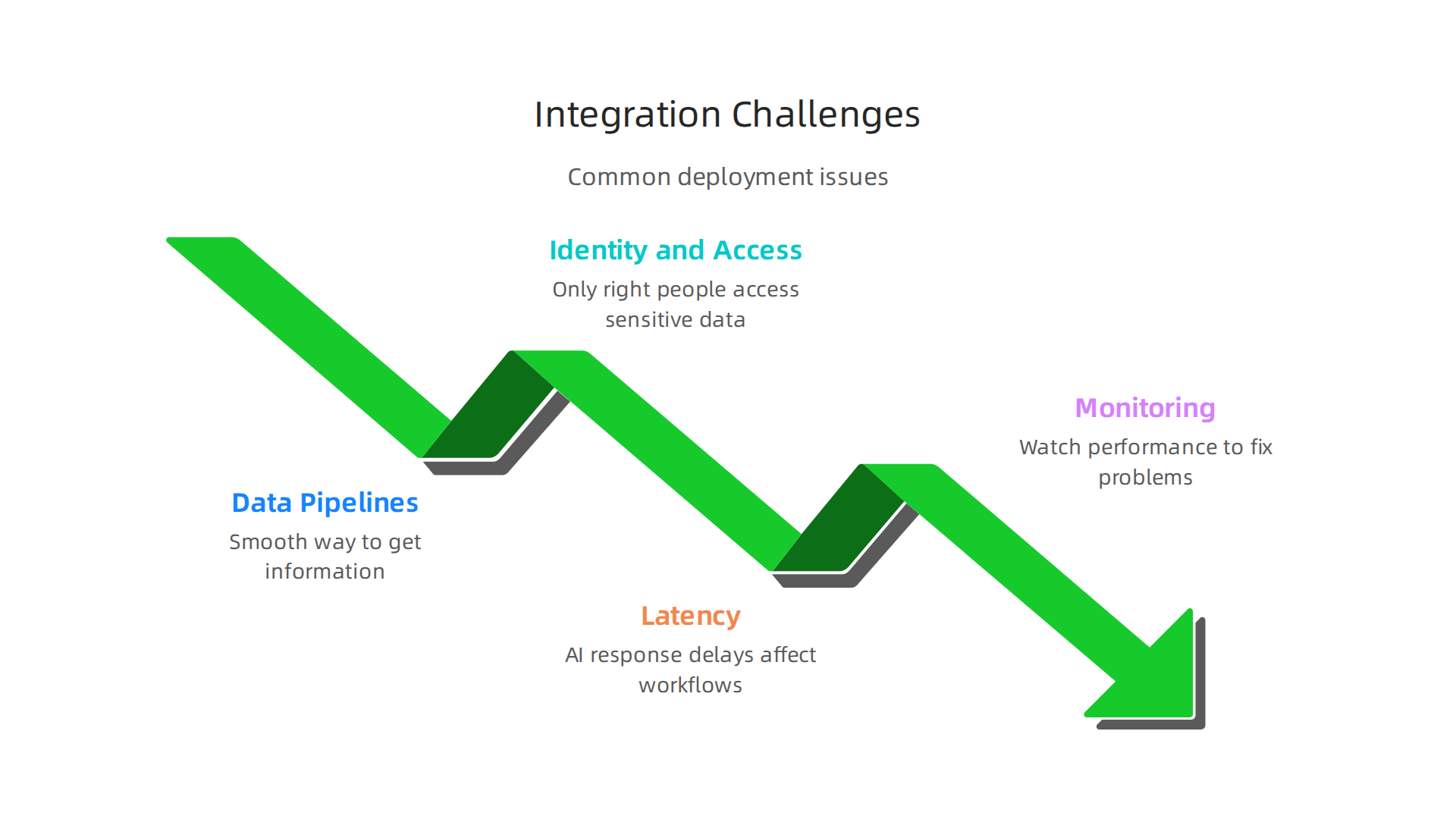
    Key challenges businesses encounter when integrating new AI tools into their operations.

    • Data Pipelines: AI needs lots of data. You need a smooth way to get your company’s information to the AI tool. This is called a data pipeline. If this pipeline isn’t set up right, the AI won’t have the facts it needs to do its job. It’s like trying to cook without all your ingredients.
    • Identity and Access: Who gets to use the AI tool? How do they log in? It’s really important that only the right people can access sensitive AI tools and data. Many top software companies offer ways to connect their AI tools to your existing security systems, like Single Sign-On (SSO) and Multi-Factor Authentication (MFA). This makes sure everyone logs in safely, as highlighted in one Enterprise AI Onboarding Checklist: 30 IT Must-Checks.
    • Latency: This is just a fancy word for delay. If your AI takes too long to respond, it can slow down your whole team. For example, if a marketing firm’s AI takes ages to draft an email, it’s not very helpful. You want quick answers from your AI.
    • Monitoring: Once an AI is working, you need to watch it closely. Is it doing what it’s supposed to? Is it making mistakes? Good monitoring tools help you see how the AI is performing in real time so you can fix problems quickly. This includes setting up dashboards to track performance, as detailed in an Ultimate Enterprise AI Integration Guide for 2026.

    Operational Readiness: Keeping AI Running Smoothly

    Beyond just getting the AI to work, you need to make sure your business is ready to keep it running well every day. This is about being "operationally ready."

    • Site Reliability Engineering (SRE) and Observability: These are about making sure the AI system is always available and working correctly. SRE teams focus on keeping things reliable. Observability means you can "see" what’s happening inside the AI system at all times, so you know if something is going wrong.
    • Compliance and Governance: In 2026, rules about how AI uses data are very important. Your AI tools must follow laws and company rules. This includes managing approvals, audits, and who can access the AI model, which are key parts of Enterprise AI in 2026: Use Cases, Governance, and Rollout. You need clear plans for how data is used and stored.
    • Vendor Support Models: Even the best AI tools from top software companies will sometimes need help. What kind of support does the vendor offer? Do they have a team you can call if there’s a problem? How quickly do they respond? Good support means less worry for your team.

    Making sure your business is ready for these challenges is vital for successful AI adoption. To learn more about how to pick the right tools for your business, check out our guide on how to choose AI for business tools that deliver real results. It’s all about thoughtful planning and choosing tools that fit your company’s specific needs and readiness. Getting this right helps your business grow and makes sure your AI investment pays off.

    Getting your AI tools up and running is one thing. Paying for them and knowing if they are truly helping your business grow is another big part of the picture. This is where we look at how to buy AI, what different pricing plans look like, and how to measure if you’re getting your money’s worth.

    Common Pricing Approaches from Top Software Companies

    When you decide to bring AI into your business, you’ll find that different top software companies offer various ways to pay for their services. Understanding these helps you budget wisely:

    • Subscription Plans: Many AI tools work like other software you might use, with a monthly or yearly fee. This gives you access to a set of features, and sometimes a certain amount of usage. It’s often the simplest way to budget.
    • Consumption-Based Pricing: With AI, you often pay for what you actually use. This might mean paying for each "token" processed, each AI "query" made, or the amount of data the AI handles. For instance, a marketing firm using AI to generate ad copy might pay per copy created. This model helps align costs with how much value you’re getting, as explained in one AI pricing guide for founders.
    • Outcome-Based Pricing: Some advanced AI solutions are priced based on the results they deliver. For example, a tool that helps reduce customer service calls might charge based on the number of calls prevented. This type of pricing ties the cost directly to the benefits your business receives.

    It’s important to know these different models so you can pick the one that best fits your company’s needs and how you plan to use the AI.

    Measuring ROI and Value from AI Initiatives

    Once you start paying for AI, the big question is: Is it worth it? This is about figuring out your Return on Investment, or ROI. It means checking if the money, time, and effort you put into AI are bringing back good results for your business.

    To truly understand if your AI investment is paying off, you need a clear plan. In 2026, many businesses are focusing on how to measure this impact. This includes:

    • Defining Clear Goals: Before you even start, know what you want the AI to achieve. Is it to save money, make things faster, or help your b2b marketing team create better campaigns? The CIO’s Playbook for Enterprise AI Strategy in 2026 suggests defining clear outcomes and baselines.
    • Tracking Key Metrics: You need to watch certain numbers to see if the AI is making a difference. For example, for a marketing firm, this could be how much faster content is produced, how many more leads are generated, or how much less is spent on repetitive tasks. For more on this, check out our guide on how to get real ROI from AI marketing cloud.
    • Calculating Time-to-Value: This means how quickly you start seeing real benefits from the AI. For AI in procurement, for example, many companies see a payback period of 9 to 18 months.
    • Considering Total Cost of Ownership (TCO): Don’t just look at the price tag. TCO includes all costs over time, like setting up the AI, training your team, ongoing maintenance, and any special infrastructure needs. A good business case for AI procurement needs to factor in this three-year total cost. Companies like Zensar Technologies understand the importance of comprehensive planning for AI solutions.

    By carefully tracking these factors, businesses can make sure their AI tools are not just fancy additions, but powerful engines for growth and efficiency.

    Want to stay ahead of the curve and get daily insights on the latest AI trends and tools?

    The AI Newsletter Worth Reading

    After looking at pricing and how to measure if your AI tools are helping, there’s another very important step: making sure you pick a trusted partner. This is about understanding the risks involved with AI vendors and what you need to check before you agree to anything.

    Vendor risk, trust, and compliance: what to check before signing

    Bringing AI into your business means you’re putting a lot of trust in the top software companies providing these tools. But not all companies are the same, and some choices can lead to big problems if you’re not careful. It’s smart to think about different kinds of risks before you sign any agreements.

    Here are some important risk areas to consider:
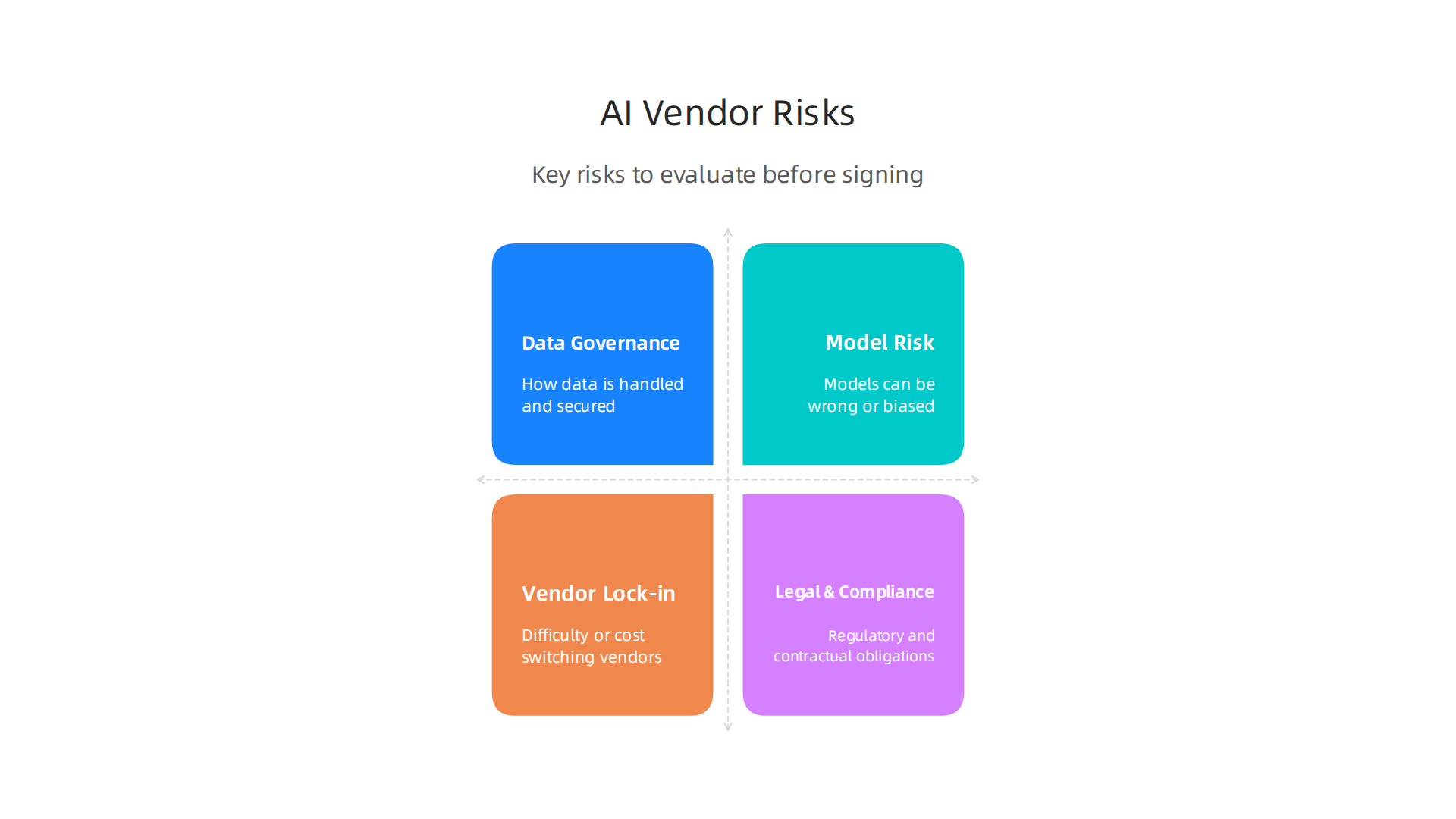
    Key risks associated with AI vendors that businesses must evaluate before committing.

    • Data Governance: This means how your data is handled. Who owns it? How is it kept safe? Will the AI vendor use your company’s data to train their models, possibly mixing it with others’ data? You need clear answers to make sure your important information stays private and secure. One expert suggests asking how training data is handled and if customer data is used for model training to avoid issues like vendor lock-in and to ensure trust with enterprise AI solutions in 2026.
    • Model Risk: AI models can sometimes be wrong, unfair, or biased. This is called model risk. If the AI makes bad decisions, it can hurt your business. For example, a b2b marketing tool that targets the wrong customers could waste a lot of money. You need to know how accurate the AI is and what steps the vendor takes to make sure it works fairly.
    • Vendor Lock-in: Imagine if it becomes very hard or costly to switch to a different AI tool later. That’s vendor lock-in. It happens when you depend too much on one vendor’s special way of doing things. You want to keep your options open, especially as AI technology keeps changing quickly in 2026.
    • Legal and Compliance Exposure: There are growing rules and laws about how AI can be used, especially with customer data. If your AI vendor doesn’t follow these rules, it could put your business in legal trouble. Understanding these legal risks is part of being ready for AI. To learn more about managing these hidden dangers, check out our guide on Stealth AI A Business Guide to Hidden AI Risks Opportunities and Management in 2026.

    Your AI Vendor Due Diligence Checklist

    To avoid these risks, you need to do your homework. This is called "due diligence." It means carefully checking out each potential AI vendor. Many top software companies offer great tools, but you need to make sure they’re the right fit for your business, not just today, but for the future.

    Here’s what to look for:

    • Security Certifications: Does the vendor have proof that their systems are secure? Look for known security badges or reports from independent auditors. This shows they take security seriously. A good AI Vendor Selection Framework suggests data governance and security are very important, weighing in at 25% of the evaluation.
    • Audit Practices: Ask how often they check their AI systems for problems or unfairness. Do they have a plan for fixing issues quickly? Good audit practices show they are responsible.
    • Contract Clauses to Negotiate: The contract isn’t just a formality. It’s your chance to protect your business. Make sure you understand clauses about data ownership, how the AI makes decisions, and what happens if something goes wrong. Don’t be afraid to ask for changes that make you feel safer. When choosing an AI vendor, a detailed AI Vendor Selection Criteria guide highlights that the technical depth and track record are critical, along with IP and data terms. For more guidance on choosing the right partners, read our article on how to Evaluate AI Companies to Unlock Business Growth in 2026.

    By taking these steps, you can build trust with your AI partners and ensure that their solutions truly benefit your operations, whether you’re a small business or a large enterprise like Zensar Technologies. Remember, careful selection is key to successful AI adoption.

    Moving from careful selection to a forward-looking plan is the next step for any business wanting to truly make AI work.

    A diverse team collaboratively outlining a long-term strategic roadmap for AI adoption.

    It means thinking ahead, not just for today or tomorrow, but for the next one to three years. This long-term view helps you pick partners who can grow with you and tools that stay useful as AI changes quickly.

    Strategic roadmap: selecting vendors and planning for 12–36 months

    To truly get the most out of AI, you need a smart plan that stretches out over time. This plan should help you pick the best AI vendors and prepare for how fast AI technology changes. It’s like setting a course for a long journey.

    A Repeatable Vendor Selection Framework

    Picking the right AI tools isn’t a one-time thing. You need a clear process you can use again and again. This is called a repeatable vendor selection framework. It helps you find the top software companies that fit your business goals.

    Here’s how to build one:

    • Set Clear Goals: Before looking at any tool, know what you want to achieve. Do you want to save money, make your customers happier, or help your marketing teams with b2b marketing efforts? For example, some businesses like Zensar Technologies might aim for better operational efficiency or new ways to grow income. Knowing your goals helps you measure success later.
    • Create an Evaluation Rubric: This is a checklist or scorecard to judge each vendor fairly. You’ll score them on things like their technical skills, how well their tools work, and their history of success. One guide suggests weighing technical depth and their track record heavily, giving them 30% and 20% of the score, respectively, when choosing an AI vendor in 2026. This also includes looking at how innovative they are and if they offer solutions that fit your whole business needs, not just one small part.
    • Pilot Program: Before fully committing, test the AI tool with a small group or project. This "pilot" lets you see how it works in real life without big risks. You can find out if the tool truly helps, if your team understands it, and if it meets your initial goals.
    • Define Scale Criteria: After a successful pilot, how do you decide if the AI is ready for your whole company? You need clear rules. This might include hitting certain performance numbers, showing good returns on investment (ROI), or being easy enough for many employees to use.

    Scenario Planning: Creating a Flexible Roadmap

    The world of AI is always moving forward. New tools and models come out all the time. This means your plan needs to be flexible. You can’t just pick one vendor and expect them to be the best choice forever.

    • Prepare for Change: Imagine different futures. What if your main AI vendor gets bought out? What if a new, much better AI model comes along? By thinking about these "scenarios," you can build a roadmap that can bend without breaking.
    • Don’t Get Locked In: It’s important not to rely too much on one vendor’s unique way of doing things. This is called vendor lock-in, and it can make it hard to switch later. Businesses in 2026 must be careful not to let how a vendor is growing decide their main AI plan. Experts suggest that a key decision for technology leaders is how to manage their entire software setup to avoid being stuck with one vendor.
    • Stay Updated on the AI Stack: The "AI stack" refers to all the different parts that make up an AI system, from the basic models to the tools you use every day. Make sure any vendor you choose fits well with your existing systems and how your company works. This helps prevent problems down the road. For many marketing firms, understanding how different AI tools integrate is crucial for seamless operations.

    By having a flexible roadmap and a clear way to pick vendors, you can make sure your business stays ahead in the fast-paced AI world. It’s about being ready for what comes next.

    If you want to stay updated on the latest AI trends and how they impact businesses like yours, consider subscribing to our daily insights.
    The AI Newsletter Worth Reading

    Summary

    This article helps business leaders cut through the noise of 2026’s fast-moving AI market by giving a practical framework for choosing and working with top software companies. It explains who counts as a leading enterprise AI vendor—platform providers, application vendors adding AI, and specialist firms—and shows what to evaluate in their products, from core capabilities to APIs and roadmaps. The piece covers real deployment challenges like data pipelines, identity, latency, monitoring, and operational readiness (SRE and observability), plus the compliance and governance steps needed to reduce legal and model risks. It also breaks down typical pricing approaches, how to measure ROI and time-to-value, and what to include in vendor due diligence. Finally, it offers a repeatable vendor selection process, scenario planning to avoid lock-in, and a 12–36 month roadmap to pilot, scale, and keep AI investments aligned with business goals.


  • Mastering the AI Future Standard 2026 Your Guide to Compliance and Growth

    Mastering the AI Future Standard 2026 Your Guide to Compliance and Growth

    Why ‘future standard’ matters for business leaders in 2026

    In 2026, the world of business is changing faster than ever, mostly because of how quickly Artificial Intelligence (AI) is growing. AI tools are getting smarter every day, which is exciting for businesses like Luminar Technologies and Driven Brands looking to improve. But this rapid growth also brings a big challenge: there are many different rules and laws being made about AI all over the world. These rules are not always the same, making it hard for business leaders to know which way to go. This mix of fast AI changes and unclear rules creates a lot of uncertainty when deciding what products to buy or how to use AI safely in your business.

    Actually, it’s like building a road while everyone is still arguing about where the lanes should be. This is why understanding the "future standard" for AI is so important. Government bodies, like the US Congress, are working on new laws and guidelines to create some order in this space. For example, there’s a lot of discussion about federal reporting and disclosure rules for AI to ensure public trust and safety. Countries like South Korea have already put big AI laws into action South Korea: Comprehensive AI Legal Framework Takes Effect. Meanwhile, the US government is also putting out its own plans and recommendations for a National Policy Framework Artificial Intelligence.

    This guide is here to help you make sense of it all. We will explain the different directions policy makers are headed and look at the new technical standards that are starting to appear. Our goal is to give you clear, practical steps you can take right now to make good decisions for your business. Staying informed about these changes is key to being ready for what’s next. If you want to keep up with the latest in this fast-moving area, it helps to be tracking major technology news for smart business decisions in 2026.

    To stay truly ahead, you need more than just headlines.
    Get clear daily AI updates from The AI Newsletter Worth Reading.

    Knowing the direction policy makers are going helps businesses like yours, including companies such as Luminar Technologies and Driven Brands, make smart choices today.

    A team collaboratively reviewing policy documents, working to understand new regulations and make informed business decisions.

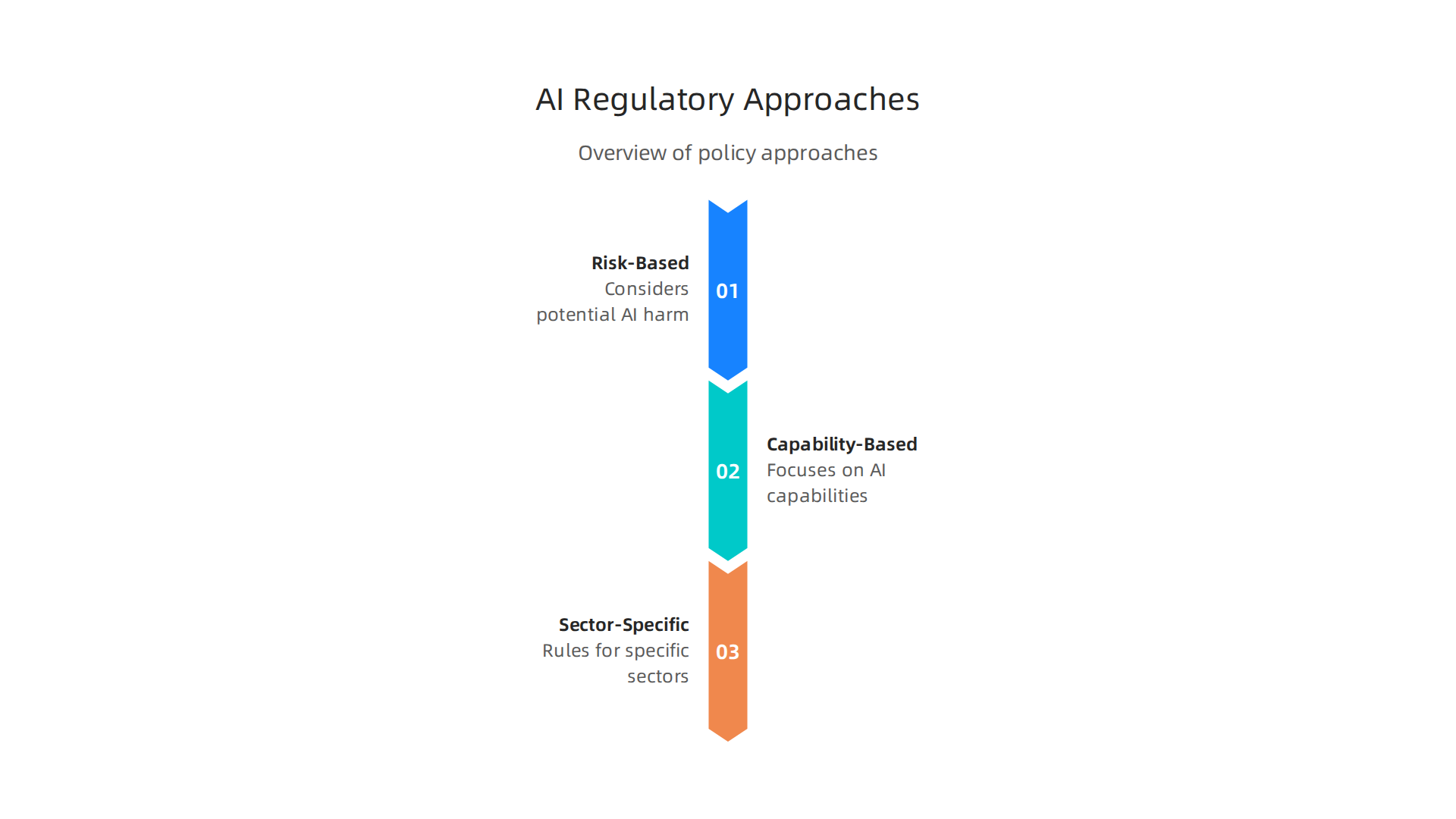
    There are a few main ways governments are trying to set rules for AI.

    An infographic outlining the three primary government approaches to AI regulation.

    Different Ways to Make AI Rules

    • Risk-Based Approach: This way of making rules looks at how much harm an AI system could cause. If an AI system could cause a lot of harm, like in healthcare or hiring, it gets stricter rules. The European Union’s AI Act is a good example of this, setting tough standards for "high-risk" AI systems that are expected to be fully in effect by August 2026 AI Regulation: How It Works, What It Requires, and …. In the United States, the National Institute of Standards and Technology (NIST) also offers an AI Risk Management Framework to help companies understand and lessen AI risks.
    • Capability-Based Approach: This approach focuses on what an AI system can do. It pays special attention to very powerful AI systems, often called "frontier AI." The idea is that if an AI is super smart or could have a very big impact, it needs special oversight, no matter how it’s used. This includes rules for big AI developers to report safety issues and deal with large risks Frequently Asked Questions.
    • Sector-Specific Approach: Some rules are made just for AI used in certain areas, like finance or medicine. For example, AI used in medical devices might have different rules than AI used in self-driving cars. This makes sure the rules fit the unique needs and dangers of each industry.

    These different ways of thinking guide how laws are written and how companies should act. For any business using AI, it’s wise to learn how to choose AI for business tools that deliver real results in 2026.

    What "Future Standard" Really Means

    When we talk about the "future standard" in AI, we are not just talking about one single rule or law. It’s a bigger idea that includes:

    • Official Laws: These are the rules made by governments, like the US tech congress, and other countries to control how AI is used.
    • Technical Standards: These are like instruction manuals for building AI systems. Groups such as NIST and IEEE create these. For example, NIST helps create AI Standards, and the IEEE has approved a recommended practice for how companies should govern AI IEEE 2863-2026. These standards help make sure AI systems are safe, work well, and can be trusted.
    • Industry Agreements: These are best practices that groups of companies and experts agree on. They might not be laws, but they become common ways of doing things that businesses follow to stay competitive and responsible.

    The "future standard" is always changing as AI technology gets better and we learn more about its effects. It’s like a moving target where policymakers, standards groups, and companies all work together to figure out the best ways forward. This includes efforts to create standards for things like how AI systems manage bias European standards supporting the AI Act – CEN-CENELEC. Staying on top of these global regulations and standards is important for any business aiming to grow with AI AI Compliance Guide 2026: Global Regulations | Modulos.

    When we talk about the "future standard" for AI, it also includes very important technical guides. These guides help make sure AI systems are built safely and work well together. Think of them as blueprints for how AI should be made and used. These technical standards are especially important for businesses like Luminar Technologies and Driven Brands.

    Here are the main kinds of technical standards you can expect:

    An infographic detailing the main categories of technical standards expected for AI systems.

    Categories of Technical Standards

    • Safety Testing: This is about making sure AI systems are safe before anyone uses them. It’s like crash-testing a car. Groups create special tests to find problems and make sure the AI won’t cause harm or do unexpected things. In 2026, many new ways to check AI safety have come out, aiming to find problems before they get serious An efficient, reusable framework to evaluate AI safety – JHU Hub. This helps make sure AI products are reliable and secure AI Safety Benchmarks: How to Evaluate and Certify Secure ….
    • Evaluation Benchmarks: These are like standardized report cards for AI. Benchmarks help compare how well different AI systems perform on the same tasks. This allows companies to see which AI is best for their needs. Many new benchmarks like HELM Safety and HarmBench became widely used by early 2026 to help decide "what to measure" in AI safety 2026 AI Safety Prior Research Report: Achievements …. The RAIL AI Safety Index also helps compare different AI models The RAIL AI Safety Index 2026: benchmarking 10 LLMs ….
    • Data Provenance: This term means knowing where the data used to train an AI system comes from. It’s like checking the ingredients list on food. Knowing the source of data helps make sure the AI is fair, honest, and doesn’t carry hidden problems from bad information. Clear rules here help everyone trust AI more.
    • Interoperability APIs: APIs (Application Programming Interfaces) are like special plugs and sockets that let different computer programs talk to each other. Interoperability means that AI systems from different companies can easily connect and work together. This is important so businesses aren’t stuck with just one AI provider and can mix and match the best tools.

    What This Means for Businesses

    For any business, these technical standards are a big deal. They impact how you buy and use AI:

    • Procurement: When you buy AI tools, you’ll need to check if they meet the latest safety and performance standards. This means looking for certifications or proof that the AI has been properly tested. This helps you choose smart technologies and evaluate AI companies to unlock business growth in 2026.
    • Vendor Selection: Choosing an AI vendor will involve more than just looking at features. You’ll need to ask about their testing methods, how they ensure safety, and what benchmarks their AI models meet. This helps you pick reliable partners. You can learn more about picking the right solutions for your company in Enterprise AI Platforms 2026: Top Providers and How to Choose the Right One.
    • Vendor Lock-in Risk: With better interoperability standards, you’ll have more freedom to switch AI tools or combine them from different companies. This reduces the risk of being "locked in" to one vendor’s system, which can be expensive and limit your choices later on. The tech congress and other bodies are working to make sure companies have options.

    Understanding these technical standards helps businesses stay competitive and use AI safely and effectively in 2026 and beyond.

    The technical guides we just talked about are changing how businesses use AI.

    Diverse professionals from various industries collaborating to adapt to evolving global AI standards.

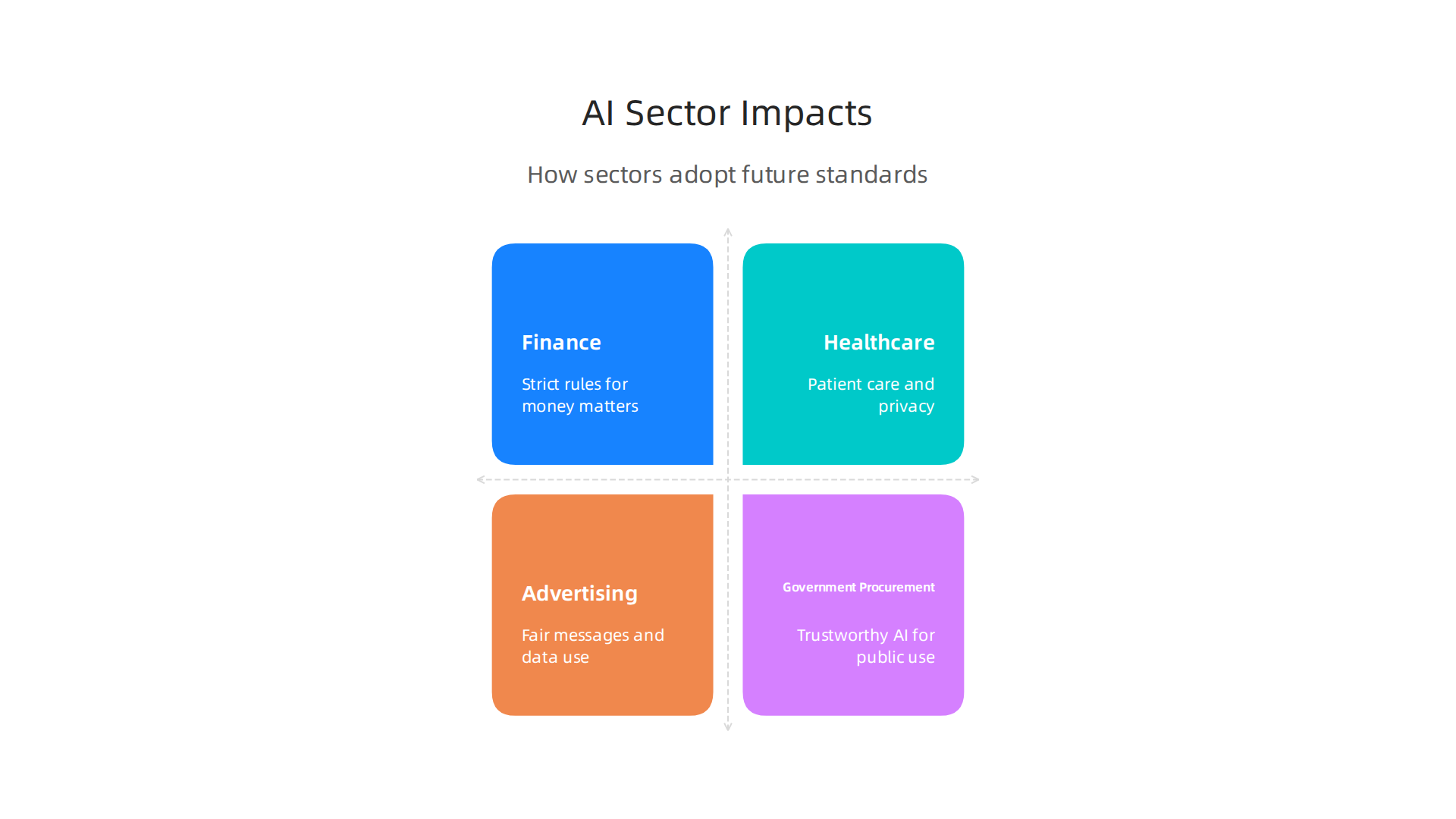
    These rules are especially important in big industries like finance, healthcare, advertising, and even how the government buys things. Each of these areas has its own special rules that make sure AI is used safely and fairly.

    An infographic highlighting how AI 'future standards' will impact key business sectors.

    This is all part of creating the future standard for AI in 2026.

    Finance: Strict Rules for Money Matters

    In finance, using AI means being extra careful with people’s money and data. Because of this, financial companies face tough rules from groups like the SEC (Securities and Exchange Commission) and FINRA (Financial Industry Regulatory Authority). These groups want to make sure AI doesn’t give bad advice or treat customers unfairly. For example, AI systems used for loans or investments must be very clear and honest. The U.S. Department of the Treasury has even shared new guides to help with using AI safely in finance Treasury Releases Two New Resources to Guide AI Use in Finance.

    Companies in finance will need to:

    States like Colorado are also making their own rules for "high-risk" AI in financial services, which will start by June 2026 Explore AI Compliance Across Regulated Industries in 2026.

    Healthcare: Patient Care and Privacy

    Healthcare is another area where AI rules are getting much stronger. When AI helps with patient care, like suggesting treatments or looking at medical images, accuracy and privacy are key. Regulations like HIPAA (which protects patient information) and rules from the FDA (Food and Drug Administration) for medical devices are now applying to AI tools. By August 2026, many new rules for "high-risk" AI medical devices will be fully in place, especially due to the EU AI Act AI in Health: Regulatory & Policy Tracker — Q2 2026.

    What this means for healthcare providers:

    • Human Oversight: Doctors and nurses must always be able to review and change AI decisions.
    • Data Protection: AI systems must strictly follow patient privacy laws.
    • Transparency: It must be clear how AI reaches its conclusions, especially for critical health decisions.

    Many states are also passing laws, with Arizona, Illinois, and California leading the way in regulating AI in areas like insurance denials and therapy services Shaping the Future: Navigating State-Level AI Legislation in Healthcare. This shows how important it is to mastering behavioral tech for business growth and impact while following ethical guidelines.

    Advertising: Fair Messages and Data Use

    In advertising, the biggest concern is how AI uses our personal information to show us ads. New standards will push for more fairness and privacy. Companies like those in the [luminar technologies] or [driven brands] supply chains that use AI for marketing must be careful not to create ads that are unfair or target people in ways that aren’t allowed. This means ensuring AI tools don’t accidentally promote harmful stereotypes or invade privacy.

    Advertising businesses will need to focus on:

    • Bias Checks: Regularly test AI to make sure it doesn’t favor or disadvantage certain groups of people in ads.
    • Data Privacy: Respect user data and only use it in ways that are explained and agreed upon.
    • Transparency: Be open about how AI is used in creating and showing ads. This helps build trust and improve how online market research surveys powered by AI deliver better insights.

    Government Procurement: Trustworthy AI for Public Use

    When governments buy AI tools, the bar is very high. These tools might be used for things like traffic management or public safety, so they need to be extremely reliable and fair. The U.S. government, with help from the [tech congress], is working on clear guidelines. For example, federal law states that the National Institute of Standards and Technology (NIST) should advance frameworks and guidelines for AI 15 USC 278h-1: Standards for artificial intelligence. This is to ensure AI is trustworthy and serves everyone well.

    Government agencies will increasingly require:

    • Third-Party Audits: AI systems must be checked by outside experts to confirm they work as promised and are safe.
    • Public Accountability: Clear ways to report problems and ensure that AI systems are held responsible.
    • Ethical Guidelines: Following strict rules that align with public values and rights.

    These sector-specific pressures mean that companies everywhere are working to make their AI compliant with this emerging future standard. This includes making sure AI systems are auditable, fair, and have proper human oversight, no matter the industry.

    Getting AI tools ready to meet the new future standard is a big job. It’s not just about knowing the rules, but also about how your company manages and uses AI every day. This means setting up good ways to control your AI, keeping clear records, and carefully checking any AI tools you get from other companies.

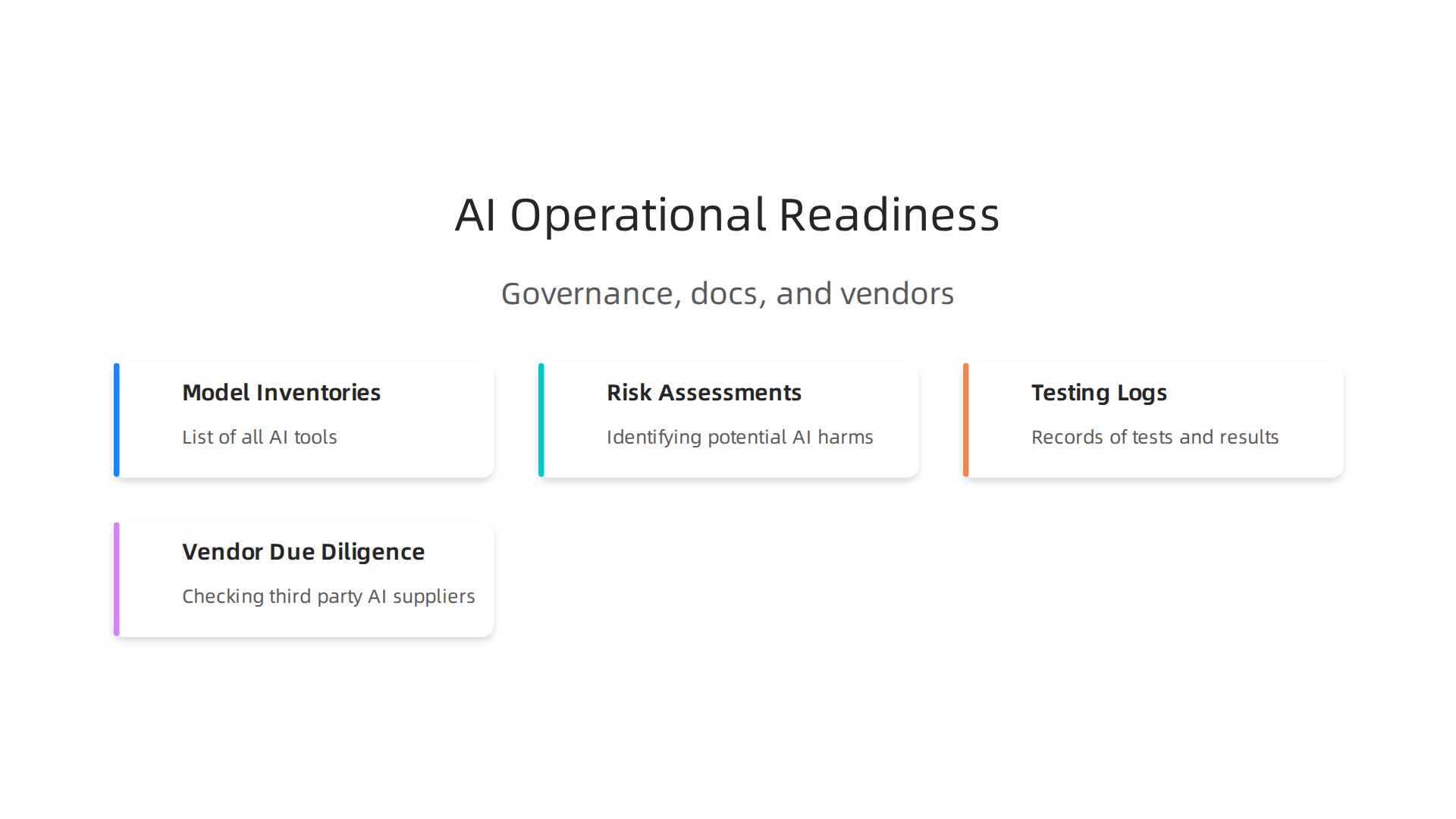
    Setting Up How You Manage AI

    Good AI management, or "governance," helps make sure your AI works well and follows all the rules. The IEEE, for example, has even created a recommended practice for how companies should manage their AI, which became an active standard in 2026 IEEE 2863-2026. Here are some important parts of that:

    An infographic detailing crucial aspects of setting up good AI management within a business.

    • Model Inventories: Think of this as a list of all the AI tools your company uses. For each tool, you should know what it does, what kind of data it uses, and who is in charge of it. This helps you keep track and makes sure no AI is used without proper checks.
    • Risk Assessments: This means looking at each AI tool and figuring out what problems it could cause. Could it make a wrong decision? Could it be unfair to some people? Understanding these risks helps you fix them before they become big issues. The National Institute of Standards and Technology (NIST) offers a helpful guide for managing AI risks AI Risk Management Framework | NIST.
    • Testing Logs: Every AI tool needs to be tested to see if it works as it should and if it’s fair. Keeping a record of these tests is like having a report card for your AI. These records show what was tested, how it was done, and the results. There are many new ways to test AI safety, with new benchmarks emerging in 2026 AI Safety Benchmarks in 2026: From RLHF to Constitutional AI and Beyond.
    • Vendor Due Diligence: If you buy AI tools from another company, you need to check them carefully. This is called vendor due diligence. You should ask about their own AI management practices and make sure they meet your standards. You should also have clear agreements, often called Service Level Agreements (SLAs), that spell out their responsibilities for AI safety and performance. European groups like CEN-CENELEC JTC 21 are working on standards that will help ensure AI systems meet strict requirements European AI Standardization | CEN-CENELEC JTC 21 |.

    Getting Ready When You Have Less Help

    For smaller teams or companies with less money or technical staff, getting ready for the future standard can feel hard. But it doesn’t have to be. Here’s a simple way to start:

    1. Start Small: Don’t try to fix everything at once. Pick one or two AI tools that are most important or carry the highest risk. Focus on getting those right first.
    2. Use Ready-Made Tools: Look for software or services that can help you with AI management. Many companies offer tools to help you keep track of your AI, test it, and document its use. This can save you a lot of time and effort. When you’re ready to explore options, consider how to choose AI for business tools that deliver real results.
    3. Train Your Team: Make sure everyone who works with AI understands the new rules and how to follow them. Simple training can go a long way.
    4. Keep It Simple: Don’t overcomplicate things. The goal is to make sure your AI is used responsibly, not to create endless paperwork. Focus on clear steps and easy-to-understand records.
    5. Look for Support: There are many resources and guides available to help businesses evaluate AI companies and unlock growth. Knowing how to evaluate AI companies to unlock business growth in 2026 can make a big difference.

    By taking these practical steps, companies of all sizes can get ready for the new AI future standard and use AI safely and effectively. Staying informed about the latest changes in AI is key to this readiness.

    Get clear daily AI updates from The AI Newsletter Worth Reading.

    Business strategy: product design, competitive advantage, and compliance-as-differentiator

    Getting ready for the future standard for AI isn’t just about following rules. It can also be a smart business move that helps your company grow and stand out. When you build AI tools with safety and fairness in mind from the very start, it can make your products better and give you a leg up on competitors.

    Think about how you design your products. If you make sure your AI tools follow all the rules, they will likely be more reliable and trustworthy. This is extra important in certain fields. For example, a guide for AI Design for Regulated Industries: 2026 Guide shows how strict rules in healthcare and finance shape how AI products are made. Companies like Luminar Technologies, which make technology for self-driving cars, know that safety standards aren’t just a checkbox. They are central to how their products are built and how people trust them. Building safe, compliant products helps create a better reputation for your brand. This means that a company like Driven Brands, using AI in its automotive services, could build more trust with customers by showing its commitment to AI safety.

    Being one of the first to meet these new AI standards can also give you a big competitive advantage.

    A confident business professional smiling, symbolizing achievement and competitive advantage gained through strategic compliance.

    In 2026, many industries are starting to have very strict rules for AI. These include areas like healthcare, finance, and manufacturing, which are among the top 7 industries with stringent AI compliance needs in 2026. If your company already meets these high standards, customers and partners will see you as a leader they can trust. This trust can help you win more business. It means you can go to market with products that are already approved and ready, while others might still be struggling to catch up.

    Of course, there’s a balance to strike. Moving very quickly to put out new AI tools might seem good for short-term gains. But if those tools don’t meet the future standard or cause problems later, it can hurt your business in the long run. Taking a bit more time to make sure your AI is safe and follows all the rules builds a stronger, more resilient business. It shows you care about your customers and the bigger impact of your technology. This careful approach helps you avoid big issues down the road and builds lasting customer loyalty. To really succeed, it’s wise to always evaluate AI companies to unlock business growth in 2026 that align with your long-term vision.

    Staying informed: monitoring standard-setting bodies, policy signals, and preparing for rapid change

    Keeping up with all the new rules and standards for AI can seem like a big job. But it’s really important for your business. When you know what changes are coming, you can make smart choices about your AI products and services. It helps you stay ahead and make sure your company is always meeting the future standard.

    A good way to do this is to set up a simple plan to watch for new information. You don’t need to check every day. A quick review once a month might be enough for many businesses. Here are some trusted places you can look:

    • Official AI Trackers: Many groups now offer lists that keep track of AI laws and rules around the world. For example, you can find a Global AI Regulations Tracker 2026 that summarizes rules from over 60 countries. There’s also the NHI and AI Agent Standards Tracker which monitors global efforts. These are great because they often give plain explanations of complex legal terms.
    • Standards Organizations: Groups like the International Telecommunication Union (ITU) have an AI Standards Exchange Database that lists many standards for AI systems. Another key one is the National Institute of Standards and Technology (NIST), which has its own AI Standards initiatives. These bodies create the technical guides for how AI should work safely.
    • Government Policy Websites: Look at sites that follow state or national laws. For example, there are many tools that track US State AI Governance Legislation to show what states are doing. You can also find trackers for specific areas like 2026 State AI in Education Bills which can signal broader trends.
    • Industry News and Reports: Good news sources and reports, like the AI Index | Stanford HAI, offer yearly updates on AI trends, including responsible AI practices. These give you a bigger picture of where AI is headed and what experts are talking about. To help you stay updated with trustworthy tech information, learn how to find AI tool discovery sources for real business results.

    When to act on new information

    Knowing when a change is important enough to act on is key. Here’s a simple checklist to help you decide when to look closer at a new policy or standard:

    • Is it a new law or an update to a big one? If a new law is passed that affects how your business uses AI, or if an important one like the EU AI Act has a new phase starting in August 2026, it’s time to pay close attention. Such changes often come with clear deadlines for businesses to follow.
    • Does it directly impact your industry? If the new rule is about healthcare AI and you’re in healthcare, then it’s a big deal. The same goes for finance, manufacturing, or any other area where you use AI.
    • Does it change what counts as "high-risk" AI? Regulators often talk about "high-risk" AI systems. If a new standard makes your AI tools fall into this category, you’ll likely need to do more testing and reporting.
    • Is there a strong push for a new standard, like ISO/IEC 42001? This standard is becoming very important for AI management systems. If many in your field are talking about it, or if it becomes a common requirement for partners, it’s worth checking to see if your products already follow it.
    • Does it come from a leading global body? If an important organization like the OECD issues new recommendations, even if not a strict law, it often shapes how future laws will look. Keeping an eye on these signals helps you prepare.

    By regularly checking these sources and using this checklist, you can be ready for changes in AI rules. This helps your business stay safe and trusted in the fast-moving world of AI.

    To make sure you’re always in the know with the most recent and important updates in AI and technology, consider subscribing to The AI Newsletter Worth Reading.

    Summary

    This article explains why understanding the emerging "future standard" for AI is essential for business leaders in 2026, when rapid AI advances collide with a patchwork of laws and technical guidance. It outlines the main regulatory approaches—risk-based, capability-based, and sector-specific—and the technical standards companies will face, such as safety testing, evaluation benchmarks, data provenance, and interoperability APIs. The guide shows concrete impacts across industries like finance, healthcare, advertising, and government procurement, and describes how standards change procurement, vendor selection, and vendor-lock-in risk. It also lays out practical AI governance practices—model inventories, risk assessments, testing logs, and vendor due diligence—and offers a simple starter plan for smaller teams. Finally, the article frames compliance as a competitive advantage, recommends reliable sources to monitor standards, and gives a checklist for when to act on new rules so businesses can stay safe, trustworthy, and ready to scale with AI.

  • How to Choose AI for Business Tools That Deliver Real Results in 2026

    How to Choose AI for Business Tools That Deliver Real Results in 2026

    Here is the reality of 2026. The number of AI tools available grows so fast that keeping up feels like a full-time job. Every week, a new platform launches. A new feature drops. A new competitor grabs headlines. It is easy to feel overwhelmed.

    But here is the other side of that coin. If you jump on every new tool without a clear plan, you waste your budget and your team’s time. If you ignore the changes completely, you risk losing your competitive edge.

    The data proves how fast this shift is happening. Recent reports show that nearly 9 in 10 organizations now use AI in at least one business function. The question is no longer if you should use AI. It is how you adopt the right future tools for your specific needs.

    This article gives you a practical framework for doing just that. We will look at the top AI platforms, evaluate what works, and build a roadmap you can actually follow.

    A person intently looking at a whiteboard, sketching out a strategic plan or roadmap.

    Think of it as your guide on how to choose AI for business tools that deliver real results.

    Staying informed is half the battle. If you want clear, daily updates on the tools that actually matter, check out The Deep View Newsletter.

    Screenshot of The Deep View Newsletter homepage, offering daily AI updates to save time.

    It saves you the scrolling so you can focus on building.

    The Evolving Landscape of Future Tools in 2026

    So what does this landscape actually look like today? The numbers tell a clear story. According to recent research, 88% of organizations now use AI regularly in at least one business function. That is up dramatically from just a few years ago. The market for these future tools keeps expanding fast, with billions of dollars flowing into new AI platforms every quarter.

    Here is the challenge though. New tools pop up almost every single week. One week a startup launches a writing assistant. The next week a giant releases an AI that handles customer service. It is noisy out there. Separating the truly useful top ai tools from the hype gets harder by the day.

    This is why understanding macro trends matters. When you know where the market is heading, you can spot which ai platforms have staying power. And that makes picking your next tool much easier. If you want a deeper look at how to evaluate your options, read our practical guide on how to choose AI for business tools that deliver real results. It walks through the exact steps to filter out the noise.

    The first step in any smart adoption plan is knowing what is actually changing around you. So let’s look at the key trends driving the industry forward, starting with the rise of agentic AI.

    Key Trends Defining the Next Generation of Tools

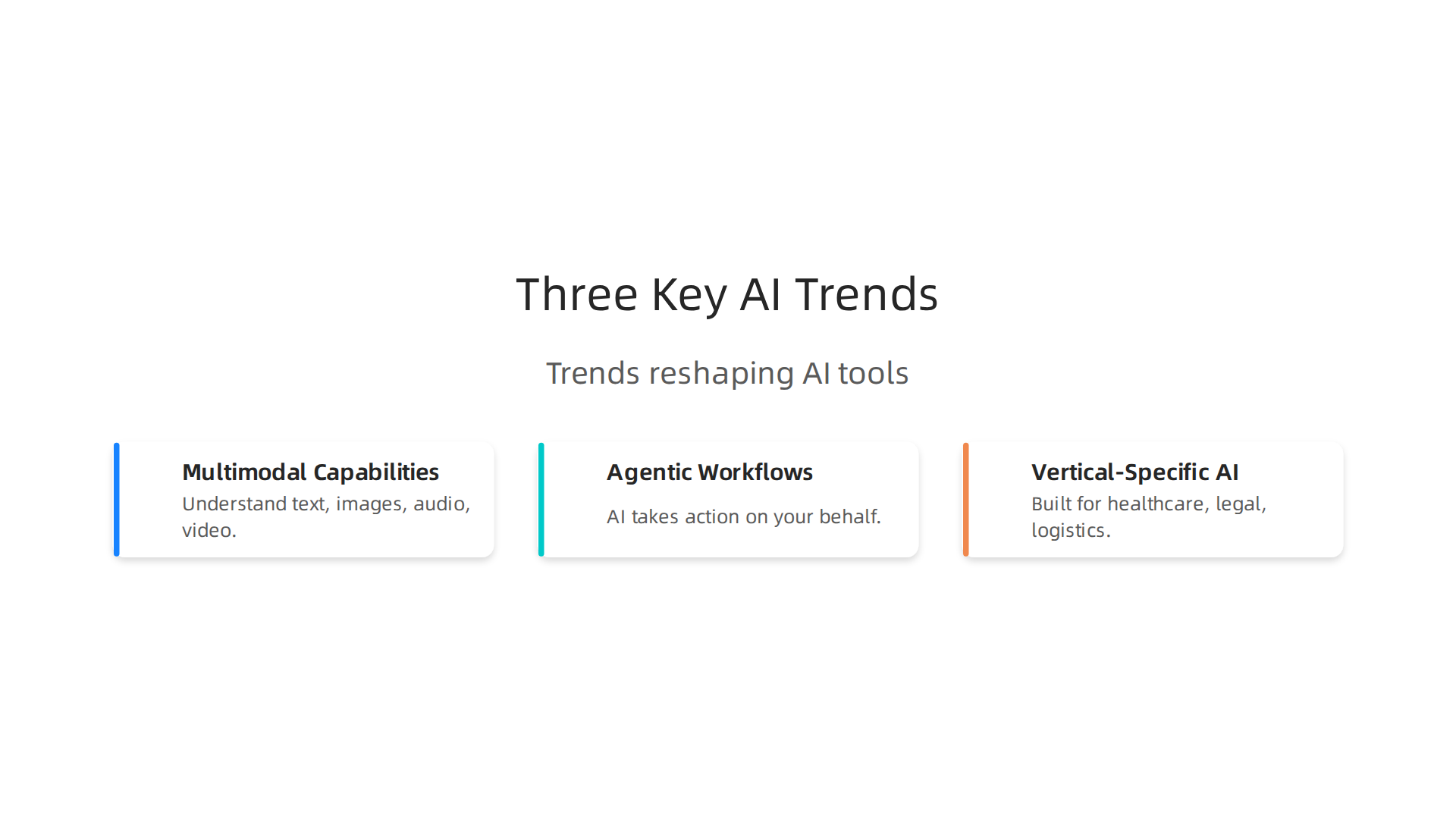
    Agentic AI is just one piece of the puzzle. Three major trends are actually reshaping the landscape of future tools in 2026, and they all point in the same direction: away from one-size-fits-all solutions and toward smarter, more specialized systems.

    Infographic illustrating the three major trends reshaping the AI tools landscape in 2026.

    First, multimodal capabilities are becoming standard. Modern ai platforms can now understand text, images, audio, and video all at once. This means a single tool can analyze a video meeting, summarize the transcript, and generate a follow-up email without you switching apps.

    Second, agentic workflows let AI take action on your behalf. Instead of just answering questions, these systems can complete multi-step tasks like booking travel or managing customer support tickets. In fact, projections suggest that by 2028 roughly 15% of daily business decisions could be made by agentic AI, according to the latest 83 AI statistics to boost your growth in 2026.

    Screenshot of the Zapier blog homepage, a resource for AI statistics and business growth.

    If you want to dive deeper into how these assistants work today, check out this guide on ai virtual assistants for businesses.

    Third, vertical-specific AI tools are taking over. Rather than generic chatbots, we now see AI built specifically for healthcare, legal, logistics, and more. These specialized tools deliver far better results because they understand industry language and workflows.

    Keeping up with these fast-moving trends can feel overwhelming. That is why staying informed matters. Grab The AI Newsletter Worth Reading to get clear daily updates on exactly which tools and trends deserve your attention.

    Why a Strategic Approach to Adoption Is Non-Negotiable

    Staying informed is only half the battle. Without a strategic approach, even the most powerful future tools can become a liability. Many teams jump into new AI platforms without a plan. That leads to tool fragmentation, data silos, and a pile of unused licenses that waste money.

    A smarter path ties every tool selection back to your real business objectives. When you know exactly what problem you are solving, you choose better tools and get higher returns.

    A team actively collaborating around a table, discussing and planning a strategic approach.

    In fact, recent global data shows that over 75% of organizations now use AI in at least one business function, and the ones with a formal adoption strategy report much higher satisfaction with their investments according to the AI Adoption Statistics (2026) report.

    Screenshot of the Omniflow AI blog homepage, providing insights on AI adoption statistics.

    Instead of picking tools one by one, build a simple checklist. Ask: Does this tool solve a specific goal? Can it integrate with what we already use? Will it scale? For a step-by-step process, check out this guide on how to choose AI for business tools that deliver real results. That kind of discipline turns a pile of shiny tech into a real competitive edge.

    A 5-Part Framework for Strategic Adoption of Future Tools

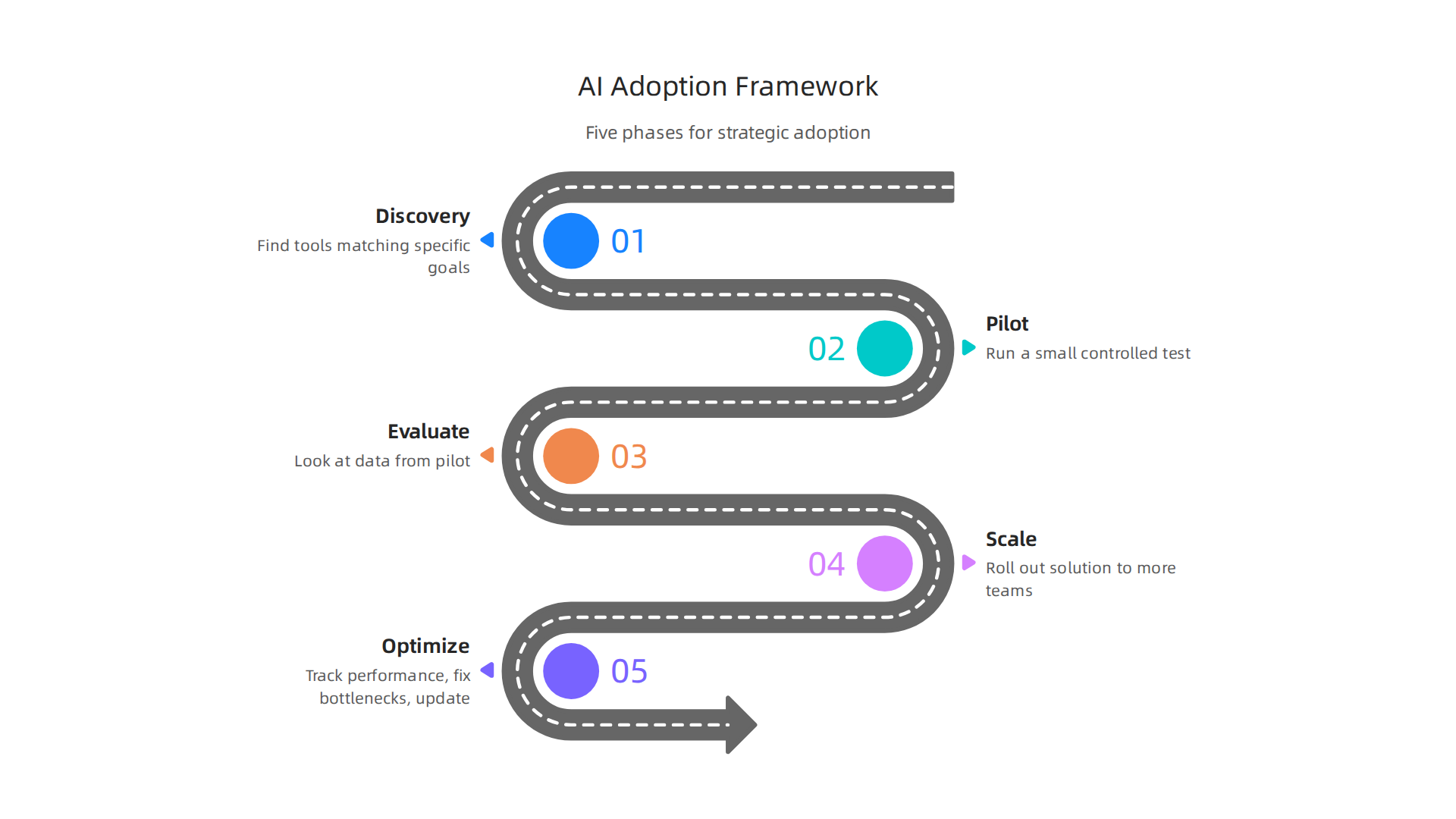
    A clear framework turns uncertainty into a repeatable process. The best teams in 2026 follow five phases: Discovery, Pilot, Evaluate, Scale, and Optimize.

    A visual framework outlining the five phases for strategic AI tool adoption.

    This proven model comes from real-world setups. For example, a complete guide to building an AI adoption framework for 2026 uses a similar phased approach to reduce risk.

    Here is how each phase works in plain terms:

    • Discovery – Find the right top AI tools and ai platforms that match your specific business goals. Skip the hype and focus on real needs.
    • Pilot – Run a small, controlled test with one team or one process. Keep the scope tight so you can measure results clearly.
    • Evaluate – Look at the data from your pilot. Did it save time? Cut costs? Improve quality? Decide if it deserves more investment.
    • Scale – Roll out the winning solution to more teams. Connect it with your existing systems. Train people so they actually use it.
    • Optimize – Keep improving. Track performance, fix bottlenecks, and update the tool as your needs change. This is where you get long-term value.

    This cycle keeps you from jumping between shiny milestone technologies without a plan. A report on enterprise AI adoption shows that companies using structured frameworks report higher success rates. For more on how to find the right options in the first phase, check out this AI tool discovery guide.

    To stay ahead of the curve with the latest best practices, consider subscribing to [The AI Newsletter Worth Reading]. It delivers clear daily updates so you never miss a key insight.

    Phase 1: Discovery and Business Alignment

    Discovery is not about grabbing the flashiest new tool on the market. It starts with a clear look at your actual business needs. Ask yourself: what problem are we really trying to solve?

    Map those needs to the capabilities of available future tools and ai platforms. This keeps you from chasing hype. A complete guide to building an AI adoption framework shows that alignment with business goals is the foundation of any successful rollout.

    Next, bring key stakeholders into the conversation early. When leaders from different teams agree on priorities, you get buy-in from day one. This prevents resistance later.

    The goal of this phase is simple: create a shortlist of candidate top ai tools based on your prioritized requirements. You are not buying anything yet. You are just narrowing the field. For a deeper look at how to evaluate options, see this guide on how to choose AI for business tools.

    Phase 2: Pilot and Proof of Value

    Once you have a shortlist of future tools, pick one or two top candidates for a small test. This is not a full rollout. It is a controlled experiment.

    Set a firm timebox between 60 and 90 days. That gives you enough time to see real results without burning budget on something that does not work.

    Define your success metrics before the pilot starts. What does winning look like? Maybe it is hours saved per week or a percentage increase in output. Write those numbers down. Measure them honestly.

    A team reviewing data and charts, assessing the results of a pilot project to determine success.

    IBM points out that many teams stumble when moving from pilots to full adoption because they skip this measurement step. Reading about the biggest AI adoption challenges for 2026 helps you avoid those same mistakes.

    Collect real feedback from the people using the tool every day. They will catch problems the sales demo never showed you. Combine that feedback with your metrics to decide if the pilot passed or failed.

    For a deeper look at comparing platforms during this phase, check this enterprise AI platforms guide. Staying current with these evaluations is easier when you have a steady source of daily updates. That is why many teams rely on The AI Newsletter Worth Reading to keep their pilot decisions informed by the latest breakthroughs.

    Phase 3: Integration, Scaling, and Governance

    Your pilot proved the tool works. Now the hard part begins. You need to weave those future tools into the systems your team uses every day. That means connecting the AI to your existing data sources, CRM, and workflow tools. Without that deep integration, you will end up with a powerful tool that nobody actually uses.

    As you scale, governance becomes just as important as performance. You need clear rules about who can access the AI, what data it can touch, and how decisions get reviewed. This enterprise AI adoption framework from the G2 Learn Hub walks through how to set those guardrails without slowing down progress.

    Continuous monitoring completes the picture. Track your success metrics over time. Watch for drift in output quality. Keep talking to the people using the tool daily so you catch problems early.

    Wondering how to pick scalable tools from the start? This guide on how to choose AI for business tools that deliver real results will help you avoid common scaling traps.

    Critical Criteria for Evaluating Future Tools

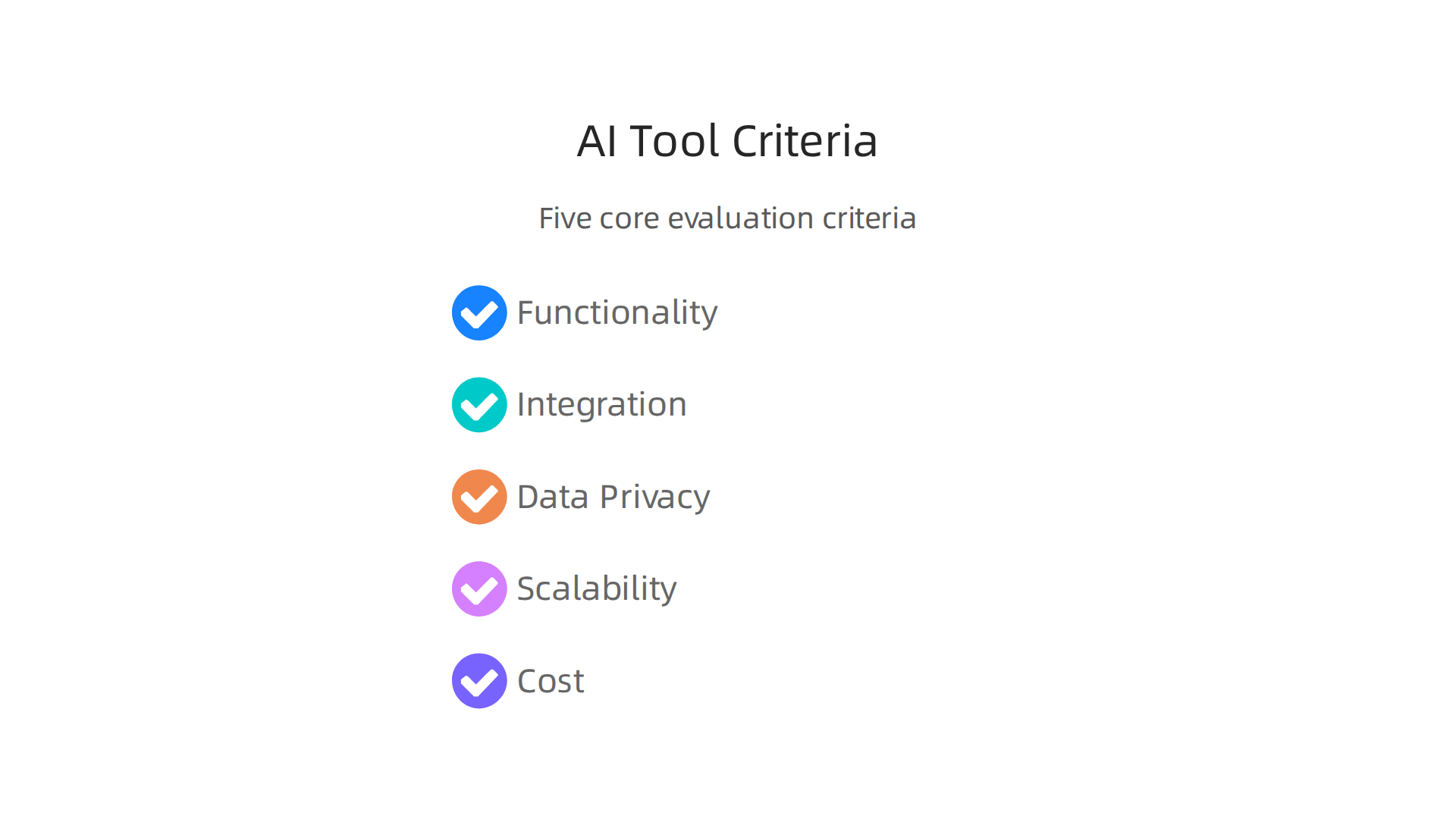
    Not every future tool deserves a spot on your tech stack. The trick is knowing what to look for before you get excited by a demo. Focus on five core criteria: functionality, ease of integration, data privacy, scalability, and cost.

    Infographic listing the five core criteria for evaluating future AI tools before adoption.

    Start with functionality. Does the tool actually solve the problem you identified in your pilot? Then check integration. Will it connect to your CRM, data warehouse, and daily workflow tools without a ton of custom work? Data privacy matters more than ever in 2026. Make sure the vendor follows your compliance requirements. Scalability means the tool can grow with your team without breaking the bank. And cost should include more than the subscription fee, like training, maintenance, and hidden infrastructure charges.

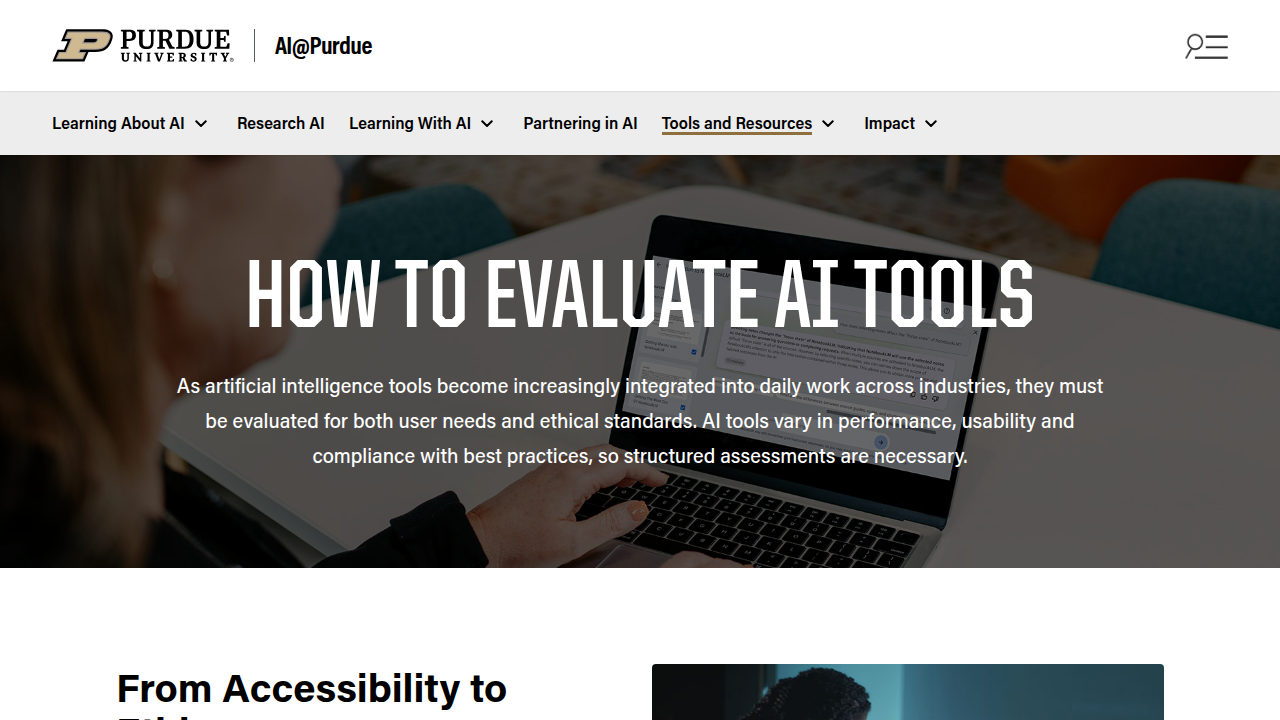
    The trick is weighting each criterion by your business priorities. A tool that scores high on functionality but low on privacy may not be the right fit for a regulated industry. Using a simple scoring matrix helps remove bias from the decision. This guide to evaluating AI tools from Purdue University lists criteria like accessibility, accuracy, and ethical implications that you can adapt to your own matrix.

    Screenshot of Purdue University's guide on how to evaluate AI tools, detailing critical criteria.

    Want a deeper look at how top platforms compare? This overview of enterprise AI platforms 2026 top providers and how to choose the right one can help you narrow the field.

    To stay on top of new future tools and evaluation methods all year long, subscribe to The AI Newsletter Worth Reading for daily updates that cut through the noise.

    Technical Capabilities and Integration Readiness

    High level criteria give you the big picture, but two areas can make or break your choice of future tools: technical capabilities and integration readiness.

    Start with technical capabilities. Look at model accuracy for your specific use case. Latency matters if you need real time answers. Check API support and how easy it is to customize the model to your data. For example, the best AI evaluation tools for production systems recommend tracking task specific metrics like accuracy and latency.

    Next, integration readiness. Does the tool connect to your CRM, ERP, or data warehouse with minimal custom code? Many top AI platforms offer pre built connectors, but you should verify before committing.

    Data readiness is often the hidden bottleneck. Tools expect clean data in a specific format. Make sure your data volume and quality meet the minimum requirements. Without that, even the most capable tool will stumble.

    For a practical framework, check out this guide to choose AI for business tools that covers these exact considerations.

    Vendor Stability, Support, and Ecosystem

    Beyond technical fit and data readiness, the long-term value of future tools depends on the vendor behind them. You want a partner, not just a product.

    First, check vendor stability. Look at the company’s financial health, user base size, and product roadmap. A tool from a stable vendor is less likely to disappear next year. According to an article from Forbes titled 10 Considerations When Evaluating An AI Tool, you should study the provider carefully.

    Next, evaluate support quality. Are response times fast? Is documentation clear? An active community can also save you when you are stuck.

    Finally, look at the ecosystem. Does the tool have strong integration partners and third-party support? A wide API ecosystem means you can connect it to your existing stack. For a deeper look at choosing a reliable platform, check out this guide on enterprise AI platforms 2026 top providers.

    Get clear daily AI updates from The Deep View Newsletter. Subscribe to The AI Newsletter Worth Reading and stay ahead with daily insights.

    Common Pitfalls in Adopting Future Tools and How to Avoid Them

    Even when you pick a stable vendor, the hardest part is still ahead. Many teams jump into future tools without a clear use case. They buy a shiny AI platform and then ask, "What should we do with it?" That backward approach often leads to wasted money and zero results.

    Another common mistake is underestimating change management. If your people don’t understand why the tool matters, they won’t use it. A successful rollout needs training, clear communication, and patience.

    Ignoring data readiness is another big pitfall. Your AI is only as good as the data you feed it. Messy, incomplete, or siloed data will give you unreliable outputs. According to a guide on avoiding costly AI adoption mistakes, poor data quality is one of the top reasons AI projects fail.

    The good news? Awareness is half the battle. When you know these traps exist, you can plan around them. Start with a specific problem, prepare your data, and bring your team along for the ride. For a step-by-step framework on picking tools that actually fit your business, check out this practical guide on how to choose AI for business tools.

    Overcoming Analysis Paralysis and FOMO

    Even with that framework in hand, the sheer number of options can still freeze you in place. Decision paralysis is real. You stare at dozens of AI platforms, afraid to choose the wrong one. Then FOMO kicks in, the fear of missing out. It pushes you to buy the hottest new tool before you even know if it fits your needs. Rushed or delayed decisions both lead to wasted time and money. In fact, decision paralysis is one of the common barriers to AI adoption that many businesses face.

    Here are three simple tactics to break the cycle. First, set a firm evaluation time limit. Give yourself two weeks to compare tools and make a call. Second, use a simple decision framework. Score each option on fit, cost, and ease of use. Third, consult a few trusted sources instead of chasing every headline. A great way to stay informed without overwhelm is to subscribe to The AI Newsletter Worth Reading.

    These small habits help you move forward with confidence. For more on structured evaluation, also check out this guide to enterprise AI platforms and how to choose the right one.

    Change Management and User Adoption

    Picking the right tool is only half the battle. The real challenge comes next: getting your team to actually use it. User adoption is the most critical factor for tool success. Even the best future tools fail if nobody adopts them.

    So how do you drive adoption? Start by communicating the value clearly. Explain how the tool makes their work easier, not harder. Provide hands-on training so people feel confident. Also, identify champions within your team who can model usage and help others. Many teams overlook these steps, which is one of the costly AI adoption mistakes in business.

    Resistance often comes from the fear of job displacement. The key is to reframe AI as augmentation, not replacement. Show your team that these tools handle tedious tasks so they can focus on more meaningful work. For a deeper look at evaluation, read how to choose AI for business tools that actually get used.

    Real-World Success Stories: Strategic Adoption in Action

    Theory helps, but nothing beats seeing results from real teams. Here are two examples of strategic adoption that paid off.

    Case Study 1: More Content, Same Team

    A mid-size marketing agency wanted to scale content production without hiring more people. They used a structured adoption framework to select a generative AI content tool. By starting small, training thoroughly, and iterating based on feedback, they boosted content output by 30%. The team produced more without burning out.

    Case Study 2: Faster Operations, Fewer Bottlenecks

    An enterprise operations team adopted an AI workflow automation platform. They picked one slow process, automated it, and proved the value. Process time dropped by 50%. That success opened the door for more automation across the organization.

    What Made Them Succeed

    Both teams shared three success factors: executive sponsorship from leadership, an iterative rollout instead of a full launch, and continuous training for the whole team.

    A diverse team happily celebrating a successful project completion, showing high morale and achievement.

    These patterns match what enterprise AI adoption trends show across industries.

    These case studies prove that future tools deliver real value when you focus on people first. For more on choosing the right technology, check out this guide to enterprise AI platforms for 2026.

    Want to keep learning about the latest AI breakthroughs? Subscribe to The AI Newsletter Worth Reading for daily updates on top AI tools and milestone technologies.

    Case Study: How a Mid-Size Marketing Agency Modernized Workflows

    Let’s unpack how that mid-size agency achieved its results. The team managed content for multiple client accounts, each with different brand voices and formatting rules. They needed a scalable solution without hiring more people.

    They adopted a clear 5-phase framework to evaluate future tools.

    • Discovery: The team scanned for top AI tools and shortlisted three candidates suited to their workflow.
    • Pilot: They ran a controlled test with one tool on a single client account to measure real performance.
    • Rollout & Training: After proving the concept, they trained the whole team on the chosen AI platform.

    The payoff came fast. Content production sped up by 30%, and editorial costs dropped by 20%. This matches what many organizations see with structured adoption. In fact, 85% of SMBs already using AI expect measurable returns. For a deeper look at finding the right starting point, explore this guide on AI tool discovery for business.

    This case study proves that future tools do not have to be complicated to deliver real, measurable value.

    Case Study: Enterprise Adoption of AI for Operations

    Now let’s look at how a large enterprise tackled similar problems at a bigger scale. This company handled thousands of manual data entries and approval workflows every week. Employees spent hours on repetitive tasks that slowed down key processes.

    The leadership team decided to pilot an AI-powered workflow automation tool. After a six-week trial on one department, the results were clear. They rolled it out across the organization.

    The outcomes speak for themselves. Process cycle time dropped by 50%. User satisfaction hit 95% in the first quarter alone. These numbers reflect a wider trend: according to The State of AI in the Enterprise 2026 report, improving productivity and efficiency remain the top benefits organizations report from AI adoption. For a closer look at picking the right system, check out this guide on enterprise AI platforms 2026.

    If you want to stay ahead of these kinds of breakthroughs, The AI Newsletter Worth Reading delivers clear daily updates on tools and trends that actually matter.

    Both the marketing agency and this enterprise prove that future tools can transform teams of any size when the adoption strategy is right.

    Summary

    This article gives a practical, step-by-step framework for choosing and adopting AI tools that actually deliver business value in 2026. It explains the fast-changing landscape—multimodal models, agentic workflows, and vertical-specific platforms—and why a strategic approach prevents wasted budgets and tool sprawl. You’ll learn a five-phase process (Discovery, Pilot, Evaluate, Scale, Optimize) with concrete guidance on pilot timing, success metrics, integration readiness, vendor stability, and governance. The piece also highlights common pitfalls like poor data readiness, decision paralysis, and weak change management, and shows how real teams achieved measurable gains by following the framework. After reading, you’ll be able to shortlist suitable AI platforms, run controlled pilots, evaluate results objectively, and scale safely while keeping users and data governance front and center.

  • Identify AI Leadership Discover Top Tech Companies for Business in 2026

    Identify AI Leadership Discover Top Tech Companies for Business in 2026

    Why tracking AI leadership among tech companies matters for businesses in 2026

    In 2026, it seems like everyone is talking about Artificial Intelligence, or AI.

    Business leaders navigate the complex landscape of AI innovation to make informed strategic decisions for 2026.

    It’s everywhere you look, from new tools to big promises. But here’s the thing: with so much happening, how do business leaders really know which companies are leading the way? It’s easy to get lost in all the news and updates. Decision-makers often face a huge amount of information, making it tough to figure out who is truly shaping the future of AI.

    This is a real challenge for businesses. Choosing the right AI partners and vendors is super important for staying ahead. You need to know if you’re working with a company that truly understands and builds powerful AI tools, or one that’s just riding the trend. Ignoring this means you might miss out on big chances or make bad choices. Experts say that AI and other new technologies are redefining how we invest and do business in ways we are just starting to see 2026 Long-Term Capital Market Assumptions.

    That’s where this guide comes in. We will help you cut through the noise. This article will show you the key players in the AI world. We’ll look at their main focus areas in AI and give you clear signs to help you pick the best vendors and partners. Whether you’re interested in a well-known name like Palantir or smaller, growing firms, understanding AI leadership is key. For example, knowing about companies like Palantir Technologies 2026 growth products and impact on business strategy can give you ideas for your own business.

    We will map out the landscape, from companies known as "moore tech" to emerging "gateway tech" firms, and even specific "california tech companies" making waves in the innovation center scene. This includes a deep dive into firms like headlands technologies and others. By the end, you’ll have a much clearer picture of who’s leading AI and why it matters for your business.

    To make sure you’re always on top of these fast changes, it helps to have reliable information delivered right to you. Get clear daily AI updates from The Deep View Newsletter.

    The subscription page for The Deep View Newsletter, offering clear daily AI updates.

    The AI Newsletter Worth Reading

    Now that you know why it’s so important to find true AI leaders, let’s talk about how to spot them. It’s like looking for clues to find a treasure. You don’t want to just trust a company because they say they use AI. You need to look for real signs that show they are actually building great AI. These signs are in their research, the smart people they hire, and how they use AI in their products.

    Research and Development (R&D)

    Think of R&D as the engine of an AI company. Companies that lead in AI are always working on new ideas and making discoveries.

    Leading AI companies demonstrate innovation through patents for new methods, published research papers, and collaborations with universities or research groups.

    They’re not just buying tools off the shelf; they’re making their own. Here’s what to look for:

    • New Inventions: Do they have patents for new AI methods or tools? This shows they are creating unique solutions.
    • Smart Papers: Do their scientists publish research papers? This means they are sharing new knowledge with the world, which is a big sign of true innovation.
    • School Friends: Do they work with universities or other research groups? This often leads to new breakthroughs.

    For example, a company deeply involved in "moore tech" might be constantly pushing the boundaries of what AI can do, just like how computing power used to grow by a lot every couple of years. Such companies are not just using AI, but improving it. The healthcare and life sciences fields, for instance, are seeing huge investments and innovations in 2026, often driven by deep R&D in AI 2026 Healthcare and Life Sciences Investment Outlook.

    Top Talent

    A company is only as good as its people, especially in AI. Leaders in AI have very smart teams. How can you tell?

    • Who They Hire: Look at their job openings. Are they looking for top AI researchers, machine learning engineers, or data scientists? Companies like headlands technologies in the "california tech companies" scene, often found in an "innovation center," are always on the lookout for the best minds.
    • What Their People Do: Check out who works there on sites like LinkedIn. Do they have people who’ve led big AI projects before? This shows they invest in human smarts.

    These talent patterns tell you a lot about a company’s real commitment to AI.

    Product Footprints

    This is where the rubber meets the road. All the R&D and smart people don’t mean much if it doesn’t show up in their products.

    True AI leaders embed AI deeply into their products, demonstrate real-world use with case studies, and provide constant updates to stay ahead.

    • Core AI Features: Is AI a small add-on or a main part of what they sell? True AI leaders embed AI deeply into their products, making them much smarter and more useful.
    • Real-World Use: Look for case studies or examples of how their AI products help real businesses. A "gateway tech" company, for instance, might offer AI tools that simplify complex tasks for many different industries.
    • Constant Updates: Are they always improving their AI tools? This shows they are staying ahead in the fast-changing AI world. Keeping up with changes is key, just as "trendspotting" is essential for businesses in 2026 Trendspotting: Embracing AI, DEI Changes, Restrategizing Research Sites.

    When you are checking out different AI tools or partners, always ask yourself: "Where are the AI signals?" By looking closely at a company’s research, the talent they hire, and how they use AI in their products, you can find the real leaders. This careful checking helps you find AI tools that will truly help your business grow. If you’re looking for help with specific applications, understanding these signals can guide you to the right solution, such as finding a great AI virtual assistants for businesses.

    Moving from general ideas about finding AI leaders, let’s look at a specific company, Headlands Technologies. This company is a good example of how some "california tech companies" are big players in the world of research and innovation. They might not sell AI products directly to everyone, but they are very important behind the scenes, especially in gathering information and finding smart people.

    Headlands Technologies is known for its wide network of research sites. Think of them like a big "innovation center" that brings together smart minds to study important topics.

    Researchers collaboratively analyze complex data, highlighting the foundational work in AI that drives cutting-edge solutions.

    In 2026, their network has grown a lot, now covering 21 places across the U.S. and Canada. This shows how much they invest in doing real-world research [Healthcare Services M&A Review].

    What Headlands Technologies Does

    Headlands Technologies focuses on collecting data and doing studies. While the specific details of their AI tools aren’t always public, we know they hire top AI talent. This means they are using smart computer programs to help with their research. For example:

    • Finding New Answers: They might use AI to quickly look at lots of data from their research studies. This helps them find new answers faster than people could alone.
    • Better Research: AI can help them plan studies better or find patterns in information that are hard to see. This makes their research even stronger.
    • Partnerships: Because they have many research sites and smart people, other companies might work with Headlands Technologies to gather important information for their own projects. This makes them a key partner in many fields.

    Why This Matters for You

    If you are looking for AI solutions for your business, understanding companies like Headlands Technologies is important. They show how AI isn’t just about selling a finished product. It’s also about the deep work of research and collecting good data, which AI helps a lot with.

    • For Businesses Needing Data: If your business needs a lot of real-world information for your own AI projects, partnering with a research network like Headlands Technologies could be a good idea. They can help you get the right data.
    • For Understanding Trends: Companies like this help shape how AI is used in different fields by doing foundational research. Keeping an eye on their work helps you see where AI is going next.
    • For Smart Tools: The research they do can sometimes lead to new methods or ideas that eventually become part of the AI tools you might use. For example, if you’re thinking about how to get the most out of smart helpers, you might want to learn about How to choose and use an AI-powered research assistant.

    By focusing on deep research and top talent, Headlands Technologies plays a quiet but very important role in the bigger AI picture, especially for businesses looking for strong, data-driven insights.

    To stay on top of all the exciting changes in AI, it helps to have reliable information.
    The AI Newsletter Worth Reading offers clear daily updates.

    Knowing that Headlands Technologies is a big player in AI research and data collection helps us understand one part of the AI world. But the AI landscape is huge. Many other AI leaders, including various "california tech companies", do different things. To make smart choices for your business, it’s good to compare what different types of AI companies offer.

    Comparing Headlands Technologies with other AI leaders: strengths and trade-offs

    When we look at different AI companies, we can think about a few key things:

    • What kind of tech they build: Do they make special tools, offer services, or focus on research like an "innovation center"?
    • How you get their AI: Do you buy a product, hire them for a project, or use their data?
    • How they charge: Is it a one-time fee, a monthly subscription, or something else?
    • Are they ready for big businesses?: Can they handle the needs of a large company?

    Headlands Technologies is very strong in collecting data and research. They build the foundation for AI, which is like growing the food that other AI systems eat. But other companies might make the actual dishes you can buy and use every day.

    For example, some companies, like Palantir Technologies, focus on specific software platforms for big data analysis, which businesses can use directly for their operations and strategy. You can learn more about how a company like that operates by looking at Palantir Technologies 2026 growth products and impact on business strategy. Other companies focus on making tools for general use, while some specialize in advice and setup.

    Here’s a simple way to see how different AI leaders can compare:

    A comparative view of different AI leadership models, highlighting their main focus, how AI is accessed, charging structures, and readiness for big businesses.

    Feature Headlands Technologies AI Product Developers AI Consulting Firms
    Main Focus Deep research, data collection, talent Building ready-to-use AI software/tools Giving advice, custom setup, training
    How you get their AI Partnerships, research data Buy software, use a platform Hire for projects, get expert help
    How they charge Project fees, data access Subscriptions, licenses, one-time buy Hourly rates, project fees, retainers
    Ready for big business? Yes, for foundational data/research Yes, for specific software solutions Yes, for strategy and custom integration

    As you can see, companies like Headlands Technologies are crucial for the big picture of AI by providing the raw materials and understanding. They help shape how AI is understood and used, especially in fields where deep study is needed. This is key because many organizations want to grow with AI, but only a few are actually doing so effectively today. Many are still trying to figure out the best ways to adopt AI into their daily work [The Enterprise AI Playbook – Stanford Digital Economy Lab].

    Understanding these differences helps you decide which kind of AI partner is best for your own needs in 2026. Whether you need deep research, a ready-made tool, or expert advice, the AI world has many kinds of leaders.

    Real-world implementations: common use cases and integration patterns

    Now that we know about different kinds of AI companies and what they offer, let’s talk about how businesses actually use AI every day. In 2026, many companies, from small ones to big ones, are using AI to solve real problems and grow. Some are still learning the best ways to bring AI into their work [The Enterprise AI Playbook – Stanford Digital Economy Lab].

    Common ways businesses use AI

    AI can help businesses in many ways. Here are some of the most common things companies are doing with AI right now:

    Businesses leverage AI to enhance customer experience, automate tasks, gain insights from data, improve products, and bolster security measures.

    • Making customers happy: AI chatbots can answer questions 24/7, helping customers faster. AI tools can also guess what a customer might want next.
    • Automating everyday tasks: AI can handle boring, repeated jobs like putting data into a computer or sorting emails. This lets people focus on more important work.
    • Understanding big piles of data: Businesses collect a lot of information. AI can look through it quickly to find important trends or problems, helping leaders make smarter choices.
    • Improving products and services: AI can suggest new features for products or make services better by learning what users like.
    • Keeping things safe: AI helps spot bad things like fraud or security threats much faster than humans can.

    Companies like Headlands Technologies, with their focus on deep research and data, might help build the core smarts behind these tools. For example, their work could lead to better ways to understand spoken language for a customer service bot, or more accurate ways to process large datasets for business insights. Other companies, including many well-known california tech companies, might then take that foundational knowledge and build user-friendly applications.

    How AI tools fit into a business

    When a business decides to use AI, they need to figure out how to connect it to their existing computer systems. This is called integration.

    A team brainstorms and solves problems using a whiteboard, illustrating collaborative AI integration planning within a business.

    There are a few main ways this happens:

    • Using AI from the cloud: Many companies use AI services that live on the internet, like those offered by big tech companies. This is often the easiest way to start because you don’t need special computers. You just connect your existing software to the AI service.
    • Building AI right into your systems: Some businesses, especially larger ones or an "innovation center" with a lot of resources, might build AI tools directly into their own computers and software. This gives them more control but takes more effort.
    • A mix of both: Most companies use a bit of both. They might use cloud services for some AI tasks and keep other sensitive AI operations on their own secure networks.

    A key part of making AI work is making sure it can talk to all the other software a company uses. This often means using special links called APIs. These APIs act like translators, letting different computer programs share information with each other. Planning for how AI will fit in is a big step for businesses [AI Deployment Strategy: A Framework for Enterprises].

    What to watch out for with AI projects

    While AI is amazing, it’s not always smooth sailing. Here are some things businesses need to be careful about:

    • Bad data in, bad data out: AI learns from data. If the data is wrong, old, or unfair, the AI will also be wrong or unfair.
    • Connecting old with new: Sometimes, older computer systems don’t play well with new AI tech. This can cause problems and delays.
    • Keeping things secure: AI systems need to be protected from hackers, just like any other computer system.
    • Cost: Running powerful AI can sometimes be expensive, so businesses need to plan their budgets carefully.
    • Fairness: It’s important to make sure AI doesn’t treat people differently because of their background.

    Even with these challenges, many companies are finding great success with AI. A 2026 report shows how important it is for businesses to have a clear plan for using AI to get the best results [Enterprise AI Adoption: A Practical Framework for 2026].

    Staying up-to-date with the latest AI advancements and strategies is important for any business leader.

    Get clear daily AI updates from The AI Newsletter Worth Reading.

    Evaluating ROI and adoption friction: budgets, teams, and time-to-value

    Staying up-to-date with the latest AI advancements and strategies is important for any business leader. But it’s also key to understand the real costs and benefits of bringing AI into your business. In 2026, many companies are spending more on AI. A report from ServiceNow shows that AI spending is up 110% this year, and leaders are feeling more sure about it [servicenow Enterprise AI Maturity Index 2026]. However, turning that spending into real value can be tricky. This is where we talk about budget, having the right team, and how long it takes to see results.

    An executive reviews financial reports, symbolizing the careful evaluation of AI investment ROI and potential adoption friction.

    Common things that make AI adoption hard

    When businesses want to use AI, they often run into some roadblocks. These are called "adoption friction."

    • Budget: AI tools and the systems they need can be expensive. Not just the software itself, but also the costs for special computer power, data storage, and experts to set it up. Companies need to think about the total cost over time, not just the starting price.
    • Internal Expertise: Does your team know enough about AI to use it well? Or do you need to hire new people, train your current staff, or get help from outside experts? Some businesses have their own innovation center to tackle new tech, but many rely on external partners.
    • Data Readiness: AI needs good data to learn from. If your company’s data is messy, old, or incomplete, the AI won’t work correctly. Getting data ready for AI often takes a lot of time and effort, which adds to the cost and can slow things down.

    These things often decide which AI vendor a company picks. For example, a small business with a tight budget might choose simpler, ready-to-use AI solutions from a company like moore tech that doesn’t need much setup. A larger company might work with a research-heavy firm like headlands technologies to build custom AI, especially if they have a strong internal team or partners like other california tech companies to help.

    How to estimate how much value AI will bring (and when)

    Before putting a lot of money into AI, it’s smart to have a plan for how you’ll measure if it’s working. This means looking at "Return on Investment" (ROI) and "time-to-value." Here’s a simple checklist to help you think about it:

    • What problem are we trying to solve? Be very clear about the goal. Is it to answer customer questions faster? Or to sort emails better?
    • How quickly will we see the first small win? Can we start with a small AI project that shows good results in just a few weeks or months? This helps build confidence.
    • How will AI save money or make more money? Try to put numbers on it. Will it cut labor costs? Increase sales? Improve efficiency? Getting real ROI from AI solutions is a main goal for many businesses. You can learn more about how to get real results from your efforts in AI by reading about how to get real ROI from AI Marketing Cloud in 2026.
    • What will our team need to do? How much training will they need? How much time will they spend integrating the new AI with old systems?
    • Is our data ready for the AI? Do we need to spend time cleaning it up first?
    • Can this AI grow with our company? As our business gets bigger or changes, can the AI adapt too?

    Ease of use and strong leadership support are also important factors that drive AI adoption, as found in a 2026 McKinsey survey [The State of Organizations 2026 | McKinsey]. Thinking about these points helps businesses make smart choices about their AI projects, whether they’re working with a big provider like gateway tech or a smaller, specialized firm.

    Thinking about how much value AI can bring is just one part of the puzzle. It’s also super important to look at the hidden risks that come with using new technology. Before you decide to buy any AI tool, you need to make sure it’s safe, fair, and follows all the rules. This is what we call "governance" and "compliance." In 2026, there are more rules for AI than ever before, and companies must check these things carefully.

    What to check before you get an AI tool

    Before your business decides to work with an AI vendor, like a big firm such as gateway tech or a specialized one like headlands technologies, you need to ask some key questions. These questions help protect your business and your customers.

    Here are the main things procurement teams should look into:

    • Data Security: How will the AI company keep your important information safe from bad actors? You need to know their plans for protecting data.
    • Privacy Rules: Does the AI system handle personal information correctly? There are many laws about protecting people’s privacy, and your chosen AI must follow them.
    • Fairness and Bias: Is the AI fair to everyone? Sometimes, AI can learn bad habits from the data it’s trained on, leading to unfair results. Businesses should look for AI that follows "Unbiased AI Principles" to ensure it treats all people equally Increasing Public Trust in Artificial Intelligence Through Unbiased AI ….
    • Transparency: Can you understand how the AI makes its decisions? It’s important to know how an AI works, not just what it does. This helps you trust the system. The government is even making rules for federal contractors to disclose all AI systems they use New Disclosure and Use-Rights Requirements for Federal Contractors.
    • Following the Law: Are there specific government rules or industry standards that the AI must meet? For example, in 2026, both federal agencies and states like California have new rules for how they buy and use AI Executive Order N-5-26 – Governor of California. It’s also important to consider what happens if the AI makes a mistake and causes regulatory fines, as modern contracts are now addressing this Re-Engineering Vendor Contracts for Algorithmic Risk.
    • Documentation and Auditing: Can you easily check how the AI was built and how it’s working? Good AI vendors, whether it’s moore tech or one of the many california tech companies, should provide clear documents and let you audit their systems. This means you can see the trail of its decisions, which is helpful if something goes wrong.

    Looking for trustworthy AI vendors

    When choosing an AI vendor, you want to see signals that they take these risks seriously. Look for companies that are open about their processes and ready to share how their AI works. They should have clear policies for data security, privacy, and making sure their AI is fair.

    For more updates on the fast-changing world of AI and what it means for your business, you might find it helpful to stay informed.

    Get clear daily AI updates from The AI Newsletter Worth Reading.

    Summary

    This article explains why tracking AI leadership among technology companies matters for business leaders in 2026 and shows how to separate genuine innovators from marketing claims. It walks you through practical signals of leadership — research and patents, top talent, and real product footprints — and uses Headlands Technologies as an example of a research-focused player that supplies foundational data and expertise. You’ll learn how to compare different vendor types (research firms, product developers, consultants), common business use cases, integration patterns (cloud vs on‑prem vs hybrid), and the main adoption frictions like budget, data readiness, and talent. The guide also covers how to estimate ROI and time-to-value, plus the governance and compliance checks procurement teams must require before buying AI. After reading, you’ll be able to ask the right questions of vendors, choose partners that match your needs, and plan realistic pilots that reduce risk while delivering measurable value.