
Introduction
Imagine visiting a website that changes its layout, colors, and even the products it shows you based on who you are and what you need. This is not science fiction anymore. In 2026, futuristic websites are here, and they are powered by artificial intelligence.
Businesses today feel real pressure to keep up. Customers expect fast, personal, and smart online experiences. If your website does not deliver, you risk losing them to competitors who already use next-generation web design. The difference between a good site and a great one is no longer just about looks. It is about how well the site understands and adapts to each visitor.
That is where this article comes in. We will explore the defining trends, tools, and strategies shaping the future of web design. You will learn how AI solution development makes invisible technologies possible. You will also discover how to apply these ideas to your own projects, whether you are building a brand new site or refreshing an old one.
One of the biggest shifts this year is AI-driven personalization. According to the latest report on web design trends in 2026, websites are now expected to adapt in real time to each visitor. This means showing the right content, the right layout, and the right tone at the right moment. It changes everything about how we think about design.
For a trusted list of resources to help you stay current, check out the top AI websites that professionals rely on for news and tools.
This article will also cover practical strategies, including how to use the right marketing mix and even guerilla marketing tactics to make your futuristic website stand out. By the end, you will have a clear roadmap for building a site that feels both advanced and human.

To stay ahead of these fast-moving trends, get clear daily AI updates from the Deep View Newsletter delivered right to your inbox.

What Defines a Futuristic Website in 2026?
So what exactly makes a website feel futuristic this year? It is not about flashy animations or neon colors. The real magic happens behind the scenes where invisible technologies quietly reshape every visit.
A truly futuristic website in 2026 puts the user first. It adapts to you without you having to ask.
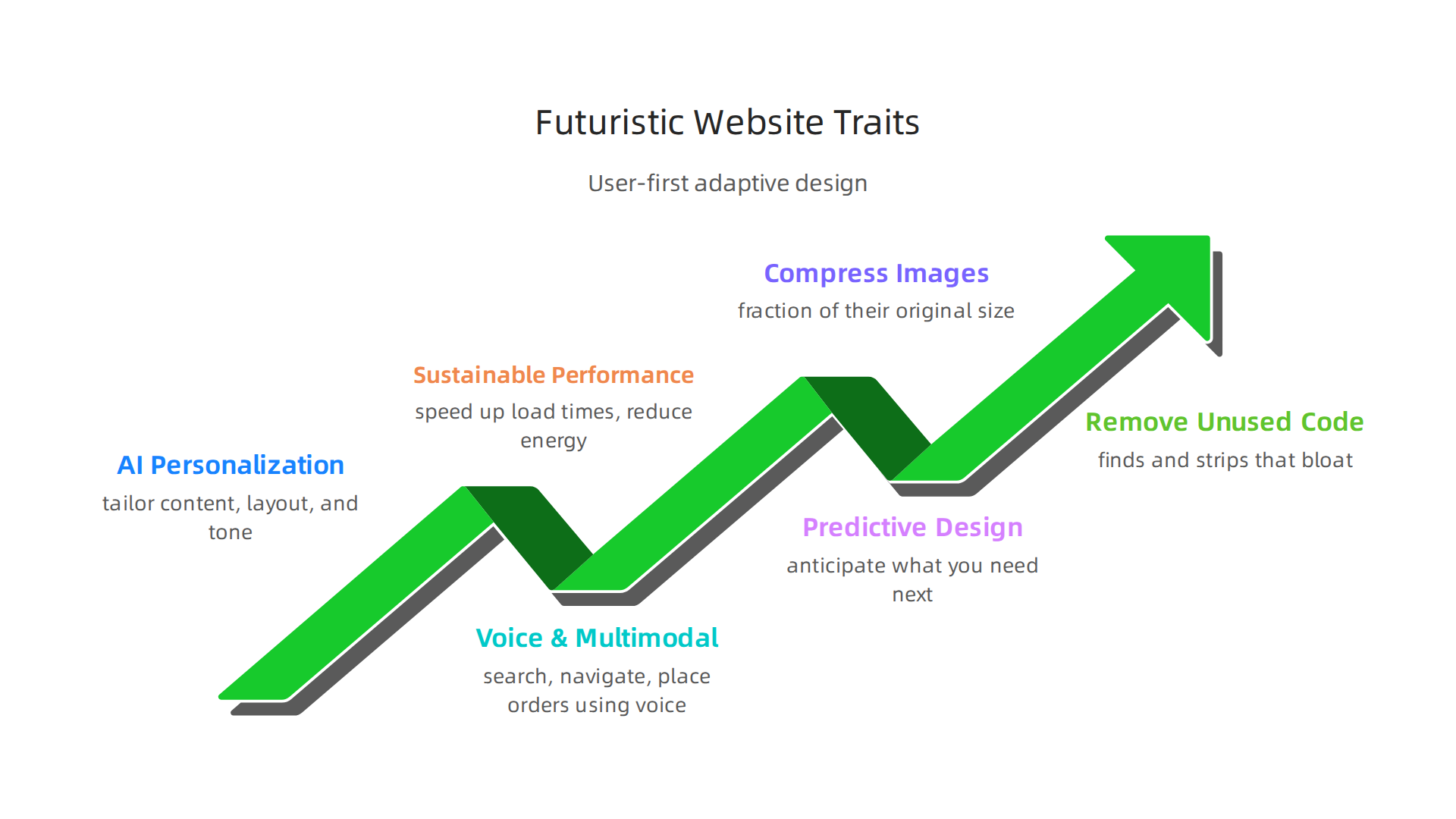
Here are the key traits:
AI-driven personalization is the new standard. Instead of showing the same page to everyone, smart sites use data to tailor content, layout, and even tone in real time. For example, if you visit an online store for the first time, the site might show you products based on your location or the time of day. According to the 2026 web design trends report, this kind of AI-powered personalization is now a core expectation, not just a nice extra.
Voice and multimodal interfaces are becoming common. People are talking to their devices more than ever. Futuristic websites let you search, navigate, and place orders using your voice or a mix of typing, tapping, and speaking. This makes the experience feel more natural and hands-free.
Sustainable performance matters. A fast, efficient website is not just good for users; it is good for the planet. Designers are stripping away heavy code and using lightweight layouts to speed up load times and reduce energy use. This trend is called digital sustainability, and it is a big part of futuristic design.
Predictive design boosts engagement. Sites that anticipate what you need next see real results. For instance, a news site might recommend articles before you finish reading the current one. Industry data shows that sites using predictive design see notable jumps in how long people stay and interact.
To build these kinds of experiences, you need smart planning and the right mix of tools. That is where AI solution development comes in. It helps you create the invisible logic that makes a website feel intuitive. And once your site is live, a solid marketing mix and a bit of guerilla marketing can help you get it in front of the right audience.
One practical step is to explore how AI virtual assistants for businesses can handle routine tasks on your site, like answering common questions or guiding visitors through checkout. These small additions make a big difference in how futuristic your site feels.
In short, a futuristic website in 2026 is not about how it looks. It is about how well it adapts, performs, and connects with each visitor on a personal level.
AI-Powered Personalization: The New Baseline
Think about the last time a website showed you exactly what you wanted. It probably felt like magic. But in 2026, that magic is just the standard.
Personalization used to mean adding your name to an email. Now it means reshaping the entire website experience in real time. AI tools analyze every signal you send. Your location, your device, how you scroll, what you clicked before. All of it feeds into a system that decides what to show you next.
That is how truly futuristic websites operate. They adapt silently, without asking a single question.
According to the AI website builder trends for 2026, modern AI tools dynamically segment visitors and assemble pages on the fly. Platforms like Dynamic Yield and Optimizely use machine learning to choose the best layout, message, or product for each person.
You do not need to be a tech expert to start. If you want to discover more great resources, check out this list of top AI websites professionals trust for real tool recommendations.
And to stay ahead of every new release, getting a steady stream of insights is key. Subscribe to The AI Newsletter Worth Reading from The Deep View for clear daily updates on AI tools and trends.
Hyper-Personalized User Journeys
Every visitor to your site walks a different path. That is the real promise of hyper-personalization.
Futuristic websites now track individual behavior to build unique journeys for each person. As you browse, dynamic content blocks shift to match your past interactions, your location, and what you seem to prefer. One visitor might see a hero image about pricing while another sees a customer story. The site makes that call in real time.
This approach is not just clever. It works. Websites using dynamic, personalized layouts see average session duration jump by 30% or more. According to the best AI personalization tools for driving growth, platforms like VWO and Adobe Target now build these tailored experiences without requiring developers on standby.
To make this work in your own setup, you need the right strategy and infrastructure. Learn how to get real ROI from AI marketing cloud tools to start building personalized journeys that actually convert.
Real-Time Content Adaptation
Imagine visiting a futuristic website that changes its main headline the moment it learns you are looking for pricing. That is real-time content adaptation in action.
AI constantly watches live data. It sees what you click, where you came from, and what device you are using. Then it shifts headlines, buttons, and images on the fly. No manual work needed.
Old A/B testing took weeks and lots of guesswork. Now AI runs tests in the background. It compares variations instantly and picks the winner for each visitor automatically. According to the best AI web design tools in 2026, websites using dynamic, personalized layouts see conversion rates jump 15-20%.
This smarter approach creates more relevant experiences for every user. Click-through rates climb because each person sees the message that fits them best.
To make this kind of real-time system work, you need tools that handle the heavy lifting behind the scenes. Pair your site with AI virtual assistants for businesses that automate these decisions without slowing down your team.
Want to stay on top of every AI shift that changes how websites behave? The AI Newsletter Worth Reading delivers clear daily updates so you never miss a breakthrough.
Generative AI for Layout and Design
Another way AI powers futuristic websites is by handling layout and design from scratch. Generative AI tools can now produce complete website layouts from a short text prompt. You just describe what you need, and the AI builds the structure, chooses colors, and arranges elements for you.
This saves hours of manual design work. Instead of starting with a blank canvas, you get a strong foundation in seconds. You can then tweak and polish until it feels right. The speed also makes rapid prototyping easy. You can test many different designs in the same time it used to take you to finish one.
According to the top AI tools for web designers in 2026, tools like Figma AI, Adobe Firefly, and Uizard now generate UI mockups from text prompts. These AI assistants handle repetitive tasks so designers can focus on strategy and creativity.
Still, the best approach treats AI as a creative assistant, not a replacement. You guide the vision, and the AI speeds up the execution. For more on balancing human creativity with machine help, check out this deep dive on human and AI creativity collaboration.
Automated Wireframing and Prototyping
AI takes wireframing from a manual chore to a fast, intelligent process.

You can describe a page layout or draw it on paper, snap a photo, and let AI turn it into a working wireframe in seconds. Tools like Adobe Firefly and Figma AI build structured, clickable prototypes from your rough ideas right away.
The real benefit comes from iterative prototyping. AI does not stop at your first draft. It analyzes your wireframe and suggests improvements for flow, spacing, and user hierarchy. This helps you spot usability problems before you move to polished design. Many of these tools also connect directly to your existing design system, keeping everything consistent with your brand.
For a closer look at how Adobe Firefly now generates complete UI mockups with functional components, read this guide on the best AI tools for web designers in 2026. To keep up with the fast pace of AI design tools, get clear daily updates from The AI Newsletter Worth Reading. And for more reliable sources, check out 10 top AI websites professionals trust for real news and tools.
AI-Generated Visual Assets and Branding
AI does not stop at layouts and prototypes. It can also create custom icons, illustrations, and even full brand kits from scratch. Instead of spending hours searching for the right stock image, you describe the style you need, and an AI tool generates unique visuals that match your brand. This speed lets you experiment with different looks while keeping everything consistent.
Tools like Adobe Firefly and Midjourney are leading the way. For a closer look at how these platforms compare, check out this roundup of top AI tools for web designers. And if you want to understand how AI can support your creative decisions, read this guide on AI and human creativity collaboration. The result is faster brand building with less grunt work and more room for real design thinking.
Voice, Conversational, and Multimodal Interfaces
Futuristic websites do not just look different. They also let you talk back. Voice search and conversational AI are becoming standard on modern sites. Instead of typing a query, you speak it. The website hears you, understands you, and responds instantly. This shift is huge.
The numbers show why. The global voice user interface market grew from $30.23 billion in 2025 to $37.04 billion in 2026, according to the latest voice user interface market report 2026. That is a 22.5% jump in a single year. And 157.1 million people in the United States alone will use voice assistants by 2026, as highlighted in these voice AI statistics for 2026.
But voice is only part of the story. The real leap forward is multimodal interfaces. These combine voice, text, touch, and even gesture into one seamless experience. You might type a question, then speak a follow-up, and the site remembers the whole conversation. Half of consumers now prefer this kind of multimodal interaction as their primary way to communicate online, per the latest voice AI trends 2026.
Why is this happening now? Improved natural language processing. Computers understand us better than ever. They catch our slang, our accents, and our tone. They know when we are frustrated or in a hurry. This makes interactions feel human.
For businesses building futuristic websites, this changes everything. A customer can say "find me a red dress under 50 dollars" and get results instantly. No menus. No scrolling. Just a fast, natural conversation. If you are designing for this future, explore practical AI virtual assistant strategies for 2026 to prepare your site.
The result is faster, more satisfying user experiences. And the technology keeps getting better. To stay ahead of these shifts, consider subscribing to a trusted source like The AI Newsletter Worth Reading for daily updates on what is coming next.
Immersive Experiences: AR/VR and 3D Web
Voice is not the only way futuristic websites are changing. They are also making you feel like you are inside the screen. Augmented reality and virtual reality are no longer just for gaming. In 2026, they are becoming everyday tools for shopping, learning, and exploring brands.
Imagine you want to buy a new sofa. Instead of looking at a flat photo, you point your phone at your living room.

A 3D model of that sofa appears right where you want it to go. You can walk around it, see the fabric texture, and check if it matches your wall color. That is AR in action, and it is appearing on more websites every day.
The best part? You do not need a special app anymore. Thanks to WebXR standards, these experiences run directly in your browser. No downloads. No extra setup. Just click and enter a 3D world. This makes immersive experiences accessible to anyone with a smartphone or laptop.
3D web graphics are also transforming how brands tell their stories. A car company can let you explore the interior of a new model from every angle. A clothing brand can show you how a jacket moves in real time. A real estate site can offer a virtual tour of a home before you ever step inside. These interactive moments create strong emotional connections that flat images simply cannot match.
For businesses, this means higher engagement and more time spent on the site. People remember a brand that let them try before they buy. They share those experiences with friends. And because WebXR removes the app barrier, more visitors actually use these features.
If you are building a futuristic website, think about how 3D visuals and virtual experiences fit your brand. Even a simple 3D product viewer can make your site stand out. To explore some of the tools that help create these immersive environments, check out the latest best AI avatar tools for 2026 for building lifelike characters and guides inside your 3D spaces.
The future of the web is not flat. It is a place you step into, look around, and interact with. AR, VR, and 3D graphics are making that future real right now.
Performance and Sustainability: AI-Optimized Load Times
All those 3D worlds and interactive tools are amazing. But they come with a hidden cost. Rich content can make a website heavy and slow. And a slow website frustrates visitors. It also hurts your search rankings. In 2026, your futuristic websites need to be fast as well as flashy.
That is where AI comes in. Artificial intelligence can now shrink your website’s weight without ruining the experience. AI tools look at every image, line of code, and font file. They find ways to make everything smaller and lighter.
Here is how it works. AI can compress images to a fraction of their original size.
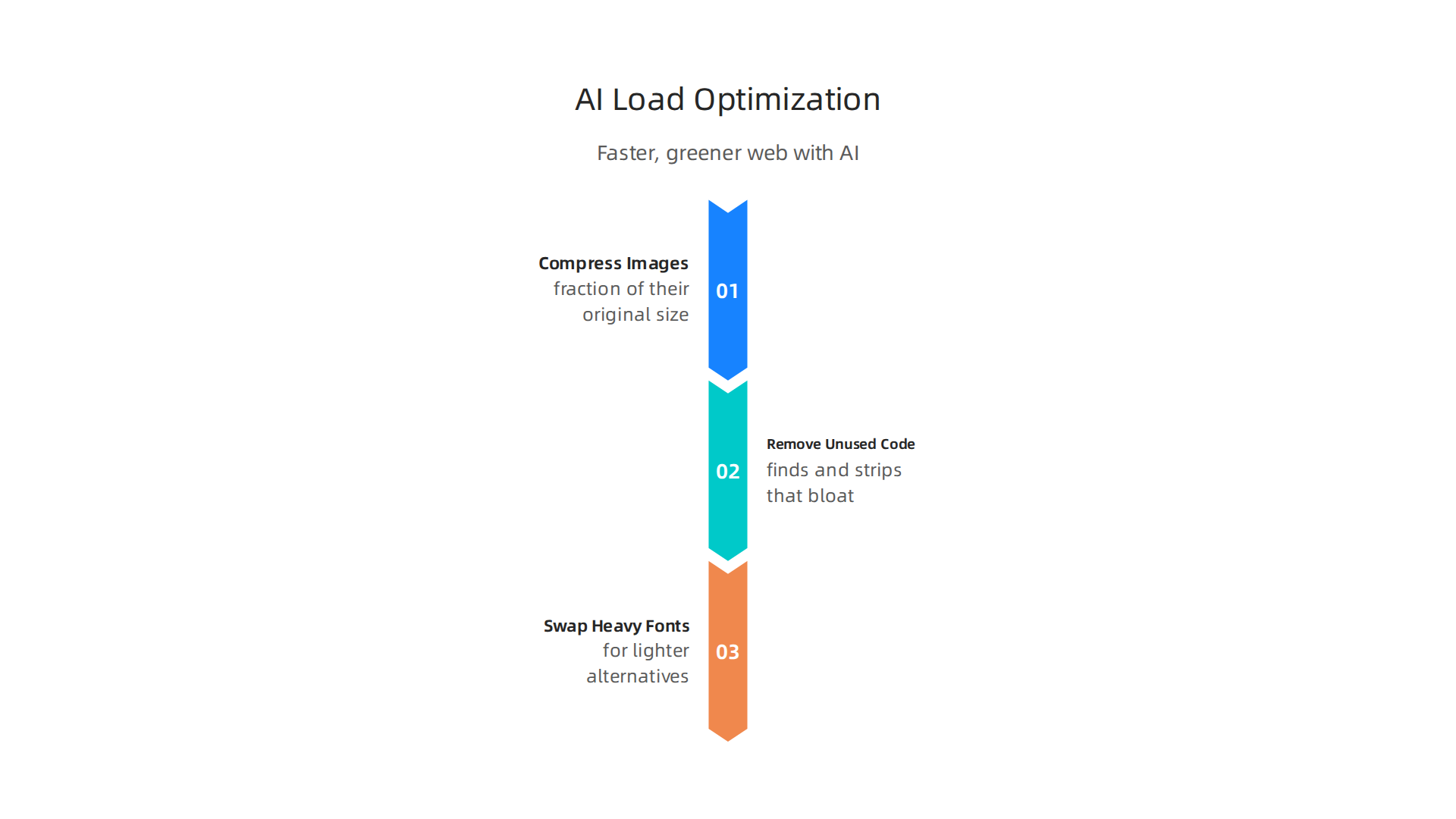
The human eye barely notices the difference, but the load time drops dramatically. AI can also remove unused code. Many websites load CSS and JavaScript that nobody ever uses. AI finds and strips that bloat. It can even swap out heavy fonts for lighter alternatives that look almost the same.
The result? Pages load in under two seconds instead of five. That matters. Google uses speed as a ranking factor. And visitors are impatient. A one-second delay can cause a 20 percent drop in conversions. For futuristic websites packed with AR and 3D, AI optimization is not optional. It is essential.
But faster load times do more than satisfy users and search engines. They also make the web greener. Every kilobyte of data that travels across the internet uses energy. Heavier pages require more server power and more bandwidth. By cutting the weight of your pages, you cut the energy cost too.
Sustainable web design is a growing priority. The W3C has published official Web Sustainability Guidelines for 2026 that recommend optimizing files and hosting with clean energy. When AI automatically reduces page weight, it helps your site meet those green standards without extra work.
This is a win on three fronts. Your visitors stay happy because pages load fast. Your search rankings improve. And your website uses less energy, which is better for the planet.
If you are building futuristic websites, start thinking about AI-powered performance tools today. They can compress images, minify code, and automate much of the optimization process. To discover which tools and resources can help you build a faster, greener site, check out the list of top AI websites for finding the best performance tools.
And if you want to stay ahead of the curve, subscribe to The Deep View Newsletter for clear daily updates on AI tools that can make your site both futuristic and fast.
Ethical Considerations and Trust
Speed and sustainability matter. But none of that counts if people do not trust your site. When you build futuristic websites with AI, you invite powerful technology into the lives of your visitors. That power comes with real responsibility.
Here is the thing. Many visitors do not know when an AI is shaping what they see. Maybe the site uses AI to recommend products, personalize content, or even generate text. If people do not know, they cannot consent. And if they cannot consent, trust breaks down.
That is where transparency comes in. The European Commission’s Ethics guidelines for trustworthy AI list seven key requirements for responsible AI. One of the most important is human agency and oversight. People should know when they are interacting with an AI. They should also have the option to understand how the system reached its conclusions. For futuristic websites, this means adding clear labels. Tell visitors when AI is at work. Explain what data the system collects and why.
Bias is another big concern. AI learns from data. If that data contains unfair patterns, the AI can repeat and amplify them. Imagine a futuristic website that uses AI to screen job applicants or recommend loans. Biased decisions would cause real harm. The OECD AI principles emphasize that fairness and non-discrimination must be built into AI systems from the start. As a site owner, you need to test your AI tools for bias before they go live.
Privacy also demands your attention. Laws like GDPR set strict rules about how you collect, store, and use personal data. In 2026, new AI-specific laws are rolling out around the world. Compliance is not optional. You need to review every AI tool on your site. Make sure it handles data responsibly. Give users control over their own information.
Building trust also means being honest about limitations. No AI is perfect. Systems make mistakes. A trustworthy futuristic website admits this upfront. It provides fallback options. If an AI gives a wrong answer or makes a bad recommendation, users need a clear path to get help from a human.
A great way to think about all of this is through the lens of AI governance. The AI governance 2026 guide from Athena Solutions recommends creating clear policies, training your team, and auditing your AI systems regularly. This is not a one-time checklist. It is an ongoing practice.
Futuristic websites that earn trust will win in the long run. Visitors return to sites that respect them. They share those sites with others. And they feel safe sharing their data.
If you want to dig deeper into how humans and AI can work together transparently, check out our post on human or AI creativity collaboration. It covers how to keep the human element strong even as AI takes on more tasks.
How to Prepare Your Business for the Next Wave
You have read about ethics and trust. Now comes the action part. Preparing your business for futuristic websites does not mean buying every shiny AI tool. It means thinking carefully about what you actually need.

Start with a clear strategy. Look at your business goals first, then figure out which AI features help you reach them. Do you want faster customer support? More personalized shopping? Better content? Choose one or two areas to focus on. A smart approach is to use an AI website builder for rapid prototyping, then bring in human designers and developers for the final build. That is the hybrid method that actually works in 2026. You can check out a detailed breakdown of when AI makes sense and when it does not in this AI website builder pitfalls and wins guide.
Next, invest in your people. The best futuristic website falls flat if your team does not know how to use it. Train your staff on the AI tools you adopt. Teach them how to prompt effectively, how to check outputs for mistakes, and how to keep the human touch. At the same time, choose tools that scale with you. Modular platforms let you add new features as you grow without ripping out everything and starting over. If you need help picking the right tools for your workflows, our article on choosing and using an AI-powered research assistant offers a solid framework.
Finally, do not try to change everything at once. Launch small experiments. Test one AI feature, like a chatbot or personalized recommendations. Measure what happens. Did engagement go up? Did sales improve? Listen to user feedback too. Then adjust and try the next thing. Iterative improvement beats a big overhaul every time.
Keeping up with new developments is part of the job. The AI space moves fast, and what works today might be outdated next month. That is why staying informed matters. For daily updates without the noise, consider subscribing to The AI Newsletter Worth Reading. It delivers clear, practical AI news straight to your inbox so you can make smarter decisions for your futuristic website.
Summary
This article explains what a truly futuristic website looks like in 2026 and gives a practical roadmap for building one. It covers the core trends—AI-driven personalization, voice and multimodal interfaces, generative design, AR/VR and 3D web, plus AI-based performance and sustainability optimizations—and shows why these features matter for engagement, conversions, and brand trust. You’ll learn how AI assembles personalized pages in real time, speeds up design and prototyping, and can compress and clean code to keep sites fast and greener. The piece also calls out ethical obligations—transparency, bias testing, and data privacy—and offers a step-by-step approach: choose goals first, run small experiments, train your team, and measure ROI. After reading, you’ll have clear next steps for adding AI features that feel human, scalable tactics to test, and resources to stay current as tools evolve.