
Artificial intelligence (AI) has changed a lot in marketing over the past few years. We’ve seen many smart tools pop up, but something new and exciting is happening in 2026: the rise of marketing AI agents.

These are not just simple tools that do one task, like writing an email or creating a picture. Think of them as smart helpers that can handle many steps of a marketing job all by themselves.
What are Marketing AI Agents?
A marketing AI agent is like a digital team member that can understand goals, make a plan, and then take action to reach those goals, even over many steps. It has a "brain" powered by advanced language models, a "memory" to learn from past actions, and the ability to use other "tools" or software to complete tasks. For example, an autonomous marketing agent might create a full social media campaign, from writing posts to scheduling them and even adjusting content based on how people react online [PDF] (https://www.alvarezandmarsal.com/sites/default/files/2026-03/The%20Agent-First%20Marketing%20Function_0.pdf).
This is different from older, single-purpose AI tools. A basic AI tool might help you write a blog post, but it won’t plan your whole content calendar or figure out which posts work best. Marketing AI agents, on the other hand, can do all that and more. They can even work together as "multi-agent" systems to tackle big, complex marketing plans, as explained in recent research about AI Agent Systems: Architectures, Applications, and Evaluation. In 2026, experts are creating ways to sort these agents into groups to better understand their different uses and parts, helping us see how they fit into a bigger picture AI Agent Architecture Decoded: The 9-Dimension Taxonomy Every ….
Big Benefits of Using Marketing AI Agents
These smart agents bring huge advantages to businesses:
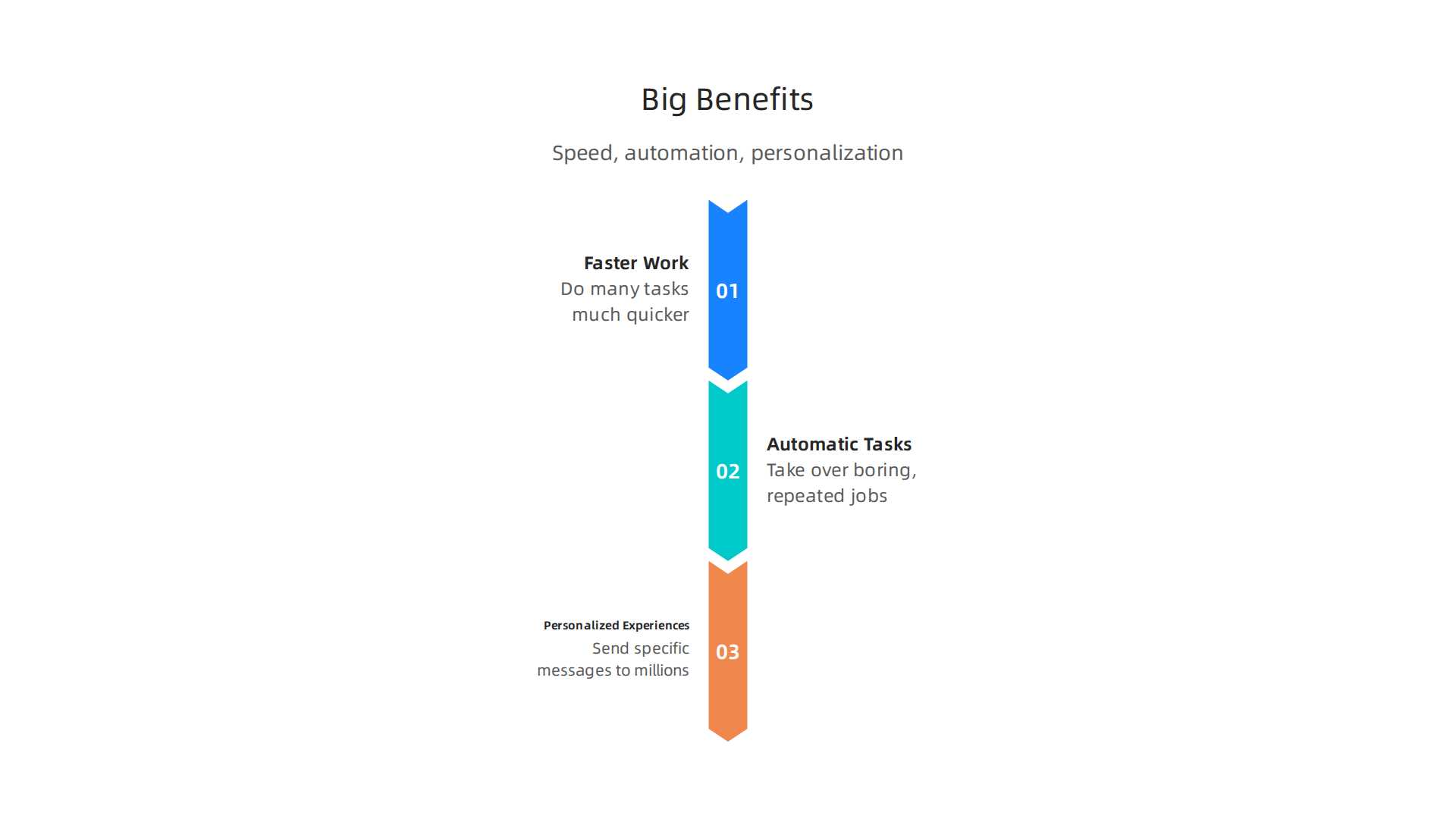
- Faster Work: They can do many tasks much quicker than people can, speeding up your marketing efforts.
- Automatic Tasks: They take over many boring, repeated jobs. This means your team can spend more time on new ideas and creative work, instead of getting stuck in daily routines. This can be a game-changer for businesses looking for an effective online marketing platform for small businesses.
- Personalized Experiences for Everyone: AI agents can help you send very specific messages and offers to thousands or even millions of customers, making each person feel like you know exactly what they need. This helps create a truly personal connection with your audience.
What You’ll Learn in This Guide
Learning how to use marketing AI agents can seem like a big job. That’s why this guide is here to help. We will walk you through everything you need to know, step-by-step. You will learn:
- How to choose the best AI agents for your specific business needs.
- How to set them up and get them working smoothly.
- How to make sure they follow rules and stay safe (this is called governance).
- How to check if they are actually helping your business grow and meet its goals.
Whether you’re looking for a simple marketing plan example or want to dive deep into using AI, this guide will give you practical steps to succeed.
Stay ahead with smart insights. Get clear daily AI updates from The Deep View Newsletter.
Now that you know what marketing AI agents are in a general sense, let’s look closer at their different types, what they are made of, and how they work in real marketing jobs. These smart helpers come in various forms, each designed for specific levels of work.
Types of Marketing AI Agents
Not all marketing AI agents are exactly the same. They can be grouped by how complex their tasks are and how much they work on their own.
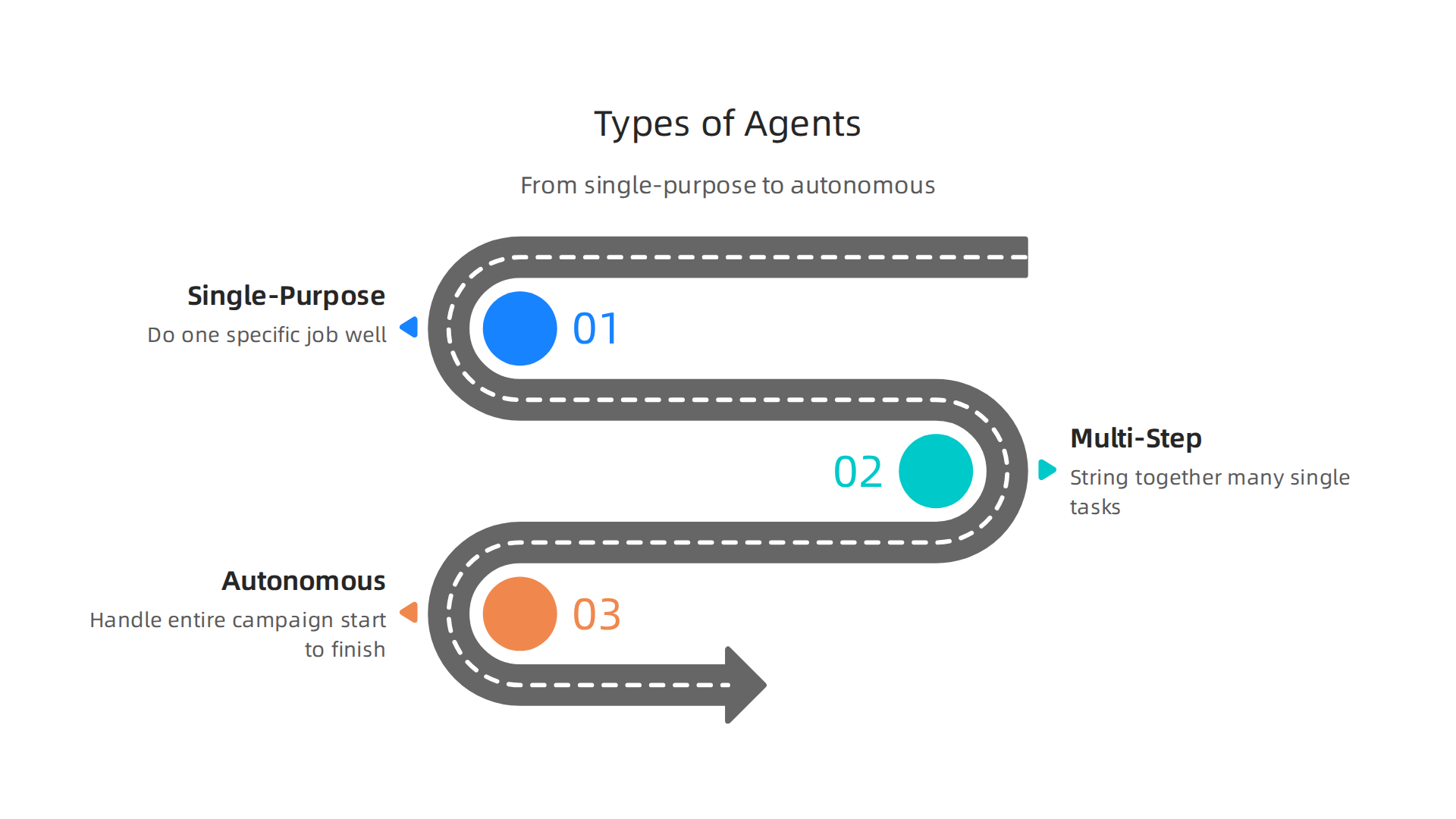
- Single-Purpose Task Agents: These are the simplest kind. They do one specific job well, like writing an email, generating a social media post, or finding keywords. They are good for quick, focused tasks. While helpful, they don’t plan out big campaigns.
- Multi-Step Orchestration Agents: These agents are smarter. They can string together many single tasks to complete a larger goal. For example, a multi-step agent might write a blog post, then create social media updates for it, and then schedule those posts. They follow a plan to make sure all parts of a task are done in order. Researchers have created ways to organize these kinds of AI agent systems, looking at how they plan, control, and interact with tools AI Agent Systems: Architectures, Applications, and Evaluation.
- Autonomous Campaigning Agents: These are the most advanced marketing AI agents. They can handle an entire marketing campaign from start to finish. They set goals, make a plan, create all the content, run the campaign, and even adjust things as they go. Humans usually check in at certain points for approval, but the agent does most of the heavy lifting. This approach can be a game-changer for businesses that need a full-service online marketing platform for small businesses. A 2026 report mentioned that marketing and sales are seeing a lot of impact from these AI agents The 2026 State of AI Agents Report.
What Makes an AI Agent Work?
Think of a marketing AI agent as having several key parts that let it do its job:
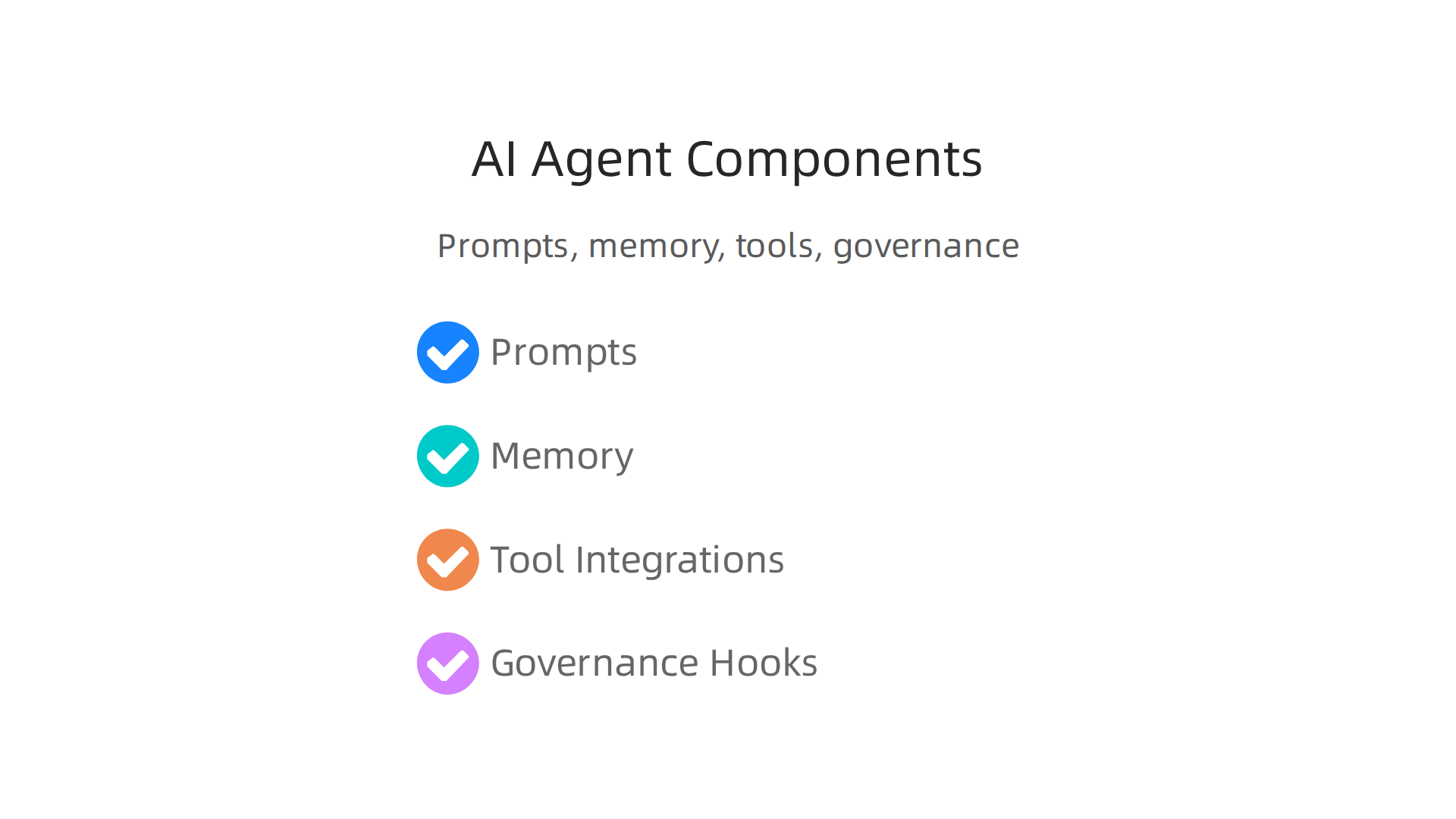
- Prompts: These are the instructions you give the agent. They tell it what to do, what goals to aim for, and what style to use. Good prompts are like giving clear directions to a smart assistant.
- Memory: Agents remember past actions, feedback, and what worked or didn’t work. This memory helps them learn and get better over time, making their future tasks more effective.
- Tool Integrations: This is how AI agents connect to other software and services. For example, an agent might connect to a CRM (Customer Relationship Management) system like Zoho Marketing Automation to get customer info, or use analytics tools to see how well a campaign is doing. These connections help agents do real-world tasks. Choosing the right AI tools for your business is key to making these integrations work well How to Choose AI for Business Tools That Deliver Real Results in 2026.
- Governance Hooks: These are safety checks and rules built into the agent. They make sure the agent follows company policies, legal rules, and ethical guidelines. This is very important for keeping AI agents responsible. Experts are working on how to create clear ways to evaluate agents in production Measuring Agents in Production.
Real-World Marketing Examples
How do these marketing AI agents actually help? Here are some examples of what they can do:
- Lead Qualification: An agent can look at many potential customer details, figure out which ones are most likely to buy, and then send them personalized messages. This saves human sales teams a lot of time.
- Creative Iteration: Need many different ideas for an ad campaign? An agent can quickly create many versions of ad copy, images, and video scripts, then test them to see which ones get the best reactions. This speeds up the creative process.
- Campaign Optimization: During a marketing campaign, an autonomous agent can watch how people react to ads in real-time. If one ad isn’t working well, it can automatically change the ad, try a new audience, or even shift the budget to a better-performing ad. This ensures your marketing money is always working its hardest. This kind of optimization can significantly boost how effective your marketing efforts are How Marketing Specialists Choose AI Tools for Marketing and Drive ROI.
Using marketing AI agents isn’t just about doing more tasks; it’s about getting real value for your business.

These smart tools help companies save time, cut costs, and get better results from their marketing efforts. We can measure this value in a few key ways.
Quantifying business value: ROI, time savings, and performance benchmarks
One big way marketing AI agents help is by taking over many tasks that people used to do by hand. This reduces the amount of manual work needed across common marketing jobs. For example, agents can quickly create many versions of ad copy, write social media posts, or analyze campaign data. This frees up marketing teams to focus on bigger ideas and strategies. Some reports even show that using AI agents can reduce manual workflow tasks by as much as 85%, which greatly increases efficiency and returns on investment (ROI) across businesses in 2026 How AI Agents are Changing Marketing: The 2026 Guide – Top ….
The value these agents bring can be grouped into different kinds of ROI:
- Cost Reduction: By automating tasks, businesses spend less money on manpower for repetitive jobs. This also includes lowering the cost to get a new customer.
- Speed-to-Market: AI agents can create content and launch campaigns much faster. This means businesses can react quickly to market changes and get their messages out sooner.
- Personalization Lift: Agents can tailor messages to individual customers much better than humans can, which leads to more engagement and higher sales. Studies from 2026 show that AI for personalizing content can boost ROI by 2.7 times, while content drafting can see a 3.2 times ROI Agentic AI in Marketing: ROI Data & Guide 2026.
- Experimentation Velocity: Marketing AI agents can test many different ideas very quickly to find out what works best. This helps improve marketing plans faster than ever.
To truly understand how well marketing AI agents are doing, you need to track key numbers before and after you start using them. These performance benchmarks help you see the actual impact.
Here are some important metrics to keep an eye on:
- Effort hours: How many hours did your team spend on certain tasks before, and how many now with agents?
- Conversion lift: Are more people buying, signing up, or taking desired actions because of the AI agents’ work?
- Cost-per-acquisition changes: Has the cost of getting a new customer gone down?
- Campaign ROI: What is the overall return on your investment in specific campaigns managed by agents?
- Lead-to-customer conversion rate: How many potential customers become actual buyers thanks to the agent’s efforts?
Setting clear goals and key performance indicators (KPIs) for your autonomous marketing AI agents is important to make sure they are on track KPIs for Autonomous AI Agents in Marketing and Governance. By tracking these numbers, businesses can see the real benefits of using marketing AI agents, from saving time to boosting sales. Learning how to get real ROI from AI marketing is a key step for success in 2026.
Want to keep up with the latest in AI and technology?
The AI Newsletter Worth Reading offers clear daily updates to help you stay informed.
To truly get the most from your AI investments and see those great returns, it’s vital to pick the right tools for the job.

Not all marketing AI agents are built the same. When you’re looking at different options for your business, you need to know what features matter most.
Key capabilities to prioritize when evaluating marketing AI agents
Choosing the best marketing AI agents means looking closely at what they can do and how well they fit into your daily work. Think of it like picking the right team member; you want someone with the right skills and who can work well with everyone else.
Here are the important things to look for:
- Reliable Data Connections: Good marketing AI agents need to easily connect with all your data sources. This means linking to your customer lists, sales records, website analytics, and social media platforms. Without good connections, the agent can’t get the information it needs to make smart decisions.
- Customizable Instructions (Prompt Flows): You should be able to tell your AI agent exactly what you want it to do and how. This involves setting up "prompt flows" that guide the agent’s actions, from writing an email to planning a whole campaign. The more you can customize these, the better the agent will understand and act on your specific marketing plan example.
- Memory and Context: Just like a person, a good AI agent needs to remember past talks and actions. This "memory" helps it understand the bigger picture and keep its responses and tasks consistent over time. It helps the agent learn from what it’s done before. Many AI agents are built with core components like these to give them reasoning and language skills Agentic Universe: April 2026.
- Ability to Take Action (APIs/Tools): An AI agent isn’t just for thinking; it’s for doing. It needs to be able to use other tools and systems through what are called APIs. This could mean posting directly to social media, updating your online marketing platform for small businesses, or sending emails through your existing marketing automation software.
Beyond these core abilities, there are other important features that help these agents work smoothly every day:
- Seeing What’s Happening (Observability): You should always be able to see what your marketing AI agents are doing. This means getting clear reports and updates, so you know the agent is working as it should and catching any problems early.
- Handling Mistakes (Retry Semantics): What happens if an agent tries to do something and it fails? A good agent will have a plan to try again or tell you there’s a problem, instead of just giving up.
- Safe Testing (Sandboxing): Before you let an agent loose on your real marketing, it’s helpful if you can test it in a safe "sandbox" environment. This way, you can make sure it works correctly without messing up your live campaigns.
- Human Control Points (Human-in-the-Loop): Even the best AI agents need human oversight. You’ll want controls that let you step in to approve decisions or correct the agent if needed. This "human-in-the-loop" approach is often part of how production systems for AI agents are designed in 2026 State of AI Agents Q2 2026.
Finally, consider how well the marketing AI agents can grow with your business. Can they manage many different campaigns at once? Can they adapt to different languages or regional needs if your business expands? This is called scalability and extensibility. Knowing how to choose AI for business tools that deliver real results is key to making sure your investment pays off in the long run.
After understanding what makes good marketing AI agents, the next big step is putting them to work. This means making smart choices about how you get these tools and how you bring them into your business without causing big problems.
Choosing and deploying an agent: checklist and phased rollout plan
First, you need to decide if you want to buy a ready-made marketing AI agent or build one yourself. This is a big choice, like deciding to buy a car or build one from scratch.
- Buying an Agent (Vendor Solution): This usually means you get to use the tool faster. It’s often easier because someone else has done all the hard work of building it. You just need to make sure it fits your needs and that you’re comfortable with how it handles your business data. This is good if you need quick results and don’t have a big team of tech experts.
- Building Your Own Agent: This gives you full control. You can make the AI agent do exactly what you want, right down to the smallest detail. But, it takes a lot more time, effort, and people with special tech skills. You also need to think about who owns the data and how much work your team can actually take on. Businesses often weigh these points when looking at whether to build or buy new AI tools Navigating the build, buy, or borrow decision.
Once you decide how to get your marketing AI agents, it’s time to put them into action. A good way to do this is with a step-by-step plan.
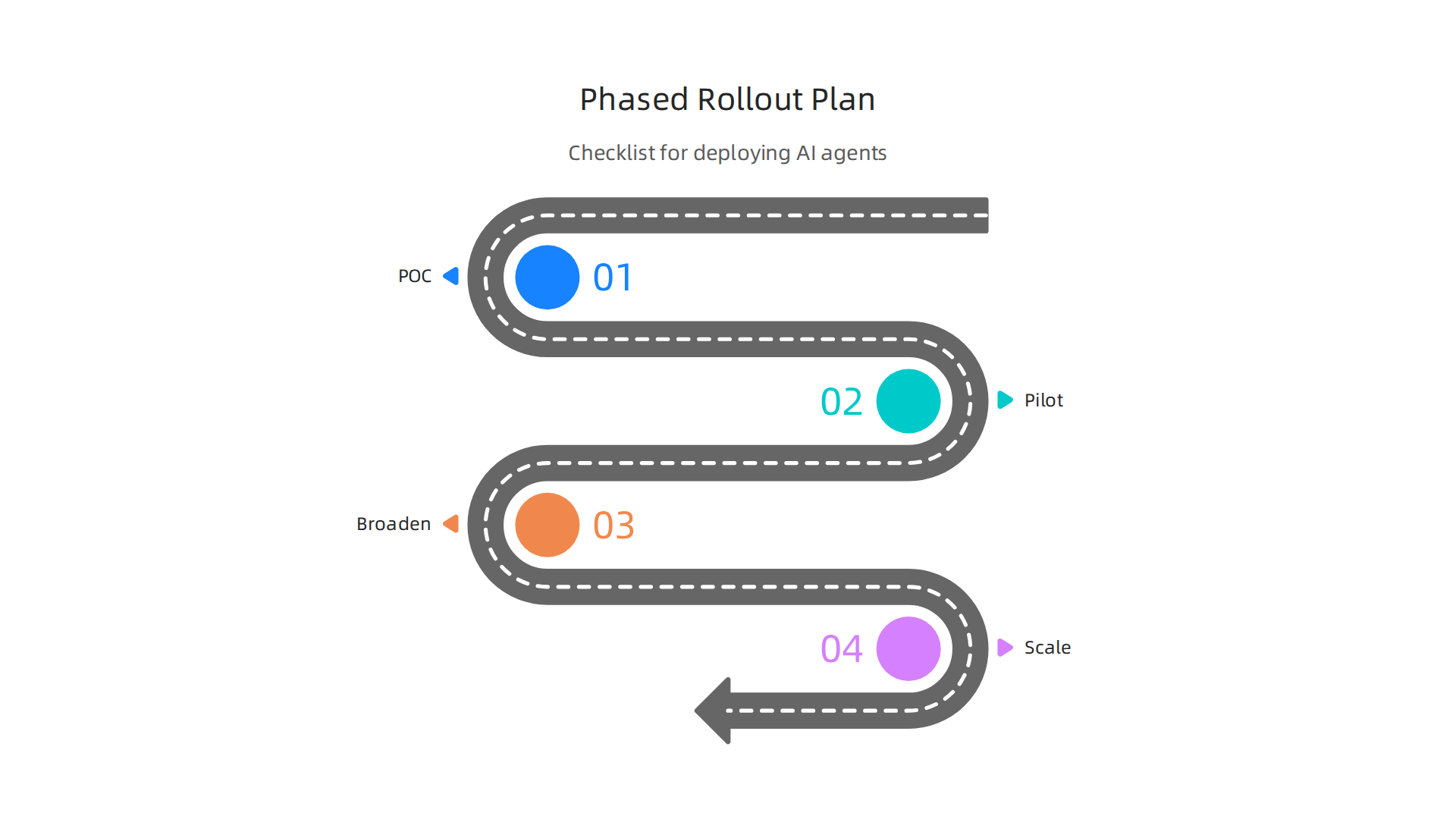
This helps you start small and grow safely.
A Phased Rollout Plan
- Proof of Concept (POC): This is like a small test drive. You pick one simple task that the AI agent can do and see if it works.
- Success Criteria: Does the agent complete the task? Does it save time or money for that one task? For example, you might test it writing a few social media posts for a specific marketing plan example. It’s smart to start with workflows that have low risk but high potential impact Using AI Agents for Marketing Agencies: 2026 Implementation Guide.
- Pilot: If the POC goes well, you expand the test to a small group of users or a small part of your business.
- Success Criteria: Does it work well for this small group? Are there any unexpected problems? Are the people using it happy with it? During this stage, you should manually check every output for at least two weeks and use any errors to make the agent smarter How to Use an AI Agent for Marketing: The 2026 Playbook ….
- Broaden: Now, you slowly let more people or more parts of your business use the marketing AI agents.
- Success Criteria: Is the agent still working well as more people use it? Is it helping more of your marketing team? This is where you might connect it with your online marketing platform for small businesses or a specific campaign.
- Scale: If all goes well, you make the AI agent a regular part of your marketing efforts across the whole company.
- Success Criteria: Is it making a real difference to your business goals? Is it able to handle everything you throw at it? Are you seeing clear returns on your investment in these new tools?
Practical Checklist for Deployment
Before you fully unleash your marketing AI agents, here’s a checklist to make sure you’re ready:
- Data Readiness: Make sure your business data is clean and ready for the AI. This means having good customer information and historical data. AI agents need connected, clean data to work effectively AI-Driven Marketing Strategies to Implement in 2026 – Aprimo. You’ll need things like real-time customer profiles and good data about how past campaigns performed AI Marketing Agents: 2026 Complete Guide. Having at least 12 months of clean historical data is a good rule of thumb AI Marketing Agent: 11 Best Tools & Guide (2026) – Improvado.
- Integration Points: Think about how the AI agent will connect with your existing tools. This includes your CRM, email programs, and analytics tools like Zoho Marketing Automation. Make sure they can all "talk" to each other AI Marketing Agents: Complete 2026 Automation Guide. You want to link apps your team already uses daily, such as Slack, Gmail, or HubSpot 2026 Marketer’s Guide to AI Agents for Marketing Operations.
- Service Level Agreements (SLAs): If you’re buying an agent, understand what kind of support you’ll get from the company selling it. How fast will they fix problems?
- Monitoring: Set up ways to watch how your marketing AI agents are doing. This helps you catch any issues quickly and ensure they’re working as they should.
- Change Management: Get your team ready for these new tools. Provide training, maybe even some free marketing courses on AI, and make sure everyone understands how the agents will help them. Before you start, write down the exact workflow you want the AI to handle, define what success looks like, and think about who owns the project AI Agents for Marketing: 15 Use Cases, ROI, and 2026 Guide.
By following these steps, you can bring marketing AI agents into your business smoothly and make sure they truly help you reach your goals.
For more deep dives into the latest AI tools and trends, make sure you’re subscribed.
The AI Newsletter Worth Reading
After you have a plan to put your marketing AI agents into action, the next big step is figuring out how these smart tools will talk to all your other business systems. This is like making sure all the different parts of a team can share information and work together smoothly. When your marketing AI agents link up with your customer relationship management (CRM), ad platforms, and analytics tools, they can do amazing things for your marketing plan.
Integration patterns: linking agents to CRMs, ad platforms, and analytics
Connecting your marketing AI agents with your existing tools is key for them to be truly helpful. It means that customer information, ad campaign results, and website visitor data can all be shared. This allows the AI agents to make smarter choices and take actions that fit your goals.
There are a few common ways these connections work:
- Data Sync (Data Sharing): This is like having two notebooks and making sure they both have the same information. Your marketing AI agents might regularly pull customer details from your CRM, or send updated customer scores back to it. This makes sure all your systems have the most current data. Businesses need clean, linked data for AI agents to work well, often including real-time customer profiles and historical campaign data to train models effectively AI Marketing Agents: 2026 Complete Guide.
- Event-Driven Triggers (Action Starters): Imagine if one action automatically started another. For example, if a customer fills out a form on your website (an "event"), it could trigger your marketing AI agent to send a personalized email right away. Or if an ad campaign performs poorly, it could alert the agent to suggest changes.
- API-Based Actioning (Direct Commands): APIs are like special language rules that allow different software programs to talk to each other and ask for things to be done. Your AI agent can use APIs to directly create new ads on an ad platform or update details in your CRM. This lets the agent not just suggest things, but actually do them.
- Streaming Analytics (Constant Flow of Information): This means data is always flowing, like a river, instead of coming in big batches. For marketing AI agents, this is super important because it lets them see what’s happening right now. If a product suddenly becomes popular, the agent can adjust your online marketing platform for small businesses campaigns in real time. This constant data flow helps AI agents react quickly to changes [How AI agents will reshape every part of marketing in 2026](https://martech.org/how-ai-agents-will-reshape-every-part-of-marketing-in 2026/).
Handling Data Across Systems
When many systems work together, we need to be careful about how data is managed:
- Idempotency (No Double Actions): This is a fancy word that means doing the same action multiple times has the same result as doing it once. For example, if your AI agent tries to send an email twice by mistake, idempotency ensures the customer only receives one email. It prevents double billing or duplicate entries.
- Reconciliation (Making Data Match): With many systems, data can sometimes get out of sync. Reconciliation is checking that the information in your CRM, ad platform, and analytics tools all match up. This is vital for accurate reporting and making good decisions. For example, ad platform data should feed back into the AI agent’s information to match up with CRM records AI Agents for Agencies: Connect Client Data Safely.
- Data Governance (Keeping Data Safe and Proper): This is about setting rules for how your data is collected, stored, and used. It makes sure your marketing AI agents respect privacy laws and company policies. Good data governance also means your data is high quality, which is super important for AI to learn from.
Architectural Choices: Real-time vs. Batch and Coupled vs. Loosely Coupled
When building these connections, businesses make some important choices:
- Real-time vs. Batch: Do you need information to update instantly (real-time), or is it okay for updates to happen once a day or once an hour (batch)? Real-time updates are great for fast-moving campaigns, while batch updates can be simpler for less urgent tasks.
- Coupled vs. Loosely Coupled Integrations:
- Coupled: Systems are tightly linked. If one system changes, the other might need to change too. This can be faster for small setups.
- Loosely Coupled: Systems work more independently. They connect through standard ways, so if one changes, it’s less likely to break the other. This makes your whole setup more flexible as you grow.
Choosing the right integration patterns and making smart architectural choices helps your marketing AI agents truly shine. It makes sure they are not just useful tools, but fully integrated team members that boost your marketing efforts.
If you’re looking to enhance your understanding of marketing technology, exploring options for how to choose marketing automation software in 2026 can provide further insights into optimizing your operations.
After linking up your marketing AI agents with your existing systems, a very important next step is to set up clear rules and make sure everything runs safely and properly. This is called governance, compliance, and risk management. It’s like having a good rulebook and safety checks in place so your smart tools work in a way that is fair, legal, and keeps your brand safe.

Data Privacy and Consent
When marketing AI agents access customer information, it’s super important to respect people’s privacy. These agents often look at user data to make marketing campaigns better. So, you need to make sure you have permission, or "consent," from customers to use their data. Laws like GDPR in Europe and others around the world mean businesses must be very careful about how they gather, store, and use personal information. For example, people must clearly agree to how their data is used for personalized ads, not just have a pre-checked box AI Compliance in Marketing: The Complete Guide 2026.
This also means that your marketing AI agents should only get access to the information they absolutely need to do their job. Businesses must document how their marketing agents handle personal data to comply with regulations Snowflake’s Agentic Enterprise Framework Puts Data …. Without proper consent management, using marketing AI agents can lead to big problems.
Bias, Brand Safety, and Content Review
Marketing AI agents can create ads, emails, and other content very quickly. But sometimes, AI can pick up unfair ideas or "bias" from the data it learns from. This could lead to content that is not fair or doesn’t fit your brand’s values. To stop this, you need:
- Human-in-the-loop governance: This means people regularly check what the AI agents are doing and creating. For new AI agents, you should manually review every output for a few weeks to catch any errors How to Use an AI Agent for Marketing: The 2026 Playbook ….
- Brand guidelines: Give your marketing AI agents clear rules about your brand’s voice and what kind of content is okay. This helps them create messages that always sound like your company.
- Safety controls: Set up ways for the AI to flag or stop content that might be offensive, wrong, or goes against your rules. This helps ensure brand safety.
Having these controls in place is key for any marketing plan example that uses AI.
Security and Access Controls
Finally, keeping your AI systems and the data they use safe is super important. Think about these things for your marketing AI agents:
- Least privilege: This means your AI agents should only have the minimum access rights needed to do their specific tasks. They shouldn’t be able to see or change data they don’t need. This helps prevent unwanted access AI Regulation 2026: Current Laws, Compliance Requirements, and ….
- Audit trails: You need a record of everything your marketing AI agents do. This is like a logbook that shows who accessed what, when, and what actions were taken. If something goes wrong, an audit trail helps you figure out what happened.
- Incident response planning: Have a plan for what to do if there’s a security problem, like a data breach or an AI agent acting strangely. Knowing what steps to take beforehand can save a lot of trouble.
As you adopt new smart tools, understanding potential problems and how to deal with them is part of having a good Stealth AI: A Business Guide to Hidden AI Risks, Opportunities, and Management in 2026. Keeping these governance, compliance, and risk management ideas in mind will help your marketing AI agents be both powerful and trustworthy tools for your business.
After making sure your marketing AI agents follow all the rules and keep data safe, the next big step is to see how well they are actually doing. This means measuring, making them better, and growing their use over time. You want to make sure these smart tools are truly helping your business grow.
Testing How Well Agents Perform
To know if your marketing AI agents are working, you need to test them. A great way to do this is through something called A/B testing. This is like trying out two different ideas to see which one works better. For example, you can have your AI agent create one type of ad, and then have your regular marketing team or a different AI strategy create another. You then show both to similar groups of people to see which ad gets more clicks or sales.
By doing these tests, you can compare what your marketing AI agents do versus your usual ways of working. Studies in 2026 show that successful AI agents can bring in 4.1 to 5.3 times more return on investment for the tasks they automate [Agentic AI in Marketing: ROI Data & Guide 2026]. This helps you see the real value of these smart tools for your marketing plan example. If you want to dive deeper into getting great returns, learn about how marketing specialists choose AI tools for marketing and drive ROI.
What to Watch: Key Numbers and Dashboards
To keep track of your marketing AI agents, you need to set up clear ways to measure their success. Think of this like a dashboard in a car, showing you all the important things at a glance. For AI agents, you should watch for:
- Speed (latency): How quickly do your agents act or respond? Faster is usually better.
- Success rate: How often do they do their job correctly, like sending the right email or suggesting the right product?
- Conversion attribution: This means figuring out how much credit your marketing AI agents deserve for bringing in leads or making sales.
- Cost per action: How much does it cost for an agent to complete a task, like getting a customer to sign up or click a link?
It’s important to set up these special goals, or Key Performance Indicators (KPIs), for your autonomous AI agents. These help you track their operational health and how they impact your business goals, like making more money or getting more customers KPIs for Autonomous AI Agents in Marketing and Governance. Platforms for online marketing, such as Zoho Marketing Automation, often have features to help you track these metrics.
Always Getting Better: Continuous Improvement
Using marketing AI agents isn’t a "set it and forget it" task. For them to stay useful, you need to make them better over time. This involves a few key steps:
- Feedback loops: This is where people tell the AI what worked well and what didn’t. Your team can give feedback on the content the agents create or the decisions they make.
- Retraining triggers: As new information comes in or marketing trends change, your AI agents might need to learn new things. You need to know when it’s time to "retrain" them with fresh data.
- Lifecycle management: This is about how you keep your marketing AI agents updated and relevant through their whole life, from when you first use them to when they might need big changes.
By having these plans in place, your marketing AI agents can keep learning and improving. This ensures they continue to bring value to your business year after year. Learning how AI agents get better over time is crucial for long-term success [How Do AI Agents Learn and Improve Over Time?]. For tips on maximizing your investment, check out how to get real ROI from AI marketing cloud in 2026.
Want to stay informed about all the latest in AI and technology?
The AI Newsletter Worth Reading
Summary
Marketing AI agents are autonomous, multi-step AI systems that plan, act, and learn to run marketing tasks from content creation to campaign optimization. This article explains the different agent types—from single-purpose tools to fully autonomous campaigning agents—what technical parts make them work (prompts, memory, tool integrations), and the real-world use cases such as lead qualification, creative iteration, and live campaign optimization. You’ll get a practical checklist for choosing whether to buy or build, a phased rollout plan (POC → pilot → broaden → scale), and concrete integration patterns for CRMs, ad platforms, and streaming analytics. The guide also covers governance: consent, bias checks, least-privilege access, and audit trails, plus the metrics you must track (effort hours, conversion lift, cost-per-acquisition, campaign ROI). Finally, it shows how to test agents, set KPIs, and create feedback loops so agents improve over time, helping teams save time, cut costs, and boost marketing performance.