Tag: business growth strategies

  • Unlock Business Growth with U.S. Tech Solutions and AI in 2026

    Unlock Business Growth with U.S. Tech Solutions and AI in 2026

    Why U.S. tech solutions and AI initiatives matter now

    The world of Artificial Intelligence (AI) is moving very, very fast in 2026. Every day, it seems like there’s a new tool or idea. For businesses in the U.S., this means big chances to grow and do things better. It also means it can be hard to keep up. Reports show that U.S. private AI investment reached $285.9 billion in 2025, showing just how much money is pouring into this area The 2026 AI Index Report | Stanford HAI. Many companies are already using AI, with about 18 percent of firms having adopted it by late 2025 Monitoring AI Adoption in the U.S. Economy.

    This speedy change creates a challenge. There’s so much information out there about new AI tools and us tech solutions that it’s easy to feel lost.

    A business leader feeling overwhelmed by the rapid pace of AI innovation and numerous new tools.

    How do you pick the right tools for your team? How do you know what will actually help your business, instead of just adding more work? It’s a real problem for professionals, creators, and business leaders trying to make smart choices. You want to use these powerful tools, but you need clear steps to follow.

    That’s exactly why this article is here. We want to cut through the noise and give you helpful, simple advice. This guide will help you understand how to pick, use, and grow with AI tools. You’ll learn practical steps to find the best AI for business tools that deliver real results in 2026. We’ll also show you how to choose trusted resources and build confidence in your AI choices.

    In a world full of new information every single day, it can be tough to know what’s truly important. If you want to keep up with the latest in AI and technology without feeling overwhelmed, we have a great resource for you. Get clear daily AI updates from The AI Newsletter Worth Reading.

    1. U.S. market overview: demand, sectors, and spending patterns

    As AI keeps growing faster than ever in 2026, U.S. businesses are eagerly looking for new ways to use this powerful technology. More and more companies understand that AI is not just a passing trend; it’s a key part of how they will work and grow. Reports show that a lot of people in the U.S. are already using AI in their daily lives. Over 60% of adults in the U.S. use AI at least a few times a week, and about 31% use it almost all the time or several times a day Public Opinion. This shows a big demand for good AI tools and us tech solutions.

    This demand isn’t just in a few big cities. AI use is spreading all over the United States, reaching many different areas.

    A diverse team collaborating, symbolizing AI's widespread adoption across various regions and industries.

    This means that businesses in all kinds of places are starting to explore what AI can do for them AI Diffusion in the United States.

    Which industries are spending the most?

    Many types of businesses are putting a lot of money into AI. Some of the top industries that are investing heavily include:
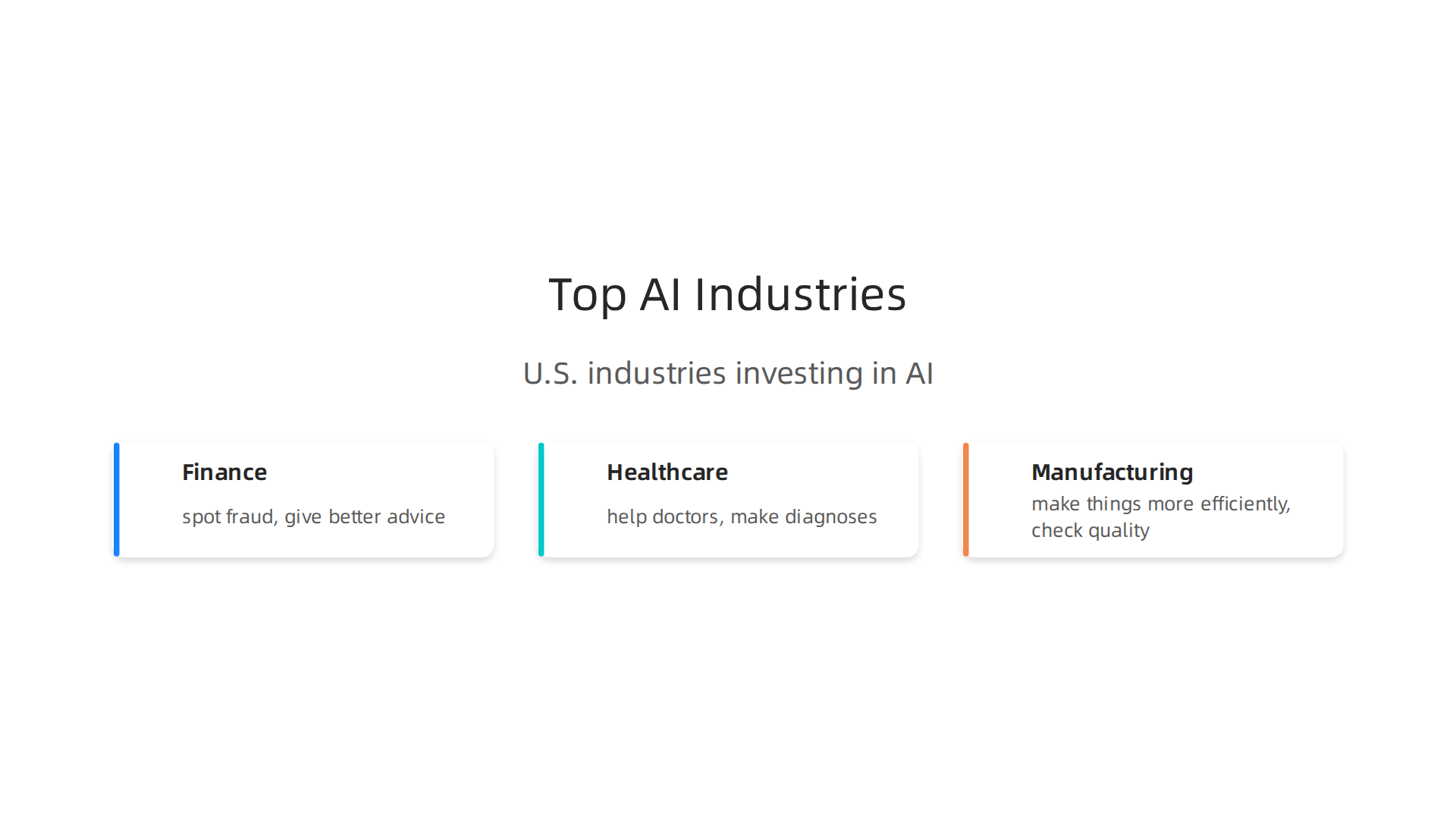
    A visual breakdown of key U.S. industries heavily investing in AI and their primary applications.

    • Finance: Banks and other money-related companies use AI to spot fraud, give better advice, and help customers.
    • Healthcare: Hospitals and clinics use AI to help doctors, make diagnoses, and manage patient care.
    • Manufacturing: Factories use AI to make things more efficiently, check quality, and keep machines running smoothly.

    Companies across the U.S. are planning to spend even more on AI this year. On average, organizations expect to spend around $207 million on AI in the next 12 months. This is almost double what they spent last year AI Quarterly Pulse Survey – Q1 2026 – KPMG International. It’s clear that AI is a big budget item for many businesses.

    How businesses buy AI tools

    The way companies buy AI solutions often depends on their size.

    • Big Companies (Enterprise Teams): These large businesses, like those you might find on a big tech campus, often need very powerful and complex AI systems. They might spend millions of dollars. They look for big AI platforms that can be built into many different parts of their work. They want solutions that offer strong security, can handle huge amounts of data, and connect with all their existing software. For them, finding the right enterprise AI platforms 2026 is a big decision. Many choose to work with specialized AI solution providers in the USA who can build custom tools just for them. These big players are also keen to identify AI leadership in the market.

    • Small and Medium Businesses (SMBs): Smaller companies usually have less money to spend. They look for simpler, more affordable us tech solutions that can solve one or two clear problems quickly. They want tools that are easy to use and show a clear benefit fast. For example, a small marketing agency might look for an [innotech website] tool that helps automate their social media posts. The cost of these tools can vary, but many choose options like ChatGPT Enterprise, which can cost about $60 per user each month AI Software Pricing 2026: 18 Tools Compared (Real Costs). They want practical AI tech products for their team that will help them save time and money without being too complicated.

    The way companies buy AI tools changes depending on their size and what they need. Now, let’s look at the different kinds of leading us tech solutions and the companies that make them. Understanding these categories can help any business pick the right AI tools for their team.

    Different types of AI solution providers

    The world of AI solutions is full of many different kinds of vendors. Each one focuses on a certain part of the AI journey.
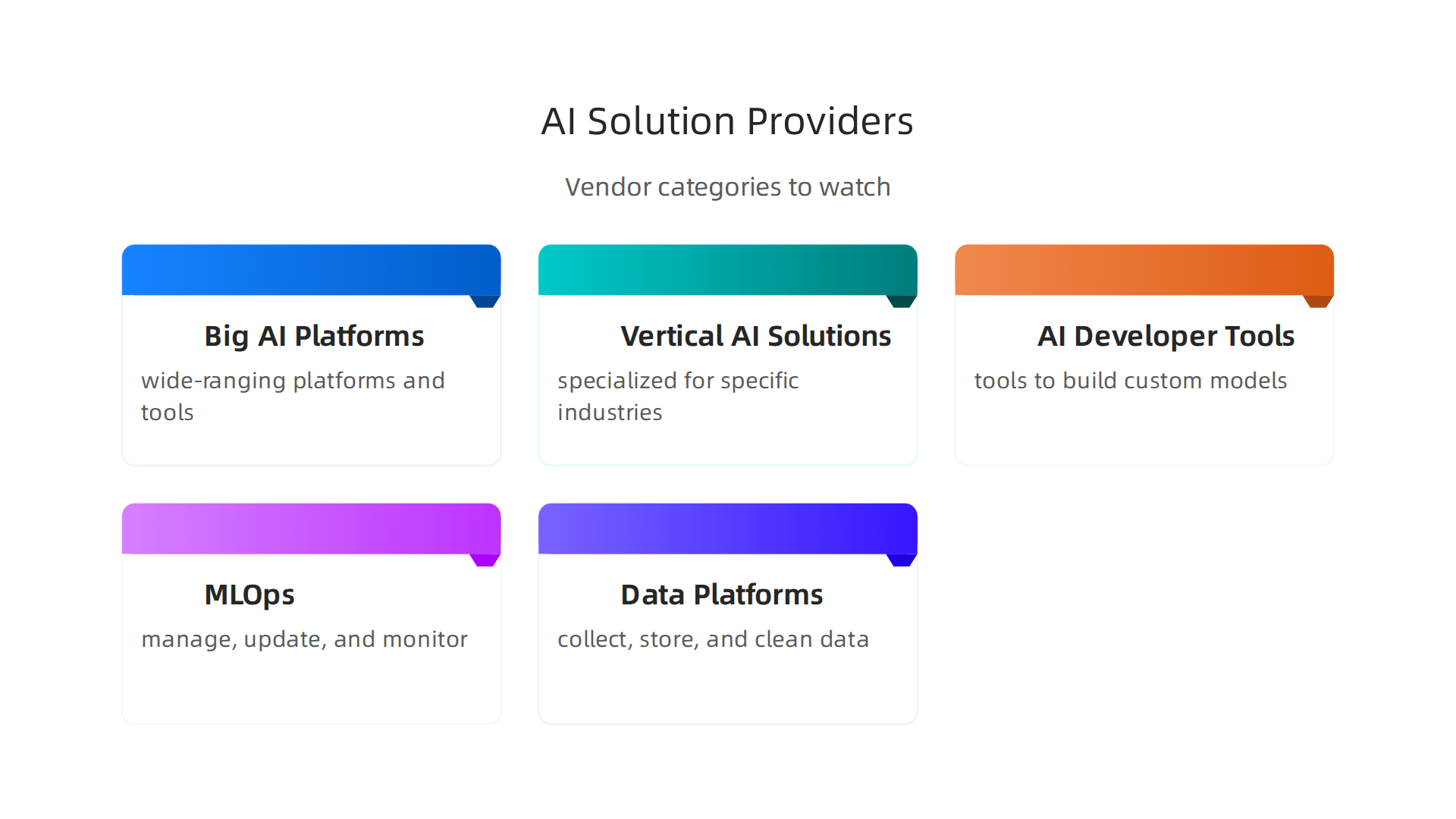
    Understanding the diverse landscape of AI solution providers, from platforms to specialized tools.

    • Big AI Platforms: These are like the big stores that sell everything. Companies such as Microsoft, Google, AWS, and IBM offer wide-ranging AI platforms. These platforms provide many tools in one place, from building AI models to running them and keeping them safe. They are usually chosen by larger businesses because they can handle huge tasks and need a lot of setup. For example, some platforms are known for being very safe and meeting important rules How to Evaluate Enterprise AI Platforms for Security and Compliance. These big platforms often aim to offer complete enterprise AI solutions that cover many business needs.

    • Vertical AI Solutions: These are specialized tools made for one specific job or industry. Think of AI that is just for healthcare to help doctors, or AI for marketing to create better ads. These solutions are often easier to use and faster to set up because they are designed for a clear purpose. A small business might find an [innotech website] tool for automating customer service much more useful than a huge, general AI platform. These focused us tech solutions help businesses get quick results for their unique problems.

    • AI Developer Tools: These tools are for people who know how to code and want to build their own custom AI programs. They give developers the building blocks to create new AI features or deeply connect AI with existing software. These tools are important for companies that want something truly unique or need to make AI work in a very specific way.

    • MLOps (Machine Learning Operations): Once an AI model is built, it needs to be managed, updated, and monitored. MLOps tools help with this. They make sure AI models keep working well, learn from new data, and don’t cause problems. These tools are key for companies that use many AI models or rely on AI for critical tasks. An AI implementation roadmap often includes plans for MLOps from pilot to production, showing its importance in making sure AI solutions work in the real world Your AI Implementation Roadmap: Guide for 2026 Success.

    • Data Platforms: AI needs good data to learn and work well. Data platforms help businesses collect, store, clean, and get their data ready for AI. Without clean, organized data, even the best AI tools won’t perform correctly. These platforms are the foundation for any successful AI project.

    How to pick the right AI solution

    Choosing the right AI vendor means looking at what your business needs and what your team can handle.

    • For small and medium businesses (SMBs): If you’re an SMB, you’ll likely want a vertical AI solution or a simpler platform that solves a clear business problem. Look for tools that are easy to use, don’t cost too much, and offer clear benefits, like a tool for improving your website or managing tasks. You might also want to explore solutions that offer clear plans for how to get started with AI quickly, like a 90-day plan for custom AI automation Custom AI Automation Roadmap for SMB Teams (30-60-90 Days). It’s about finding practical [us tech solutions] that fit your budget and don’t require a lot of technical know-how.

    • For larger companies (Enterprise Teams): Big companies need solutions that can handle large amounts of data, work with many existing systems, and offer strong security. They might use a mix of big AI platforms for core tasks and specialized tools for certain departments. They often need help moving their AI ideas from small tests to full use across the company Enterprise AI in 2026: Navigating the Shift from Pilots to …. When looking at bigger projects, companies might even consider academic partnerships, perhaps with a place like Dartmouth AI, to explore new ideas or complex challenges. Finding out how to evaluate AI companies to unlock business growth in 2026 is a critical step for larger organizations.

    No matter your business size, choosing the best AI solutions means carefully looking at your goals, your data, and what your team is ready for. It’s not just about the newest tech, but about finding tools that truly help you work better and grow.

    Stay on top of the latest AI trends and tools.
    Get clear daily AI updates from The AI Newsletter Worth Reading.## 2. Leading U.S. tech solutions and vendor categories to watch

    The way companies buy AI tools changes depending on their size and what they need. Now, let’s look at the different kinds of leading us tech solutions and the companies that make them. Understanding these categories can help any business pick the right AI tools for their team.

    Different types of AI solution providers

    The world of AI solutions is full of many different kinds of vendors. Each one focuses on a certain part of the AI journey.

    • Big AI Platforms: These are like the big stores that sell everything. Companies such as Microsoft, Google, AWS, and IBM offer wide-ranging AI platforms. These platforms provide many tools in one place, from building AI models to running them and keeping them safe. They are usually chosen by larger businesses because they can handle huge tasks and need a lot of setup. For example, some platforms are known for being very safe and meeting important rules How to Evaluate Enterprise AI Platforms for Security and Compliance. These big platforms often aim to offer complete enterprise AI vendor comparison solutions that cover many business needs.

    • Vertical AI Solutions: These are specialized tools made for one specific job or industry. Think of AI that is just for healthcare to help doctors, or AI for marketing to create better ads. These solutions are often easier to use and faster to set up because they are designed for a clear purpose. A small business might find an innotech website tool for automating customer service much more useful than a huge, general AI platform. These focused us tech solutions help businesses get quick results for their unique problems.

    • AI Developer Tools: These tools are for people who know how to code and want to build their own custom AI programs. They give developers the building blocks to create new AI features or deeply connect AI with existing software. These tools are important for companies that want something truly unique or need to make AI work in a very specific way.

    • MLOps (Machine Learning Operations): Once an AI model is built, it needs to be managed, updated, and monitored. MLOps tools help with this. They make sure AI models keep working well, learn from new data, and don’t cause problems. These tools are key for companies that use many AI models or rely on AI for critical tasks. An AI implementation roadmap often includes plans for MLOps from pilot to production, showing its importance in making sure AI solutions work in the real world Your AI Implementation Roadmap: Guide for 2026 Success.

    • Data Platforms: AI needs good data to learn and work well. Data platforms help businesses collect, store, clean, and get their data ready for AI. Without clean, organized data, even the best AI tools won’t perform correctly. These platforms are the foundation for any successful AI project.

    How to pick the right AI solution

    Choosing the right AI vendor means looking at what your business needs and what your team can handle.

    • For small and medium businesses (SMBs): If you’re an SMB, you’ll likely want a vertical AI solution or a simpler platform that solves a clear business problem. Look for tools that are easy to use, don’t cost too much, and offer clear benefits, like a tool for improving your website or managing tasks. You might also want to explore solutions that offer clear plans for how to get started with AI quickly, like a Custom AI Automation Roadmap for SMB Teams (30-60-90 Days). It’s about finding practical [us tech solutions] that fit your budget and don’t require a lot of technical know-how.

    • For larger companies (Enterprise Teams): Big companies need solutions that can handle large amounts of data, work with many existing systems, and offer strong security. They might use a mix of big AI platforms for core tasks and specialized tools for certain departments. They often need help moving their AI ideas from small tests to full use across the company Enterprise AI in 2026: Navigating the Shift from Pilots to …. When looking at bigger projects, companies might even consider academic partnerships, perhaps with a place like Dartmouth AI, to explore new ideas or complex challenges. Finding out how to evaluate AI companies to unlock business growth in 2026 is a critical step for larger organizations.

    No matter your business size, choosing the best AI solutions means carefully looking at your goals, your data, and what your team is ready for. It’s not just about the newest tech, but about finding tools that truly help you work better and grow.

    Stay on top of the latest AI trends and tools.
    Get clear daily AI updates from The AI Newsletter Worth Reading.

    3. Implementation strategies: from pilot to production

    Picking the right AI tools is just the first step. The real challenge is making them work well in your business. This means moving from a small test, called a pilot, to full, everyday use. For any business, especially those with fewer resources, a clear plan is key to putting new us tech solutions into action.

    Starting with a smart pilot project

    When you begin with AI, don’t try to change everything at once. Instead, pick one small, clear problem to solve. This is your pilot project.
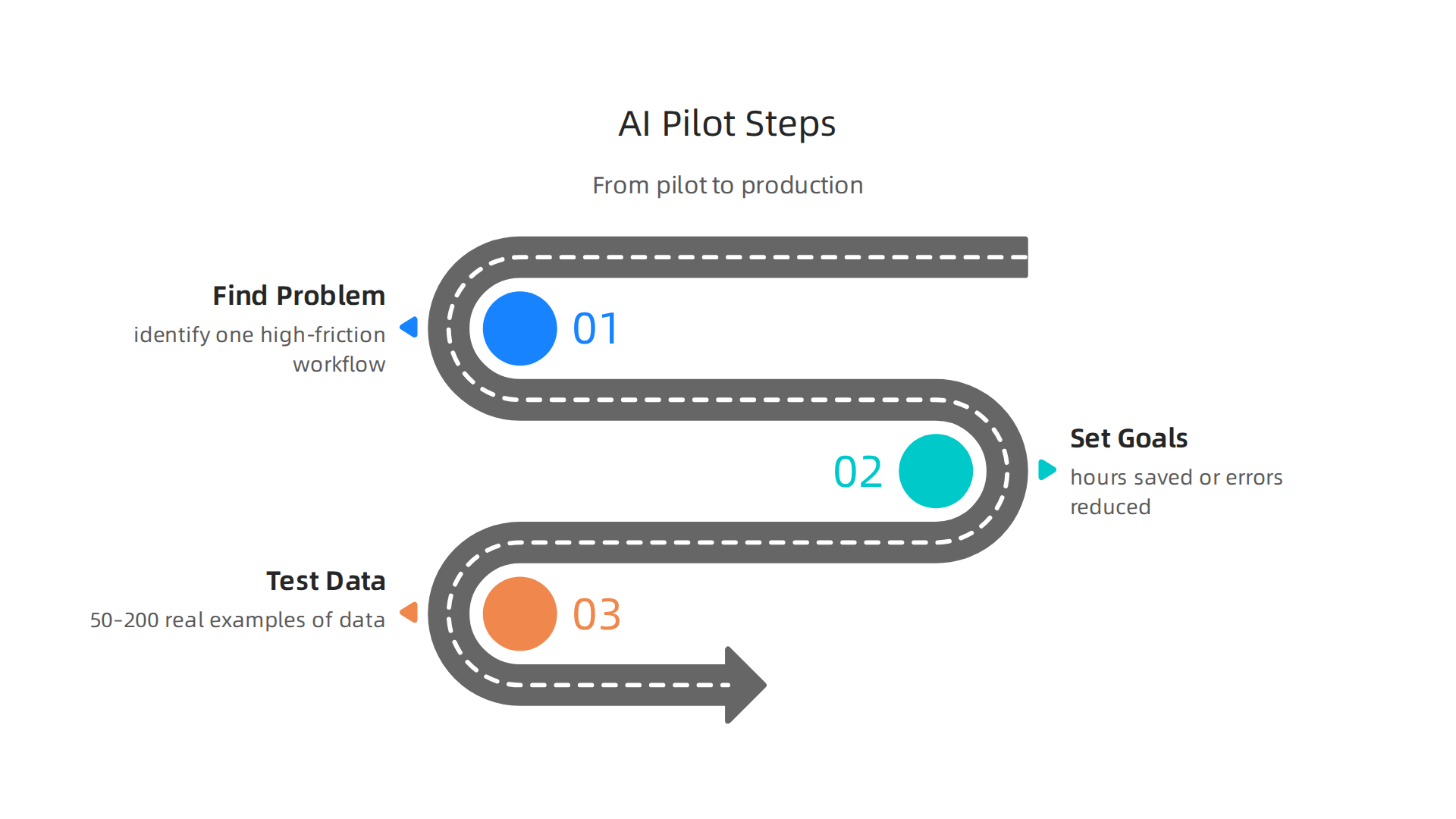
    Key steps for initiating a successful AI pilot project within your business.

    • Find a clear problem: Look for a work task that takes a lot of time or has many steps. It should be a task that you can easily track and measure. You need to "identify one high-friction workflow with clear ownership" to make sure it’s manageable.
    • Set clear goals: Before you start, know what success looks like. Instead of just saying "use AI," think about "hours saved" or "errors reduced." These clear goals help you prove the AI is actually helping AI Implementation Strategy: From Pilot to Production in 2026.
    • Test with real data: Use a small amount of your own real information to see how the AI performs. For small to medium businesses (SMBs), testing with "50–200 real examples of your own data" can show if the AI works as expected AI Adoption Roadmap for SMBs: 90 Days (2026). Many businesses find a 90-day plan helpful to get these first steps done Your 90-Day AI Roadmap: How Small Businesses Can Start Smart ….

    Moving from pilot to full use

    Once your pilot shows good results, it’s time to think bigger. Moving AI from a small test to a full part of your business means careful steps.

    A team celebrating a successful project, reflecting the achievement of moving an AI pilot to full production.

    • Plan for changes: This shift means looking at your technology setup (infrastructure), how your data moves (data pipelines), and how you manage the AI tools every day (MLOps). You also need to think about new rules and how your team will work with the AI. This journey needs "organizational change" to really take hold.
    • Roll out slowly: Don’t turn on the AI for everyone at once. You might use methods like "canary deployment," where you first give the AI tool to a small group of users. If it works well, you slowly give it to more people Ai Model Development And…. This helps you catch problems early.
    • Get leadership on board: To make sure AI projects succeed, both business and technology leaders need to support it. This means "securing commitment from both business and IT leadership" and agreeing on what success looks like Enterprise AI in 2026: Navigating the Shift from Pilots to ….

    Key people and working together

    Making AI work is a team effort.

    • Assign owners: Every AI project needs someone to be in charge. This "human owner" makes sure the AI runs smoothly and oversees its steps AI Implementation Roadmap for SMBs: Phasing the Rollout.
    • Train your team: Your employees will be using these new tools, so they need proper training. Providing "structured AI training for leadership and operational teams" helps everyone understand and use the AI effectively The AI Transformation Playbook for UK and European ….
    • Work with partners: Sometimes, you’ll need help from outside experts. Working with vendors who specialize in Mastering Specialized AI Tools can make a big difference. They can offer insights and support to help you deploy your chosen us tech solutions. Knowing how to find trusted sources for AI tool discovery 2026 can also speed up your progress.

    By taking these careful steps, from a small pilot to a full-scale rollout, businesses can successfully bring AI into their daily work. It’s about being smart and planned, rather than just jumping into the newest technology.

    Stay on top of the latest AI trends and tools. Get clear daily AI updates from The AI Newsletter Worth Reading.

    4. How to evaluate and compare AI tools: KPIs, security, and ROI

    After learning how to start with AI, the next big step is picking the right tools. It’s not enough to just pick the newest or most popular option. You need to know how to truly check if an AI tool is a good fit for your business. This means having a clear way to measure its worth, how safe it is, and if it will give you good results for your money.

    Your AI Tool Checklist

    To pick the best us tech solutions, you can use a simple checklist. This helps you compare different tools fairly.

    • How Well Does It Work? (Functionality and KPIs)

      • First, does the AI tool do what you need it to do? For example, if it’s supposed to write emails, how good are those emails?
      • How fast is it? Does it complete tasks quickly or does it make you wait? This is like its speed.
      • How often does it get things right? You want a high "task success rate," which means it achieves the goal most of the time. Experts suggest looking at things like latency, cost, and safety when judging AI agents How to Evaluate AI Agents: Latency, Cost, Safety, ROI.
      • The goal is to choose how to choose AI for business tools that deliver real results for your company.
    • Is It Safe and Private? (Security and Compliance)

      • AI tools often handle important company information. You must ask: "Is my data safe with this tool?"
      • Does the tool follow rules for keeping data private? This is super important, especially if your business has special guidelines to follow. The National Institute of Standards and Technology (NIST) has an AI Risk Management Framework to help make AI trustworthy.
      • Can you see what the AI tool is doing? This is called "auditability." It means you can check its work and make sure it’s doing things correctly and without mistakes. Make sure to check for things like detailed audit logging when looking at different AI platforms How to Evaluate Enterprise AI Platforms for Security and Compliance.
    • What About the Money? (Total Cost of Ownership and ROI)

      • The price tag of an AI tool is just the start. Think about the "Total Cost of Ownership." This includes the first price, how much it costs to set up, and how much you pay to keep it running over time.
      • Will the tool save you money or help you make more money? This is your Return on Investment (ROI). Many businesses look for a good ROI from their AI tools, especially in areas like marketing. You want a tool that gives you more value than what you spend on it.
      • Different platforms have different costs. Some popular ones like Microsoft Azure AI and Google Cloud AI use a "pay-as-you-go" system based on how much you use them Enterprise AI Platforms Guide 2026: Compare Top Solutions. Understanding how to get real ROI from AI marketing cloud or other tools is vital.

    Shortlisting and Testing Vendors

    Once you have your checklist, you can start comparing different AI tools and the companies that make them. Think of it like making a shopping list. You’ll want to evaluate AI companies to unlock business growth in 2026. This is called shortlisting. You can use templates to score each tool against your needs. This helps you figure out which ones are best to try.

    After you’ve shortlisted a few top choices, you can run small pilot projects with them. This is the best way to see how they work in your actual business. It lets you test out a few different us tech solutions, from big names to smaller innovators, before you pick the one that fits just right. Looking at things like "Decision Framework" can help you in this process Decision Framework.

    5. Scaling adoption: change management, governance, and measuring impact

    So, you’ve tried out new AI tools and found some that work well in a small test. That’s great! But the real challenge is making these tools work for everyone in your company. This means rolling them out widely, helping people get used to them, setting clear rules, and checking if they truly help your business grow. Moving from a small test (a pilot) to full use needs careful planning. Experts point out that a big step here is dealing with "organizational change" to make sure everyone is ready for AI Your AI Implementation Roadmap: Guide for 2026 Success.

    Making the Switch Easy for Everyone (Change Management)

    When you bring in new technology like AI, people might feel unsure or even worried. It’s like learning a new way to do things. Helping your team understand why the AI is useful, how it works, and how it will help them do their jobs better is called change management.

    • Talk it Out: Share clear information about the new AI. Explain what it does and what it doesn’t do.
    • Teach Them Well: Provide good training so everyone knows how to use the tools. Make it easy for them to ask questions and get help. Starting with structured training for all teams is a smart move for an AI transformation The AI Transformation Playbook for UK and European ….
    • Show the Benefits: Highlight how the AI will make tasks simpler or save time. This helps people feel excited about the change instead of worried.

    This smooth transition helps your company adopt smart AI for business more successfully.

    Setting the Rules for AI (Governance)

    As AI becomes a bigger part of your business, you need clear rules about how it’s used. This is called governance. It’s about making sure AI is used safely, fairly, and in a way that helps your company reach its goals.

    • Who’s in Charge? Decide who will be responsible for overseeing the AI tools. Who makes sure they are used correctly?
    • Fair Play: Make sure the AI tools are not used in ways that are unfair or that cause problems. This means checking for things like bias in the AI’s decisions.
    • Clear Guidelines: Create simple guidelines for how teams should use AI in their daily work. This helps keep things organized and safe.
    • Operating Model: Think about how your whole company works with AI. This might mean changing how teams talk to each other and how projects get money. Building a new "operating model" helps businesses grow with AI Rewiring the enterprise operating model for AI scale – Deloitte.

    It’s also important to activate good governance when moving from AI pilots to full production Your AI Implementation Roadmap: Guide for 2026 Success.

    Knowing if AI is Really Helping (Measuring Impact)

    After you’ve rolled out AI to more people, you need to keep checking if it’s truly making a difference. This means looking at the numbers and seeing the real impact.

    • Track the Right Things: Don’t just count how many times someone uses an AI tool. Instead, measure things like "hours saved," "mistakes reduced," or "more sales." These are the real signs of success AI Implementation Strategy: From Pilot to Production in 2026.
    • Compare Results: A good way to measure is by testing. You can run "A/B tests" where some people use the AI and others don’t, then compare their results. Or, try a "canary deployment," where you give the AI to a small group first and watch how it performs before giving it to everyone Ai Model Development And….
    • Get More Support: When you can show how much the AI is helping, it’s easier to get more money and support to keep using it and find new ways it can benefit your business. Start small, prove it works, and then grow AI Adoption Roadmap for SMBs: 90 Days (2026). This is how many us tech solutions become central to business operations.

    To stay on top of the latest strategies for AI adoption and impact measurement, consider subscribing to The AI Newsletter Worth Reading for daily updates.

    6. Regulatory and ethical considerations for U.S. deployments

    After setting up rules for how your company uses AI, it’s also important to think about the bigger picture: the laws and guidelines set by the government. In the U.S., these rules are still growing, but they are very important for any business using us tech solutions. They help make sure AI is used in a fair, safe, and private way.

    Key U.S. Guidance Areas to Watch

    As of 2026, there isn’t one big federal law that covers all AI use in the United States. However, many states have already put their own AI laws in place, and companies must follow them today. This means that if your business operates in different states, you need to be aware of various rules State AI Laws Take Hold as Federal Preemption Stalls.

    Here’s what businesses need to keep an eye on:

    Practical Steps for Teams

    To make sure your AI tools are used responsibly and follow all the rules, here are some things your team can do:

    • Understand the Laws: Keep up with new federal and state laws that affect AI, especially those related to data privacy and fairness. An innotech website or specific legal news sources can help you stay current.
    • Use Frameworks: Follow guides like the NIST AI Risk Management Framework. This framework helps you align AI development and use with privacy laws and intellectual property rights Artificial Intelligence Risk Management Framework: Generative ….
    • Check for Bias: Make sure your AI tools are fair and don’t make unfair decisions. This is a big part of ethical AI.
    • Be Clear: If your company uses AI to interact with customers, be open about it. Let people know when they are talking to an AI.
    • Get Training: Teach your team about ethical AI use and how to follow privacy rules. Understanding these details is key to mastering the AI future standard 2026.
    • Review Regularly: The world of AI rules is changing fast. Make sure you check your AI practices often to match new laws and best practices. Even big names like Dartmouth AI researchers keep up with these changes.

    Summary

    This article explains why U.S. tech solutions and AI matter for businesses in 2026 and gives a practical playbook for choosing, testing, and scaling AI. It reviews market demand, sector spending patterns, and how procurement differs for SMBs versus enterprise teams. You’ll get a clear breakdown of vendor types—big platforms, vertical solutions, developer tools, MLOps, and data platforms—and how each fits different needs. The guide shows how to run a focused pilot (50–200 real examples, 90-day plans), move to production with canary rollouts and MLOps, and assign human owners and training. It also offers a checklist to evaluate tools by functionality, security, and total cost of ownership, plus governance and impact-measurement advice. Finally, it covers the evolving U.S. regulatory landscape, ethical safeguards, and practical steps to keep AI deployments compliant and effective.


  • Mastering Behavioral Tech for Business Growth and Impact

    Mastering Behavioral Tech for Business Growth and Impact

    Why behavioral tech matters now – and what this guide will help you do

    Think about how much technology helps us every day. From the apps on your phone to the websites you visit, these tools are often designed to understand how you act and what you like. This is what we call behavioral tech. It’s not just about tracking what you do, but also about using that information to make things better or even guide choices.

    In 2026, behavioral tech has grown a lot, especially with the rise of smart AI. It uses ideas from how people learn and behave, often called "behavioral science," and mixes them with modern digital tools like apps and software. Experts see it as a way to use technology to help people change habits or reach goals, like being healthier or making smarter buying choices [^1]. It brings together computer science, psychology, and even brain science to really get how humans and animals act [^2].

    This is why leaders like CTOs, marketing managers, founders, and business consultants need to pay close attention.

    A group of business leaders in a meeting, actively discussing and making strategic decisions for their company's future.

    With AI making these tools even more powerful, behavioral tech helps businesses truly understand their customers. It lets them create better products, build more effective online marketing platforms, and connect with people in a more personal way, often using tools similar to those that manage many HubSpot marketing contacts. Companies like Eightfold AI also show how AI helps understand people better in the workplace.

    This guide will help you understand this important area. You will learn about:

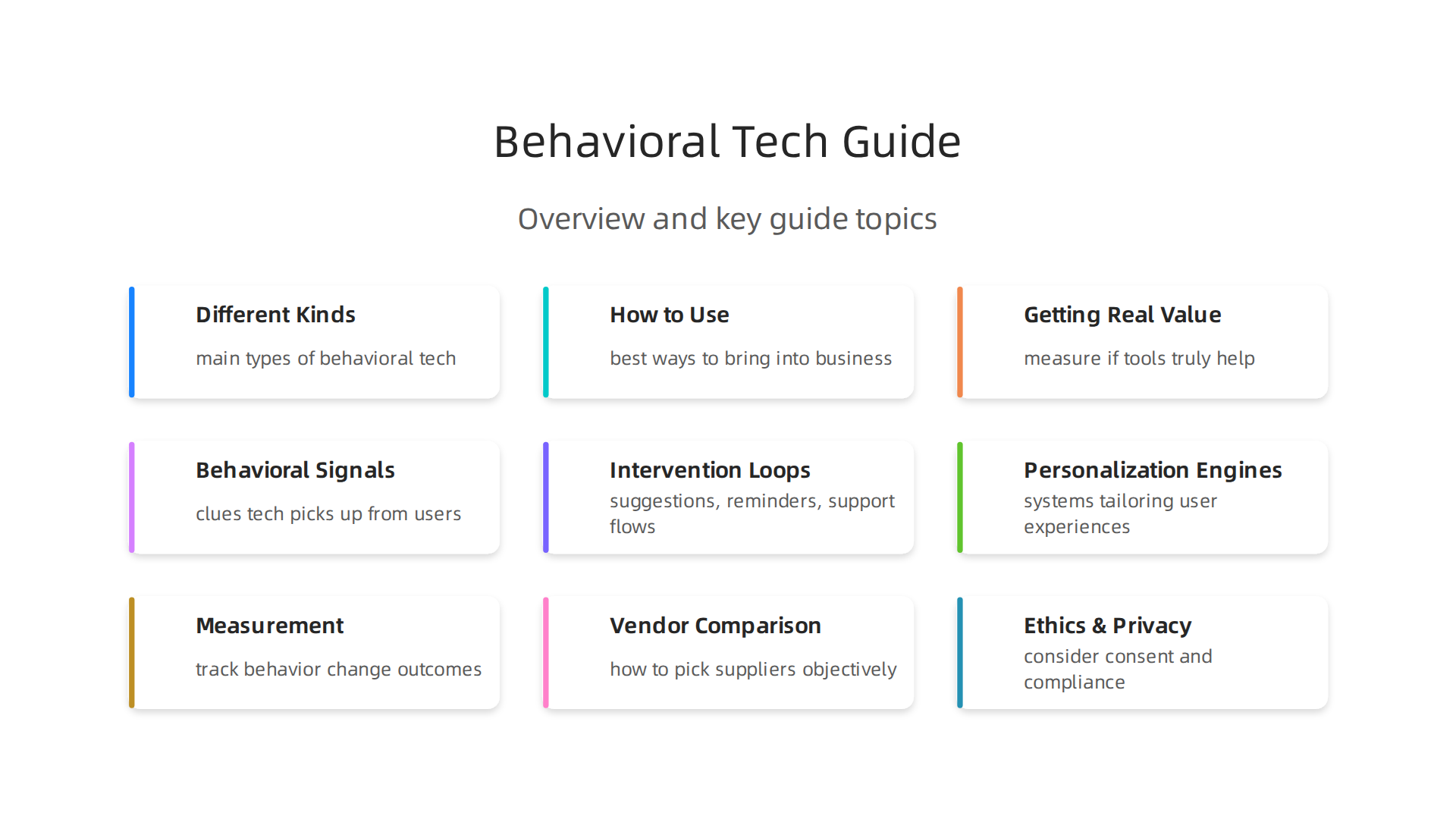
    An overview of what this guide covers regarding behavioral technology, from tool types to value measurement.

    • Different Kinds of Tools: We’ll look at the main types of behavioral tech out there.
    • How to Use Them: You’ll discover the best ways to bring these tools into your business.
    • Getting Real Value: We’ll explain how to measure if these tools are truly helping your company grow and make money.

    Our goal is to give you clear, easy-to-understand advice so you can make smart choices about using behavioral tech to help your business thrive. Staying updated on these fast changes is key.

    Get clear daily AI updates from The AI Newsletter Worth Reading.

    [^1]: What Is Behavioral Change Technology? ABA & BCT Tools
    [^2]: BEHAVIORAL TECHNOLOGY Definition in Psychology# Why behavioral tech matters now – and what this guide will help you do

    Think about how much technology helps us every day. From the apps on your phone to the websites you visit, these tools are often designed to understand how you act and what you like. This is what we call behavioral tech. It’s not just about tracking what you do, but also about using that information to make things better or even guide choices.

    In 2026, behavioral tech has grown a lot, especially with the rise of smart AI. It uses ideas from how people learn and behave, often called "behavioral science," and mixes them with modern digital tools like apps and software. Experts see it as a way to use technology to help people change habits or reach goals, like being healthier or making smarter buying choices. These digital tools, apps, and software are designed to intentionally shape or modify human behavior, offering new ways to collect data and extend support beyond traditional settings

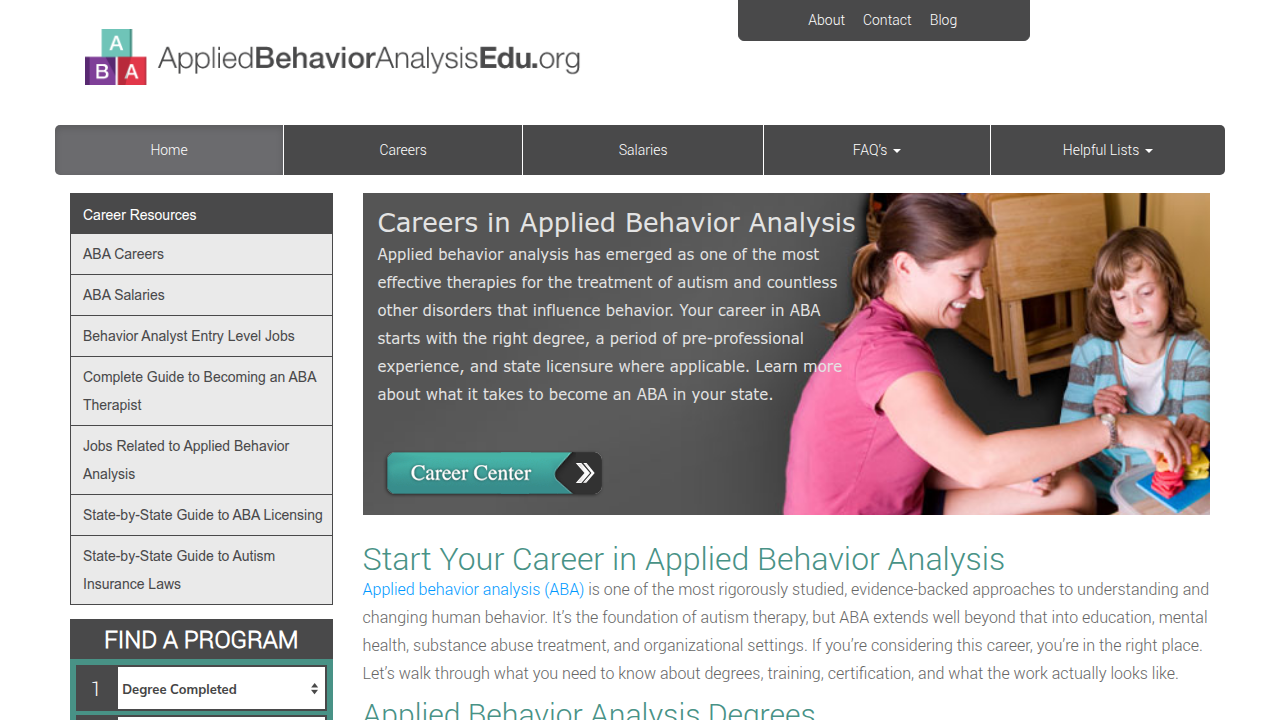
    Screenshot of the Applied Behavior Analysis Education website, a resource explaining behavioral change technology and its applications.

    What Is Behavioral Change Technology? ABA & BCT Tools. It brings together computer science, psychology, and even brain science to really get how humans and animals act BEHAVIORAL TECHNOLOGY Definition in Psychology.

    This is why leaders like CTOs, marketing managers, founders, and business consultants need to pay close attention. With AI making these tools even more powerful, behavioral tech helps businesses truly understand their customers. It lets them create better products, build more effective online marketing platforms, and connect with people in a more personal way, often using tools similar to those that manage many HubSpot marketing contacts. AI platforms like Eightfold AI also show how AI helps understand people better in the workplace.

    This guide will help you understand this important area. You will learn about:

    • Different Kinds of Tools: We’ll look at the main types of behavioral tech out there.
    • How to Use Them: You’ll discover the best ways to bring these tools into your business.
    • Getting Real Value: We’ll explain how to measure if these tools are truly helping your company grow and make money.

    Our goal is to give you clear, easy-to-understand advice so you can make smart choices about using behavioral tech to help your business thrive. Staying updated on these fast changes is key.

    Get clear daily AI updates from The AI Newsletter Worth Reading.

    1) What exactly is ‘behavioral tech’ – core concepts and components

    Let’s dive deeper into what behavioral tech truly is. It’s more than just regular software. It’s about building tools that understand and gently guide human actions. Think of it as mixing what we know about how people act with smart technology. In 2026, this field is all about making technology work for us in ways that feel natural and helpful.

    Behavioral tech works using a few main ideas:

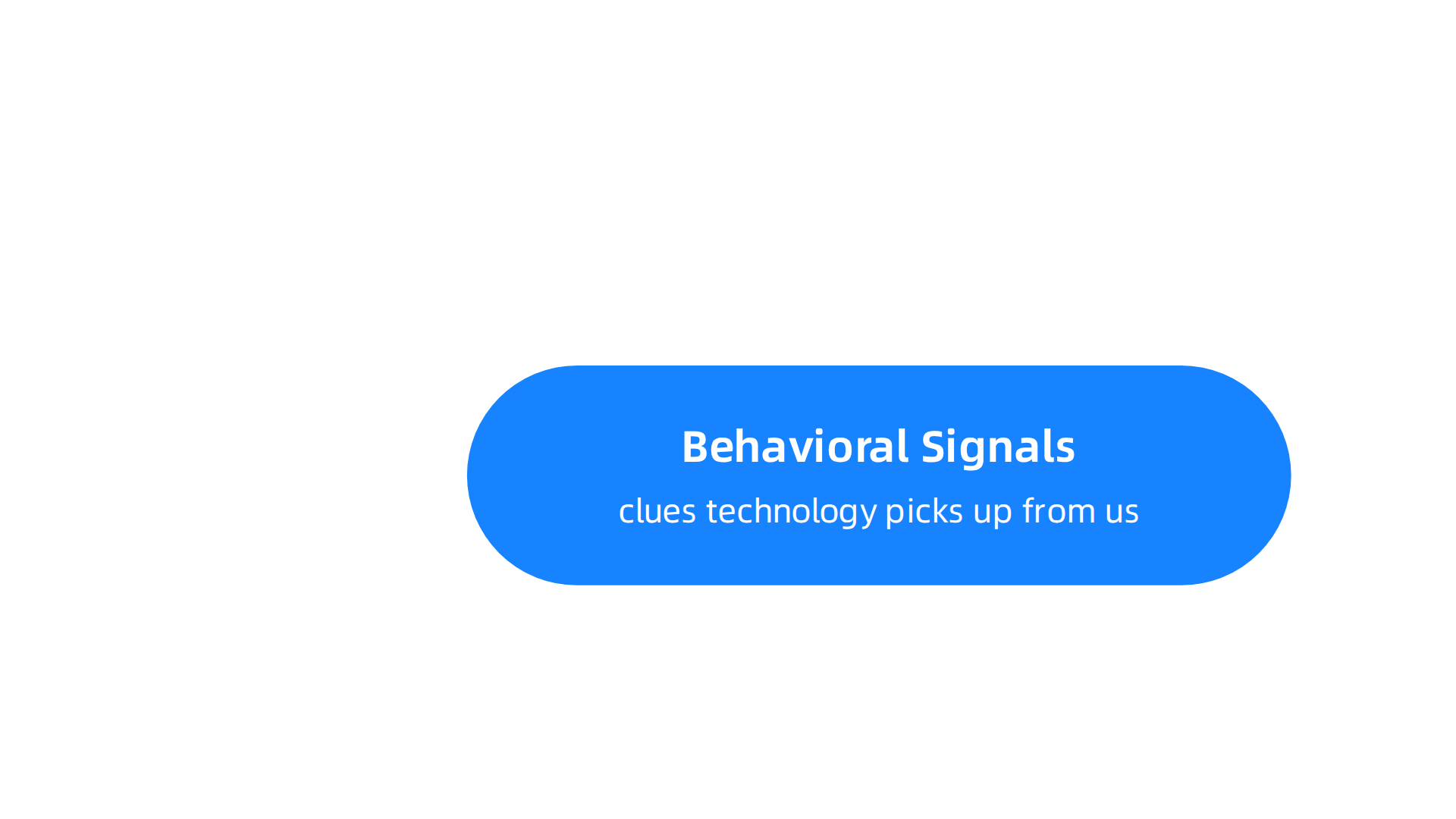
    Visualizing the fundamental ideas behind behavioral technology, including how it collects signals and personalizes experiences.

    • Behavioral Signals: These are the clues technology picks up from us. It could be how long you look at a certain product online, what articles you read, or even how often you use a fitness app. These signals give businesses a clear picture of what you like and what you might do next. Tools for understanding these signals are key for businesses, letting them see how customers move and where a little help might change things for the better

    Screenshot of the Saras Analytics homepage, a platform offering customer behavior analysis tools to help businesses understand user actions.

    10 Best Customer Behavior Analysis Tools to use in 2026. This data helps create better online marketing platforms.

    • Intervention Loops: This is where the tech steps in. Based on your signals, the technology might offer a suggestion, send a reminder, or show you new information. For example, a healthy eating app might remind you to drink water or suggest a recipe. It’s a continuous cycle of observing, nudging, and seeing what happens next.
    • Personalization Engines: These are the smart brains of behavioral tech. They take all the signals and decide what is most useful or interesting for you. It’s how an app knows to recommend certain movies or how an online store shows you products you might actually want to buy. This makes your experience unique, often using AI to create a futuristic website with personalization.
    • Measurement: To know if behavioral tech is really working, we need to measure its effects. This means tracking if people actually changed their habits or if a business goal was met. For instance, did more people complete a task after getting a digital nudge? This step helps improve the tools over time.

    These ideas work together to form what experts call "Behavioral Intervention Technologies," which are digital tools that aim to improve health behaviors and well-being The Behavioral Intervention Technology Model.

    How is behavioral tech different from other tech fields?

    It’s easy to mix up behavioral tech with other similar areas, but there are important differences:

    • Compared to regular analytics: Basic analytics just tells you what happened. For example, "1,000 people visited this page." Behavioral tech goes further by asking, "How can we get those 1,000 people to do this specific thing?" It aims to influence action, not just report on it.
    • Compared to classical personalization: Old-school personalization might put your name in an email. Behavioral tech looks at your deep behaviors and patterns to offer truly relevant experiences. It’s not just about addressing you by name; it’s about understanding your needs.
    • Compared to predictive AI: Predictive AI tries to guess what will happen in the future, like if a customer will leave. Behavioral tech uses those predictions to act and prevent that outcome. For example, if AI predicts someone might quit their job, tools similar to those used by Eightfold AI can then step in with helpful resources to make them stay. It’s about guiding outcomes, not just predicting them. To truly grasp these concepts, it helps to understand the technology meaning explained in clear AI terms.

    In short, behavioral tech is about actively shaping behavior using smart, data-driven tools, offering a powerful way for businesses to connect and grow with their customers.

    2) Market landscape: who builds behavioral tech and who buys it

    Now that we know what behavioral tech is, let’s look at who makes these smart tools and who uses them. In 2026, the world of behavioral technology is buzzing with different kinds of companies, from big names to small, specialized firms. Behavioral technology is an area that brings together computer science, psychology, and other fields to help understand and improve human actions BEHAVIORAL TECHNOLOGY Definition in Psychology.

    Who builds behavioral tech?

    We can sort the companies that build behavioral tech into a few groups:

    • Platform Providers: These are the big players offering wide-ranging tools. Think of companies that provide customer relationship management (CRM) systems or all-in-one marketing tools. They often add behavioral tech features to help businesses connect better with their customers. For example, platforms like HubSpot use AI to help streamline business operations across marketing, sales, and service, making it easier to manage customer interactions and use behavioral data for better results. These platforms handle things like managing online marketing platforms and tracking HubSpot marketing contacts.
    • Niche Vertical Vendors: These companies focus on one special area. For instance, there are behavioral tech tools just for health apps, helping people stick to fitness goals, or for financial apps, guiding users to save money. They are experts in their specific field.
    • Analytics + Action Toolchains: These firms offer tools that first gather lots of data about how people behave, then give businesses ways to act on that data. This means they not only show you what customers are doing but also help you nudge them toward a desired action.
    • Consultancies: These are expert teams that don’t build the tools themselves. Instead, they help other businesses figure out which behavioral tech tools to use and how to make them work best for their specific needs. They offer advice and help with setting things up.

    Who buys behavioral tech?

    The buyers of behavioral tech also come in different shapes and sizes:

    • Small to Medium Businesses (SMBs): These businesses often look for simpler, ready-to-use behavioral tech solutions. They want tools that are easy to set up and start showing results quickly. Their main goal might be to get more customers, improve sales, or make their customer service better without needing a huge technical team. They often look for practical tools that deliver real results.
    • Enterprises: Big companies have different needs. They might want custom behavioral tech solutions that fit perfectly with their existing complex systems. For example, a large company might use advanced AI tools like those from Eightfold AI for human resources, to better understand employee behavior and help with career development or retention. Enterprises have bigger budgets and look for deep integrations and powerful features to solve large-scale problems or drive strategic goals. When choosing tools, it’s important for these large businesses to carefully consider how to choose AI for business tools that deliver real results in 2026.

    Staying informed about this fast-changing market can be tricky.
    If you’re interested in keeping up with the latest in AI and technology, consider subscribing to The AI Newsletter Worth Reading for clear daily updates.

    3) High-impact use cases: personalization, risk detection, behavior change, and more

    But knowing about the market is just the first step. To really use behavioral tech well, we need to look at what it can actually do for businesses and people. In 2026, behavioral tech is helping in many ways, from making things more personal to spotting problems before they get big.

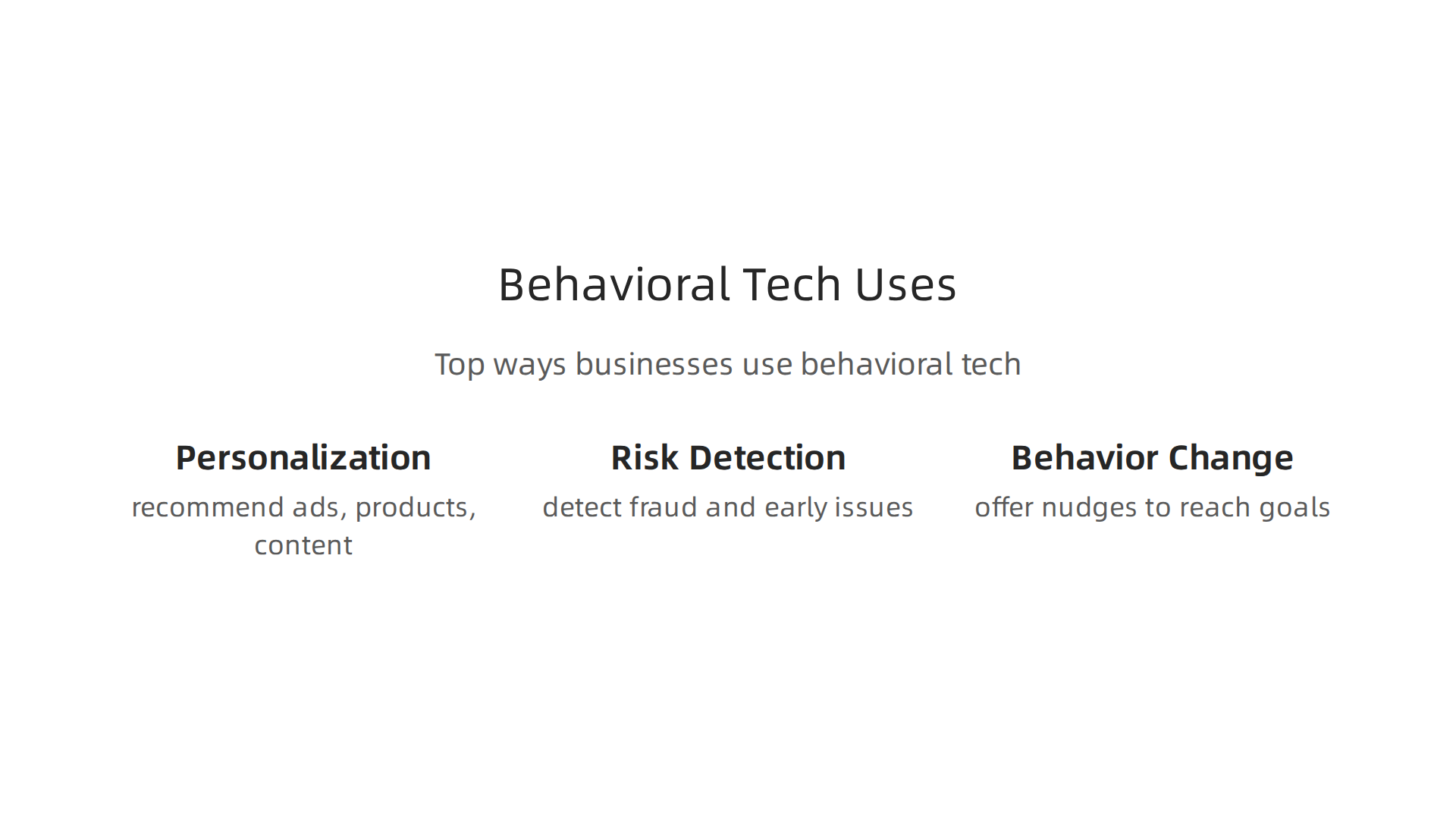
    Here are some top ways businesses use behavioral tech today:

    Illustrating key applications of behavioral technology across personalization, risk detection, and behavior change.

    • Making things Personal (Personalization)
      Have you ever noticed how websites or apps seem to know what you like? This is a big use of behavioral tech. Companies watch how you click, what you buy, and what you look at. Then, they use this information to show you ads, products, or content that you might be interested in. This helps them connect better with customers and make more sales. For example, businesses use special tools to understand how customers act online and tie that behavior to purchases and loyalty 10 Best Customer Behavior Analysis Tools to use in 2026. This often involves using advanced methods in AI Inbound Marketing: Better Personas, Content, ROI. It’s all about making your experience feel unique, especially across different online marketing platforms.

    • Spotting Risks (Risk Detection)
      Behavioral tech can also help find problems early. This might mean:

      • Fraud detection: Banks can use tech to notice unusual spending patterns that might mean someone is trying to steal money.
      • Employee problems: Companies can use tools like eightfold AI to predict if an employee might leave, helping them keep valuable team members. This is part of a larger trend in "people analytics" which helps predict outcomes like employee departures.
      • Health alerts: In mental health, AI can look at how someone is communicating to detect signs of distress, which can help in getting them help faster Top 21 AI & Emerging Tech Use Cases for Behavioral Health. For businesses, it’s also important to be aware of hidden dangers. Learn more about Stealth AI: Hidden AI Risks and Opportunities.
    • Helping with Change (Behavior Change)
      Sometimes, we want to change a habit, like eating healthier or saving more money. Behavioral tech can offer nudges and support to help us reach these goals. Health apps might remind you to drink water, or financial apps might suggest ways to cut down on spending. These tools are designed to encourage positive actions over time and are enhancing behavioral health with technology.

    When choosing a behavioral tech tool, businesses need to think about a few things. First, what kind of data do you need? Personalization needs customer behavior data, while risk detection might need financial or communication data. Second, how will you protect people’s privacy? This is very important. And third, how will you measure if the tool is actually working? For example, with personalization, you might track how many hubspot marketing contacts become paying customers. Each use case needs its own careful plan to make sure the tech helps in the best way possible.

    When you understand what behavioral tech can do, the next big step is picking the right tools and partners.

    A professional carefully reviewing documents, perhaps comparing different behavioral tech solutions or vendor proposals.

    It’s like choosing the best team for a big project. In 2026, many companies offer behavioral tech solutions, so knowing how to compare them is super important. You want to make sure the tools you pick actually help your business grow and solve problems.

    Here are the main things to look at when comparing behavioral tech vendors:

    Data Needs and Handling

    First, think about the data.

    • What kind of data does the tool need? Does it need customer clicks, employee feedback, or health information? Make sure the tool can use the data you have.
    • How does it keep data safe? Protecting people’s information is a must. Ask about their security plans and how they follow privacy rules.

    AI Models and How They Work

    Behavioral tech uses smart computer programs, called AI models, to learn from data.

    • How well does the AI work? Ask for proof that the AI is good at what it does, like predicting customer actions or spotting risks.
    • Can you understand its choices? This is called "explainability." Sometimes, AI can be like a black box. It’s better if the vendor can explain why the AI made a certain suggestion. This helps you trust the tool more.

    How it Connects to Other Systems

    A new behavioral tech tool should play nice with your existing tools.

    • Does it link easily? Check if the tool can connect with your other systems, like your customer management software (CRM) or your online marketing platforms. Good connections mean your data flows smoothly. For example, if you use HubSpot for your marketing contacts, you’ll want a behavioral tech tool that can integrate well.
    • What are the "integration surfaces"? This just means how the tools talk to each other, often through special connectors called APIs.

    Service Guarantees (SLAs)

    It’s important to know what you can expect from a vendor after you buy their tool.

    • What promises do they make? Look for Service Level Agreements (SLAs). These are like contracts that say how much of the time the tool will be working, how fast they will fix problems, and what kind of support you will get. Knowing these details helps you plan better and avoid surprises. A strong vendor will have clear SLAs covering reliability and support The Essential IT Vendor Selection Criteria Checklist.

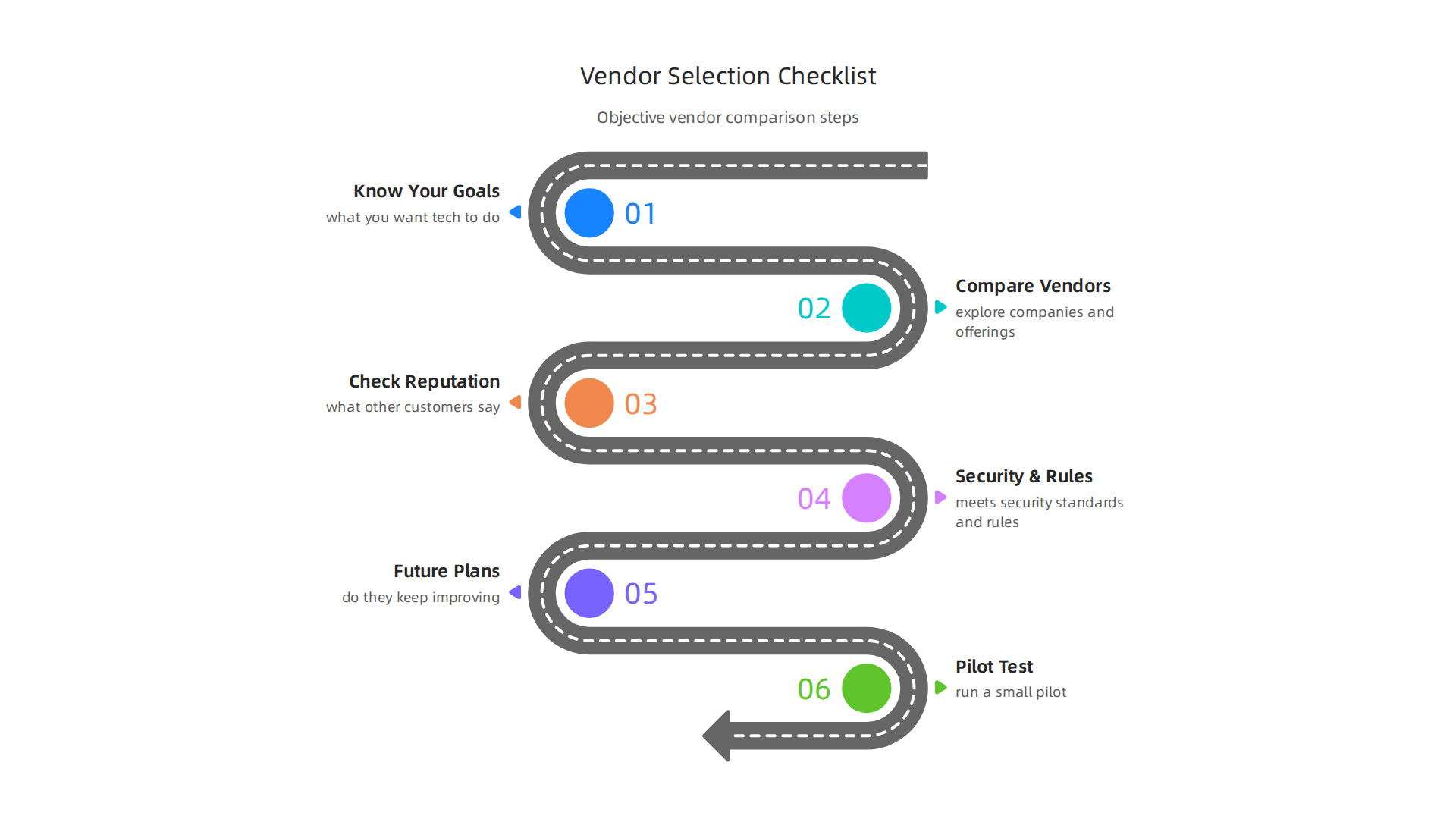
    A Simple Checklist for Choosing Vendors

    To make sure you pick the best behavioral tech for your business, follow these steps:

    A clear checklist to guide businesses in objectively comparing and selecting behavioral tech vendors.

    1. Know Your Goals: Before you even look at tools, write down exactly what you want the behavioral tech to do for you. Do you want to increase sales, reduce employee turnover with tools like eightfold AI, or improve customer satisfaction?
    2. Look at Many Options: Don’t just pick the first tool you see. Explore different companies and their offerings.
    3. Check Their Reputation: How long have they been around? What do other customers say about them? Reading reviews and asking for references can help a lot.
    4. Security and Rules: Make sure the vendor meets high security standards and follows all important rules for your industry. This might include certifications like SOC 2 or ISO 27001 Vendor Evaluation Criteria Checklist for Procurement Teams.
    5. Future Plans: Ask about their future plans for the tool. Do they keep making it better? You want a partner that will grow with you.
    6. Try It Out: If possible, do a small test or "pilot" project with the tool. This lets you see how it works in your own company before you commit fully.

    Picking the right behavioral tech can feel like a big decision, but with a clear plan, you can find the best fit for your business. For more help on finding great tools, you might want to read our guide on how to choose AI for business tools that deliver real results in 2026.

    Stay informed about the fast-changing world of AI and behavioral tech.
    Get clear daily AI updates from The AI Newsletter Worth Reading.

    Once you have picked the best behavioral tech tool for your business, the next big step is putting it to work. This means making sure it connects smoothly with all your other systems. Think of it like building a new road in a busy city: you need to make sure it links up well with existing roads and that traffic flows easily.

    How Behavioral Tech Fits Into Your Systems

    There are different ways to connect behavioral tech with your business operations. These are often called "integration patterns."

    • In-app SDKs: If you have a mobile app or a website, an SDK (Software Development Kit) is a common way to add behavioral tech. It’s like a small toolkit you drop into your app. This toolkit helps gather information directly from how users interact with your app or site. The behavioral tech can then send back suggestions, like showing a special offer to a customer based on what they just clicked.
    • Server-side Inference: Sometimes, the smart work of behavioral tech happens on your company’s own computer servers or in a special cloud service. This is called "server-side inference." Your systems send data to the behavioral tech, it processes the information and makes predictions (the "inference"), and then sends the results back. This approach is good for handling lots of data and making complex decisions. Designing these kinds of systems needs a good plan for how data moves, often called a data pipeline architecture, which helps to collect, move, and change data for analysis Data Pipeline Architecture: Key Patterns and Best Practices.
    • Edge vs. Cloud Computing: Where the behavioral tech does its thinking matters.
      • Cloud computing means the smart programs run on powerful computers far away, like Google’s or Amazon’s servers. This is flexible and can handle huge amounts of data.
      • Edge computing means the smart programs run closer to where the data is collected, like on a smart device or a local server. This can be faster for instant decisions, like for a security camera using AI to spot something unusual right away.
    • Orchestration Layers: These are like traffic cops for your data and different tech tools. An orchestration layer makes sure all your systems and the behavioral tech talk to each other correctly. It manages the "data flows" and ensures everything happens in the right order. This is especially important when you have many tools, like eightfold AI for HR or various online marketing platforms, all needing to share information.

    Common Problems When Implementing Behavioral Tech

    Even with a great plan, challenges can pop up when you put behavioral tech into action. Knowing about them helps you avoid them.

    • Data Flow Hiccups: The biggest problem is often making sure data moves freely and correctly. If data doesn’t get to the behavioral tech tool, or if the results don’t get back to your team, the whole system breaks down. This can delay small test projects, known as pilots, or stop the tool from being used widely. Good planning for how data flows is key to avoid this.
    • Not Having Clear Goals: If your team isn’t sure what the behavioral tech is supposed to achieve, it’s hard to make it work right. Goals like "increase customer engagement by 15%" are much better than "just use some AI."
    • People Problems: Sometimes, the issue isn’t the tech itself, but getting everyone in the company to understand and use it. People might not trust the AI or might not want to change how they work. Getting everyone on board from the start is very important. To ensure your business leaders are ready for new technologies, consider reading about Qualcomms 2026 Innovations Reshape Business for Future Leaders.

    Successfully using behavioral tech means thinking about how it fits into your daily work, not just what it can do. It’s about designing a system where data can move easily and everyone understands their part.

    After putting behavioral tech into action, the next big question is: how do we know it is actually helping? This is where measuring its impact comes in. You need to look at certain numbers and run tests to make sure your new tools are truly making a difference and giving you good value for your money.

    Which Numbers to Watch (KPIs)

    To see if your behavioral tech is working, you need to track key performance indicators, or KPIs. These are like scorecards that tell you how well your business is doing in certain areas. For behavioral tech, some important KPIs include:

    • Lift Metrics: This shows how much better things are compared to before you used the behavioral tech. For example, if sales went up by 10% because of personalized offers, that 10% is your "lift." Other lifts could be more people clicking on emails or spending more time on your website.
    • Behavior-Based Retention: This KPI looks at whether customers stick around longer because of the behavioral tech. Are they buying more often? Are they staying subscribed to your service? Behavioral tech often aims to make customers happier and more loyal, so seeing them stay is a big win.
    • Cost-to-Serve: Sometimes, behavioral tech can help you save money. For example, if it automates responses to common customer questions, your support team spends less time on those tasks. This lowers your "cost-to-serve" each customer, which means more profit for your business.

    To track these numbers well, you need good systems to collect and process data. Designing how your data moves, from where it’s gathered to where it’s analyzed, is called Data Pipeline Architecture. Having a smart setup helps you instrument these KPIs effectively.

    Running Tests to See What Works

    Just like a scientist, you need to run tests to be sure that any good changes you see are actually from the behavioral tech and not something else.

    • Designing Pilots: A "pilot" is a small test run. You might try the new behavioral tech with a small group of customers or in just one part of your business first. This helps you see if it works as expected before rolling it out to everyone. It also helps you spot any problems early.
    • A/B Tests: This is a very common way to test. You show two different versions of something to similar groups of people. For example, one group sees the regular website (Group A), and another group sees a version with behavioral tech features (Group B). Then, you compare how Group A and Group B act. If Group B buys more or stays longer, you know the behavioral tech is making an incremental value.

    By carefully planning these tests, you can truly understand if your behavioral tech is delivering results. It helps prove that your investment is worthwhile. Tools like HubSpot AI streamlines your business operations can help track these results, especially for online marketing platforms and managing customer contacts.

    Staying on top of these trends and understanding the best ways to measure AI’s impact can be tricky in 2026. For clear daily AI updates, consider subscribing to The AI Newsletter Worth Reading.

    The last section talked about measuring if behavioral tech is working. Now, let’s talk about how to use these tools in a fair and safe way. This means thinking about ethics, privacy, and following the rules.

    Two professionals engaged in a serious discussion, likely about ethical implications and compliance for new technologies.

    Key Privacy and Compliance Questions

    Using behavioral tech can be very helpful for businesses, especially for online marketing platforms or managing customer contacts. But it also means you are dealing with people’s personal information. This brings up big questions about fairness and privacy.

    First, transparency is key. People need to know when and how their data is being used. Businesses should be clear about what kind of information they collect and why. It’s like telling someone you’re taking their picture and why you need it.

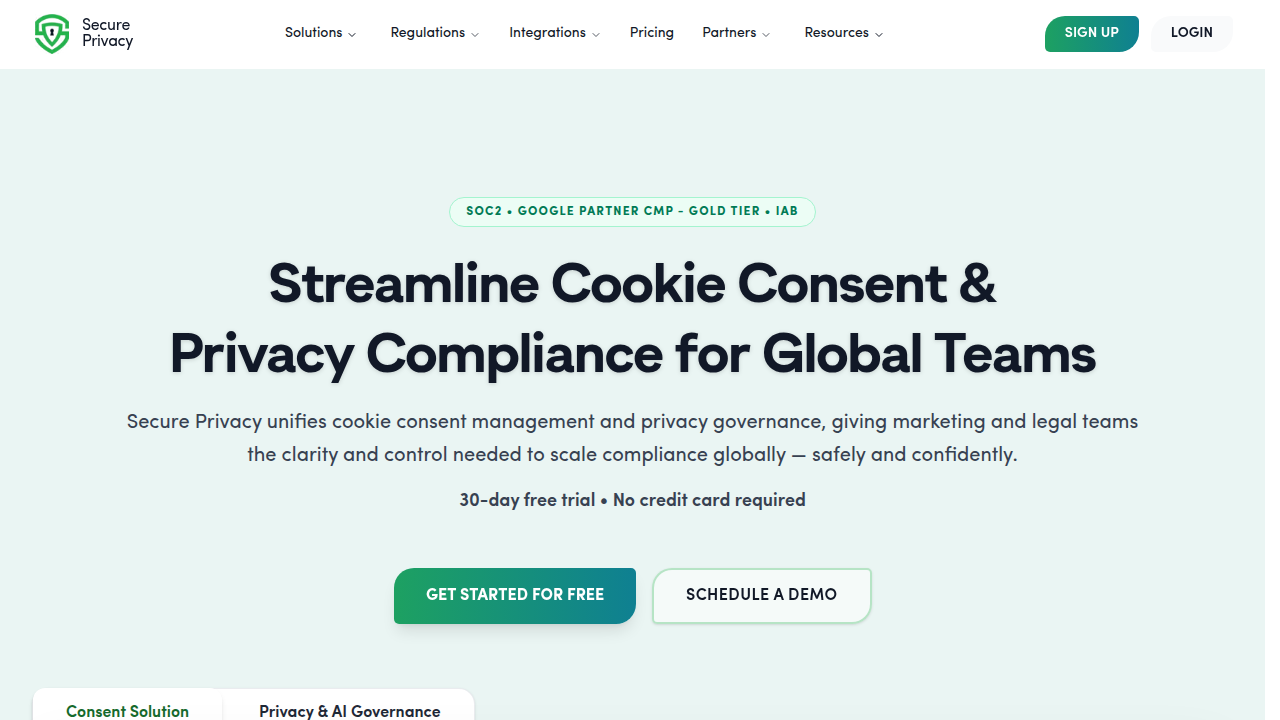
    Next is consent. This means getting a clear "yes" from people before you use their data to understand or change their behavior. In 2026, new rules are making this even more important. For example, some laws now require a very clear Online Privacy Act of 2026 to Provide Personal Information … before systems try to influence behavior or filter content. Simply being "aware" is not enough; businesses need actual permission to make predictions about people’s behavior New US State Privacy Laws in 2026: What Rights Do You Have Now?. Regulators are closely watching how companies ask for consent, looking for any tricky ways to get a "yes"

    Screenshot of Secure Privacy AI's homepage, a platform focused on compliance with privacy laws and ethical data handling.

    Privacy Laws 2026: Global Changes, Enforcement & ….

    Then there’s fairness. Behavioral tech should not lead to unfair treatment or bias. For example, if you use AI to help with hiring, like with tools similar to Eightfold AI, you need to make sure it treats all candidates fairly and does not accidentally favor one group over another. This is an important risk to understand, as covered in a guide to Hidden AI Risks, Opportunities, and Management in 2026.

    Finally, cross-border data flows are a big deal. This refers to sending personal data from one country to another. In 2026, governments are putting new rules in place to control how "sensitive personal data" from the U.S. can be sent to certain countries Data Privacy, Cybersecurity, AI developments shaping 2026. This means businesses need to be careful about where their data goes and if those places have strong enough privacy laws.

    How to Operationalize Ethics

    It’s not enough to just know about these rules; businesses need to put them into practice every day. This is called "operationalizing ethics."

    • Governance: This means setting up clear rules and policies within your company for how behavioral tech should be used. Who is in charge of making sure data is handled correctly? What steps need to be taken before a new behavioral system goes live? Many businesses are building strong privacy, cybersecurity, and AI programs to help with compliance Privacy and AI Heatmap for 2026: What Device & Drug ….
    • Documentation: Keep good records of everything. This includes how you got consent, how your AI systems make decisions, and what steps you take to protect data. Good documentation helps show that you are following the rules and thinking about ethics.
    • Vendor Obligations: When you use tools or services from other companies for your behavioral tech, you need to make sure they also follow ethical and privacy rules. For instance, if you’re using a third-party platform for your online marketing or to manage hubspot marketing contacts, ensure they meet your standards. You should have clear agreements with these vendors about data protection. Ethical use of AI is also important for students, like knowing how to Use AI-Powered Homework Help Smartly and Ethically.

    By putting these practices in place, businesses can use behavioral tech in a way that helps customers and keeps their trust, while also staying on the right side of the law in 2026.

    Summary

    This guide explains why behavioral technology matters in 2026 and how businesses can use it to understand and influence user behavior. It defines core concepts—behavioral signals, intervention loops, personalization engines—and contrasts behavioral tech with analytics and predictive AI. The article maps the market (platforms, niche vendors, consultancies), shows high-impact use cases like personalization, fraud and health risk detection, and behavior change, and gives practical vendor-selection criteria and a simple checklist. It also covers integration patterns (SDKs, server-side inference, edge vs cloud), common implementation challenges, and how to run pilots and A/B tests to prove value. Finally, it outlines the KPIs to track and the privacy, consent and fairness practices needed to deploy behavioral tech ethically and compliantly. After reading, leaders will know how to evaluate, test, measure, and govern behavioral tech so it delivers real business and user benefits.

  • The Innovation Line 2026: How Businesses Adopt AI for Growth

    The Innovation Line 2026: How Businesses Adopt AI for Growth

    Why the ‘Innovation Line’ Matters Now

    In 2026, it feels like artificial intelligence (AI) is everywhere. Most businesses, around 88% in fact, are now using AI in some part of their work

    Explore Ventionteams to learn about AI adoption statistics and industry reports.

    AI Adoption Statistics Q1 2026: All Figures – Vention. We’re seeing AI help with everything from writing new content to creating computer code. The money spent on AI is also growing very fast, expected to hit over $2 trillion this year and keep climbing State of AI 2026 – AI Market Size, Investment, and Industry Data. It’s clear that AI is no longer a small experiment; it’s a huge part of how businesses run.

    But with all this growth, there’s a big question: how do companies actually make these new AI tools work well for them? This is where the idea of the "innovation line" comes in. Think of the innovation line as the point where new ideas and advanced technologies, like AI, turn into real, helpful tools that bring good results for a business. It’s about moving from just trying out new AI to using it in a way that truly changes things for the better, making work easier or helping the company grow.

    Leaders in companies today face many hurdles when trying to cross this innovation line. One big problem is simply too much information. There are so many AI tools and new updates every day that it’s hard to know what’s useful. It’s like trying to drink from a firehose!

    Navigating the overwhelming landscape of AI tools and information requires careful decision-making.

    Then comes the challenge of picking the right tools from endless choices. How do you know which AI platform is best for your specific needs? Companies often worry about whether a new AI system will fit with their old systems, like at a big tech place such as the Comcast Technology Center. They also wonder if the money they spend on AI will actually bring them more money back, known as return on investment (ROI). Choosing the right tools is key to making sure your investment pays off. If you’re wondering how to pick smart tools, you can learn more about how to choose AI for business tools that deliver real results.

    It’s a lot to keep up with, and making the right choices means staying informed.

    Ready to cut through the noise and get daily insights that matter? Get clear daily AI updates from The AI Newsletter Worth Reading.

    Now, let’s look at the bigger picture to understand the "innovation line" in 2026. The world of AI is changing fast, and some big trends are shaping how businesses use new technology to grow.

    Major Trends Reshaping the Innovation Line

    First, we see the commoditization of tooling. This simply means that many basic AI tools and features are now very common and easy to get. They are no longer special or expensive. It’s like how everyone has access to good basic software today. This makes it easier for many companies to start using AI, but it also means that just having an AI tool isn’t enough to stand out.

    Second, there’s a big move towards platform consolidation. Instead of using many different small AI tools for different tasks, businesses are looking for bigger platforms that can do it all. Companies like Viant Technology, for example, might prefer one large system that handles many AI jobs at once. This helps connect different parts of a business better and makes managing AI easier. You can think of it like going to a Micro Center PC builder to get all your computer parts in one go, instead of buying each piece from a different store. Picking the right major platform is a growing challenge. If you’re looking for solutions for your business, exploring enterprise AI platforms 2026 top providers and how to choose the right one can be a smart next step.

    Third, companies now have rising expectations for measurable ROI. This means businesses don’t just want to try AI; they want to see clear proof that it’s actually saving money or making more money. Leaders are expecting AI to deliver real, "transformative impact" on their work, and they want numbers to show for it

    Deloitte's insights on applied artificial intelligence, including reports on the state of AI in the enterprise.

    The State of AI in the Enterprise – 2026 AI report. It’s not enough to say "AI makes us more efficient"; you need to show how much more efficient. Learning how to get real ROI from AI marketing cloud in 2026 is a great example of this trend.

    Shifts in Buying Behavior

    These trends also change how businesses buy new AI tools. Because AI platforms are more mature, buyers are more careful. They take longer to decide, ask more questions about how a tool will actually help their company, and want to see proven results. They are less likely to buy something just because it’s new and shiny. This shift means that AI providers need to clearly show the value and benefits of their tools to help companies cross the innovation line.

    Now, let’s dive deeper into the actual building blocks that define the innovation line in 2026. After seeing how businesses are changing their buying habits, it’s helpful to understand the main kinds of technology that are driving all this AI growth. These are called "technology clusters," and they are like different parts of a big machine working together.

    Key Technology Clusters Driving the Innovation Line

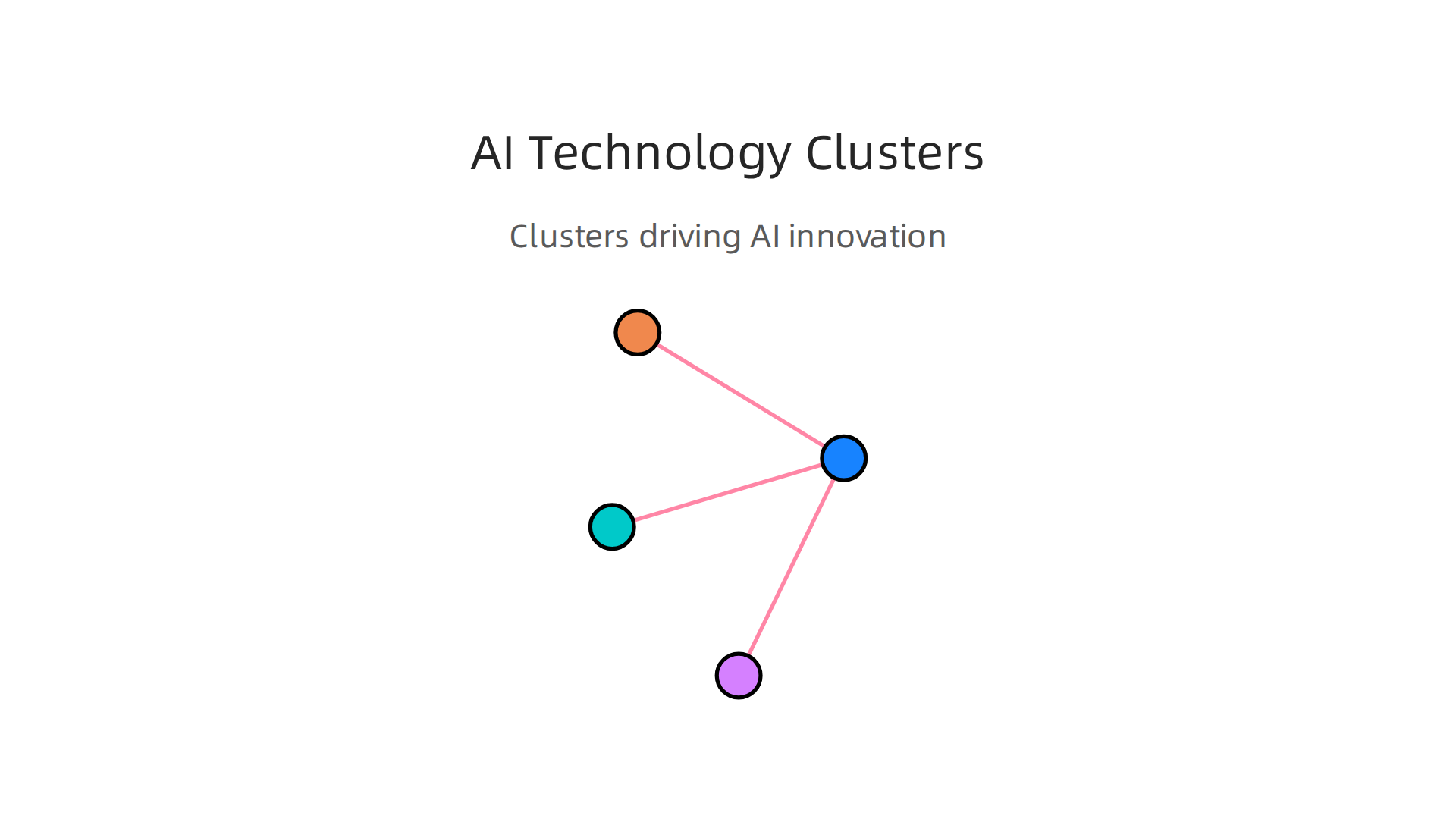
    To help companies like Viant Technology or even smaller businesses cross the innovation line, we can look at four key technology clusters.

    The four main technology clusters that underpin and drive AI innovation today.

    These clusters help shape what AI tools are available and how they are used.

    1. Infrastructure: This is the basic foundation, like the roads and power grids for AI. It includes things like powerful computer chips, data centers (big buildings full of computers), and cloud services. These are the engines that make AI possible. Since 2022, industries building this AI foundation, like semiconductors and cloud services, have added a lot of money to the economy, showing just how fast the demand for AI infrastructure is growing The high-growth industries reshaping the global economy …. The market for cluster computing, which is a big part of this, is also growing rapidly, expected to reach $63.21 billion in 2026 Cluster Computing Market Analysis Report 2026 – EIN Presswire.

    2. Foundation Models: Think of these as the huge, smart brains of AI. These models are trained on massive amounts of data and can do many different tasks, like writing text, creating images, or understanding speech. Many smaller, more specific AI tools are built on top of these big foundation models. It’s like having a very smart general-purpose engine that you can then adapt for different kinds of cars.

    3. Developer Platforms: These are like toolkits that help people build new AI solutions without having to start from scratch. They provide ways to easily use and customize foundation models. For example, a developer platform might offer tools to help a company use an existing AI brain to create a new customer service chatbot. This speeds up how quickly new AI ideas can become real products.

    4. Verticalized AI: This means AI tools that are made for a very specific job or industry. Instead of general AI, these are tailored. For example, AI for healthcare might help doctors read X-rays, or AI for manufacturing might help control robots on a factory floor. Companies like those near the Comcast Technology Center are often looking for these specialized solutions.

    These clusters work together to form a big ecosystem of vendors, which are the companies selling these AI tools. Buyers now have many choices, and it can be hard to pick the best fit. Understanding these layers helps businesses make smart decisions. To make sure you pick the right tools that truly help your company, it’s important to learn how to choose AI for business tools that deliver real results in 2026.

    Staying on top of these fast changes can feel like a lot.

    Get clear daily AI updates from The AI Newsletter Worth Reading.

    Staying on top of these fast changes can feel like a lot. But to truly cross the innovation line and keep up with new AI developments, we need to look at the very foundation: the hardware.

    AI Infrastructure & Chips — Why Hardware Still Matters

    Even in 2026, with all the smart AI software around, special computer parts, or "chips," are still super important. Think of them as the powerful engines that make AI possible. These are not just any old chips; they are specialized hardware like GPUs (Graphics Processing Units) and TPUs (Tensor Processing Units) that are made to handle the huge math problems AI models need to solve. These advanced chips are what let companies like Viant Technology use the newest, most complex AI models. For example, some chips are now built to support the new age of AI inference, making AI tools work faster and better 10 top AI hardware and chip-making companies in 2026.

    These powerful chips need a place to live, which is where cloud infrastructure comes in. Cloud infrastructure means having access to these supercomputers over the internet, without needing to own them yourself. This setup is key for running next-gen AI models. When the hardware and cloud services are good, it helps lower the everyday costs of using AI for businesses. This means more companies can afford to bring AI into their work.

    The price and availability of this strong hardware also decide who wins in the AI world.

    Senior leaders in a strategic meeting, discussing the critical role of infrastructure in AI success.

    If a company can get these chips and cloud services easily and at a good price, they can make their AI tools better and cheaper. This makes them more competitive. For customers, it means they can adopt AI solutions more easily, helping them move faster towards their own innovation line. It also affects how much it costs for you to set up your own AI-ready computer, and there are even ways to find Gaming PC Deals 2026 How AI Hardware Makes Mid-Range Systems Outperform. Strong hardware also makes AI operations more efficient, helping businesses cut costs without cutting corners in 2026.

    Moving from the powerful hardware, we now look at the smart software that makes AI truly useful: the foundation models and platforms. Think of these as the brains and operating systems for AI. In 2026, we see many companies creating these big AI models. These models are like super-smart tools that can understand language, create images, and even solve complex problems.

    The world of foundation models is growing fast. Different companies are making their models special in unique ways. Some focus on being very good at writing text, while others are better at making designs or helping with science. This means businesses have many choices. The rise of "AI foundation" industries, which include things like semiconductors, cloud services, and AI software, has added a lot of money to the global economy The high-growth industries reshaping the global economy. Also, the total money invested in AI around the world is expected to reach $500 billion in 2026, showing how important this area is The 5 Sectors That Will Shape Global Growth in 2026.

    For businesses, choosing the right AI software is a big decision on their path to the innovation line. They can pick:

    • Managed Platforms: These are like ready-to-use AI services. Companies like Viant Technology or those working with the Comcast Technology Center might find these helpful because everything is set up for them. They just plug in their data and go.
    • Open Models: These models are more flexible. Businesses can take them and change them to fit their exact needs. It’s like building your own computer with a Micro Center PC Builder, where you choose all the parts.
    • Hybrid Deployments: Many companies use a mix of both. They might use a managed platform for common tasks but fine-tune open models for their special projects.

    Picking the right platform is key for businesses to get real results from AI. If you’re looking for more details on how to choose, check out this guide on enterprise AI platforms 2026 top providers and how to choose the right one. Understanding these software layers helps businesses truly cross the innovation line and stay ahead.

    If you want to keep up with all the latest in AI and technology, there’s a great way to do it.


    Stay Ahead of the AI Curve

    Get clear daily AI updates and never miss a beat.

    The AI Newsletter Worth Reading

    Now that you know about different AI software options, the next big step is figuring out how to pick the right one. It’s not just about what an AI can do, but what it should do for your business and how you measure its success. Companies that truly cross the innovation line use smart ways to check if AI technologies are a good fit.

    Practical Ways to Evaluate AI

    Businesses in 2026 use special ways, called frameworks, to look at new AI tools.

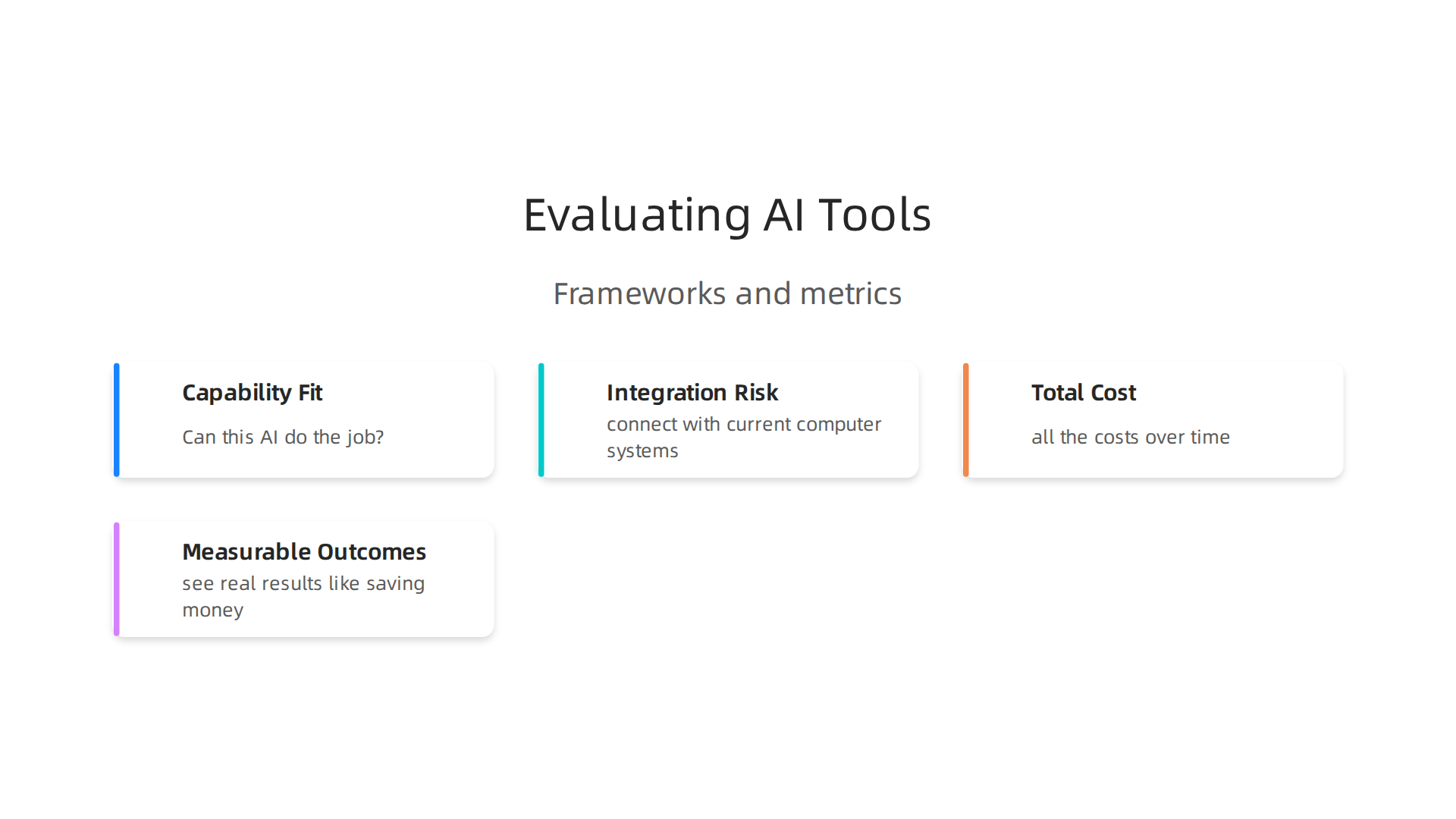
    Key frameworks and considerations for businesses evaluating new AI technologies.

    These frameworks help them decide if an AI will actually help them grow and make things better.

    • Capability Fit: This simply means, "Can this AI do the job we need it to do?" Does it solve a specific problem or make a process easier? For example, if you need an AI to write reports, you check if it can write good reports that match your style.
    • Integration Risk: How easy will it be to connect this new AI with our current computer systems? Businesses like Viant Technology or those at the Comcast Technology Center already have many systems. They want an AI that can work smoothly with what they have, not cause big headaches. If it’s too hard to link up, it might not be worth it.
    • Total Cost of Ownership: This is more than just the price tag. It includes all the costs over time. Think about how much it will cost to set up the AI, train your team to use it, keep it running, and update it later. This helps companies understand the real long-term expense.
    • Measurable Outcomes: Most importantly, how will we know if the AI is actually helping? Businesses need to see real results, like saving money, making tasks faster, or improving customer happiness.

    How Companies Measure Success

    To make sure an AI is worth the investment, companies use what are called Key Performance Indicators (KPIs) and follow strict steps before buying.

    • Defining Success Early: Before even trying an AI, businesses set clear goals. They ask, "What specific problems are we trying to solve?" or "What improvements do we expect to see?" This helps them know what to measure later MLOps workflow: from definition to production-ready pipelines.
    • Tracking Performance: Once an AI is in use, companies watch how well it works. They might track things like:
      • Accuracy: Is the AI giving correct answers or doing tasks correctly?
      • Speed: Is the AI making things faster?
      • Cost Savings: Is it reducing expenses?
      • User Satisfaction: Are employees or customers happier with the results?
      • Some businesses even automate the tracking of model quality to spot when an AI starts to perform poorly, prompting them to retrain it MLOps: Continuous delivery and automation pipelines in machine learning.
    • Procurement Checkpoints: Before a company signs a deal, they go through a checklist. This might include testing the AI with a small group, making sure it meets security rules, and checking how easy it is for people to use. They want to avoid surprises and ensure the AI will truly help them get ahead of the innovation line.

    Understanding these evaluation methods helps businesses big and small choose AI tools that deliver real value and not just hype. If you’re looking for more guidance on selecting the right tools, explore how to find trusted tech sources that deliver real business results in 2026 to stay informed.

    After picking the right AI and knowing how to check if it’s working, the next big step is putting it into action. This means smoothly bringing new AI tools into your business’s daily operations. Companies that truly stay ahead of the innovation line need smart ways to connect AI with their existing systems and make sure their teams are ready.

    How AI Tools Connect to Your Business

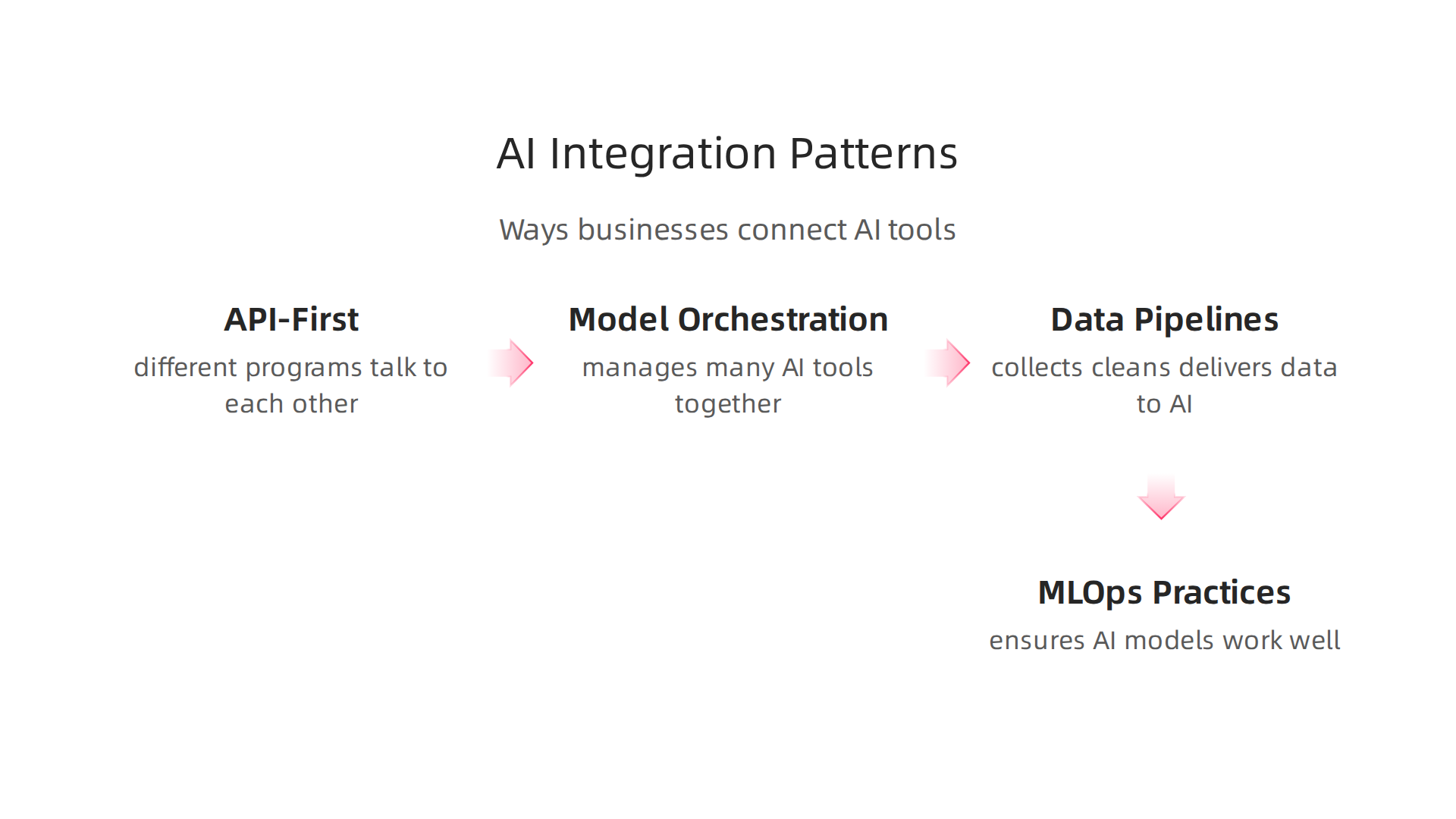
    Putting AI to work means carefully adding it to your company’s systems. There are a few main ways businesses do this in 2026:

    Strategies for integrating AI tools smoothly into existing business operations.

    • API-First Approach: Think of an API (Application Programming Interface) as a special messenger. It lets different computer programs talk to each other easily. With an API-first approach, the AI tool is built so it can easily send and receive information from your other apps. This is great for companies like Viant Technology or even smaller businesses that want new AI tools to work well with their current setup without big changes.
    • Model Orchestration: When you have many AI tools working together for a bigger job, you need something to manage them. This is like a conductor leading an orchestra. Model orchestration makes sure each AI model does its part at the right time. This helps complex tasks run smoothly, especially for large companies with many moving parts.
    • Data Pipelines: AI needs a lot of data to learn and work. A data pipeline is like a path that collects, cleans, and delivers data to the AI. It makes sure the AI always has the fresh, correct information it needs. Setting these up properly is key for any AI to be effective.
    • MLOps Practices for Production: MLOps (Machine Learning Operations) is a set of best practices to make sure AI models work well not just in testing, but also when they are actually being used by customers or employees. It’s about keeping AI models up-to-date, checking their performance, and fixing problems quickly. Good MLOps helps companies like Comcast Technology Center manage many AI tools reliably. For example, consistently tracking how well AI models perform in the real world is a core part of MLOps, often leading to retraining them with new data to keep them accurate MLOps Best Practices That Actually Work in Production. This helps make sure the AI delivers results day after day.

    Getting Your Team Ready for AI

    Bringing AI into a business isn’t just about technology; it’s also about people. For successful AI adoption, companies need to think about their teams and what new skills they might need.

    • New Skills: Employees might need training on how to use new AI tools or how to work alongside AI assistants.

    A team actively collaborating, perhaps during an AI implementation training session or problem-solving meeting.

    This could mean learning how to ask AI the right questions or how to check the AI’s work.

    • Changing Roles: Some job roles might change as AI takes over certain tasks. This gives people a chance to focus on more creative or complex work that AI can’t do. Investing in training helps everyone grow with the new technology.
    • Rules and Safety: As AI becomes more common, rules about its safe and fair use are also growing. For instance, in 2026, many regulations like the EU AI Act are becoming fully active, requiring businesses to be transparent and make sure humans can oversee high-impact AI systems AI Governance, Risk & Compliance: Trends & Challenges 2026. This means businesses need people who understand these rules to keep everything compliant.

    To help your business choose the right AI tools that truly deliver results, it’s important to stay informed. Many companies are exploring how to implement AI and looking for proven strategies.

    Learning about new AI trends and tools is a big part of staying ahead.

    Get Clear Daily AI Updates

    Stay informed with the latest in AI and technology. Get clear daily AI updates from The AI Newsletter Worth Reading.

    Understanding how AI fits into your business and making sure your team is ready are important steps to fully use the power of AI. If you’re looking for more details on picking suitable tools, read our guide on how to choose AI for business tools that deliver real results.

    Staying ahead in AI means more than just finding new tools; it’s also about understanding the important rules and possible risks that come with them. In 2026, navigating the innovation line responsibly is key for any business using AI. This means paying close attention to new laws, ethical ideas, and how to manage risks.

    Regulatory and Compliance Pressures

    Governments around the world are creating new rules for AI. These rules are shaping how companies build and use AI tools. For example, the EU AI Act is now fully active, making businesses follow strict guidelines, especially for AI systems that could have a big impact. This means companies need to be transparent about how their AI works and make sure humans are still in charge of important decisions EU AI Act & AI Governance Profile 2026.

    Not only is Europe setting standards, but countries like South Korea also have their own AI laws, and in the US, federal agencies are adopting new frameworks for AI governance Governing AI in 2026. Businesses must understand these different rules because they affect how AI tools are offered by vendors and how companies control their own AI use. Falling behind on these rules can cause big problems.

    Ethical and Risk Management Considerations

    Beyond legal rules, businesses also need to think about the right way to use AI. This includes several key areas:

    • Data Governance: This means making sure the data used by AI is collected fairly, kept private, and used correctly. Companies must also protect data from being misused or "poisoned" with bad information OCC Report Signals AI Governance Guidance Is on the ….
    • Model Risk: AI models can sometimes make mistakes or be biased. Managing model risk means checking AI systems often to make sure they are fair, accurate, and don’t cause harm. For industries like finance, there are even updated rules for how to manage these risks New Model Risk Management Rules: What They Mean ….
    • Transparency Expectations: People want to know how AI makes decisions. This means companies need to be able to explain why an AI tool gave a certain answer. This is especially true for high-risk AI, where human oversight is a must Why AI Governance Must Pivot from Policy to Operations in 2026.

    To stay on the right side of the innovation line, businesses must put strong practices in place for these ethical and risk concerns. This helps ensure AI is used safely and fairly for everyone. Choosing the right AI tools that fit these standards is a big step for any company. You can learn more about how to make these smart choices by reading our guide on how to choose AI for business tools that deliver real results in 2026.

    After understanding the rules and right ways to use AI, the next big step is choosing the right tools and making sure they actually help your business grow. This means looking closely at who sells the tools, what they offer, and how you can see real money coming back from your investment. For any business trying to stay on the innovation line in 2026, smart buying choices are just as important as knowing the law.

    Purchasing, Vendor Selection, and Measuring ROI

    When you pick AI tools, you’re not just buying software; you’re choosing a partner for your business’s future. It’s important to look at a few key things:

    • What’s their plan? Check the vendor’s roadmap. Does their AI tool have a clear plan for getting better and adding new features that match what your business needs later on? You want a tool that grows with you.
    • How good is their help? Strong customer support is a must. If something goes wrong or you have questions, you need to know you can get help easily.
    • How do you pay? Look at the pricing models. Some tools are a one-time cost, others are monthly, and some charge based on how much you use them. Make sure the costs fit your budget and what you expect to gain.
    • Does it play well with others? Think about how the new AI tool will work with the systems you already have. An easy integration ecosystem means less headaches and more value. For specialized needs, some might even seek solutions that power large data systems, perhaps using viant technology principles, or hardware solutions that might come from a place like a micro center pc builder for custom AI workstations. You can find out more about choosing big AI platforms that fit your needs by reading about Enterprise AI Platforms 2026 Top Providers And How To Choose The Right One.

    Now, let’s talk about how to know if your AI investment is actually paying off. This is called measuring Return on Investment, or ROI.

    Building Your Business Case and Measuring Results

    Before buying any AI tool, you need a strong reason, or "business case," for why you need it. This helps you figure out what success looks like. Many companies are already seeing big impacts from AI. For example, worker access to AI grew by 50% in 2025, and twice as many leaders reported truly changing results from AI compared to the year before The State of AI in the Enterprise – 2026 AI report. Global spending on AI is expected to hit over $2 trillion in 2026, showing just how much businesses are investing State of AI 2026 – AI Market Size, Investment, and Industry Data.

    • Short-term ROI: This means looking for quick wins. Can the AI tool save time on small tasks? Does it help your team finish projects faster? Even small gains in efficiency add up quickly.
    • Long-term ROI: This looks at the bigger picture. How will the AI tool help your business grow over months and years? Will it help you find new customers, create better products, or cut down on major costs? As companies move past just trying out AI, measuring its impact becomes key to showing its value AI Adoption Trends: 2024-2026 Data.

    By carefully selecting vendors and always checking the results, businesses can make sure their AI investments truly move them forward along the innovation line. This careful approach helps avoid wasted money and makes sure AI brings real benefits.

    Want to keep up with the fast-moving world of AI?
    Stay informed and make smarter choices for your business.

    The AI Newsletter Worth Reading

    Summary

    This article explains the