
Introduction: The Rise of AI in Legal Practice
Picture this: you are a lawyer staring at a mountain of contracts, case files, and discovery documents. The clock is ticking, your client expects answers by tomorrow, and your eyes are starting to glaze over.

Sound familiar? For years, this was just the reality of legal work. But in 2026, things look very different.
Artificial intelligence has quietly become the legal profession’s most powerful ally. And at the center of this shift is Harvey AI, an AI legal assistant that combines the raw power of large language models with deep, domain-specific legal expertise.

Founded in 2022 by former securities litigator Winston Weinberg and AI researcher Gabriel Pereyra, Harvey has grown into a company valued at $8 billion according to a recent Observer profile. The idea was simple: build an AI that actually understands how law firms work, not just how language works.
Harvey is not just another chatbot. It is a purpose-built tool that helps legal professionals analyze documents, draft contracts, conduct legal research, and manage complex workflows. The Contrary Research report on Harvey’s founding story shows how the company went from a simple idea to a platform trusted by some of the world’s largest law firms. The secret? Combining cutting-edge AI with real-world legal process knowledge.
In this guide, we will take a deep look at what Harvey AI actually does, how much it costs, how it compares to other AI tools in the space, and how you can start using it in your own practice. We will also explore how alternatives like Vidnoz AI and Digen AI fit into the broader landscape, and what the top 5 AI tools for legal professionals look like in 2026. If you are curious about how AI is reshaping professional work, you might also enjoy our guide on how to choose and use an AI-powered research assistant.
The legal world is changing fast. And Harvey is leading the charge. Stick around as we break down everything you need to know about this game-changing platform.
Want to stay ahead of the curve? Get clear daily AI updates delivered right to your inbox with The Deep View Newsletter.
What Is Harvey AI? Company Background and Vision
So, what exactly is Harvey AI? At its core, Harvey is a legal AI platform built on top of OpenAI’s GPT architecture. But here is the key difference. It has been fine-tuned on a massive dataset of legal documents, case law, and contracts. This means it understands the specific language and structure of the legal world, not just general conversation.
Let us look at the story behind it. Harvey was founded in 2022 by Winston Weinberg and Gabriel Pereyra. Weinberg was a former securities and antitrust litigator, so he knew exactly how painful traditional legal work could be. Pereyra was an AI researcher who understood what large language models could really do. Together, they created Harvey. The Contrary Research report tells the full story of how they combined legal pain points with AI expertise to build a product that law firms actually needed.
The company grew fast. Really fast. By 2026, Harvey had reached a valuation of $8 billion according to a recent Observer profile of Winston Weinberg. This growth attracted top investors and led to a case study by Harvard Business School, showing just how much the legal industry was changing.
But what is the vision behind Harvey? The mission is simple. Augment lawyers, do not replace them. Harvey is built to help legal professionals develop expertise faster, not to take their jobs.

The Harvey team page describes it as blending deep industry knowledge with cutting-edge innovation. This focus on accuracy and confidentiality is what makes it different from general AI tools like Vidnoz AI or Digen AI, which serve different creative needs. Like the founders of many disruptive AI companies, such as the one behind Perplexity AI, Weinberg and Pereyra identified a clear gap in how professionals access and process critical information.
As we look at the top 5 AI tools transforming professional work in 2026, Harvey stands out for its depth in the legal sector. If you are interested in how AI is reshaping other industries too, check out our analysis of Palantir Technologies and its impact on business strategy.
Want to stay ahead of the curve in legal AI and beyond? Get clear daily AI updates delivered right to your inbox with The Deep View Newsletter.
Core Feature: Legal Document Analysis
Think about what happens when you have 50 contracts to review by Friday. Traditional review means reading every line, taking notes, and hoping you didn’t miss a key deadline. Harvey AI changes that completely.
Here is how it works. You upload a document, any type really. Contracts, legal briefs, internal memos, even complex court filings. Harvey ingests the text and immediately starts extracting the important stuff. It finds key clauses, important dates, obligations, and potential risks. Then it presents everything in a clean summary. The Harvey blog on choosing a platform explains how this process compresses hours of manual review into just minutes.
But here is the part that matters most for trust. Harvey does not just guess. It gives you a confidence score for each finding. And it always shows you the source text so you can verify the answer yourself. This transparency is rare in most AI tools. It is what makes Harvey different from general assistants like Vidnoz AI or Digen AI, which serve creative needs without legal rigor.
The tool can handle bulk document analysis too. If you are working on a merger or a big compliance project, you can upload hundreds of files at once. Harvey will scan each one and flag the critical details. For legal teams, this is a game changer. It frees up time to focus on strategy instead of paperwork.
If you want to see how other AI tools stack up for research tasks, check out our guide on how to choose an AI powered research assistant.
The legal world moves fast in 2026, and tools like Harvey are helping professionals stay ahead. Want to keep learning about the best AI tools for your work? Get clear daily AI updates delivered to your inbox with The Deep View Newsletter.
Core Feature: Contract Review and Redlining
Now let’s zoom in on a task that eats up hours of legal time. Contract review and redlining.
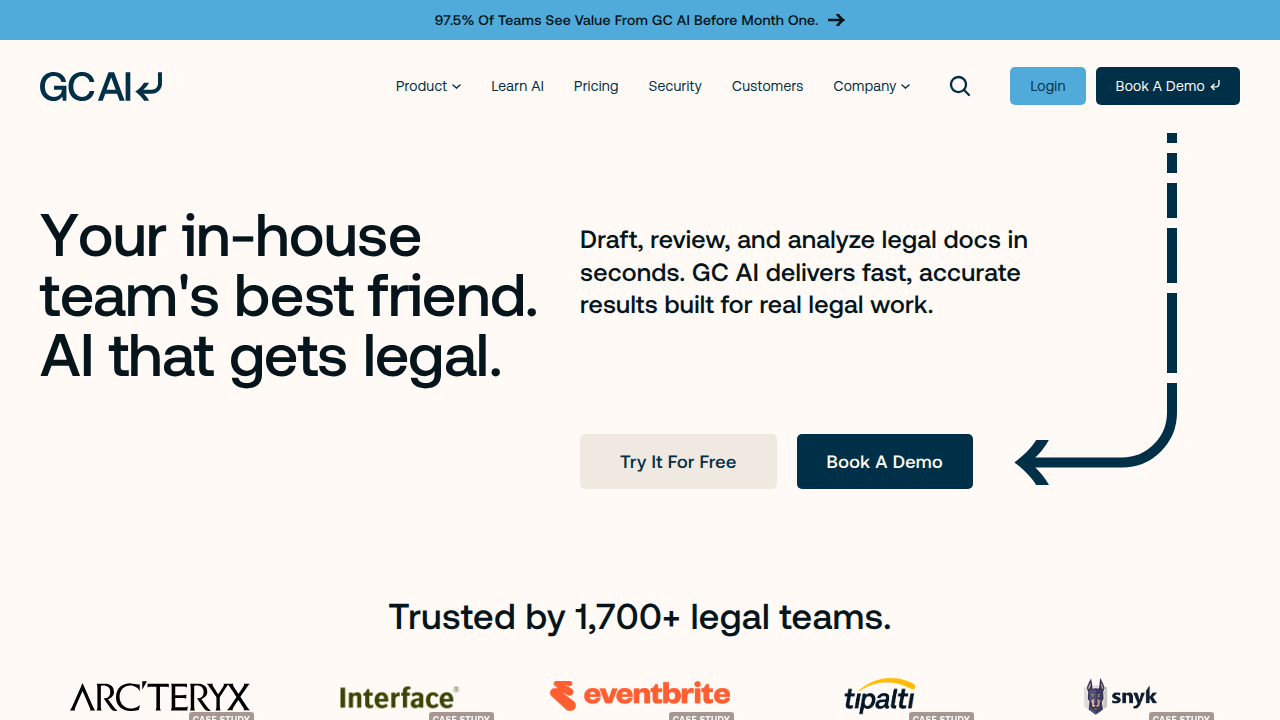
Here is the workflow. You upload a contract in PDF or DOCX. Harvey reads it fast and flags all the risky parts. Missing liability caps. Unclear deadlines. Unfair termination clauses. But here is the real time saver. Harvey does not just point out the problems. It also suggests the actual language changes you might need. You get a redlined draft ready for your final review. According to a detailed GC.ai review of Harvey AI, this workflow is built for enterprise teams who handle huge volumes of contracts.
Customization makes it even more useful. You can teach Harvey your firm’s redlining preferences. Maybe you need strict compliance language for your industry. Or you want to match a specific jurisdiction’s rules. Harvey learns those standards and applies them every time. The Harvey blog on choosing a legal AI platform explains how this compresses the gap between getting a contract and acting on it.
This redlining feature works with the formats you already use. PDF, DOCX, and Google Docs all work without extra steps.
Want to stay updated on the best AI tools in 2026? Read our list of 10 top AI websites professionals trust for real news and tools to find your next favorite resource.
Stay ahead of the curve in legal tech. Get clear daily AI updates delivered straight to your inbox with The Deep View Newsletter.
Core Feature: Due Diligence Assistance
Due diligence can feel like drinking from a firehose. You have thousands of documents in a data room. Deadlines are tight. Missing one risk item could cost your client millions.
Here is where Harvey AI shines. You upload the entire data room. Harvey scans everything fast. It flags risk items like hidden liabilities, conflicting clauses, or missing regulatory approvals. It also generates clear summaries of each document. A detailed GC.ai review of Harvey AI explains how this feature handles the massive workload of M&A transactions.
The multi-document querying ability is a game changer. You can ask questions that span across files. "Show me all the indemnification clauses in every contract." "List every deadline that has passed." Harvey returns answers in seconds, not days. According to a Vals AI industry report, AI tools have surpassed the Lawyer Baseline on document analysis and information retrieval tasks. That is a big deal for due diligence.
The time savings are real. Manual review of a 500-document data room might take a week. Harvey compresses that time dramatically. As the Harvey blog on choosing a legal AI platform notes, AI is compressing the time between receiving a document and acting on it.
If you perform due diligence regularly, learning to use an AI research assistant can transform your workflow. Check out this guide on how to choose and use an AI powered research assistant in 2026 to sharpen your approach even further.
Want to stay ahead of legal tech trends in 2026? Get clear daily AI updates delivered straight to your inbox with The Deep View Newsletter.
Who Is Harvey AI For? Target Users and Ideal Use Cases
So you have seen what Harvey AI can do for due diligence. But who actually uses this tool in the real world? And are you the right fit?

The short answer is that Harvey AI works best for specific legal teams who handle heavy document work. Let us break down who gets the most value.
Law Firms of All Sizes
Solo practitioners and small firms can use Harvey to level the playing field against bigger competitors. You get fast contract analysis and legal research without hiring a whole support team.
Large firms with hundreds of lawyers use Harvey to scale their work even more. When you have multiple deals running at once, the time savings add up fast.
But here is the reality check. Harvey AI is not cheap. According to a pricing comparison from early 2026, seats start around $1,200 per month. That makes more sense for firms with steady deal flow.
In-House Legal Departments
Corporate legal teams love Harvey for one main reason. It cuts down on outside counsel costs. Instead of sending every contract review to an external firm, your team handles more work internally.
A detailed GC.ai review of Harvey AI notes that in-house teams use the tool for compliance reviews, contract management, and regulatory research. The multi-document querying feature we talked about earlier is a lifesaver when you need answers across thousands of files fast.
What Kind of Legal Work Fits Best?
Harvey AI shines in three main areas:
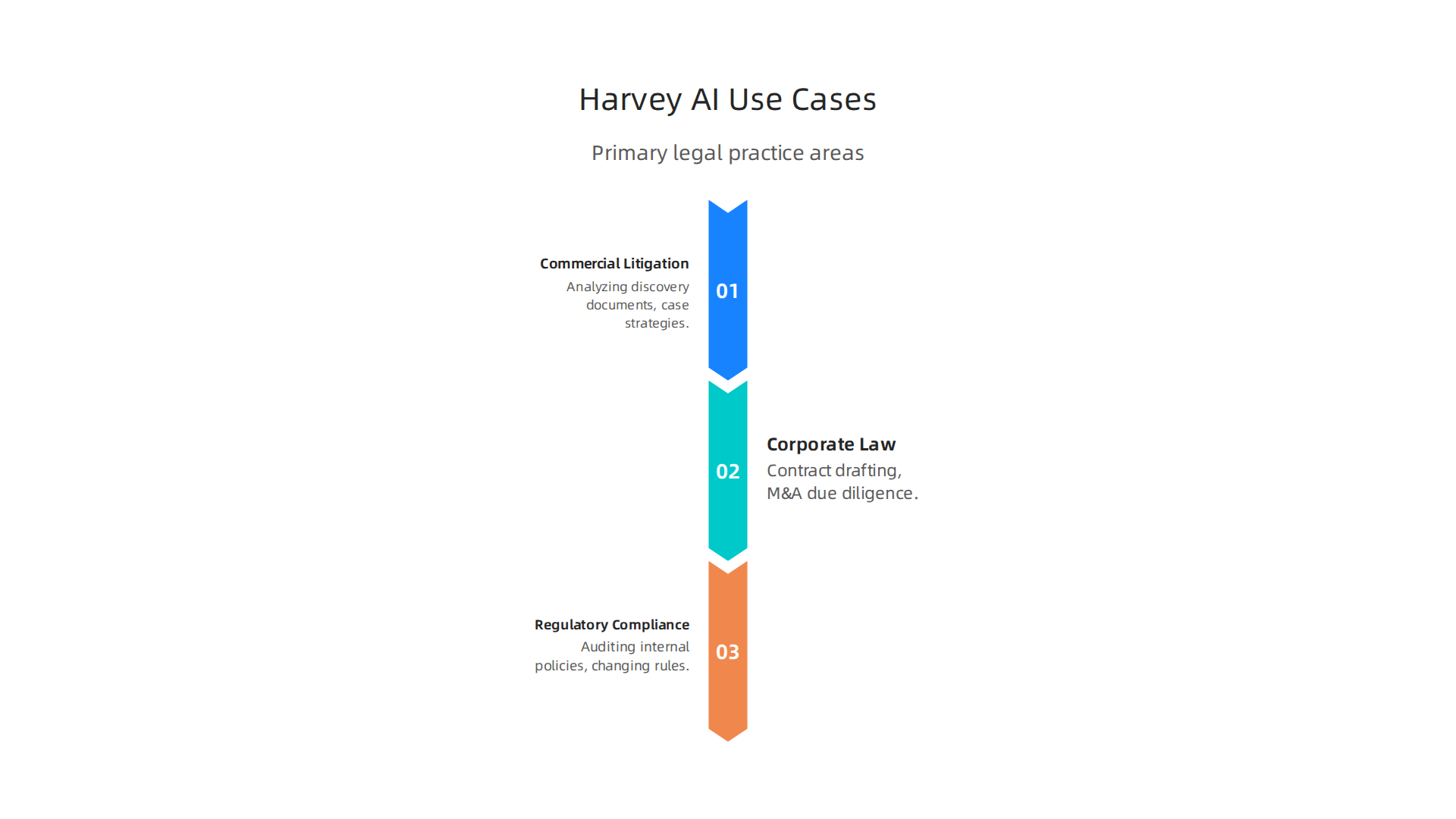
- Commercial litigation. Analyzing discovery documents and building case strategies goes much faster.
- Corporate law. Think contract drafting, M&A due diligence, and entity management.
- Regulatory compliance. Staying on top of changing rules and auditing internal policies.
The official Harvey AI use case guide confirms these patterns across both law firms and in-house teams.
The Learning Curve and Human Oversight
Here is something you need to know. Harvey AI is powerful but it is not plug-and-play. Your team will need training to use it properly. And you absolutely cannot let it run without human review.
A legal AI evaluation guide for 2026 reminds litigators that AI tools still miss context sometimes. Always double check the output. That is not a weakness. That is smart practice with any AI tool in 2026.
If you are curious about how other AI assistants compare, check out our guide on how to choose an AI powered research assistant.
Want to stay ahead of legal tech trends in 2026? Get clear daily AI updates delivered straight to your inbox with The Deep View Newsletter.
Harvey AI Pricing and Plans (2026 Update)
You now know who Harvey AI is for. The next logical question is, what does it cost in 2026?
Let us start with the honest truth. Harvey AI does not publicly list its pricing. You must request a demo to get a custom quote. This is a common sales approach for enterprise software aimed at large law firms.
Based on industry reports from early 2026, the starting cost for Harvey AI is around $1,200 per user per month. A detailed AI legal tools pricing comparison confirms this price range.
That number helps you understand the investment level we are talking about.
What Does the Subscription Include?
Enterprise plans typically give you full access to everything we discussed. You get unlimited contract analysis, the multi-document querying feature, drafting tools, and the secure document vault for storage. Support and security compliance are usually part of the package.
Harvey even offers an official ROI calculator for law firms to help you estimate the financial impact on your billable hours. A 2026 industry survey showed that firms using AI effectively are seeing real gains in efficiency.
How Does It Compare to Other Tools?
Here is the thing. Harvey is not the only player in town. Tools like CoCounsel and Clio Duo offer lower starting prices. Some platforms even start around $110 per month. A detailed review from GC AI points out that alternative tools can offer strong features at a lower price point.
The value of Harvey really depends on your workload. If your team handles high volumes of complex legal work daily, the cost per hour saved makes sense. If you only review contracts occasionally, a cheaper option is a better fit.
Making the right purchase decision requires comparing features carefully. If you are evaluating tools right now, you might find our guide on how to choose an AI powered research assistant helpful.
Pricing in legal AI changes fast. Stay informed with clear, daily updates on the tools that matter. Get The Deep View Newsletter delivered straight to your inbox each day.
Harvey AI vs. Competitors: How It Stacks Up
By now you have a good sense of what Harvey AI does and what it costs. But here is the thing. Harvey is not the only legal AI tool in town. Actually, 2026 is full of strong options. Choosing the right one depends on your firm’s size, practice area, and budget.
Let us look at the main competitors. Tools like CoCounsel (from Thomson Reuters), Casetext, LexisNexis Protege, and even generic large language models (LLMs) like ChatGPT all try to do some of the same work. But they are not all built the same way.
Key Competitors at a Glance
A detailed guide on Harvey AI alternatives from Isometrik lists Spellbook, CoCounsel, Lexis+ AI, and Hebbia as top choices for contract drafting and legal research. Meanwhile, a comparison by LegesGPT calls Harvey AI the most powerful general-purpose legal AI for BigLaw. So the field is split between enterprise giants and niche players.
Here is a quick comparison table to help you see the differences.
| Tool | Domain Specialization | Accuracy | Security | Ease of Use | Integration | Pricing |
|---|---|---|---|---|---|---|
| Harvey AI | Enterprise transactional & litigation | Very high (trained on legal data) | Bank-grade encryption, SOC 2 | Good but steep learning curve | Works with major document systems | Custom quote, ~$1,200/user/month |
| CoCounsel | General legal (from Thomson Reuters) | High | Strong (enterprise ready) | More intuitive, designed for busy lawyers | Integrates with Westlaw, other tools | Starts lower, around $110/user/month |
| Casetext | Litigation & research | High for case law | Solid | Easy search interface | Good with court filings | Moderate, varies by plan |
| LexisNexis Protege | Research & drafting | Very high (LexisNexis data) | Excellent (trusted by top firms) | Familiar Lexis interface | Deep LexisNexis ecosystem | Premium pricing |
| Generic LLMs (ChatGPT, etc.) | General | Varies, risk of hallucinations | Lower, not built for legal | Very easy | Limited | Free to low-cost |
A real litigator’s guide notes that litigation teams need AI built specifically for case building. Harvey AI handles this well, but tools like Litmas AI focus even more on that niche.
What Sets Harvey Apart?
Harvey AI shines in domain specialization and accuracy. It is trained on legal documents, so it understands legal language better than a generic chatbot. Security is also a top reason firms choose Harvey. But the price is high.
If your firm does mostly contract review and drafting, CoCounsel or Lexis+ AI might give you similar results for less money. If you need a tool for litigation, check out options built for that workflow. A video comparison between Harvey AI and Filevine shows that each platform has strengths depending on your daily tasks.
How to Make the Right Choice
The best approach is to match the tool to your biggest pain point. Start with a free trial or demo of at least two or three options. Ask about integration with your existing systems. And always check security certifications.
If you want more guidance on evaluating tools, read our article on how to choose an AI powered research assistant. It covers the decision process in detail.
Legal AI changes fast. Stay ahead with clear, daily updates on the tools that matter. Get The Deep View Newsletter delivered straight to your inbox each day.
Practical Implementation: Getting Started with Harvey AI
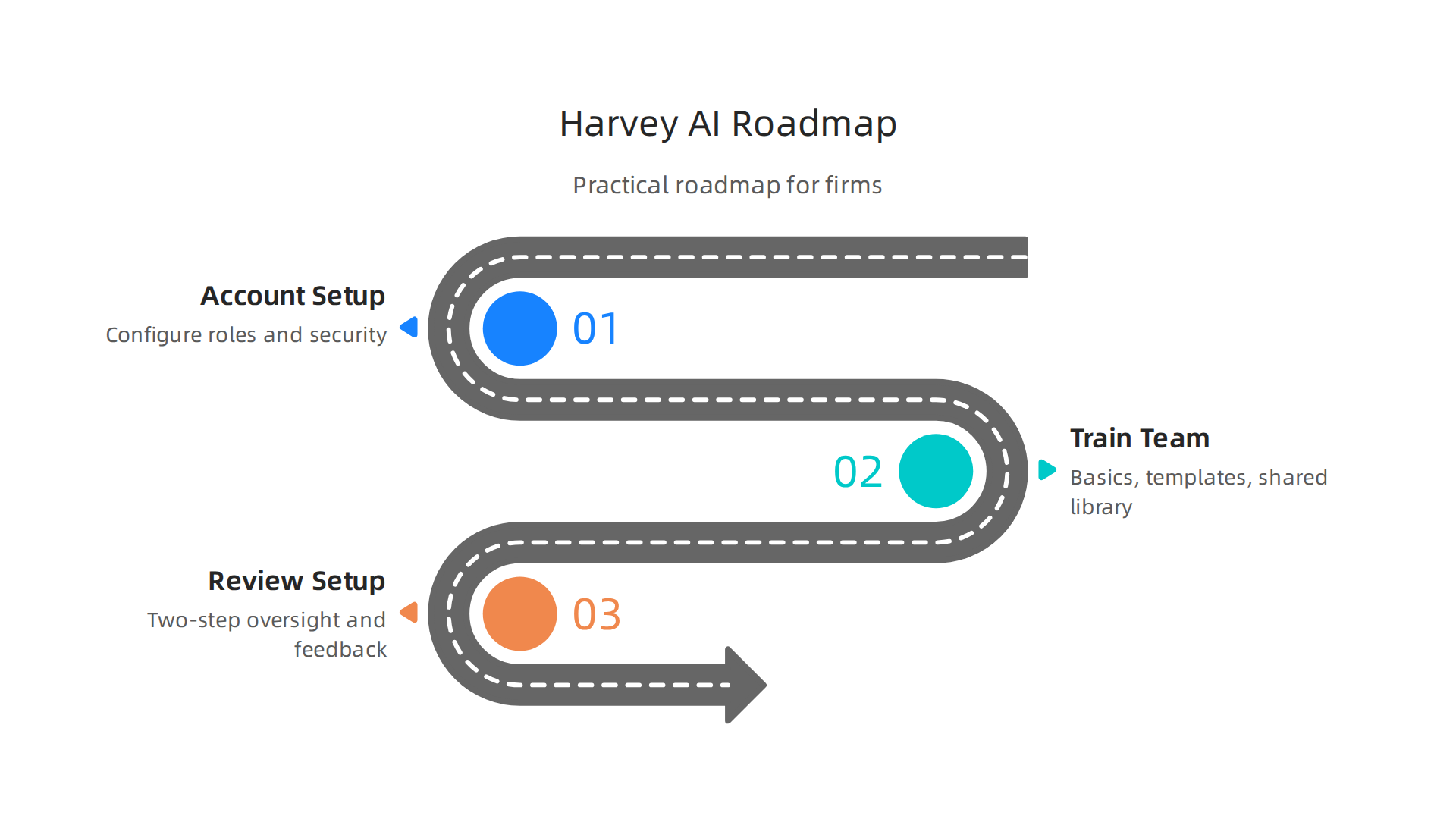
So you have decided to give Harvey AI a try. Great. Now comes the real work: getting your team up and running without slowing down your daily caseload. Here is a practical roadmap based on what works for firms already using Harvey in 2026.
Step 1: Account Setup and Data Migration
Start by working with Harvey’s onboarding team. They help you configure user roles, permissions, and security settings. The platform uses bank-grade encryption and SOC 2 compliance, so your client data stays safe from day one.
For data migration, focus on your most used document templates, clause libraries, and past contracts. Harvey’s team can help import these in batches. The April 2026 product update describes new automation features that make this process smoother. Plan for a one to two week setup period for a mid-sized firm.
Step 2: Train Your Team
Do not just give everyone a login and expect magic. Hold at least two training sessions. First, show the basics: how to start a conversation, upload documents, and ask for a contract review.

Second, cover prompt templates.
Create a shared library of prompts your team uses daily. For example, "Draft a non-disclosure agreement for a software development partnership" or "Summarize the key obligations in this 50-page lease." Consistent prompts lead to consistent results. A guide on legal AI research from Harvey stresses that better prompts mean better answers. Encourage your team to refine prompts over time.
Step 3: Set Up Review Workflows and Feedback Loops
Harvey AI is powerful, but it is not perfect. Build a two-step review process. First, have the junior associate check Harvey’s output for obvious errors. Second, have a senior lawyer do a final review. This catches the rare hallucination and keeps accuracy high.
Create a simple feedback loop. When a lawyer finds a mistake, note the prompt and what went wrong. Share that with the team so everyone learns. Over time, this improves your firm’s use of Harvey.
Integration with Your Existing Tools
Harvey AI integrates with major document management systems and e-discovery platforms. If your firm uses Microsoft 365, the setup is straightforward. The NexLaw vs Harvey comparison notes that Harvey handles high-volume transactional work well, which makes it a good fit for firms that already have robust case management software. Test the integration with a small pilot before rolling out firm-wide.
Stay Sharp with Daily AI Updates
Legal AI changes fast. New features drop, competitors improve, and best practices shift. To keep your edge, you need a steady stream of reliable information. One of the top AI websites professionals trust is AI Tools News Today itself, but for daily curated updates, consider a dedicated newsletter.
Get clear, practical AI news that helps your firm make smarter tech decisions. Subscribe to The Deep View Newsletter and have the day’s most important developments delivered to your inbox each morning.
The Verdict: Pros, Cons, and ROI Considerations
So does Harvey AI live up to the hype? For many large law firms, absolutely. But it is not a one-size-fits-all tool. Here is the honest breakdown.
Where Harvey AI Shines
The biggest advantage is speed. Harvey AI can review a 100-page contract in minutes and spot key clauses faster than a junior associate. The platform is also surprisingly accurate on legal tasks thanks to its domain-specific training. A 2026 survey by Harvey showed that firms using the tool reported higher work product quality and better matter economics (2026 SKILLS Legal AI Survey). And for security, Harvey uses bank-grade encryption and SOC 2 compliance, so client data stays protected.
Where It Falls Short
Here is the thing: Harvey AI is expensive. Reports from early 2026 show pricing starts at $1,200 per month per user (AI Legal Tools Pricing Comparison). That is steep for solo practitioners and small firms. You also need to invest time in curated training data and prompt templates to get consistent results. Harvey can hallucinate, just like any large language model. The rare mistake means every output needs a human review.
The ROI Picture
The real question is whether the time savings justify the cost. Firms using Harvey often see 5 to 10 hours saved per lawyer per week on contract review and legal research. That time can go back to higher-value work or simply reduce burnout. Harvey provides an ROI calculator to help firms estimate potential savings based on their own metrics. In practice, firms that invest in training and feedback loops tend to see the biggest gains.
A framework: calculate the total yearly cost per seat, estimate hours saved weekly, and multiply by your effective hourly rate. If the math works, Harvey can pay for itself in under three months. If it does not, consider one of the many Harvey AI alternatives that might fit your budget better.
Final Thought
Harvey AI is a powerful tool for the right firm. But it demands a serious financial and training commitment. Before you sign, run the numbers, pilot a small team first, and keep learning. The AI landscape changes fast. To stay ahead of new tools and pricing shifts, get the day’s most important AI news in your inbox each morning. Subscribe to The Deep View Newsletter and make sure your firm’s strategy stays sharp in 2026 and beyond.
Summary
This article explains Harvey AI—a purpose-built legal assistant using fine-tuned large language models—to speed document analysis, contract drafting, due diligence, and legal research. It covers the company’s origins, core features (document analysis, contract redlining, multi-document queries), target users (from solo practitioners to large law firms and in-house teams), and practical implementation steps for onboarding and training. The guide also reviews pricing realities and ROI math, compares Harvey with competitors like CoCounsel and generic LLMs, and highlights security and accuracy considerations. Readers will learn how Harvey changes common legal workflows, what investments and safeguards are required, and how to evaluate whether the platform pays for itself in their practice. Practical tips include pilot testing, creating prompt libraries, and enforcing human review to avoid hallucinations while capturing efficiency gains.