
Why AI Skills and the Right Digital Marketing Course Matter in 2026
It’s 2026, and the world of digital marketing is changing faster than ever. A big reason for this speed is artificial intelligence, or AI. AI is everywhere, from how we create ads to how we understand what customers want. Because of all these new changes, it can feel like there’s too much information to keep up with. It’s hard to know which new skills are important and which training is best.

Many people wonder how to find a good digital marketing course that truly helps them grow.
You might be feeling lost in all the talk about new AI tools and wonder which ones actually help your business. Knowing how to pick the right tools for your business is key. This quick growth of AI also makes it tough to choose the right learning path. There are so many options out there, and it’s hard to tell which ones are real and useful. Actually, knowing how to check if an online course is trustworthy is a big deal, and experts offer tips on how to assess online course credibility.
But don’t worry! This guide is here to help you. We will show you how to look at different digital marketing courses, especially those that focus on artificial intelligence applications. Our goal is to help you find training that teaches you the right AI skills. This way, you can pick a digital marketing course that helps your business grow in clear, measurable ways. Think of it as learning about the best ways for AI product development, but for your marketing efforts.
Staying updated on all the new AI trends can be a full-time job. To make it easier for you to keep up, consider getting clear daily AI updates.
The AI Newsletter Worth Reading
1) The business case for AI in digital marketing
So, we know AI is changing how we do things in digital marketing. But why should you care about this for your business? It’s simple: AI helps you get better results. It’s not just a fancy new thing. It’s a way to make more money, reach more customers, and work smarter. This is the strong business reason for using AI in digital marketing.
Think about what AI can do for your marketing efforts.
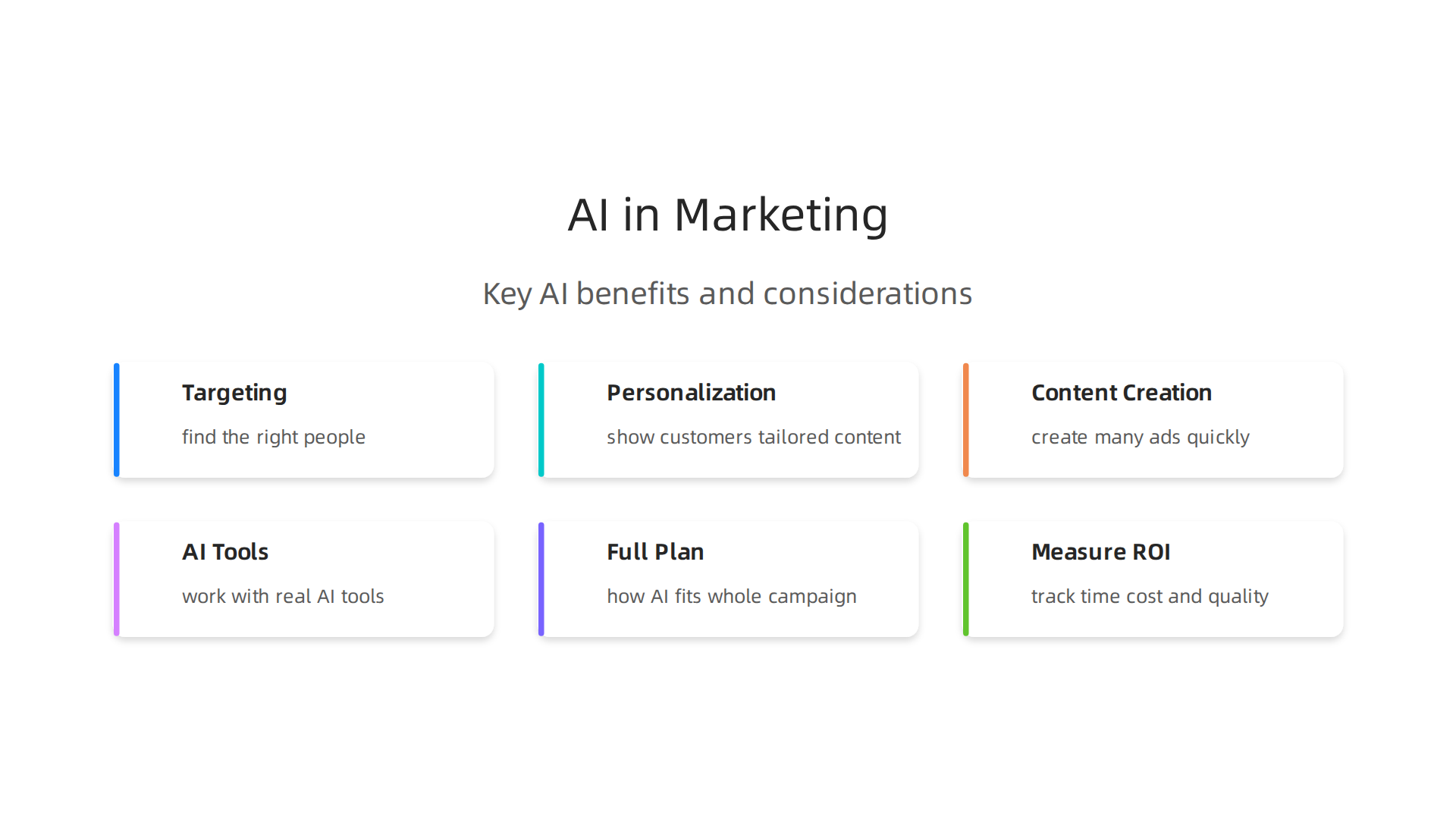
For example, AI is super good at helping you find the right people to show your ads to. This is called targeting. Instead of guessing, AI uses lots of data to know who will most likely buy your product. This means you spend your ad money better. AI also helps with making things personal. It can show each customer exactly what they want to see, making them feel special and more likely to buy. It can even help you create many different ads and messages quickly, which saves a lot of time and effort. This is part of how businesses achieve real return on investment (ROI) with AI marketing cloud in 2026.
Many businesses are already seeing these good results. In fact, a report from 2026 showed that 87% of big companies’ marketing teams now use AI tools in some way to make their work better and get stronger outcomes. That’s a huge number! This shows that artificial intelligence applications are not just for tech companies anymore; they’re for everyone in digital marketing. If you want your business to keep growing, learning about these tools is a must.
However, getting AI into your marketing plans isn’t always easy. Even though many companies use AI, a big problem is knowing how to make it a deep part of how they work every day. It’s about more than just having the tools. It’s about knowing how to use them well. One big challenge is that people need new skills. Companies also worry about how much it costs and how to make new AI tools work with their existing systems. A report from 2026 highlighted that the real gap in AI adoption now lies in "talent capability," meaning having the right skilled people, rather than just getting the tools themselves. This is why choosing the right digital marketing course is so important. It helps overcome these skill gaps and allows for better AI product development within your marketing team.
2) What to look for in a digital marketing course that teaches AI
So, we talked about how important it is to have the right skills for AI in marketing. A good digital marketing course can help you get those skills. But with so many choices out there, how do you pick the best one?

You want a course that really teaches you how to use AI for real business growth, not just fancy words.
Here’s what to look for:
What the course should teach you (the curriculum)
A top-notch digital marketing course will give you hands-on experience. It should cover:
- Learning AI Tools You’ll Actually Use: The course needs to show you how to work with real AI tools. This means learning things like how to use ChatGPT for writing, Midjourney for making images, or AI features in Google and Meta Ads for better advertising. It’s about getting comfortable with the same tools marketing pros use every day in 2026.
- Building a Full Marketing Plan with AI: It’s not enough to know one tool. A good course will teach you how AI fits into a whole marketing campaign, from start to finish. This means understanding how to use AI for keyword research, creating content, setting up ads, and even sending emails. Think about how AI can help with AI Inbound Marketing: A Practical Framework for Better Personas, Content, and ROI.
- Checking Your Results with Data: You need to know if your AI efforts are working. The course should teach you how to look at data and measure success. This means understanding things like Google Analytics and other reporting tools. It’s how you make smart decisions and improve your marketing over time. Learning about how online market research surveys powered by AI deliver better insights can be very helpful here.
Signs of a really useful course
Beyond what’s on the syllabus, pay attention to these things:
- Real Projects and Case Studies: The best way to learn is by doing. Look for courses that include many hands-on projects, like creating a full campaign or working on a client’s problem. Many courses even have a final project where you put everything you learned into practice, sometimes involving tools like ChatGPT, Midjourney, and Google Analytics 4, as seen in some 2026 sample syllabi. This shows you how artificial intelligence applications work in real life.
- Templates and Guides: A course that gives you ready-to-use templates for planning or reports can save you a lot of time later. These are practical tools you can take straight into your work.
- Experienced Teachers: Who is teaching the course? Look for instructors who have actually worked in digital marketing and used AI in their jobs. They can share real-world tips and help you understand how to apply what you learn.
- A Focus on "How To": You want a course that focuses on "how to" do things, not just "what" AI is. It should help you feel confident in using AI for tasks like content creation, ad setup, and figuring out what customers want. This helps you with your own AI product development within your marketing team.
Choosing the right digital marketing course means you’re investing in your future and making sure you can keep up with all the new AI changes.
Want to stay ahead of all the fast changes in AI and technology? Get clear daily updates directly to your inbox.
The AI Newsletter Worth Reading
To truly get the most out of your training, it’s not just about what a digital marketing course teaches, but also how it teaches. Different course formats fit different people and different company needs. Let’s look at the main types and what they mean for busy pros and teams with limited money.
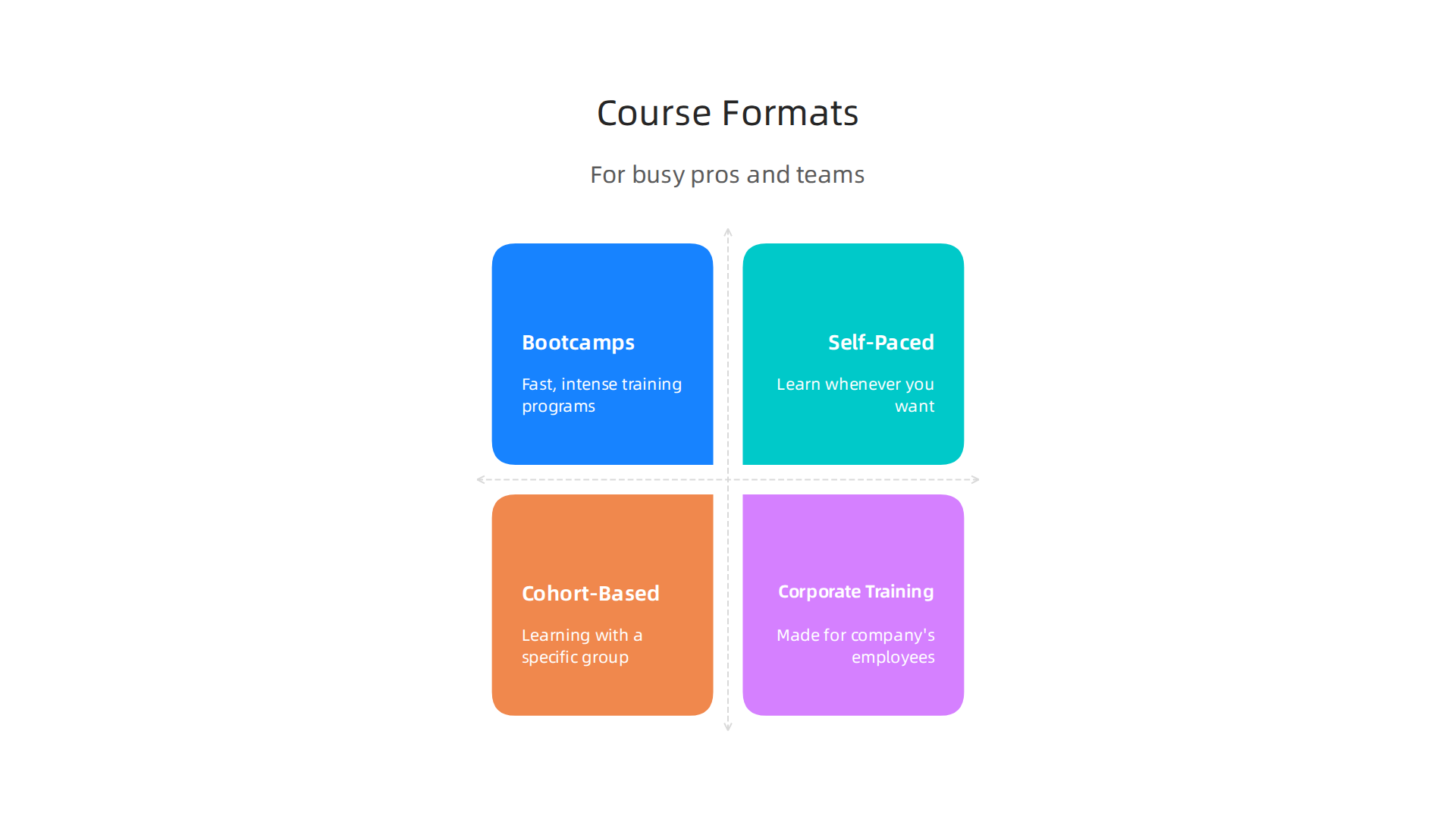
Bootcamps: Fast and Focused
Bootcamps are like quick, intense training programs. They are usually full-time for a few weeks or months.
- Pros: Bootcamps move fast and teach you a lot in a short time. They are often hands-on, meaning you get to do many practical projects. This can be great for someone who wants to switch jobs quickly or learn a new skill like advanced artificial intelligence applications. Some bootcamps, for example, offer a mix of projects, lectures, and real-world scenarios, as explained in a guide to digital marketing bootcamps.
- Cons: They can be very expensive and demand a lot of your time. This makes them hard for people who already have full-time jobs or other duties. If your team has a small budget, a bootcamp for everyone might not be possible.
Self-Paced Courses: Learn on Your Own Time
Self-paced courses let you learn whenever you want. You get access to all the materials and can work through them at your own speed.
- Pros: This format is super flexible. You can learn after work, on weekends, or whenever it fits your schedule. It’s often cheaper than bootcamps. This works well for busy people who need to fit learning around their life. These courses usually break content into smaller parts to make learning easier, as highlighted by a guide to self-paced learning.
- Cons: You need a lot of self-discipline. It’s easy to fall behind or stop altogether because there’s less pressure from others. If you have questions, getting answers might take longer. Studies show that learning retention can drop below 20% within six months if skills aren’t practiced, making accountability important.
Cohort-Based Courses: Learning with a Group
Cohort-based courses combine self-paced learning with group activities. You learn alongside a specific group of people who start and finish the course at the same time.
- Pros: You get the best of both worlds. There’s a set schedule, which helps with accountability, but also flexibility for individual study. You learn from others, share ideas, and get feedback. This group setting can make learning more fun and help you stay motivated. It’s also known to boost completion rates and skill application through regular interaction and feedback, according to a comparison of cohort vs. self-paced learning.
- Cons: These courses usually have fixed start and end dates, so they are not as flexible as truly self-paced options. They can also be more expensive than purely self-paced courses.
Corporate Training: Learning for the Whole Team
Corporate training is when a company organizes a special digital marketing course for its employees. These can be bootcamps, self-paced programs, or cohort-based models, all tailored for the company’s needs.
- Pros: The training is made just for your team’s specific goals. It can help everyone learn the same new skills, like new artificial intelligence applications, at once. This is great for an
ai development companylooking to keep all its marketers up-to-date. - Cons: Creating custom training can be costly, especially for smaller businesses. It might also take a lot of planning and effort to get everyone on board. Some companies struggle to fully embed AI into workflows, with only 24% of organizations fully doing so in 2026, pointing to a need for more integrated training, as noted by AOL.
When picking a digital marketing course, think about your budget, how much time you have, and if you learn better alone or with a group. Choosing the right format is key to making sure you or your team can really learn and use those new AI marketing skills effectively. To understand how businesses are truly using AI for growth, check out The Innovation Line 2026: How Businesses Adopt AI for Growth.
After thinking about the best format for your learning, the next big step is to look closely at the course content itself. This means checking who is teaching, what kind of projects you’ll do, and if the course covers the most up-to-date tools, especially in the fast-changing world of AI.
4) Evaluating Instructors, Projects, and Tool Coverage (Practical Checklist)
Picking the right digital marketing course means looking beyond just the topic list. You need to make sure the learning experience will actually help you or your team use new skills, like artificial intelligence applications, in real work. Here’s a checklist to help you decide:
Who is Teaching? (Instructor Quality)
- Check their background: Are the instructors actual experts in digital marketing and AI? Look for people with real-world experience, not just textbook knowledge. You can often check their professional profiles on sites like LinkedIn. Their work history should show they’ve been in the field for a while, as a guide to evaluating course instructor credentials explains.
- Verify their credentials: Make sure they have proper degrees, certifications, or a strong reputation in the industry. For instance, reputable online platforms or established universities are often good signs. If a course or instructor claims to be an expert, they should be able to show their qualifications clearly. You can also look for reviews from past students to see what others say about their teaching style and expertise. A useful resource on how to know if an online course is legitimate suggests looking for reviews and testimonials from other students.
- Look for red flags: Be careful if an instructor hides their background, if their profile seems too new, or if they don’t share examples of their work or teaching. A detailed guide points out that a strong online presence and clear credentials are key to assessing online course credibility.
What Tools and Topics are Covered? (Modern Relevance)
- Focus on AI tools: In 2026, any good digital marketing course must cover modern
artificial intelligence applications. Does the course teach how to use AI for things like content creation, ad targeting, or data analysis? - Data privacy and ethics: With more AI tools, understanding data privacy is super important. Does the course talk about how to use AI ethically and keep customer data safe? This is a vital part of using AI responsibly.
- Practical application: Does the course focus on how to actually use these tools in everyday marketing tasks? Look for mentions of real-world workflows and integration. For example, learning about
how to choose AI for business tools that deliver real results in 2026is more helpful than just knowing what the tools are.
What Kind of Projects Will You Do? (Hands-On Learning)
- Project-based learning: The best way to learn is by doing. A good digital marketing course should have lots of practical projects. These projects should let you apply what you’ve learned to create real marketing plans, campaigns, or analyses.
- Templates and starter code: Does the course provide helpful resources like templates for marketing strategies, ROI calculations, or project proposals? These can save a lot of time and help you put new skills into practice right away. For instance, many courses now offer AI Marketing Templates or an AI-Ready Marketing Strategy Kit to help you measure success and build business cases. Getting access to these kinds of tools is very valuable.
- Deployment workflows: Does the course show you how to take a marketing idea, use AI tools, and then put it into action? This means understanding the whole process, from planning to launching and measuring results. This is especially important for an
ai development companytrying to streamline its marketing efforts. - Measuring success: Practical projects should also teach you how to measure the success of your AI-powered campaigns, including how to calculate the return on investment (ROI). There are many templates available, like an AI Marketing Training ROI Calculator Template, that can help you understand the impact of your efforts.
By using this checklist, you can make sure your chosen digital marketing course truly prepares you for the challenges and opportunities of marketing in 2026 and beyond.
To stay on top of the latest AI news and practical insights that can inform your course choices, consider subscribing to The AI Newsletter Worth Reading.
After picking a great digital marketing course and learning lots of new things, the real test begins. It’s time to show that what you learned can make a real difference. This means proving the value of your new skills, especially with advanced artificial intelligence applications, in a clear way. You want to see real results for your business.
5) Measuring ROI and building a pilot after the course
Learning is great, but showing that your new skills lead to better business results is even better. After completing a digital marketing course focused on AI, the next smart step is to set up a small test, also called a pilot project. This helps you apply what you learned in real life and see how it helps your company.
How to set up a small test project
A pilot project is like a mini-experiment. You take a small part of your marketing work and apply your new AI skills to it. The goal is to see if these new ways of working can bring good results before using them everywhere.
Here’s how you can do it:
- Choose a small task: Pick one specific marketing task that you think AI can help with. Maybe it’s writing social media posts, making ads, or analyzing website visitor data. Keep it simple at first.
- Set clear goals: What do you hope to achieve with this pilot? Do you want to save time, get more clicks on your ads, or understand customers better? Write down your goals clearly. Many companies use a Free AI Implementation Execution Playbook to help plan these steps.
- Use your new AI tools: Apply the artificial intelligence applications you learned in your digital marketing course. For example, use an AI writing tool for content or an AI analytics tool for data.
- Follow a plan: You can find many useful outlines, like The Team AI Playbook 2026, which offers advice on how to scope a 30-day pilot to get clear data. There are also specific templates like the AI Content Personalization Framework 2026 if your pilot focuses on personalizing content.
Remember, starting small helps you learn and fix things along the way without big risks.
What numbers to track for success
To know if your pilot project is working, you need to track some key numbers. This is how you measure your Return on Investment, or ROI. ROI just means seeing how much value you get back for the effort and money you put in. For example, if you spend money on a course, you want to see that money come back as savings or new sales.
Here are some important things to track:
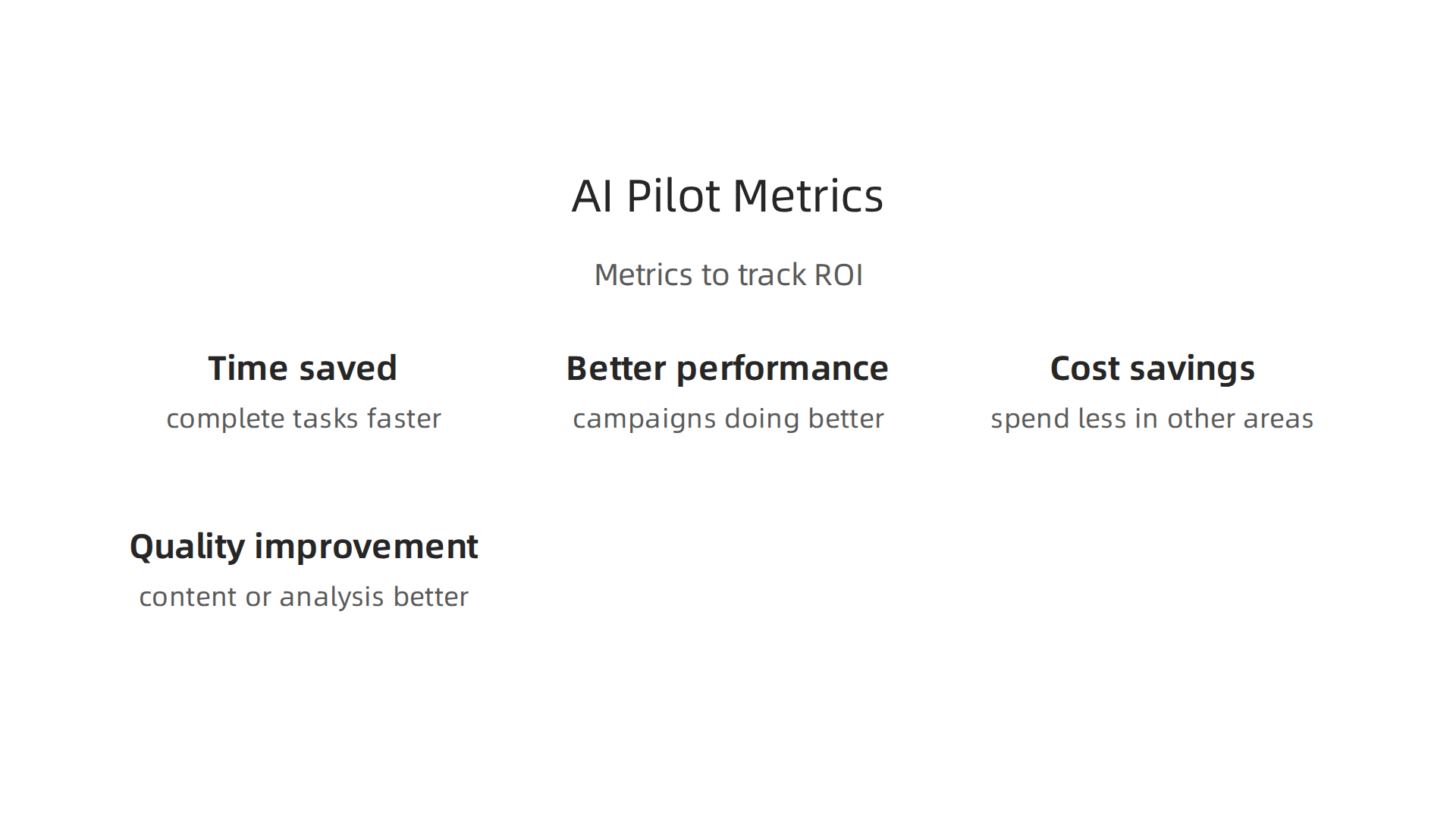
- Time saved: Did AI tools help you complete tasks faster? For instance, if writing an ad campaign used to take 5 hours and now it takes 1 hour with AI, that’s a big time saving.
- Better performance: Are your marketing campaigns doing better? Look at things like:
- More people opening your emails.
- More clicks on your ads.
- More people buying your products or services.
- Lower costs for each new customer.
- Cost savings: Did AI help you spend less money in other areas? Maybe you didn’t need to hire an extra person for a task, or you reduced spending on certain tools.
- Quality improvement: Is the content or analysis you create with AI better than before? This can be harder to measure but is still important.
You can compare these numbers from before you used AI to after you started your pilot. This helps you clearly see the improvements. Tools like an AI ROI Calculator: Build the Business Case for AI Training can help you put all these numbers together. Knowing how to get real ROI from AI marketing cloud in 2026 is a key skill to develop.
When you show these clear results, it helps your team and leaders understand the value of investing in training and using new AI tools. It’s how you prove that your digital marketing course was a good investment and that you can make good choices about how to choose AI for business tools that deliver real results in 2026. This is also important for any ai development company looking to show the impact of their new products. By carefully tracking and showing your results, you can build a strong case for expanding your use of artificial intelligence applications in marketing.
After seeing how a pilot project can bring good results, the next big step is to bring these new AI skills and tools into your everyday work. This means making sure your team and your existing tools all work together with what you learned in your digital marketing course. It’s about smart implementation.
6) Implementation tips: integrating course learnings with existing tools and teams
Bringing new ideas and tools, especially advanced artificial intelligence applications, into a company can feel like a big puzzle.

But with a good plan, you can make it smooth for everyone. Your goal is to make sure the valuable lessons from your digital marketing course help your whole team do better work.
Helping your team learn the new ways
The first step is to help everyone on your team understand and use the new AI tools. This is often called "onboarding."
- Share what you learned: Talk to your team about the exciting things you found in your digital marketing course. Show them the successes from your pilot project.
- Offer simple training: Not everyone needs to become an AI expert. Teach them how to use the specific AI tools that will help them with their daily tasks. You can even create short, custom learning guides, as some companies do when Transforming Corporate Training with Personalized Learning.
- Show how it helps them: Explain how these new tools will make their jobs easier, faster, or more fun. Maybe an AI writing tool can help create social media posts much quicker, as taught in many current digital marketing course curriculums that include Digital Marketing with AI.
- Encourage trying things out: Let your team play with the new tools on small, safe tasks. This helps them get comfortable without fear of making big mistakes. Learning in a group, also known as cohort-based learning, can lead to better skill use, as highlighted in "Cohort vs. Self-Paced Learning: Key Differences in 2026."
Fitting new AI tools with your existing tools
Your company already uses many digital marketing tools, like email programs or ad platforms. This collection of tools is sometimes called your "martech stack." The trick is to make sure new artificial intelligence applications fit right in.
- Check for connections: Can your new AI tools talk to your old tools? For example, can an AI tool that helps write emails send its ideas directly to your email marketing program? A good digital marketing course will often cover different Digital Marketing with AI Curriculum & Syllabus that include working with a variety of platforms.
- Start small: Just like your pilot project, begin by connecting one new AI tool to one existing tool. See how it works before trying to connect everything at once.
- Look for solutions that grow: As your company grows, you’ll want tools that can grow with you. Learning about tools that offer seamless integration will ensure your ai product development is future-ready. It’s smart to look into how to choose AI-ready business computers in 2026 to support these new applications.
- Keep things tidy: Make sure you know which tools do what. Don’t add a new tool if an old one can do the same job just as well, unless the AI adds a clear benefit.
Making change easy and getting early wins
People don’t always like change, even if it’s for the better. This is where "change management" comes in.
- Talk openly: Let everyone share their worries or ideas. Listen to them and try to make things better based on what they say.
- Celebrate small successes: When someone uses a new AI tool to save time or get a great result, share that success with the whole team. This helps everyone see the good things that come from using the new methods.
- Leaders should lead by example: If managers and leaders use the new tools and show excitement, others will be more likely to follow. This creates a positive mood around new technology.
- Learn and adjust: Not everything will work perfectly the first time. Be ready to change your plan based on what you learn. An effective ai development company knows this well when bringing new products to market.
By following these tips, you can smoothly bring the powerful lessons from your digital marketing course into your business, helping your team and company thrive with artificial intelligence applications.
Want to stay ahead in the fast-changing world of AI and technology? Get clear daily AI updates.
The AI Newsletter Worth Reading
Summary
This article explains why AI skills are essential for digital marketers in 2026 and how to pick the right digital marketing course to build those skills. It covers the business case for AI—how it improves targeting, personalization, and efficiency—and why talent capability, not just tools, drives real adoption. You’ll learn what a strong AI-focused course should teach (hands-on tool use, campaign planning, and measurement), how to evaluate instructors and course projects, and which course formats fit different schedules and budgets. The guide also gives a practical checklist to vet courses, shows how to run a small pilot to prove ROI, and offers implementation tips to integrate new tools with existing teams and martech stacks. By following these steps you can choose training that delivers measurable results and scale AI across your marketing operations.