
Introduction: Why AI Is No Longer Optional for Inbound Marketers
Think about your inbound marketing strategy for a moment. Are you still writing blog posts by hand and guessing what your audience wants? If so, you are already behind.
Inbound marketing has changed completely. The days of creating content and hoping it finds the right people are over. In 2026, the numbers tell a clear story. According to the latest research, a powerful 87% of marketers now use generative AI in at least one recurring workflow. That is up from just 51% two years ago. In other words, most of your competitors are already using AI to create content, personalize emails, and understand their audience better. They are not guessing anymore. They are using data.
Here is the real truth. Marketers who ignore AI risk losing more than just time. They risk losing customers. Teams that use AI report higher revenue growth and better conversion rates. A recent survey found that 77% of marketing teams now use AI tools for at least one core function, and these teams see real results. Personalization engines powered by AI deliver strong returns on investment. If you want your inbound marketing to work in 2026, AI needs to be part of your plan.

That is where this guide comes in. We are going to walk through a practical framework that helps you integrate AI into your inbound marketing planning and execution. No confusing jargon. Just real steps you can take.
If you want to stay ahead of the curve, start by getting clear daily updates on what actually works. Check out The AI Newsletter Worth Reading to keep your finger on the pulse of AI trends that matter for marketers.
But first, let us understand why traditional inbound marketing needs a serious upgrade in 2026.
1. The 2026 Inbound Marketing Landscape: Data, AI, and the New Rules
Let us start with the biggest change. Inbound marketing used to be about picking the right keywords and writing blog posts that ranked in Google. That worked for a while. But in 2026, that playbook is outdated.
Here is the thing. AI has completely shifted how inbound marketing works.
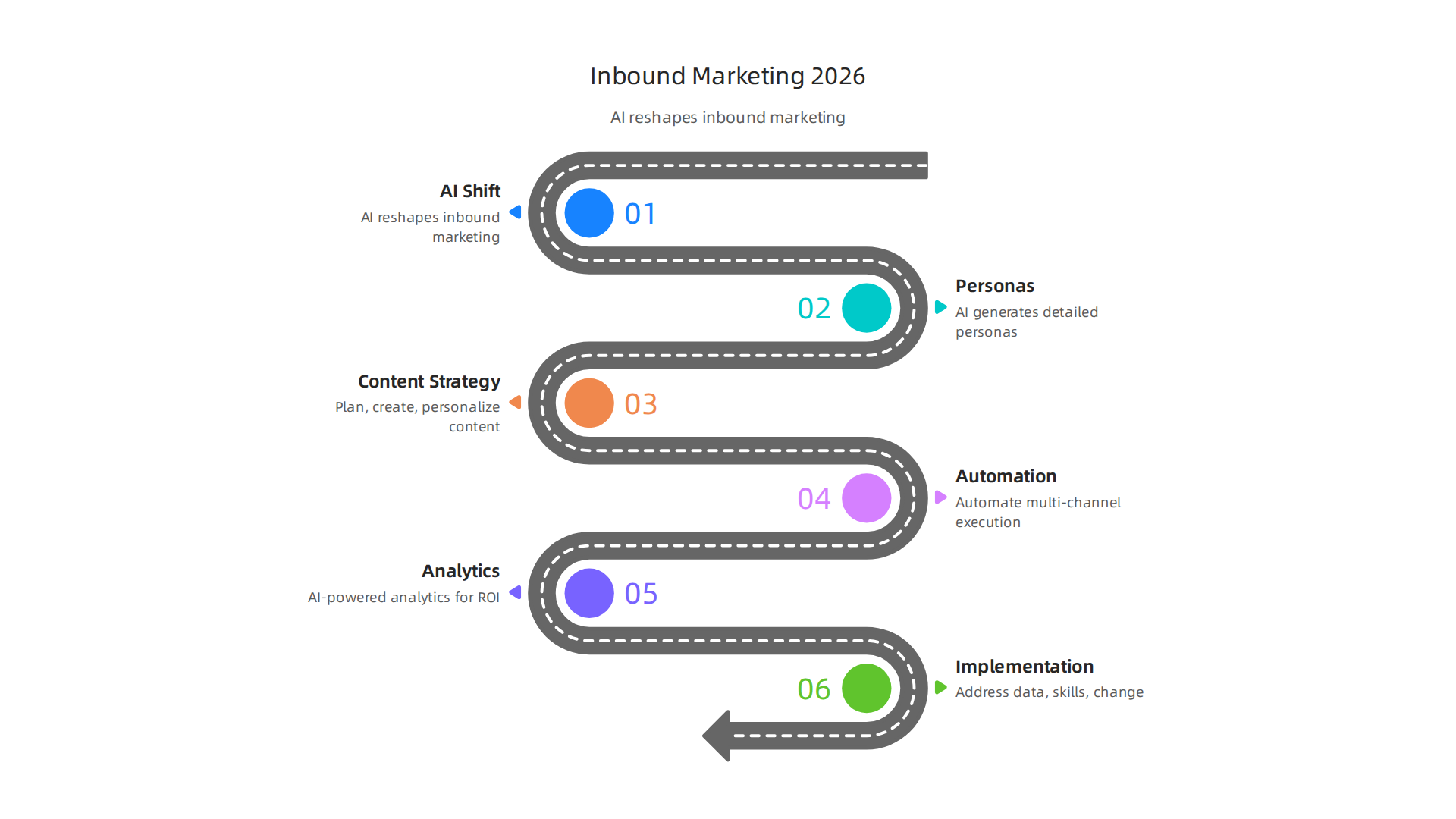
Instead of manually guessing what your audience wants, AI now gives you predictive audience insights. It looks at behavior patterns, past purchases, and real-time signals to tell you exactly what to create and who to target. This is not future talk. It is happening now. According to the latest AI adoption data, 71% of businesses that use AI in marketing and sales report actual revenue gains. That is a big number. It means AI is not just a cool tool. It is directly helping companies bring in more money.
The old way of doing inbound marketing meant writing content by hand, optimizing it for one search engine, and hoping for the best. Today, AI helps you build a complete social media marketing strategy at the same time. It can draft posts, suggest the best times to publish, and even adjust your messaging for different platforms. You get to act like a marketing consultant with a whole team of assistants, even if you are working alone.
Generative AI has also made content creation possible at a much larger scale. You can now produce blog articles, email sequences, and ad copy faster than ever before. But here is the catch. You still need human oversight. AI can write a first draft in seconds, but it cannot capture your brand voice or check for accuracy on its own. Tools like YesChat AI help marketers generate content quickly, but human review ensures the message stays on brand and builds trust.
Now, none of this works without good data. The foundation of effective AI-driven inbound marketing is data quality and first-party data. That means collecting information directly from your audience through forms, surveys, and website behavior. When your data is clean and accurate, AI tools can give you better predictions and personalization. If your data is messy, AI will only make the mess bigger. That is why investing in your data strategy is the first step before adding any new AI tool to your workflow.
To get the most out of your AI tools, you need to understand how to measure results. A good place to start is learning how to get real ROI from AI marketing cloud solutions, which can help you track what is actually working.
In short, the rules of inbound marketing have changed. The winners in 2026 are the marketers who combine AI’s speed and smarts with human creativity and clean data.
2. Supercharging Buyer Personas: AI for Deep Audience Understanding
You probably already have buyer personas. Maybe you created them last year. Or the year before. But here is the truth. Most of those personas are already out of date. In fact, 40 to 60 percent of buyer personas get abandoned within six months. That is a huge waste of time and effort. The old way of building a persona once and hoping it lasts just does not work anymore. People change. Markets change. What your customers needed six months ago is not what they need today.
That is where AI changes everything. Instead of building a static persona and forgetting about it, AI helps you create dynamic buyer personas that update in real time. These personas are not based on guesses. They are built from actual data. Social media conversations, survey responses, CRM notes, website behavior. AI pulls it all together and finds patterns a human alone would miss.
For example, tools like Delve AI can take your raw research data and generate detailed personas in minutes.
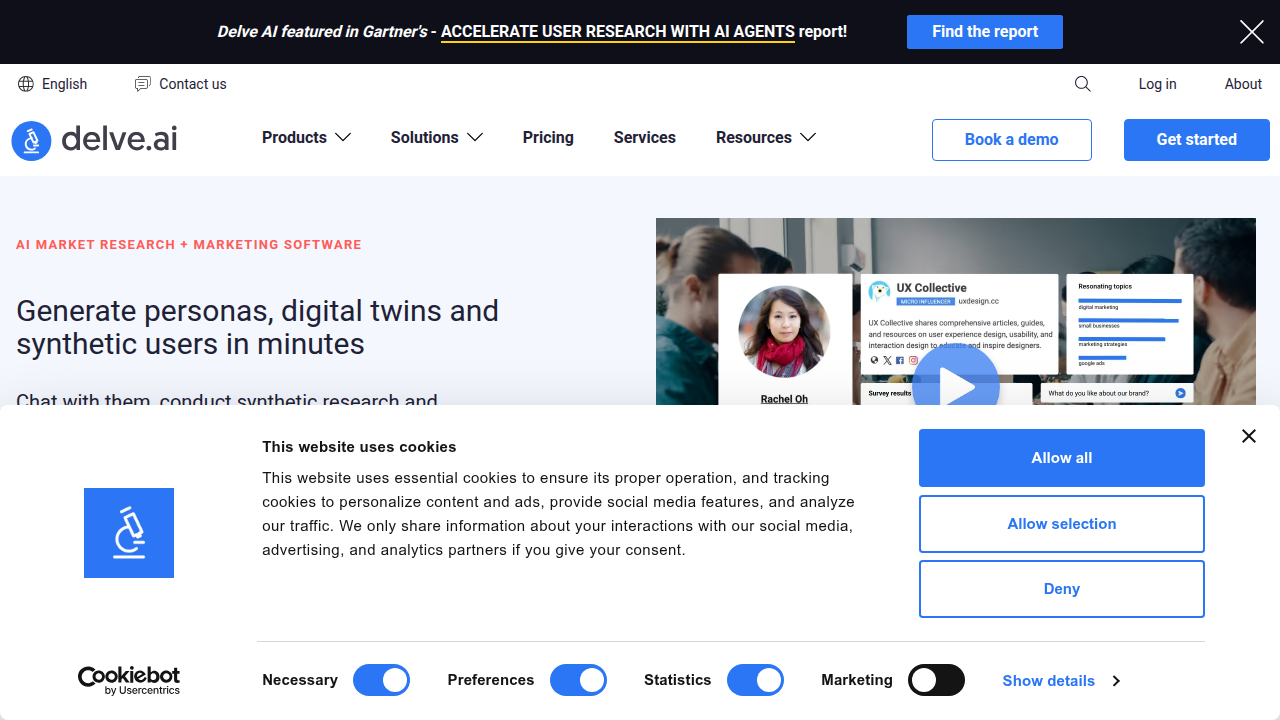
You get demographics, goals, pain points, and communication preferences. But the real power is in how AI keeps those personas current. Social listening and sentiment analysis tools track what people are saying about your brand and your industry right now. If your audience suddenly shifts priorities, your persona shifts too.
Predictive modeling takes this even further. It analyzes past buying behavior to identify which customer segments are most likely to convert. Instead of guessing who to target with your next campaign, AI tells you. You can then tailor your messaging specifically for those high-value groups.
Creating these AI-driven personas is easier than you think. Start by collecting your best data:
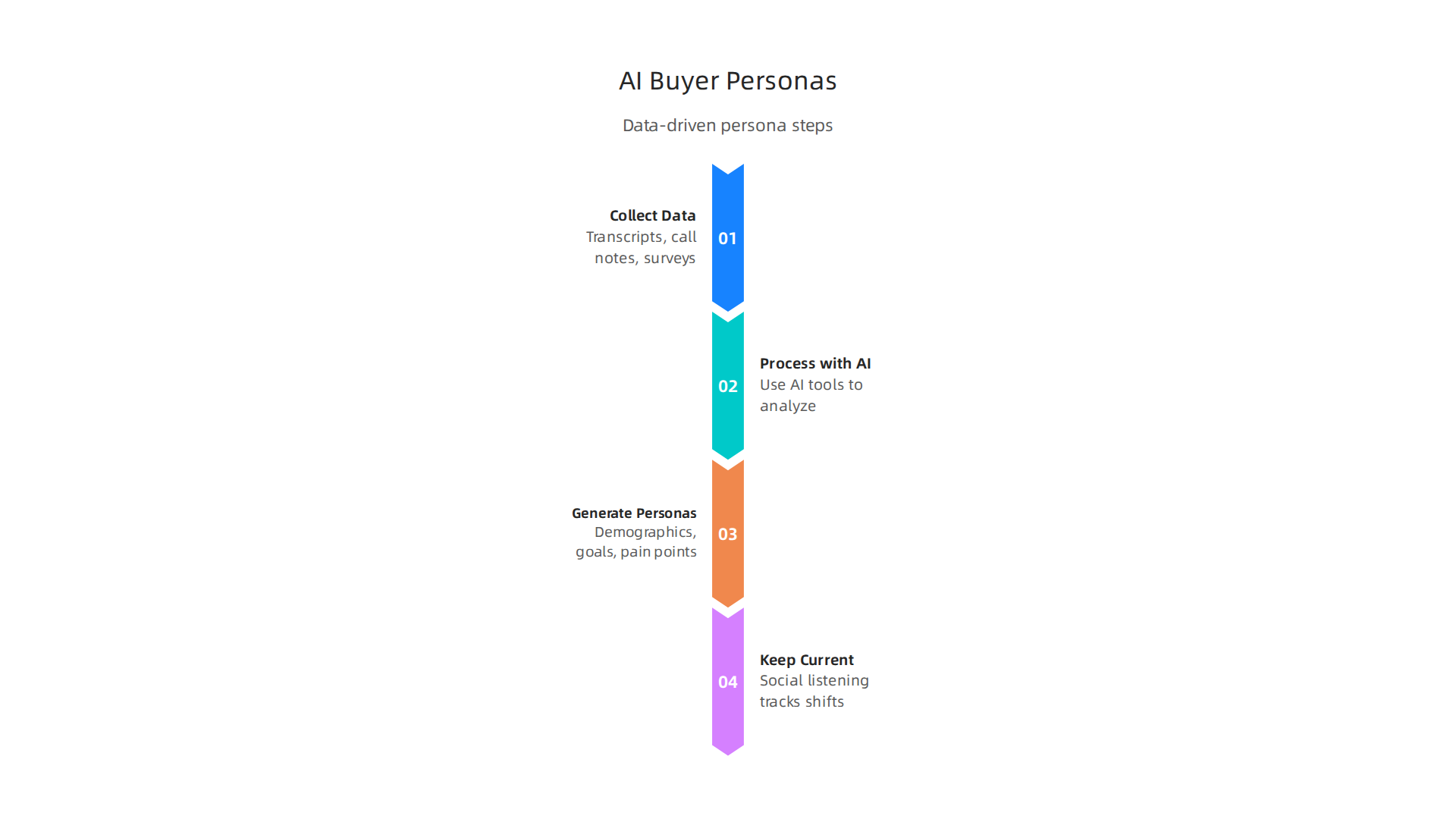
interview transcripts, sales call notes, survey exports, and CRM data. Then use an AI tool to process it all. For example, how online market research surveys powered by AI deliver better insights can help you gather and analyze the raw material for your personas. The goal is not a perfect persona in six weeks. It is a usable one in sixty minutes that you revisit and refine regularly.
When your inbound marketing strategy is built on deep, real-time audience understanding, every piece of content and every campaign hits harder.
You stop creating for imaginary people and start speaking directly to real ones.

To stay on top of the latest AI tools and techniques for audience research, subscribe to The AI Newsletter Worth Reading. It delivers clear daily AI updates from The Deep View Newsletter straight to your inbox.
3. AI-Driven Content Strategy: From Planning to Personalization
Once you understand your audience deeply, the next step is creating content that actually speaks to them. This is where AI transforms your inbound marketing from guesswork into a precision process. Instead of writing content and hoping it lands, you can plan, create, and personalize with confidence.
AI helps you find content gaps you would never spot on your own. It scans what your competitors are writing, what questions your audience is asking, and what topics get the most engagement. Tools like the content gap analysis tools reviewed on SlateHQ can show you exactly where your site is missing important information. You can then fill those gaps with content that connects with your ideal audience.
Generative AI tools make the actual writing faster too. But here is the key. You do not want generic robot content. You want content that keeps your brand voice and feels real to your readers. Modern AI writing tools let you set your tone, style, and preferred vocabulary upfront. They can draft blog posts, social media captions, email sequences, and landing pages in minutes. You still review and edit, but the heavy lifting is done.
Personalization takes this even further. Imagine a website that changes its homepage based on who is visiting. A returning customer sees different offers than a first-time visitor. A person in the research phase sees educational content, while someone ready to buy sees pricing and case studies. That is what AI personalization engines do. They tailor every piece of content in real time based on user behavior, past interactions, and even their current stage in the buying journey.
The best part? All of this works together to strengthen your inbound marketing results. When your content strategy is driven by real audience data, every blog post, video, and social update has a better chance of being seen, read, and acted upon.
To get the most out of AI for your own planning, start by using a tool that analyzes your current content against competitors.
Your goal is to identify topics your audience cares about that you have not covered yet. Then use a generative AI tool to create content that fills those gaps, while keeping your brand voice consistent. Finally, set up a personalization engine on your site so that each visitor gets content that feels like it was written just for them.
As you build out this system, you will want a process for choosing the right tools. Our guide on how to choose AI for business tools outlines what to look for when building your content tech stack.
When your inbound marketing strategy includes AI-driven planning, creation, and personalization, you stop shouting into the void. You start having real conversations with the people who matter most to your business.
4. Automating the Inbound Flywheel: AI for Multi-Channel Execution
Planning and personalizing content is only half the battle. You also need to get that content in front of the right people at the right time across every channel they use. AI makes this possible without your team working overtime.
An inbound marketing flywheel works best when every channel pulls in the same direction. Your email campaigns, social media posts, and paid ads should all tell the same story. AI tools can orchestrate this across platforms. They take your content calendar and automatically schedule posts for each channel. They adjust the message format for each platform while keeping your brand voice consistent.
Before you automate distribution, you need content that fills gaps your audience actually cares about. That is where AI-driven analysis helps you find opportunities other brands miss. Tools covered in the best content gap analysis tools for 2026 on Single Grain show you exactly what topics will connect with your audience. Once you have that content, AI automation spins it across your channels seamlessly.
Smart scheduling is one thing. But AI also learns when your audience is most likely to engage. It studies past open rates, click patterns, and conversion times. Then it picks the best send times for each segment. This is much better than guessing or using a one-size-fits-all schedule.
A/B testing becomes automatic too. Instead of running tests manually and waiting weeks for results, AI runs multiple variations at once. It compares subject lines, images, calls to action, and even send times. When it finds a winner, it shifts more traffic to that version in real time. Your campaigns keep getting better without extra work.
Maybe the biggest shift is how AI nurtures leads around the clock. Chatbots and conversational AI tools handle the first contact with website visitors. They answer questions, qualify leads, and pass hot prospects to your sales team. They never sleep. Your inbound marketing engine never stops running.
All of this works together to keep your flywheel spinning. Content gets created, personalized, and delivered across channels automatically. Leads get nurtured even when your team is offline. And every interaction helps the AI learn more about what works.
If you are building out this kind of system, you might want to check out how HubSpot AI streamlines your business operations across marketing, sales, and service.
It covers how one platform can unify your multi-channel inbound efforts.
You do not need a huge budget. Even smaller AI tools can automate scheduling, run A/B tests, and power a basic chatbot. The key is to start with one channel, get it running smoothly, and then expand.
To stay current with the latest AI tools that power inbound marketing, get clear daily AI updates from The Deep View Newsletter.
By letting AI handle the execution, your team can focus on strategy, creativity, and relationship building. That is where the real inbound marketing magic happens.
5. Measuring What Matters: AI-Powered Analytics for Inbound ROI
All that effort you put into automating your inbound flywheel means nothing if you can’t tell what’s actually working. Old school analytics often gives you a muddy picture. You might see that email brought in a sale, but what about the blog post, social media share, and ad that led the customer to your email in the first place?
AI powered analytics changes that completely. It looks at every single touchpoint a customer touches before they buy. Instead of guessing or using simple rules, machine learning models assign credit where it really belongs.
Let’s talk about attribution. Most marketers still rely on last click or first click models. Those are simple but they miss the bigger story. A customer might see your Instagram ad, read three blog posts, click a retargeting ad, and then finally convert from an email. Last click gives all credit to email. First click gives all credit to Instagram. Neither tells you the truth about what your whole marketing mix actually did.
AI attribution models solve this by analyzing actual customer paths. They use algorithms like Markov chains and Shapley value models to calculate each channel’s real contribution to conversions. This is explained well in an AI attribution modeling guide from Digital Applied. It shows how these models go beyond simple rules to give you a clear picture of what drives inbound marketing success.
Predictive analytics takes this even further. AI can forecast which leads are most likely to convert based on past behavior. It scores leads automatically so your sales team knows who to call first. It can also predict customer lifetime value. That means you know which customers are worth spending more to acquire. You stop wasting money on channels that bring in low value leads and double down on the ones that bring in your best customers.
Real time dashboards let you make changes fast. Instead of waiting for monthly reports, you see performance as it happens. If one channel starts to drop off, you can shift budget immediately. If a new social media post is driving huge engagement, you can boost it right away. AI powered dashboards learn what metrics matter most for your specific business and highlight them.
This is a huge shift for anyone using inbound marketing. You no longer have to guess which channels really deserve your budget. The data shows you. And when you know exactly where your ROI comes from, you can pour more fuel on what works and cut what doesn’t.
For more on how to build a measurement system that actually delivers returns, check out this guide on maximizing AI marketing cloud ROI. It walks through setting up the right analytics stack for your team.
When you combine AI automation with AI analytics, your inbound marketing becomes a self improving system. It creates content, delivers it, measures results, and learns from those results to do better next time.

That is the real power of modern inbound.
6. Overcoming AI Implementation Hurdles: Data, Skills, and Change Management
Getting your inbound marketing to run on AI sounds great on paper. But in practice, most teams hit real roadblocks. The data isn’t clean. People don’t know how to use the tools. And some team members are not excited about changing their workflow.
The truth is, the technology itself is rarely the problem. The problem is the foundation underneath it. Let’s look at the biggest hurdles and how to beat them.

Fix your data first
AI systems only work with good data. If your data is scattered across different platforms, full of duplicates, or just plain wrong, your AI will produce bad results. That is not a technology problem. It is a data problem.
According to the 2026 marketing data report from Supermetrics, 52% of marketers do not own their data strategy. And 40% struggle to prove ROI across channels. The report says you cannot outrun a bad data foundation. Clean, connected data is the base for everything else.
Start by mapping where your data lives. Connect your CRM, email platform, analytics tools, and ad accounts into one system. Clean up old records. Set rules for how data is entered. When your data is solid, your AI will actually help you.
Build skills across your team
Another big barrier is lack of AI know-how. Only 6% of marketers have fully embedded AI into their workflows according to the same report. That is a huge gap.
Your team needs training, not just tool access. They need to understand what AI can and cannot do. They need to practice writing good prompts, checking outputs for accuracy, and knowing when to trust the results.
The marketing AI adoption challenges report from Exaalgia highlights that poor training and low AI literacy are among the top reasons projects fail. Teams get access to fancy tools but have no idea how to use them in their daily work.
Set aside time for learning. Start with one or two tools. Create shared prompt templates and review checklists. Let people experiment in low risk areas first. When people see how AI saves them time, resistance drops fast.
Roll out in phases with clear goals
Trying to implement AI everywhere at once is a recipe for chaos. You need a phased rollout with clear KPIs.
Pick one process to improve first. Maybe it is email personalization or social media scheduling. Set a clear metric for success like open rates or time saved. Run a pilot with a small team. Measure the results. Then expand.
The key is to anchor every AI tool to a specific business challenge. Do not adopt AI just because everyone else is doing it. Adopt it because it solves a real problem in your inbound marketing workflow.
Organizational resistance is real. According to a LinkedIn article on overcoming barriers to AI adoption, some team members worry AI will replace their creativity or even their job. The solution is to normalize exploration. Show them AI is a tool to amplify their work, not replace it.
Embed AI conversations into your regular planning meetings. Let people co develop guidelines. When the team owns the process, adoption happens naturally.
Stay ahead of the curve
AI is changing fast. To keep up, you need a steady stream of clear, practical updates. That is where The AI Newsletter Worth Reading comes in. It delivers daily insights you can actually use, so you never fall behind on the tools that drive your inbound marketing.
If you want a deeper look at how to choose the right tools for your team, check out this guide on picking the best AI for business use. It walks through the evaluation criteria that actually matter.
Summary
This article explains why integrating AI into inbound marketing is no longer optional and lays out a practical framework for doing it well. It covers the 2026 landscape where predictive insights, generative content, and personalization engines have replaced guesswork, and it shows how clean first‑party data is the foundation of any successful AI program. You’ll learn how AI creates dynamic buyer personas, finds content gaps, speeds content production while preserving brand voice, and automates multi‑channel execution including smart scheduling and chatbots. The guide also explains AI‑powered measurement—attribution, predictive scoring, and real‑time dashboards—so you can see real ROI. Finally, it walks through common implementation hurdles (data, skills, change management) and recommends phased pilots, team training, and clear KPIs so you can adopt AI without chaos. Read it to get a step‑by‑step approach that combines AI’s speed with human oversight to improve conversions and revenue.