Why Marketing Specialists Must Adopt Focused AI Strategies Now
In 2026, the world of marketing is changing faster than ever, and artificial intelligence (AI) is at the heart of it all. If you’re a marketing specialist, you’ve likely seen many new AI tools pop up every day. It can feel like too much information, making it hard to figure out which tools are right for your work.

This big challenge is what many marketing teams face today: how do you pick the best AI tools for your specific marketing jobs from so many choices?
Actually, almost all marketing teams are now using AI. A report from this year shows that 91% of marketers actively use AI in their daily tasks, a big jump from past years. This means that if you’re not using AI, or not using it well, you might be falling behind. The goal for any marketing specialist today isn’t just to use AI, but to use it in a smart, focused way to get real results. Teams that focus on getting a good return on investment (ROI) from their AI tools see much better results, sometimes 3.2 times better [1]. This shows that the ai advantage is clear, especially for growth marketing.
But with so many options, how do you cut through the noise? How do you pick AI tools that truly help with things like making better marketing collateral or understanding customers more deeply? Many marketing specialists feel unsure about where to start or how to make sure the AI tools they choose will actually work and be easy for their team to adopt. There’s a real worry about spending money on tools that don’t deliver.
This article is here to help. We will give you a clear, step-by-step guide to choosing and using AI tools for your marketing work. Our playbook focuses on what really matters: getting a good return on your money, making sure the tools are easy to start using (low adoption friction), and helping you get them up and running quickly (implementation readiness). You’ll learn how to find AI solutions that truly fit your needs, so you can stop feeling overwhelmed and start seeing real business growth.
To keep up with the fast-moving AI world without getting lost in all the news, it helps to have a trusted source. You can always get clear daily AI updates from The Deep View Newsletter. We will help you understand how to choose AI tools for business that deliver real results, so you can make smart choices for your team.
[1] State of AI Marketing 2026 | Enterprise AI Adoption Report
Set Clear Goals: Map AI Features to Marketing Outcomes
Now that we know focused AI strategies are a must, the very first step for any smart marketing specialist is to set clear goals. You can’t pick the right tools if you don’t know exactly what you want them to do for you. Think of it like this: if you want to drive to a friend’s house, you first need to know their address.
It’s not enough to say "I want more sales." You need to make your goals clear and easy to measure. For example, do you want to:
- Make more people aware of your brand? (Like getting more views on your online videos or more people seeing your ads.)
- Get better quality leads? (These are people who are more likely to buy from you.)
- Turn more leads into customers? (This means improving your conversion rates.)
- Keep existing customers happier for longer? (This is about customer retention.)
By making your goals specific, you can then see how AI tools can really help. Each AI tool has different strengths, and knowing your goal helps you match the tool to the job. For example, an AI tool that writes emails might help with conversion rates, while one that suggests new ad ideas could boost awareness. The goal is to find AI solutions that directly help your growth marketing efforts.
How to Map AI Features to Your Goals
Once you have your goals, list out the marketing jobs you do every day. These are your "use cases." Then, think about how AI could make those jobs easier or better.
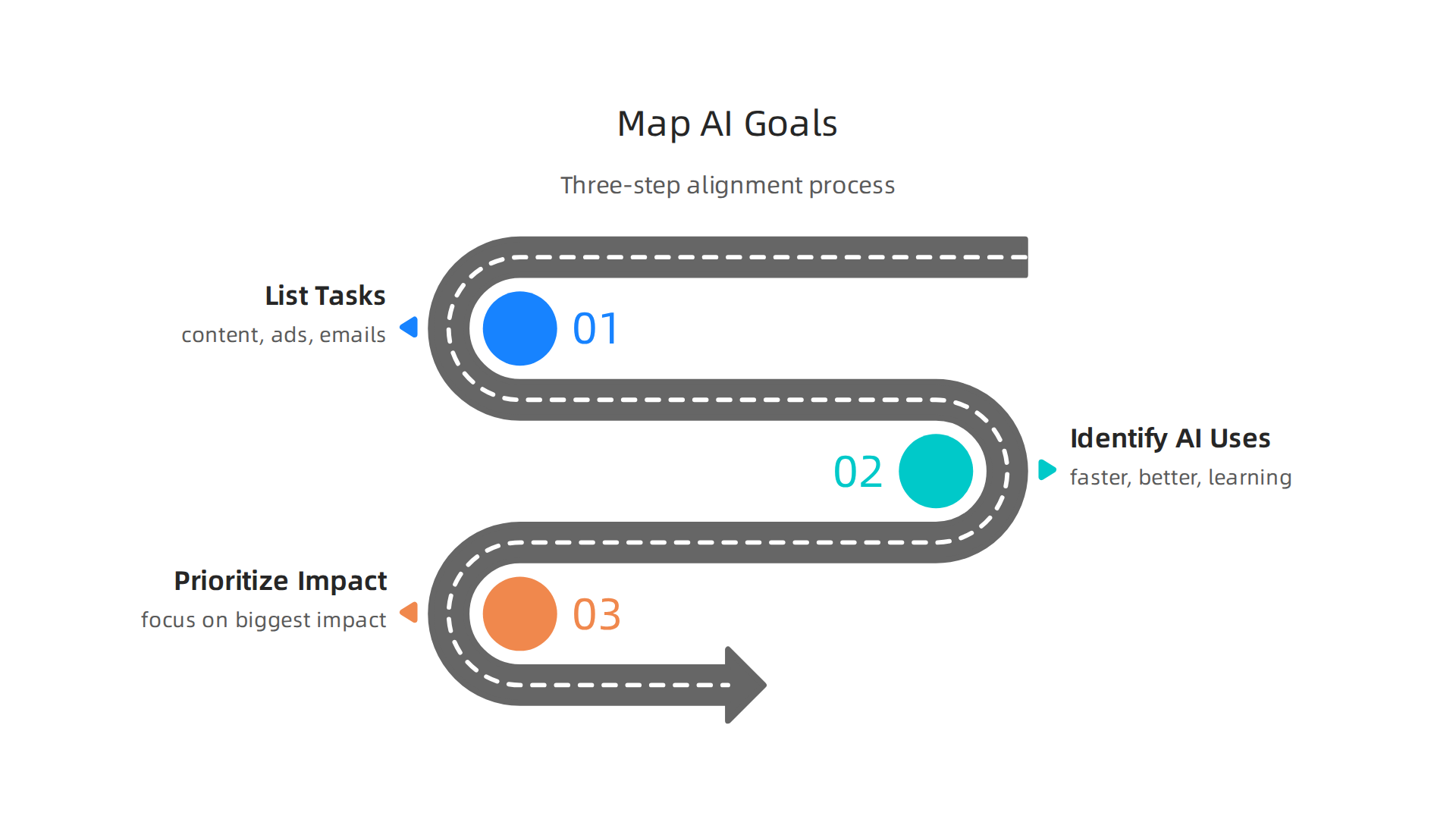
This helps you build a "prioritized use-case matrix."
Here’s how to think about it:
- List your marketing tasks: Think about creating content, running ads, sending emails, talking to customers, or figuring out what customers like.
- See where AI can help: For each task, ask: Can AI make this faster? Can it make it better? Can it help me learn new things? Maybe AI can help you create more engaging marketing collateral.
- Prioritize: Not all tasks are equally important. Focus on the ones that will have the biggest impact on your measurable goals and give you the best return on your money. For example, if increasing leads is your top goal, prioritize AI tools that help with lead generation and lead scoring. Many businesses that use AI for marketing automation see a really good return on their money, sometimes even 544% ROI [1]. This shows the clear AI advantage when you pick tools carefully.
By making a list of your goals and matching them to what AI tools can actually do, you’ll make smarter choices. This way, your limited budget and time go toward experiments that truly matter and bring high-impact results. This focused approach is key to harnessing the power of AI for business success. For example, understanding how to choose marketing automation software carefully can make a big difference for your team.
[1] The Real ROI of AI-Driven Marketing in 2026: What the Data Actually Shows – V12 AI
Now that you have your clear goals, the next smart step for any marketing specialist is to figure out where to put your money first. You need to pick the best types of AI tools that will give you the most bang for your buck and be easiest for your team to start using. This means looking at tool categories and ranking them.
Think of AI tools like different types of helpers. Some are good for writing, some are good for talking to customers, and some are good for understanding numbers. You can’t hire all of them at once, so you need to decide which helpers will do the most important work for your business first.
Key AI Marketing Categories to Consider
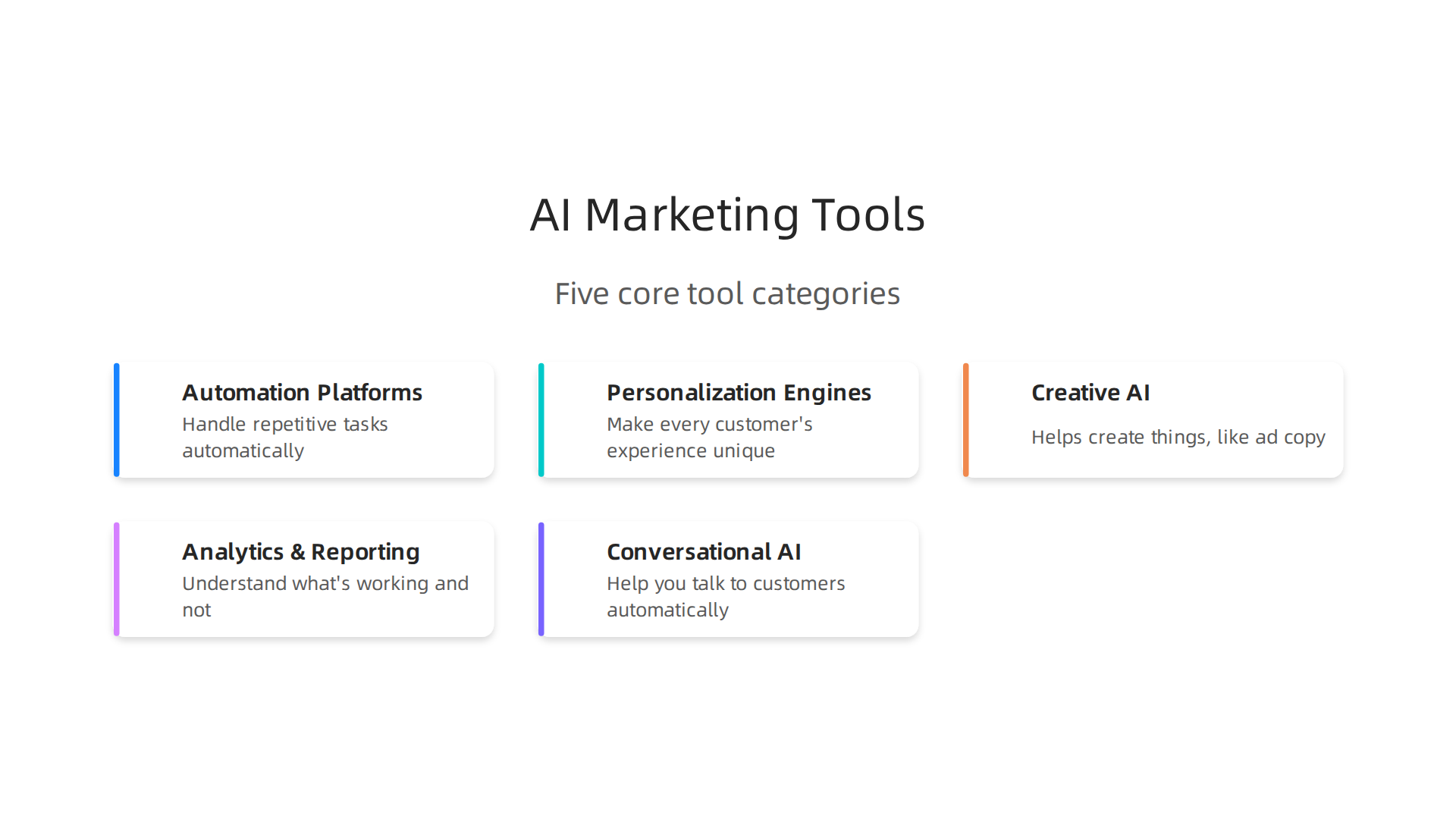
Many marketing teams are using AI in a few main areas. Here are some big ones:
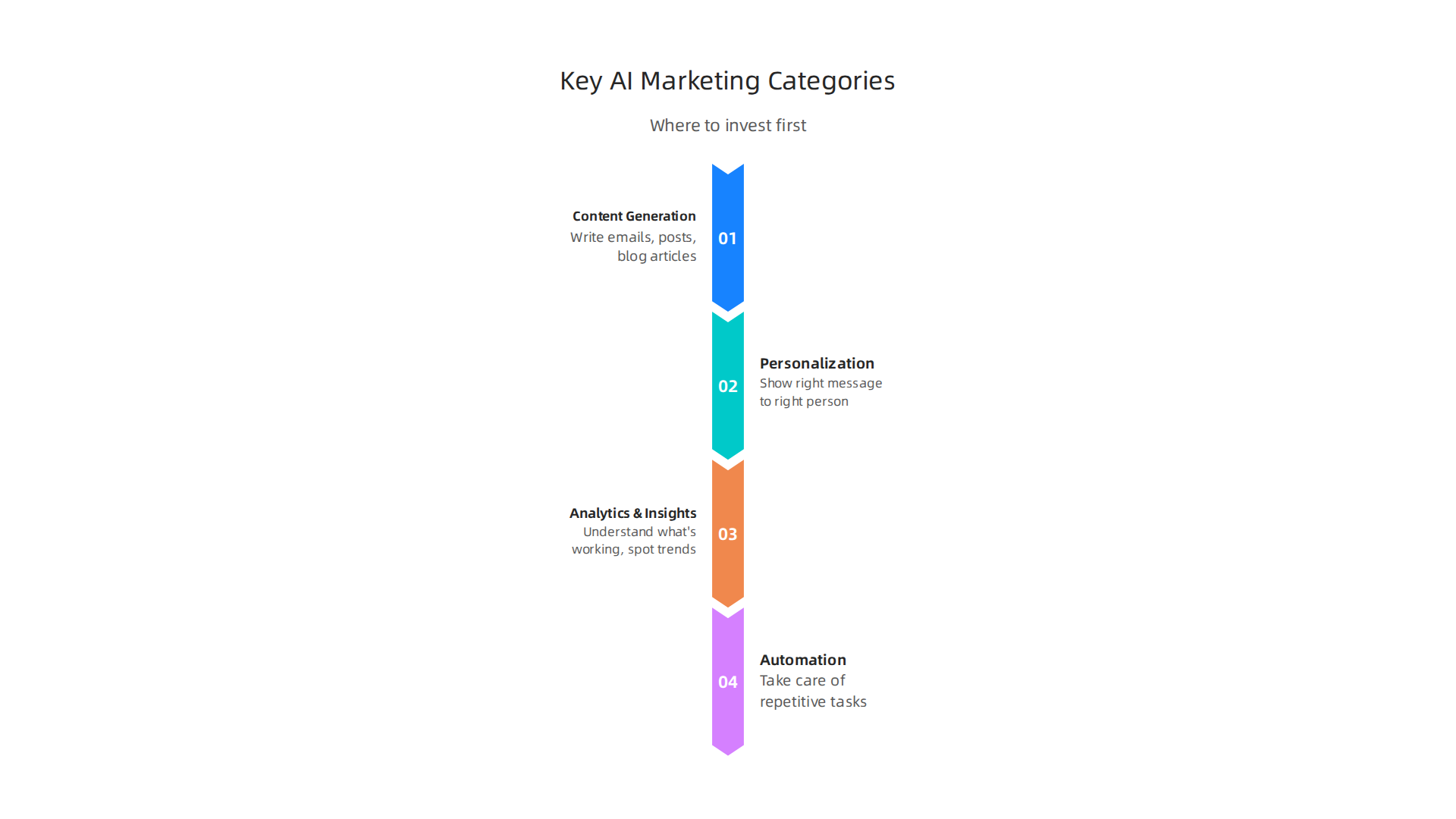
- Content Generation: These tools help you write emails, social media posts, blog articles, and other [marketing collateral]. Many businesses in 2026 use AI for creating content, making it the most common use of AI in marketing.
- Personalization: These tools help you show the right message to the right person at the right time. For example, they can suggest products a customer might like or change an ad based on what someone has looked at before.
- Analytics and Insights: These tools look at huge amounts of data to help you understand what’s working and what’s not. They can spot trends and tell you what customers might do next.
- Automation: These tools take care of repetitive tasks, like sending follow-up emails, scheduling posts, or moving data between different systems. This saves your team time and lets them focus on bigger ideas.
How to Prioritize Your AI Investment
When deciding where to invest, think about two main things for each category:
- Expected Return on Investment (ROI): Which category will help you reach your specific goals the fastest and give you the biggest boost in sales or customer happiness? For example, AI tools that help with content writing can bring in 3.2 times your investment on average. Tools for personalization are also strong, bringing in about 2.7 times the investment on average.
- Integration Complexity: How hard will it be to set up and use these tools with what you already have? Some tools are super easy to plug in, while others might need a lot of setup or special tech skills. You want to pick tools that your team can learn and use without too much trouble.
Also, don’t forget your team’s skills and your current tech setup. It’s important to match new AI tools to what your team can handle and what your systems can support. If your team isn’t ready for a very complex AI system, it might be better to start with something simpler. This helps avoid "adoption friction" and ensures your team actually uses the tools effectively. Looking into how to choose the best AI tech products for your team in 2026 can make this process smoother.
By carefully ranking these categories based on their likely ROI and how easy they are to use with your team’s current skills and existing systems, you can build a smart plan. This focused approach gives your business a real [AI advantage] and helps your growth marketing efforts succeed.
To stay on top of all the fast-changing AI tools and trends, make sure you’re getting trusted information.
Get clear daily AI updates from The AI Newsletter Worth Reading.
After you know which types of AI tools are best for your business, the next big step is picking the right company or "vendor" to get them from. For any smart marketing specialist, this means having a clear plan to check out each option. You want to make sure the tool will truly help your growth marketing efforts and fit well with how your team works.
Evaluate Vendors: Checklist for Marketing Specialists
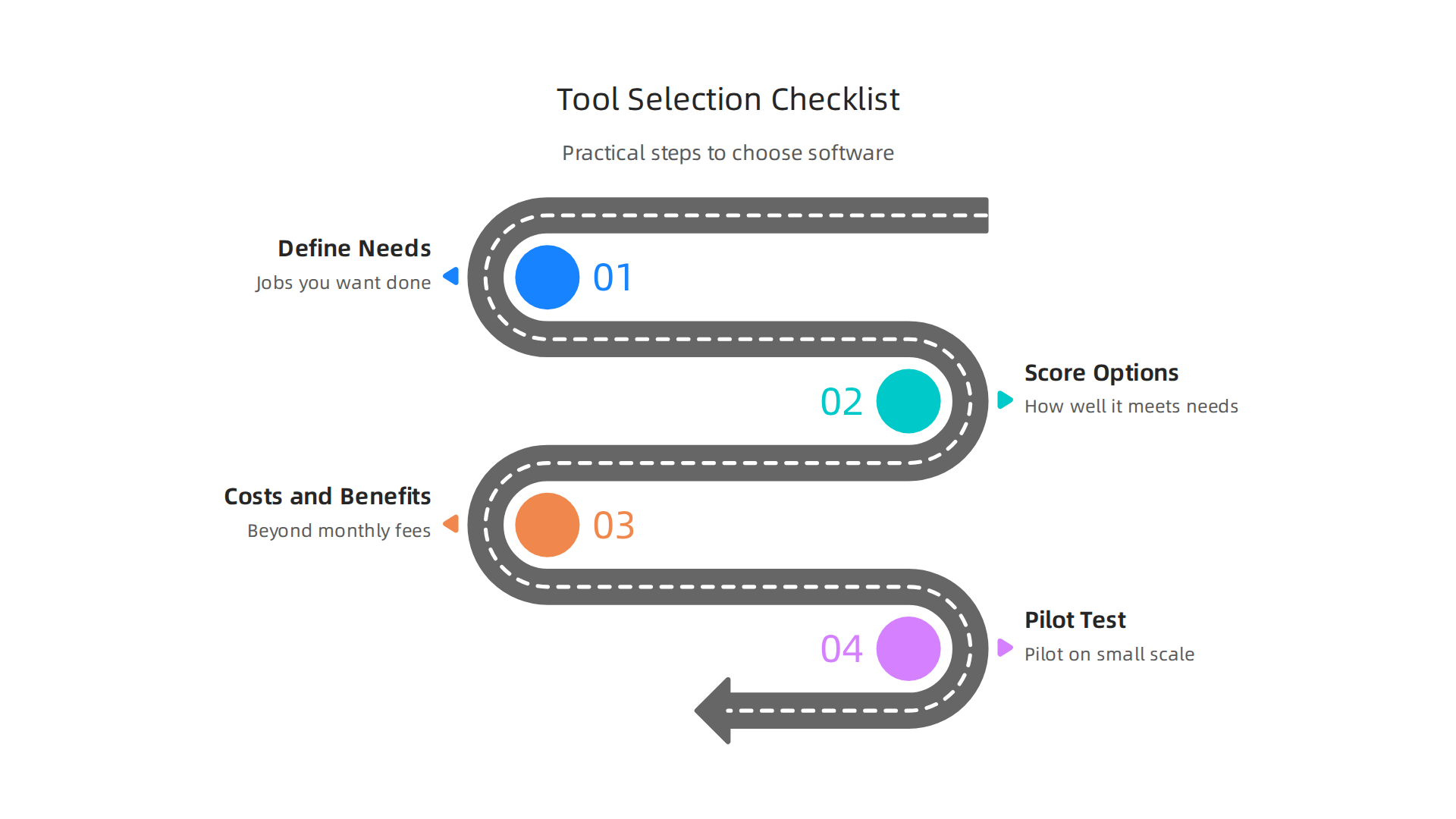
When looking at different AI tools, don’t just pick the first one you see. You need a checklist to compare them fairly.

Think of it as interviewing each tool provider to see if they’re the right fit for your team in 2026. Here are some key things to ask about:
- How easy is it to connect with other tools you use? (Integration) The AI tool should work well with your existing marketing software, like your email system or customer database. If it’s hard to connect, it will cause problems later.
- Can the AI tool use your business’s information? (Data Access) AI tools need data to learn and work. Make sure the tool can safely and easily use your company’s specific information without issues.
- Can you change the tool to fit your needs? (Customization) Your business is unique. Can you change how the AI works or what it does to match your specific marketing campaigns and goals?
- Is your information safe with them? (Security) This is super important. You need to know that your customer data and business secrets will be protected from bad actors. Ask about their security measures.
- Are the costs clear and fair? (Pricing Transparency) Make sure you understand all the costs involved. Are there hidden fees? Does the price change as you use it more? A good vendor will be open about their pricing.
Many companies offer checklists to help you with this. One helpful guide suggests looking at how vendors handle things like security and data management to avoid problems later on AI Vendor Evaluation Checklist: How to Choose Business AI Tools Without Getting Burned. It’s also smart to look at how different enterprise AI platforms stack up before making a big decision.
Try Before You Buy: Short Pilot Tests
After you have a few favorite vendors, the best way to really check if an AI tool is right for you is to try it out. This is called a "pilot test." It’s like a short trial run before you sign a long-term contract.
A pilot test should be short, often about 30 to 90 days. During this time, you set clear goals. For example, you might want to see if an AI content tool can help your team write blog posts 20% faster. You need to decide exactly what you want to measure to know if the test is a success A Practical 30‑Day Pilot Plan to Evaluate AI Marketing Tools for Small Teams.
Here’s how to run a good pilot test:
- Set Clear Goals: What do you hope the AI tool will achieve for your marketing team? Make these goals specific and measurable.
- Pick Key Numbers to Watch: These are called Key Performance Indicators or KPIs. They help you track if the AI tool is meeting your goals. For instance, if you’re testing an AI ad tool, you might track how many people click on the ads or how much a new customer costs AI Pilot Success Metrics & Reporting Plan: KPIs, Experiment.
- Keep it Small: Don’t try to use the AI tool for everything at once. Pick one small project or a small part of your team to test it with. This makes it easier to manage and see clear results.
- Decide What "Success" Looks Like: Before you start, agree on what will make you say, "Yes, this AI tool is great!" or "No, this isn’t what we need."
By doing these pilot tests, your marketing specialist team can clearly see the value of an AI tool with your own data. This way, you make smart choices that truly give your business an [AI advantage] and boost your growth marketing efforts.
Implementation Roadmap: People, Process, and Tech
Once your team finishes a pilot test and sees that an AI tool works, the next steps are all about making it a permanent part of your business.

This involves a clear plan, often called an "implementation roadmap." It covers three main stages: getting the AI tool set up, putting it into wider use, and then growing its use even more across your company.
Many experts agree that a good roadmap helps you smoothly bring AI into your marketing work. It’s like having a step-by-step guide to gain a real [AI advantage]. A common way to think about this journey is a 90-day plan, moving from initial checks to full-scale use, as shown in the How to Implement AI in Marketing in 90 Days guide.
Key Stages for Rolling Out AI Tools
- Pilot: You just learned about this. It’s your short test to make sure the AI tool does what you need it to do. If the pilot goes well, you move to the next stage.
- Integration: This is where you connect the new AI tool with your other systems. For example, if you tested an AI tool for writing emails, you now link it to your email sending program. This makes sure all your tools talk to each other and share information easily. A marketing specialist often helps manage this technical part.
- Scale: After successful integration, you begin to use the AI tool across more of your team or for more projects. If it helped a small group write blog posts faster, now your whole content team might use it for all their [marketing collateral]. This helps your entire business see better results and boosts your growth marketing.
Who Does What? Important Roles
For each step of this roadmap, different people on your team will have important jobs. Having clear roles helps everything run smoothly. Here are some key people you’ll need:
- Project Owner: This person is in charge of the whole AI project. They make the big decisions, clear away problems, and make sure the project stays on track. They are often a leader in marketing.
- AI Integrator: This person makes sure the AI tool connects properly with your existing software. They solve any technical issues that come up.
- Data Analyst: This person keeps an eye on the numbers. They check if the AI tool is truly helping your business reach its goals, using the KPIs you set during the pilot.
- Workflow Owners: These are the people who actually use the AI tool day-to-day for specific tasks, like the content creators or ad managers. They help make sure the tool fits into their daily work.
Putting together a strong team with clear jobs is crucial for success. In fact, a good AI Tool Selection Playbook for Marketing Teams points out the need for a cross-functional team with defined roles.
Getting Everyone On Board: Change Management
Bringing new AI tools into a business can sometimes be tricky because people don’t always like change. They might worry about their jobs or feel overwhelmed. This is where "change management" comes in. It’s all about helping your team understand and accept the new tools.
Here are some tips to help everyone get on board:
- Talk About Why: Explain clearly how the AI tool will help them and the company. Show how it will make their work easier or more effective, not harder.
- Listen to Concerns: Let people share their worries and try to address them. Maybe they need more training or a simpler way to use the tool.
- Provide Good Training: Don’t just give them a new tool and expect them to figure it out. Offer clear, easy-to-understand training sessions.
- Show Success Stories: Share examples of how the AI tool is already making a difference, perhaps from your pilot test. This can inspire others.
- Get Leaders Involved: When company leaders show their support and even use the tools themselves, it encourages everyone else.
A big part of this is understanding your team’s different views and getting "buy-in" from everyone, as highlighted in the Leadership AI Adoption: A CMO Playbook for 2026. By handling changes well, your business can smoothly adopt new AI tools and achieve significant How Businesses Adopt AI for Growth.
Staying on top of the latest AI trends and implementation strategies is a continuous effort.
Get clear daily AI updates from The AI Newsletter Worth Reading.
Governance, privacy, and compliance for marketers
Staying on top of the latest AI trends and implementation strategies is a continuous effort. Beyond just putting AI tools to use, businesses must also think about the rules and safety. This means looking at how you handle data, get permission, and make sure everything follows the law. A good marketing specialist knows that using AI responsibly is key to long-term success and trust with customers.
Practical Privacy Checklist for AI
When using AI in marketing, it’s super important to be careful with people’s information. Here is a simple checklist to help your team:
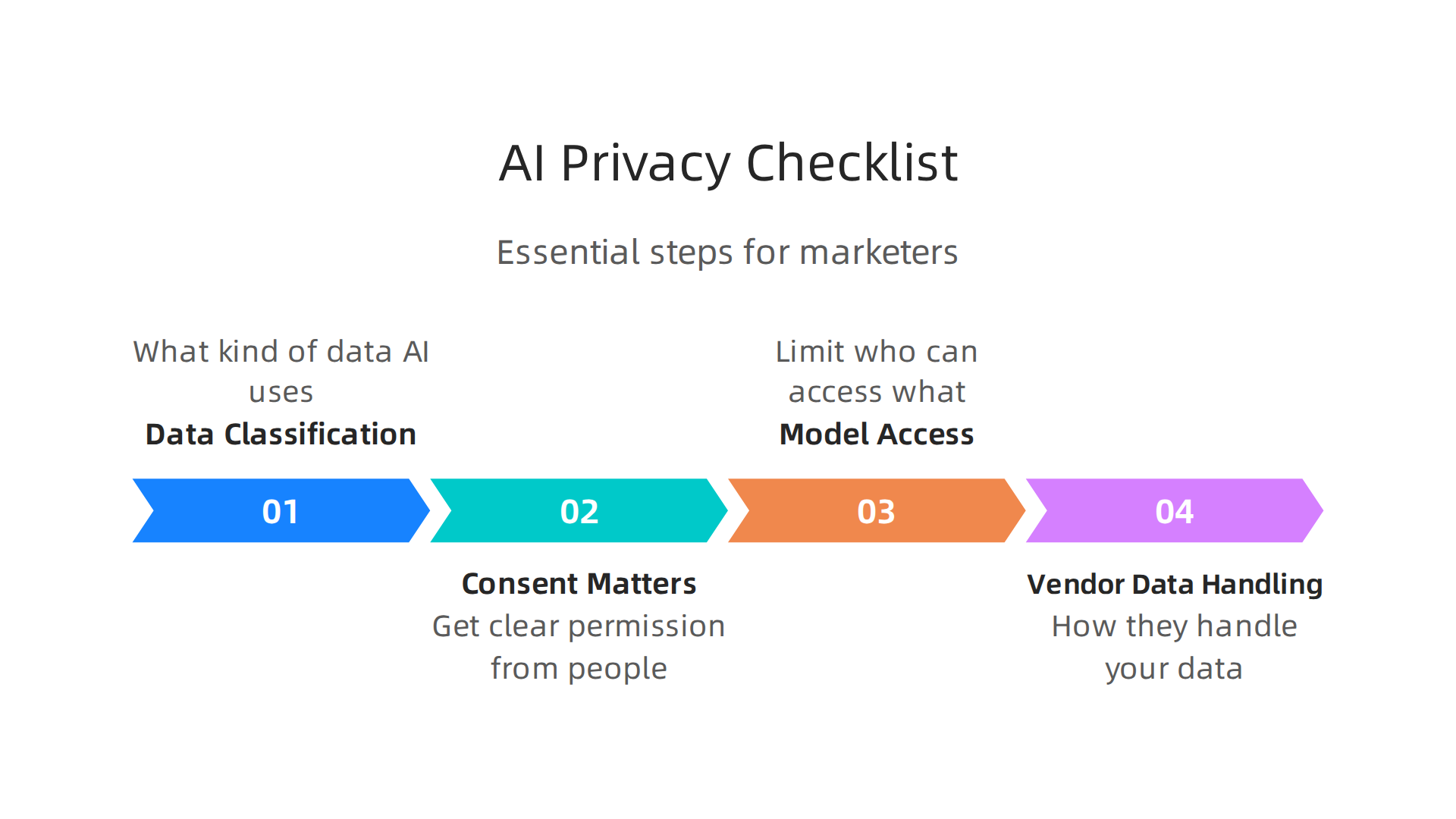
- Data Classification: Think about what kind of data your AI tools use. Is it sensitive customer information or just general website traffic? Knowing the difference helps you protect the most important data more carefully.
- Consent Matters: You must get clear permission from people before using their data with AI. This is especially true for personalized marketing efforts. Studies from 2026 show that people want "permission-based targeting" for AI-driven personalization, meaning they agree to how their data is used, which helps build trust with customers AI-Driven Personalization in Digital Marketing.
- Model Access: Not everyone on your team needs to have access to all your AI models or the data they use. Limit who can access what, based on their job. This keeps your data safer.
- Vendor Data Handling: If you use outside companies for AI tools, make sure you know how they handle your data. Read their privacy rules carefully. You want to be sure they protect your information just as well as you do.
Aligning AI with Laws and Company Rules
Using AI for growth marketing isn’t just about getting an [AI advantage]; it also means following many rules. A marketing specialist needs to work closely with legal teams to make sure AI practices are always compliant.
- Understand the Laws: Different places have different laws about data privacy. For example, the UK and Europe have strict rules like GDPR. Other regions have their own laws. Businesses need to understand these regional rules to avoid big fines. A comprehensive guide can help your team understand AI Marketing Compliance Guide 2026 across various regions.
- Internal Legal Review: Always have your company’s lawyers look over how you plan to use AI. They can help you spot risks before they become problems. This includes reviewing how AI creates [marketing collateral] and other content.
- Human Oversight: Even with smart AI tools, humans should always be in charge of important decisions. AI can help create content or suggest ideas, but a person should give the final okay, especially for high-risk customer interactions. Keeping a human touch helps maintain ethical standards and meet compliance requirements, as outlined in a 2026 guide on How to Use AI for Marketing Compliance in 2026.
- Privacy by Design: Build privacy into your AI plans from the very start, not as an afterthought. This means thinking about data protection when you choose AI tools and set up new projects. A 2026 guide on Data Privacy in 2026: CRM, AI & Compliance Guide notes that organizations must adopt a privacy-by-design approach. For more on navigating these complex areas, you might find valuable insights in this article on Mastering the AI Future Standard 2026. Also, exploring how different AI systems handle privacy can offer additional perspectives, such as understanding Siri AI 2026: unlock its power for privacy and business strategy.
By following these steps, your business can use AI tools safely and ethically, building customer trust and avoiding legal issues in 2026 and beyond.
When you use AI for marketing, it is not enough to just set it up. You need to know if it is really helping your business grow.

This means looking at numbers and understanding what they tell you. A smart marketing specialist always checks the results to make sure AI tools are giving you an [ai advantage] and helping your business get ahead.
How to Track Success with AI
Measuring the impact of your AI marketing efforts means looking at different kinds of important numbers.
- Leading KPIs (Key Performance Indicators): These are early signs that things are going well. For example, if your AI creates social media posts or [marketing collateral], you might look at how many people click on them, share them, or visit your website. These numbers tell you quickly if your content is interesting and reaching people.
- Lagging KPIs: These show the final big results. This could be how many sales you made because of an AI-powered ad, how many new customers you gained, or how much money you got back for every dollar you spent. This is called Return on Investment, or ROI. In 2026, many companies see great results. Some reports show that businesses using AI for marketing often get a 300% average ROI within six months of using AI marketing solutions [AI Marketing ROI Statistics 2026: 50+ Sourced Data Points – Zigment.ai]. Other studies suggest an average ROI improvement of 35% for companies using AI in their marketing efforts [AI in Marketing Statistics 2026: Adoption, ROI & …].
You also need to set "measurement windows." This means deciding how long you will wait to check the results. For some things, you might check daily or weekly. For big goals like sales growth, you might look at results every month or quarter. If you want to dive deeper into how to measure financial gains, an article on How to Get Real ROI from AI Marketing Cloud can help.
Understanding Where Credit Is Due (Attribution)
It can be tricky to know exactly which part of your marketing efforts caused a sale. This is called attribution. With AI, you need clear ways to tell if the AI helped a customer decide to buy your product or service. This means setting up your tracking tools to follow the journey a customer takes. For example, you can see if they first saw an AI-made ad, then read an AI-generated blog post, and finally made a purchase.
Being able to track this helps you prove the real value of your AI investments. For example, AI tools used for writing content can deliver a 3.2x ROI on average, and AI personalization engines can achieve 2.7x ROI [AI Marketing Statistics 2026: 200+ Adoption Insights].
Improving Your AI with Feedback Loops
To keep getting better results, a marketing specialist uses what is called a feedback loop. This means you look at the results of your AI campaigns and use that information to make your AI models smarter and your work processes better. This is how you achieve ongoing optimization.
- Refining Models: If your AI isn’t finding the right customers, you can give it more data or adjust its settings. This helps it learn and get more accurate.
- Improving Prompts: If the AI is creating content or ideas that do not sound quite right, you can change the instructions (prompts) you give it. This helps the AI learn to make better content over time that matches your brand’s voice.
- Adjusting Workflows: Maybe your AI is great at making designs, but the process of getting those designs approved by your team is slow. You can change your team’s steps to make things smoother and faster.
This constant adjustment is a key part of [growth marketing]. It helps ensure your AI tools are always working their best, saving time, and bringing in more business. Companies that actively track their AI ROI often report big returns, with 60% seeing two times their investment back or even more [AI to ROI Reports & Data: The State of AI in Marketing 2026]. To learn more about how AI can improve your customer focus, check out this guide on AI Inbound Marketing.
Staying on top of the latest AI advancements and strategies is crucial for continuous improvement.
Get clear daily AI updates from The AI Newsletter Worth Reading.
Summary
This article explains why marketing specialists must adopt focused AI strategies now and gives a practical playbook for doing it well. It covers how to set specific, measurable goals and map those goals to prioritized AI use cases so you invest where ROI is highest. You’ll learn which AI categories (content, personalization, analytics, automation) typically deliver the biggest returns and how to rank them by expected ROI and integration complexity. The guide shows how to evaluate vendors with a clear checklist, run 30–90 day pilot tests, and scale successful pilots using a 90‑day implementation roadmap with defined roles. It also walks through privacy, compliance, and governance best practices—like consent, data classification, and vendor reviews—so your AI work stays lawful and trusted. Finally, you’ll get practical ways to measure impact with leading and lagging KPIs, attribution approaches, and feedback loops to keep improving results.