Why meta smart glasses matter for businesses in 2026
Imagine wearing glasses that do more than just help you see. These are Meta smart glasses, and they are changing how we think about everyday tools in 2026. They look like regular eyeglasses or sunglasses, but they have special computer technology built right in. This means they come with a camera, microphones, and even an AI assistant to help you throughout your day. For example, many models feature a 12-megapixel camera, can record 3K video, and have a good microphone system to pick up your voice clearly, often lasting around 8 hours on one charge

Best Smart Glasses & AI Glasses in 2026: 15 Models ….
These smart glasses are more than just a cool gadget. For businesses, they represent a big step in the tech industry, offering new ways to work. Think about professionals who need to keep their hands free, like doctors, engineers, or people working in manufacturing.

With meta smart glasses, they can get information, record important moments, or even communicate with others without reaching for a phone or tablet. This kind of wearable computer technology lets workers do things faster and with fewer mistakes. It marks a milestone technology in making AI and digital tools a natural part of our daily work.
So, what kinds of chances do meta smart glasses open up for small and big companies?
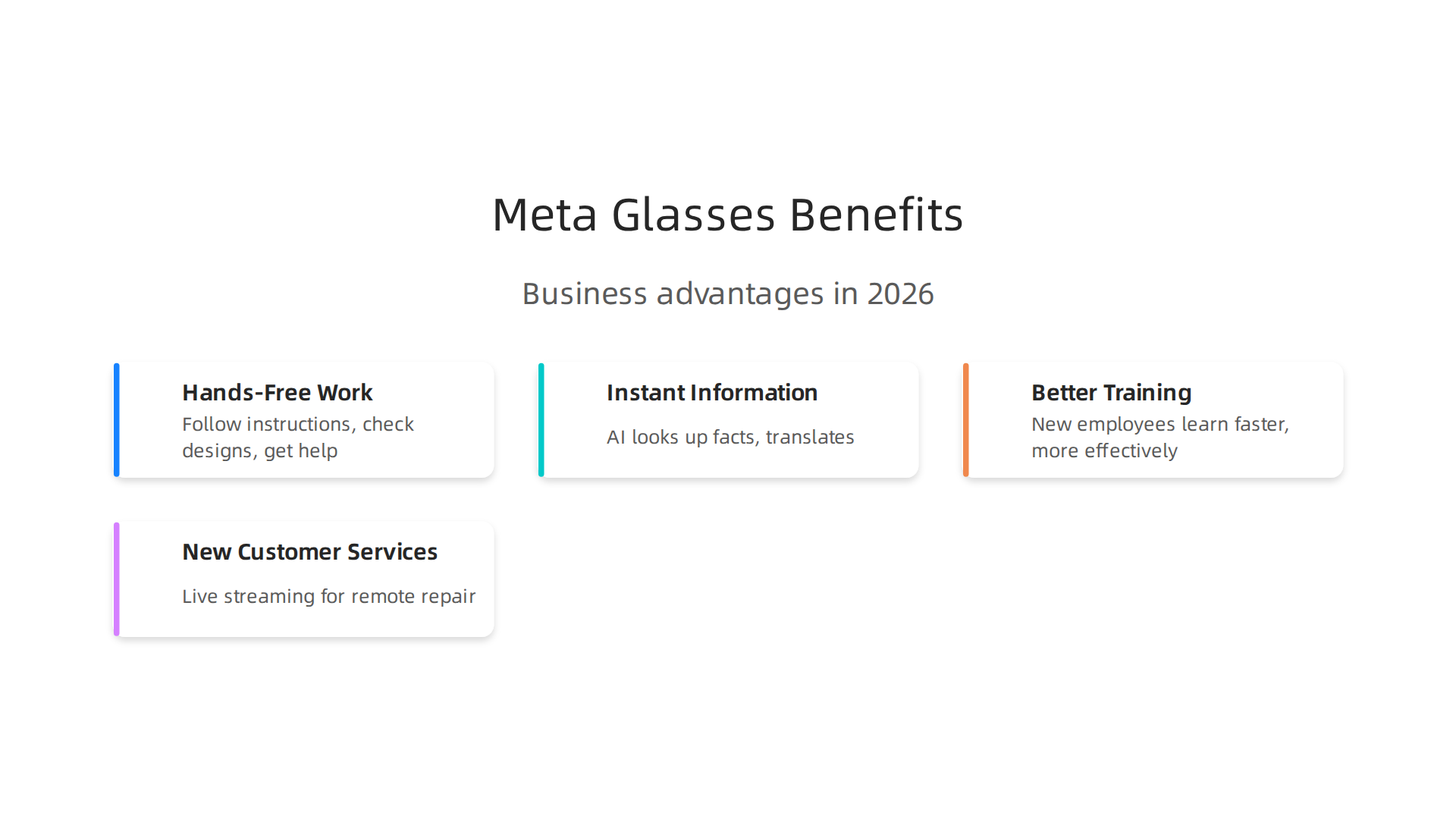
- Hands-Free Work: Employees can follow instructions, check designs, or get help from an expert while still using both hands for their tasks.
- Instant Information: An AI assistant can quickly look up facts, translate languages, or give directions, making staff more efficient.
- Better Training: New employees can see exactly what an expert sees, learning faster and more effectively.
- New Customer Services: Imagine a repair person streaming live video from their glasses to a customer service agent, getting instant help to fix a problem. This is how businesses can unlock growth by selecting the right smart technologies in 2026.
However, bringing this century tech into your business isn’t without its challenges. One of the biggest concerns is privacy. Because these glasses can record video and audio, companies need to be careful about how and when they are used. Laws like GDPR, for example, have strict rules about recording people, especially in public places Smart Glasses and GDPR: Why Europe Is Cracking Down on …. Another barrier can be the cost of buying many pairs of smart glasses and making sure they work well with existing business systems. But with careful planning, these new tools can really help a business grow.
Want to stay informed about all the latest AI tools and tech trends that can impact your business?
The AI Newsletter Worth Reading
So, how do these amazing meta smart glasses actually work? Let’s peek under the hood to see what makes this modern computer technology tick. It’s all about the parts inside and how they work together, especially with smart AI.
Inside Your Meta Smart Glasses: Hardware and Sensors
Meta smart glasses pack a lot of high-tech stuff into a small, stylish frame. Think of them as tiny, powerful computers that sit right on your face.
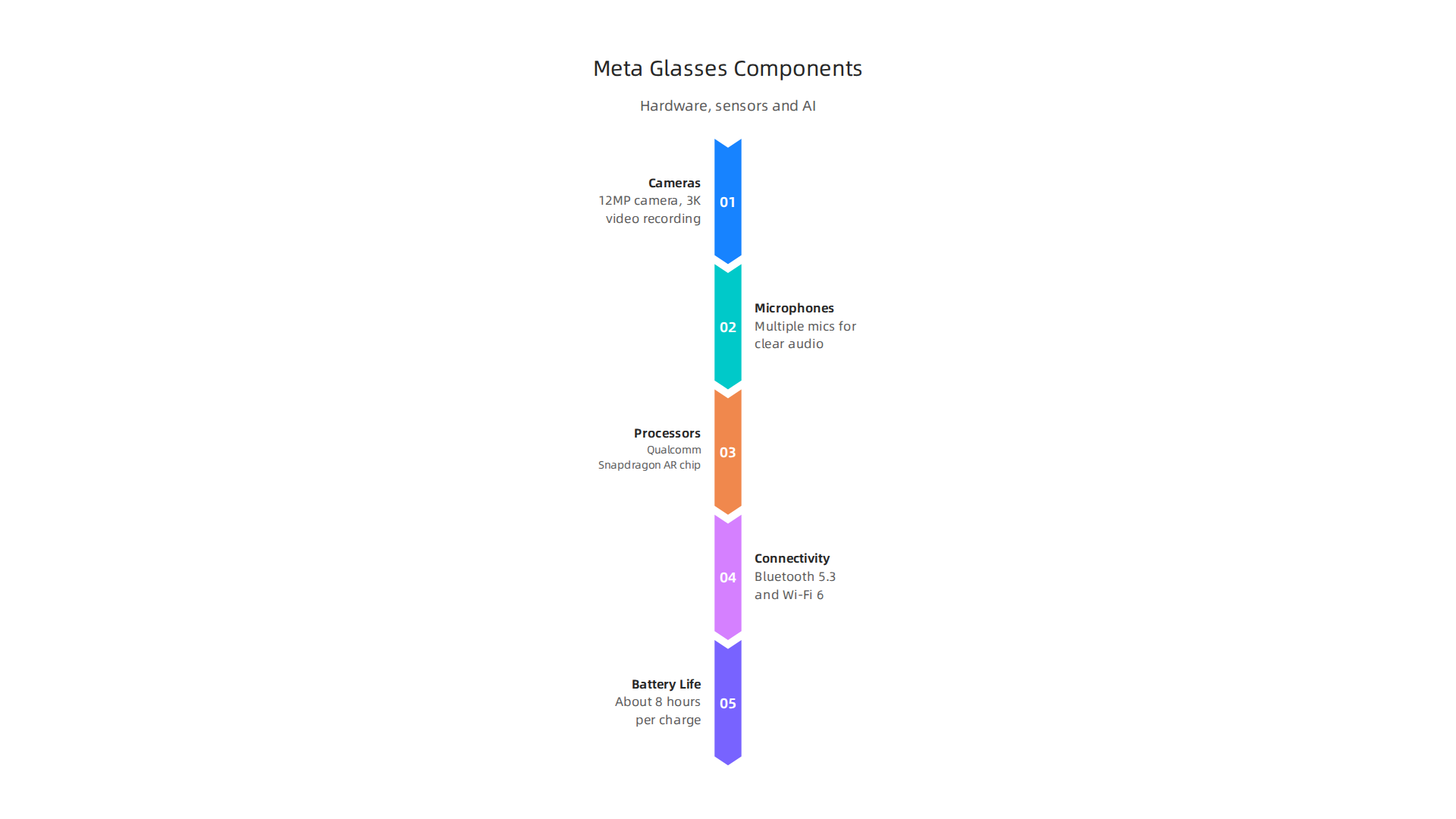
- Cameras: Most models feature a 12-megapixel camera. This isn’t just for taking simple photos; it can record crisp 3K videos. Some designs even have special features like an ultrawide view, portrait mode, and smart systems that adjust to light and faces automatically Introducing the New Ray-Ban | Meta Smart Glasses. This allows for rich visual input, which is key for many of their smart functions.
- Microphones: To hear your voice clearly and pick up sounds from the world around you, these glasses come with a special setup. Many have five or six tiny microphones that work together. This helps the glasses understand your commands and record good quality audio, even in noisy places News – Shenzhen Mitacbattery Technology Co.,Ltd..
- Processors: The "brain" of these glasses is a powerful chip. For example, many Meta smart glasses run on the Qualcomm Snapdragon AR1 Gen 1 platform. This chip is super important because it handles all the heavy lifting, making sure the glasses run smoothly and quickly. If you want to learn more about such advanced chips, you can read about Qualcomm’s 2026 innovations reshape business for future leaders.
- Connectivity: These glasses connect to other devices, like your phone, using things like Bluetooth 5.3 and Wi-Fi 6. This allows them to send and receive information quickly.
- Battery Life: Wearing a computer on your face means you need good battery life. Many models offer around 8 hours of use on a single charge. The special charging case can give you up to 40 more hours, so you can keep using them all day. The weight is also kept light, with many standard versions weighing around 53 grams Why Meta’s new smart AI glasses might not be for everyone, and why I still recommend them. Some newer models even feature a small display in one lens, showing you information directly in your view.
On-Device AI: Smartness Without the Cloud
One of the coolest things about modern meta smart glasses is their "on-device AI." This means that a lot of the smart thinking happens right inside the glasses themselves, not always needing to send information to the internet or a distant cloud server.
Why does this matter?
- Speed: When the AI works on the device, it’s much faster. There’s almost no delay, or "latency," between when you ask for something and when the glasses respond. This is super helpful for quick tasks like identifying objects or translating words right away.
- Works Anywhere: Because the AI is built-in, some features can still work even if you don’t have an internet connection. This is great for workers in remote areas or places with spotty Wi-Fi.
- Privacy: Processing information on the device can also be better for your privacy, as less data needs to be sent away.
While some complex tasks, like generating long answers or creating images, might still use cloud processing, the glasses’ powerful chips allow for a lot of "inference" right there. This means they can understand and act on basic information instantly. This on-device smartness is a big step for wearable computer technology and a key part of why these glasses are becoming such a useful century tech tool. Businesses looking to use smart tools often think about how to choose AI-ready business computers in 2026, and these glasses are a prime example of such readiness.
The on-device AI we just talked about is what truly lets meta smart glasses shine in the business world. This century tech is not just for fun; it is changing how many companies operate in 2026. These smart glasses are becoming key tools for improving work in many areas, helping with productivity, training new workers, giving remote help, and gathering important data.
Key business use cases: productivity, training, remote assistance, and data capture
Imagine wearing glasses that give you superpowers for your job. That is what meta smart glasses offer businesses right now. They deliver real value in many different industries by making everyday tasks easier and faster.
This powerful computer technology is becoming a game-changer across the tech industry.
- Remote Assistance and Field Services: For workers out in the field fixing things, like a technician repairing equipment, these glasses are a huge help. They can connect to an expert far away who sees what the technician sees through the glasses’ camera. The expert can then draw arrows or highlight parts on the technician’s view (called AR overlays) to give step-by-step guidance.

This means less travel for experts and faster fixes, cutting down on expensive downtime Meta’s Smart Glasses: Pioneering the Enterprise AR Revolution and …. It is a major boost for productivity.
-
Manufacturing and Assembly: In factories, workers often need to follow complex instructions. Meta smart glasses can show these instructions right in their line of sight, overlaid on the actual parts they are working with. This means fewer mistakes and quicker assembly. The glasses’ computer vision can even check if parts are put together correctly, ensuring quality control without needing extra tools or hands Smart Glasses for Enterprise: A Complete Guide.
-
Training: Teaching new employees can take a lot of time. With smart glasses, training can be much faster and more hands-on. New hires can get virtual guides and see how to do tasks correctly, which helps them learn quicker and make fewer errors. Many companies are seeing great returns on investment (ROI) from using these glasses for employee training in 2026 AR/VR in the Workplace: Real Enterprise Use Cases in 2026.
-
Retail and Logistics: Think about managing a warehouse or a store. Workers can use meta smart glasses to quickly find items, check inventory, and even get details about products right in front of their eyes. This boosts efficiency and makes sure customers get what they need faster. In retail, these glasses can even transform how products are displayed and how customers interact with them Meta Glasses Transform Retail With AI-Powered Display ….
These business uses highlight how meta smart glasses are not just a fancy gadget, but a practical tool that helps companies solve real problems. They use features like AR overlays, contextual prompts (helpful hints that appear when needed), and computer vision (the glasses’ ability to "see" and understand images) to tackle common pain points such as high training costs, slow repair times, and errors in work. Many businesses are now looking to unlock growth by selecting the right smart technologies in 2026, and these smart glasses are definitely on their radar.
This widespread adoption shows that meta smart glasses are quickly becoming one of the true milestone technologies of our century.
Get clear daily AI updates from The Deep View Newsletter. The AI Newsletter Worth Reading
To make smart glasses truly useful in business, they need to connect smoothly with other computer technology and systems. This is where how they "integrate" or link up becomes very important. There are a few main ways these powerful devices, like meta smart glasses, fit into a company’s tech setup. Understanding these ways helps businesses pick the best solution for their needs.
Integration patterns: edge AI, cloud services, and enterprise systems
Smart glasses use different setups to process information and work with other tools. Let’s look at the common ways these milestone technologies connect.
-
Fully Edge Model: In this setup, the smart glasses do most of the thinking right on the device itself. They have tiny but strong computer chips inside that handle a lot of the AI tasks. For example, the Ray-Ban Meta smart glasses use a Qualcomm Snapdragon AR1 Gen 1 processor that lets them do many things without needing to connect to the internet all the time Ray-Ban Meta Smart Glasses 2026 – Price, Features & …. This is great for speed and privacy, as information doesn’t have to travel far. It means tasks like simple voice commands or checking if a part is correct can happen very quickly. This setup also helps when internet connections are not strong.
-
Cloud-First Model: Sometimes, the smart glasses send most of their work to powerful computers on the internet, known as "the cloud." The cloud then does the heavy lifting, like running very complex AI programs, and sends the answers back to the glasses. This model allows for more advanced features because cloud computers have more power than what can fit into a small pair of glasses. However, it needs a good internet connection and can sometimes be a bit slower because the data has to travel.
-
Hybrid Edge-Cloud Model: Most meta smart glasses today use a mix of both. They do simpler, time-sensitive tasks right on the glasses (edge AI) and send harder tasks to the cloud. This way, they get the best of both worlds: speed for quick actions and powerful processing for complex problems How Smart Glasses AI Assists Your Daily Life. For instance, Meta’s own Ray-Ban smart glasses use a system that combines on-device processing, phone connection, and cloud AI services to work its magic Meta / Ray Ban: Edge AI Architecture for Wearable Smart Glasses …. This helps them manage tasks like analyzing what you see or understanding long questions. The edge hybrid approach is becoming very popular because it balances speed, power, and keeping things private Edge hybrid pattern.
For these smart glasses to fit into a company’s computer technology world, they also need practical ways to connect. These connectors make sure the glasses can talk to other company programs and tools.
- Identity Management: This ensures that only the right people can use the smart glasses and access company data. It links the glasses to a user’s company ID.
- MDM (Mobile Device Management): This helps companies manage many smart glasses at once, making sure they have the right software and security settings.
- APIs (Application Programming Interfaces): These are like secret codes that let different software programs talk to each other. APIs help smart glasses connect with a company’s specific apps, like inventory systems or training modules.
- Analytics Pipelines: These are ways to collect all the useful data from the smart glasses, like how long a task takes or how many errors happen. This data then flows into systems that help businesses understand and improve their work.
- Enterprise System Integrations: This means linking the smart glasses directly to big company systems like those for managing customers (CRM) or planning resources (ERP). This makes the glasses a seamless part of daily business operations.
By using these integration patterns and connectors, meta smart glasses become powerful tools that can truly change how work gets done in the tech industry and beyond. For businesses looking to adopt the latest tech, knowing how these connections work is key to making smart choices about new computer technology. If you are interested in keeping up with the latest in AI and how it affects business, consider subscribing to The Deep View Newsletter. It’s The AI Newsletter Worth Reading.
While meta smart glasses offer amazing ways to improve how businesses work, it’s super important to also think about privacy, security, and following the rules. These milestone technologies come with built-in cameras and microphones, which can bring up big questions about people’s private information.
Privacy, security and compliance for wearable AI
When companies use smart glasses that can record video and sound, they must be very careful. Many places around the world are creating new laws to protect people’s privacy from these advanced devices. For example, starting in May 2026, new global rules for wearable smart devices require physical switches for cameras and microphones. They also make sure people give clear permission before recordings happen in public

AI Glasses Privacy Compliance 2026: Physical Switches …. Europe, in particular, is looking closely at how smart glasses fit with laws like GDPR, which protects personal data
Smart Glasses and GDPR: Why Europe Is Cracking Down on …. In fact, some parts of Europe are even thinking about banning certain meta smart glasses because of these privacy worries Meta Smart Glasses Face Calls for Bans Across Europe ….
For businesses using this new computer technology, here’s a checklist of things to think about to avoid risks:
- Camera Use: Are the glasses recording people without them knowing? This includes co-workers, customers, or sensitive company information.
- Microphone Use: Are the glasses always listening? Could they pick up private conversations or trade secrets?
- Biometric Data: Some smart glasses can recognize faces or voices. Laws like the Illinois Biometric Information Privacy Act (BIPA) say you need written permission before collecting such data Smart Glasses and Privacy Risks | Purdue Global Law School.
- Location Tracking: Do the glasses keep track of where people go?
- Data Storage: Where is the recorded information kept? Is it safe from hackers?
- User Consent: Does everyone know and agree to be recorded or monitored by the smart glasses?
To manage these risks, companies need strong security controls and good ways of working.
- Device Management: Using tools like Mobile Device Management (MDM) helps companies keep track of all their smart glasses. It lets them set up security rules and make sure the software is up-to-date.
- Data Encryption: All the information that goes into, out of, or is stored on the smart glasses should be scrambled (encrypted). This makes it hard for unwanted people to read.
- Data Minimization: Only collect the information you truly need. Don’t gather extra data just because you can.
- Permissions Models: Make sure apps on the smart glasses only have access to the parts of the device and information they need to do their job. For example, a training app might need the camera but not the microphone.
- Clear Policies: Companies must have clear rules for how employees should use smart glasses. Everyone needs to understand what they can and cannot do with these devices. This also includes training employees on privacy best practices.
- Regular Checks: Companies should regularly check their smart glasses to make sure they are still secure and following all the rules. It’s like checking a car regularly to make sure it’s safe to drive.
The tech industry is moving fast, and wearable AI like meta smart glasses are a big part of this century’s tech growth. But with great power comes great responsibility. By thinking about privacy and security from the start, businesses can use these powerful tools wisely and make sure they follow all the necessary laws and rules. You can learn more about how to manage new technologies and their rules in our guide on Mastering the AI Future Standard 2026: Your Guide to Compliance and Growth.
Choosing the right smart glasses for your business is a big step, almost as important as picking the right computer technology for other tasks. With so many new devices coming out, especially meta smart glasses, it’s easy to feel lost. To make sure you get the best fit for your company, here’s a checklist for buying these advanced devices.
How to choose the right model and vendor: checklist for procurement
After making sure your company is ready for new wearable AI devices in terms of privacy and security, the next big task is choosing which ones to buy. This is where smart planning helps you find the right meta smart glasses and the best companies that sell them.
Consider these key things when looking at different options:
- How it fits your business: The most important thing is how the smart glasses will help your daily work. Think about what problems you want to solve or how you want to make things better. For example, some companies use smart glasses to guide workers through assembly steps, which can lower errors by 40% and cut training time by 60% in manufacturing Smart Glasses for Enterprise: A Complete Guide. Others use them for remote help, letting experts guide technicians from far away, reducing travel and downtime Meta’s Smart Glasses: Pioneering the Enterprise AR Revolution and…. You can also watch a video to see AI Glasses for Business: Real Use Cases From Real Companies.
- Software tools available (SDK maturity): Does the smart glass come with good tools for creating your own apps? This is called an SDK, and a mature one means it’s easier to build and change software for your specific needs.
- Easy to connect with other systems (Integration support): Your new smart glasses shouldn’t work alone. They need to connect smoothly with your company’s existing systems, like inventory or customer service tools. This often involves thinking about integration patterns for public cloud platforms.
- Simple to manage: You’ll want to be able to set up, update, and manage many smart glasses at once. Good management tools save time and effort.
- Help and support (Support SLAs): What kind of help will you get if something goes wrong? Look for clear agreements on support, like how fast they will respond or fix issues.
- Cost (Pricing models): Understand all the costs. This isn’t just the price of the glasses but also ongoing costs for software, support, and maybe even cloud services. Think about the total cost of ownership (TCO) over time, not just the initial purchase The Choice Between Enterprise and Consumer Smart….
To help you decide, create an evaluation scorecard. List out these factors and give each smart glass model a score. This helps you compare them fairly. Many companies are seeing great success with these milestone technologies. For example, some Fortune 500 companies are using augmented reality and virtual reality to speed up training for millions of workers and even improve safety Fortune 500 Companies Using AR & VR (2026…).
In 2026, the tech industry continues to grow at a rapid pace, and choosing the right AI tools is essential for staying ahead. By carefully evaluating options like meta smart glasses, businesses can unlock growth and make smart technology decisions. To learn more about selecting the right smart technologies for your business, explore our guide on how to unlock growth by selecting the right smart technologies in 2026.
Keeping up with all the changes in the world of AI and computer technology can be tough. But having the right information can make all the difference for your business in this century tech era.
Get clear daily AI updates from The AI Newsletter Worth Reading.
After choosing the best smart glasses for your business, the next big step is putting them to use. This isn’t just about handing out the devices. It’s about having a clear plan to roll them out, manage costs, and make sure they truly help your company grow. Think of it as a roadmap for success in this new century tech era.
Implementation roadmap: pilot to scale, costs and ROI considerations
To bring meta smart glasses into your business smoothly, follow these steps from a small test to a full rollout.
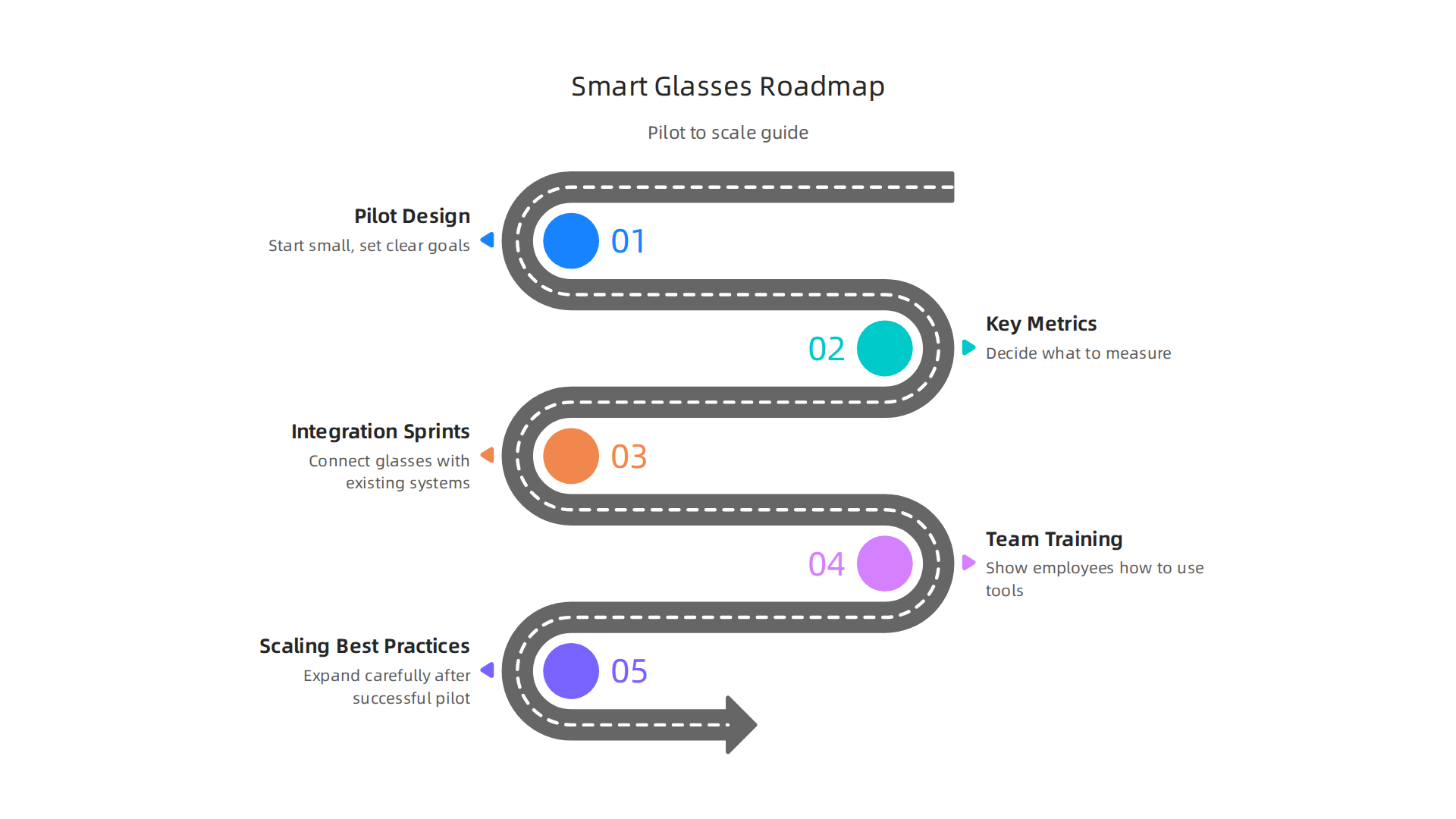
Step-by-step roadmap for smart glasses
- Pilot Design and Goals: Start small. Pick one team or area where meta smart glasses can make a big difference. Clearly state what you want to achieve. For example, do you want to train new workers faster or help technicians fix things more quickly? Set clear goals you can measure.

- Key Metrics to Track: How will you know if your pilot project is working? Decide what to measure. This could be how much faster tasks are completed, how many errors are avoided, or how much time employees save. These numbers will show the real value.
- Integration Sprints: Your new smart glasses need to talk to your existing computer technology and systems. This might include connecting with inventory apps or work order systems. Many AI glasses use a mix of on-device smarts and cloud power to work best. This is called a hybrid architecture, where some tasks happen right on the glasses and others use the cloud for more complex things. For example, Meta’s own smart glasses use a setup that combines processing on the device, a smartphone connection, and cloud AI services to handle tasks Meta / Ray Ban: Edge AI Architecture for Wearable Smart Glasses …. Thinking about integration patterns for low-latency AR glasses can help ensure everything works together fast and smoothly.
- Training Your Team: Show your employees how to use the meta smart glasses. Make sure they feel comfortable and understand how these new tools will make their jobs easier. Good training helps everyone accept new milestone technologies.
- Scaling Best Practices: If your pilot project goes well, you can start to use smart glasses in more parts of your business. Share what you learned from the pilot and slowly expand. This careful growth helps you avoid big problems and makes sure the technology truly helps your whole company.
Understanding the costs and getting your money back
Bringing in new computer technology like meta smart glasses comes with costs, but also big chances to save money and make more.
-
Cost Components:
- Hardware: This is the price of the smart glasses themselves. In 2026, companies like Meta are making smart glasses more affordable. Some new models from Meta start around $299 Meta launches cheaper range of AI smart glasses starting ….
- Software Licenses: You’ll likely pay for the programs or apps that run on the glasses. These can be one-time fees or ongoing subscriptions.
- Support: Getting help when things go wrong is important. This cost covers technical support and maintenance.
- Training and Change Management: Teaching your staff to use new tools and helping them adjust is an important investment.
- IT Infrastructure: You might need to update your network or other computer technology to support the new devices. Keep in mind that for a good setup, your network needs to handle timely updates and data sharing with the cloud The Future of Cloud Computing in Edge AI.
-
ROI Levers (How You Get Your Money Back):
- Productivity Gains: Workers can do tasks faster and more efficiently.
- Error Reduction: Smart glasses can guide users, leading to fewer mistakes.
- Faster Training: New employees can learn jobs more quickly with visual guides.
- Reduced Travel: Experts can help remote workers without needing to travel, saving time and money.
- Better Decision-Making: Access to instant information helps employees make smarter choices.
In 2026, the tech industry sees smart glasses as a big area for growth. Reports show that global shipments of AI smart glasses are expected to go over 20 million units this year, with Meta holding a large share of the market Meta’s Four-Wave Push Targets a 20M AI Smart Glasses …. This shows a strong belief in their value and potential for businesses.
To make smart decisions about technology that really help your business, it’s key to understand how to pick and use the right tools. Learn more about how to choose AI for business tools that deliver real results.
Summary
Meta smart glasses are evolving from novelty gadgets into practical business tools in 2026, packing cameras, mics, powerful chips and on-device AI into lightweight frames. This article explains how the hardware and embedded AI work, why on-device processing matters for speed and privacy, and which real-world use cases—training, remote assistance, manufacturing, retail and logistics—deliver measurable productivity gains. It walks through integration patterns (edge, cloud, hybrid), necessary IT connectors like MDM and APIs, and the compliance issues businesses must address around recording, biometrics and data storage. The guide also gives a procurement checklist for choosing vendors and SDKs, plus a step-by-step pilot-to-scale roadmap with cost components and ROI levers. Read it to understand practical readiness steps, legal risks to mitigate, and how to evaluate whether meta smart glasses will boost efficiency and cut costs in your organization.