
Are you drowning in information? You sit down to research a topic, open a dozen tabs, and suddenly hours have passed.

You have read reports, skimmed studies, and watched videos, but you still cannot pull out the key insights quickly. This is the reality for many professionals in 2026. The sheer volume of data out there is growing faster than ever. In fact, the global artificial intelligence market is projected to reach nearly $2.5 trillion by 2034, and the tools for creating content are multiplying just as fast Fortune Business Insights.
But all that information does not help if you cannot find what matters.
That is where the AI powered research assistant comes in. These smart tools promise to automate the boring parts of research: synthesizing long documents, summarizing key points, and even extracting insights from scattered sources. Instead of spending your energy on sorting, you can focus on understanding and deciding. The AI assistant market itself is growing at a staggering compound annual growth rate of over 44%, showing just how many people are already turning to these helpers SNS Insider.
But here is the thing: not every AI tool lives up to the hype. Some claim to be research wizards but deliver shallow summaries. Others are built for general tasks, not deep investigation. That is why this guide exists. We are going to cut through the noise and give you a clear framework for evaluating and adopting the best AI research tools for your specific needs. Whether you are an engineer exploring engineering applications of artificial intelligence, a marketer comparing AI tools, or a founder looking for the next edge, you need a practical approach. If you want to stay ahead of the curve every day, consider subscribing to The AI Newsletter Worth Reading for clear, daily updates.
Before we dive into the tools, you might also want to check out our list of 10 Top AI Websites Professionals Trust for Real News and Tools. It is a great starting point for building your own reliable source stack. Now, let us break down exactly what an AI powered research assistant can do for you and how to pick the right one without the guesswork.
What Is an AI-Powered Research Assistant?
Let’s get specific. An AI powered research assistant is a smart tool that uses large language models (LLMs) and a technique called retrieval-augmented generation (RAG) to help you work with information. Instead of just searching the web and giving you a list of links, it actually reads, summarizes, and answers questions based on the content you feed it. Think of it as a tireless research partner who never gets tired of skimming hundreds of pages.
The key difference from a regular search engine is the output. Google gives you ten blue links. A research assistant gives you a synthesized answer with citations you can check. You can upload a PDF, a bunch of articles, or even a video transcript, and then ask things like "What are the three main arguments in this report?" or "Summarize the key findings from the past year." It pulls the relevant pieces, combines them into a clear response, and tells you where it got the information. That is a huge time saver.
In 2026, the leading examples include tools like Perplexity AI, which acts like a conversational search engine,
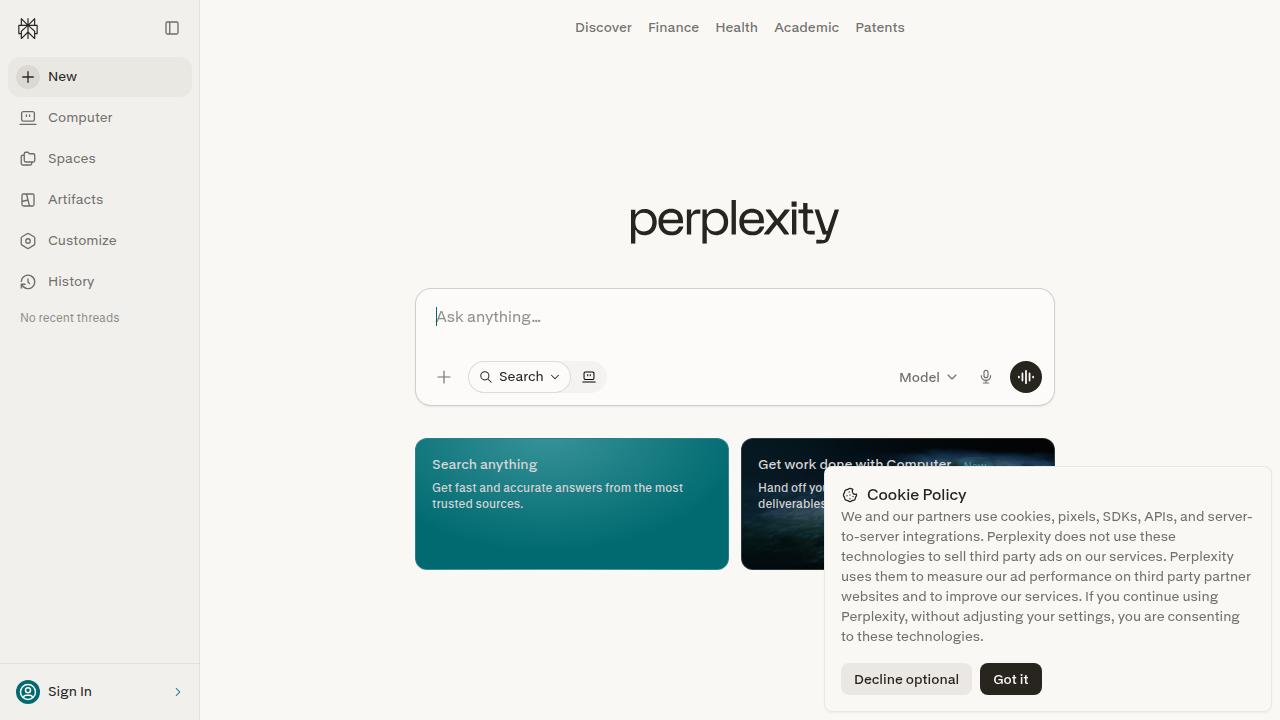
and Google’s Gemini Deep Research, which can create detailed reports from many sources. Many companies also build custom enterprise solutions that work on their internal documents, combining the power of LLMs with their own data. The AI assistant market is growing fast, with forecasts showing it could reach over $21 billion by 2030 MarketsandMarkets. That growth tells you these tools are not just hype.
These assistants are designed to help you do the boring parts of research so you can focus on understanding and making decisions. They are a perfect example of ai to human collaboration, where the machine handles the heavy lifting and you apply your judgment.

For a deeper look at how this partnership works, read our article on human or AI creativity. The goal is not to replace your thinking. It is to make your thinking faster and sharper.
If you want to keep learning about which tools deliver real results, subscribe to The AI Newsletter Worth Reading. It gives you clear, daily updates so you never miss what matters.
Core Capabilities of Modern AI Research Tools
You have a stack of PDFs, a dozen browser tabs, and a deadline. You need one clear answer. That is exactly where an ai powered research assistant shines. The best tools in 2026 share a set of core capabilities that turn information chaos into usable insights.
First, advanced summarization. These tools can boil down long reports, academic papers, or even video transcripts into a few digestible paragraphs. Instead of reading 50 pages, you get the key points in seconds. According to a comparison of top tools, features like real-time data retrieval and citation tracking are now standard DevOpsSchool.
Second, multi-source synthesis. A good assistant does not just summarize one document. It pulls from many sources at once, combines the information, and gives you a coherent answer. You can ask "Compare the pricing models of these three competitors" and get a table with citations. That saves hours of manual cross-referencing. Tools now go beyond simple Q&A to handle research, coding, and full workflows across different apps EMA.ai.
Third, real-time data integration. The best assistants connect to live databases, news feeds, or your company’s internal systems. They give you up-to-date answers, not stale summaries. For example, you can get current market trends or competitor news pulled straight from the web. Platforms like CleverX and Outset.ai are examples of end-to-end research tools that do this well CleverX.

Customizable knowledge bases and API access are what separate average tools from powerhouses. If you work in a specialized field like engineering, being able to train the assistant on your own documents changes everything. You can upload internal reports, past projects, or technical manuals. The tool then answers questions using your private data. This is where the real ai to human value shows up. For a deeper look at how custom AI fits into business strategy, read our article on Palantir Technologies 2026 growth and products.
Accuracy and source transparency remain the make-or-break factors. You need to trust the answer. The best tools show exactly where each piece of information came from, usually with clickable citations. Without that, you cannot verify the output. Many students and professionals have tested assistants like ChatGPT, Perplexity, and NotebookLM, and they always emphasize that seeing the source builds confidence Zemith.
In short, the right assistant does not just give you answers. It gives you answers you can trust, fast. If you want to stay on top of which tools are delivering real results, subscribe to The AI Newsletter Worth Reading. It delivers clear daily updates so you never miss what matters.
How to Choose the Right AI Research Assistant
You know what you need from your ai powered research assistant. Speedy answers, clear sources, and help with the heavy lifting.

But with so many options in 2026, how do you pick the right one without wasting time or money?
The trick is to compare tools using the criteria that actually matter for your work. Don’t get distracted by flashy features you will never use. Focus on five key areas.
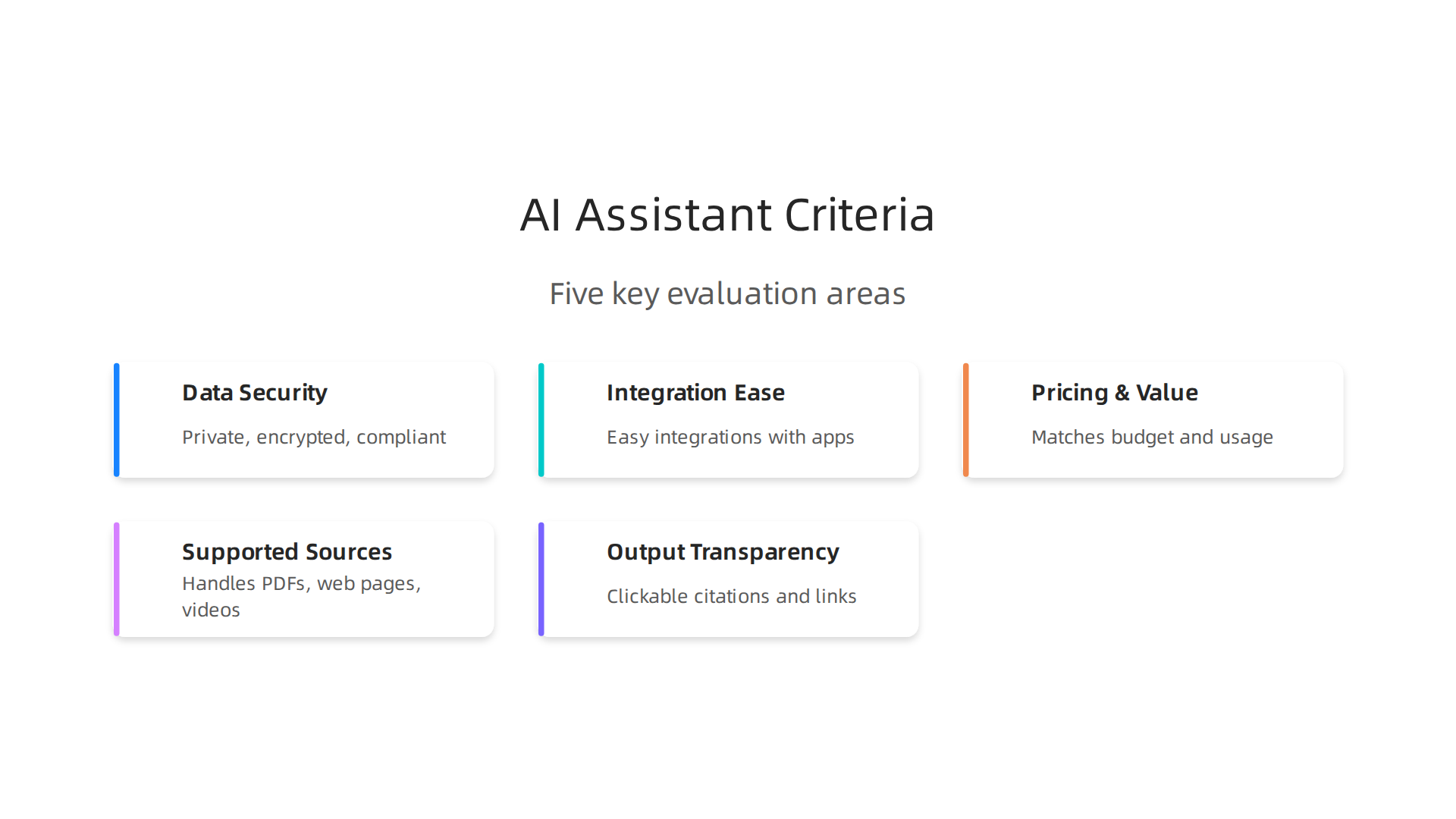
Data security. If you work with sensitive client information or internal reports, the tool must keep your data private. Check whether the tool encrypts your files and whether it trains on your data. This matters more than ever for business users and engineering applications of artificial intelligence.
Integration ease. A tool that sits alone is less useful than one that connects to your existing apps. Look for tools that plug into your browser, document storage, or project management platform. The best ai powered research assistant fits into your flow, not the other way around. According to a comparison of AI assistants, the top tools now go beyond simple Q&A to handle full workflows across apps EMA.ai.
Pricing and value. Some tools offer generous free tiers. Others charge a monthly fee for advanced features. Think about your budget and how often you will use the tool. Students can often get by with free versions, while professionals might need the deeper capabilities of paid plans.
Supported data sources. Can the tool handle PDFs, web pages, videos, and spreadsheets? Or is it limited to text? If you work with a lot of academic papers or industry reports, choose a tool that excels with those formats. Tools like Anara AI are built specifically for handling large piles of PDFs and research documents Stackademic.
Output quality and transparency. This is the big one. Does the tool show you its sources? Can you verify the information? The best tools provide clickable citations so you can trust the answer. Top tools in 2026 include options like ChatGPT, Perplexity, and NotebookLM, all of which have been tested by students and professionals for accuracy Zemith.
To make the choice easier, here is a simple comparison of a few widely used tools:
| Tool | Best For | Key Feature | Pricing Hint |
|---|---|---|---|
| ChatGPT | General queries and brainstorming | Strong conversational skills | Free tier + paid plans |
| Perplexity | Real-time search with citations | Always shows sources | Free tier + pro |
| NotebookLM | Working with your own documents | Uses your uploaded files only | Free |
| Anara AI | Heavy PDF and paper analysis | Handles large document sets | Free tier + paid |
Before you commit to any tool, test it yourself. A trial period or free tier is essential. Spend a day using it for your real work. See if it actually saves you time or just adds another layer of noise. Research workflows can be 10x faster with the right setup OpenClawLaunch, but only if the tool matches your needs.
For a wider look at the tools available, check out our roundup of the 10 top AI websites professionals trust for real news and tools. It will help you spot the ones worth trying.
Finally, the best way to stay ahead is to keep learning. The AI landscape shifts fast. Subscribe to The AI Newsletter Worth Reading and get clear daily updates on the tools that actually deliver results.
Advanced Applications Across Industries
Now that you know how to choose the right ai powered research assistant, let’s look at how different fields are putting these tools to work. The most successful teams don’t just use AI for quick answers. They build it into their daily workflow to save hours of manual effort.
Marketing teams rely on AI research assistants for competitor analysis and content gap identification. Instead of spending weeks manually reading through competitor blogs and social posts, they ask the assistant to pull key themes and missing topics. According to research, top AI research assistants can complete in hours what used to take weeks, giving marketers a huge speed advantage ListenLabs. They also use these tools to translate raw data into human language that shapes campaign strategy. This kind of ai to human translation helps teams act faster on insights. For more tips on how AI can help you write content that connects, check out our guide on how undetectable AI helps you write content that sounds human and gets results.
Finance professionals use AI research assistants for regulatory summarization and market trend extraction. New rules and reports come out constantly. Reading every page would take a full team. AI tools scan hundreds of documents and pull out the important changes. Some tools reach 75-90% accuracy for tasks like identifying regulatory updates Jenova AI. This lets finance teams spend their time on analysis instead of reading. The engineering applications of artificial intelligence in finance mean these assistants can also spot patterns in market data that humans might miss.
Healthcare researchers use AI research assistants for literature review and clinical trial data synthesis. A single review might involve thousands of papers. Modern AI tools can screen up to 40,000 papers in real time with smart suggestions Editage. This is a lifesaver for teams who need to stay current with medical studies. The assistant helps them find relevant studies faster and compare results across trials. One recent evaluation shows that ai-powered research assistant tools now support every stage of academic research, from review to citation management Lumivero.
No matter your industry, the core idea stays the same. An ai powered research assistant is not just a search engine. It is a partner that handles the boring work so you can focus on the big picture.
If you want to keep up with the latest ways teams use AI across different fields, you need a source you can trust. Subscribe to The AI Newsletter Worth Reading and get clear updates on how ai tools are changing the way professionals work.
Overcoming Common Challenges
Using an ai powered research assistant sounds amazing. And it is. But let’s be real. You will hit some bumps on the road. Knowing what they are ahead of time makes all the difference.
Data privacy and compliance are top concerns. When you upload sensitive company data or personal information into an AI tool, you need to know where it goes. Rules like GDPR and CCPA put strict limits on data handling. Not every tool follows the same standards. Always check the privacy policy before you start. A good framework for evaluating AI tools includes ethical use and privacy safeguards ASCCC. If your industry has extra rules like HIPAA, make sure the tool can handle that too.
Accuracy and hallucination risks are real. Here is the thing: even the best ai powered research assistant can make things up. Studies show these tools reach 75-90% accuracy for most tasks Jenova AI. That means 10-25% of answers could be wrong. You cannot just copy and paste the output. Always validate key facts against original sources.

Think of the assistant as a smart intern, not a final reviewer. For more on making AI output sound trustworthy and human, check out our guide on how undetectable AI helps you write content that sounds human and gets results.
Integration with existing workflows often needs custom setup. Most ai tools do not plug in perfectly on day one. You might need to connect them to your CRM, project management software, or internal databases. That takes time and sometimes a bit of technical work. Tools that support multiple stages of research, from review to citation management, tend to fit more smoothly Lumivero. Plan for a short setup period when you adopt a new assistant.
The good news? Once you work through these challenges, your ai-powered research assistant becomes a reliable partner instead of a risk. You just need to go in with your eyes open.
Want to stay updated on how professionals are solving these challenges with the latest ai tools? Subscribe to The AI Newsletter Worth Reading and get clear, practical insights delivered to your inbox every day.
Real-World Case Studies and ROI
So what does an ai powered research assistant actually deliver in real life? The numbers are pretty impressive. Let me walk you through two examples.
A marketing agency cut research time by 50%. This mid-size agency handled eight clients in different industries. Before the assistant, researchers spent hours digging through competitor data, market reports, and customer insights. After adopting a specialized ai powered research assistant, they cut that time in half. The team reallocated those saved hours to strategy and creative work. Their client satisfaction scores went up too. They simply had better insights to work with. And they did not need to worry about data leaks because they chose a tool with strong privacy controls. As the landscape of AI privacy becomes more complex, picking a tool that respects data boundaries is key IBM.
You can see how the right ai tools can reshape a team’s whole workflow.
A biotech startup accelerated literature review by 70%. This is where engineering applications of artificial intelligence really shine. The startup needed to review thousands of research papers for a new drug target. Doing that manually would have taken months. With an ai-powered research assistant, they scanned, summarized, and categorized papers in weeks. The team validated the AI’s findings against original sources, so they did not sacrifice accuracy for speed. The result? They got to the lab phase much faster. For startups racing against funding timelines, that kind of speed can make or break a project.
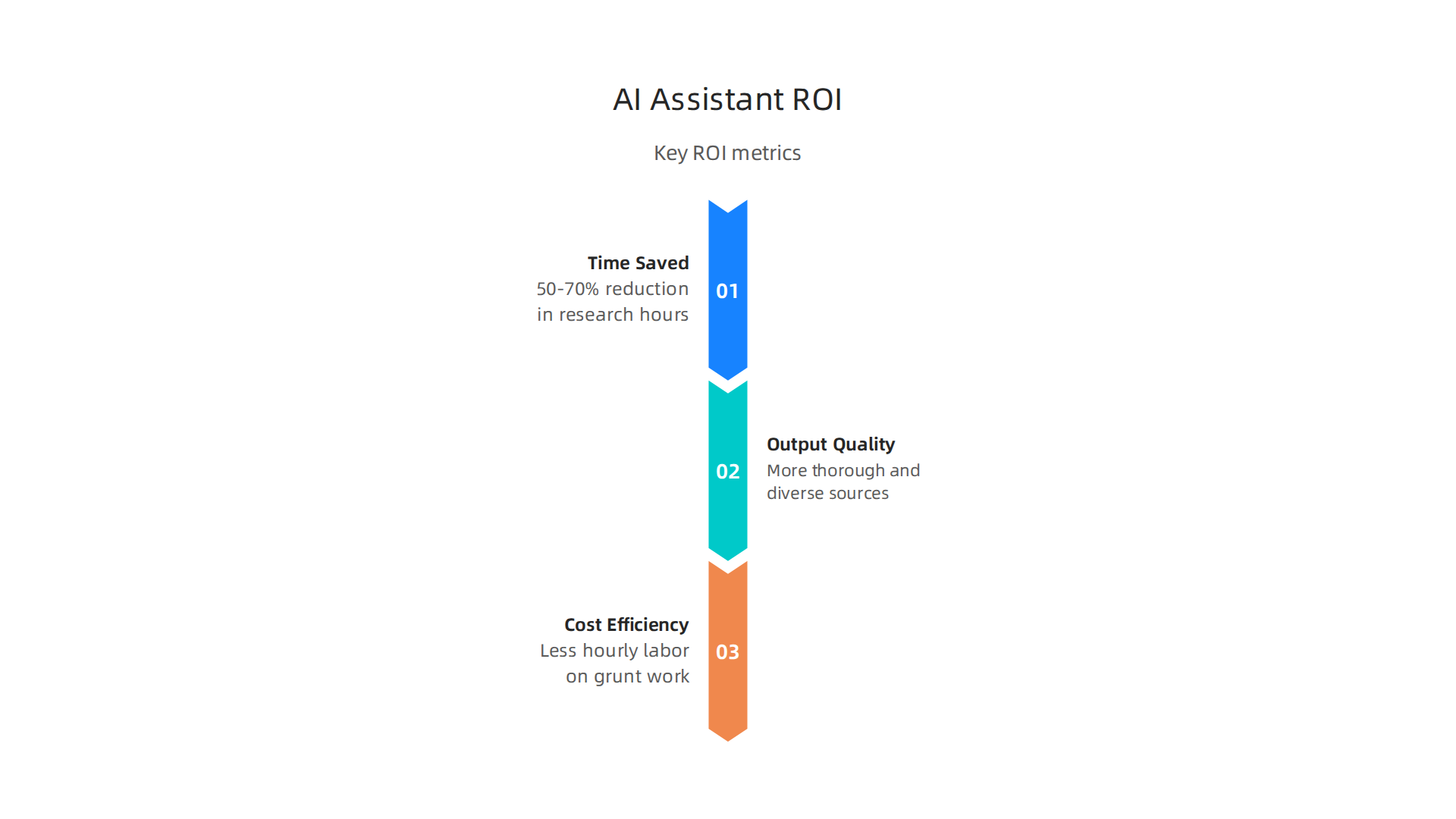
**Here are the key metrics that matter:
**
| Metric | What it means |
|---|---|
| Time saved | 50-70% reduction in research hours |
| Output quality | More thorough and diverse sources |
| Cost efficiency | Less hourly labor spent on grunt work |
These results are not outliers. Teams in marketing, biotech, finance, and education are seeing similar gains. The secret is using the ai to human handoff correctly. Let the assistant do the heavy lifting. Then apply your own expertise to refine the final output. If you want to learn more about how AI and human creativity can work together, read our article on human or AI creativity and what the data says about collaboration in 2026.
These case studies show the assistant is not just a nice toy. It is a real tool that changes how teams work and how fast they deliver results.
Want to get more case studies and practical tips on using ai tools in your industry? Subscribe to The AI Newsletter Worth Reading and get daily insights that actually help you work smarter.
Future Trends in AI Research Tools
The ai powered research assistant you use today will look very different a year from now. The technology is moving fast, and three big trends are about to change how we do research.
Multimodal research assistants. Right now, most assistants work with text. But the next wave can process images, audio, and video together. Imagine uploading a recorded interview, a chart from a report, and a podcast clip, and getting a single summary that connects everything. This kind of multimodal processing will make research faster and richer. Of course, handling multiple data types also raises new privacy questions. As AI works with more personal content, staying on top of data protection becomes essential Stanford HAI.
Agentic AI that works on its own. This is where engineering applications of artificial intelligence get really exciting. Instead of you giving step by step instructions, the assistant will plan and execute multi-step research tasks by itself. For example, it could search databases, cross-reference findings, check sources for credibility, and then hand you a final report. You just review and refine. That is the ultimate ai to human handoff. But autonomous agents also need strong governance. Organizations must set clear rules about what the agent can access and share IBM.
Integration with enterprise systems. Future assistants will plug directly into your company’s knowledge graphs, CRM, and internal documents. Instead of manually exporting data, you will ask a question and get answers rooted in your own proprietary information. This tight integration will make research much more relevant for your specific business context. Companies like Palantir are already showing how ai tools can work inside large enterprise systems. If you want to see how that plays out in practice, check out our breakdown of Palantir Technologies 2026 growth products and impact on business strategy.
These trends all point in one direction: the ai powered research assistant will become smarter, more autonomous, and more embedded in your daily workflow. But with that power comes responsibility. Pay attention to privacy and governance as you adopt these new tools.
Want to stay ahead of these trends? Subscribe to The AI Newsletter Worth Reading and get daily updates on the tools and technologies shaping the future of research.
Implementation Best Practices
The future sounds exciting, but you might be wondering: How do I actually start using an AI powered research assistant today without messing things up? That is a smart question. Jumping in without a plan can lead to wasted time, security risks, and low quality results. Follow these three best practices to get it right.
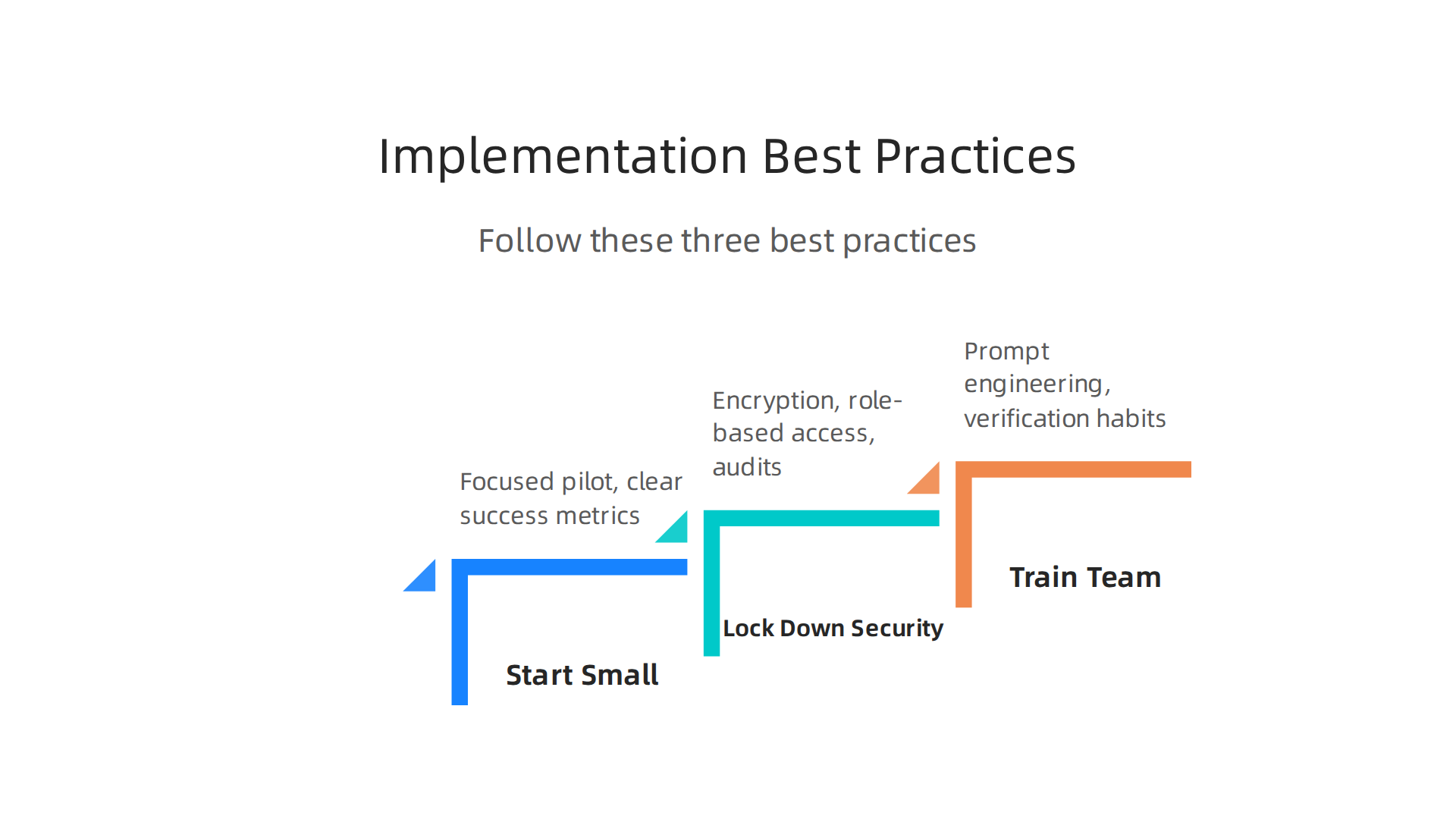
Start with a small, focused pilot project. Do not try to automate your entire research workflow on day one. Pick one specific, high value use case. For example, maybe your team spends hours every week summarizing competitor news. Use your AI research assistant to handle just that task first. Define clear success metrics like time saved, accuracy of summaries, and stakeholder satisfaction Workmate. Starting small lets you test the tool, find problems early, and build confidence before scaling.
Lock down data security from the start. An AI powered research assistant will likely access sensitive company information, internal reports, and maybe even customer data. That means you need strong protections. Use encryption for data in transit and at rest. Set up role based access controls so only the right people can ask questions about certain documents. Regularly audit who and what the assistant can access. Remember, keeping data safe is not a one time setup. It requires ongoing attention Philip Burgess. This is especially important when you consider the engineering applications of artificial intelligence that connect into your core systems.
Train your team on prompt engineering and verification. The best tool in the world is useless if people do not know how to use it well. Teach your team how to write clear, specific prompts that get useful answers. Also, build a habit of verifying everything the AI produces. An AI should supplement your thinking, not replace it Tellemai. Treat its outputs as draft material that needs a human check. This ai to human loop is what separates mediocre research from excellent research. Encourage your team to ask, "Does this answer make sense? Where did the data come from?" That kind of critical thinking makes the partnership stronger. For a deeper look at how humans and AI can collaborate effectively, check out our piece on human or AI creativity and what the data says about collaboration in 2026.
Getting the implementation right means the difference between a tool that frustrates and one that transforms your workflow. Start small, keep it secure, and invest in your team’s skills.
Want more practical guidance delivered to your inbox every day? Subscribe to The AI Newsletter Worth Reading for daily tips on using ai tools smarter and safer.
Summary
This article explains what an AI-powered research assistant is, how these tools work, and why they matter for professionals drowning in information. It breaks down core capabilities—like advanced summarization, multi-source synthesis, and real-time data integration—and shows which features separate robust assistants from hype. The guide gives practical criteria for choosing a tool (security, integrations, pricing, supported formats, and source transparency) and offers implementation best practices such as running a small pilot, locking down data, and training teams on prompts and verification. You’ll see real-world use cases across marketing, finance, biotech, and education with ROI examples (time savings of roughly 50–70%) and common pitfalls like hallucinations and compliance risks. The article also previews future trends—multimodal assistants, agentic automation, and tighter enterprise integration—and points to related coverage to help you stay current. After reading, you’ll be able to evaluate options, run a safe pilot, and integrate an AI research assistant that actually speeds up decision-making without sacrificing trust.