Why precise definitions of ‘technology’ and AI terms matter today
In 2026, it feels like new kinds of technology pop up every day. You hear a lot of big words, and it can be hard to keep up. Everyone talks about "AI" and "tech," but what do these words really mean? Getting clear on the exact meaning of technology and other tech terms is super important. It helps us all understand each other better, especially when we talk about new tools and ideas.

So, what is the core technology meaning? Simply put, technology is when we use science to solve real-world problems or make things better. It is about applying knowledge to get practical results, like making a new machine or a better way to do something. The word "technology" can mean the know-how, the process, or the tools themselves [1, 2]. For example, a dictionary says technology is the practical use of scientific knowledge, especially in a certain area [3]. Another view is that it includes any equipment or system used to create or share information [4].
When we talk about technology, we are not just talking about shiny new gadgets. We also mean the ideas, methods, and ways of doing things that help us change our world. It’s the whole package, from thinking up a new solution to actually building it. Understanding this broad idea of technology meaning helps us see that there are many synonyms of tech, covering everything from simple tools to complex systems.
Why does this matter so much right now? Well, with so many new things coming out, it’s easy to get lost in all the information. We see big changes happening with artificial intelligence (AI). Many people wonder, for example, are machine learning and artificial intelligence the same? If we don’t have clear definitions, it’s like trying to talk about something where everyone has a different idea of what the words mean. This can lead to wrong choices or simply feeling overwhelmed.
Having a shared vocabulary helps everyone make faster, smarter decisions. Whether you are picking new tools for your business or just trying to understand the news, clear definitions cut through the noise. It helps you focus on what’s really important and how new tech can truly help you. You can learn more about practical applications by checking out Understanding What is Information Technology for Business Success in 2026.
To stay ahead of all the new terms and understand how they fit into your world, consider getting a trusted source for daily updates.
Get clear daily AI updates from The AI Newsletter Worth Reading.
What ‘technology’ and ‘technology meaning’ really mean
To truly understand new inventions and ideas, we need to dig a little deeper into what the word "technology" actually means. It is more than just shiny new gadgets. At its heart, "technology meaning" involves using what we know from science to solve real problems and make life better. It covers the tools we use, the steps we follow, and all the ideas behind them [1]. Think of it as people changing their world to fit their needs and wants [2].
Let’s break down the main parts of technology:
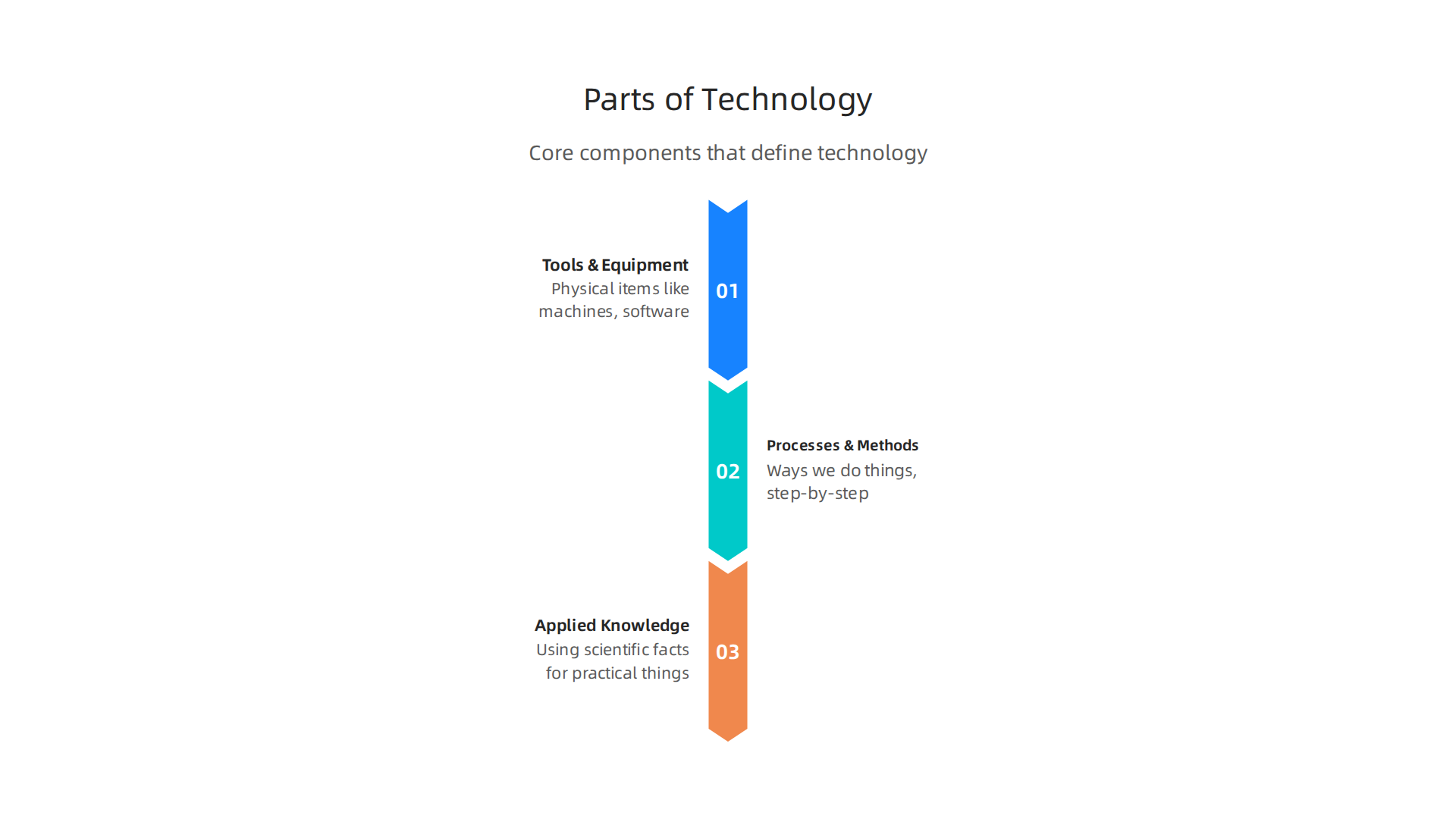
- Tools and Equipment: These are the physical items, like machines, software, or computer systems that help us do tasks. For example, your phone is a piece of technology, and so is the app on it. This can also include any system used to make or share information [3].
- Processes and Methods: This means the ways we do things. It’s the step-by-step plan or the smart trick we use to get a job done. Think of how a factory puts together a car, or how you use a certain method to cook a meal.
- Applied Knowledge: This is using scientific facts and discoveries for practical things. It’s the brainpower that helps us create new tools and better ways of working.
Sometimes, when people talk about "tech," they just mean new computers or software. That’s how we use the word in everyday talk. But for experts, the meaning of technology is much wider. It includes everything from making a simple tool to building a whole complex system. For instance, the dictionary says technology is the practical use of scientific knowledge, especially in a certain area [4]. So, the plow from long ago was technology, and so is the newest self-driving car in 2026.
There are many synonyms of tech that show this wide meaning. Words like "innovation," "systems," "machinery," and "engineering" all touch on different parts of technology. Even "alpha technology," which refers to early or test versions of new tools, shows how diverse the world of tech is.
This clear picture of what technology means helps us when we look at more specific ideas, like artificial intelligence. It helps us see why questions such as "are machine learning and artificial intelligence the same?" are so important to answer with precision. Knowing the core "technology meaning" makes it easier to understand all the different parts that make up our modern, tech-filled world.
Now that we know the basic technology meaning, let’s look at specific words you’ll hear when people talk about Artificial Intelligence (AI). Understanding these simple terms helps everyone, from curious learners to big business leaders, make smart choices in 2026.
Here are some core AI terms explained in plain language:
- Artificial Intelligence (AI): This is a big area of computer science. It’s about making computer systems that can do tasks normally needing human smarts. This can be things like seeing pictures, understanding what you say, or making good guesses [1].
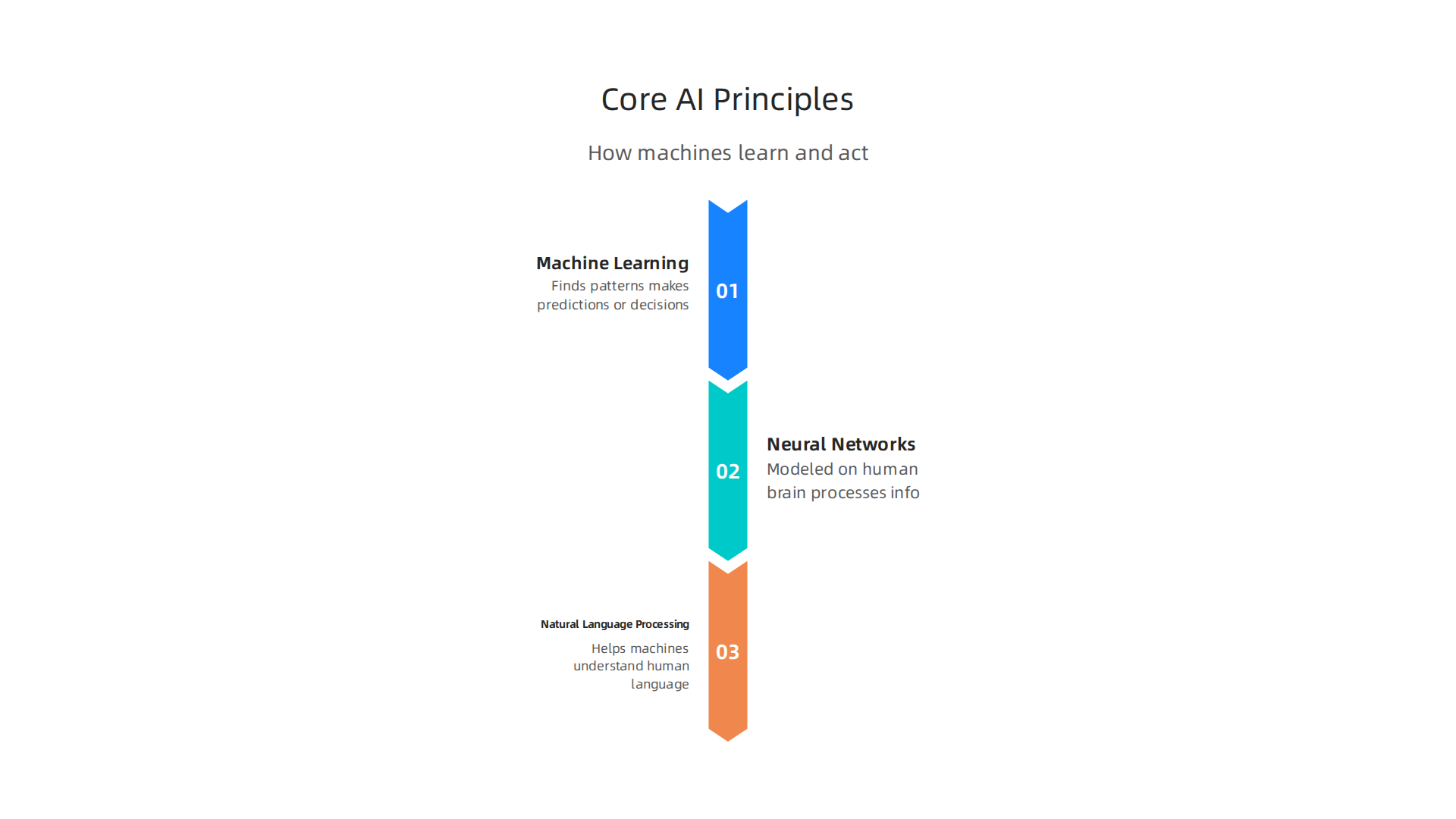
- Machine Learning (ML): This is a special part of AI. Machine learning helps computers learn from lots of information, or "data," without someone telling them every single rule. Instead, they get better by practicing with the data [2]. So, to answer the question, are machine learning and artificial intelligence the same? Not exactly. ML is a way that AI works, a tool within the larger AI world [3].
Now, let’s break down how many AI systems actually learn and work:
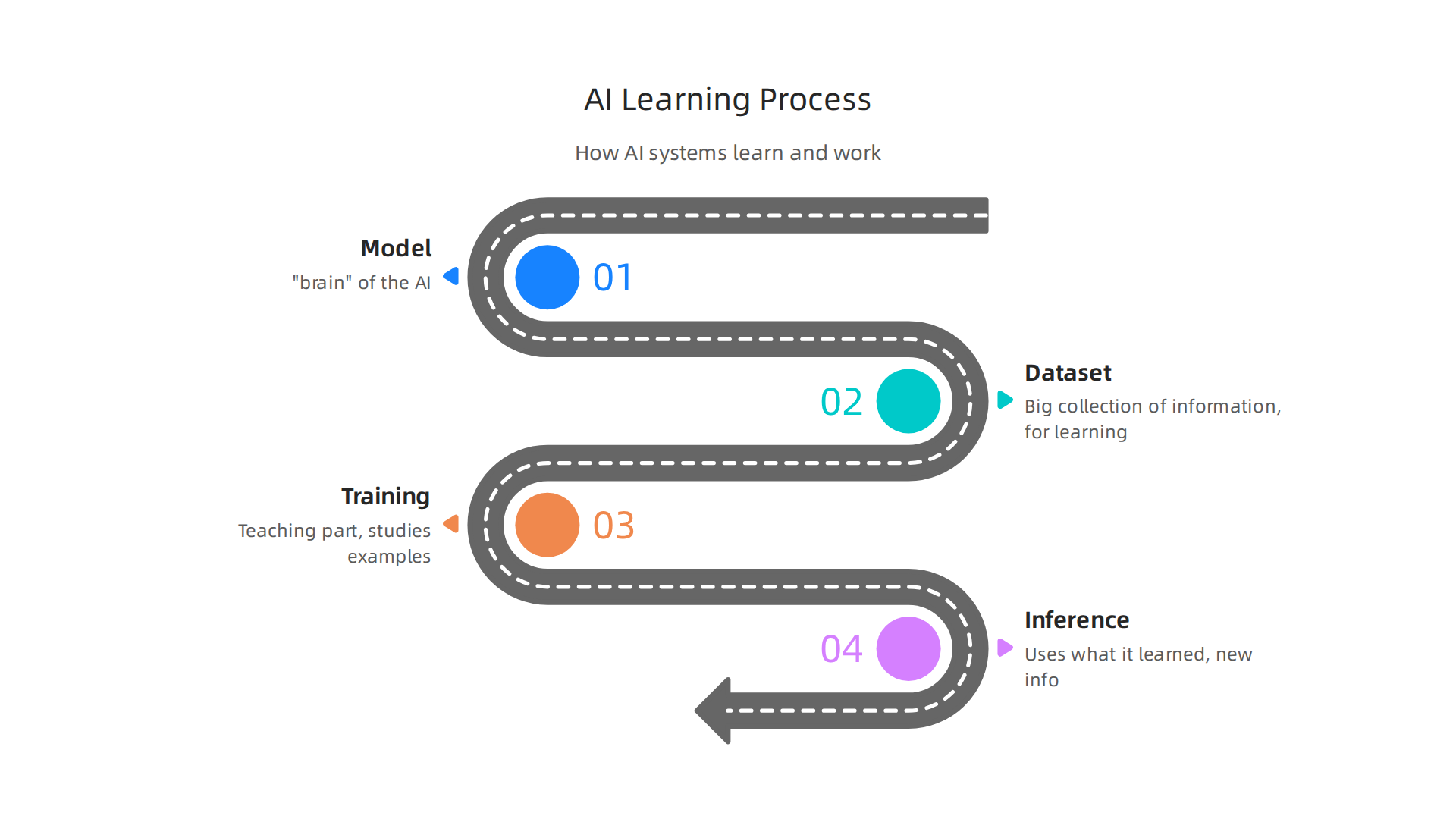
- Model: Think of this as the "brain" of the AI. After it learns, the model is the computer program that knows how to do a specific job, like telling you if a picture has a dog in it.
- Dataset: This is simply a big collection of information. It’s all the examples an AI needs to learn from. If you want an AI to spot dogs, your dataset would have thousands of pictures of dogs and other animals.
- Training: This is the teaching part. You feed the dataset to the model, and it studies all the examples. It learns patterns and rules from this information, getting better and better at its job over time.
- Inference: Once the model has finished training and is smart enough, inference is when you use it. You give the trained model new information it has never seen before, and it uses what it learned to make a guess, a prediction, or a decision. For example, showing a dog-spotting AI a new photo and asking if there’s a dog in it.
Knowing these words is very important, especially for people who make big decisions [4]. When you understand what each term means, you can ask better questions about how AI tools work and what they can really do for your business. This helps you How to Choose AI for Business Tools that truly work and avoid common mistakes.
If you want to keep up with all the new ideas and tools in AI, we have something just for you. Get clear daily AI updates from The AI Newsletter Worth Reading.
Understanding what goes into AI is just one part of knowing about all the amazing tools we use today. Beyond the smarts of AI, there are bigger categories of technology that help everything run. To truly grasp the full "technology meaning" in 2026, it helps to know these different groups.
Let’s look at the main types of technology you’ll hear about:
Common technology categories and short definitions: hardware, software, cloud, edge
When we talk about technology, we often mean the tools and systems that come from using scientific knowledge to solve real-world problems Technology Definition & Meaning – Merriam-Webster. These tools can be broken down into a few common categories. Knowing these helps you understand costs, how to keep things running, and if you might get stuck with one company’s products.
- Hardware: This is the physical stuff you can touch. Think of computers, smartphones, servers in a data center, or the wiring that connects them. It’s the physical foundation of any digital system.
- For Businesses: Buying hardware means a big upfront cost. You also need space for it, and someone to take care of it and fix it when it breaks. It’s like owning a car; you pay for the car and then for its gas, repairs, and parking.
- Software: This is the set of instructions that tells the hardware what to do. You can’t touch software, but you use it all the time. Examples are apps on your phone, the operating system on your computer (like Windows or macOS), or business programs like word processors.
- For Businesses: Software often comes with ongoing costs like subscriptions or updates. You usually don’t need to physically maintain it, but you do need to keep it updated and secure. There can be "vendor lock-in" if a specific software is very hard to switch out for another.
- Cloud: This means using computers, storage, and software over the internet, instead of owning it all yourself. Think of services like Google Drive or Netflix. The "cloud" is just someone else’s computers, managed by them, that you get to use.
- For Businesses: Cloud services often have flexible costs, meaning you pay for what you use, which can save money compared to buying all your own hardware. Less maintenance is needed from your side. But you do need a good internet connection, and if you rely too much on one cloud provider, it can be hard to switch later on.
- Edge: This is about processing data very close to where it’s collected, rather than sending it all the way to the cloud. Imagine smart sensors in a factory making quick decisions, or a self-driving car processing its surroundings instantly. It’s about speed and efficiency.
- For Businesses: Edge technology allows for faster responses and can save money on sending data over the internet. However, managing many small "edge" devices can be complex, and each might need its own care.
Here’s a quick look at how these common tech categories compare for business use:
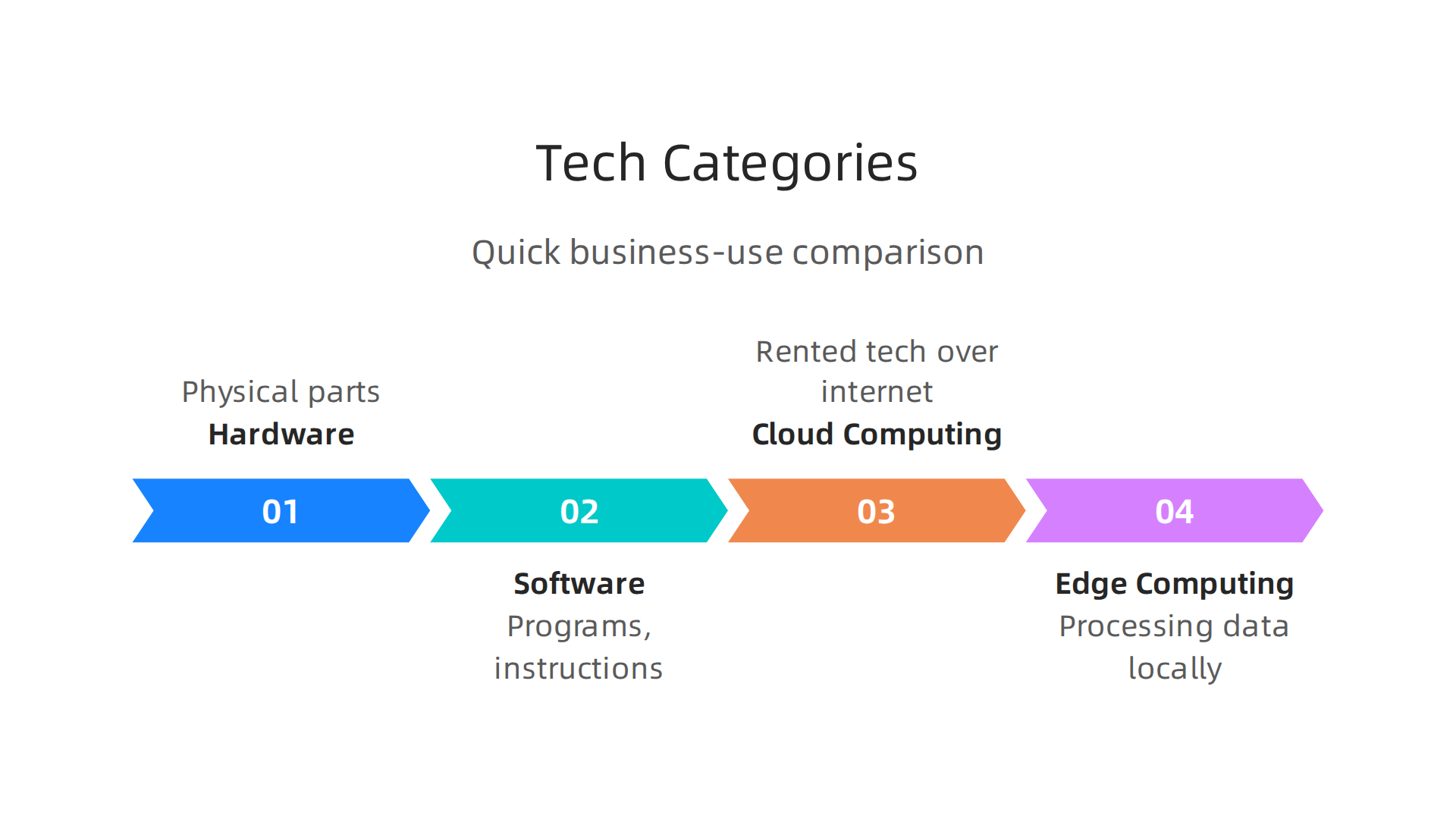
| Feature | Hardware | Software | Cloud Computing | Edge Computing |
|---|---|---|---|---|
| What it is | Physical parts | Programs, instructions | Rented tech over internet | Processing data locally |
| Location | Your office or data center | Lives on hardware | Remote data centers | Close to where data is made (e.g., factory floor) |
| Cost Model | High upfront, ongoing upkeep | Subscription, licensing, updates | Pay-as-you-go, scalable | Hardware upfront, energy, maintenance for devices |
| Management | Your team handles everything | Updates and fixes by your team | Provider handles infrastructure | Your team manages many small devices |
| Best for | Total control, specific needs | Specific tasks, user interaction | Flexibility, rapid scaling | Instant reactions, data security |
Understanding these differences is key for any business looking to grow and make smart choices with its digital tools in 2026. For more on the bigger picture of how these systems fit together, you can learn about understanding what is information technology for business success in 2026. This knowledge helps you see beyond just the "newest gadget" and understand the full potential of any new technology.
After understanding the general types of technology like hardware and software, it’s time to dive into a truly exciting and often misunderstood area: Artificial Intelligence, or AI. You see, AI isn’t just one thing. It’s a big field with many smaller parts, each designed to help computers think and act in different ways. Knowing these parts is key to understanding the full technology meaning of AI in 2026 and picking the right tools.

Let’s break down the main parts of AI that people talk about a lot.
AI subfields and terminology explained: ML, DL, NLP, CV, RL
Artificial Intelligence (AI) itself is all about making computer systems that can do tasks that normally need human smarts. This can include things like learning, solving problems, and making choices AI Glossary: 300+ Terms Every Leader Should Know. But under this big umbrella, there are many specialized areas.
Here are some of the most important ones:
- Machine Learning (ML): This is a very important part of AI. With machine learning, computers learn from examples and past experiences without being told every single step. Think of it like teaching a child to recognize a cat by showing them many pictures of cats. The computer gets better over time by seeing more and more data Navigate your AI Language: Updated 2026 Guide …. Many people wonder, "are machine learning and artificial intelligence the same?" Not quite! ML is a way to achieve AI, but AI is the bigger goal.
- What it does: Helps with things like predicting future sales, recommending movies, or finding patterns in huge amounts of information.
- Common mistake: Thinking all AI is ML. ML is a powerful tool, but it’s just one way AI can work.
- Deep Learning (DL): This is a special type of machine learning. Deep learning uses something called "neural networks" which are inspired by the human brain. These networks have many layers that let them learn very complex patterns. The "deep" part refers to having many of these layers AI Terms Everyone Should Know (2026 Edition).
- What it does: Great for very complex tasks like recognizing faces, understanding speech, or playing advanced games.
- Common mistake: Confusing DL with ML. All deep learning is machine learning, but not all machine learning is deep learning.
- Natural Language Processing (NLP): This area of AI helps computers understand, interpret, and create human language. This means both spoken words and written text Artificial Intelligence (AI) Terms & Definitions.
*   **What it does:** Powers virtual assistants like Siri or Alexa, helps translate languages, and summarizes long documents.
*   **Common mistake:** Thinking NLP is just about chatbots. It's much broader, including sentiment analysis (understanding feelings in text) and text generation.
- Computer Vision (CV): Computer vision is all about letting machines "see" and understand visual information from images and videos AI Glossary: The definitive guide to essential terms in artificial ….
- What it does: Used in self-driving cars to see roads and obstacles, in security systems for facial recognition, or to find defects in products on a factory line.
- Common mistake: Believing CV is only for simple object recognition. It can understand complex scenes and even predict movements.
- Reinforcement Learning (RL): This is where AI learns by trying things out and getting feedback. It’s like training a pet with treats. The AI agent performs an action in an environment and gets a "reward" or "punishment." Over time, it learns which actions lead to the best rewards.
- What it does: Excellent for teaching AI to play games, control robots, or manage complex systems like energy grids.
- Common mistake: Thinking RL is only for games. It has many real-world uses where trial and error can optimize outcomes.
Understanding these different parts of AI helps you avoid picking the wrong tools for your needs. For instance, if you want to analyze customer reviews, you’d look for NLP tools, not computer vision. When thinking about how to bring these smart tools into your company, knowing the right terms helps you make better choices. You can explore more about how to choose AI for business tools that deliver real results in 2026 to ensure your company uses AI smartly.
After looking at the different kinds of AI, it’s also important to understand the special words used when building and running these smart systems. These words help you know what kind of work, time, and money will be needed. They help explain the deeper technology meaning when you want to use AI in your business.
Let’s talk about some key terms:
API (Application Programming Interface)
Think of an API like a menu in a restaurant. You don’t need to know how the chef cooks the food, but you can choose what you want from the menu, and the kitchen will prepare it. In the world of tech, an API lets different computer programs talk to each other.
- What it does: If you want your website to use a powerful AI tool for translating languages, you don’t build the translator yourself. You use its API to send text to it and get the translated text back. It’s like sending a request and getting a response.
- Why it matters for business: Using APIs often means you can add AI features to your existing tools quickly without building everything from scratch. This can save money and time.
SDK (Software Development Kit)
An SDK is like a toolbox given to a carpenter. It has all the special tools, parts, and instructions needed to build something specific.
- What it does: An SDK helps computer programmers easily create new programs that work with a specific AI service or platform. It includes pre-written code, guides, and examples.
- Why it matters for business: If you want to build a custom app that uses a certain AI, an SDK makes the job much easier and faster for your developers. It helps them put all the pieces together correctly.
MLOps (Machine Learning Operations)
This term sounds fancy, but it’s really about making sure your AI models work well all the time, even after they’ve been built. MLOps stands for Machine Learning Operations. It’s a set of rules and practices to help manage the full life of an AI model, from when it’s first made to when it’s used every day and needs updates What is MLOps? – Machine Learning Operations Explained.
- What it does: Imagine you train an AI model to predict sales. MLOps helps you put that model into action, watch how well it’s doing, update it when new information comes in, and fix any problems. It’s about automating the parts of managing AI models, like making sure they are always learning and improving What is MLOps?.
- Why it matters for business: Good MLOps means your AI tools stay useful and reliable. It helps make sure the "alpha technology" you use keeps giving good results without constant manual effort. This saves money in the long run and helps you adapt faster. If you’re looking for ways to cut costs with AI, practices like MLOps are key for Tech For Less AI Operations Cut Costs Without Cutting Corners In 2026.
Inference vs. Training
These two words describe different ways AI models work and have big cost differences.
-
Training: This is when you teach an AI model. You feed it lots of data, and it learns from that data. Think of it like a student studying for a test. Training needs a lot of computer power and can be very expensive and take a long time, especially for complex AI.
- Cost & Resources: High cost, needs powerful computers (often special chips), and lots of data. It’s like the initial investment.
-
Inference: This is when the AI model uses what it learned to do its job. It’s like the student taking the test after studying. If you ask a trained AI to translate a sentence or recognize a face, that’s inference.
- Cost & Resources: Generally much cheaper and faster than training. It needs less computer power per task, making it the day-to-day operational cost.
Understanding these differences is key when you’re thinking about building your own AI from scratch versus using an existing AI service. Training costs are a big factor if you decide to develop a custom model. Knowing these terms can help you make smarter decisions when choosing and managing Enterprise AI Platforms 2026 Top Providers And How To Choose The Right One for your company.
While understanding how AI works is important, it is also crucial to know about the words that talk about how AI should be used in a fair and safe way. This part of the technology meaning helps businesses use smart systems responsibly and avoid problems.
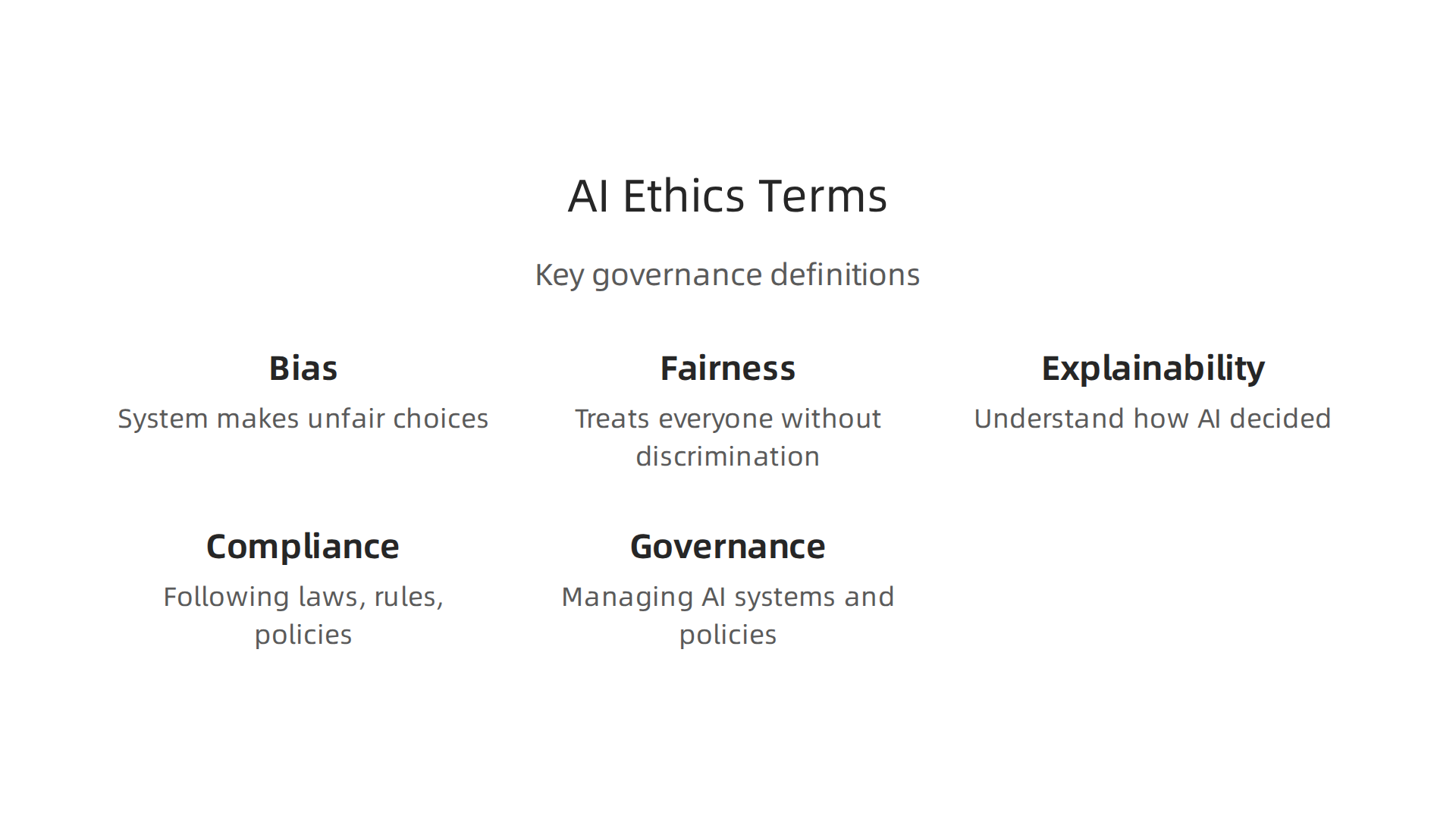
These terms affect how you pick AI tools and what rules you need to follow.
Bias
Bias in AI means that the system makes unfair choices because of the data it learned from. If the data used to train an AI has unfair ideas, the AI will learn and repeat those unfair ideas. For example, an AI hiring tool might unfairly favor certain groups if it was trained on historical hiring data that showed bias. Fixing bias is key for Ensuring Fairness, Transparency, and Trust in 2026.
- Why it matters for business: Biased AI can lead to bad business choices, legal issues, and harm your company’s reputation. It’s important to check AI for bias often, as part of good AI Bias and Fairness: From Detection to Mitigation in 2026.
Fairness
Fairness in AI means that the system treats everyone justly and without discrimination. It’s about making sure the AI’s decisions are fair to different groups of people, no matter their background. This is a core idea in responsible AI.
- Why it matters for business: Aiming for fairness helps build trust with customers and employees. It also helps your business follow ethical guidelines and legal rules about discrimination.
Explainability
Explainability means that you can understand how an AI system came to a certain decision. Some AI models are like "black boxes" because it’s hard to see inside and know why they decided what they did. Explainable AI lets us look into the "why." Even with explainability, bias can still exist, because knowing how it decided doesn’t always tell you if it decided fairly, as noted in research on AI Bias and Fairness: How to Measure and Reduce Risk.
- Why it matters for business: If an AI decides not to give a loan, the customer or a regulator might want to know why. Explainable AI lets you give clear reasons. This is very important for auditability and trust. Being able to explain AI decisions is a key part of good AI Ethics 2026: The Powerful Guide to Trustworthy AI.
Compliance
Compliance means following all the laws, rules, and company policies that apply to your AI systems. As AI becomes more common, governments and groups are creating new laws, like the EU AI Act, to make sure AI is used safely and ethically.
- Why it matters for business: Not following these rules can lead to big fines and legal troubles. Staying compliant means your business is safe and responsible. Building a responsible AI framework helps move beyond just principles to practical Responsible AI Framework: Moving Beyond Principles to Practice.
Governance
AI governance is about setting up systems and rules to manage AI risks, ethics, and compliance across your whole business. It’s like having a clear plan for how your company will use, oversee, and be accountable for its AI tools. It covers everything from how AI is designed to how it’s used every day. Many companies are setting up AI Ethics Frameworks in 2026: EU AI Act + Tools to help with this.
- Why it matters for business: Strong AI governance helps make sure your AI projects are successful and trustworthy. It helps you pick the right vendors, put the necessary rules into your contracts, and be ready for any audits. It’s about ensuring the AI, or any alpha technology you use, helps your business grow in a safe and ethical way.
Now that we know the basic words that talk about how AI should be used, let’s see how these ideas can help your business make smart choices about AI tools. It’s like having a map when you are trying to understand the full technology meaning of new systems. In 2026, many companies are looking to use AI, with over 75% already using it in some way. But only a few are seeing big returns, often because they struggle with how to use AI best. A clear checklist can help.
How to evaluate and adopt AI tools: applying the glossary to real decisions
To make sure your AI choices bring good results, you need a plan. This checklist uses the important words we just learned to help you pick, use, and keep an eye on your AI tools.

Step 1: Picking the Right AI Tools and Vendors
When you look for new AI tools or companies that sell them, think about these things:
- Bias Check: Ask vendors how they stop bias in their AI. Do they test their systems to make sure they don’t treat certain groups unfairly? Look for tools that promise to reduce unfair choices.
- Fairness Promise: How does the tool ensure fairness for everyone it affects? This is super important, especially if the AI deals with customers or employees. A good vendor will be able to show you how their AI promotes fair outcomes.
- Explainability Needs: Can the AI show why it made a certain choice? If an AI decides something important, like whether to approve a loan or process an application, you should be able to understand how it got there. This is key for building trust and dealing with problems. Always ask about the explainability features.
- Governance and Compliance Talk: Does the vendor understand the rules and laws for AI? Make sure their tools can help your company stay compliant. Also, ask about their own internal governance, meaning how they manage their AI systems responsibly.
It’s wise to explore how to choose the right tools for your business by looking at how to choose AI for business tools that deliver real results in 2026.
Step 2: Planning Your AI Projects
Once you have an idea of the AI tools you might want, it’s time to plan how you’ll use them.
- Define Your Project with Fairness in Mind: What problem will this AI solve? How will you make sure it solves it fairly? Think about what data the AI will use and if that data could cause bias.
- Meet Compliance Rules: Before you even start, check all the laws and rules that apply to your AI project. This could be about privacy, data use, or how decisions are made. Not following these can lead to big problems. Many companies are investing big in AI, with global spending set to pass $300 billion in 2026, but not all see returns due to poor strategy and compliance issues.
- Set Up Governance: How will your team oversee this AI? Who will be in charge of checking its results? Having clear rules and people responsible for the AI’s actions is part of good governance. This helps manage risks and ensures the AI works well for a long time. This is also why understanding the "technology meaning" of these governance rules is important for success.
Step 3: Keeping an Eye on Your AI
Adopting AI is not a one-time thing. You need to watch it closely.
- Monitor for Bias and Fairness: Even after putting AI to use, keep checking if it’s acting fairly and without bias. AI models can change over time as they get new data, so regular checks are a must.
- Ensure Explainability is Always On: If your AI makes a decision, always make sure you can explain it. This helps you fix problems and answer questions from people affected by the AI. This is like ensuring the "technology meaning" of every decision is clear.
- Review Compliance Regularly: Laws and rules for AI can change. Make sure your AI systems are always up to date with the latest rules. Some companies are using special practices called MLOps, or Machine Learning Operations, which help automate and manage how AI models are deployed and monitored over time, making sure they stay compliant and perform well. This applies a factory-line approach to AI, helping keep everything in order.
- Strengthen Governance: Keep improving your company’s AI governance plan. This includes setting clear roles and responsibilities and making sure there are ways to fix problems if they come up. This ongoing work helps make sure your company uses all forms of advanced alpha technology wisely and successfully.
This careful approach helps your business gain the most from AI, turning new ideas into real-world benefits while staying responsible.
Want to keep up with the latest in AI and tech without feeling swamped?
Get clear daily AI updates from The AI Newsletter Worth Reading.
Summary
This article explains why clear, precise definitions for technology and AI terms matter now more than ever, and it gives practical language to help readers make smarter decisions. It defines technology as applied science—covering tools, processes, and know-how—and breaks down AI vocabulary like AI, machine learning, deep learning, NLP, computer vision, and reinforcement learning. The piece also compares core tech categories (hardware, software, cloud, edge) and explains operational concepts such as APIs, SDKs, training vs. inference, and MLOps. It covers ethical and legal terms—bias, fairness, explainability, compliance, and governance—and offers a three-step checklist for selecting, planning, and monitoring AI tools in business. After reading, you’ll be able to ask vendors the right questions, judge costs and risks, set governance rules, and monitor AI for fairness and performance.