Tag: marketing ai tools

  • How Marketing Specialists Choose AI Tools for Marketing and Drive ROI

    How Marketing Specialists Choose AI Tools for Marketing and Drive ROI

    Why Marketing Specialists Must Adopt Focused AI Strategies Now

    In 2026, the world of marketing is changing faster than ever, and artificial intelligence (AI) is at the heart of it all. If you’re a marketing specialist, you’ve likely seen many new AI tools pop up every day. It can feel like too much information, making it hard to figure out which tools are right for your work.

    Navigating the overwhelming landscape of new AI tools in marketing requires focused strategy.

    This big challenge is what many marketing teams face today: how do you pick the best AI tools for your specific marketing jobs from so many choices?

    Actually, almost all marketing teams are now using AI. A report from this year shows that 91% of marketers actively use AI in their daily tasks, a big jump from past years. This means that if you’re not using AI, or not using it well, you might be falling behind. The goal for any marketing specialist today isn’t just to use AI, but to use it in a smart, focused way to get real results. Teams that focus on getting a good return on investment (ROI) from their AI tools see much better results, sometimes 3.2 times better [1]. This shows that the ai advantage is clear, especially for growth marketing.

    But with so many options, how do you cut through the noise? How do you pick AI tools that truly help with things like making better marketing collateral or understanding customers more deeply? Many marketing specialists feel unsure about where to start or how to make sure the AI tools they choose will actually work and be easy for their team to adopt. There’s a real worry about spending money on tools that don’t deliver.

    This article is here to help. We will give you a clear, step-by-step guide to choosing and using AI tools for your marketing work. Our playbook focuses on what really matters: getting a good return on your money, making sure the tools are easy to start using (low adoption friction), and helping you get them up and running quickly (implementation readiness). You’ll learn how to find AI solutions that truly fit your needs, so you can stop feeling overwhelmed and start seeing real business growth.

    To keep up with the fast-moving AI world without getting lost in all the news, it helps to have a trusted source. You can always get clear daily AI updates from The Deep View Newsletter. We will help you understand how to choose AI tools for business that deliver real results, so you can make smart choices for your team.


    [1] State of AI Marketing 2026 | Enterprise AI Adoption Report

    Set Clear Goals: Map AI Features to Marketing Outcomes

    Now that we know focused AI strategies are a must, the very first step for any smart marketing specialist is to set clear goals. You can’t pick the right tools if you don’t know exactly what you want them to do for you. Think of it like this: if you want to drive to a friend’s house, you first need to know their address.

    It’s not enough to say "I want more sales." You need to make your goals clear and easy to measure. For example, do you want to:

    • Make more people aware of your brand? (Like getting more views on your online videos or more people seeing your ads.)
    • Get better quality leads? (These are people who are more likely to buy from you.)
    • Turn more leads into customers? (This means improving your conversion rates.)
    • Keep existing customers happier for longer? (This is about customer retention.)

    By making your goals specific, you can then see how AI tools can really help. Each AI tool has different strengths, and knowing your goal helps you match the tool to the job. For example, an AI tool that writes emails might help with conversion rates, while one that suggests new ad ideas could boost awareness. The goal is to find AI solutions that directly help your growth marketing efforts.

    How to Map AI Features to Your Goals

    Once you have your goals, list out the marketing jobs you do every day. These are your "use cases." Then, think about how AI could make those jobs easier or better.
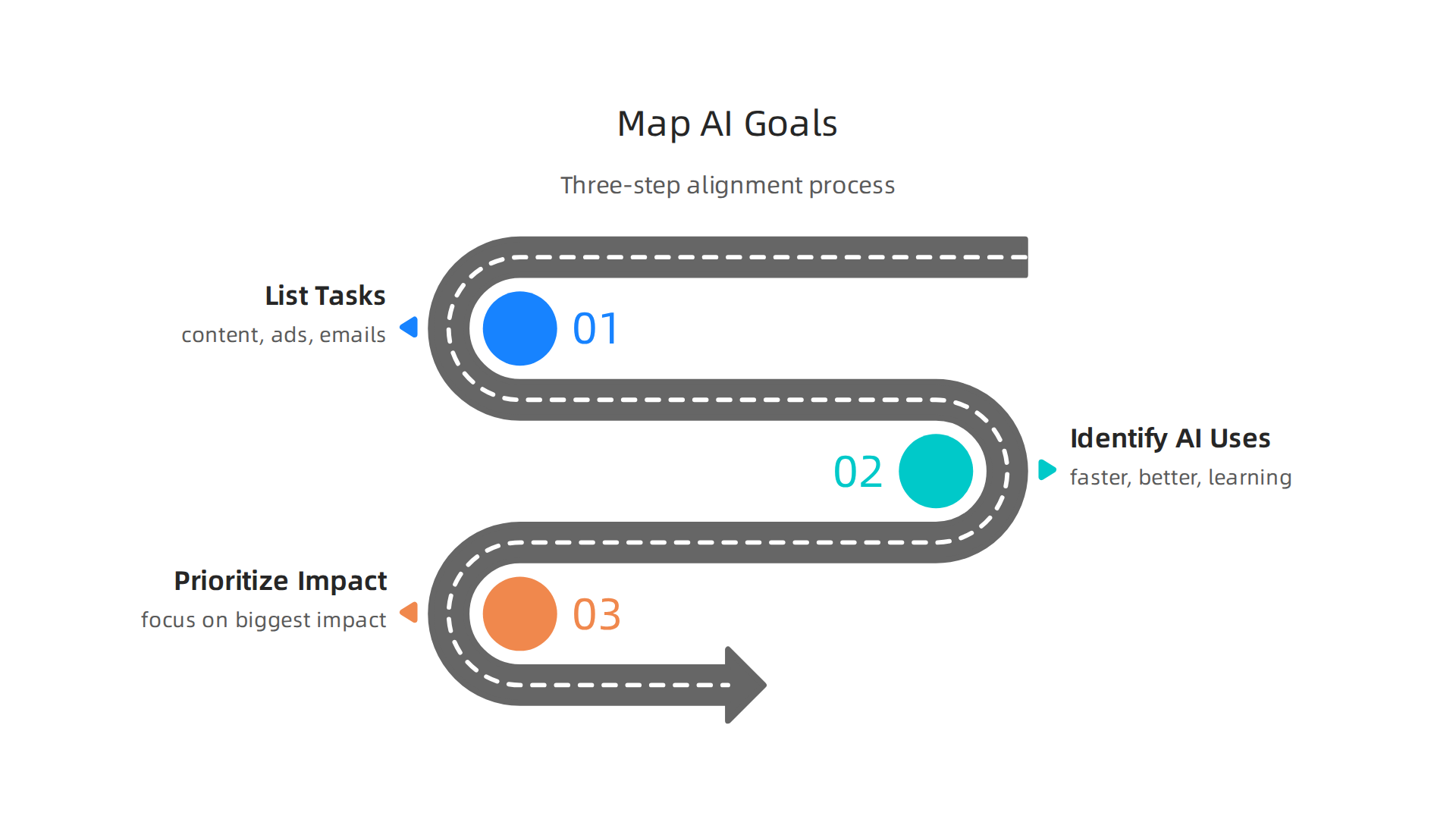
    A three-step process to align AI capabilities with specific marketing objectives for maximum impact.

    This helps you build a "prioritized use-case matrix."

    Here’s how to think about it:

    1. List your marketing tasks: Think about creating content, running ads, sending emails, talking to customers, or figuring out what customers like.
    2. See where AI can help: For each task, ask: Can AI make this faster? Can it make it better? Can it help me learn new things? Maybe AI can help you create more engaging marketing collateral.
    3. Prioritize: Not all tasks are equally important. Focus on the ones that will have the biggest impact on your measurable goals and give you the best return on your money. For example, if increasing leads is your top goal, prioritize AI tools that help with lead generation and lead scoring. Many businesses that use AI for marketing automation see a really good return on their money, sometimes even 544% ROI [1]. This shows the clear AI advantage when you pick tools carefully.

    By making a list of your goals and matching them to what AI tools can actually do, you’ll make smarter choices. This way, your limited budget and time go toward experiments that truly matter and bring high-impact results. This focused approach is key to harnessing the power of AI for business success. For example, understanding how to choose marketing automation software carefully can make a big difference for your team.


    [1] The Real ROI of AI-Driven Marketing in 2026: What the Data Actually Shows – V12 AI

    Now that you have your clear goals, the next smart step for any marketing specialist is to figure out where to put your money first. You need to pick the best types of AI tools that will give you the most bang for your buck and be easiest for your team to start using. This means looking at tool categories and ranking them.

    Think of AI tools like different types of helpers. Some are good for writing, some are good for talking to customers, and some are good for understanding numbers. You can’t hire all of them at once, so you need to decide which helpers will do the most important work for your business first.

    Key AI Marketing Categories to Consider

    Many marketing teams are using AI in a few main areas. Here are some big ones:
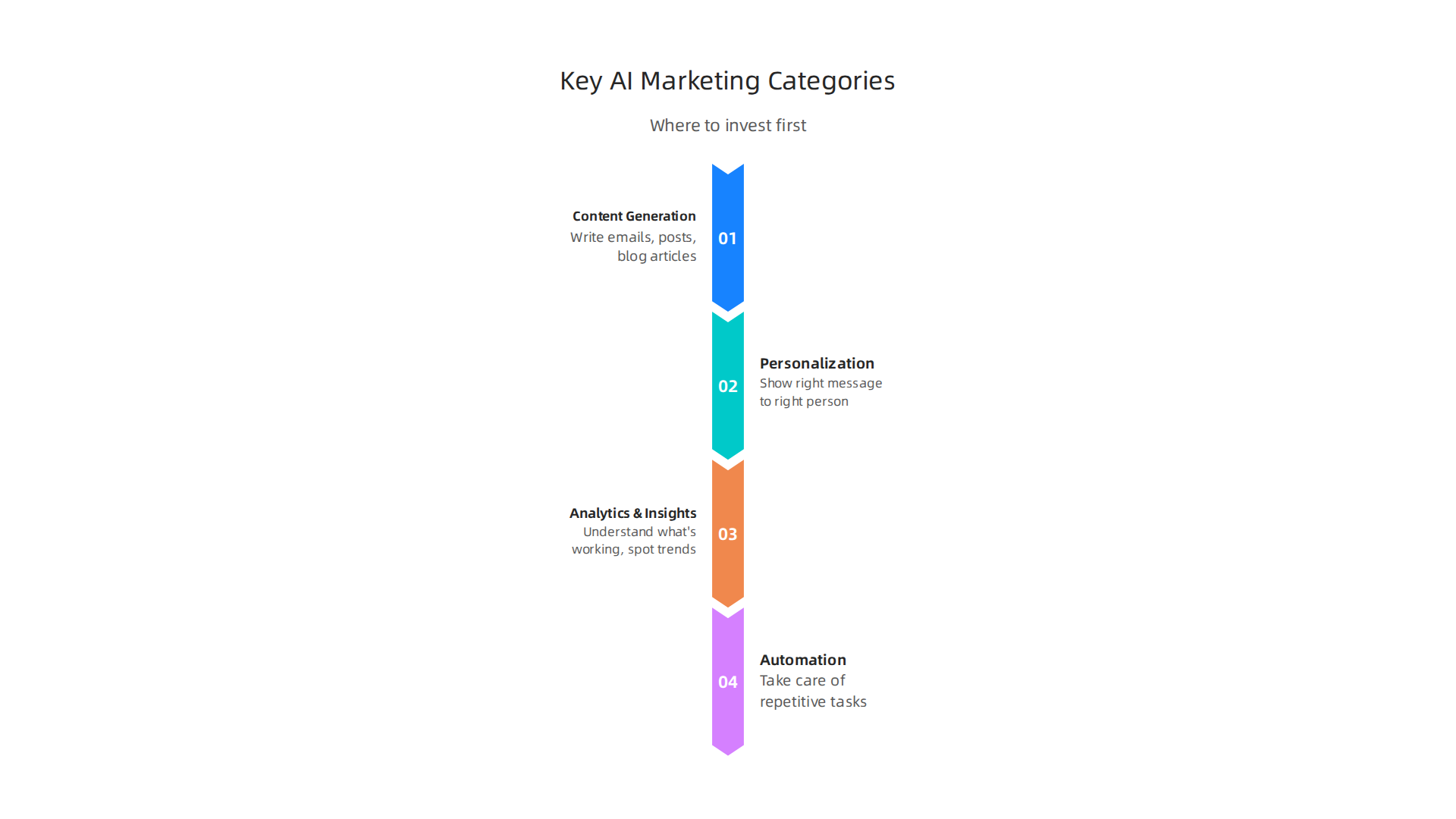
    Essential AI categories marketers should consider for initial investment to maximize growth.

    • Content Generation: These tools help you write emails, social media posts, blog articles, and other [marketing collateral]. Many businesses in 2026 use AI for creating content, making it the most common use of AI in marketing.
    • Personalization: These tools help you show the right message to the right person at the right time. For example, they can suggest products a customer might like or change an ad based on what someone has looked at before.
    • Analytics and Insights: These tools look at huge amounts of data to help you understand what’s working and what’s not. They can spot trends and tell you what customers might do next.
    • Automation: These tools take care of repetitive tasks, like sending follow-up emails, scheduling posts, or moving data between different systems. This saves your team time and lets them focus on bigger ideas.

    How to Prioritize Your AI Investment

    When deciding where to invest, think about two main things for each category:

    1. Expected Return on Investment (ROI): Which category will help you reach your specific goals the fastest and give you the biggest boost in sales or customer happiness? For example, AI tools that help with content writing can bring in 3.2 times your investment on average. Tools for personalization are also strong, bringing in about 2.7 times the investment on average.
    2. Integration Complexity: How hard will it be to set up and use these tools with what you already have? Some tools are super easy to plug in, while others might need a lot of setup or special tech skills. You want to pick tools that your team can learn and use without too much trouble.

    Also, don’t forget your team’s skills and your current tech setup. It’s important to match new AI tools to what your team can handle and what your systems can support. If your team isn’t ready for a very complex AI system, it might be better to start with something simpler. This helps avoid "adoption friction" and ensures your team actually uses the tools effectively. Looking into how to choose the best AI tech products for your team in 2026 can make this process smoother.

    By carefully ranking these categories based on their likely ROI and how easy they are to use with your team’s current skills and existing systems, you can build a smart plan. This focused approach gives your business a real [AI advantage] and helps your growth marketing efforts succeed.

    To stay on top of all the fast-changing AI tools and trends, make sure you’re getting trusted information.

    Get clear daily AI updates from The AI Newsletter Worth Reading.

    After you know which types of AI tools are best for your business, the next big step is picking the right company or "vendor" to get them from. For any smart marketing specialist, this means having a clear plan to check out each option. You want to make sure the tool will truly help your growth marketing efforts and fit well with how your team works.

    Evaluate Vendors: Checklist for Marketing Specialists

    When looking at different AI tools, don’t just pick the first one you see. You need a checklist to compare them fairly.
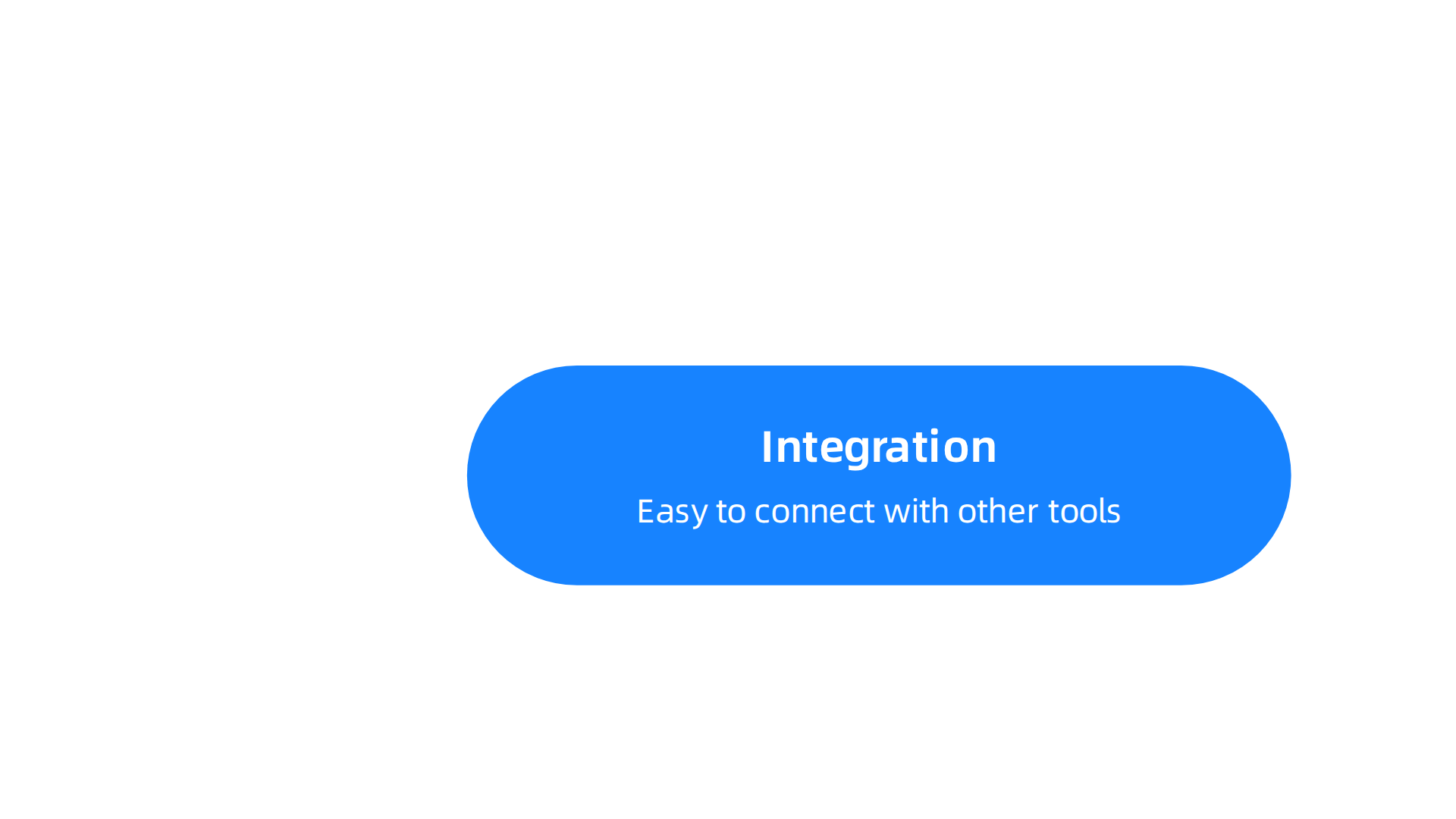

    A comprehensive checklist for marketing specialists to evaluate potential AI tool vendors.

    A marketing team collaboratively reviewing and discussing various AI tools or vendor proposals.

    Think of it as interviewing each tool provider to see if they’re the right fit for your team in 2026. Here are some key things to ask about:

    • How easy is it to connect with other tools you use? (Integration) The AI tool should work well with your existing marketing software, like your email system or customer database. If it’s hard to connect, it will cause problems later.
    • Can the AI tool use your business’s information? (Data Access) AI tools need data to learn and work. Make sure the tool can safely and easily use your company’s specific information without issues.
    • Can you change the tool to fit your needs? (Customization) Your business is unique. Can you change how the AI works or what it does to match your specific marketing campaigns and goals?
    • Is your information safe with them? (Security) This is super important. You need to know that your customer data and business secrets will be protected from bad actors. Ask about their security measures.
    • Are the costs clear and fair? (Pricing Transparency) Make sure you understand all the costs involved. Are there hidden fees? Does the price change as you use it more? A good vendor will be open about their pricing.

    Many companies offer checklists to help you with this. One helpful guide suggests looking at how vendors handle things like security and data management to avoid problems later on AI Vendor Evaluation Checklist: How to Choose Business AI Tools Without Getting Burned. It’s also smart to look at how different enterprise AI platforms stack up before making a big decision.

    Try Before You Buy: Short Pilot Tests

    After you have a few favorite vendors, the best way to really check if an AI tool is right for you is to try it out. This is called a "pilot test." It’s like a short trial run before you sign a long-term contract.

    A pilot test should be short, often about 30 to 90 days. During this time, you set clear goals. For example, you might want to see if an AI content tool can help your team write blog posts 20% faster. You need to decide exactly what you want to measure to know if the test is a success A Practical 30‑Day Pilot Plan to Evaluate AI Marketing Tools for Small Teams.

    Here’s how to run a good pilot test:

    1. Set Clear Goals: What do you hope the AI tool will achieve for your marketing team? Make these goals specific and measurable.
    2. Pick Key Numbers to Watch: These are called Key Performance Indicators or KPIs. They help you track if the AI tool is meeting your goals. For instance, if you’re testing an AI ad tool, you might track how many people click on the ads or how much a new customer costs AI Pilot Success Metrics & Reporting Plan: KPIs, Experiment.
    3. Keep it Small: Don’t try to use the AI tool for everything at once. Pick one small project or a small part of your team to test it with. This makes it easier to manage and see clear results.
    4. Decide What "Success" Looks Like: Before you start, agree on what will make you say, "Yes, this AI tool is great!" or "No, this isn’t what we need."

    By doing these pilot tests, your marketing specialist team can clearly see the value of an AI tool with your own data. This way, you make smart choices that truly give your business an [AI advantage] and boost your growth marketing efforts.

    Implementation Roadmap: People, Process, and Tech

    Once your team finishes a pilot test and sees that an AI tool works, the next steps are all about making it a permanent part of your business.

    A team confidently presenting or reviewing a successful project implementation roadmap.

    This involves a clear plan, often called an "implementation roadmap." It covers three main stages: getting the AI tool set up, putting it into wider use, and then growing its use even more across your company.

    Many experts agree that a good roadmap helps you smoothly bring AI into your marketing work. It’s like having a step-by-step guide to gain a real [AI advantage]. A common way to think about this journey is a 90-day plan, moving from initial checks to full-scale use, as shown in the How to Implement AI in Marketing in 90 Days guide.

    Key Stages for Rolling Out AI Tools

    1. Pilot: You just learned about this. It’s your short test to make sure the AI tool does what you need it to do. If the pilot goes well, you move to the next stage.
    2. Integration: This is where you connect the new AI tool with your other systems. For example, if you tested an AI tool for writing emails, you now link it to your email sending program. This makes sure all your tools talk to each other and share information easily. A marketing specialist often helps manage this technical part.
    3. Scale: After successful integration, you begin to use the AI tool across more of your team or for more projects. If it helped a small group write blog posts faster, now your whole content team might use it for all their [marketing collateral]. This helps your entire business see better results and boosts your growth marketing.

    Who Does What? Important Roles

    For each step of this roadmap, different people on your team will have important jobs. Having clear roles helps everything run smoothly. Here are some key people you’ll need:

    • Project Owner: This person is in charge of the whole AI project. They make the big decisions, clear away problems, and make sure the project stays on track. They are often a leader in marketing.
    • AI Integrator: This person makes sure the AI tool connects properly with your existing software. They solve any technical issues that come up.
    • Data Analyst: This person keeps an eye on the numbers. They check if the AI tool is truly helping your business reach its goals, using the KPIs you set during the pilot.
    • Workflow Owners: These are the people who actually use the AI tool day-to-day for specific tasks, like the content creators or ad managers. They help make sure the tool fits into their daily work.

    Putting together a strong team with clear jobs is crucial for success. In fact, a good AI Tool Selection Playbook for Marketing Teams points out the need for a cross-functional team with defined roles.

    Getting Everyone On Board: Change Management

    Bringing new AI tools into a business can sometimes be tricky because people don’t always like change. They might worry about their jobs or feel overwhelmed. This is where "change management" comes in. It’s all about helping your team understand and accept the new tools.

    Here are some tips to help everyone get on board:

    • Talk About Why: Explain clearly how the AI tool will help them and the company. Show how it will make their work easier or more effective, not harder.
    • Listen to Concerns: Let people share their worries and try to address them. Maybe they need more training or a simpler way to use the tool.
    • Provide Good Training: Don’t just give them a new tool and expect them to figure it out. Offer clear, easy-to-understand training sessions.
    • Show Success Stories: Share examples of how the AI tool is already making a difference, perhaps from your pilot test. This can inspire others.
    • Get Leaders Involved: When company leaders show their support and even use the tools themselves, it encourages everyone else.

    A big part of this is understanding your team’s different views and getting "buy-in" from everyone, as highlighted in the Leadership AI Adoption: A CMO Playbook for 2026. By handling changes well, your business can smoothly adopt new AI tools and achieve significant How Businesses Adopt AI for Growth.

    Staying on top of the latest AI trends and implementation strategies is a continuous effort.

    Get clear daily AI updates from The AI Newsletter Worth Reading.

    Governance, privacy, and compliance for marketers

    Staying on top of the latest AI trends and implementation strategies is a continuous effort. Beyond just putting AI tools to use, businesses must also think about the rules and safety. This means looking at how you handle data, get permission, and make sure everything follows the law. A good marketing specialist knows that using AI responsibly is key to long-term success and trust with customers.

    Practical Privacy Checklist for AI

    When using AI in marketing, it’s super important to be careful with people’s information. Here is a simple checklist to help your team:
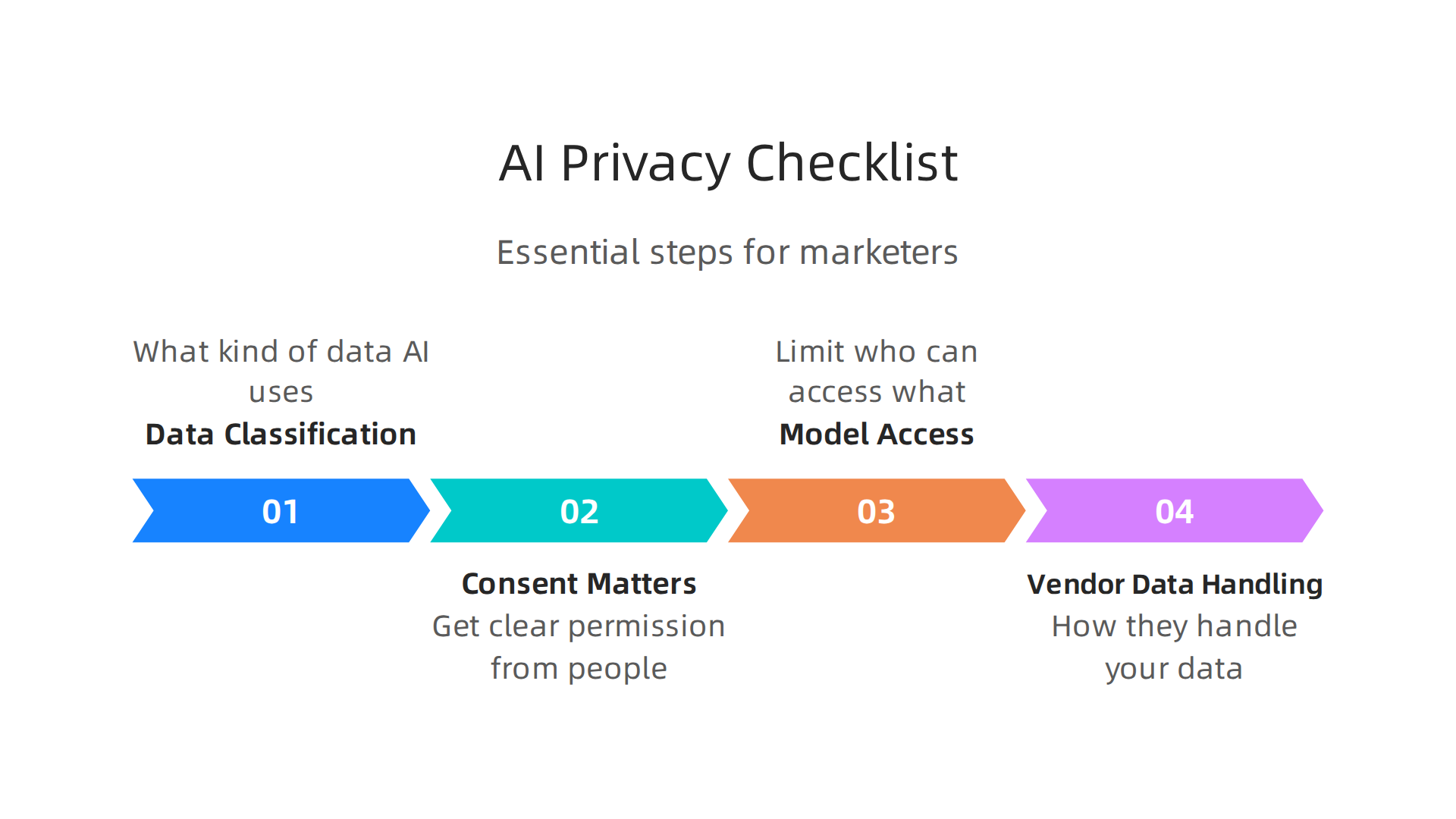
    Essential steps for marketers to ensure data privacy and responsible AI usage.

    • Data Classification: Think about what kind of data your AI tools use. Is it sensitive customer information or just general website traffic? Knowing the difference helps you protect the most important data more carefully.
    • Consent Matters: You must get clear permission from people before using their data with AI. This is especially true for personalized marketing efforts. Studies from 2026 show that people want "permission-based targeting" for AI-driven personalization, meaning they agree to how their data is used, which helps build trust with customers AI-Driven Personalization in Digital Marketing.
    • Model Access: Not everyone on your team needs to have access to all your AI models or the data they use. Limit who can access what, based on their job. This keeps your data safer.
    • Vendor Data Handling: If you use outside companies for AI tools, make sure you know how they handle your data. Read their privacy rules carefully. You want to be sure they protect your information just as well as you do.

    Aligning AI with Laws and Company Rules

    Using AI for growth marketing isn’t just about getting an [AI advantage]; it also means following many rules. A marketing specialist needs to work closely with legal teams to make sure AI practices are always compliant.

    • Understand the Laws: Different places have different laws about data privacy. For example, the UK and Europe have strict rules like GDPR. Other regions have their own laws. Businesses need to understand these regional rules to avoid big fines. A comprehensive guide can help your team understand AI Marketing Compliance Guide 2026 across various regions.
    • Internal Legal Review: Always have your company’s lawyers look over how you plan to use AI. They can help you spot risks before they become problems. This includes reviewing how AI creates [marketing collateral] and other content.
    • Human Oversight: Even with smart AI tools, humans should always be in charge of important decisions. AI can help create content or suggest ideas, but a person should give the final okay, especially for high-risk customer interactions. Keeping a human touch helps maintain ethical standards and meet compliance requirements, as outlined in a 2026 guide on How to Use AI for Marketing Compliance in 2026.
    • Privacy by Design: Build privacy into your AI plans from the very start, not as an afterthought. This means thinking about data protection when you choose AI tools and set up new projects. A 2026 guide on Data Privacy in 2026: CRM, AI & Compliance Guide notes that organizations must adopt a privacy-by-design approach. For more on navigating these complex areas, you might find valuable insights in this article on Mastering the AI Future Standard 2026. Also, exploring how different AI systems handle privacy can offer additional perspectives, such as understanding Siri AI 2026: unlock its power for privacy and business strategy.

    By following these steps, your business can use AI tools safely and ethically, building customer trust and avoiding legal issues in 2026 and beyond.

    When you use AI for marketing, it is not enough to just set it up. You need to know if it is really helping your business grow.

    Professionals reviewing data and metrics to measure the impact of marketing initiatives.

    This means looking at numbers and understanding what they tell you. A smart marketing specialist always checks the results to make sure AI tools are giving you an [ai advantage] and helping your business get ahead.

    How to Track Success with AI

    Measuring the impact of your AI marketing efforts means looking at different kinds of important numbers.

    • Leading KPIs (Key Performance Indicators): These are early signs that things are going well. For example, if your AI creates social media posts or [marketing collateral], you might look at how many people click on them, share them, or visit your website. These numbers tell you quickly if your content is interesting and reaching people.
    • Lagging KPIs: These show the final big results. This could be how many sales you made because of an AI-powered ad, how many new customers you gained, or how much money you got back for every dollar you spent. This is called Return on Investment, or ROI. In 2026, many companies see great results. Some reports show that businesses using AI for marketing often get a 300% average ROI within six months of using AI marketing solutions [AI Marketing ROI Statistics 2026: 50+ Sourced Data Points – Zigment.ai]. Other studies suggest an average ROI improvement of 35% for companies using AI in their marketing efforts [AI in Marketing Statistics 2026: Adoption, ROI & …].

    You also need to set "measurement windows." This means deciding how long you will wait to check the results. For some things, you might check daily or weekly. For big goals like sales growth, you might look at results every month or quarter. If you want to dive deeper into how to measure financial gains, an article on How to Get Real ROI from AI Marketing Cloud can help.

    Understanding Where Credit Is Due (Attribution)

    It can be tricky to know exactly which part of your marketing efforts caused a sale. This is called attribution. With AI, you need clear ways to tell if the AI helped a customer decide to buy your product or service. This means setting up your tracking tools to follow the journey a customer takes. For example, you can see if they first saw an AI-made ad, then read an AI-generated blog post, and finally made a purchase.

    Being able to track this helps you prove the real value of your AI investments. For example, AI tools used for writing content can deliver a 3.2x ROI on average, and AI personalization engines can achieve 2.7x ROI [AI Marketing Statistics 2026: 200+ Adoption Insights].

    Improving Your AI with Feedback Loops

    To keep getting better results, a marketing specialist uses what is called a feedback loop. This means you look at the results of your AI campaigns and use that information to make your AI models smarter and your work processes better. This is how you achieve ongoing optimization.

    • Refining Models: If your AI isn’t finding the right customers, you can give it more data or adjust its settings. This helps it learn and get more accurate.
    • Improving Prompts: If the AI is creating content or ideas that do not sound quite right, you can change the instructions (prompts) you give it. This helps the AI learn to make better content over time that matches your brand’s voice.
    • Adjusting Workflows: Maybe your AI is great at making designs, but the process of getting those designs approved by your team is slow. You can change your team’s steps to make things smoother and faster.

    This constant adjustment is a key part of [growth marketing]. It helps ensure your AI tools are always working their best, saving time, and bringing in more business. Companies that actively track their AI ROI often report big returns, with 60% seeing two times their investment back or even more [AI to ROI Reports & Data: The State of AI in Marketing 2026]. To learn more about how AI can improve your customer focus, check out this guide on AI Inbound Marketing.

    Staying on top of the latest AI advancements and strategies is crucial for continuous improvement.

    Get clear daily AI updates from The AI Newsletter Worth Reading.

    Summary

    This article explains why marketing specialists must adopt focused AI strategies now and gives a practical playbook for doing it well. It covers how to set specific, measurable goals and map those goals to prioritized AI use cases so you invest where ROI is highest. You’ll learn which AI categories (content, personalization, analytics, automation) typically deliver the biggest returns and how to rank them by expected ROI and integration complexity. The guide shows how to evaluate vendors with a clear checklist, run 30–90 day pilot tests, and scale successful pilots using a 90‑day implementation roadmap with defined roles. It also walks through privacy, compliance, and governance best practices—like consent, data classification, and vendor reviews—so your AI work stays lawful and trusted. Finally, you’ll get practical ways to measure impact with leading and lagging KPIs, attribution approaches, and feedback loops to keep improving results.


  • Lyfe Marketing AI-Enhanced Services Drive Business Growth and ROI

    Lyfe Marketing AI-Enhanced Services Drive Business Growth and ROI

    Why Lyfe Marketing’s AI-enhanced services matter now

    In 2026, it seems like everyone is talking about artificial intelligence (AI). Many marketing agencies promise amazing results by using AI. They tell you AI can make things faster and better. But here’s the thing: how do you know which promises are real? Businesses need clear guides to pick the right partners for their marketing.

    A business leader reviews documents, contemplating strategic marketing decisions.

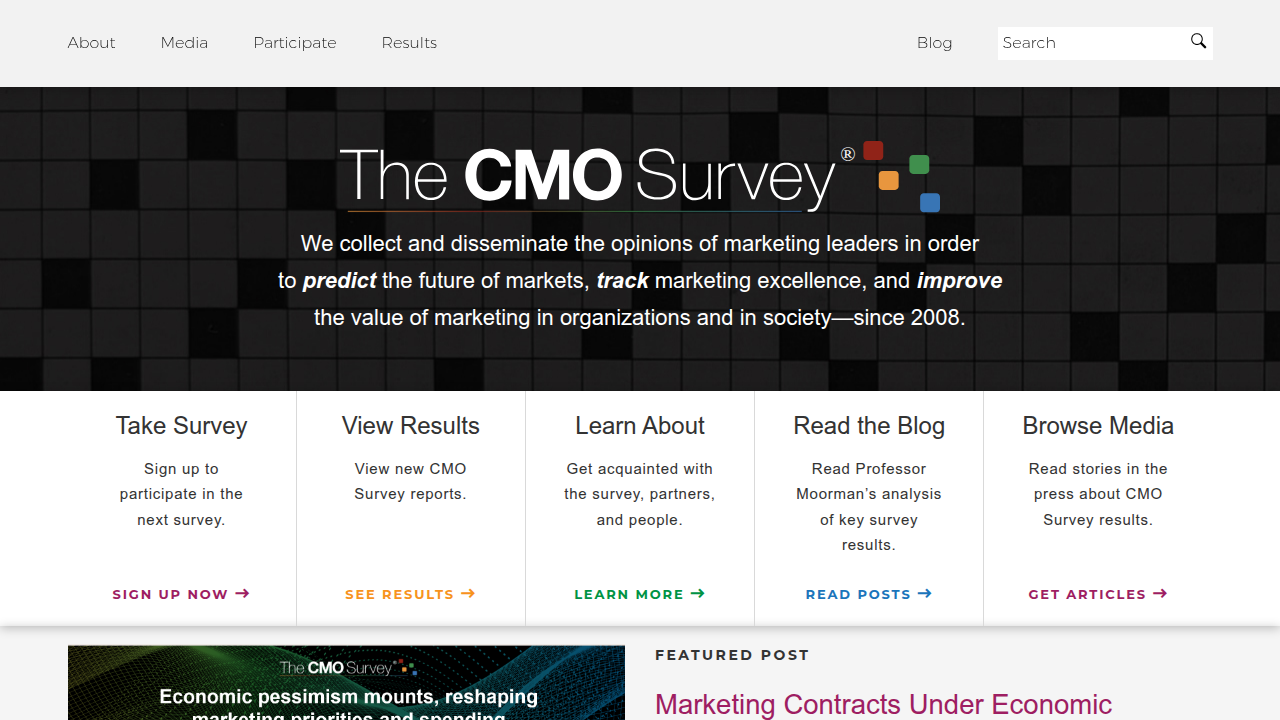
    Actually, a lot of companies are already using AI. Reports show that the use of AI in marketing has almost doubled in just two years.

    Explore insights from the CMO Survey on the rapid growth of AI in marketing.

    For example, AI made up 13.1% of marketing work in 2024, but by 2026, it’s jumped to 24.2% according to the Highlights and Insights Report 2026. This rapid change means businesses need to understand how to really use these powerful marketing AI tools. Many teams use tools like generative AI to make content and boost how much work they get done, as noted in the Adobe AI and Digital Trends 2026: GenAI and Agentic AI Insights report.

    This article will help you understand Lyfe Marketing’s AI-enhanced services. We will look closely at what they offer and how their special highlevel AI solutions can help your business. We will talk about:

    • What services Lyfe Marketing provides: We will break down their offerings simply.
    • How to measure your money back (ROI): We’ll explain how these services can give you a real return on your investment.
    • Steps for adding their services: We’ll show you how to easily bring Lyfe Marketing’s solutions into your current work.
    • Reasons to trust them: We will point out key things that show Lyfe Marketing is a reliable partner.

    Understanding how to choose AI for business tools that deliver real results is more important than ever. We want to give you clear information so you can make smart choices about performance marketing and growing your business.

    To stay on top of the latest in AI and technology, consider subscribing to The AI Newsletter Worth Reading. It offers clear daily updates.

    What Lyfe Marketing offers today: service breakdown

    Now, let’s look closer at what Lyfe Marketing brings to the table. Lyfe Marketing uses smart AI tools to boost your business marketing. They do this by making common tasks faster and better, letting their human experts focus on big-picture thinking and custom plans for you. They understand that a good AI-powered marketing agency combines the best of both worlds: smart machines and creative people.

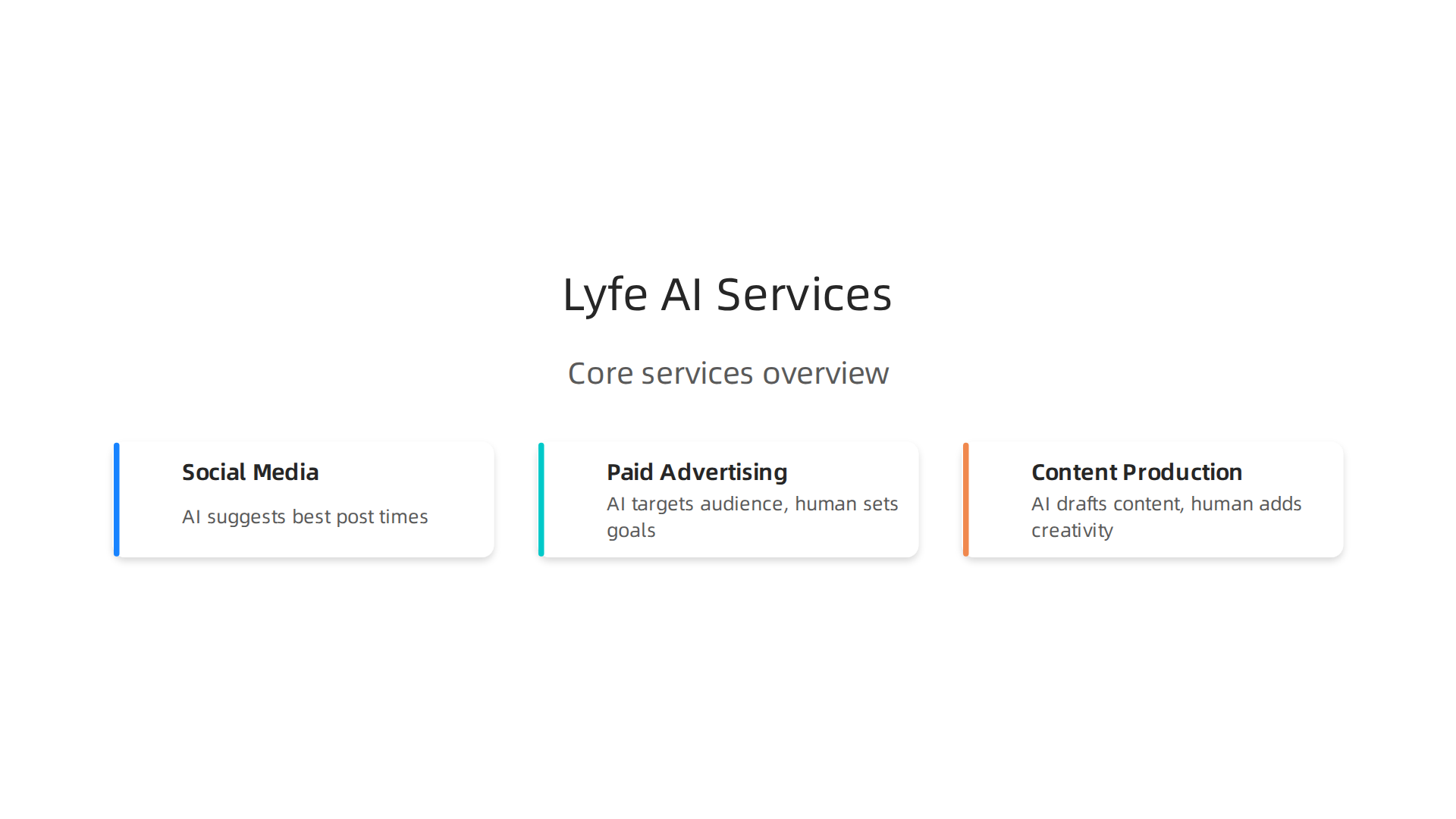
    Here are the main services Lyfe Marketing offers:

    An overview of Lyfe Marketing's AI-enhanced services, combining smart machines and creative people.

    Social Media Management

    For social media, Lyfe Marketing uses AI to handle many tasks. Think about how much time it takes to post on Facebook, Instagram, or LinkedIn every day.

    • AI’s role: Their highlevel AI helps suggest the best times to post so more people see your content. It also helps find popular topics and ideas for posts. Plus, AI can learn what types of content your audience likes most.
    • Human’s role: Even with these smart tools, people are still key. Lyfe Marketing’s team creates the actual messages and images. They make sure your brand’s voice is just right. They also handle talking with your followers and building real connections. This mix makes sure your social media feels human and personal.

    Paid Advertising Campaigns

    Running ads online can be tricky, but Lyfe Marketing uses AI to make it easier and more effective. Many top AI advertising platforms use tools that help agencies improve how well their ads work, noted a report on Top AI Advertising Platforms for Agencies in 2026.

    • AI’s role: The AI helps decide who should see your ads. It looks at lots of data to find the right people who are most likely to buy from you. It also helps set the best price for your ads and changes things in real-time to get you the most clicks or sales for your money. This focus on performance marketing helps you get more value.
    • Human’s role: Lyfe Marketing’s ad specialists set the main goals for your ads. They decide on the overall budget and choose which ad platforms to use. They also come up with the catchy headlines and images that grab attention. The human team keeps a close eye on the AI to make sure everything is working as planned and makes big adjustments when needed.

    Content Production

    Making great content like blog posts, emails, and website text is vital for any business. Lyfe Marketing uses generative AI tools to make this process smoother.

    • AI’s role: AI can quickly create first drafts of articles or social media captions. It helps suggest keywords to use so your content shows up higher in search results. It can also help make sure your writing is clear and easy to read. Tools like HighLevel CRM also help agencies manage their clients and automate tasks, which supports better content output according to a guide on Best AI Marketing Tools for Digital Agencies in 2026.
    • Human’s role: While AI gives a great starting point, Lyfe Marketing’s content creators add the creativity and unique ideas. They polish the content, making it sound exactly like your brand. They add personal stories and insights that only a human can provide. This teamwork makes sure your content is not just good, but amazing.

    Lyfe Marketing focuses on making sure their use of marketing AI tools leads to real results. They aim to help your business grow by making smarter decisions and working more efficiently. If you’re looking to understand how to choose AI for business tools that deliver real results, learning about how agencies combine human and AI strengths is a great start.

    So, how exactly do AI tools help agencies like Lyfe Marketing work smarter? It all comes down to what AI can do within their daily tasks:

    Key AI capabilities driving smarter agency workflows: automation, personalization, and optimization.

    making things automatic, personalizing messages, and making campaigns better.

    Automation for Faster Work

    One big way AI helps is by handling repetitive tasks. Think about all the little jobs in marketing that take a lot of time. AI can do these quickly, which saves money and lets people focus on more important things.

    • Content Generation: Tools that use generative AI tools can write first drafts of emails, social media posts, or even parts of articles. This doesn’t mean AI writes everything perfectly, but it gives a great starting point much faster than a person could.
    • Reporting Automation: AI can gather data from different places and put it into easy-to-read reports. This helps agencies quickly see what’s working and what’s not, without spending hours digging through numbers. In fact, many top AI tools for marketing teams in 2026 focus on streamlining these types of operational tasks.

    Personalization for Better Connections

    AI is also very good at understanding people. It can look at lots of information about customers and figure out what they like.

    • Audience Segmentation: AI can sort customers into groups based on their interests, how they behave online, or what they’ve bought before. This is called audience segmentation.
    • Tailored Messages: Once groups are made, AI helps agencies send very specific messages to each group. This makes customers feel like the company truly understands their needs, leading to stronger connections and more sales.

    Optimization for Stronger Results

    Making sure marketing campaigns get the best results is where AI really shines.

    • Ad Optimization: For paid ads, AI can test different versions of an ad to see which one performs best. It can also change who sees the ads and how much money is spent on them in real-time. This focus on performance marketing helps businesses get more for their advertising dollars.
    • Website and Email Improvement: AI can suggest changes to websites or emails to make them more effective. It might suggest different headlines, images, or calls to action to get more people to click or buy.

    The Balance: Speed and Cost vs. Creativity and Oversight

    While marketing AI tools offer amazing speed and can cut costs, they also come with a trade-off.

    • Speed and Cost Savings: AI can work much faster than humans and costs less for many tasks. This means agencies can do more work with fewer resources.
    • Creative Nuance and Oversight: Here’s the thing: AI doesn’t have feelings or truly unique ideas. It needs human creativity to make content that truly stands out and captures a brand’s voice. Also, someone needs to watch over the AI to make sure it’s doing what it’s supposed to and not making mistakes. This is where human experts come in to review, edit, and add that special touch. Setting up clear rules for how AI is used, also known as AI governance, is very important to ensure responsible and effective use of these powerful tools.

    Combining the smarts of highlevel AI with the wisdom and creativity of people is how modern marketing agencies get the best results in 2026.

    Ready to dive deeper into the world of AI and how it’s shaping business? Stay updated with the latest insights.

    The AI Newsletter Worth Reading

    Pricing Models and ROI: How to Evaluate Value from AI-Enhanced Agency Services

    After understanding how AI helps agencies work smarter, the next big question for many businesses is about costs and what kind of return they can expect. When you look at agencies that use AI, like Lyfe Marketing, you’ll see different ways they charge for their services. Knowing these helps you compare prices fairly and set the right expectations for your money.

    Common Ways Agencies Price AI-Enhanced Services

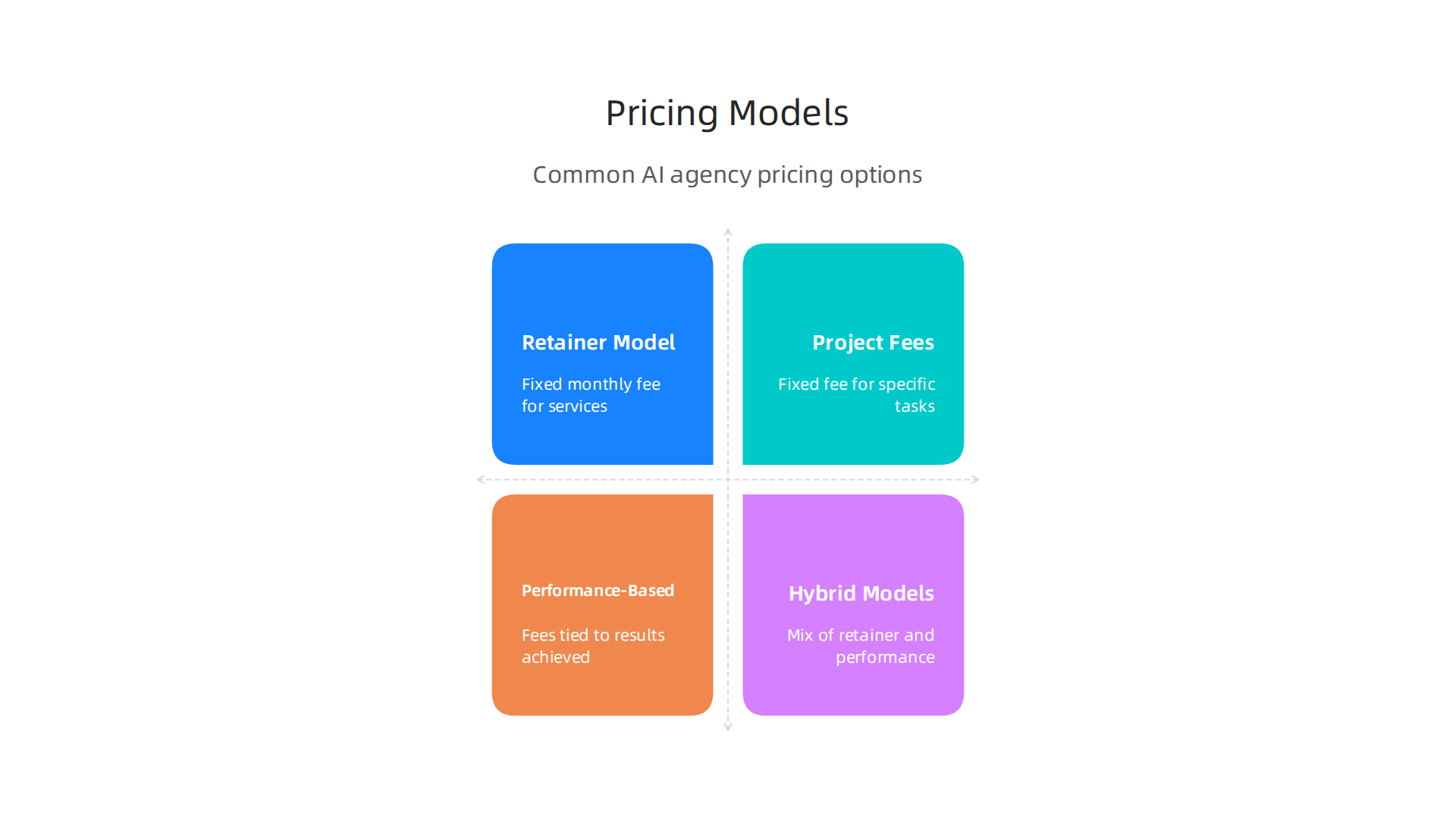
    In 2026, most digital marketing agencies using AI follow a few main pricing methods.

    Key pricing models for AI-enhanced agency services, from fixed retainers to performance-based fees.

    Each one works best for different kinds of business needs.

    • Retainer Model: This is a fixed monthly fee. You pay a set amount each month for a certain amount of work or access to services. With AI, agencies can often do more work or provide deeper insights for the same retainer fee, making your investment go further. This model is quite common, with monthly retainers sometimes ranging from $1,500 to $50,000, depending on the agency and services offered 6 Proven Digital Marketing Agency Pricing Models.
    • Project-Based Fees: For specific tasks, like building a new website or running a short campaign, an agency might charge a fixed fee. AI tools can help agencies complete these projects faster and more efficiently, potentially lowering costs or allowing for more complex deliverables within the fixed price.
    • Performance-Based Pricing: With this model, the agency’s fees are tied to the results they get for you. For example, they might earn a percentage of the sales they help generate or a bonus for hitting certain lead goals. AI’s ability to optimize ads and campaigns means agencies using it might be more confident offering this type of deal. This model means you pay for actual outcomes, not just time spent.
    • Hybrid Models: Many agencies use a mix of these. For instance, you might pay a smaller monthly retainer plus a bonus based on performance. This gives you some budget predictability while still encouraging the agency to achieve great results. Experts note that hybrid pricing is a dominant model among successful AI companies in 2026 AI Agent Pricing Models Explained (2026).

    How much an AI marketing agency costs can vary a lot, from a few hundred dollars a month for simpler AI platform access to thousands for full-service managed campaigns How Much Does an AI Marketing Agency Cost in 2026? Full …. It’s important to ask what’s included and how AI tools are used to deliver value within each model.

    Understanding Your Return on Investment (ROI)

    When you invest in AI-enhanced marketing services, you want to know you’re getting good value for your money. This is where Return on Investment, or ROI, comes in. ROI simply tells you how much money you get back for what you spend.

    Here’s a simple way to think about ROI with AI-enhanced services:

    • Look for Savings: Did the AI tools reduce the cost of creating content, running ads, or managing customer service? For example, if generative AI tools help produce more social media posts in less time, that’s a saving on labor costs.
    • Watch for Growth: Did your sales go up? Did you get more quality leads? Did more people visit your website or engage with your brand? Agencies using AI aim to boost these numbers through better targeting and personalized messages.
    • Faster Results: AI can speed up many tasks, meaning you might see results from your marketing efforts much quicker than before.

    While many businesses are using AI in marketing right now (over 90% of marketing teams, according to some studies in 2026), proving the exact ROI can sometimes be tricky New Research: The State of AI in Marketing 2026. However, teams that really focus on measuring ROI often see much better results, sometimes up to 3.2 times better, according to a 2026 report State of AI Marketing 2026 | Enterprise AI Adoption Report.

    To make sure you’re getting good ROI, talk to your agency. Ask them how they measure success and what metrics they’ll use to show you the value of their AI-powered work. This clear communication helps everyone stay on the same page. Learning more about how to track these benefits can help you make better decisions for your business. For more details on this, you might find our guide on How to Get Real ROI from AI Marketing Cloud in 2026 very helpful.

    When you decide to work with an agency that uses AI, like Lyfe Marketing, it’s key to understand how they actually put these smart tools to work for you. This means looking at how they bring AI into their daily tasks, from handling your data to picking the right marketing ai tools.

    How Agencies Set Up and Use AI

    Bringing AI into marketing is a step-by-step process. Here’s what often happens:

    • Getting Your Data Ready: First, the agency needs to access your business data. This includes things like customer info, past sales, or website visits. They make sure the data is clean and organized, because good data is super important for AI to work well. Poor data can lead to poor results, so agencies should define clear standards for data quality to ensure accuracy and consistency Data Governance Best Practices: What Works in 2026.
    • Choosing the Right Tools: Next, the agency picks specific marketing ai tools that fit your goals. These could be tools for creating content, running ads better, or understanding what customers want.

    Screenshot of GEND's blog about best AI tools for marketing agencies, providing insights on current AI stacks.

    Many agencies use a mix of different AI tools, often called an "AI stack," to cover all their needs, from strategy to performance measurement Best AI Tools for Marketing Agencies (2026 Stack). For example, a powerful setup might include a CRM tool like highlevel ai, plus other generative ai tools for content and SEO.

    • Starting Small (Pilot Projects): Instead of changing everything at once, agencies often start with a small test project. This helps them see how the AI tools work with your business before using them everywhere. It’s like a trial run to make sure everything is working as it should.
    • Growing with AI (Scaling): If the pilot project goes well, the agency will then slowly expand the use of AI to more parts of your marketing. This means using AI for more campaigns, more types of content, or reaching more customers.

    Handling Risks and Keeping Things Safe

    Using AI also comes with some important things to watch out for. Agencies need to be careful to protect your business.

    • Data Quality and Privacy: It’s super important that your data is correct and that your private information stays private. Agencies must have clear rules for handling your data, especially personal details. This is called data governance, and it helps make sure AI is used in a safe and fair way A Marketer’s Guide to Data Governance in the Age of AI.
    • Keeping Up with Changes: The world of AI changes fast. Agencies and their teams need to keep learning about new tools and ways to use AI effectively. They should also train their staff to understand how to work with AI, what it can do, and what its limits are. This helps them manage operational risks.
    • Making Sure AI is Fair: Sometimes, AI can accidentally be unfair if it’s not built or used correctly. Agencies need to make sure the AI tools they use treat all customers fairly and do not create problems. They often set up special committees to oversee these things, ensuring ethical use of AI.

    By following these steps, agencies can bring AI into your marketing in a smart and safe way. This helps them improve your performance marketing and deliver better results for your business. When thinking about different AI tools, it’s important to choose ones that really help your business grow. You can learn more about how to pick the best tools in our guide on how to choose AI for business tools that deliver real results.

    Want to stay on top of the rapidly changing AI landscape?

    The AI Newsletter Worth Reading

    To really know if an AI marketing agency like Lyfe Marketing can help your business, you need to look at their success stories. These stories are called client case studies. They show what the agency has achieved for other businesses. But not all case studies are the same. You need to know what to look for to make sure their claims about using AI are real.

    What Credible Case Studies Should Include

    A good case study tells a clear story about how an agency used marketing AI tools to get good results. Here are the key parts it should have:

    • A Clear Starting Point (Baseline): The case study should first tell you where the client’s business was before the agency started working with them. For example, what were their sales numbers or website visits? This "baseline" helps you see how much things changed.
    • How They Did It (Methodology): This part explains the exact steps the agency took. It should talk about which marketing ai tools they used, including any special generative ai tools for creating content or how they used a platform like highlevel ai. It should also explain how they applied AI to improve performance marketing, like targeting the right customers or making ads better. An AI-powered marketing agency typically uses machine learning to help with things like buying ads, finding the best audiences, and testing creative ideas to help businesses grow in 2026 Faq (aeo Optimized).
    • What They Achieved (Metrics): This is where they show the results. Did sales go up? Did more people visit the website? The case study should use real numbers and data to prove their success. These are the important "metrics" that show if their AI work actually paid off.
    • How Long It Took (Timeframe): Results do not happen overnight. A good case study will tell you how long the project lasted. This helps you understand how quickly you might see similar results for your own business.

    Checklist to Evaluate AI Claims

    When you read a case study, use this simple checklist to decide if the agency’s AI claims are really true:

    • Is the starting point clearly stated? You need to know where they began.
    • Do they explain the AI tools and methods they used? Look for details on their marketing ai tools.
    • Are the results shown with real numbers and proof? Don’t just trust big claims without data.
    • Is the timeframe for the results mentioned? Knowing how long it took is important.
    • Does the case study seem honest and not too good to be true?
    • Can you imagine how their approach might work for your business?

    By carefully checking these things, you can better understand how different agencies use AI to help businesses. This helps you choose a partner that truly understands how to leverage AI for your growth. Learning about how other businesses use smart technology can also help you understand how to bring AI into your own company for success. You can explore more about the innovation line 2026: how businesses adopt AI for growth.

    When you are looking at different AI marketing agencies, it’s smart to compare them.

    Professionals discussing and comparing different options, highlighting the decision-making process for choosing an agency.

    Just like you wouldn’t buy the first car you see, you shouldn’t pick the first agency that comes along. This is true for agencies like Lyfe Marketing and others that use smart technology. You want to find the best fit for your business.

    Here are some key things to look at when comparing AI-enabled agencies:

    AI Maturity

    This is about how deeply an agency uses AI. Some agencies might just use simple marketing AI tools. Others, like many top agencies in 2026, truly make AI the core of their work, helping them with everything from content to ad buying AI Agency Types 2026: The 4 Models Redefining…. Look for agencies that show they understand and use advanced generative AI tools for creating new ideas and content, not just basic tasks. They should be able to explain how their approach to AI helps with performance marketing, making sure your ads and campaigns work better.

    Transparency

    A good agency will be open about how they use AI. They should be clear about which marketing AI tools they use and how these tools help get results. Do they share real numbers and stories like the good case studies we talked about before? Or do they just make big, vague promises? You want an agency that helps you understand their methods and how they plan to help your business grow.

    Integrations

    Think about how the agency’s AI solutions will work with your current systems. Do they use platforms like HighLevel AI, which can connect many different marketing tasks? Can their AI tools easily fit into your existing website, customer management systems, or advertising accounts? Good integration means smoother work and better results without extra headaches for you.

    Pricing

    Of course, cost matters. Different agencies will have different price tags for their services. Make sure you understand what you are paying for and what kind of return on investment (ROI) you can expect. Don’t just pick the cheapest option. Instead, focus on the value they bring and if their pricing matches the results they can deliver for your business. When looking at various AI-powered agencies, you’ll see a wide range of starting prices and specialties 30 Best AI-Powered Agencies for 2026.

    Client Fit

    Some agencies are great for small businesses, while others work best with large companies. Some might specialize in certain industries, like tech or retail. Think about whether the agency’s past clients are similar to your business. Do they understand your industry’s unique challenges and goals? A good fit means they can hit the ground running and truly become a partner in your success.

    When you’re ready to pick an agency for a bigger project, like an RFP (Request for Proposal) or a small test (pilot project), use these points to narrow down your choices. Look for agencies that are transparent, show proven results, and really understand your business needs. Choosing the right AI partner is a big step for your business in 2026. For more help on this, check out our guide on how to choose AI for business tools that deliver real results in 2026.

    Staying up to date with the newest AI tools and strategies is key to making smart decisions for your business.
    Get clear daily AI updates from The AI Newsletter Worth Reading.

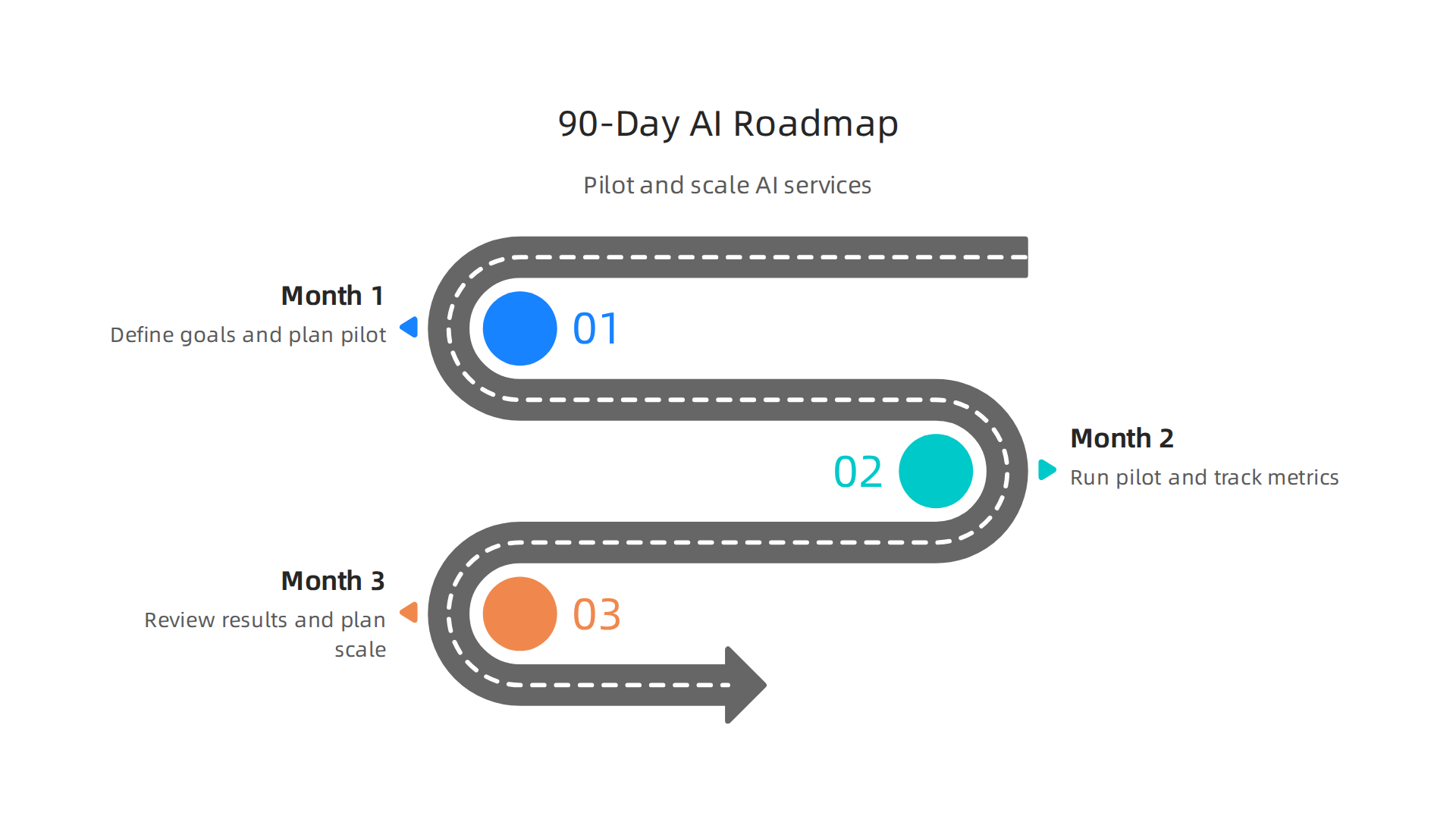
    When you have chosen an AI marketing agency, the next step is to work with them in a smart way. A good plan helps make sure your first project goes well and can grow over time. Here is a simple 90-day roadmap to help you pilot and then scale AI services with your chosen agency.

    A practical 90-day roadmap to successfully pilot and scale AI services with a marketing agency.

    This plan includes important checks to keep your data safe, manage your budget, and meet your performance goals.

    A practical 90-day roadmap to pilot and scale AI services with an agency

    Month 1: Discovery and Pilot Planning

    The first month is all about getting to know each other and setting clear goals.

    • Deep Dive Meetings: Your agency, whether it’s Lyfe Marketing or another, should spend time learning about your business. They need to understand your main goals, what problems you want to solve, and what you are doing now in marketing.
    • Review Your Data: Share your past marketing results and customer information. This helps the agency see where AI can make the biggest difference.
    • Pick a Small Pilot Project: Choose one specific area where AI can help quickly. For example, maybe you want to improve your ad messages or make your website content better. This pilot project should have clear, measurable goals. You want to see real results from the marketing AI tools being used.

    Month 2: Run the Pilot Project

    Now it’s time to put the plan into action.

    • Launch AI Efforts: The agency will start using its chosen AI tools, perhaps including advanced generative AI tools for content creation or specialized performance marketing AI for ads.
    • Track Key Numbers: Watch the pilot project closely. What are the metrics you agreed on? Are ads getting more clicks? Is content bringing in more visitors? Knowing your ROI is very important here. In 2026, companies often see a big boost in marketing ROI when using AI in key areas AI in Marketing Statistics 2026: ROI, Tools & Trends.
    • Regular Check-ins: Have weekly or bi-weekly meetings with your agency. Talk about what’s working and what’s not. This helps everyone stay on the same page.

    Month 3: Review, Adjust, and Plan to Scale

    This month is for looking at what happened and deciding what’s next.

    • Review Pilot Results: Compare the results of your pilot project to the goals you set in Month 1. Did you hit your targets? What did you learn?
    • Feedback Loop: Give honest feedback to the agency. What could be better? What surprised you? A good agency will listen and adjust.
    • Decide on Scaling: If the pilot was a success, talk about how to grow these AI efforts to other parts of your business. This is where you think about going from a small test to a bigger plan. Setting clear criteria for AI in digital marketing helps measure continued success.

    Important Checks for Data and Budgets

    When you work with an AI agency, you need to have rules in place. This is called governance.

    • Data Governance: This means making sure your customer data is safe and used correctly. Ask the agency:
      • What kind of data will their AI systems use?
      • How will they protect private information, like customer names or emails?
      • Who owns the data once it’s used by their tools, like HighLevel AI?
      • Many companies are setting up strict AI data governance strategies for 2026 to ensure ethical use.
    • Model Governance: This is about the AI models themselves. You should ask:
    • Budget and Performance: Always keep an eye on how much you are spending and the results you are getting. Make sure the agency gives you clear reports.
    • Compliance: Ensure that all AI activities follow local laws and rules about data privacy, like GDPR or CCPA, if they apply to your business. Having a clear set of AI governance guidelines for marketing teams helps protect everyone involved.

    By following this roadmap, you can work effectively with an AI marketing agency. It helps you try out new AI marketing tools in a safe way and then grow what works best for your business. To understand how businesses are adopting AI for growth, learn more about The Innovation Line 2026: How Businesses Adopt AI for Growth.

    Summary

    This article explains why Lyfe Marketing’s AI-enhanced services matter and how businesses can judge which AI-powered agencies actually deliver results. It breaks down Lyfe’s core offerings—social media management, paid advertising, and content production—showing how AI handles repetitive tasks while human teams add creativity and oversight. You’ll learn how automation, personalization, and real-time optimization improve campaign performance, plus the trade-offs between speed, cost savings, and the need for human review. The piece covers common pricing models (retainers, project fees, performance-based and hybrids), practical ROI checks, and the step-by-step process agencies use to set up AI, including data preparation and pilot testing. It also gives a checklist for evaluating case studies, criteria to compare agencies, and a 90-day roadmap with governance and budget checks so you can safely pilot and scale AI marketing work.