
Why behavioral tech matters now – and what this guide will help you do
Think about how much technology helps us every day. From the apps on your phone to the websites you visit, these tools are often designed to understand how you act and what you like. This is what we call behavioral tech. It’s not just about tracking what you do, but also about using that information to make things better or even guide choices.
In 2026, behavioral tech has grown a lot, especially with the rise of smart AI. It uses ideas from how people learn and behave, often called "behavioral science," and mixes them with modern digital tools like apps and software. Experts see it as a way to use technology to help people change habits or reach goals, like being healthier or making smarter buying choices [^1]. It brings together computer science, psychology, and even brain science to really get how humans and animals act [^2].
This is why leaders like CTOs, marketing managers, founders, and business consultants need to pay close attention.

With AI making these tools even more powerful, behavioral tech helps businesses truly understand their customers. It lets them create better products, build more effective online marketing platforms, and connect with people in a more personal way, often using tools similar to those that manage many HubSpot marketing contacts. Companies like Eightfold AI also show how AI helps understand people better in the workplace.
This guide will help you understand this important area. You will learn about:
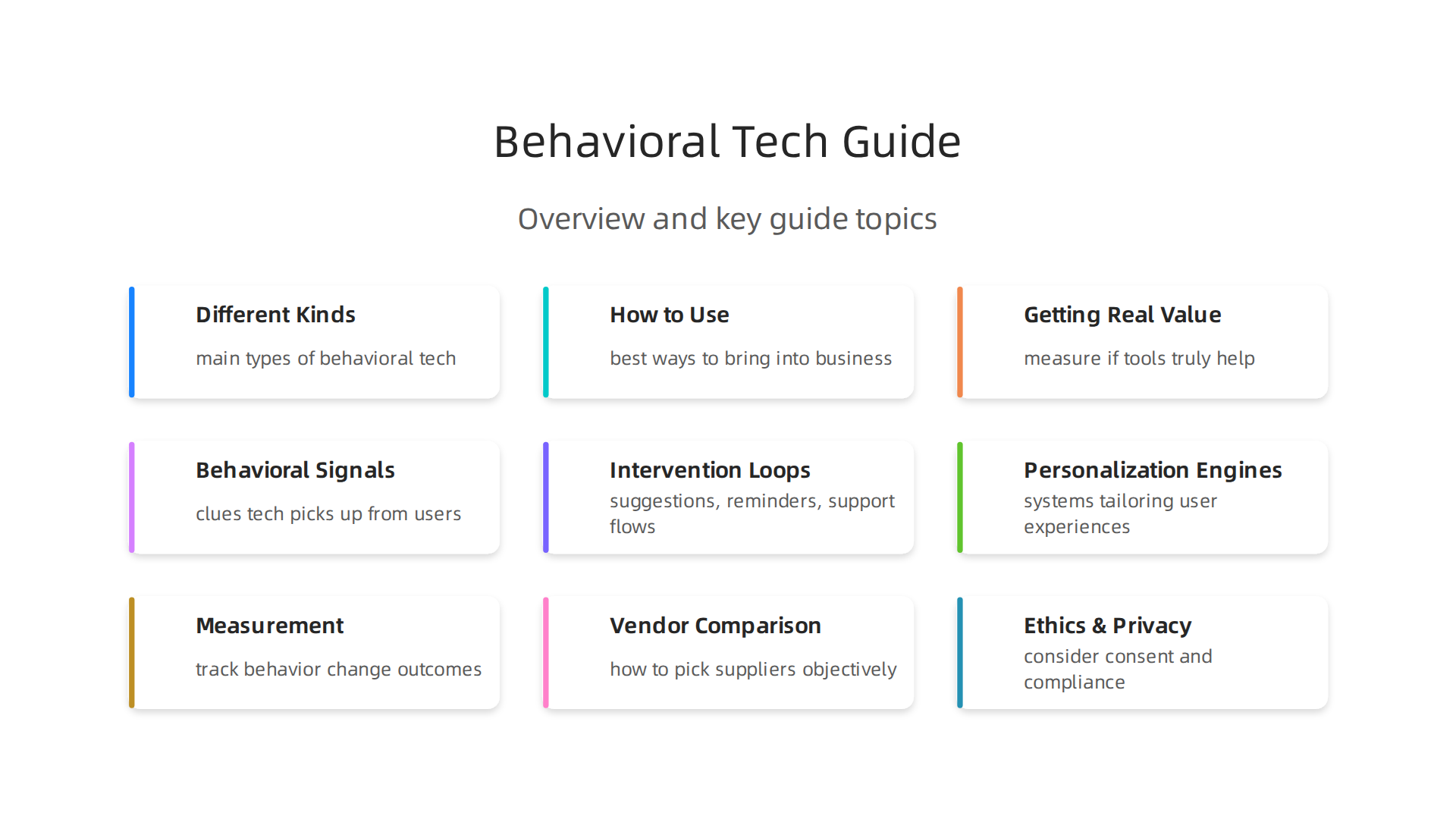
- Different Kinds of Tools: We’ll look at the main types of behavioral tech out there.
- How to Use Them: You’ll discover the best ways to bring these tools into your business.
- Getting Real Value: We’ll explain how to measure if these tools are truly helping your company grow and make money.
Our goal is to give you clear, easy-to-understand advice so you can make smart choices about using behavioral tech to help your business thrive. Staying updated on these fast changes is key.
Get clear daily AI updates from The AI Newsletter Worth Reading.
[^1]: What Is Behavioral Change Technology? ABA & BCT Tools
[^2]: BEHAVIORAL TECHNOLOGY Definition in Psychology# Why behavioral tech matters now – and what this guide will help you do
Think about how much technology helps us every day. From the apps on your phone to the websites you visit, these tools are often designed to understand how you act and what you like. This is what we call behavioral tech. It’s not just about tracking what you do, but also about using that information to make things better or even guide choices.
In 2026, behavioral tech has grown a lot, especially with the rise of smart AI. It uses ideas from how people learn and behave, often called "behavioral science," and mixes them with modern digital tools like apps and software. Experts see it as a way to use technology to help people change habits or reach goals, like being healthier or making smarter buying choices. These digital tools, apps, and software are designed to intentionally shape or modify human behavior, offering new ways to collect data and extend support beyond traditional settings
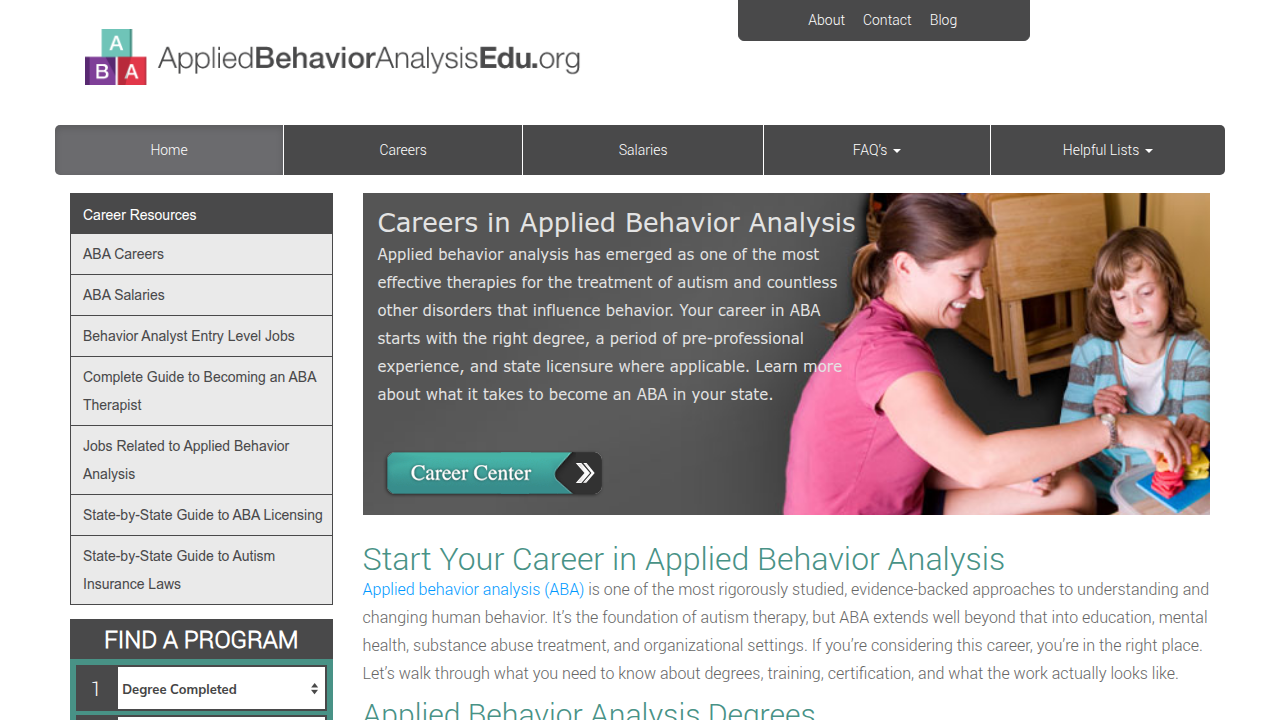
What Is Behavioral Change Technology? ABA & BCT Tools. It brings together computer science, psychology, and even brain science to really get how humans and animals act BEHAVIORAL TECHNOLOGY Definition in Psychology.
This is why leaders like CTOs, marketing managers, founders, and business consultants need to pay close attention. With AI making these tools even more powerful, behavioral tech helps businesses truly understand their customers. It lets them create better products, build more effective online marketing platforms, and connect with people in a more personal way, often using tools similar to those that manage many HubSpot marketing contacts. AI platforms like Eightfold AI also show how AI helps understand people better in the workplace.
This guide will help you understand this important area. You will learn about:
- Different Kinds of Tools: We’ll look at the main types of behavioral tech out there.
- How to Use Them: You’ll discover the best ways to bring these tools into your business.
- Getting Real Value: We’ll explain how to measure if these tools are truly helping your company grow and make money.
Our goal is to give you clear, easy-to-understand advice so you can make smart choices about using behavioral tech to help your business thrive. Staying updated on these fast changes is key.
Get clear daily AI updates from The AI Newsletter Worth Reading.
1) What exactly is ‘behavioral tech’ – core concepts and components
Let’s dive deeper into what behavioral tech truly is. It’s more than just regular software. It’s about building tools that understand and gently guide human actions. Think of it as mixing what we know about how people act with smart technology. In 2026, this field is all about making technology work for us in ways that feel natural and helpful.
Behavioral tech works using a few main ideas:
- Behavioral Signals: These are the clues technology picks up from us. It could be how long you look at a certain product online, what articles you read, or even how often you use a fitness app. These signals give businesses a clear picture of what you like and what you might do next. Tools for understanding these signals are key for businesses, letting them see how customers move and where a little help might change things for the better
10 Best Customer Behavior Analysis Tools to use in 2026. This data helps create better online marketing platforms.
- Intervention Loops: This is where the tech steps in. Based on your signals, the technology might offer a suggestion, send a reminder, or show you new information. For example, a healthy eating app might remind you to drink water or suggest a recipe. It’s a continuous cycle of observing, nudging, and seeing what happens next.
- Personalization Engines: These are the smart brains of behavioral tech. They take all the signals and decide what is most useful or interesting for you. It’s how an app knows to recommend certain movies or how an online store shows you products you might actually want to buy. This makes your experience unique, often using AI to create a futuristic website with personalization.
- Measurement: To know if behavioral tech is really working, we need to measure its effects. This means tracking if people actually changed their habits or if a business goal was met. For instance, did more people complete a task after getting a digital nudge? This step helps improve the tools over time.
These ideas work together to form what experts call "Behavioral Intervention Technologies," which are digital tools that aim to improve health behaviors and well-being The Behavioral Intervention Technology Model.
How is behavioral tech different from other tech fields?
It’s easy to mix up behavioral tech with other similar areas, but there are important differences:
- Compared to regular analytics: Basic analytics just tells you what happened. For example, "1,000 people visited this page." Behavioral tech goes further by asking, "How can we get those 1,000 people to do this specific thing?" It aims to influence action, not just report on it.
- Compared to classical personalization: Old-school personalization might put your name in an email. Behavioral tech looks at your deep behaviors and patterns to offer truly relevant experiences. It’s not just about addressing you by name; it’s about understanding your needs.
- Compared to predictive AI: Predictive AI tries to guess what will happen in the future, like if a customer will leave. Behavioral tech uses those predictions to act and prevent that outcome. For example, if AI predicts someone might quit their job, tools similar to those used by Eightfold AI can then step in with helpful resources to make them stay. It’s about guiding outcomes, not just predicting them. To truly grasp these concepts, it helps to understand the technology meaning explained in clear AI terms.
In short, behavioral tech is about actively shaping behavior using smart, data-driven tools, offering a powerful way for businesses to connect and grow with their customers.
2) Market landscape: who builds behavioral tech and who buys it
Now that we know what behavioral tech is, let’s look at who makes these smart tools and who uses them. In 2026, the world of behavioral technology is buzzing with different kinds of companies, from big names to small, specialized firms. Behavioral technology is an area that brings together computer science, psychology, and other fields to help understand and improve human actions BEHAVIORAL TECHNOLOGY Definition in Psychology.
Who builds behavioral tech?
We can sort the companies that build behavioral tech into a few groups:
- Platform Providers: These are the big players offering wide-ranging tools. Think of companies that provide customer relationship management (CRM) systems or all-in-one marketing tools. They often add behavioral tech features to help businesses connect better with their customers. For example, platforms like HubSpot use AI to help streamline business operations across marketing, sales, and service, making it easier to manage customer interactions and use behavioral data for better results. These platforms handle things like managing online marketing platforms and tracking HubSpot marketing contacts.
- Niche Vertical Vendors: These companies focus on one special area. For instance, there are behavioral tech tools just for health apps, helping people stick to fitness goals, or for financial apps, guiding users to save money. They are experts in their specific field.
- Analytics + Action Toolchains: These firms offer tools that first gather lots of data about how people behave, then give businesses ways to act on that data. This means they not only show you what customers are doing but also help you nudge them toward a desired action.
- Consultancies: These are expert teams that don’t build the tools themselves. Instead, they help other businesses figure out which behavioral tech tools to use and how to make them work best for their specific needs. They offer advice and help with setting things up.
Who buys behavioral tech?
The buyers of behavioral tech also come in different shapes and sizes:
- Small to Medium Businesses (SMBs): These businesses often look for simpler, ready-to-use behavioral tech solutions. They want tools that are easy to set up and start showing results quickly. Their main goal might be to get more customers, improve sales, or make their customer service better without needing a huge technical team. They often look for practical tools that deliver real results.
- Enterprises: Big companies have different needs. They might want custom behavioral tech solutions that fit perfectly with their existing complex systems. For example, a large company might use advanced AI tools like those from Eightfold AI for human resources, to better understand employee behavior and help with career development or retention. Enterprises have bigger budgets and look for deep integrations and powerful features to solve large-scale problems or drive strategic goals. When choosing tools, it’s important for these large businesses to carefully consider how to choose AI for business tools that deliver real results in 2026.
Staying informed about this fast-changing market can be tricky.
If you’re interested in keeping up with the latest in AI and technology, consider subscribing to The AI Newsletter Worth Reading for clear daily updates.
3) High-impact use cases: personalization, risk detection, behavior change, and more
But knowing about the market is just the first step. To really use behavioral tech well, we need to look at what it can actually do for businesses and people. In 2026, behavioral tech is helping in many ways, from making things more personal to spotting problems before they get big.
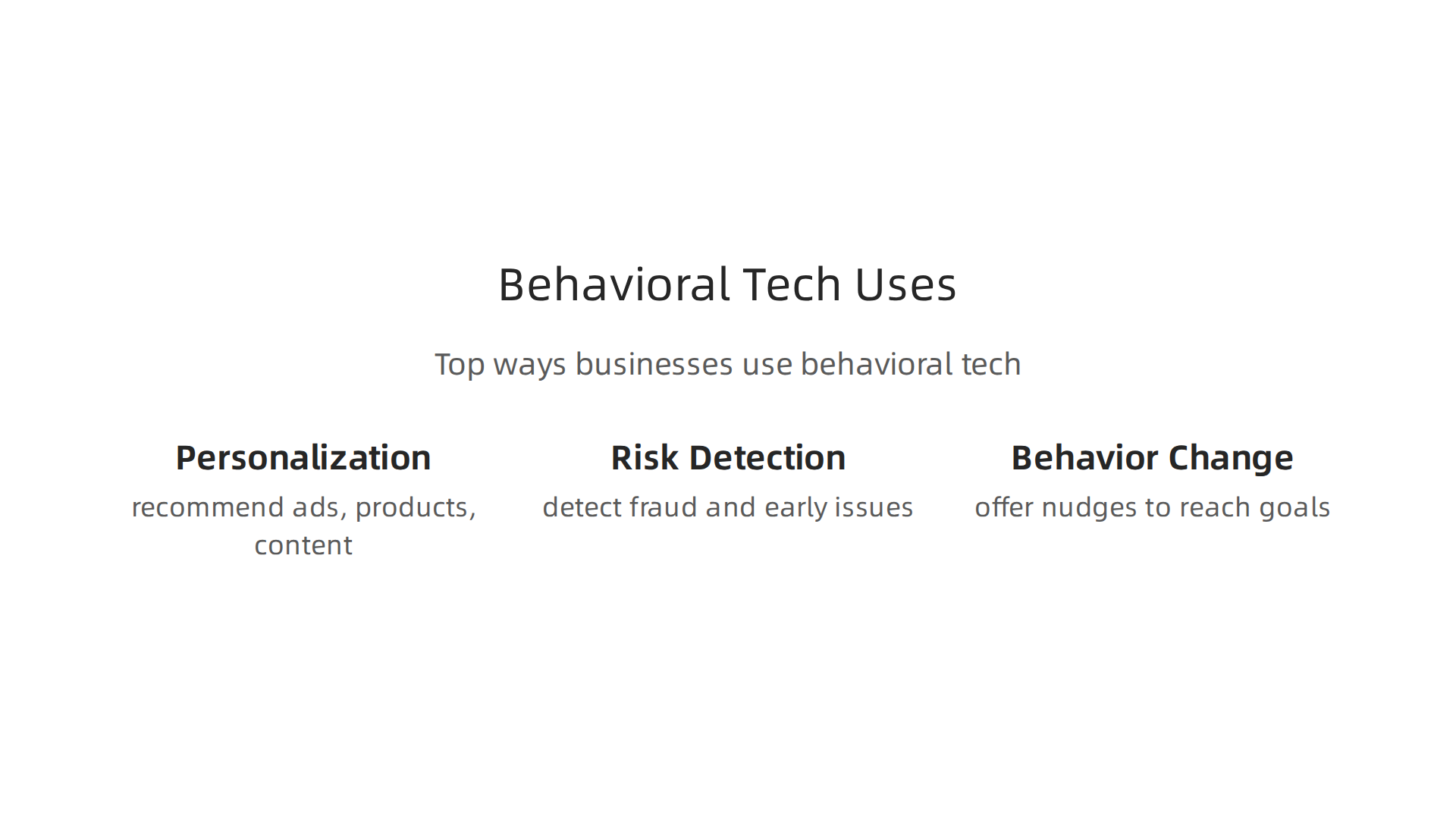
Here are some top ways businesses use behavioral tech today:
-
Making things Personal (Personalization)
Have you ever noticed how websites or apps seem to know what you like? This is a big use of behavioral tech. Companies watch how you click, what you buy, and what you look at. Then, they use this information to show you ads, products, or content that you might be interested in. This helps them connect better with customers and make more sales. For example, businesses use special tools to understand how customers act online and tie that behavior to purchases and loyalty 10 Best Customer Behavior Analysis Tools to use in 2026. This often involves using advanced methods in AI Inbound Marketing: Better Personas, Content, ROI. It’s all about making your experience feel unique, especially across different online marketing platforms. -
Spotting Risks (Risk Detection)
Behavioral tech can also help find problems early. This might mean:- Fraud detection: Banks can use tech to notice unusual spending patterns that might mean someone is trying to steal money.
- Employee problems: Companies can use tools like eightfold AI to predict if an employee might leave, helping them keep valuable team members. This is part of a larger trend in "people analytics" which helps predict outcomes like employee departures.
- Health alerts: In mental health, AI can look at how someone is communicating to detect signs of distress, which can help in getting them help faster Top 21 AI & Emerging Tech Use Cases for Behavioral Health. For businesses, it’s also important to be aware of hidden dangers. Learn more about Stealth AI: Hidden AI Risks and Opportunities.
-
Helping with Change (Behavior Change)
Sometimes, we want to change a habit, like eating healthier or saving more money. Behavioral tech can offer nudges and support to help us reach these goals. Health apps might remind you to drink water, or financial apps might suggest ways to cut down on spending. These tools are designed to encourage positive actions over time and are enhancing behavioral health with technology.
When choosing a behavioral tech tool, businesses need to think about a few things. First, what kind of data do you need? Personalization needs customer behavior data, while risk detection might need financial or communication data. Second, how will you protect people’s privacy? This is very important. And third, how will you measure if the tool is actually working? For example, with personalization, you might track how many hubspot marketing contacts become paying customers. Each use case needs its own careful plan to make sure the tech helps in the best way possible.
When you understand what behavioral tech can do, the next big step is picking the right tools and partners.

It’s like choosing the best team for a big project. In 2026, many companies offer behavioral tech solutions, so knowing how to compare them is super important. You want to make sure the tools you pick actually help your business grow and solve problems.
Here are the main things to look at when comparing behavioral tech vendors:
Data Needs and Handling
First, think about the data.
- What kind of data does the tool need? Does it need customer clicks, employee feedback, or health information? Make sure the tool can use the data you have.
- How does it keep data safe? Protecting people’s information is a must. Ask about their security plans and how they follow privacy rules.
AI Models and How They Work
Behavioral tech uses smart computer programs, called AI models, to learn from data.
- How well does the AI work? Ask for proof that the AI is good at what it does, like predicting customer actions or spotting risks.
- Can you understand its choices? This is called "explainability." Sometimes, AI can be like a black box. It’s better if the vendor can explain why the AI made a certain suggestion. This helps you trust the tool more.
How it Connects to Other Systems
A new behavioral tech tool should play nice with your existing tools.
- Does it link easily? Check if the tool can connect with your other systems, like your customer management software (CRM) or your online marketing platforms. Good connections mean your data flows smoothly. For example, if you use HubSpot for your marketing contacts, you’ll want a behavioral tech tool that can integrate well.
- What are the "integration surfaces"? This just means how the tools talk to each other, often through special connectors called APIs.
Service Guarantees (SLAs)
It’s important to know what you can expect from a vendor after you buy their tool.
- What promises do they make? Look for Service Level Agreements (SLAs). These are like contracts that say how much of the time the tool will be working, how fast they will fix problems, and what kind of support you will get. Knowing these details helps you plan better and avoid surprises. A strong vendor will have clear SLAs covering reliability and support The Essential IT Vendor Selection Criteria Checklist.
A Simple Checklist for Choosing Vendors
To make sure you pick the best behavioral tech for your business, follow these steps:
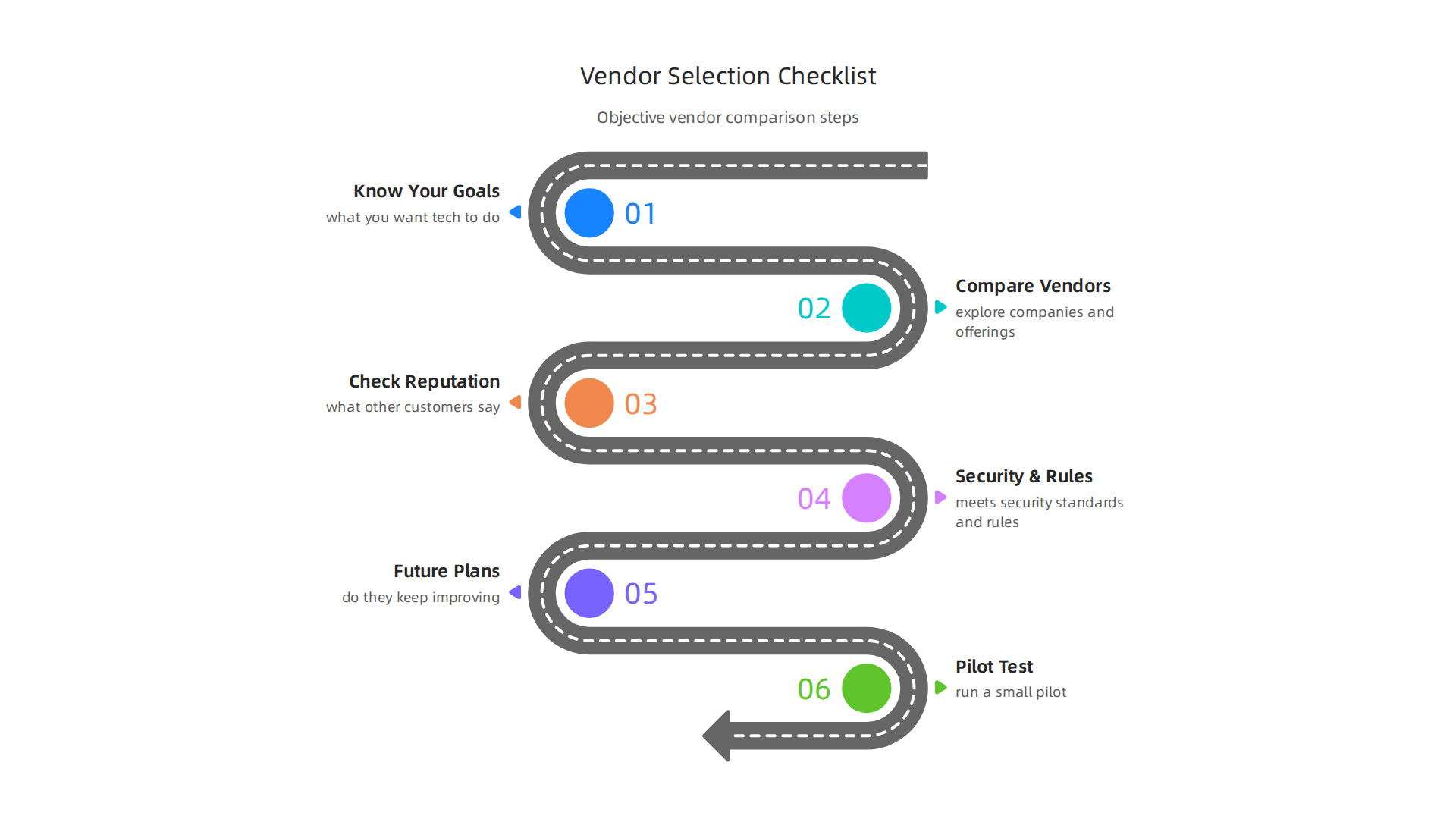
- Know Your Goals: Before you even look at tools, write down exactly what you want the behavioral tech to do for you. Do you want to increase sales, reduce employee turnover with tools like eightfold AI, or improve customer satisfaction?
- Look at Many Options: Don’t just pick the first tool you see. Explore different companies and their offerings.
- Check Their Reputation: How long have they been around? What do other customers say about them? Reading reviews and asking for references can help a lot.
- Security and Rules: Make sure the vendor meets high security standards and follows all important rules for your industry. This might include certifications like SOC 2 or ISO 27001 Vendor Evaluation Criteria Checklist for Procurement Teams.
- Future Plans: Ask about their future plans for the tool. Do they keep making it better? You want a partner that will grow with you.
- Try It Out: If possible, do a small test or "pilot" project with the tool. This lets you see how it works in your own company before you commit fully.
Picking the right behavioral tech can feel like a big decision, but with a clear plan, you can find the best fit for your business. For more help on finding great tools, you might want to read our guide on how to choose AI for business tools that deliver real results in 2026.
Stay informed about the fast-changing world of AI and behavioral tech.
Get clear daily AI updates from The AI Newsletter Worth Reading.
Once you have picked the best behavioral tech tool for your business, the next big step is putting it to work. This means making sure it connects smoothly with all your other systems. Think of it like building a new road in a busy city: you need to make sure it links up well with existing roads and that traffic flows easily.
How Behavioral Tech Fits Into Your Systems
There are different ways to connect behavioral tech with your business operations. These are often called "integration patterns."
- In-app SDKs: If you have a mobile app or a website, an SDK (Software Development Kit) is a common way to add behavioral tech. It’s like a small toolkit you drop into your app. This toolkit helps gather information directly from how users interact with your app or site. The behavioral tech can then send back suggestions, like showing a special offer to a customer based on what they just clicked.
- Server-side Inference: Sometimes, the smart work of behavioral tech happens on your company’s own computer servers or in a special cloud service. This is called "server-side inference." Your systems send data to the behavioral tech, it processes the information and makes predictions (the "inference"), and then sends the results back. This approach is good for handling lots of data and making complex decisions. Designing these kinds of systems needs a good plan for how data moves, often called a data pipeline architecture, which helps to collect, move, and change data for analysis Data Pipeline Architecture: Key Patterns and Best Practices.
- Edge vs. Cloud Computing: Where the behavioral tech does its thinking matters.
- Cloud computing means the smart programs run on powerful computers far away, like Google’s or Amazon’s servers. This is flexible and can handle huge amounts of data.
- Edge computing means the smart programs run closer to where the data is collected, like on a smart device or a local server. This can be faster for instant decisions, like for a security camera using AI to spot something unusual right away.
- Orchestration Layers: These are like traffic cops for your data and different tech tools. An orchestration layer makes sure all your systems and the behavioral tech talk to each other correctly. It manages the "data flows" and ensures everything happens in the right order. This is especially important when you have many tools, like eightfold AI for HR or various online marketing platforms, all needing to share information.
Common Problems When Implementing Behavioral Tech
Even with a great plan, challenges can pop up when you put behavioral tech into action. Knowing about them helps you avoid them.
- Data Flow Hiccups: The biggest problem is often making sure data moves freely and correctly. If data doesn’t get to the behavioral tech tool, or if the results don’t get back to your team, the whole system breaks down. This can delay small test projects, known as pilots, or stop the tool from being used widely. Good planning for how data flows is key to avoid this.
- Not Having Clear Goals: If your team isn’t sure what the behavioral tech is supposed to achieve, it’s hard to make it work right. Goals like "increase customer engagement by 15%" are much better than "just use some AI."
- People Problems: Sometimes, the issue isn’t the tech itself, but getting everyone in the company to understand and use it. People might not trust the AI or might not want to change how they work. Getting everyone on board from the start is very important. To ensure your business leaders are ready for new technologies, consider reading about Qualcomms 2026 Innovations Reshape Business for Future Leaders.
Successfully using behavioral tech means thinking about how it fits into your daily work, not just what it can do. It’s about designing a system where data can move easily and everyone understands their part.
After putting behavioral tech into action, the next big question is: how do we know it is actually helping? This is where measuring its impact comes in. You need to look at certain numbers and run tests to make sure your new tools are truly making a difference and giving you good value for your money.
Which Numbers to Watch (KPIs)
To see if your behavioral tech is working, you need to track key performance indicators, or KPIs. These are like scorecards that tell you how well your business is doing in certain areas. For behavioral tech, some important KPIs include:
- Lift Metrics: This shows how much better things are compared to before you used the behavioral tech. For example, if sales went up by 10% because of personalized offers, that 10% is your "lift." Other lifts could be more people clicking on emails or spending more time on your website.
- Behavior-Based Retention: This KPI looks at whether customers stick around longer because of the behavioral tech. Are they buying more often? Are they staying subscribed to your service? Behavioral tech often aims to make customers happier and more loyal, so seeing them stay is a big win.
- Cost-to-Serve: Sometimes, behavioral tech can help you save money. For example, if it automates responses to common customer questions, your support team spends less time on those tasks. This lowers your "cost-to-serve" each customer, which means more profit for your business.
To track these numbers well, you need good systems to collect and process data. Designing how your data moves, from where it’s gathered to where it’s analyzed, is called Data Pipeline Architecture. Having a smart setup helps you instrument these KPIs effectively.
Running Tests to See What Works
Just like a scientist, you need to run tests to be sure that any good changes you see are actually from the behavioral tech and not something else.
- Designing Pilots: A "pilot" is a small test run. You might try the new behavioral tech with a small group of customers or in just one part of your business first. This helps you see if it works as expected before rolling it out to everyone. It also helps you spot any problems early.
- A/B Tests: This is a very common way to test. You show two different versions of something to similar groups of people. For example, one group sees the regular website (Group A), and another group sees a version with behavioral tech features (Group B). Then, you compare how Group A and Group B act. If Group B buys more or stays longer, you know the behavioral tech is making an incremental value.
By carefully planning these tests, you can truly understand if your behavioral tech is delivering results. It helps prove that your investment is worthwhile. Tools like HubSpot AI streamlines your business operations can help track these results, especially for online marketing platforms and managing customer contacts.
Staying on top of these trends and understanding the best ways to measure AI’s impact can be tricky in 2026. For clear daily AI updates, consider subscribing to The AI Newsletter Worth Reading.
The last section talked about measuring if behavioral tech is working. Now, let’s talk about how to use these tools in a fair and safe way. This means thinking about ethics, privacy, and following the rules.

Key Privacy and Compliance Questions
Using behavioral tech can be very helpful for businesses, especially for online marketing platforms or managing customer contacts. But it also means you are dealing with people’s personal information. This brings up big questions about fairness and privacy.
First, transparency is key. People need to know when and how their data is being used. Businesses should be clear about what kind of information they collect and why. It’s like telling someone you’re taking their picture and why you need it.
Next is consent. This means getting a clear "yes" from people before you use their data to understand or change their behavior. In 2026, new rules are making this even more important. For example, some laws now require a very clear Online Privacy Act of 2026 to Provide Personal Information … before systems try to influence behavior or filter content. Simply being "aware" is not enough; businesses need actual permission to make predictions about people’s behavior New US State Privacy Laws in 2026: What Rights Do You Have Now?. Regulators are closely watching how companies ask for consent, looking for any tricky ways to get a "yes"
Privacy Laws 2026: Global Changes, Enforcement & ….
Then there’s fairness. Behavioral tech should not lead to unfair treatment or bias. For example, if you use AI to help with hiring, like with tools similar to Eightfold AI, you need to make sure it treats all candidates fairly and does not accidentally favor one group over another. This is an important risk to understand, as covered in a guide to Hidden AI Risks, Opportunities, and Management in 2026.
Finally, cross-border data flows are a big deal. This refers to sending personal data from one country to another. In 2026, governments are putting new rules in place to control how "sensitive personal data" from the U.S. can be sent to certain countries Data Privacy, Cybersecurity, AI developments shaping 2026. This means businesses need to be careful about where their data goes and if those places have strong enough privacy laws.
How to Operationalize Ethics
It’s not enough to just know about these rules; businesses need to put them into practice every day. This is called "operationalizing ethics."
- Governance: This means setting up clear rules and policies within your company for how behavioral tech should be used. Who is in charge of making sure data is handled correctly? What steps need to be taken before a new behavioral system goes live? Many businesses are building strong privacy, cybersecurity, and AI programs to help with compliance Privacy and AI Heatmap for 2026: What Device & Drug ….
- Documentation: Keep good records of everything. This includes how you got consent, how your AI systems make decisions, and what steps you take to protect data. Good documentation helps show that you are following the rules and thinking about ethics.
- Vendor Obligations: When you use tools or services from other companies for your behavioral tech, you need to make sure they also follow ethical and privacy rules. For instance, if you’re using a third-party platform for your online marketing or to manage hubspot marketing contacts, ensure they meet your standards. You should have clear agreements with these vendors about data protection. Ethical use of AI is also important for students, like knowing how to Use AI-Powered Homework Help Smartly and Ethically.
By putting these practices in place, businesses can use behavioral tech in a way that helps customers and keeps their trust, while also staying on the right side of the law in 2026.
Summary
This guide explains why behavioral technology matters in 2026 and how businesses can use it to understand and influence user behavior. It defines core concepts—behavioral signals, intervention loops, personalization engines—and contrasts behavioral tech with analytics and predictive AI. The article maps the market (platforms, niche vendors, consultancies), shows high-impact use cases like personalization, fraud and health risk detection, and behavior change, and gives practical vendor-selection criteria and a simple checklist. It also covers integration patterns (SDKs, server-side inference, edge vs cloud), common implementation challenges, and how to run pilots and A/B tests to prove value. Finally, it outlines the KPIs to track and the privacy, consent and fairness practices needed to deploy behavioral tech ethically and compliantly. After reading, leaders will know how to evaluate, test, measure, and govern behavioral tech so it delivers real business and user benefits.