Tag: predictive analytics

  • AI Inbound Marketing A Practical Framework for Better Personas Content and ROI

    AI Inbound Marketing A Practical Framework for Better Personas Content and ROI

    Introduction: Why AI Is No Longer Optional for Inbound Marketers

    Think about your inbound marketing strategy for a moment. Are you still writing blog posts by hand and guessing what your audience wants? If so, you are already behind.

    Inbound marketing has changed completely. The days of creating content and hoping it finds the right people are over. In 2026, the numbers tell a clear story. According to the latest research, a powerful 87% of marketers now use generative AI in at least one recurring workflow. That is up from just 51% two years ago. In other words, most of your competitors are already using AI to create content, personalize emails, and understand their audience better. They are not guessing anymore. They are using data.

    Here is the real truth. Marketers who ignore AI risk losing more than just time. They risk losing customers. Teams that use AI report higher revenue growth and better conversion rates. A recent survey found that 77% of marketing teams now use AI tools for at least one core function, and these teams see real results. Personalization engines powered by AI deliver strong returns on investment. If you want your inbound marketing to work in 2026, AI needs to be part of your plan.

    Marketers strategize to integrate AI into their inbound marketing plans.

    That is where this guide comes in. We are going to walk through a practical framework that helps you integrate AI into your inbound marketing planning and execution. No confusing jargon. Just real steps you can take.

    If you want to stay ahead of the curve, start by getting clear daily updates on what actually works. Check out The AI Newsletter Worth Reading to keep your finger on the pulse of AI trends that matter for marketers.

    But first, let us understand why traditional inbound marketing needs a serious upgrade in 2026.

    1. The 2026 Inbound Marketing Landscape: Data, AI, and the New Rules

    Let us start with the biggest change. Inbound marketing used to be about picking the right keywords and writing blog posts that ranked in Google. That worked for a while. But in 2026, that playbook is outdated.

    Here is the thing. AI has completely shifted how inbound marketing works.
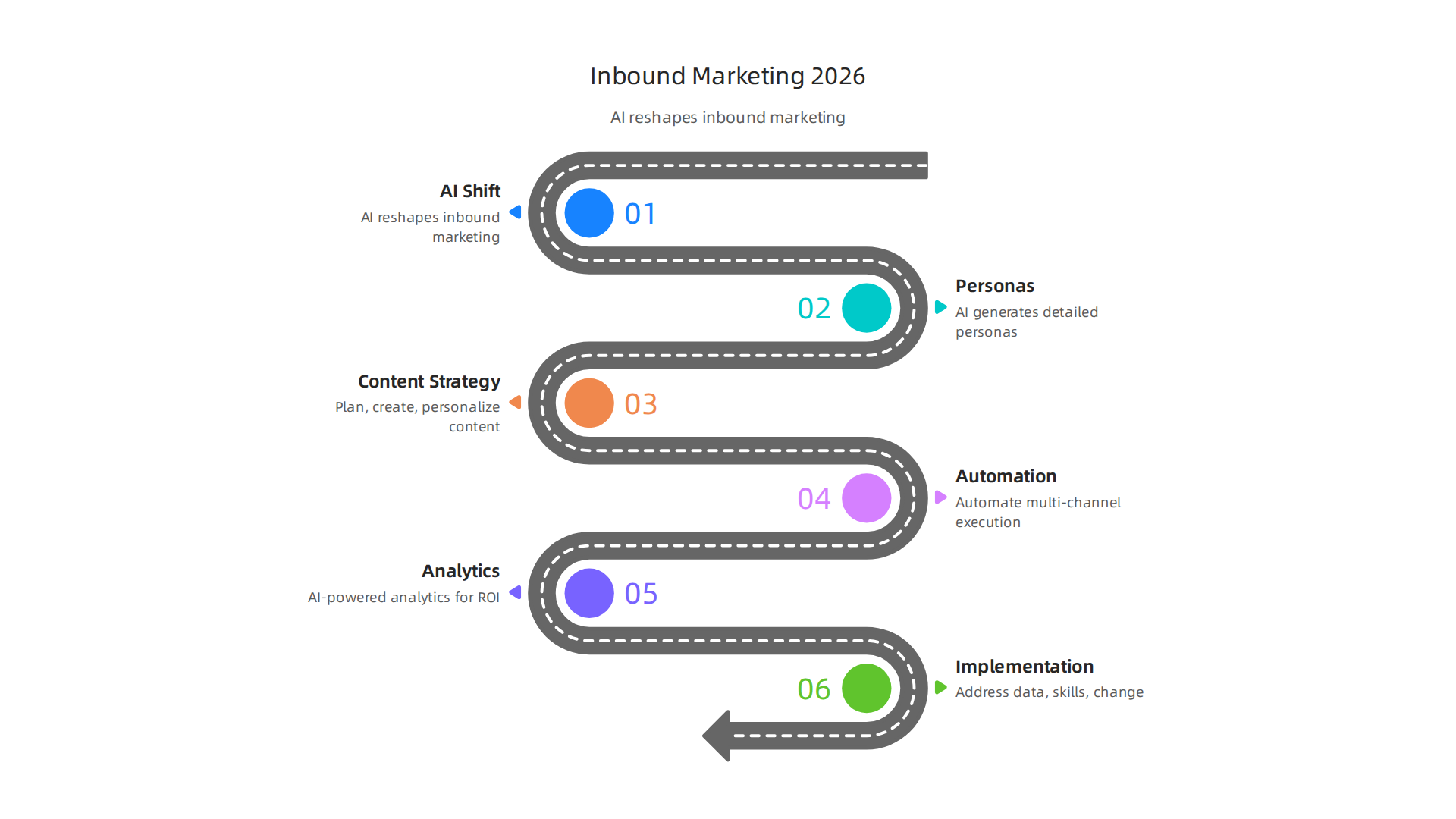
    Understand how AI is reshaping inbound marketing strategies and execution in 2026.

    Instead of manually guessing what your audience wants, AI now gives you predictive audience insights. It looks at behavior patterns, past purchases, and real-time signals to tell you exactly what to create and who to target. This is not future talk. It is happening now. According to the latest AI adoption data, 71% of businesses that use AI in marketing and sales report actual revenue gains. That is a big number. It means AI is not just a cool tool. It is directly helping companies bring in more money.

    The old way of doing inbound marketing meant writing content by hand, optimizing it for one search engine, and hoping for the best. Today, AI helps you build a complete social media marketing strategy at the same time. It can draft posts, suggest the best times to publish, and even adjust your messaging for different platforms. You get to act like a marketing consultant with a whole team of assistants, even if you are working alone.

    Generative AI has also made content creation possible at a much larger scale. You can now produce blog articles, email sequences, and ad copy faster than ever before. But here is the catch. You still need human oversight. AI can write a first draft in seconds, but it cannot capture your brand voice or check for accuracy on its own. Tools like YesChat AI help marketers generate content quickly, but human review ensures the message stays on brand and builds trust.
    YesChat AI assists marketers in rapidly generating content for various needs.

    Now, none of this works without good data. The foundation of effective AI-driven inbound marketing is data quality and first-party data. That means collecting information directly from your audience through forms, surveys, and website behavior. When your data is clean and accurate, AI tools can give you better predictions and personalization. If your data is messy, AI will only make the mess bigger. That is why investing in your data strategy is the first step before adding any new AI tool to your workflow.

    To get the most out of your AI tools, you need to understand how to measure results. A good place to start is learning how to get real ROI from AI marketing cloud solutions, which can help you track what is actually working.

    In short, the rules of inbound marketing have changed. The winners in 2026 are the marketers who combine AI’s speed and smarts with human creativity and clean data.

    2. Supercharging Buyer Personas: AI for Deep Audience Understanding

    You probably already have buyer personas. Maybe you created them last year. Or the year before. But here is the truth. Most of those personas are already out of date. In fact, 40 to 60 percent of buyer personas get abandoned within six months. That is a huge waste of time and effort. The old way of building a persona once and hoping it lasts just does not work anymore. People change. Markets change. What your customers needed six months ago is not what they need today.

    That is where AI changes everything. Instead of building a static persona and forgetting about it, AI helps you create dynamic buyer personas that update in real time. These personas are not based on guesses. They are built from actual data. Social media conversations, survey responses, CRM notes, website behavior. AI pulls it all together and finds patterns a human alone would miss.

    For example, tools like Delve AI can take your raw research data and generate detailed personas in minutes.
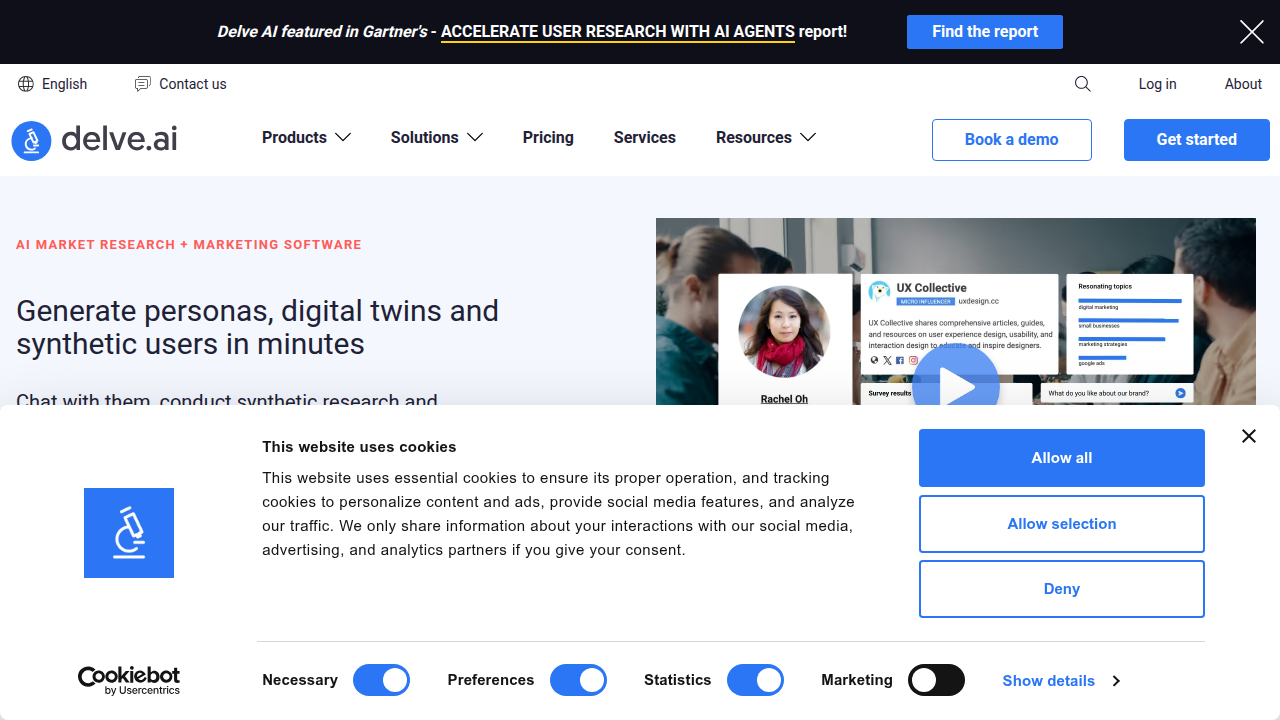
    Delve AI's platform for generating detailed buyer personas from research data.

    You get demographics, goals, pain points, and communication preferences. But the real power is in how AI keeps those personas current. Social listening and sentiment analysis tools track what people are saying about your brand and your industry right now. If your audience suddenly shifts priorities, your persona shifts too.

    Predictive modeling takes this even further. It analyzes past buying behavior to identify which customer segments are most likely to convert. Instead of guessing who to target with your next campaign, AI tells you. You can then tailor your messaging specifically for those high-value groups.

    Creating these AI-driven personas is easier than you think. Start by collecting your best data:
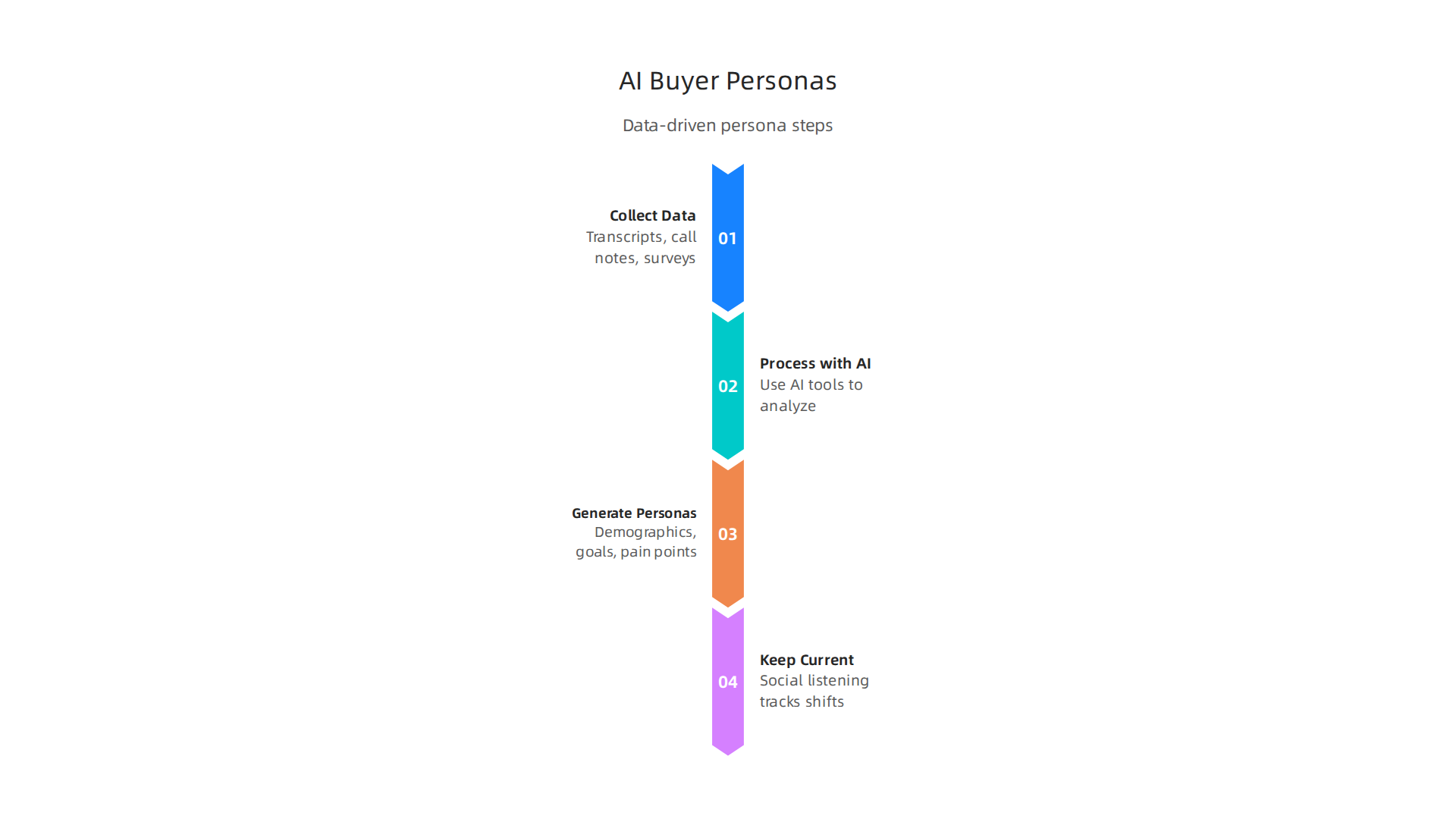
    A simple process for building dynamic, data-backed buyer personas using AI.

    interview transcripts, sales call notes, survey exports, and CRM data. Then use an AI tool to process it all. For example, how online market research surveys powered by AI deliver better insights can help you gather and analyze the raw material for your personas. The goal is not a perfect persona in six weeks. It is a usable one in sixty minutes that you revisit and refine regularly.

    When your inbound marketing strategy is built on deep, real-time audience understanding, every piece of content and every campaign hits harder.
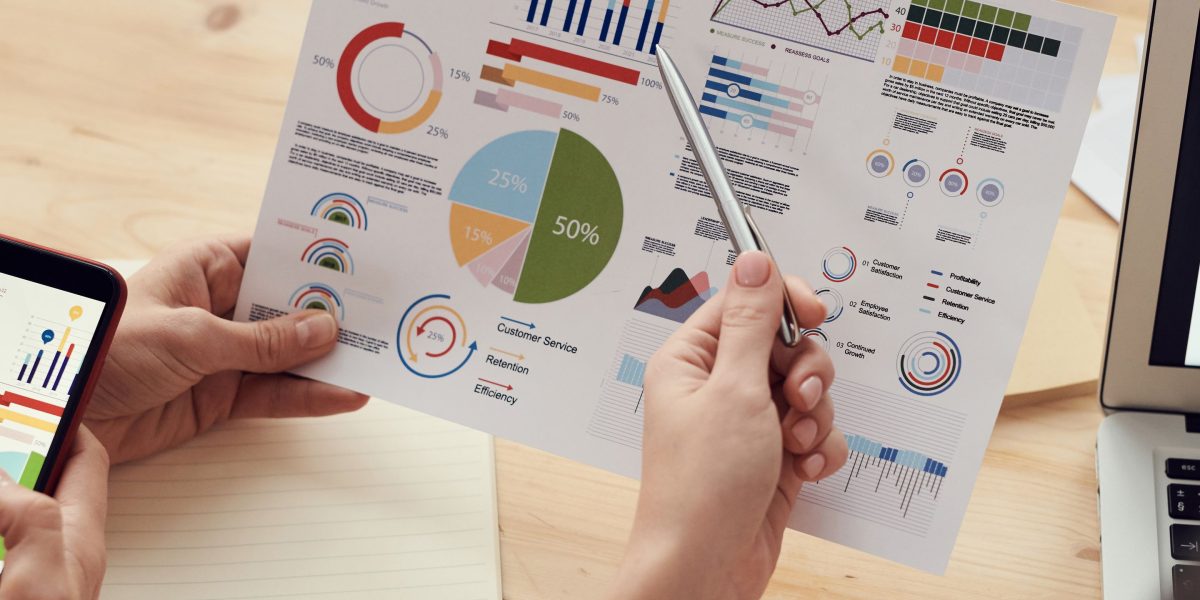
    A marketing team collaborates to gain deeper customer insights.

    You stop creating for imaginary people and start speaking directly to real ones.

    A person focused on writing, channeling creativity for targeted content.

    To stay on top of the latest AI tools and techniques for audience research, subscribe to The AI Newsletter Worth Reading. It delivers clear daily AI updates from The Deep View Newsletter straight to your inbox.

    3. AI-Driven Content Strategy: From Planning to Personalization

    Once you understand your audience deeply, the next step is creating content that actually speaks to them. This is where AI transforms your inbound marketing from guesswork into a precision process. Instead of writing content and hoping it lands, you can plan, create, and personalize with confidence.

    AI helps you find content gaps you would never spot on your own. It scans what your competitors are writing, what questions your audience is asking, and what topics get the most engagement. Tools like the content gap analysis tools reviewed on SlateHQ can show you exactly where your site is missing important information. You can then fill those gaps with content that connects with your ideal audience.

    Generative AI tools make the actual writing faster too. But here is the key. You do not want generic robot content. You want content that keeps your brand voice and feels real to your readers. Modern AI writing tools let you set your tone, style, and preferred vocabulary upfront. They can draft blog posts, social media captions, email sequences, and landing pages in minutes. You still review and edit, but the heavy lifting is done.

    Personalization takes this even further. Imagine a website that changes its homepage based on who is visiting. A returning customer sees different offers than a first-time visitor. A person in the research phase sees educational content, while someone ready to buy sees pricing and case studies. That is what AI personalization engines do. They tailor every piece of content in real time based on user behavior, past interactions, and even their current stage in the buying journey.

    The best part? All of this works together to strengthen your inbound marketing results. When your content strategy is driven by real audience data, every blog post, video, and social update has a better chance of being seen, read, and acted upon.

    To get the most out of AI for your own planning, start by using a tool that analyzes your current content against competitors.
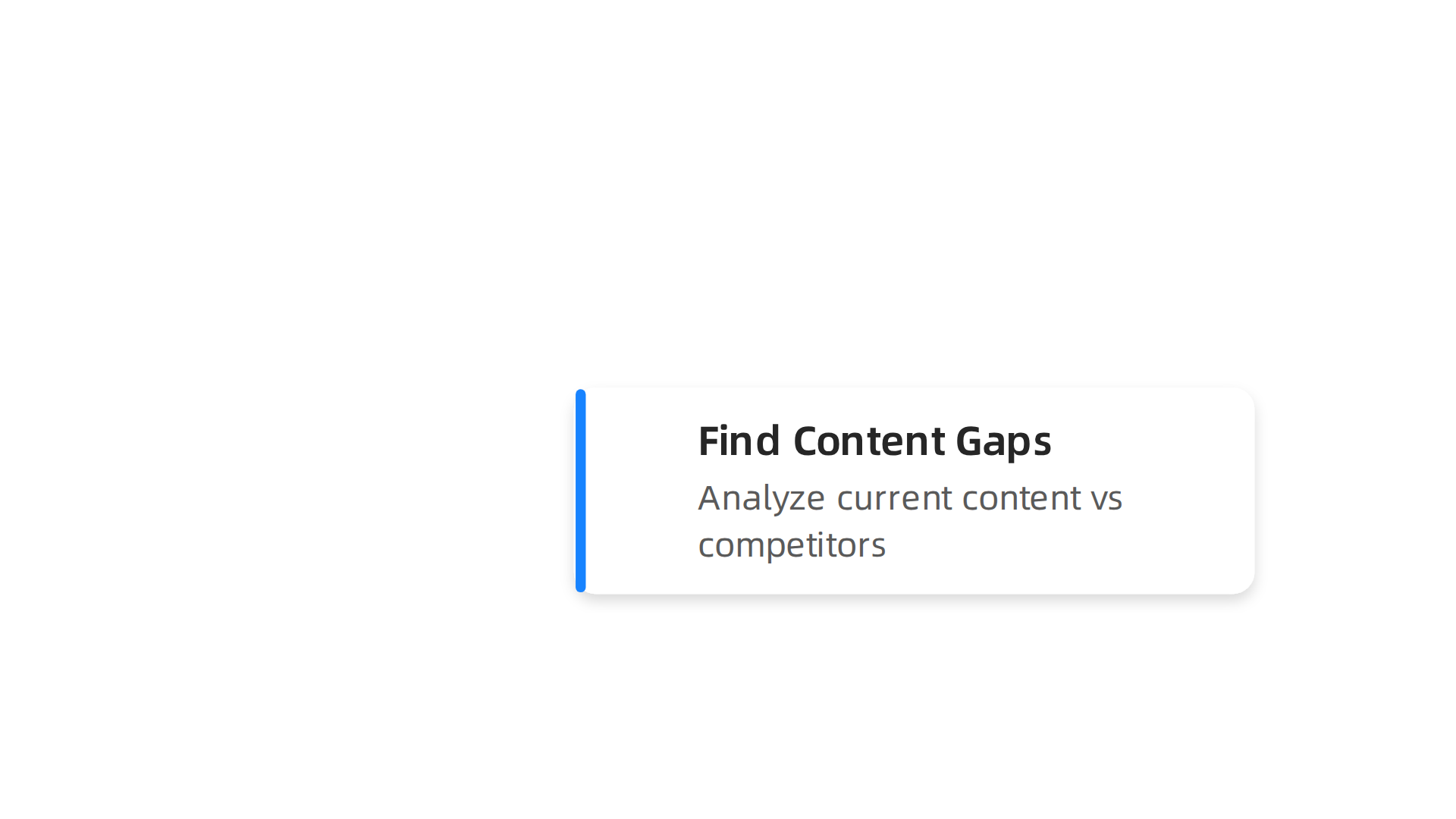
    A framework for planning, creating, and personalizing content with AI.

    Your goal is to identify topics your audience cares about that you have not covered yet. Then use a generative AI tool to create content that fills those gaps, while keeping your brand voice consistent. Finally, set up a personalization engine on your site so that each visitor gets content that feels like it was written just for them.

    As you build out this system, you will want a process for choosing the right tools. Our guide on how to choose AI for business tools outlines what to look for when building your content tech stack.

    When your inbound marketing strategy includes AI-driven planning, creation, and personalization, you stop shouting into the void. You start having real conversations with the people who matter most to your business.

    4. Automating the Inbound Flywheel: AI for Multi-Channel Execution

    Planning and personalizing content is only half the battle. You also need to get that content in front of the right people at the right time across every channel they use. AI makes this possible without your team working overtime.

    An inbound marketing flywheel works best when every channel pulls in the same direction. Your email campaigns, social media posts, and paid ads should all tell the same story. AI tools can orchestrate this across platforms. They take your content calendar and automatically schedule posts for each channel. They adjust the message format for each platform while keeping your brand voice consistent.

    Before you automate distribution, you need content that fills gaps your audience actually cares about. That is where AI-driven analysis helps you find opportunities other brands miss. Tools covered in the best content gap analysis tools for 2026 on Single Grain show you exactly what topics will connect with your audience. Once you have that content, AI automation spins it across your channels seamlessly.

    Smart scheduling is one thing. But AI also learns when your audience is most likely to engage. It studies past open rates, click patterns, and conversion times. Then it picks the best send times for each segment. This is much better than guessing or using a one-size-fits-all schedule.

    A/B testing becomes automatic too. Instead of running tests manually and waiting weeks for results, AI runs multiple variations at once. It compares subject lines, images, calls to action, and even send times. When it finds a winner, it shifts more traffic to that version in real time. Your campaigns keep getting better without extra work.

    Maybe the biggest shift is how AI nurtures leads around the clock. Chatbots and conversational AI tools handle the first contact with website visitors. They answer questions, qualify leads, and pass hot prospects to your sales team. They never sleep. Your inbound marketing engine never stops running.

    All of this works together to keep your flywheel spinning. Content gets created, personalized, and delivered across channels automatically. Leads get nurtured even when your team is offline. And every interaction helps the AI learn more about what works.

    If you are building out this kind of system, you might want to check out how HubSpot AI streamlines your business operations across marketing, sales, and service.
    HubSpot's integrated AI tools for streamlining marketing, sales, and service operations.

    It covers how one platform can unify your multi-channel inbound efforts.

    You do not need a huge budget. Even smaller AI tools can automate scheduling, run A/B tests, and power a basic chatbot. The key is to start with one channel, get it running smoothly, and then expand.

    To stay current with the latest AI tools that power inbound marketing, get clear daily AI updates from The Deep View Newsletter.

    By letting AI handle the execution, your team can focus on strategy, creativity, and relationship building. That is where the real inbound marketing magic happens.

    5. Measuring What Matters: AI-Powered Analytics for Inbound ROI

    All that effort you put into automating your inbound flywheel means nothing if you can’t tell what’s actually working. Old school analytics often gives you a muddy picture. You might see that email brought in a sale, but what about the blog post, social media share, and ad that led the customer to your email in the first place?

    AI powered analytics changes that completely. It looks at every single touchpoint a customer touches before they buy. Instead of guessing or using simple rules, machine learning models assign credit where it really belongs.

    Let’s talk about attribution. Most marketers still rely on last click or first click models. Those are simple but they miss the bigger story. A customer might see your Instagram ad, read three blog posts, click a retargeting ad, and then finally convert from an email. Last click gives all credit to email. First click gives all credit to Instagram. Neither tells you the truth about what your whole marketing mix actually did.

    AI attribution models solve this by analyzing actual customer paths. They use algorithms like Markov chains and Shapley value models to calculate each channel’s real contribution to conversions. This is explained well in an AI attribution modeling guide from Digital Applied. It shows how these models go beyond simple rules to give you a clear picture of what drives inbound marketing success.

    Predictive analytics takes this even further. AI can forecast which leads are most likely to convert based on past behavior. It scores leads automatically so your sales team knows who to call first. It can also predict customer lifetime value. That means you know which customers are worth spending more to acquire. You stop wasting money on channels that bring in low value leads and double down on the ones that bring in your best customers.

    Real time dashboards let you make changes fast. Instead of waiting for monthly reports, you see performance as it happens. If one channel starts to drop off, you can shift budget immediately. If a new social media post is driving huge engagement, you can boost it right away. AI powered dashboards learn what metrics matter most for your specific business and highlight them.

    This is a huge shift for anyone using inbound marketing. You no longer have to guess which channels really deserve your budget. The data shows you. And when you know exactly where your ROI comes from, you can pour more fuel on what works and cut what doesn’t.

    For more on how to build a measurement system that actually delivers returns, check out this guide on maximizing AI marketing cloud ROI. It walks through setting up the right analytics stack for your team.

    When you combine AI automation with AI analytics, your inbound marketing becomes a self improving system. It creates content, delivers it, measures results, and learns from those results to do better next time.

    A marketing team celebrates successful results driven by AI-powered strategies.

    That is the real power of modern inbound.

    6. Overcoming AI Implementation Hurdles: Data, Skills, and Change Management

    Getting your inbound marketing to run on AI sounds great on paper. But in practice, most teams hit real roadblocks. The data isn’t clean. People don’t know how to use the tools. And some team members are not excited about changing their workflow.

    The truth is, the technology itself is rarely the problem. The problem is the foundation underneath it. Let’s look at the biggest hurdles and how to beat them.
    Common challenges in adopting AI for marketing and how to address them.

    Fix your data first

    AI systems only work with good data. If your data is scattered across different platforms, full of duplicates, or just plain wrong, your AI will produce bad results. That is not a technology problem. It is a data problem.

    According to the 2026 marketing data report from Supermetrics, 52% of marketers do not own their data strategy. And 40% struggle to prove ROI across channels. The report says you cannot outrun a bad data foundation. Clean, connected data is the base for everything else.

    Start by mapping where your data lives. Connect your CRM, email platform, analytics tools, and ad accounts into one system. Clean up old records. Set rules for how data is entered. When your data is solid, your AI will actually help you.

    Build skills across your team

    Another big barrier is lack of AI know-how. Only 6% of marketers have fully embedded AI into their workflows according to the same report. That is a huge gap.

    Your team needs training, not just tool access. They need to understand what AI can and cannot do. They need to practice writing good prompts, checking outputs for accuracy, and knowing when to trust the results.

    The marketing AI adoption challenges report from Exaalgia highlights that poor training and low AI literacy are among the top reasons projects fail. Teams get access to fancy tools but have no idea how to use them in their daily work.

    Set aside time for learning. Start with one or two tools. Create shared prompt templates and review checklists. Let people experiment in low risk areas first. When people see how AI saves them time, resistance drops fast.

    Roll out in phases with clear goals

    Trying to implement AI everywhere at once is a recipe for chaos. You need a phased rollout with clear KPIs.

    Pick one process to improve first. Maybe it is email personalization or social media scheduling. Set a clear metric for success like open rates or time saved. Run a pilot with a small team. Measure the results. Then expand.

    The key is to anchor every AI tool to a specific business challenge. Do not adopt AI just because everyone else is doing it. Adopt it because it solves a real problem in your inbound marketing workflow.

    Organizational resistance is real. According to a LinkedIn article on overcoming barriers to AI adoption, some team members worry AI will replace their creativity or even their job. The solution is to normalize exploration. Show them AI is a tool to amplify their work, not replace it.

    Embed AI conversations into your regular planning meetings. Let people co develop guidelines. When the team owns the process, adoption happens naturally.

    Stay ahead of the curve

    AI is changing fast. To keep up, you need a steady stream of clear, practical updates. That is where The AI Newsletter Worth Reading comes in. It delivers daily insights you can actually use, so you never fall behind on the tools that drive your inbound marketing.

    If you want a deeper look at how to choose the right tools for your team, check out this guide on picking the best AI for business use. It walks through the evaluation criteria that actually matter.

    Summary

    This article explains why integrating AI into inbound marketing is no longer optional and lays out a practical framework for doing it well. It covers the 2026 landscape where predictive insights, generative content, and personalization engines have replaced guesswork, and it shows how clean first‑party data is the foundation of any successful AI program. You’ll learn how AI creates dynamic buyer personas, finds content gaps, speeds content production while preserving brand voice, and automates multi‑channel execution including smart scheduling and chatbots. The guide also explains AI‑powered measurement—attribution, predictive scoring, and real‑time dashboards—so you can see real ROI. Finally, it walks through common implementation hurdles (data, skills, change management) and recommends phased pilots, team training, and clear KPIs so you can adopt AI without chaos. Read it to get a step‑by‑step approach that combines AI’s speed with human oversight to improve conversions and revenue.


  • How to Get Real ROI from AI Marketing Cloud in 2026

    How to Get Real ROI from AI Marketing Cloud in 2026

    Introduction

    Feeling lost in the flood of marketing cloud options in 2026? You are not alone.

    A person feeling overwhelmed by complex choices, reflecting the challenge of selecting marketing cloud options.

    The marketing cloud platform market is growing fast, with estimates showing it could hit $32.88 billion by 2033 Grand View Research. At the same time, AI is reshaping the game entirely. The AI-in-marketing market is already around $47 billion in 2026 Soku.ai. And major players like Salesforce are rebuilding their marketing cloud for the age of AI SalesforceBen.

    SalesforceBen offers insights and news on Salesforce products, including their AI-powered marketing cloud.

    But here is the thing. Most marketers struggle to cut through all the hype. You hear buzzwords like “agentic” and “predictive intelligence,” but what actually works? A recent survey found that 63% of marketers are already using generative AI Salesforce Marketing Statistics. Yet many still feel unsure about which platform will deliver real results for their business.

    That is where this guide comes in. We will give you a simple, structured framework to evaluate, implement, and get the most out of an AI-powered marketing cloud. No fluff. Just practical steps that help you make smart choices.

    Staying on top of these changes is tough. That is why we recommend the The Deep View Newsletter for clear daily AI updates that keep you informed without the noise. And if you are still figuring out where to find reliable tech news, check out our list of 10 top AI websites professionals trust for real insights.

    Let us start by looking at what a marketing cloud really is and why it matters in 2026.

    What Is a Marketing Cloud? The AI-Enhanced Foundation

    Let me paint a picture. You wake up, check your email campaign stats in one tool, jump to social media scheduling in another, then open your ad manager for PPC data, and finally pull up Google Analytics for web traffic. By the time you have connected all the dots, it is lunchtime.

    That is the old way. A marketing cloud changes everything by pulling email, social, ads, analytics, customer data, and more into a single unified platform. Instead of jumping between dashboards, you see the full picture in one place.

    What makes a marketing cloud different in 2026?

    The global marketing cloud platform market was worth $15.86 billion in 2025 and is expected to reach $32.88 billion by 2033 Grand View Research. At the same time, the AI in marketing market sits around $47 billion in 2026 and keeps climbing Soku.ai. Those numbers tell you one thing: marketing clouds are not just getting bigger. They are getting smarter.

    Today, a modern marketing cloud uses AI to orchestrate customer journeys across every channel. It learns from behavior, predicts what someone will do next, and personalizes messages at scale. Major players like Salesforce are rebuilding their marketing cloud around agentic AI, meaning the platform can act on its own to trigger the right message at the perfect moment SalesforceBen. That is a huge leap from the old batch-and-blast email days.

    How this helps small businesses and teams

    If you run a small business, a good marketing cloud acts as your digital marketing platform for small businesses. It handles everything from email nurture sequences to ad retargeting, all without needing a room full of specialists. And if you are involved in affiliate programs, many platforms now include affiliate tracking and management right inside the cloud. So you can run what is affiliate marketing campaigns alongside your other channels without extra software.

    But here is the challenge: how do you pick the right one? You need the right tech choice tools to compare features, pricing, and AI capabilities. That is where having a trusted source for AI updates really helps. For a no-nonsense daily digest on all the tech tools shaping marketing, we recommend the The Deep View Newsletter.

    The Deep View Newsletter provides daily AI updates for marketing professionals.

    It cuts through the noise and gives you practical insights you can use.

    And if you want to see how the biggest players compare, check out our roundup of 10 top AI websites professionals trust for real news and tools to sharpen your research.

    Now that you understand the AI-enhanced foundation of a marketing cloud, let us walk through the exact criteria you should use to evaluate and choose the best platform for your business.

    How AI Is Reshaping Marketing Cloud Capabilities in 2026

    So now you know what a marketing cloud is and why it matters. But the old marketing cloud from a few years ago? It is almost nothing like what you see today. AI has completely changed the game. In 2026, a modern marketing cloud is less of a tool you control and more of a smart system that works alongside you.

    A team collaborating, symbolizing the partnership between marketers and AI-powered systems.

    Predictive segmentation and real-time personalization

    One of the biggest upgrades is how AI handles customer data. Instead of manually building segments based on simple rules like "opened email last week," AI looks at thousands of data points. It predicts who is most likely to buy, who is about to churn, and what message will work best for each person. This is what Salesforce calls using AI to unify and analyze your data so you learn more about customer preferences Salesforce.

    Salesforce is a leading CRM provider, integrating AI into its marketing cloud solutions.

    That predictive power lets you send the right offer at the exact right moment, without guessing.

    Real-time personalization is another leap. As someone visits your site, the marketing cloud can adjust the next email, ad, or push notification based on what they just did. It is not batch processing anymore. It is instant. According to the Perficient team, Salesforce Marketing Cloud now uses AI tools to deliver real-time personalization and even autonomous agents that boost marketing ROI Perficient. That means less manual work and better results.

    Automated content generation and embedded AI

    AI also writes content now. Leading marketing clouds use natural language processing to generate subject lines, email body copy, social posts, and even ad headlines. You give it a few keywords and a tone, and the platform drafts multiple variations for you to test. Some platforms also include computer vision, so they can analyze images and suggest which visuals will perform best.

    These features are now built right into the core platform. For example, Salesforce Marketing Cloud includes tools like interactive email forms and data extensions, but the real magic in 2026 is how AI powers every step of the journey igmGuru. You do not need separate AI tools plugged in. It is already there.

    The big 2026 trend: agentic AI workflows

    Here is where things get really interesting. In 2026, the biggest shift is toward agentic AI. That means the marketing cloud does not just suggest actions. It takes them on its own. Campaigns can adjust themselves without you touching a thing. If a certain email subject line is underperforming, the AI swaps it for a better one. If a customer is stuck in a journey step, the system triggers a new path.

    Salesforce calls this Agentforce Marketing. The whole ecosystem is being rebuilt around this idea. As the SalesforceBen team explains, the platform follows an agentic path where AI acts independently to deliver the best experience SalesforceBen. Deloitte also notes that Salesforce’s 2026 evolution enhances core CRM with AI-driven automation and real-time data intelligence, creating unified agentic workflows Deloitte Digital. That is a huge time saver for small teams.

    If you want to stay on top of these rapid changes, getting a clear daily briefing helps. Many marketers turn to a newsletter that cuts through the hype and delivers practical AI updates. You can start with something like the The Deep View Newsletter to get actionable insights on AI tools and trends every morning.

    Now that you see how AI is reshaping marketing clouds, the next step is figuring out which platform fits your needs. We will walk through that next.

    Essential AI Features to Look for in a Marketing Cloud Platform

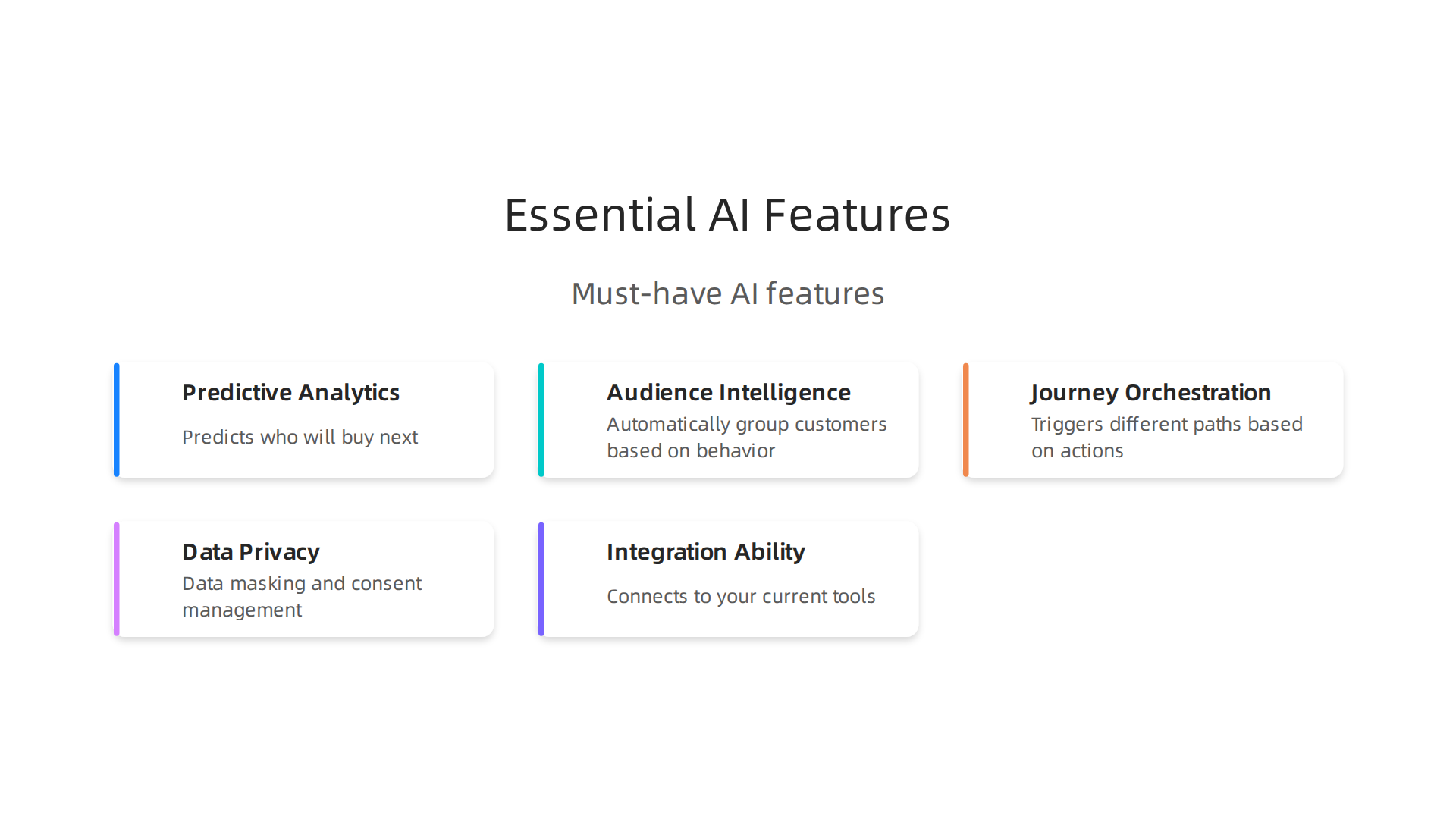
    So which platform is right for you? Not all marketing cloud platforms are built the same in 2026. Some are just fancy email senders. Others are smart systems that work like a co-pilot. Before you pick one, check for these three must-have features.

    Key AI capabilities that distinguish modern marketing cloud platforms in 2026.

    Predictive analytics, audience intelligence, and journey orchestration

    First, look for predictive analytics. The best platforms use AI to study your customer data and spot patterns you might miss. They predict who will buy next, who might leave, and what offer they need to see. This is what Salesforce calls using AI to unify and analyze your data so you learn more about customer preferences Salesforce. Without this, you are just guessing.

    Second, audience intelligence matters. The platform should automatically group your customers based on behavior, not just basic rules. It should tag people in real time as they browse, click, or ignore your messages.

    Third, journey orchestration. Do not settle for a tool that only builds simple email flows. You need a platform that triggers different paths based on what each person does. If someone stops engaging, the AI should switch to a new message or offer without you doing anything. That is where agentic AI truly shines. As the SalesforceBen team explains, the platform now follows an agentic path where AI acts independently to deliver the best experience SalesforceBen.

    Data privacy and compliance are non-negotiable

    In 2026, you cannot ignore privacy. Every marketing cloud you consider must include data masking and consent management features. That means the system automatically hides sensitive data and respects each customer’s opt-in choices. If a platform struggles with this, skip it. You do not want legal trouble down the road.

    Integration ability with your existing tech stack

    Finally, check how well the platform connects to your current tools. Does it work with your CRM, your ecommerce store, and your analytics software? A marketing cloud is only useful if it talks to everything else you use. If it requires a ton of custom coding to connect, that is a red flag. Choose a platform that plays nice with your stack.

    Comparing features across many tools can feel overwhelming. To help you stay informed and spot the best options, many professionals turn to reliable sources. For a great starting point, check out this list of 10 top AI websites professionals trust for real news and tools. It will point you to the right resources.

    And if you want a daily briefing that cuts through all the noise, the The Deep View Newsletter delivers practical AI updates every morning. It is a simple way to stay sharp while you shop for your next platform.

    Comparing Top Marketing Cloud Providers: AI Edition

    Now you know what to look for. But how do the big players actually compare in 2026? Here is a quick breakdown of the three main options and who they work best for.

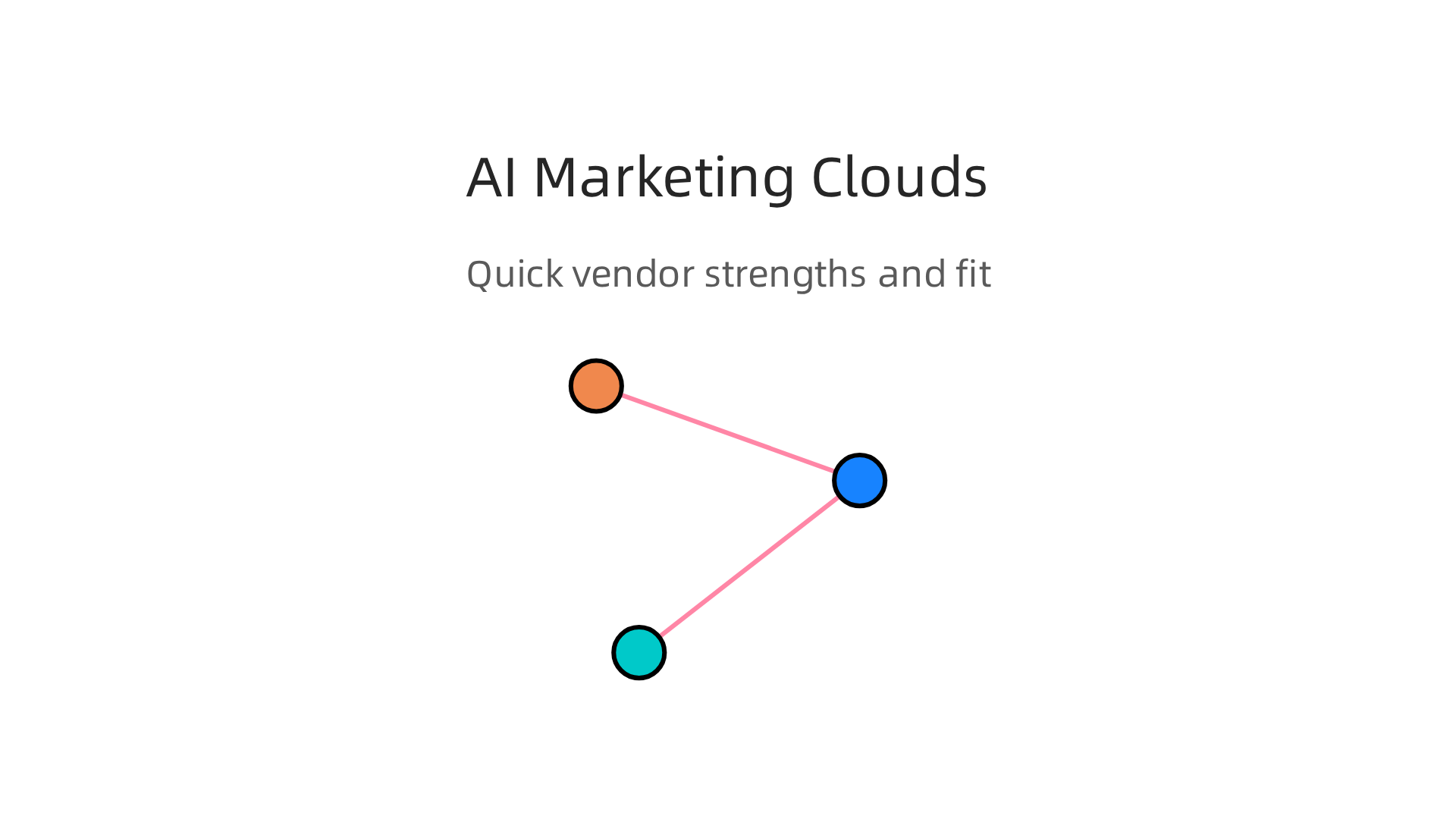
    A comparison of top marketing cloud providers, highlighting their AI strengths and ideal use cases.

    The quick comparison table

    Provider AI Strength Best For Pricing Range
    Salesforce Marketing Cloud Agentic journey orchestration, predictive scoring Large enterprises with complex funnels High, but scalable
    Adobe Experience Cloud Deep personalization across web, email, ads Brands that need consistent multi-channel experiences High, with enterprise licensing
    HubSpot Simple AI tools for small teams, low learning curve Small to mid-size businesses that want all-in-one Mid-range, free tier available

    Salesforce Marketing Cloud: The AI power player

    Salesforce continues to lead the enterprise space. Their agentic AI features mean the system can act on its own, adjusting journeys without waiting for your team. Predictive analytics, real-time segmentation, and deep CRM integration make it a strong choice if you already use Salesforce. But the cost is high, and you often need help from a certified partner. In fact, many businesses turn to top Salesforce Marketing Cloud partners for implementation and support Cyntexa. If you have the budget and the team, this is the most advanced option.

    Adobe Experience Cloud: Personalization at scale

    Adobe is the best fit if you care about delivering the right content across every touchpoint. Its AI engine analyzes customer behavior across email, web, social, and ads. Then it personalizes everything in real time. Adobe works well for companies that already use its other products like Adobe Analytics or Adobe Commerce. But be warned: setup is complex, and pricing is not transparent. Smaller businesses might find it too much.

    HubSpot: Simple and affordable

    HubSpot is the go-to for small to mid-size businesses. Its AI features are not as deep as Salesforce or Adobe, but they are much easier to use. You get predictive lead scoring, smart email sends, and basic journey automation right out of the box. HubSpot integrates with hundreds of tools, so you do not need a developer to connect everything. For a digital marketing platform for small businesses, it is often the smartest starting point. And if you later outgrow it, you can migrate to a bigger system.

    How to pick the right one for you

    Think about these three things:

    • Your team size: Small teams love HubSpot. Big teams need Salesforce or Adobe.
    • Your budget: HubSpot has a free tier and clear plans. The other two require a bigger investment.
    • Your existing tech: If you already use Salesforce CRM or Adobe products, stick with that family.

    The best marketing cloud is the one you can actually use. Do not buy a Ferrari if you only need a reliable sedan. And do not settle for a bicycle if you are trying to win a race.

    Still unsure which tool fits your use case? Many professionals start by exploring curated lists of tech choice tools to understand what others in their industry use. For example, this guide to top AI marketing tools in 2026 breaks down real pricing and honest limitations Marketing Mary.

    And for a visual walkthrough, you can watch a comparison of top marketing automation systems on YouTube YouTube.

    One more thing: do not forget to check how each platform handles privacy. Compliance features like data masking and consent management vary a lot between these providers. Make sure yours matches your local laws.

    The quickest way to stay ahead in this fast-changing space is to keep learning. If you want a daily dose of practical AI updates delivered each morning, the The Deep View Newsletter gives you fresh insights without the noise. It is one of the best ways to keep your tech choices sharp in 2026.

    Implementing AI in Your Marketing Cloud: A Step-by-Step Roadmap

    You picked your marketing cloud. Good. But here is the thing. Choosing the platform is only half the battle. Actually making AI work inside it is where most people get stuck. If you skip the setup steps, your fancy new tool will just sit there. Or worse, it will give you bad results.

    So let us walk through a simple roadmap that works in 2026.

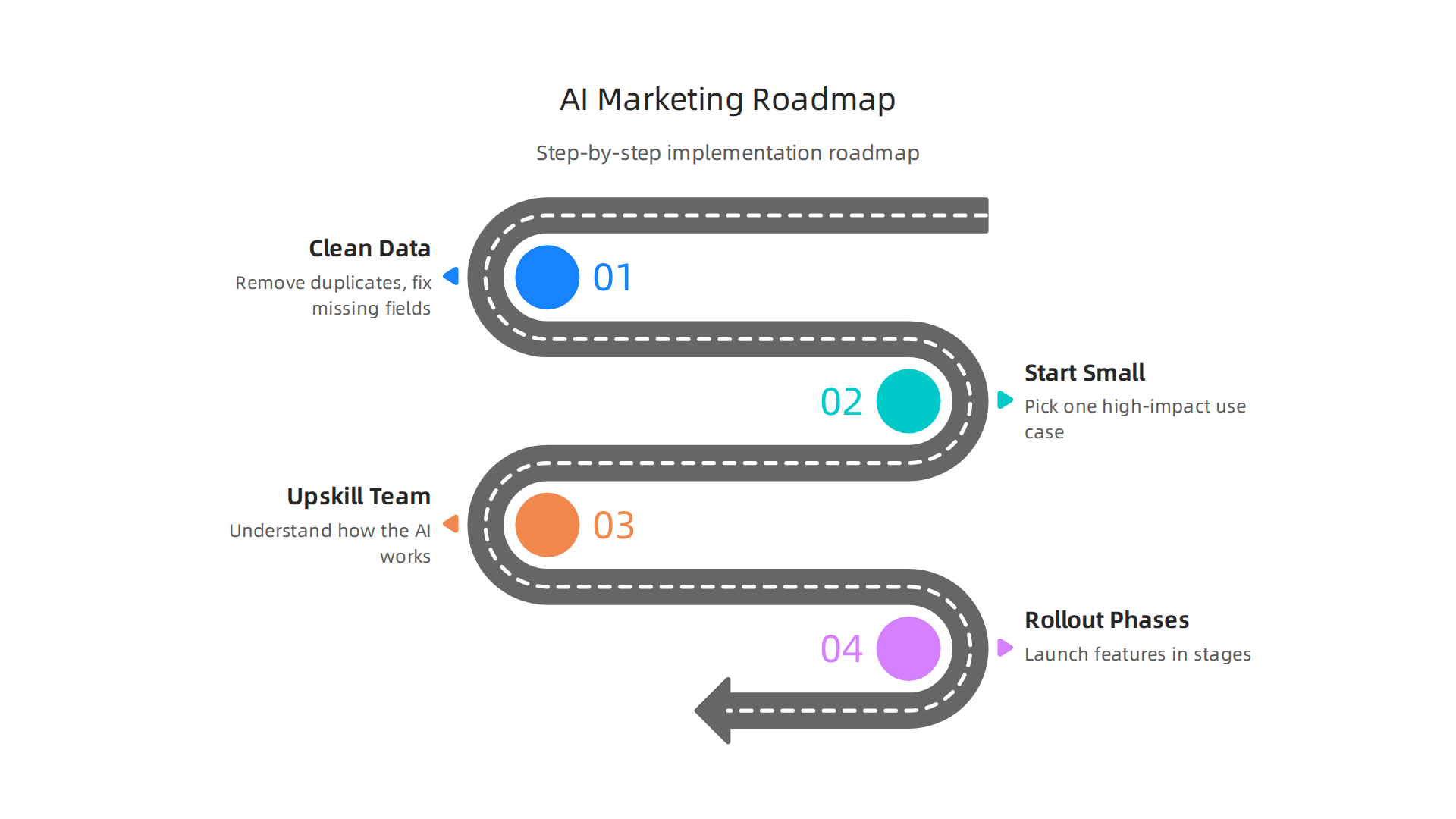
    A step-by-step roadmap for successfully implementing AI features in your marketing cloud platform.

    Follow these steps, and you will avoid the common traps that waste time and money.

    Step 1: Clean your data first

    AI is only as smart as the data you give it. Garbage in, garbage out. Before you turn on any AI feature, you need to clean your customer data. Remove duplicates. Fix missing fields. Standardize how you record names, emails, and purchase history. This is boring work, but it is the most important step. Many cloud providers like DigitalOcean emphasize data readiness as a foundation for AI success DigitalOcean. If your data is messy, your AI will make wrong predictions.

    Step 2: Start with one high-impact use case

    Do not try to automate everything at once. Pick one thing that will give you a quick win. Predictive lead scoring is a great start. It helps your sales team focus on the people most likely to buy. Your marketing cloud already has this feature built in. Turn it on for one audience segment. See how it performs. Then expand. The best AI marketing tools in 2026 all suggest starting small and scaling up The Smarketers. If you try to do too much too fast, you will overwhelm your team and your system.

    Step 3: Upskill your team

    Your people need to understand how the AI works and what it can do. Run training sessions. Show them real examples. Let them play in a sandbox environment. A common mistake is buying a powerful tool and assuming everyone will figure it out on their own. That never works. If you use Salesforce, many businesses hire certified partners early on to guide the team through the learning curve Cyntexa. But even without a partner, you can start with free courses and tutorials. The key is to build confidence before pushing new features live. For ongoing learning, our curated list of top AI websites professionals trust is a great starting point for your team.

    Step 4: Roll out in phases

    Launch your AI features in stages. For example, start with email personalization for one segment. Once that runs smoothly, add behavior-based triggers. Then add predictive scoring. Then add full journey automation. Each phase gives you a chance to fix issues without breaking everything. Over-customization is a real trap. Some teams try to configure every possible setting and end up with a system nobody can manage. Keep it simple at first. You can always add complexity later.

    Common pitfalls to avoid

    Change management matters. Your team might resist new AI tools if they feel threatened or confused. Explain how AI helps them work better, not replaces them. Also, watch out for over-customization. Stick to the core features before building custom integrations. And never skip the data cleanup. It will come back to haunt you.

    Keep learning as you go

    The AI landscape shifts fast. The tools you use today might look different next year. That is why staying informed matters. A daily newsletter like The Deep View gives you clear updates without the hype. It is a simple way to keep your skills sharp and your tech choices smart. If you want to stay ahead in 2026, make learning a habit The Deep View Newsletter.

    Implementation takes time. But if you follow this roadmap, you will get real results from your marketing cloud. And you will avoid the frustration that comes with rushing in.

    Measuring ROI of AI-Powered Marketing Cloud Investments

    So you followed the roadmap. Your marketing cloud is live with AI features. Good. Now comes the question everyone asks but few answer well. Is it actually working?

    A person reviewing charts and data, focused on measuring the success and ROI of initiatives.

    Here is the thing. Most businesses spend big on AI but never track whether it pays off. A 2026 study found that only 19% of content marketers track AI-specific KPIs Digital Applied. That means 81% are flying blind. Do not be one of them.

    Track the right metrics

    Measuring ROI from your marketing cloud comes down to three main numbers. First, look at your conversion rate lift. Is your AI helping more people buy? Second, watch your cost per acquisition or CPA. Good AI should lower this over time. Third, track time saved across your team. When AI handles personalization and segmentation, your people can focus on bigger strategy work The Hovi.

    Attribution is more than just sales

    Do not only look at direct revenue. AI also creates operational efficiencies. Your attribution model should capture both hard savings like lower ad spend and soft gains like faster reporting and better audience insights Kanerika. When you add those up, the real ROI is often much higher than it first appears.

    Use benchmarks to check yourself

    What is a good click rate or conversion rate? It depends on your industry. But you can use public benchmarks to set realistic goals for your digital marketing platform for small businesses or enterprise. For example, AI product recommendations lift email click rates to an average of 3.75%. Top performers see even higher numbers Klaviyo. Compare your results to these standards. If you fall short, adjust your strategy.

    Keep learning and improving

    ROI tracking is not a one-time task. The tools and benchmarks shift every few months. That is why it helps to stay connected to trustworthy sources for updates on tech choice tools and industry shifts. Our curated list of AI websites professionals trust is a solid starting point.

    For daily updates on the specific metrics that drive real ROI, without all the hype, many professionals rely on The Deep View Newsletter. It cuts through the noise so you can focus on what actually moves the needle for your business.

    Data Privacy and Compliance in AI Marketing Clouds

    Professionals discussing data security, highlighting the importance of privacy and compliance.

    All that data your marketing cloud collects? It comes with serious rules. And those rules are getting stricter every year.

    In 2026, you have to juggle regulations like the GDPR in Europe, the CCPA in California, and a growing list of AI-specific laws popping up worldwide. These laws set hard limits on how you can collect, store, and use customer data.

    Here is the challenge. Your AI marketing cloud needs data to work. But it also needs permission to use that data. That is where built-in privacy controls come in.

    A good digital marketing platform for small businesses now includes features like consent tokens and data anonymization. Consent tokens track who said yes to what. Data anonymization strips away personal details so you can still analyze patterns without risking someone’s privacy.

    Look for tech choice tools inside your marketing cloud that handle these tasks automatically. You do not want to be the person manually checking if every email address has permission.

    The real cost of ignoring compliance

    Non-compliance is not just a legal headache. It can destroy your business.

    Fines from regulators can run into the millions. But the hidden cost is worse. When customers find out you mishandled their data, they leave. Trust is hard to build and easy to lose.

    That is why staying on top of the latest regulations matters so much. The rules change fast. One of the smartest things you can do is follow reliable sources that track these shifts for you.

    For a solid starting point, check out this list of AI websites professionals trust for real updates on tech tools and compliance news.

    And if you want daily summaries on the privacy and compliance changes that actually affect your marketing cloud, many business owners rely on The Deep View Newsletter. It helps you stay informed without drowning in noise.

    Compliance is not exciting. But it keeps your business running. Build it into your AI marketing cloud from day one and you will save yourself a world of pain later.

    Future-Proofing Your Marketing Strategy with AI and Marketing Cloud

    Getting compliance right is your foundation. But a strong foundation only matters if you build something lasting on top of it. The real question is this. Is your marketing cloud ready for what is coming next?

    The pace of change in 2026 is faster than ever. Gartner predicts that by 2027, a huge 80% of enterprise marketers will use generative AI every single day. But here is the catch. Only those who keep a close eye on strategy and oversight will actually see a good return on that investment.

    So what is coming next?

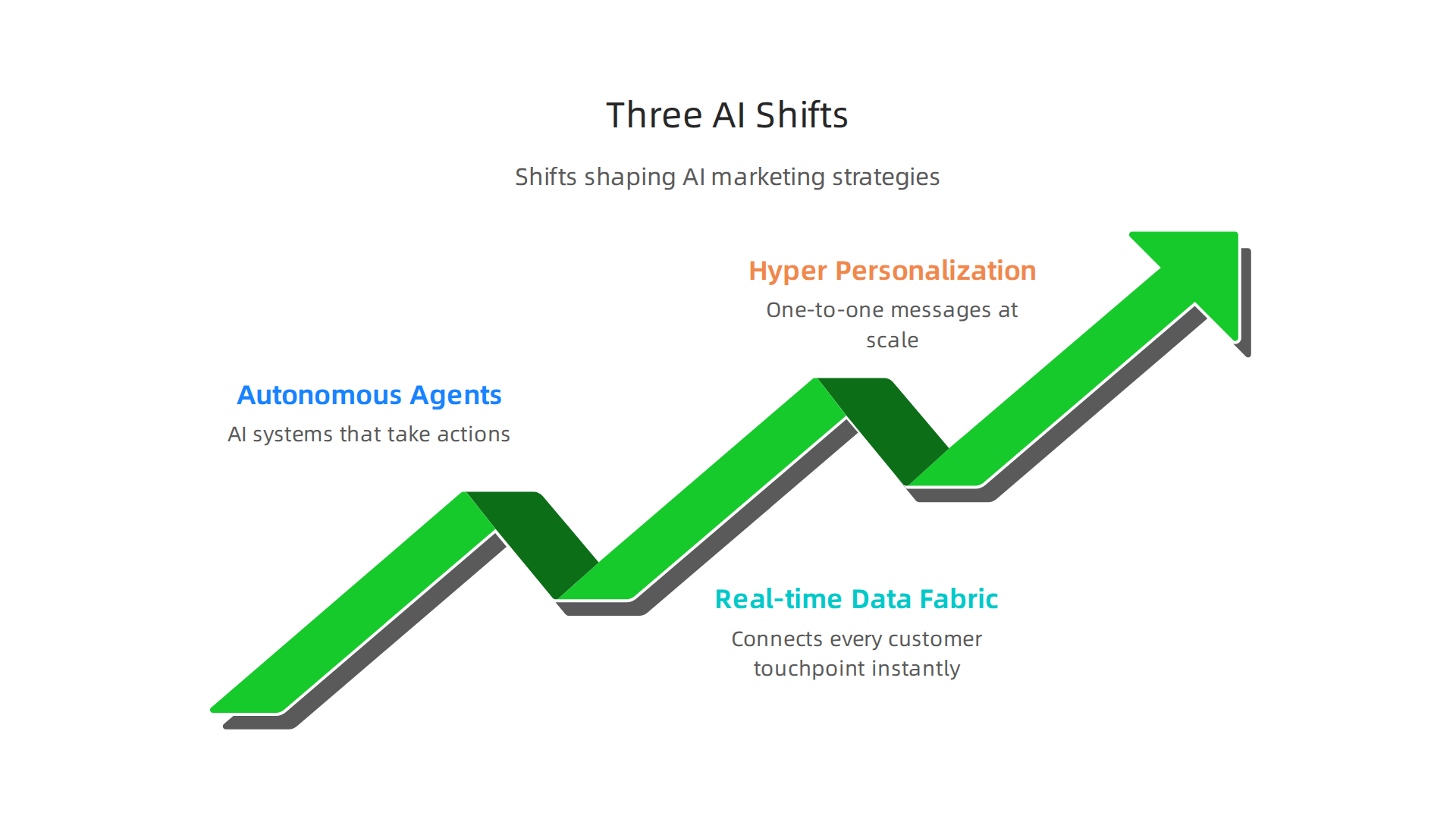
    The three major shifts defining the future of AI-powered marketing cloud strategies.

    The big three shifts on the horizon

    First, we have autonomous agents. These are AI systems that do not just suggest actions. They take actions. Imagine an AI in your marketing cloud that spots a drop in email engagement, automatically adjusts the send time, rewrites the subject line, and triggers a new test campaign without you lifting a finger. Google Cloud’s latest AI agent trends report for 2026 shows this is moving from experimental to essential for businesses that want to scale.

    Second is the real-time data fabric. Your digital marketing platform for small businesses should not have to wait hours or days to process data. A data fabric connects every customer touchpoint instantly. It gives you a complete picture of your audience the moment they act, which makes your campaigns faster and more relevant.

    Third is hyper-personalization. We are past the era of just "Hi {{first_name}}." AI now studies past behavior, current context, and predicted future needs to create one-to-one messages at scale. The 2026 AI marketing trends analysis from Improvado confirms that personalization depth is now the top driver of customer loyalty.

    Why flexibility and learning matter most

    Here is the thing. No one knows exactly what the next big breakthrough will be. That is why locking yourself into a rigid stack is dangerous. You need a marketing cloud that works with modern tech choice tools and adapts as new platforms emerge.

    Building a culture of continuous learning matters just as much. The teams that win are the ones that experiment early. If you are curious about what an AI agent actually looks like in practice, check out our review of the Galaxy AI 2026 agentic assistant for business and content creation. And if you want to see how blending human intuition with machine speed creates better results, take a look at our breakdown of human or AI creativity.

    Early adopters are pulling ahead

    The data is clear on this one. Companies testing agentic workflows today are building a serious lead. According to Salesforce trends for 2026 and the Dotdigital marketing predictions, the brands that treat AI as a core team member rather than just a tool are seeing faster campaign launches and higher customer satisfaction.

    According to WSI World’s marketing predictions, "Search Everywhere" optimization and privacy-first data strategies are becoming non-negotiable for staying visible.

    How to stay ahead without burnout

    The hardest part of future-proofing is simply keeping up. Trends shift fast. New tools launch every week. You do not have time to chase every single headline.

    Want to stop guessing and start knowing what is next? The Deep View Newsletter delivers the day’s most important AI and tech updates straight to your inbox. It is the easiest way to stay ahead of the curve without the noise.

    The future of marketing belongs to the curious. Stay flexible. Keep learning. And let your marketing cloud do the heavy lifting.

    Summary

    This guide explains how AI has transformed marketing clouds in 2026 and gives a practical framework for choosing, implementing, and measuring an AI-powered marketing platform. It starts by defining a modern marketing cloud and highlights key AI capabilities—predictive segmentation, real-time personalization, automated content generation, and agentic workflows—that make platforms smarter and more autonomous. The article lays out the essential features to vet (predictive analytics, audience intelligence, journey orchestration, privacy controls, and integration ability), compares major vendors (Salesforce, Adobe, HubSpot) by use case and budget, and provides a step-by-step rollout plan focused on data cleanup, single high-impact pilots, team upskilling, and phased launches. It also shows how to track ROI with the right metrics, why compliance must be built in, and what trends (autonomous agents, real-time data fabric, hyper-personalization) will shape the next wave. Readers finish with concrete actions: what to check before buying, how to get quick wins, how to measure impact, and where to keep learning to avoid costly mistakes.