
Why ‘Smart AI’ Matters Now — a concise primer
In 2026, it seems like everyone is talking about Artificial Intelligence, or AI. You hear about it daily in the news, from how it helps doctors to how it changes the way we work. But what does "smart AI" really mean for your business? It’s more than just big words and fancy models. Smart AI is about practical tools that understand your world and help you make better choices every day.

Think of smart AI as a helper that knows what you need. It’s not just a general AI system that can do many things. Instead, it’s a "tech smart" system built for specific tasks. These systems are "context-aware," meaning they understand the situation and the data around them to give you useful answers and take helpful actions. The US government even has rules about how AI should be used safely and fairly to make sure it’s trustworthy and responsible Safe, Secure, and Trustworthy Development and Use of Artificial Intelligence. Also, understanding context is key for human-AI teamwork, as seen in recent studies CONTEXT-MAXXING – Brookings Institution.
For business leaders like you, the world of AI can feel overwhelming. There’s a flood of new information every day. How do you pick the right tools? How do you even begin to make them work in your company? Plus, you have limited money and people to get the job done. This can lead to big worries about picking the wrong tools or wasting precious resources. That’s why understanding smart AI is so important right now. It helps you cut through the noise and find solutions that truly fit your business. If you’re struggling with too much information, we can help.
The AI Newsletter Worth Reading offers clear, daily updates to keep you informed.
Choosing the right kind of smart AI means looking for tools that are not just powerful but also make sense for your specific goals. It’s about finding the difference between "ai vs generative ai" and understanding which one will truly help your business grow. If you’re looking to bring in new tools, learning how to choose AI for business tools that deliver real results in 2026 is a smart first step.
1) Smart AI in 2026: Market snapshot & core capabilities
In 2026, the world of smart AI is moving very fast. Most businesses are already using some form of AI. More than half of professionals use generative AI for their work, a big jump from last year, showing how quickly these tools are becoming part of daily business life 2026 AI in Professional Services Report. This rapid growth means businesses need to know what smart AI can truly do for them.
Smart AI tools today do much more than just simple tasks. They are built with core powers that make them truly helpful for businesses.
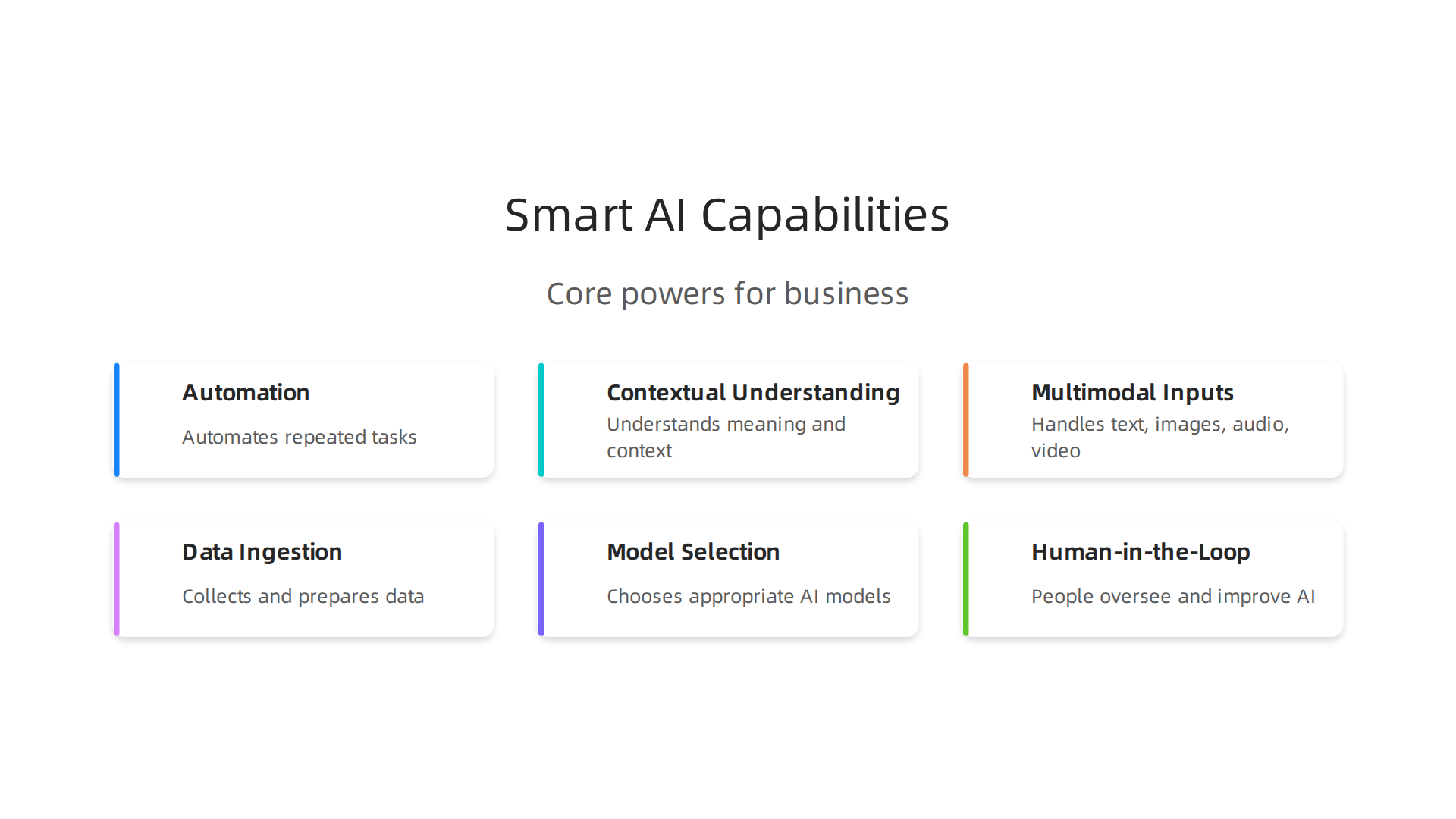
Let’s look at what these "tech smart" systems offer:
- Automation: One big power is automation. This means AI can take over boring, repeated tasks. Think of it helping with customer questions or sorting emails. This frees up your team to do more important work that needs human thought. If you want to dive deeper into how technology works in business, understanding what is information technology for business success in 2026 is a great step.
- Contextual Understanding: Another key ability is contextual understanding. Smart AI doesn’t just look at words; it understands the meaning behind them, the situation, and past conversations. This is like having a truly smart assistant who "gets" what you mean, even if you don’t say it perfectly. For this to work well, having good and complete data is super important, as it helps AI make sense of everything 2026 State of Data Integrity and AI Readiness.
- Multimodal Inputs: And these smart AI systems can now understand different types of information. This is called multimodal input. They can take in text, pictures, sounds, and even videos. This lets them handle more complex requests and give richer answers.
So, where are businesses seeing the most help from smart AI right now?
- Customer Service: Many companies use it in customer service. AI chatbots can handle a lot of common questions, helping customers faster and easing the workload for human agents.
- Content Generation: Another popular use is creating content. From writing emails and social media posts to helping design marketing materials, generative AI tools are a huge help for marketing teams. A survey in March 2026 showed that many small businesses use AI tools for general business research and content creation, as well as operational tasks like marketing automation Small Business Technology Use Survey (March 2026). For those interested in this area, learning how to choose marketing automation software in 2026 can be very useful.
- Operations: Beyond that, smart AI helps with daily operations. This includes things like managing projects, looking at sales data to find trends, and even making supply chains work better. These uses save time and money.
When it comes to getting a return on investment (ROI), businesses often see results quickly in these areas. Tools that automate tasks and improve efficiency usually show value first.

Research shows a strong link between how well businesses use AI and how much money they save or earn From Exploration to Transformation—What AI Success Looks Like. Picking the right smart technologies is key to unlocking this growth.
2) Key 2026 trends: model access, multimodality, and tool consolidation
Now that we know what smart AI can do and where it helps businesses, let’s look at the big changes happening in 2026. These changes affect how companies get and use these powerful tools. It’s not just about what AI can do, but how you can get your hands on it and make it work for you.
How Businesses Get Smart AI Today
There are a few main ways businesses are getting their smart AI tools:
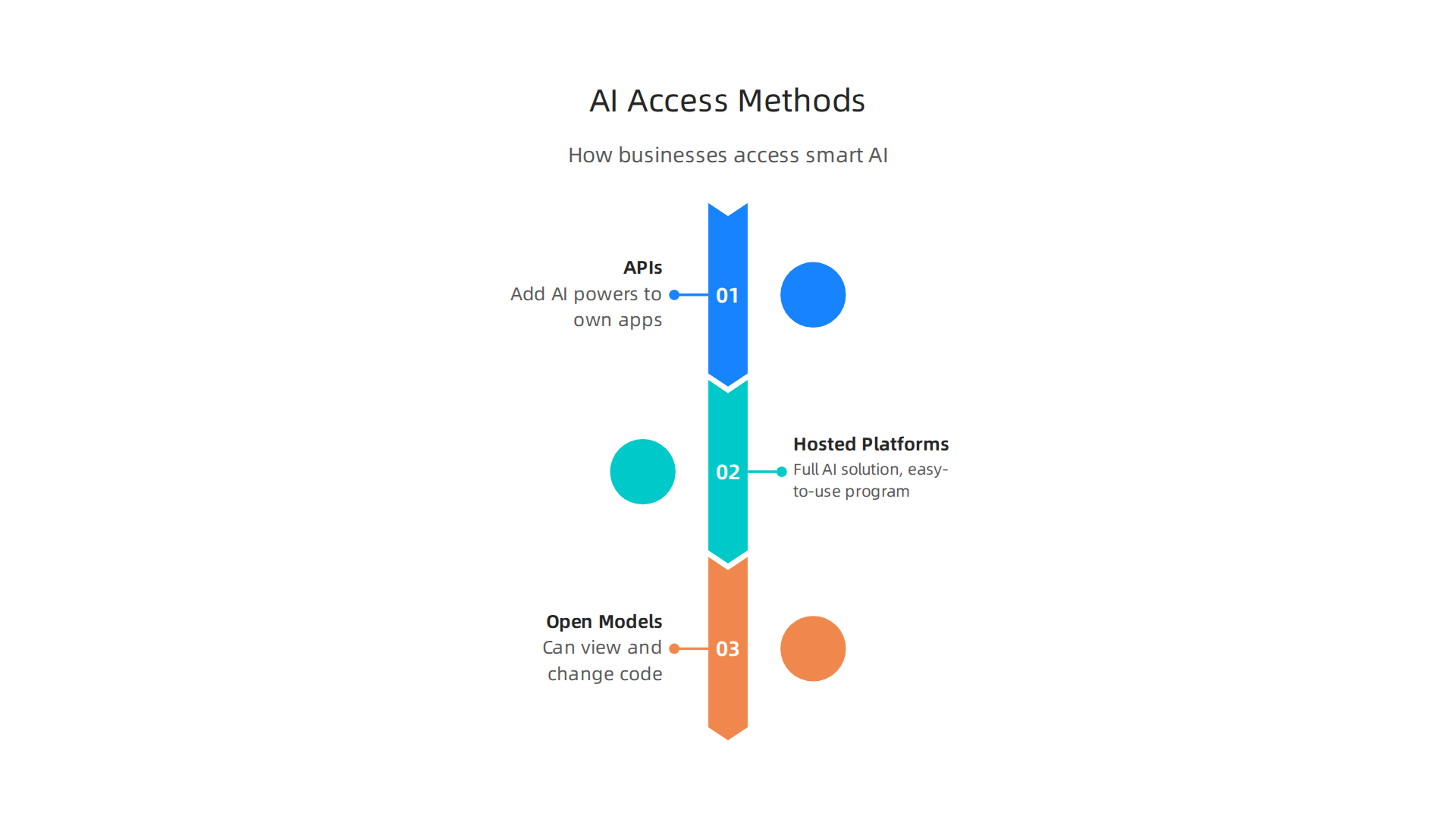
- APIs (Application Programming Interfaces): Think of APIs like ordering food from a menu. You ask for a specific AI function, and the AI service sends back the answer. This lets companies add AI powers to their own apps and systems without building everything from scratch. It’s very flexible and lets you use the best AI for each task.
- Hosted Platforms: These are like all-in-one meal kits. A company offers a full AI solution, often with an easy-to-use website or program. You just log in and start using it. These are great for businesses that want a quick way to use AI without a lot of technical setup.
- Open Models: Some smart AI models are open, meaning their basic code can be looked at and changed by anyone. This is like having a recipe you can tweak yourself. Open models can be very powerful because many people work to make them better, but they often need more technical know-how to set up and run.
Each way has its own good and bad points, and the best choice depends on what a business needs and how much tech help they have. To really use AI well, businesses often need to choose the right tools for their team and goals. If you’re wondering about making the best choices for your business, you might want to learn more about how to choose AI for business tools that deliver real results in 2026.
The Rise of Multimodal Smart AI
We talked a bit about multimodal inputs before. This means AI can understand different kinds of information, like text, pictures, and sounds. In 2026, this ability is getting much stronger. Smart AI can now combine all these types of data to understand situations better and give more complete answers. For example, an AI could look at a customer’s message (text), a screenshot of their problem (picture), and even hear their voice (sound) to figure out what’s going on. The work on "Generative AI for multimodal content" shows how much this area is growing Generative AI for multimodal content: a survey with empirical and …. This is a big step forward because it helps AI act more like a human, understanding the full picture, not just parts of it.
One Big Tool or Many Small Ones?
Another big trend is how businesses decide between using one large AI system for everything or using many different specialized AI tools.
- Consolidation: Some companies want one big AI platform that can do many different things, like marketing, customer service, and data analysis. This can make things simpler to manage, as you only deal with one vendor. It’s like buying all your groceries from one big supermarket.
- Best-of-Breed: Other companies prefer to pick the very best AI tool for each specific job. They might use one smart AI for writing content, another for customer chat, and a third for looking at sales data. This can lead to better results for each task but means working with many different systems and vendors. It’s like going to different specialty shops for bread, cheese, and meat.
Choosing between these options means thinking about how easy it is to manage versus getting the best performance. As smart AI becomes more complex, businesses also need to think about responsible AI use. This includes having good rules for how AI is used, to keep things fair and safe. In fact, setting up a proper system for checking and guiding AI is becoming very important for businesses, as discussed in the "Board-level governance and risk oversight framework for Artificial Intelligence systems" Board-level governance and risk oversight framework for Artificial Intelligence systems.
No matter how you choose to use smart AI, staying informed about the latest changes and how they impact your business is key.
Get clear daily AI updates from The AI Newsletter Worth Reading.
To really make smart AI work for your business, it’s not enough to just pick the right tool. You also need to think about how all the different parts of AI will fit together, like building blocks in a wall. This collection of tools and how they connect is often called a "tech stack." In 2026, building a good smart AI tech stack means looking at several key layers and how they all integrate for different business needs.
Core Layers of a Smart AI Tech Stack
Think of a smart AI system as having different jobs, each handled by a specific layer in its tech stack.
These layers work together to make the AI powerful and useful.
- Data Ingestion: This is how AI gets its food. AI needs a lot of information to learn and work, whether it’s text, pictures, or sounds. This layer is all about collecting, cleaning, and preparing that data. If the data isn’t good, the AI won’t be good either. Making sure your data is accurate and consistent is super important for AI readiness, as highlighted in the 2026 State of Data Integrity and AI Readiness report.
- Model and Runtime Selection: This is where you pick the "brain" of your AI. It involves choosing the specific AI models that will do the work. As we discussed, these could be accessed through APIs, hosted platforms, or open models. Businesses need to choose the best AI tech products for their team in 2026 based on their tasks.
- Orchestration: Once you have your data and your AI models, you need a way to make them all play nicely together. Orchestration is like a conductor for an orchestra. It manages how different AI tools and systems connect, share information, and run their tasks in the right order. This layer makes complex smart AI workflows feel smooth.
- Observability: Just like you check a car’s dashboard, observability for AI lets you see how your smart AI systems are working. It helps you know if the AI is performing well, if it’s making good decisions, or if something is going wrong. This is key for responsible AI use, ensuring fairness and fixing problems quickly.
- Human-in-the-Loop Controls: Even the smartest AI needs human guidance. This layer ensures that people can oversee, correct, and improve the AI’s work. It’s about building safeguards and making sure humans stay in charge. For example, setting up ways to check for and manage bias in AI is a big part of this, as explained by NIST’s work on managing bias in AI. The government also supports and contributes to technical standards for testing AI system components to ensure reliability and safety, which is crucial for overall responsible AI practices, according to a bill on the future of AI in 2026.
Integration Patterns: Putting it All Together
Businesses don’t just stack these layers randomly. They use different ways to put them together, called integration patterns, to fit their specific needs.
- Turnkey Solutions: For many common business tasks, companies might choose ready-made smart AI platforms that already combine many of these layers. These are like buying a ready-to-assemble furniture kit. They are easier to set up and manage, especially for smaller businesses or those without a lot of specialized tech smart staff. You can find many options among the enterprise AI platforms for 2026.
- Custom-Built Integrations: Other businesses, especially those with unique needs or large technical teams, might choose to build their AI stack from scratch. This involves more engineering effort but gives them full control to mix and match the best tools for each layer. They might use a "vendor-neutral" approach, meaning they can switch out different AI tools without being tied to one company, which is a growing trend for flexible deployment as discussed in research on vendor-neutral enterprise AI.
The choice between these patterns depends on balancing the desire for top performance with the resources available to build and maintain the system. No matter which path a business takes, it’s essential to plan carefully to make sure their smart AI setup is strong, secure, and aligns with their goals. Ultimately, it’s about making smart choices to unlock growth by selecting the right smart technologies in 2026.
Even with the best planning for your smart AI tools, it’s super important to think about the possible problems. Using smart AI comes with risks that businesses need to manage carefully.

Just like any powerful tool, if not handled right, AI can cause issues.
What are the main risks with smart AI?
There are a few big kinds of risks when using smart AI:
- Operational Risks: These are problems that can happen while your AI is actually working.
- Data Leakage: Imagine your smart AI deals with private customer information. If there’s a security flaw, that information could get out. This is a big worry, as protecting data is a key part of Understanding Information Technology for Business Success.
- Hallucinations: This is when AI, especially generative AI, makes up information that sounds real but isn’t true. For example, a customer service bot might give wrong answers or invent facts. This happens because AI models sometimes guess incorrectly, as noted in research on Hallucination in Multimodal Grounding and Reasoning.
- Regulatory and Compliance Concerns: Governments and other groups are creating rules for how AI should be used. Businesses need to follow these rules, or they could face fines or other punishments. Keeping up with Mastering the AI Future Standard 2026 is a must. For instance, existing rules often do not fully cover AI-specific risks like how AI models might change over time or ethical issues, making new frameworks important for governance, risk, and compliance frameworks for AI Security.
- Reputational Risks: If your smart AI system makes mistakes, acts unfairly, or causes problems, people might lose trust in your business. This can really hurt your brand and how customers see you.
How to manage smart AI risks with good governance
To keep these risks in check, businesses need strong rules and ways to oversee their AI systems. This is often called AI governance, and it’s all about making sure AI is used responsibly.
- Access Limits: Control who can use and change your AI tools and the data they access. Only people who need to should have these permissions.
- Monitoring: Keep a close eye on how your AI systems are working. Are they giving good results? Are there any unexpected behaviors? This helps catch problems early.
- Human Review: Don’t let AI make all the decisions alone. Have human experts check key outputs or decisions made by the AI. This "human-in-the-loop" approach helps ensure fairness and accuracy.
- Audit Trails: Keep detailed records of what your AI does, when it does it, and why. If something goes wrong, you can look back at these records to understand what happened and fix it. The NIST Artificial Intelligence Risk Management Framework offers guidance on how to manage these risks. Having a board-level framework for overseeing AI is also becoming essential for companies, as highlighted in research on risk oversight for Artificial Intelligence systems.
Thinking about these risks and setting up good governance controls is just as important as choosing the right tech smart tools. It’s how businesses can truly embrace smart AI while protecting their operations, reputation, and customers.
After setting up good rules to manage AI risks, the next big step is picking the right smart AI tools. It’s like finding the perfect helper for your business. With so many AI tools out there in 2026, it can feel like a lot. But don’t worry, there’s a simple way to look at them.
A Simple Way to Pick Your Smart AI Tools
To choose wisely, follow these steps:
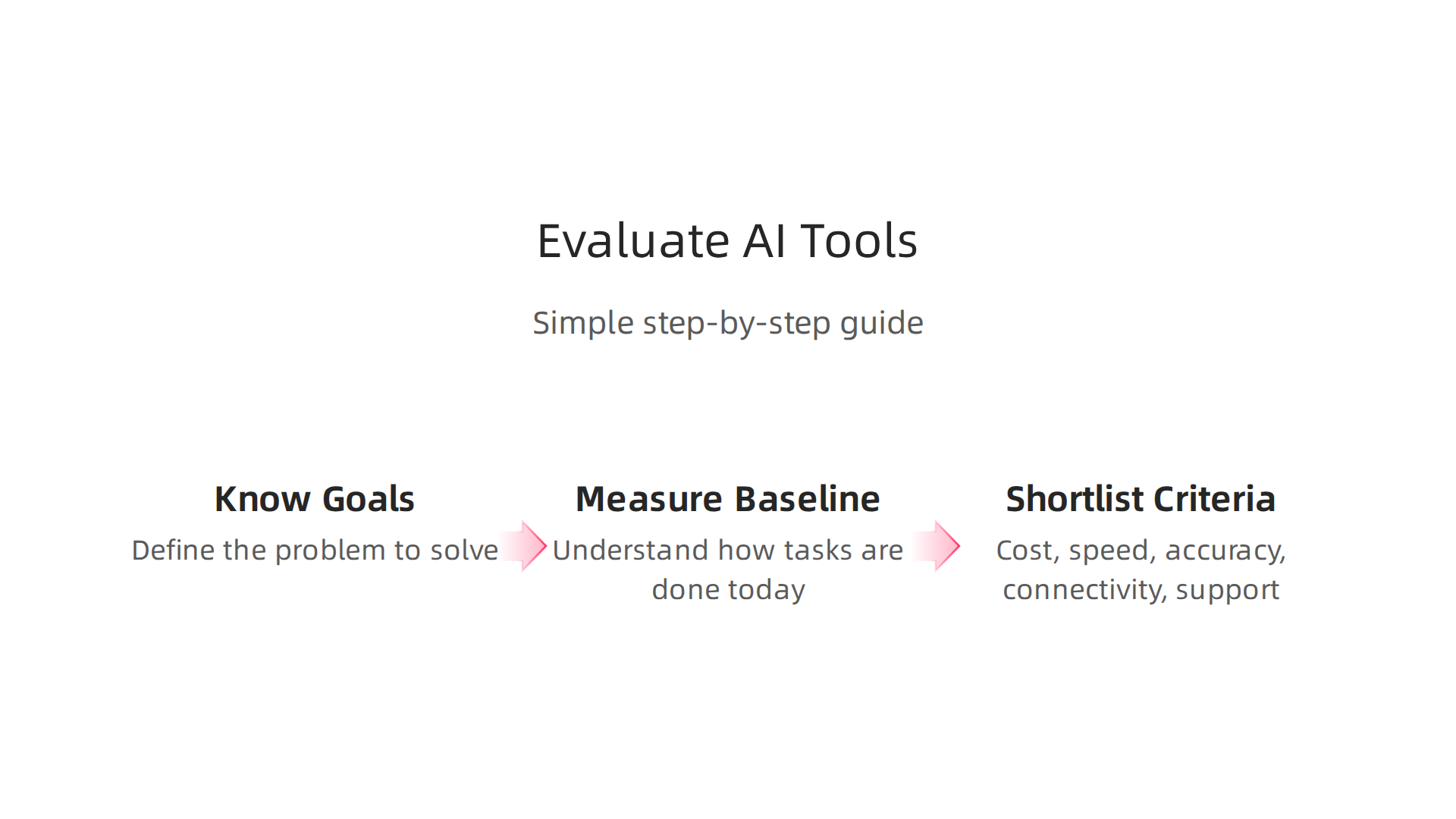
- Know What You Want to Achieve: Before looking at any tool, ask yourself: What problem do I want to solve? What goal do I want to reach? For example, do you want to answer customer questions faster or write better marketing words? Knowing your goal makes it easier to find a tool that truly fits. Over 65% of companies are increasing their AI budgets this year, so making smart choices is key to seeing real returns AI Adoption Statistics 2026: Business & Enterprise Data.
- Measure How Things Work Now: Before using AI, understand how your tasks are done today. This is your "baseline." How long does it take? How much does it cost? What results do you get? This helps you see if the new smart AI tool actually makes things better later on.
- Make a Short List of Important Things: When comparing tools, think about these points:
- Cost: How much does the tool cost to buy and use? Does it fit your budget?
- Speed: How fast does it work? Does it respond quickly enough for your needs? This is also called "latency."
- Accuracy: Does the tool do what it’s supposed to do correctly? For example, if it answers questions, are the answers right?
- Easy to Connect: Can the tool work well with the other software and systems you already use? This is called "integration." A tool that plays nice with your existing tech smart setup saves a lot of headaches.
- Good Help: If you have problems, can you get good support from the company that made the AI?
Testing AI Tools Before You Go All In
It’s a smart idea to test a new AI tool with a small project before using it everywhere in your business. This is called a "pilot."
- Design a Small Test: Pick a specific task where the AI can help. Run the AI tool alongside your usual way of doing things.
- Watch for Success: During the pilot, keep an eye on your goals. Is the AI saving time? Making fewer mistakes? Giving better results? These are your "success metrics." Many companies start with pilots, but only a small number move them to full use, so testing well is important Deloitte State of AI: 2026 Key Takeaways.
- Roll Out Carefully: If the pilot shows good results, then you can slowly start using the smart AI tool more widely. This responsible AI approach helps make sure it works well for everyone.
By thinking through these steps, you can choose AI tools that truly help your business grow. If you’re looking for more guidance on picking the best solutions, check out our guide on how to choose AI for business tools that deliver real results in 2026. It’s all about making informed choices for your tech smart future.
Want to keep up with the latest AI trends and how they impact businesses like yours? Get clear daily AI updates from The AI Newsletter Worth Reading.
After running small tests with AI tools and seeing good results, the next big step is to plan how to use these tools more widely in your business.

This means thinking carefully about your team, your money, and how everyone will learn to use the new smart AI helpers.
Staffing Your Smart AI Journey
To truly make a smart AI tool work well for your business, you need the right people. You have a few choices for how to get this done:
- Your Own Team: Your current team members can learn new skills to work with AI. This helps them grow and become even more useful.
- Contractors: For special tasks or when you need extra help for a short time, you can hire outside experts called contractors. They can quickly help set up new AI systems.
- Vendors: The companies that make the AI tools often give support and services. They can guide you on how to best use their products. This mix of help ensures your information technology definition is ready for all the new smart tech. Many businesses are giving more workers access to AI tools. About 60% of workers now have official AI tools to use, which is a big jump from before Organizations Stand at the Untapped Edge of AI’s Potential … – Deloitte.
Planning Your AI Budget
Just like staffing, how you spend money on AI needs careful planning. In 2026, companies are putting a lot of money into AI. For example, some expect to spend around $207 million on AI in the next year. This is almost twice what they spent last year [PDF] AI Quarterly Pulse Survey – Q1 2026 – KPMG International.
- Pilot Phase: The small test projects you did will need some money. This is for trying out the tools before you commit.
- Scaling Up: When you decide to use AI more widely, you will need a larger budget. This money goes towards buying the tools, training your team, and getting expert help when needed.
Managing Change to Drive Adoption
Even the best smart AI tool won’t help your business if people don’t use it. This is where "change management" comes in. It is about helping everyone in your business understand, accept, and use new ways of working with AI.
- Explain the "Why": Clearly tell your team how the new AI tools will make their jobs easier or better. This helps them see the value.
- Offer Training: Show your team exactly how to use the new tools well. Good training makes people feel more confident.
- Listen to Feedback: Ask your team what works and what does not. Make changes based on what they say. This thoughtful approach helps create a truly tech smart workplace and makes sure the AI adoption is responsible. It helps ensure that these changes bring real value to your business.
Summary
This primer explains what