
Why ‘deep tech’ matters now — a concise primer for decision-makers
In 2026, you hear a lot about AI. It is in our phones, our smart homes, and helps us write emails. But there is a special kind of technology called deep tech that is much more than just simple computer AI tools. Deep tech is about big, important breakthroughs that change the world in a really big way. It is not just making things a little better. It is about creating whole new things that did not exist before.
Think of it like this: consumer AI might help you pick a movie. Deep tech, on the other hand, might create a new kind of battery for electric cars or find a new way to treat sickness. These technologies come from deep scientific discoveries and hard engineering work. They often need a lot of research, time, and money to develop. Governments around the world are even creating policies to support this area, like the National Deep Tech Startup Policy Framework (NDTSP) which looks closely at what makes these startups special.
For leaders like you, deep tech can be both exciting and a bit scary. You want to make sure your business stays ahead.

But with so many new tools and ideas popping up every day, it is easy to feel lost. This is what we call information overload. It is hard to pick the right deep tech tools when you are not sure what they do or how they fit with your business.
Then comes the challenge of making these new technologies work with your existing systems. It is like trying to put a brand-new, super-fast engine into an old car. It takes skill and careful planning. And finally, you need to see a real return on your investment (ROI). You want to know that spending money on deep tech will actually help your business grow and make more money.
Understanding these big changes and choosing the right steps for your company requires strong AI literacy. Learning how to pick smart technologies and bring them into your business is key to staying competitive in 2026 and beyond.
To help you cut through the noise and get to what matters, we share clear, daily updates on the world of AI and technology.
The AI Newsletter Worth Reading
What ‘deep tech’ means in 2026: definitions, categories, and taxonomy
Let’s dig deeper into what deep tech really means in 2026. It is more than just new apps or better versions of old software. Deep tech comes from big science ideas and clever engineering work. It builds on new discoveries that push the limits of what we thought was possible. Think of it as creating something truly new, not just making something existing a little bit better. This kind of technology often creates a strong advantage that is hard for others to copy, because it is based on solid scientific research or engineering leaps, not just a new business idea.
Some people might call deep tech by other names, like "frontier tech," "hard tech," or "tough tech." No matter the name, the main idea is the same: these are game-changing innovations that come from deep scientific roots. According to experts, deep tech refers to companies and products built on major scientific or engineering breakthroughs that give them a strong competitive edge that lasts for a long time. In March 2026, over $80 billion is invested each year into deep tech areas like quantum computing and synthetic biology, showing just how important it is becoming for business leaders to understand this field.
What makes deep tech special?
Deep tech has a few key traits that set it apart from regular computer AI tools or everyday gadgets:
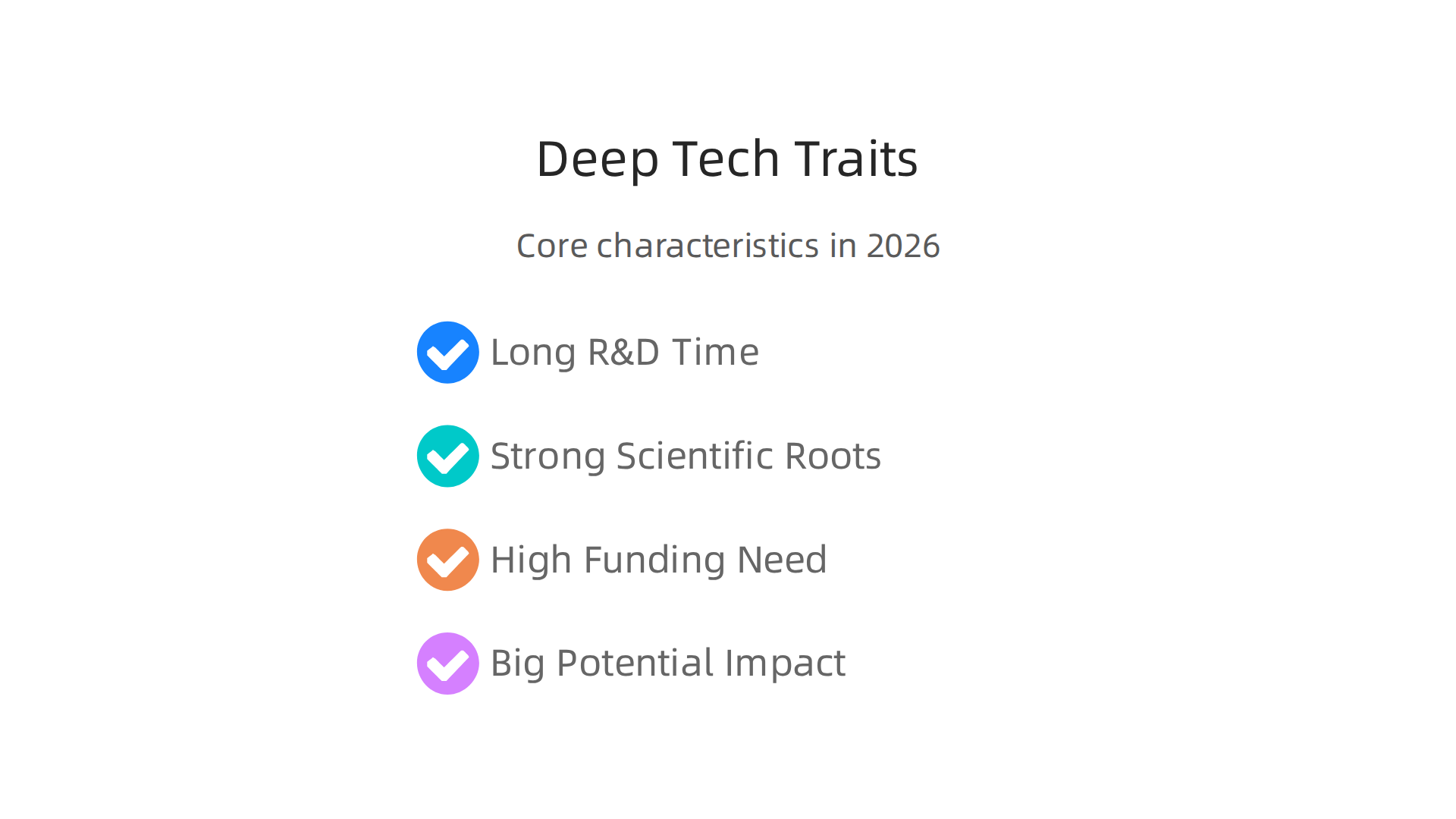
- Long Research and Development Time: These ideas do not become products overnight. They need many years of careful study and testing in labs. It is a marathon, not a sprint.
- Strong Scientific Roots: Deep tech is born from new understandings in science, like physics, chemistry, or biology. It is not just about combining existing tools in a new way.
- High Need for Money: Because of the long research time and complex development, deep tech projects often need a lot of money to get started and keep going.
- Big Potential Impact: While hard to develop, deep tech can solve some of the world’s biggest problems, like climate change, new diseases, or access to clean energy.
Main types of deep tech in 2026
When we talk about deep tech, we are usually looking at a few main categories.
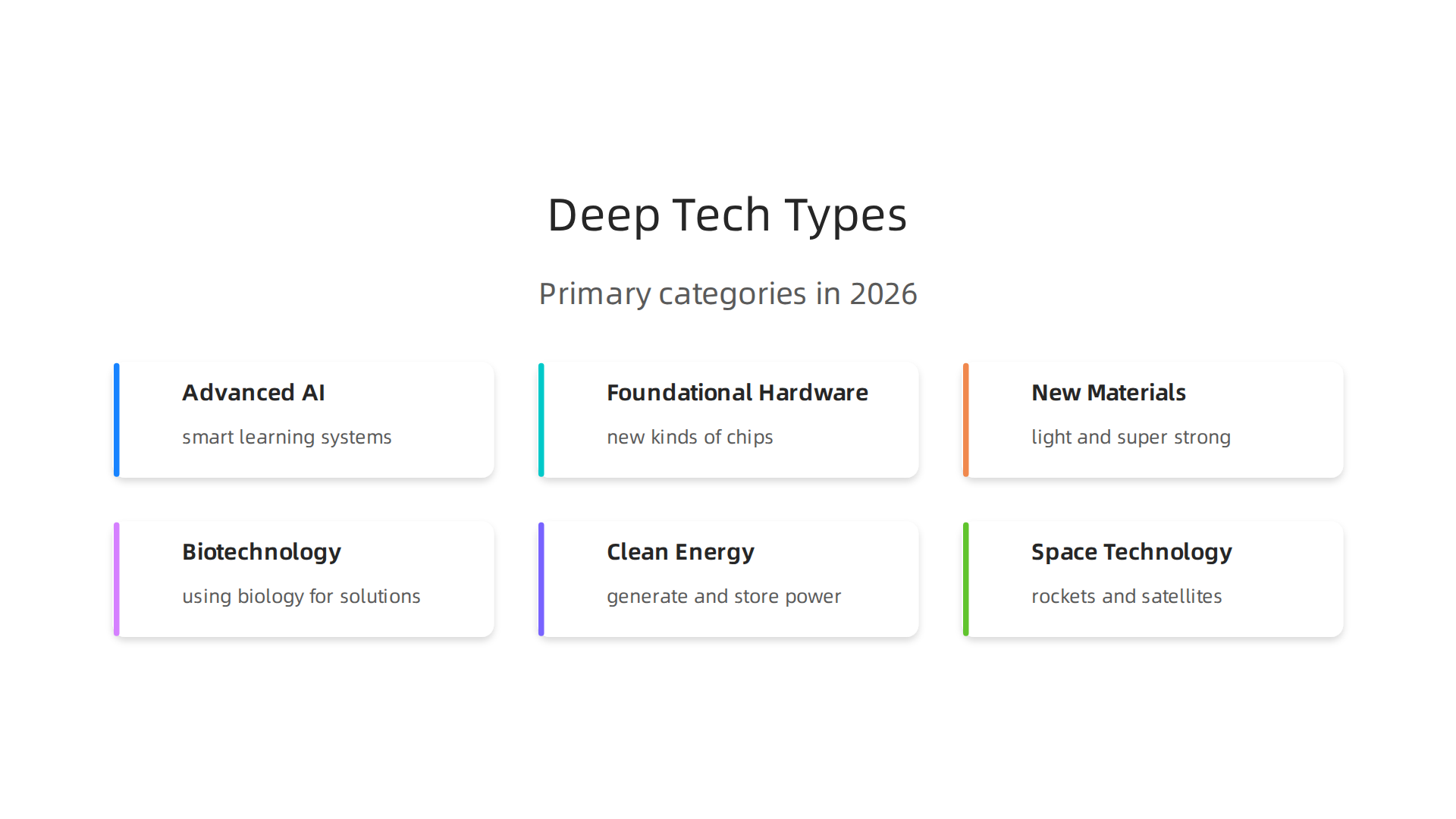
These are the big areas where scientists and engineers are making the most exciting progress:
- Advanced AI and Algorithms: This goes beyond the AI that helps you choose a movie. It includes things like really smart learning systems, new ways for machines to "see" and "understand" the world, or advanced decision-making tools that can solve very complex problems. This is where the core of computer AI development truly advances.
- Foundational Hardware: This means building entirely new kinds of computer chips, advanced sensors, or even quantum computers that can do calculations impossible for today’s machines. These are the building blocks for the next generation of technology. If you are looking to understand the core components driving these innovations, consider learning about AI hardware 2026 a business leaders guide to growth.
- New Materials: Imagine materials that are super strong but feather-light, or materials that can heal themselves. Deep tech includes creating these amazing new substances that can change how we build everything, from cars to medical devices.
- Biotechnology and Life Sciences: This area focuses on using biology to create new solutions. It covers everything from new ways to edit genes, develop advanced medicines, or create lab-grown foods.
- Clean Energy: Finding new ways to generate and store clean energy is a huge deep tech challenge. This can include advanced solar panels, better batteries, or even new types of nuclear power.
- Space Technology: Developing new rockets, satellites, or ways to live and work in space falls under deep tech. It pushes the boundaries of engineering and exploration.
Understanding these different areas helps leaders like you know where the biggest changes are coming from. Keeping up with these trends is a key part of staying competitive and making smart choices for your business in 2026 and beyond. Getting daily updates from experts can help you manage the fast pace of this What Is Deep Tech? The Definitive Guide to Frontier Technology.
To really understand deep tech, it helps to look at where it is growing and where money is being invested. In 2026, the market for deep tech is booming. It is moving from science labs into real-world products and services. Many reports show big growth, meaning more and more companies are seeing the value in these advanced technologies.
Where deep tech is growing
Deep tech is making a big splash in many different parts of our world. Think about the areas below:
- Healthcare: New ways to find and treat diseases, using advanced computer AI for better diagnosis or new biotech tools for medicines.
- Clean Energy: Fresh ideas for how we make and store power, like super-efficient solar cells or better batteries.
- Manufacturing: Smart factories use deep tech to make things faster, cheaper, and with less waste. This involves new robots and very precise production methods.
- Defense and Space: These areas have always pushed technology forward, and deep tech helps create new tools for safety and exploration.
- Agriculture: Finding ways to grow more food with fewer resources, using things like smart sensors and gene editing.
The global deep tech market was worth about $2.74 billion in 2025. Experts believe it will jump to $3.28 billion in 2026 and keep growing fast, possibly reaching $13.85 billion by 2034. This shows a huge belief in its future possibilities Deep Tech Market Size, Industry Share, Forecast to 2026- …. Another report says the market could grow from $811.33 million in 2026 to $4524.37 million by 2035 Deep Tech Market Size, Share | Industry Report, 2035. This strong growth means deep tech is becoming a central part of how businesses innovate.
What executives should watch for
Business leaders need to pay close attention to several signs to know where deep tech is heading:

- More Money Being Invested: Venture capital funds and big companies are putting more money into deep tech startups. For example, in 2025, Europe saw $20.3 billion in venture capital funding for deep tech, which was 32% of all venture capital in the region Continuing trend towards deep tech. Across the U.S. and Europe, total venture funding for deep tech hit $156.6 billion, with the U.S. making up most of that The 2026 Deep Tech Report by Drumbeat Capital. These numbers show strong confidence from investors.
- More Deals and Company Purchases: Keep an eye on how many deep tech companies are being bought by bigger firms. This means their technology is proven and ready for a wider market.
- New Inventions and Patents: A rise in new ideas and patents means a lot of research is happening. This often leads to breakthrough products later on.
- Government Support: Governments around the world are helping deep tech grow through funding and special programs. This can speed up development and make it easier for businesses to adopt new technologies.
- Customer Interest: When more and more customers or businesses want deep tech solutions, it is a clear sign that these technologies are ready to go mainstream.
To make smart choices for your business, you need to understand these trends. Learning about where to find and choose the right AI companies can help unlock business growth. For more insights on how to pick strong partners, read our guide on how to Evaluate AI companies to unlock business growth in 2026. Staying informed is key for any business aiming to use deep tech to its advantage.
To keep up with the fast-changing world of deep tech and AI, you need reliable information.
Get clear daily AI updates from The AI Newsletter Worth Reading.
Deep tech is not just a fancy idea anymore. It is turning into real solutions that help businesses grow and make money. When companies put their efforts into deep tech, they see a good return on their investment (ROI). Let us look at some important ways deep tech is being used right now, in 2026, across different industries.
High-impact business use cases: where deep tech delivers ROI
Deep tech brings big changes to how businesses work, helping them get ahead. Here are some key areas:
-
Healthcare: In healthcare, deep tech is like a superhero. It helps find diseases earlier and makes new medicines faster. For example, special computer AI can look at medical scans and spot problems that doctors might miss. This means patients get help sooner. Companies like Google DeepMind have shown how deep learning models can help detect eye diseases with expert-level accuracy HSBC: Transforming Anti…. The payoff here is better patient care and more efficient hospitals, leading to healthier communities. The changes can be seen in an ongoing way, making improvements steadily over time.
-
Manufacturing: Imagine a factory that almost runs itself. That is what deep tech is doing for manufacturing. Smart robots and advanced sensors, part of a larger tech center, can check products for tiny flaws or help machines work perfectly. This means less waste, lower costs, and products made much faster. Think about "checkout-free stores" that use computer vision to track items, helping businesses operate smoothly Top 50 Deep Learning Use Case & Case Studies – AIMultiple. Businesses can see these benefits quite quickly, sometimes within months, as processes become more efficient.
-
Clean Energy: Deep tech is changing how we power our world. It helps create better batteries that store more energy and makes solar panels that capture more sunlight. It also improves how power grids send electricity around without wasting it. These new technologies help companies lower their energy bills and be kinder to the planet. The impact can be seen over a few years, as new energy systems are built and start working.
-
Other Industries: Deep tech also helps in areas like defense and space, making equipment safer and more advanced. In agriculture, it helps farmers grow more food with less water and fewer chemicals, using smart sensors and special plant science. Across many businesses, from banking to real estate, generative AI is solving real-world challenges, with some transformations happening in weeks and others taking years The Enterprise AI Playbook: Lessons from 51 Successful …. This shows deep tech can deliver results on different timelines.
The main idea is that deep tech can lead to big improvements for businesses. It helps them save money, make better products, and serve customers in new ways. To truly get the most out of these powerful tools, businesses need good AI literacy and a clear plan. Learning how to pick the right AI tools for your business is crucial for getting these great results. Read our guide on how to choose AI for business tools that deliver real results in 2026 to make smart choices.
To truly make the most of deep tech and get good results for your business, you need to know how to pick the right tools. It is not always easy, as deep tech solutions can be complex. Here is a simple guide to help you look at and choose the best deep tech for your company in 2026.
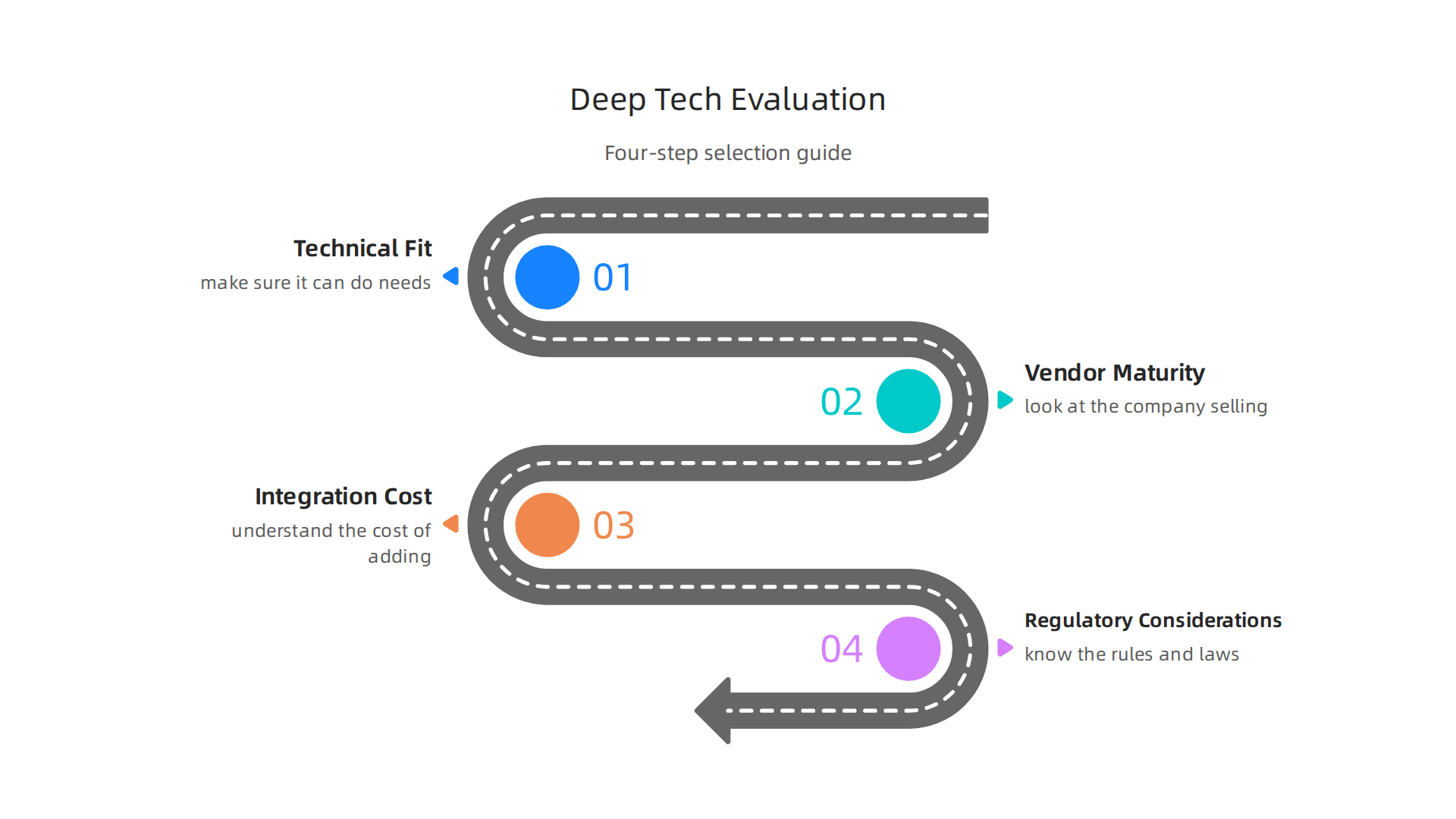

How to evaluate and select deep tech solutions: a practical framework
Choosing deep tech solutions means more than just picking something new and shiny. It means finding tools that really fit your business and help it grow. You need a clear way to check if a new deep tech solution is right for you. Think of it like a checklist for success.
1. Check if it fits your needs (Technical Fit)
First, make sure the deep tech solution can actually do what you need it to.
- Does it work well? Does the computer AI or other deep tech perform tasks quickly and correctly? Look for proof that it works as promised, maybe from other businesses like yours.
- Will it play nice with your current systems? Deep tech should connect smoothly with the other tools and software you already use. If it does not, adding it could cause more problems than it solves. This is called "integration architecture" and it needs to be compatible with your existing setup AI Vendor Evaluation Scorecard: A Quantified Framework ….
- Can it grow with you? As your business gets bigger, your deep tech tools should be able to handle more work without slowing down. This is important for future growth.
2. Look at the company selling it (Vendor Maturity)
It is not just about the product, but also the company behind it.
- Are they experts? Do they have a good history of making and supporting deep tech?
- How good is their help? If something goes wrong, can you get quick and helpful support?
- Is it safe and secure? Deep tech often handles important information. Make sure the company takes data security seriously and follows all the rules. Before you buy, define clear safety requirements like specific certifications AI Vendor Evaluation Framework: Gartner MQ, RFP Scoring ….
3. Understand the cost of adding it (Integration Cost)
Deep tech might have a price tag, but there are other costs too.
- How much work to set it up? Sometimes, getting new deep tech to work with your systems can take a lot of time and effort. This is part of the cost.
- Training your team: Will your employees need special training to use the new tools? This also adds to the overall cost.
- Long-term fees: Think about monthly fees or upkeep costs over time.
4. Know the rules (Regulatory Considerations)
Some deep tech solutions need to follow strict laws and rules, especially in areas like healthcare or finance.
- Does it meet legal standards? Make sure the deep tech and its provider follow all the necessary laws, like privacy rules for customer data. This includes things like data residency rules for where data is stored.
- Ethical use: Think about how the deep tech will be used and make sure it is fair and ethical for everyone involved.
By using this step-by-step approach, businesses can make smarter choices about which deep tech to bring in. It helps make sure you invest in solutions that truly help your company succeed and get a good return on your money. Learning how to select these powerful tools is a key skill for leaders in 2026. If you want to dive deeper into how to evaluate AI companies, read our guide on how to evaluate AI companies to unlock business growth in 2026.
To stay on top of the fast-changing world of deep tech and AI, getting reliable, daily updates is super helpful.
Get clear daily AI updates from The AI Newsletter Worth Reading.
After choosing the right deep tech solutions for your business, the real work begins. This next step is all about putting those powerful tools into action. For your engineering and operations teams, it means careful planning and smart steps to make sure the new technology works well with everything else you do. Think of it as building a strong bridge: you need to plan each part carefully so it can handle the traffic.
Implementation and integration: pragmatic steps for engineering and ops teams
Bringing new deep tech into your company is a big job. It needs a clear plan, especially for the teams who will set it up and keep it running every day. Here’s a simple guide for how to do that.
Your Deep Tech Rollout Plan: Start Small, Grow Smart
It’s usually not a good idea to bring in a big new deep tech solution all at once. A better way is to follow a roadmap, like a staged approach.
- Start with a Small Test (Pilot Program): Begin by using the deep tech on a small, controlled project. This "pilot" helps your teams learn how it works and find any problems without affecting your whole business. Many leading organizations use this method when trying out new deep learning tools, for example. This is like setting up a small "tech center" to experiment.
- Learn and Make Changes: After the pilot, gather all the feedback. What worked well? What caused problems? Use this information to fix things and make the deep tech better before you use it more widely.
- Grow Step-by-Step (Scale Up): Once the deep tech is working smoothly in your small test, you can slowly bring it to more parts of your company. This helps everyone get used to it and keeps things from breaking. Companies have seen great success by carefully scaling their generative AI use cases across different business functions, leading to real-world value Real-world gen AI use cases from the world’s leading ….
What Can Go Wrong and How to Fix It
Even with a good plan, sometimes things don’t go perfectly. Here are some common problems when bringing in deep tech and how to handle them:
- It Doesn’t Connect: New deep tech might not easily "talk" to your older computer AI systems. This can cause a lot of headaches and extra work.
- Fix: Before you even start, plan how the new deep tech will link up with your existing software. Sometimes, you might need special tools or help from partners to make them work together. Understanding the full landscape of your information systems vs information technology helps here.
- Your Team Doesn’t Know How to Use It: Deep tech can be complicated, and your team might not have all the skills to use it right away. This is where "AI literacy" becomes important.
- Fix: Offer training for your employees. You might also bring in outside experts or consultants to help guide your team. To boost professional skills, consider creating internal tech councils drive professional growth and knowledge sharing.
- Bad Data In, Bad Results Out: Deep tech, especially types like machine learning, needs good quality information to do its job well. If your data is messy or incomplete, the results won’t be helpful.
- Fix: Spend time cleaning up your data before you start using the deep tech. Make sure you have clear rules for how data should be collected and stored.
Bridging Skill Gaps: When to Ask for Help
Your internal teams are experts in your business, but deep tech can be very specialized. You might not have people who are experts in every new deep tech area.
- Finding Your Internal Gaps: Look at what skills your team has and what new skills the deep tech needs. It’s okay if there are gaps. No one knows everything.
- Working with Others:
- Deep Tech Vendors: The company that sells you the deep tech often provides support, training, and updates. They know their product best.
- Integration Partners: These are other companies that specialize in helping new technologies fit into existing systems. They can offer specific technical skills and help make sure everything connects smoothly. Successful businesses use a combination of internal knowledge and external partnerships to implement smart AI for business effectively.
Successfully bringing deep tech into your company takes careful planning and smart choices about how to work with both your internal teams and outside partners. By taking these practical steps, your business can make the most of these powerful tools and drive real growth in 2026. Many companies, including those featured in 10 Deep Learning Case Studies [Detailed Analysis][2026], have shown that a thoughtful implementation strategy is key to success.
Successfully bringing new deep tech into your company is a big achievement, but the journey doesn’t end once the tools are set up. Leaders must also think about potential risks, how to manage them, and the rules they need to follow.

This is like having a powerful new car: you need to know how to drive it safely and understand the traffic laws.
Risks, governance, and the regulatory landscape – preparing for future shocks
Deep tech, with all its power to change things, also brings important risks. Ignoring these risks can cause big problems for your business. It’s smart to plan ahead for these possible shocks.
Understanding the Principal Risks
When you adopt deep tech, especially advanced computer AI systems, you face a few main types of risks:
- Ethical Risks: These are about fairness and doing the right thing.
- Bias: Deep tech systems learn from data. If that data is unfair or incomplete, the system can make biased decisions. This means it might treat certain groups of people differently, which is not good for business or society. Concerns about bias, fairness, and transparency are growing, especially with generative AI The Ethical Role of Generative Artificial Intelligence in Modern HR Decision-Making.
- Privacy: Deep tech often needs a lot of personal data. Keeping this data safe and private is very important. If data leaks, it can harm individuals and your company’s reputation. Governments worldwide are stressing the need for Data Protection Impact Assessments (DPIAs) when processing personal data that poses high risks Data and AI Ethics Framework.
- Accountability: If a deep tech system makes a mistake, who is responsible? It can be hard to figure this out, especially with complex AI.
- Operational Risks: These are about how the deep tech affects your day-to-day work.
- Job Changes: Some deep tech tools might change or even replace certain jobs. Businesses need to think about how to support employees through these shifts. The impact of AI on job losses is a key governance issue Artificial Intelligence and the Future of Work. You can explore this further by learning about preparing for what jobs will AI replace.
- Security Flaws: Deep tech systems can be targets for cyberattacks. Protecting them from hackers is a must.
- Unintended Outcomes: Sometimes, deep tech can do things you didn’t expect, leading to problems that are hard to fix.
Navigating the Regulatory Landscape in 2026
Governments around the world are creating new rules for deep tech and AI. In 2026, staying up-to-date is more important than ever.
- Global Rules: Countries like China are making strong rules about AI ethics and pre-development reviews China Issues New Rules on AI Ethics Review and Support. The European Union’s AI Act is also taking effect, bringing new transparency rules AI Act | Shaping Europe’s digital future. India has tightened its IT rules for AI-generated content and deepfakes India tightens AI-generated content regulations with new IT rules.
- Guidance for Businesses: The OECD has released guidance for responsible AI, helping companies identify and prevent negative impacts OECD Due Diligence Guidance for Responsible AI. Staying compliant with these standards is crucial for avoiding legal issues and maintaining trust. To ensure you’re on the right track, read our guide on mastering the AI future standard 2026.
Governance Practices and Risk Mitigation Strategies
To handle these challenges, businesses need clear rules and ways to reduce risks.
- Create an Ethics Board: Set up a group of people in your company to look at how deep tech is used. This board should make sure your deep tech tools are fair, private, and safe.
- Regular Audits and Reviews: Periodically check your deep tech systems for bias, security weaknesses, or unexpected behaviors. Think of it like a regular health check-up for your technology.
- Data Governance: Make clear rules for how you collect, store, and use data. Ensure everyone follows these rules to protect privacy and improve data quality.
- Employee Training: Teach your employees about the ethical use of deep tech and how to spot potential problems. This helps build a culture where everyone is aware of the risks.
- Stay Informed: The world of deep tech and its rules changes fast. Keep up with new regulations and best practices.
By actively managing these risks and setting up good governance, your business can use deep tech to its full potential while staying safe and responsible. Keeping informed is key.
Stay ahead of the curve and get clear daily AI updates directly to your inbox. Get clear daily AI updates from The Deep View Newsletter.
Summary
This primer explains what deep tech means in 2026, why it matters to business leaders, and how to turn scientific breakthroughs into commercial advantage. It describes the defining traits of deep tech — long R&D cycles, strong scientific roots, heavy capital needs, and large potential impact — and surveys major categories like advanced AI, hardware, new materials, biotech, clean energy, and space. The article outlines market signals to watch (investment flows, deals, patents, and government support), concrete industry use cases that deliver ROI, and a practical vendor‑selection framework covering technical fit, vendor maturity, integration costs, and regulatory checks. It gives an implementation roadmap—pilot, iterate, and scale—plus common failure modes and fixes for engineering and operations teams. Finally, it highlights governance steps to manage ethical, operational, and legal risks so leaders can adopt deep tech responsibly and competitively.