
Why the distinction between Information Systems and Information Technology matters in 2026
Many people use the words "Information Systems" and "Information Technology" as if they mean the same thing. But actually, there’s a big difference. Knowing this difference is super important, especially now in 2026, with the fast-moving AI revolution changing how we do everything.

If you mix them up, it can lead to bad choices for your business.
Think of it this way: Information Technology (IT) is about the tools. It’s the computers, the internet, the software programs that store, send, and process data. An information technology is anything that transmits, processes, or stores information, like your computer or a network server. On the other hand, an Information System (IS) is more like the whole plan or setup. It’s how those tools (IT) are used together to reach a specific goal for people, groups, or a whole company. An information system is a set of parts that work together to collect, process, store, and share information for a special purpose, like helping a business make decisions. This means IS applies IT to help things happen, as explained in some definitions of information systems and technology [1].
In today’s world of rapid tech trends, especially with AI becoming so powerful, understanding this difference helps leaders make better AI-driven decisions. Businesses often struggle with many problems. One big issue is information overload; there’s just too much data and too many new tools every day. Then comes picking the right AI tools for their needs, which can be tough. Getting these new tools to work smoothly in a company is another challenge. And often, there aren’t enough resources, like money or skilled people, to do it all. To better grasp these fundamental concepts, consider reading about understanding what is information technology for business success in 2026.
Knowing the difference between information systems vs. information technology helps clear up some of this confusion. It helps you see beyond just the shiny new tech and focus on how that tech fits into your bigger business goals. This way, you can choose better tools and make sure they really help your business grow and solve its problems. If you’re looking to keep up with these fast-paced changes, it helps to have clear, daily updates.
Get clear daily AI updates from The AI Newsletter Worth Reading.
To make truly good choices about technology for your business, especially with how quickly AI is growing, it’s super important to know exactly what Information Systems (IS) and Information Technology (IT) mean. Let’s look closely at both.
Core definitions: Information Systems vs Information Technology (side-by-side)
Information Technology (IT) is all about the gadgets and tools. It includes computers, software, networks, and anything else that helps store, process, or move digital information. Think of it as the building blocks or the raw materials. These tools are key to making many business activities possible in 2026. For example, IT includes the actual computer servers that hold your website’s data, the email programs you use, and the internet cables that connect your office. One definition states that IT is the use of computers to store, get back, send, and manage data or information [1]. Other sources define information technology as the application of computers to store, study, retrieve, and transmit information [2].
On the other hand, an Information System (IS) is much bigger. It’s the whole picture. An IS takes these IT tools and combines them with people, business steps, and data to reach a specific business goal. It’s about how everything works together to solve a problem or make something better. For example, an IS could be the full setup a sales team uses: the customer database software (IT), the people who enter data, the steps they follow to talk to customers, and the reports they get to see how sales are doing. An information system gathers, processes, stores, looks at, and shares information for a special reason [3]. Many experts agree that an information system is a set of parts that work together to collect, process, store, and share information to help with planning and making decisions [4].
Here’s a simple way to see the differences between information systems vs information technology:
| Feature | Information Technology (IT) | Information Systems (IS) |
|---|---|---|
| What it is | The actual tools, hardware, software, and networks. | The entire system combining IT tools, people, processes, and data. |
| Focus | Making technology work and keeping it running. | Using technology to solve business problems and reach goals. |
| Examples | Servers, routers, operating systems, specific apps, cloud storage. | Customer relationship management (CRM) system, inventory control system, human resources system. |
| Components | Hardware, software, data, communication technology. | Hardware, software, data, communication technology, people, and processes. |
| Outputs | Functional devices, working networks, processing data. | Business reports, improved workflows, better decisions, strategic advantages. |
Roles, Responsibilities, and Success
When we talk about the jobs people do, their responsibilities, and how we measure success, the difference between information systems vs information technology becomes even clearer.

Information Technology (IT) Roles: People in IT often make sure the computers are fast, the internet is working, and all the software is updated and safe. Their main job is to keep the "lights on" for the technology. They handle things like fixing broken computers, setting up new networks, and protecting against online threats. Their success is often measured by how reliably systems run, how fast they are, and how safe they are from attacks.
Information Systems (IS) Roles: Those who work with Information Systems look at the bigger picture. They ask: "How can this technology help our business make more money?" or "How can it make our work easier?" They might design a new system to track customer orders or improve how different parts of the company share information. Their job is more about understanding business needs and then figuring out how technology can meet those needs. They are often involved in choosing the right AI tools for business to drive growth in 2026. Success for an IS team is measured by how well the system helps the business reach its goals, like making operations more efficient, giving leaders better information for decisions, or boosting profits. It’s less about the tech itself and more about the impact it has on the business and its people. For more on this, you can read about smart AI for business your 2026 guide to successful adoption.
Understanding this division is very helpful for any business aiming to keep up with current tech trends and plan for future tech advancements. It helps business leaders think about more than just buying the latest gadgets. Instead, they can focus on building smart systems that really help the company grow and thrive in the AI revolution.
Understanding the difference between information systems vs information technology is even more important as new tech trends, especially Artificial Intelligence (AI), change how businesses work. In 2026, AI is not just a fancy tool; it’s truly shaking up both IT and IS roles.
How AI and emerging tech are reshaping IS and IT in 2026
The way we use and manage technology is quickly changing, mostly because of AI and other new tools like machine learning (ML), edge computing, cloud services, and automation.
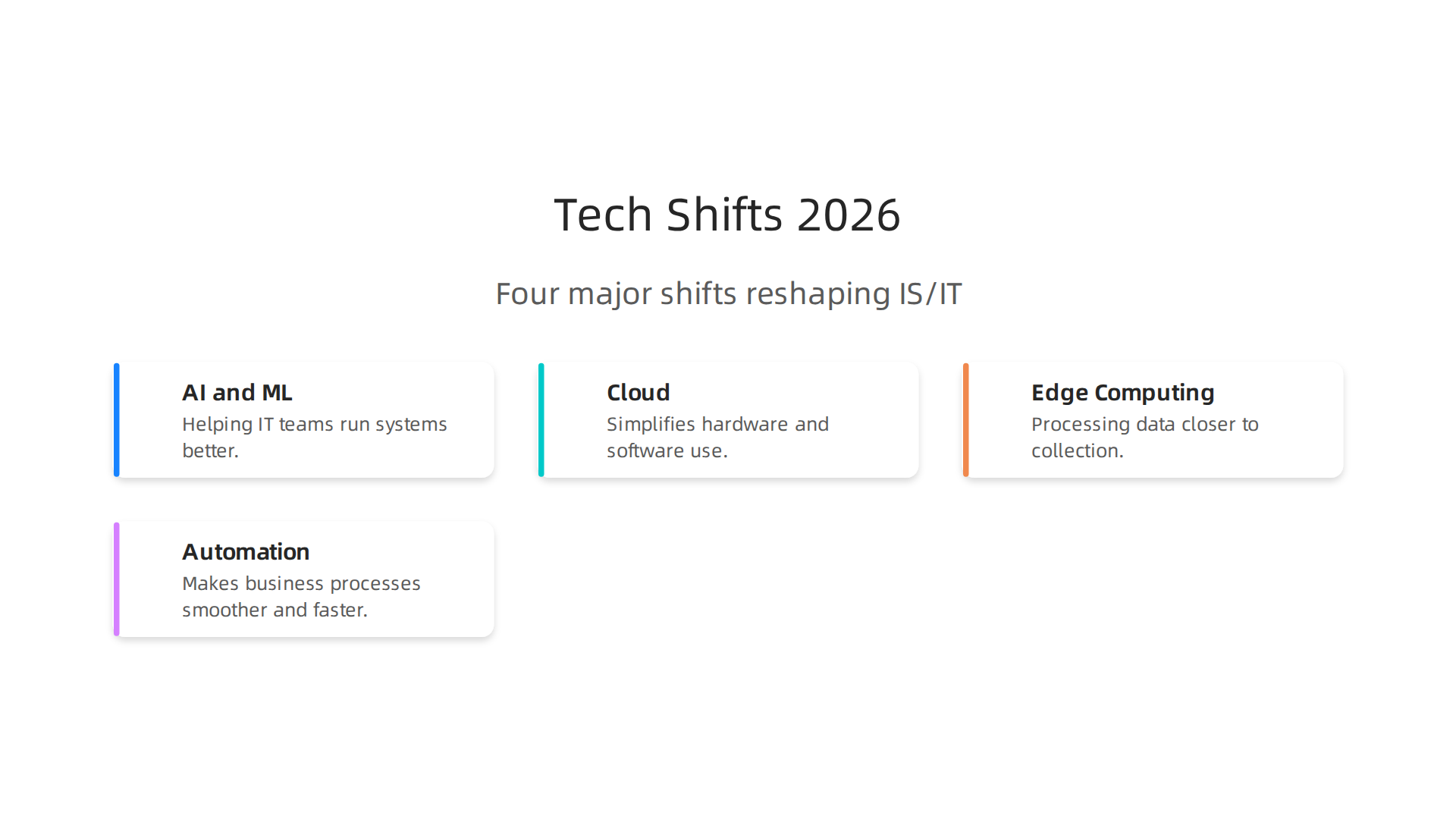
These advancements are making the lines between Information Technology (IT) and Information Systems (IS) shift.
The Big Shifts from AI and New Technologies
1. AI and Machine Learning (ML):
AI is now a big part of how technology is designed and used. It’s helping IT teams run systems better and safer. For example, AI can spot problems in networks before they get big or stop cyber attacks automatically. In fact, more than 70% of tech leaders say AI is already being used across their organizations in 2026, changing how IT functions operate Wavestone’s AI Tech Leaders Survey.
For Information Systems, AI means even bigger changes. It’s not just about making computers work; it’s about making them smart enough to help with business decisions. AI helps IS teams create new ways to understand customers, predict sales, or manage complex projects. Companies are spending a lot on AI, with many expecting to spend nearly double what they did last year on these smart tools AI Quarterly Pulse Survey – Q1 2026. The truth is, businesses that don’t use AI well might lose a good chunk of their money, about 8.6% of their income, predicts one survey Couchbase FY 2026 CIO AI Survey.
2. Cloud Computing:
Cloud services have made IT hardware and software easier to get and use. This means IT teams don’t have to build and maintain as many physical servers. Instead, they manage cloud resources. This shift lets IS teams focus more on how these cloud-based tools can solve business problems, without worrying as much about the basic tech setup.
3. Edge Computing:
Edge computing means doing some data processing closer to where the data is collected, like on a smart camera or a factory machine. This affects IT by changing where hardware is placed and how it’s connected. For IS, it means being able to make decisions much faster, right where the action is happening.
4. Automation:
Automation, often powered by AI, changes how both IT and IS work. IT teams use it to automate routine tasks, like updating software or checking system health. For IS, automation is key to making business processes smoother and faster, from managing customer service to handling inventory.
Changing Roles and Capabilities
As these new tech trends grow, what IT and IS teams do changes.
-
IT’s New Focus: The IT team still makes sure the technology backbone is strong. But now, they also focus on building and maintaining the special infrastructure that supports AI. This includes managing powerful AI hardware and keeping AI systems secure. They also make sure all the data that feeds AI is ready to use. Many IT leaders report seeing value from their AI investments in 2026, with 67% calling their return on investment positive The State of AI in IT for 2026. If you want to dive deeper into this, learn about AI hardware for business leaders.
-
IS’s Strategic Power: Information Systems teams are becoming even more important for business strategy. They use AI and other advanced tools to find new chances for growth, create smarter products, and make better business decisions. They are the ones who figure out how to take all the smart tech IT provides and turn it into real business value. This means IS roles are now heavily focused on understanding how enterprise AI platforms can help the business. AI agents are showing great impact, especially for data analysis, which is a big part of IS work The 2026 State of AI Agents Report.
In short, AI means that IT moves more towards creating and managing the smart infrastructure, while IS focuses more on using that smartness to drive business success and innovation. This separation helps businesses use the AI revolution to their best advantage, moving from just having technology to having technology that truly understands and helps the business thrive. To keep up with these fast-moving changes, you need good information.
Get clear daily AI updates from The AI Newsletter Worth Reading.
This shift also means that some jobs will change, and new ones will appear. For example, AI is predicted to create 2.3 million new specialized AI jobs Impact of Artificial Intelligence on IT Industry Jobs and Emerging. This makes it vital for businesses to stay updated on the latest top technology trends business leaders must adopt in 2026 and understand how to track AI trends and tools.
The shift towards an AI-first world means that the jobs people do in tech are also changing a lot. We’re seeing new kinds of jobs pop up and older jobs needing new skills. This makes it super important for businesses to think carefully about how they organize their teams and what skills they look for in workers, especially when it comes to the difference between information systems and information technology.
People and skills: Rethinking org roles for IS and IT
As AI and other new tech trends become more common, the skills needed for both Information Technology (IT) and Information Systems (IS) teams are changing. It’s not just about what you know now, but what you can learn and how you can use new tools.
What Skills Are Most Important Now?
In 2026, companies are looking for different kinds of skills for their IT and IS roles.
-
For IT Teams: The IT team still needs strong technical skills. They are the ones who build and keep the technology running. But now, this includes skills like making sure AI systems work well, keeping them safe from cyber threats, and managing cloud services. They also need to be good at what’s called "AI-enabled delivery," which means using AI tools to make IT work faster and better. Many hiring managers are looking for people with skills in cybersecurity, cloud management, and the ability to update systems smoothly in 2026 IT Careers in 2026: What Hiring Managers Want.
-
For IS Teams: Information Systems teams need skills that help them use technology to solve business problems and find new opportunities. This means they must understand how AI can help the company make more money or serve customers better. Key skills include being able to work with large amounts of data, understand how AI models work, and turn data into smart business plans. These teams often need people who can be "AI Translators" or "Governance Leads" to make sure AI is used well and responsibly across the company AI Leadership Roles and Literacy. Actually, strong data analysis skills are becoming a must for IS graduates looking into AI career paths AI career paths and skills for Information Systems graduates.
Beyond just technical know-how, everyone in an AI-powered workplace needs a mix of skills. These include being good at thinking critically, understanding data, designing work steps, and communicating clearly. These "human skills" are just as important as knowing how to use the latest software in 2026 The Skills Every AI-Enabled Workforce Needs in 2026.
Changing How We Hire and Train
With these big shifts, companies need to change how they find new workers and train their current staff.

- Hiring Smarter: When hiring, companies should look for people who are not just good at one thing, but who can learn new skills and adapt quickly to new tech trends. They need to seek out candidates who understand both the technical side (IT) and the business side (IS) of AI. In fact, most tech jobs now include some need for AI skills AI Workforce Consortium Finds 78% of ICT Roles Now ….
- Upskilling Current Teams: It’s also important to train existing employees. This means giving them chances to learn about AI, machine learning, and how these tools can improve their daily work. Many companies are investing in programs to teach their IT staff about managing AI systems and their IS staff about using AI for strategy. Learning how to select and use smart AI for business is key for this.
- Redesigning Roles: Job roles are being updated to fit the new AI world. For example, some IT roles might now focus on "AI Operations" (AI Ops), which is all about keeping AI systems running smoothly and safely. On the IS side, roles might be created to focus on "AI strategy" or "AI ethics." This helps make sure that the right people with the right skills are doing the right jobs, helping the business use AI to its fullest. If you’re wondering how AI will impact jobs, it’s worth exploring preparing for what jobs will AI replace.
By focusing on these new skills and smart ways of hiring and training, businesses can make sure their IT and IS teams are ready for the future. This helps them stay ahead in the fast-moving AI revolution and keeps them competitive.
The new world of AI doesn’t just change jobs and skills. It also brings big questions about how we use this powerful tech in a fair, safe, and lawful way. This is where governance, risk, compliance, and ethics come into play. Both Information Systems (IS) and Information Technology (IT) teams must work together to get this right.
Why Rules and Ethics Matter for AI
Think about it like driving a new, super-fast car. You need to know the traffic laws, understand the risks, follow safety rules, and make sure you’re driving fairly. AI is similar. As AI becomes more common, companies face pressures from laws and from people expecting them to use AI responsibly.
- Governance: This is about having clear rules and ways to make decisions about how AI is used. It’s like having a good roadmap for your AI journey.
- Risk: AI can have unexpected problems, like making unfair decisions or getting hacked. Managing risk means finding these problems and stopping them.
- Compliance: This means making sure all AI tools and uses follow the latest laws and industry rules. For example, there’s the EU AI Act and frameworks like the NIST AI Risk Management Framework that help guide companies in 2026 Governance, risk, and compliance frameworks for AI Security ….
- Ethics: This is about doing the right thing, even when there isn’t a rule. It’s about being fair, open, and not causing harm with AI. Many international AI frameworks push for trustworthy and accountable systems AI Ethical Frameworks and Governance Boards.
These pressures affect IS and IT teams in different ways, but both are very important. The IS team often thinks about the big picture and how AI fits into business goals and ethical use. The IT team focuses on making sure the AI systems are built and run securely and correctly.
Bringing IS and IT Together for AI Safety
For a business to truly use AI well, the IS and IT teams must work hand-in-hand on these tough topics.
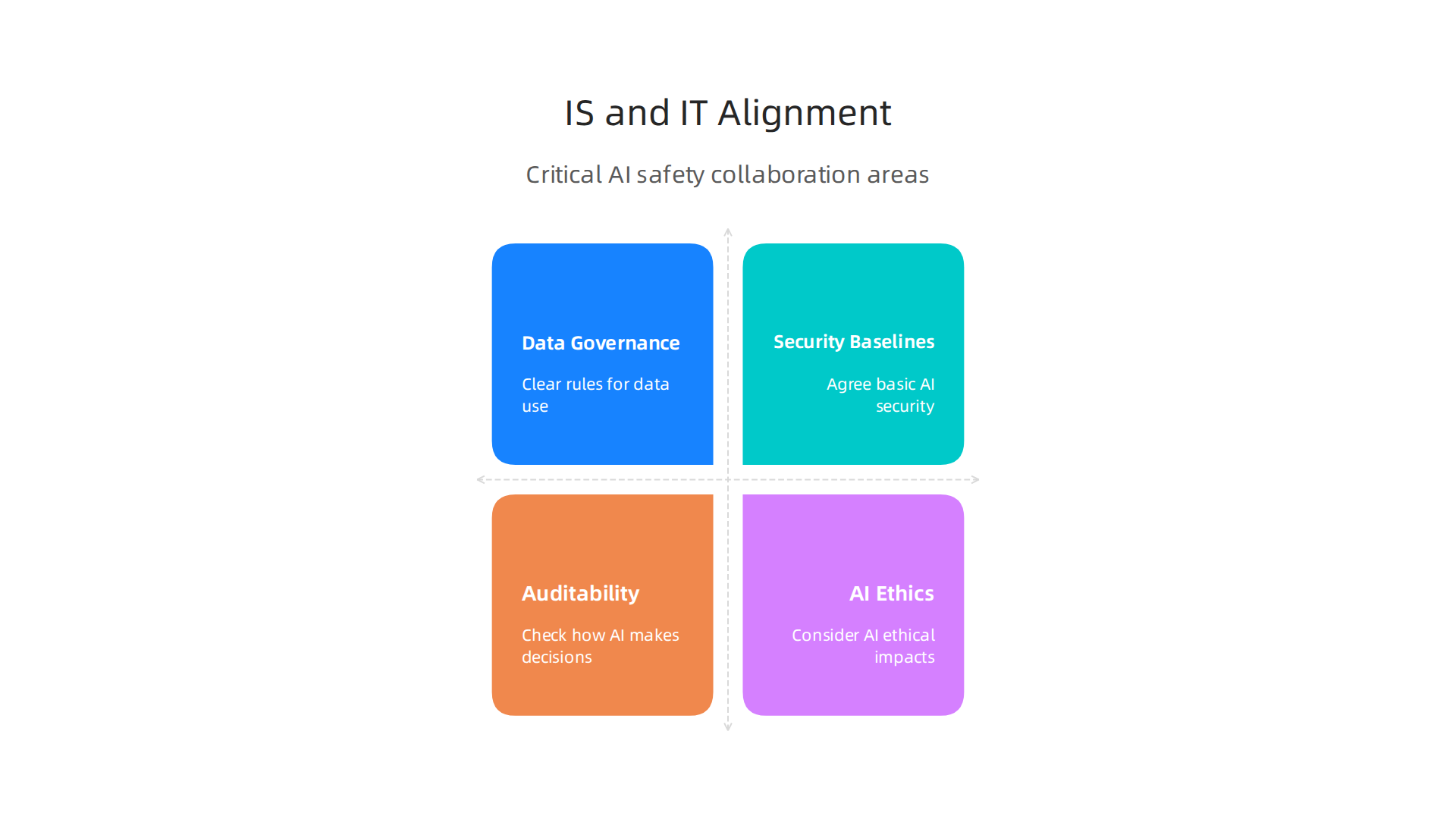
Here’s how they can make sure their efforts align:
- Data Governance: This means having clear rules for how data is collected, stored, and used. Both teams need to make sure the data feeding AI systems is good, safe, and used ethically. The IS team might set the rules for data use based on business needs and ethics, while the IT team builds the secure systems to handle that data.
- Security Baselines: AI systems can be targets for cyber attacks. IT teams are responsible for making these systems safe, but IS teams need to understand the security risks when designing new AI-powered business solutions. They need to agree on a basic level of security for all AI projects. Singapore, for example, has put out guides for responsible use of agentic AI AI Risk Management: Operationalisation Handbook. It is critical to stay updated on these kinds of future tech.
- Auditability and Transparency: It’s important to be able to check how AI makes its decisions. This is called auditability. IT teams build systems that can be checked, and IS teams make sure those checks meet business and ethical needs. For example, frameworks exist to help businesses show their ability to identify and control AI risks AI Governance & Risk Readiness 2026: EU AI Act & Global ….
- AI Ethics: This is maybe the most important part of the AI revolution. Both teams must think about the ethical impact of their AI projects. Will the AI be fair to everyone? Is it causing any harm? IS teams might lead the charge in defining ethical guidelines, while IT teams make sure the technology follows those rules. It’s all about mastering the AI future standard 2026.
By making sure these areas are aligned, businesses can create trust in their AI use and avoid big problems. The journey through the new tech trends requires constant learning and staying informed.
If you want to stay ahead of the curve in this fast-changing world, make sure you’re getting the most up-to-date information.
Get clear daily AI updates from The AI Newsletter Worth Reading.
Moving from understanding the "why" of AI governance to the practical "how" of putting AI into action is the next big step for businesses. This is where information systems vs information technology teams truly shine, working together to turn AI ideas into real-world tools that help the business. It’s about taking AI from a small test (a pilot) to a system that works every day (production). This journey needs a clear plan, often called an adoption roadmap.
Here is a simple roadmap for IS and IT leaders to guide their businesses through the current AI revolution:
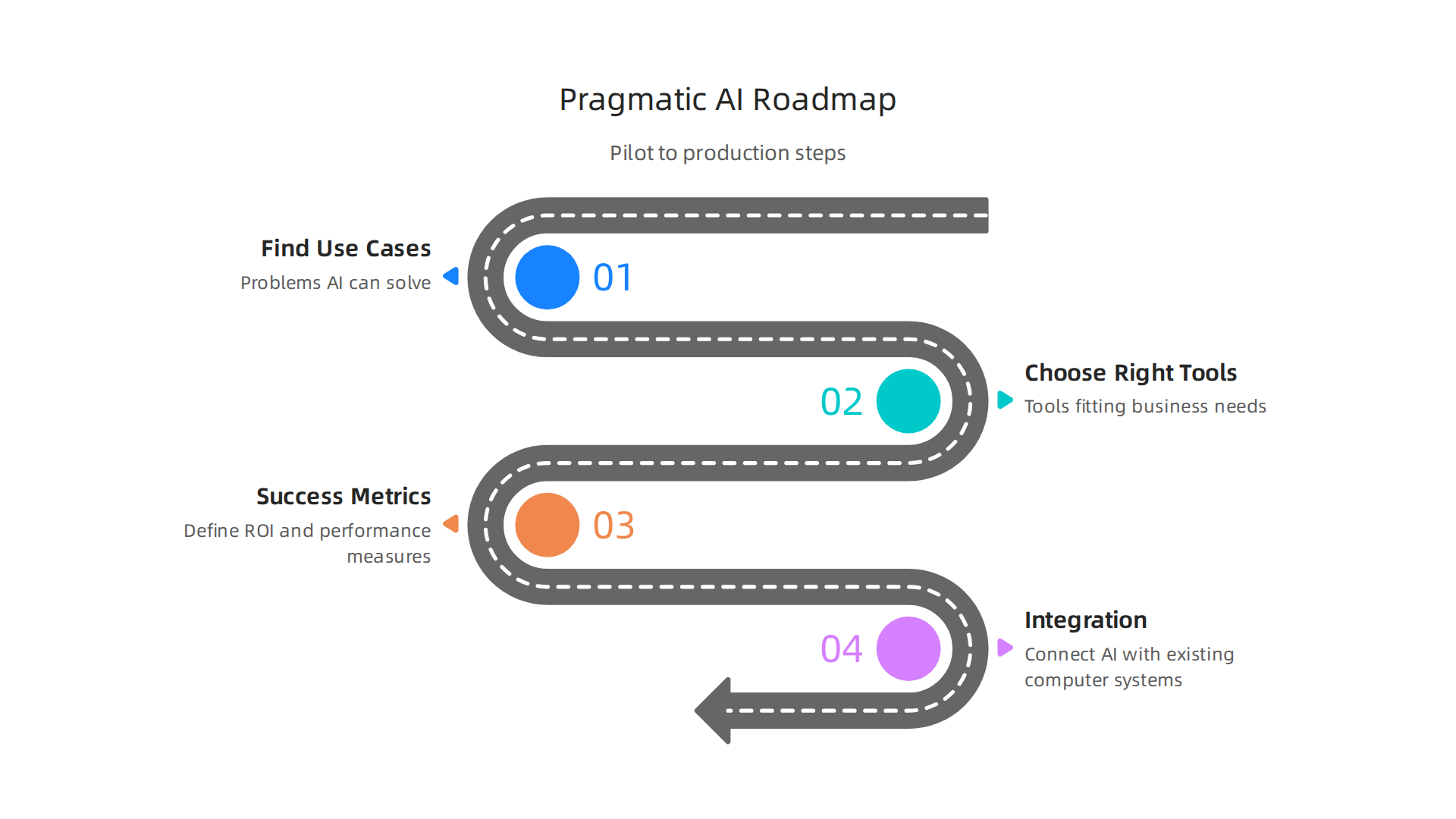
1. Find the Best Ways to Use AI (Use Cases)
Before diving into any AI project, it’s key to figure out what problems AI can solve for your business. This means looking at daily tasks and asking: "Can AI make this faster, better, or cheaper?" IS leaders often start this process by understanding business goals and spotting areas where AI could help a lot. They might look at customer service, making products, or how employees work.
Even in 2026, many companies are still figuring this out. A report from Deloitte shows that about 69% of businesses are just trying out AI or running small tests, with only a smaller part actually using AI daily with clear financial benefits Deloitte-HKU AI Adoption Index 2026 The Paradox of Promise and …. This highlights how important it is to pick the right projects to begin with.
2. Choose the Right Tools for the Job
Once you know how you want to use AI, you need to pick the right tools. This is where the difference between information systems vs information technology becomes very clear.
- IS teams might focus on tools that fit the business need, how they will be used by people, and how they help reach company goals. They might explore different types of AI solutions, like those for better marketing or smarter operations. If you’re looking for guidance, you can learn more about how to choose AI for business tools that deliver real results.
- IT teams look at the technical side: Can these tools work with our current systems? Are they secure? What kind of computers or cloud services do we need? They make sure the chosen technology is strong enough and safe. Tech leaders are still investing heavily, with average projected AI spending around $294 million in the next 12 months, according to one 2026 survey AI Quarterly Pulse Survey Technology – KPMG International.
Both teams need to agree on tools that work for everyone.
3. Figure Out What Success Looks Like (ROI and Metrics)
Before starting any big AI project, it is super important to know how you will measure if it’s working. This means defining your "Return on Investment" (ROI) and other success metrics.
- IS leaders decide what business outcomes are important: Will it save money? Make customers happier? Boost sales?
- IT leaders help track the technical performance: Is the AI fast enough? Is it accurate? Are there fewer errors?
You need to think about all the costs, both clear and hidden, like training staff or changing old systems. Many reports in 2026 talk about how to measure AI ROI, suggesting you set clear goals and track them carefully from the start How to Measure AI ROI: Executive Guide (2026). Without clear goals, it is hard to tell if the AI is truly helping your business grow.
4. Connect AI with What You Already Have (Integration)
Most businesses already have many computer systems. When you bring in new AI, it needs to work smoothly with these existing systems, often called "legacy IT" or "data platforms."
- IT teams are usually in charge of making these connections happen. They build the bridges between the new AI tools and older databases or software. This might involve building new data pipelines or making sure different systems can talk to each other. Learn more about how to choose the best AI tech products for your team in 2026.
- IS teams guide this by making sure the AI-enabled information systems get the data they need and send information back to other systems correctly. They ensure the overall flow of information makes sense for the business. This is a critical step for making sure AI isn’t just a standalone experiment, but a useful part of your everyday work.
By following these steps, businesses can safely and effectively adopt new AI technologies, moving beyond small tests to fully using AI to power their future. This continuous adaptation is essential in a world shaped by rapidly changing tech trends.
Now that you have a clear roadmap for bringing AI into your business, the real work begins: looking at actual AI solutions and deciding if they are truly right for your company. This means knowing how to spot good promises from empty ones, especially when vendors talk about the latest tech trends in the AI revolution. It also means understanding the different viewpoints of information systems vs information technology teams when judging new tools.
What to Ask AI Vendors and Partners
When you are ready to pick an AI solution, you’ll talk to many companies that sell AI tools.

They will make many claims about what their AI can do. Your job, as an IS or IT leader, is to look past the shiny presentations and get to the real facts. Both IS and IT teams have important questions to ask:
- For IS leaders (focus on business value):
- How will this AI change how our employees work day-to-day?
- What exact business problem does it solve, and how does it make our customers happier or our operations smoother?
- Can you show us case studies from other businesses like ours where this AI led to real money saved or more sales?
- How easy is it for our team to learn and use this new system?
- For IT leaders (focus on technical details and safety):
- Will this AI work with our existing computer systems and data? What kind of integration effort is needed?
- How secure is this AI tool? What steps do you take to protect our company’s data?
- Where will our data be stored and processed? Which other companies (third parties) might get access to it?
- What happens if the AI makes a mistake or has a problem? How does your system handle these "failure modes"?
- Can we host this AI ourselves, or do we have to use your cloud service?
It is important to evaluate AI vendors carefully to ensure they meet your specific needs for growth, as detailed in guides like How Enterprises Should Evaluate AI Vendors in 2026. Asking tough questions helps you understand the true value and risks. In fact, experts suggest asking as many as 40 questions during an Enterprise AI Vendor RFP in 2026 process to cover all bases.
The Right KPIs to Request for IS vs IT Solutions
When a vendor tells you their AI will help your business, you need them to prove it with numbers. These numbers are called Key Performance Indicators, or KPIs. They show if an AI solution is truly working.
- For IS-focused solutions: You’ll want to see business-related KPIs.
- Cost Savings: How much money did the AI save per month or year?
- Time Savings: How much faster are tasks completed? For example, reducing customer service response time.
- Revenue Growth: Did sales go up because of the AI?
- Customer Satisfaction: Are customers happier or more likely to recommend your business?
- Employee Productivity: Are employees getting more done with less effort?
- For IT-focused solutions: You’ll need technical KPIs.
- System Uptime: How often is the AI system working without issues?
- Processing Speed: How fast does the AI analyze data or complete tasks?
- Accuracy Rates: How often is the AI’s output correct?
- Security Incidents: How many security problems occurred, if any?
It’s crucial to set these clear goals from the start. A recent report stresses that to truly measure the business impact of AI, you need to track specific metrics like adoption depth and task-level time savings from the beginning of your project in 2026 Measuring AI Adoption: Metrics for Business Impact in 2026. Without clear KPIs, it’s just guesswork.
Case-Study Prompts and Evidence Checkpoints
When considering an AI solution, ask vendors for real-world proof.
- Pilot Program Success: If they have done a pilot (small test) with another company, ask for details. What were the results? What challenges came up, and how were they solved?
- Adoption Rates: A tool is only useful if people actually use it. Ask what the adoption rates were for past projects. How did they get employees to use the new AI?
- Long-Term Impact: AI isn’t just for a quick win. Ask for proof of long-term value. How has the AI continued to help businesses over time?
- Data Portability and Exit Strategy: What happens if you want to switch vendors later? Can you easily get your data back, and will the AI still work with a different provider?
By asking these types of questions and looking for solid evidence, your IS and IT teams can work together to make smart choices. This helps you avoid wasting money on tools that don’t deliver, and instead, find the best AI to keep your business competitive in a world of fast-changing tech trends.
To stay on top of the latest AI revolution and make informed decisions, consider getting regular updates.
Get clear daily AI updates from The AI Newsletter Worth Reading.
Summary
This article explains why distinguishing Information Systems (IS) from Information Technology (IT) matters for businesses in 2026, especially during the AI revolution. IT refers to the technical tools — hardware, software, networks and platforms — while IS is the broader system that combines those tools with people, processes and data to meet business goals. The piece details how AI, cloud, edge computing and automation are reshaping both functions: IT now builds and secures AI infrastructure, while IS turns AI capabilities into strategic outcomes. It covers changing roles, the most important skills to hire or train, and how teams should collaborate on governance, risk, compliance and ethics. The article provides a practical adoption roadmap—identifying use cases, choosing tools, defining KPIs, integrating with legacy systems—and gives guidance on vetting vendors and measuring ROI. Readers will walk away able to separate technical decisions from business design, ask the right vendor questions, set useful KPIs, and organize IS and IT to deliver safe, measurable AI value.
Leave a Reply