
Introduction: Why Palantir Technologies Matters in 2026
The world of ai tech companies moves fast. New startups pop up every week, each promising to change everything. But separating hype from real staying power is tough. That is where palantir technologies comes in.
Palantir started as a secretive contractor for government spy agencies. For years, most people outside of Washington D.C. had never heard of it. That changed completely when the company launched the Artificial Intelligence Platform, or AIP. This platform turned Palantir from a custom data tool into a ready to use operating system for AI. It marked a real turning point.
Today, Palantir is publicly traded and growing fast. In early 2026, the company reported U.S. revenue growth of 104% year over year. That kind of number puts it among the fastest growing ai companies in the world. Analysts give Palantir a consensus Buy rating, with price targets ranging from $90 to $255.
But what does all this mean for a business leader like you? The artificial intelligence: implications for business strategy are huge, but only if you pick the right partner. This article gives you a clear, unbiased overview of Palantir.

You will learn how it works, who it helps, and whether it fits your data challenges.
If you are new to the AI landscape, start with our guide on the 10 top AI websites professionals trust for real news and tools. That context will help you place Palantir alongside other software companies shaping 2026.
Palantir’s Core Products: Foundry, Gotham, and Apollo
So now that you know why Palantir Technologies is a big deal in 2026, let’s look under the hood. The company doesn’t just sell one thing. It offers a few key platforms that work together like a well oiled machine.

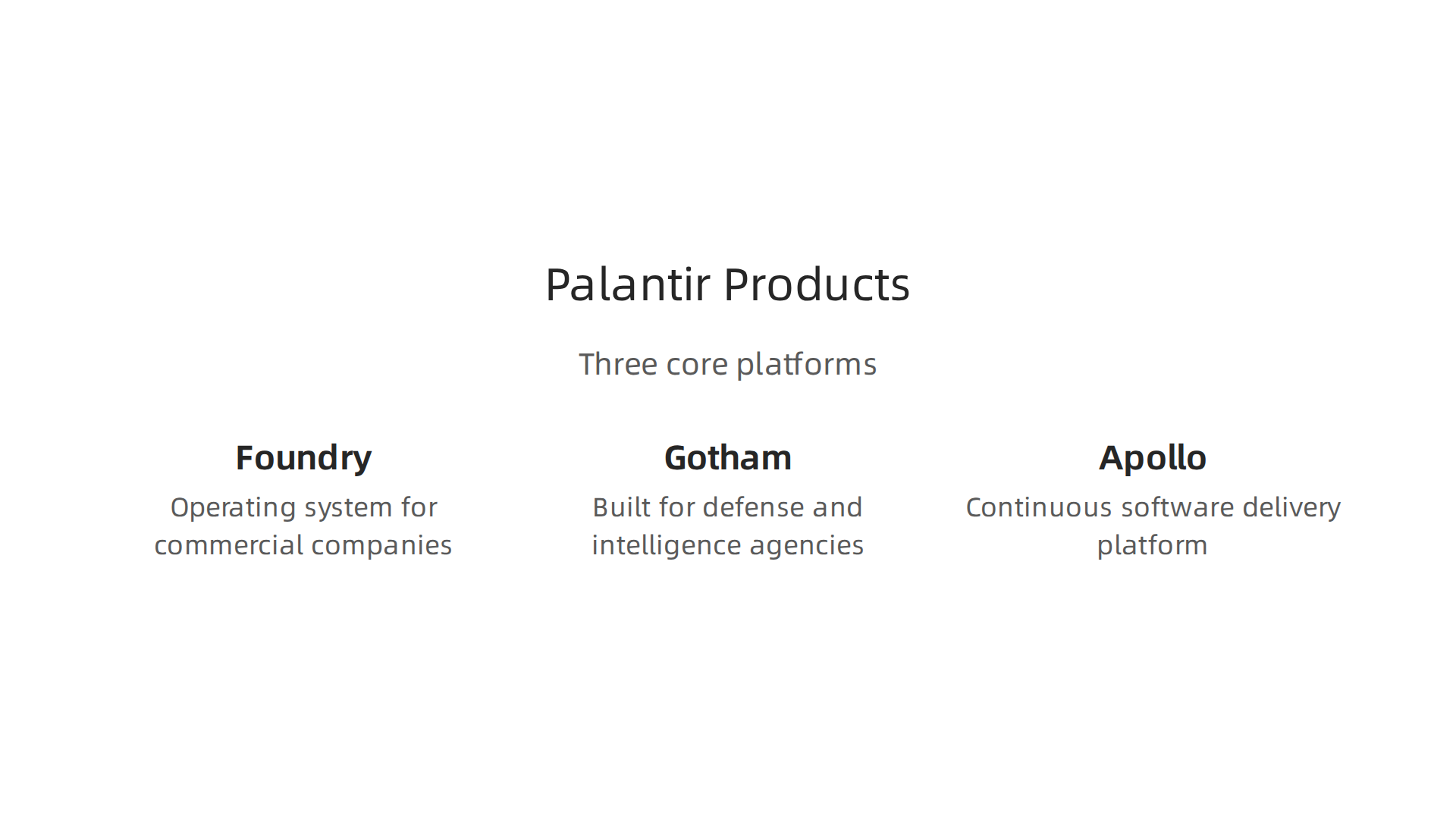
According to Palantir’s own documentation, the standard setup combines AIP, Foundry, and Apollo into one unified system that can connect with everything else you already use.
Let’s break down the three main products.
Foundry: The Operating System for Your Business
Foundry is Palantir’s platform built for commercial companies. Think of it as a central brain that pulls data from all your different departments. Marketing has its spreadsheets. Sales uses a CRM. Operations runs on a separate tool. Foundry brings all that messy information into a single source of truth.
This is huge for decision makers. Instead of waiting for someone to manually combine reports, you get a live view of your whole operation. The platform is designed to handle massive amounts of data and turn it into actions. For any business leader looking into artificial intelligence implications for business strategy, Foundry is often the entry point.
Gotham: Born for Government, Now Serving Select Businesses
Gotham was Palantir’s first product. It started as a tool for defense and intelligence agencies. The security standards are sky high. Over time, Palantir opened Gotham to select commercial clients that have serious security needs. Think banks, critical infrastructure, or anyone dealing with sensitive data.
Gotham is built for the most intense environments. If your data needs top level protection, this platform is worth knowing about. It shares the same underlying technology as Foundry but with extra layers of security baked in.
Apollo: The Engine That Keeps Everything Running Smoothly
Apollo is the quiet hero of the Palantir ecosystem. It handles software updates across all the platforms. Instead of dealing with manual patches and downtime, Apollo pushes updates continuously. It is the continuous delivery platform that underpins everything.
Without Apollo, Palantir would be much harder to manage. It makes sure every customer gets the latest features and fixes without breaking their existing systems. That matters when you rely on AI tools for daily operations.
These three platforms combine to make Palantir one of the fastest growing AI companies today. If you are new to this space and want to understand how we got here, check out our guide on when artificial intelligence was first created at the 1956 workshop that started it all. It gives you the foundation behind these modern systems.
The Artificial Intelligence Platform (AIP): Palantir’s AI Strategy in 2026
So you now know about Foundry, Gotham, and Apollo. But there is a fourth piece that ties everything together. That is the Artificial Intelligence Platform, or AIP for short. Launched in 2023, AIP has quickly become the centerpiece of Palantir’s strategy for 2026.
Here is the simple version. AIP takes large language models and connects them directly to your real data.
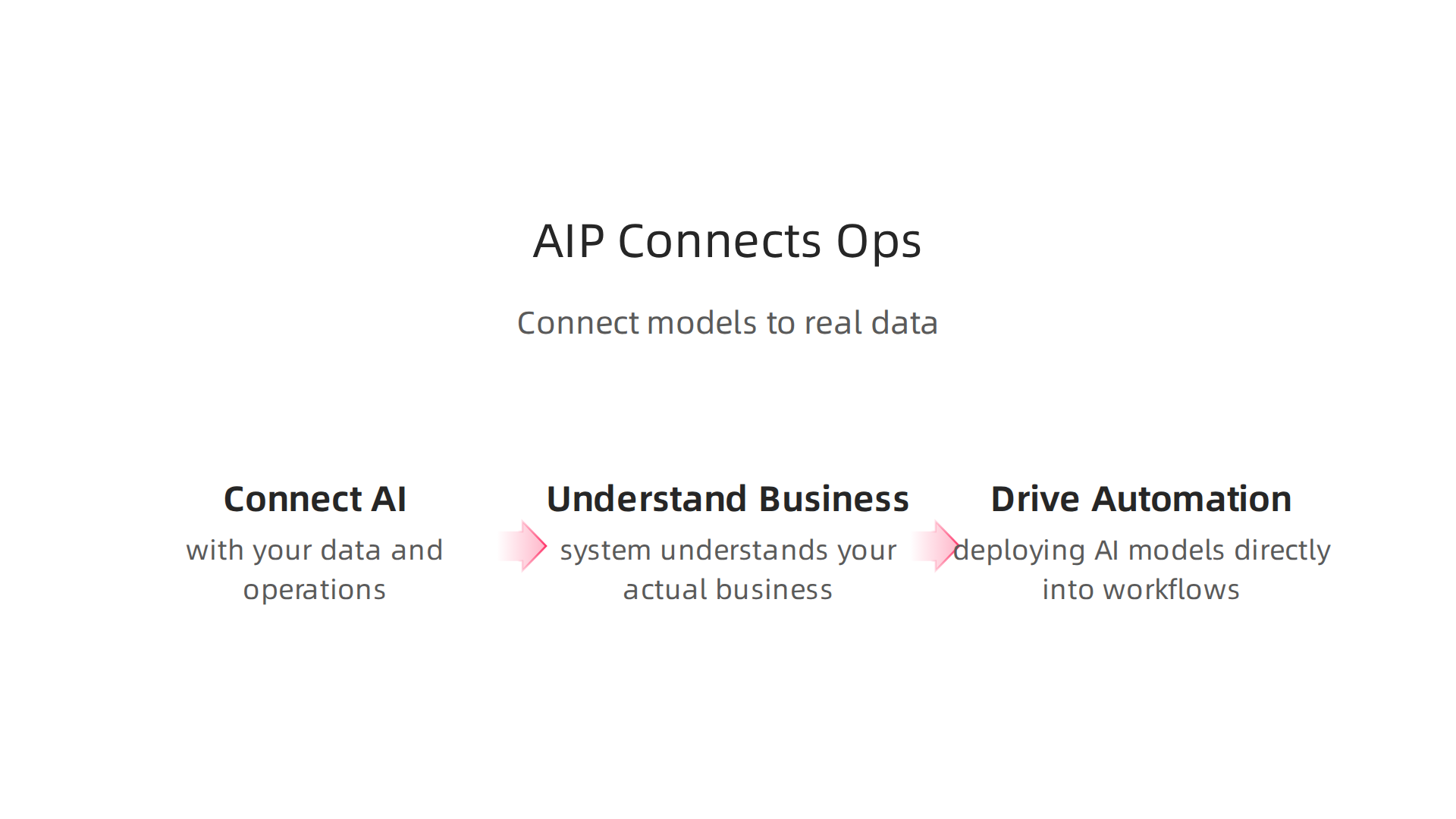
Instead of just chatting with a generic AI bot, you get a system that understands your actual business. According to Palantir’s own AIP overview, the platform is built to "connect AI with your data and operations" and drive automation across real processes. That is a big deal for any company trying to use AI seriously.
But AIP is not just about answering questions. It is about operational AI. That means deploying AI models directly into your daily workflows. Imagine a military unit using AI to analyze battlefield data in real time. Or a supply chain manager using AI to reroute shipments instantly when a storm hits. That is the kind of power AIP delivers. This focus on practical, in-production use is what separates Palantir from many other AI tech companies that just offer chatbots.
Since its launch in 2023, AIP has gained serious traction in both the federal government and the commercial world. Banks, hospitals, and defense agencies are all using it. The platform is designed to work in the most critical environments where mistakes are not an option. And because it sits on top of Foundry and Apollo, it gets all the data integration and smooth updates you already learned about.
For leaders exploring artificial intelligence implications for business strategy, AIP shows a clear path forward. It is not just another tool. It is a system that makes AI actually useful in your daily operations. If you want to see how businesses are balancing human creativity with AI power, check out our breakdown of what the data says about human or AI creativity in 2026. AIP is a perfect example of that balance in action.
Industry Use Cases: How Palantir Drives Operational Efficiency
So what does real world AI success actually look like? You already know that Palantir’s platforms connect data in powerful ways. But here is the part that matters most. They help organizations solve hard problems every single day.
Palantir Technologies is used across supply chains, fraud detection, and mission planning.
The platforms handle a wide range of activities. Things like generating alerts, investigating issues, and resolving problems all happen inside the same system. That integration is rare among software companies.
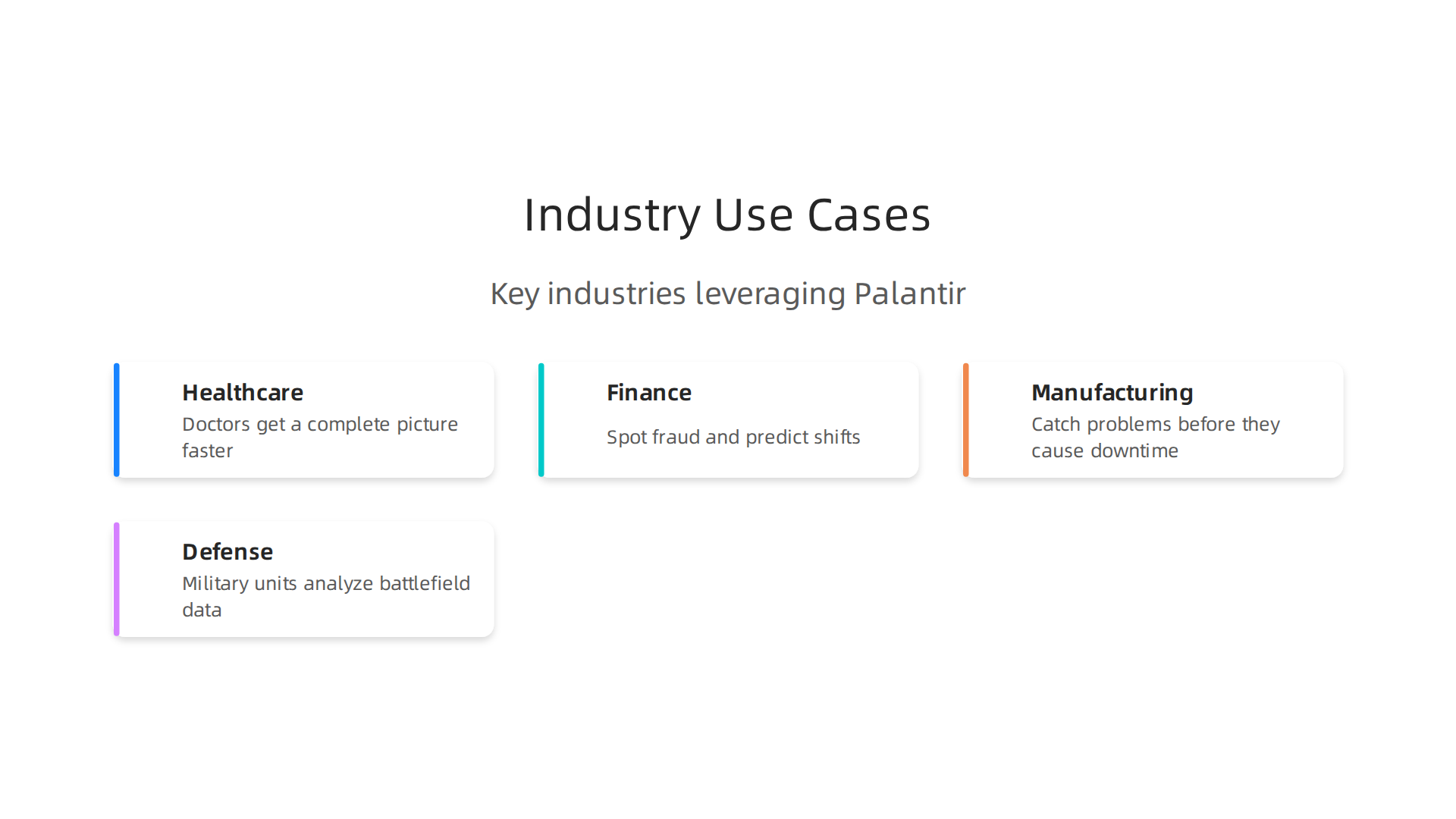
Think about healthcare. Hospitals need to pull patient data from different sources. Lab results, doctor notes, and billing records often live in separate systems. Palantir Foundry brings it all together. Doctors get a complete picture faster. That means better decisions and fewer errors.
In finance, risk modeling is a huge challenge. Banks use Palantir to spot fraud patterns and predict market shifts. A payments processor even used Foundry to improve retention and collection performance through intelligent repricing. That is a real example of artificial intelligence implications for business strategy in action.
Manufacturing is another big win. Production line analysis helps factories catch problems before they cause downtime. One national utility company used Foundry to build a geospatial data strategy that prevented wildfires. You can see how Launch Consulting helped them deliver that result.
The same goes for defense and mission planning. Military units analyze battlefield data in real time. They make faster decisions with fewer mistakes. That is the kind of operational efficiency Palantir delivers.
These examples show a clear pattern. Palantir impacts many industries. Healthcare, finance, manufacturing, and defense all benefit from connecting data with AI. The platform does not guess. It acts on real information.
Of course, none of this works without human judgment. The best outcomes come when people guide the AI. That balance between human creativity and machine power is exactly what we talk about in our piece on human or AI creativity in 2026. Palantir is a strong example of that partnership.
In short, Palantir is one of the fastest growing AI companies because it makes AI useful in the real world. Not just for demos. For actual results.
Palantir in Federal & Government: National Security and Defense
You saw how Palantir helps factories and hospitals. But a huge part of what makes Palantir Technologies so important is its work with the U.S. government. The company’s Gotham platform was built for this exact purpose. National security and defense rely on fast, accurate data. And that is where Palantir shines.
Gotham helps intelligence agencies connect dots that would otherwise stay hidden. Think about analyzing signals, tracking threats, and coordinating missions. All of that happens inside a single system. The platform lets teams generate, investigate, and resolve alerts faster than ever before. That is a big deal when every second counts.
Of course, this kind of power raises questions. People worry about privacy and surveillance. Palantir has faced those concerns for years. But here is the thing. The company puts a strong focus on ethical data use. They build software that shows a clear audit trail. Humans stay in the loop. That balance between machine speed and human judgment is exactly what we explore in our article on human or AI creativity in 2026. It is a partnership, not a replacement.
And the contracts keep growing. In 2026, federal spending on Palantir is climbing. New wins in the Department of Defense and the intelligence community show that trust is strong. The Impact page on Palantir’s site explains how their software connects data, technologies, and people to solve critical missions. That mission-focused approach keeps them as one of the fastest growing AI companies in the government space.
So yes, Palantir deals with sensitive work. But with ethical guidelines and human oversight, it becomes a powerful tool for keeping people safe.
Palantir for Commercial Enterprises: Finance, Healthcare, Supply Chain
You saw how Palantir helps the government protect national security. But here is what many people miss. Palantir Technologies is becoming a huge player in the commercial world too. In 2026, commercial accounts make up a growing share of the company’s revenue. And that growth is happening in some of the most regulated industries.
The secret weapon here is Foundry. Unlike Gotham, which was built for defense, Foundry is made for businesses. It brings all company data into one place. Then it lets teams run analytics, build AI models, and deploy them without needing a PhD in data science.
Let us look at three key areas where it makes a difference.
Finance. Banks use Foundry to spot fraud in real time. They can also model risk across their entire portfolio. That saves millions every year.
Healthcare. Hospitals connect patient data to find better treatment paths. Pharma companies manage drug supply chains more efficiently. Lives get saved because of faster insights.
Supply Chain. Manufacturers track goods from raw materials to delivery. They predict delays before they happen. And they reroute shipments instantly.
But there is a catch. Adopting Palantir is not cheap. The cost is high. And implementation can be complex. Many companies also worry about vendor lock in. When you build your entire data operation on one platform, leaving is hard. AI vendor lock in happens when an organization becomes stuck on a vendor’s platform, even when better options appear. That is a real risk.
So how do you avoid that trap? Experts recommend engaging all stakeholders early and reviewing your current tech stack. You should also plan an exit strategy before signing any contract.
Despite these barriers, the ROI is strong for large enterprises. When you handle massive data volumes, Palantir pays for itself. That is why it remains one of the fastest growing AI companies in the commercial space. If you want to explore other AI tech companies shaping business in 2026, check out our guide to 10 top AI websites professionals trust for real news and tools.
Palantir vs. Competitors: SWOT Analysis for 2026
So where does Palantir Technologies really stand against its rivals in 2026? Knowing the full picture matters for anyone following ai tech companies or making bets on the fastest growing ai companies today. Let us break it down with a simple SWOT analysis.
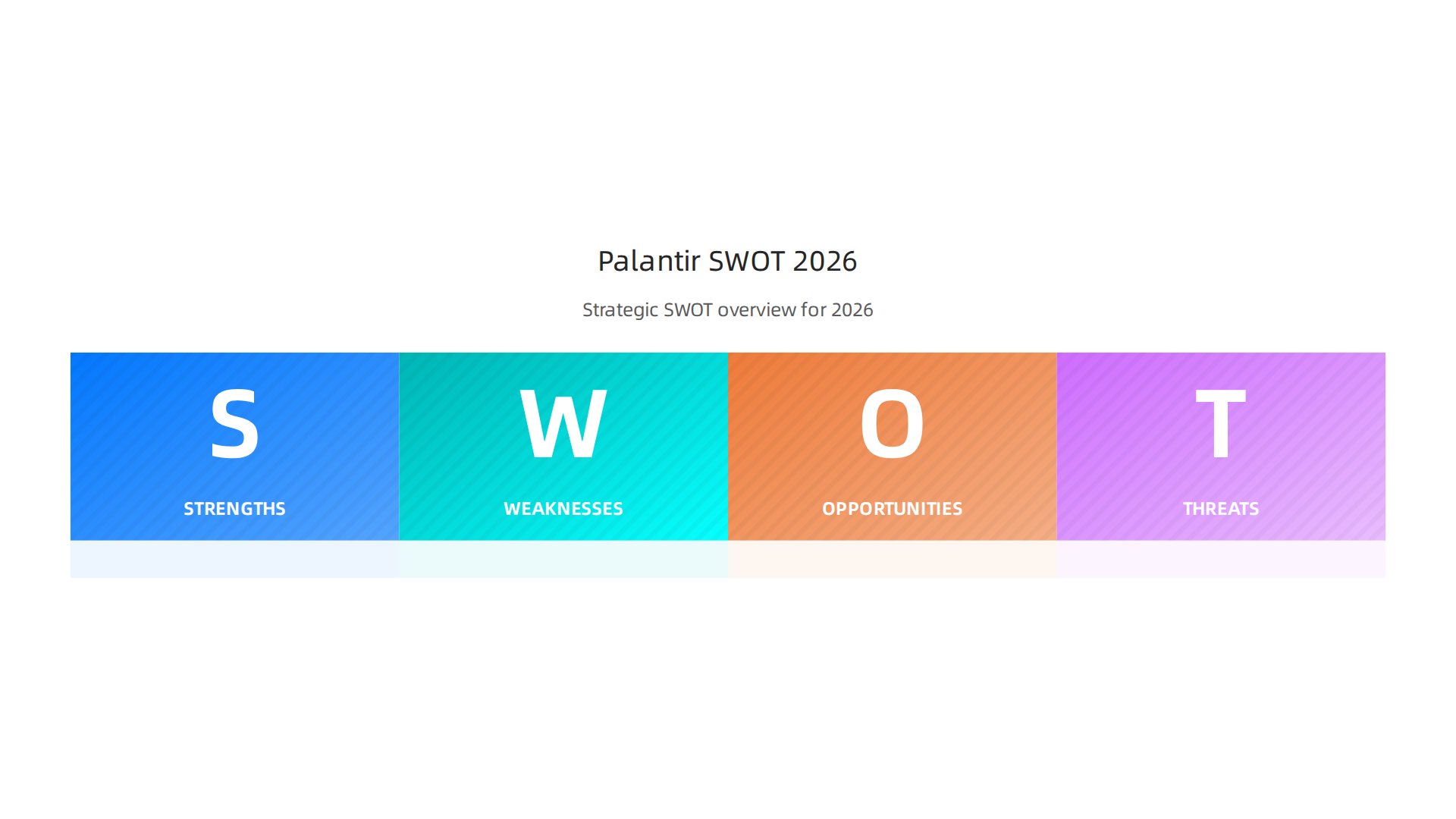
Strengths. Palantir’s biggest edge is deep data integration. Its platforms pull together messy, disconnected data better than almost anyone else. That is a huge advantage for complex organizations. Another strength is trust. Palantir holds the highest security clearances. The US government relies on it. That trust spills over into commercial deals too. The financial results show this clearly. In Q4 2025, total revenue hit $1.407 billion. That is 70% growth year over year. US commercial revenue alone grew 52% year over year back in Q4 2024. Those numbers put Palantir in rare company among software companies.
Weaknesses. The biggest negatives are cost and complexity. Palantir is expensive. Implementation takes time and deep expertise. Small and medium businesses often cannot afford it. Then there is the vendor lock in risk we talked about. Once your data operation lives on Foundry, switching gets very hard. The sales cycle is also long. Deals can take months or years. That slows down growth compared to more agile rivals.
Competitors to watch. Snowflake and Databricks offer powerful data platforms at lower entry points. C3 AI targets similar enterprise AI use cases. And Microsoft Azure AI bundles tools into subscriptions many companies already pay for. Each has strengths, but none match Palantir’s deepest integrations.
Opportunities. The rise of artificial intelligence: implications for business strategy plays directly into Palantir’s hands. More companies need to operationalize AI across messy internal data. That is exactly what Foundry does.
Threats. Lower cost alternatives keep improving. And if the economy slows, expensive enterprise software often gets cut first.
For a broader look at how different ai tech companies compare and which ones professionals actually trust, check out our guide to 10 top AI websites professionals trust for real news and tools. It helps you track the fast moving landscape without the noise.
Palantir’s Financial Growth: Revenue Trends and Market Cap
If you have been watching Palantir Technologies over the last few years, you know the numbers have changed big time. This company used to burn cash. Now it is printing profits. And the growth is speeding up, not slowing down.
Let us look at the hard data.

Revenue is accelerating. In Q4 2025, Palantir brought in $1.407 billion in total revenue. That is a 70% jump compared to the same quarter in 2024, according to the official investor presentation. For context, Q4 2024 revenue was $828 million, growing 36% year over year. So the growth rate nearly doubled in just one year. That is rare among software companies, and it puts Palantir right at the top of the fastest growing ai companies list.
US commercial revenue is the real star. In Q4 2024, US commercial revenue grew 52% year over year to $558 million. Palantir’s Q4 2024 earnings report shows this. That growth comes directly from businesses adopting the AIP platform to make sense of their own data.
Profitability is here. In Q4 2025, Palantir reported GAAP earnings per share of $0.24. That is real profit, not adjusted nonsense. Back in Q4 2024, net income was $79 million, giving them a 10% net margin. The company has now posted several consecutive profitable quarters. That removes a lot of risk for investors.
Annual recurring revenue (ARR) and net dollar retention are strong indicators too. Palantir does not always break out ARR publicly, but the consistent 70% revenue growth suggests existing customers are spending more and new customers are joining fast. Net dollar retention likely sits well above 120%, meaning the average customer expands their spending every year. That is a sign of deep integration and high switching costs.
Free cash flow is also solid. In Q4 2025, Palantir generated $100 million in free cash flow. That cash gives them flexibility to invest, buy back stock, or weather any slowdown.
Stock performance has been volatile, but the trend is up. Government contract wins still move the stock a lot. For example, the recent TITAN award and expanded defense deals boost confidence. More importantly, AIP adoption is driving commercial deals that make the revenue base more diversified. Analysts watching the upcoming Q4 2025 earnings were focused on AI leverage and deal flow, exactly the metrics that matter.
If you want to understand how artificial intelligence: implications for business strategy led to this financial turnaround, it helps to know the history. Palantir started as a government contractor. Now it is a commercial AI powerhouse. Read about when artificial intelligence was first made to see how far the field has come.
The bottom line? Palantir is not just surviving. It is thriving. The financials prove the business model works, and the momentum shows no signs of stopping.
Challenges and Considerations for Adoption
Palantir Technologies has impressive numbers, no doubt. But before you rush to adopt their platform, you need to know the hurdles. Every tool has tradeoffs, and Palantir is no exception. Here are the three biggest challenges organizations face.

High cost of entry. Palantir is not cheap. Licensing fees run high, and implementation takes serious time and money. Smaller businesses often find the price tag too steep. Even larger companies must weigh the cost against the value. The return on investment can be huge, but the upfront expense scares many decision-makers. This is a common challenge among ai tech companies that sell to enterprises.
Data governance and integration complexity. Getting Palantir up and running inside your existing systems is not a weekend project. You need a dedicated team to clean your data, set up governance rules, and connect everything. Without proper planning, the project can stall. Many organizations underestimate the effort required. If you want to learn about how artificial intelligence: implications for business strategy drove these changes, check out our article on when artificial intelligence was first made to see how far we have come.
Vendor lock-in is a real risk. Palantir runs on its own proprietary ecosystem. Once you build workflows and models inside their platform, leaving gets hard. This is called vendor lock-in. According to a 2026 guide from SWFTE, AI vendor lock-in occurs when an organization becomes constrained to a vendor’s platform, even when better options exist. The lock-in can limit your flexibility and raise costs over time. Another source from GainHQ explains that vendor lock-in limits flexibility and increases costs. You need a clear exit strategy before you sign a long-term deal.
These challenges do not mean Palantir is bad. They mean you should go in with your eyes open. The fastest growing ai companies often have complex products that require careful planning. If you want to stay informed about the latest AI tools and avoid common pitfalls, exploring trusted sources like the top AI websites professionals trust can help you make smarter decisions.
Summary
This article offers a practical, unbiased overview of Palantir Technologies in 2026, explaining why the company matters for leaders considering AI at scale. It walks through Palantir’s core products—Foundry, Gotham, Apollo—and the Artificial Intelligence Platform (AIP), showing how they integrate data, deliver continuous updates, and deploy AI directly into operations. The piece highlights real industry use cases across finance, healthcare, manufacturing, and government, and it explains how Palantir’s strengths in deep data integration and security drive fast revenue growth. It also covers the financial turnaround—accelerating revenue, profitability, and cash flow—and outlines key adoption challenges like cost, complexity, and vendor lock-in. After reading, you’ll understand what Palantir can solve, when it makes sense for your organization, and which trade-offs to plan for before signing a deal.
Leave a Reply